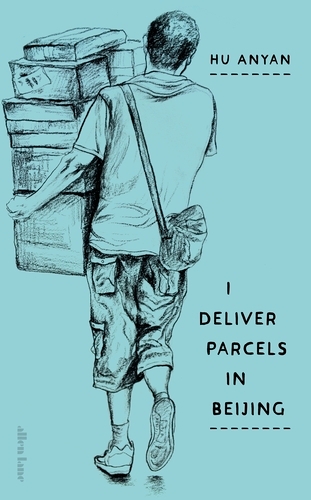
What a strange book. I picked it up because I had heard that it was a best seller in China, and I was curious to know why. To be honest, having finished it, I still don’t know why this memoir was such a runaway success there, and who its Chinese readers might be.
The story itself is quite simple. The author is a young college-graduate who moves from home to take up a series of poorly-paid unskilled positions over a twenty-year period. His jobs include working in a logistics firm unpacking and packing items, delivering parcels for several courier companies, working in a hotel restaurant, selling bicycles, doing computer-aided artwork on comics, working in a bakery and working in his own companies selling clothes in a shopping mall. As he shifts from province to province seeking work, his accommodation often consists of an apartment partitioned into 5 sq metre ‘rooms’ with only space for a bed and a desk with shared bathroom facilities and only sometimes kitchen facilities. Sometimes he sleeps at the workplace. When working at the bicycle shop, for a 72 hour week, his rent was 1500 yuan per month, leaving him 2000 yuan per month to live on. In some of his jobs, food was provided, although often it was food that was left over. In the logistics job, the work statistics are so harsh that there is no time for toilet breaks and the temperature is so high that he sweats continuously. The hours are punishingly long. The courier job has expectations of customer service while at the same time offering such a pittance that compliance with any customer request puts him out of pocket. Companies take advantage of a three-day unpaid trial period, sometimes there is medical insurance and sometimes not, and employers take any opportunity to ‘stiff’ their workers. Amongst his co-workers he witnesses theft and dishonesty, but says nothing because he has to work alongside them. As he says:
The moral of the this story: When disgruntled, the lowly among us only have each other to pick on, because going after the powerful will only cost us in the end. (p. 202)
I see that the author was born in 1979, in the wake of the Cultural Revolution and at the start of Deng Xiaoping’s economic reforms that took China from a command economy to a market economy. He mentions a sister only once, but he does speak quite a bit about his parents. I found myself wondering how parents from such a starkly different type of economy would advise and equip their children to work in a new economy, unlike anything they had known (much like us as parents and grandparents parenting children who will work in an AI economy that is foreign to us).
My parents had only ever taught me to be kind to others. They failed to mention I also had to stick up for my own interests…Maybe because nobody had ever sat me known to talk it through before. My parents wouldn’t go near the topic. They had spent their whole lives in the same work units; the market economy was completely alien to them. …The thing was, my family was from out of town and had no relatives that lived nearby. My parents are unsociable folk, too. (p. 198)… I was starting to feel like my parents were to blame for all the rotten luck I had with people and work. They should have warned me. Their lessons on how to act had zero grounding in this world. They had said nothing about going after what I wanted, only that I should be frugal. What they told me was the wrong way to behave was exactly how everybody was behaving, and society wasn’t punishing them for it but rewarding the, and not just rewarding them, punishing me (p. 222)
Nonetheless, he did have his parents as a fall-back. Burnt out by the culture of exploitation and competitiveness, intimidated by the effort of having to interact with other people and yearning to have time to read and write, he returns to his parents’ home and in his own words, stays indoors for almost two years (p. 264). He later borrows money from them to set up one of his ultimately unsuccessful businesses. He does have a couple of girlfriends: indeed, it is because he wants to be with one of his girlfriends that he shifts from Guandong Province in 2018 to Beijing. He breaks up with another girlfriend when he is living and working in the store in Nanning, and she shifts overseas. He does not have friends, beyond his workmates and at work he is just as likely to make enemies as friends. I found myself wondering if his flight back to his parents’ home was an early example of tang ping, or lying flat culture, a rejection of societal pressure to over-work, a phenomenon in China particularly after COVID.
The structure of the book is unusual and rather hard to follow with a rather strange arrangement of chapters. The book sprang from a blog post written in 2020 (Chapter 2?) so perhaps that might explain why it is structured as it is. His story starts off in 2017 while he is working in Foshan as a package handler, but the chapter is written when he has been in Beijing for three years. The second chapter focuses on his time as a delivery worker in Beijing, followed his work in a convenience store, then in a neighbouring bike shop in Shanghai in Chapter 3. Chapter 4 is headed ‘Other Jobs I’ve Had’ where he lists jobs 1-8 (1: waiter 2: clothing store assistant 3: gas station attendant 4: fast food chain delivery 5: popsicle wholesaler 6: 3D architectural renderings 7: comic book artist 8: graphic designer for a startup magazine about anime). Jobs 9-11 were:
9: copy shop attendant
10: return to the anime magazine
11: his own clothing store. He then has a lengthy section about writing and reading, complete with extracts from two pieces of his writing. He then continues with the job countdown-
12: (2011) online store
13: property management at a mall
14: bakery shop
15: deli stall
16: selling rear view car cameras and car fresheners
17: the logistics job described in Chapter 1 with D company
18: parcel delivery with S Company
19: parcel delivery with Pinjun Express, both described in Chapter 2.
In the closing pages of the book, as he loses his job with Pingun Express, he observes that he had alternated between two mutually exclusive states: working and writing. He tended to do either one or the other, spending half of his life free of work, and the other half consumed by it (p. 317). He considers the nature of “freedom”, which he considers a matter of consciousness, rather than of what you possess. He observes:
So, by freedom, I suppose I am referring to a personal pursuit of sorts, and self-realization through consciousness of our individual selves- the spiritual essence that differentiates one person from another. If more of us when after this kind of freedom, the world would be a more diverse, more inclusive, more equal and richer place. It would be all the more colorful. The pursuit of freedom is what shapes our individual trajectories, our personal goals, and stops us from having to vie for space on a single narrow path…Maybe it is something we can strive for but never quite attain, and maybe I will never reach it in my whole life, but that doesn’t matter. Because the pursuit is more precious than the attainment, and this holds true for every person and for the world as a whole- like our ideals and our convictions, it is the fulcrum of our lives, not their content (p. 315)
Is this valourization of freedom the appeal of the book to a Chinese audience, I wonder? I can’t even think of the word ‘freedom’ without hearing it come out of George W. Bush’s mouth, and it seems almost antithetical to the choreographed military displays in Tienanmen Square. Is the book’s popularity a somewhat subversive embrace of that? Or was the book a bestseller in China when the recipients of packages ordered online became curious about the lives of the people who delivered them to them? Or is the book popular with the tang ping generation, with him forging the way? At times the book reminded me of George Orwell’s Down and Out in London and Paris but this is no dilettante’s or journalist’s curiosity. The jobs came first and the writing emerged later, and it seems that the author is still oscillating between the two, without the choice to leave it all behind as Orwell did.
Most of all, it made me realize how little I know about China.
My rating: 7/10
Sourced from: Yarra Plenty Regional Library
Read because: I had read an article in the Guardian about it.
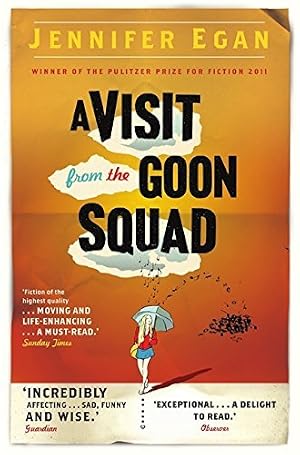
I had heard a lot about this book, and it hadn’t registered with me that it was written in 2010, which in these days of deluge of new titles is an eon ago. I don’t know why I didn’t read it at the time- it must not have appealed to me- and I’m not sure that it appeals to me now, sixteen years later. The title evoked a mafia, true-crime book, and the blurbs crowed with praise without actually denoting what the book was. I’m not sure that I even know what the book is, either.
The book starts with the two characters who are the linchpins of the book. The first is Sasha, personal assistant to a record producer who ‘picks up’ two things in the first chapter: a younger man called Alex whom she takes home for sex, and a wallet stolen from the handbag of another woman while she was in the toilet. The second is Bennie Salazar, Sasha’s former employer, who founded Sow’s Ear records and is still immersed in the music of the 1970s. These two characters are the linchpin, but only because the other characters have or have had a tangential relationship with them in the forty-odd years covered by this book. It’s like a book of six-degrees-of-separation, or a form of narrative doodling, where the author creates a character and then plays with them. The thirteen chapters each have a different character as their focus, slipping backwards and forwards in time, occasionally voiced in the first person, or in the format of a Powerpoint presentation. There are a lot of characters, and as you’re reading you’re not quite sure whether you’ve met them before. There are two musicians, washed up by the 1990s: Scotty, a semi-derelict who goes back to Bennie the record producer and launches a last open-air concert, hyped by influencers, and Bosco, a member of the Conduits, the bank that launched Bennie’s career who wants to commit suicide on stage but ends up recovering from cancer. There’s Dolly the publicist who holds a disastrous party and ends up in jail for negligence, who becomes a publicist for a dictator. There’s Rob, Sasha’s ‘pretend boyfriend’ at college, who dies in a drug-fuelled swim in the East River. There’s Lou, the hedonistic record producer, thrice married and the father of six children.
The ‘goon squad’ of the title is not a bunch of mafia thugs, as I suspected, but instead is time.‘Time’s a goon, right? You gonna let that goon push you around?’ Two of the characters- Scotty and Bosco- both question how they started off at one place and ended up at another. When Scotty, disheveled and disturbed turns up in Bennie’s plush office he says
…I came for this reason: I want to know what happened between A and B…A is when we were both in the band, chasing the same girl. B is now. (p. 107)
Bosco wants to produce a new record ‘A to B’
The album’s called A to B, right? And that’s the question I want to hit straight on: How did I go from being a rock star to being a fat fuck no one cares about? Let’s not pretend it didn’t happen…Time’s a goon, right? Isn’t that the expression? (p. 134)
This question lies at the heart of the book- and indeed, in the heart of anyone over the age of, say, fifty who can look back at their life and wonder how they got there. What are the hinge-points; what are the inevitabilities? What if…what if.. It’s a big question but I don’t know if this multi-layered, tangled story is the best way to address it. There is a discipline to the book, and an overarching structure, but you have to work very hard to find it.
This book was discussed at the recent Ivanhoe Reading Circle meeting (which I missed) and both the presenter there, and several blogs I’ve read (including Louise at A Strong Belief in Wicker) felt that the book definitely deserved a second reading. Indeed some people have spent an inordinate amount of time reconstructing the timelines of the characters of the stories. I can see, just by flipping through the first chapter, that a second reading would yield a tapestry of threads that I hadn’t noticed on the first reading. But for me, a first reading should bring its own rewards, rather than needing a second reading to make it intelligible. As it is, each chapter is self-contained, and reads almost as a short story in its own right (indeed, several were published in the New Yorker as stand-alones). In a world drowning in new publications, I don’t know if any author has the right to demand two readings of any book to make it coherent: a second reading should be a joyful choice, not a post-requisite.
My rating: 7/10
Sourced from: purchased second hand from Brotherhood Books
Read because: Ivanhoe Reading Circle August 2026 selection.
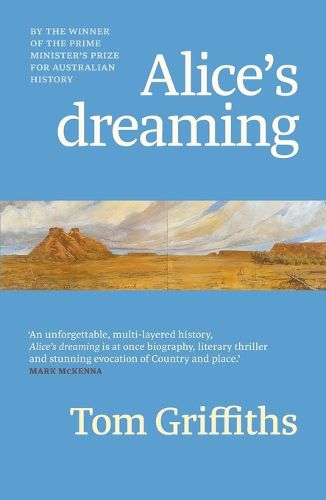
I don’t think that I’ve ever started a review of a history book with a spoiler alert, but in the case of Alice’s dreaming, I do. You might think that there could not possibly be spoilers in a history, but when a history is as multilayered and reflective as this one is, you’re best off reading it yourself without knowing what’s going to come next. A master historian- one of my favourites- Tom Griffiths takes us on a journey through anthropology, history, literary production, detective work, personal biography, family history and historiography all in one book. Like Griffith himself in writing this book, I found myself alternating between having my eyes opened, and then stepping back with skepticism and disillusionment, until being persuaded to join Griffiths where he sits historically now.
So don’t read my review- read the book yourself, and then come back to me.
2026, 320 p. & notes
SPOILERS
As a fourteen-year-old, the future historian Tom Griffiths came across a dusty book on the ‘Australiana’ shelf of his school library called Where Strange Paths Go Down. It was written by Alice Duncan-Kemp, drawing on her childhood memories from the 1900s growing up among the Mithaka people on Mooraberrie station in the Channel Country of outback south-west Queensland. Little was Griffiths to know that the information in the book that he held in his hands in 1971, and the other volumes published by Alice Duncan-Kemp, would be drawn upon (albeit not exclusively) when the Mithaka people finally gained Native Title over 33,752 square kilometres of Mithaka Country in 2015. Nor could he have known that he, himself, would be writing about Alice’s work in 2026.
Alice Duncan was born in 1901, one of three sisters and one brother who died of diphtheria in 1903, aged four. Her parents were Scottish-born William Duncan and Laura Davis, the daughter of a Sydney solicitor. William had managed pastoral properties in the outback, and in the early 1900s purchased Mooraberrie. Although he owned Mooraberrie, he always considered the Mithaka as the rightful owners and referred to them as the ‘landlords’. He died in 1907. Although Laura considered selling Mooraberrie after her husband’s death, she instead stayed there with her daughters. The children were brought up by First Peoples nursemaids, particularly Mary Ann who, with her head wrapped in a scarf and her long skirts, took the three girls on Country, with the other children who lived around the station where their parents worked either as domestic labour or as stockmen. When she was older, Alice joined the pastoral workers, both Black and white, camping out during mustering. Thus Alice was imbued with a strong sense of Country that never left her: observant about plants and animals, alert to colour and landscape, free to accompany the station workers on mustering work around neighbouring stations and waterholes, curious about the stories, practices and lifestyles of the Mithaka people but aware that some knowledge was kept from her.
The Mithaka considered Alice to be ‘twice-born’ because as a two-year-old she escaped drowning in the flooded Bulloo River when the buggy in which she was lying collided with a bauhinia tree in the swirling waters. When she was a little older, she was given a secret name ‘Pinningarra’ in a ceremony on a sacred flat-topped lookout, and she was called ‘Mingari’ in everyday life. At the age of five, she experienced a vision, with an authoritative voice declaring ‘You must go among these people and learn from, and about them, before it is too late’. She believed that she ‘was endowed with the breath of the Dreamtime’. (p. 60-61) She was to have a third revelation when she returned to Mooraberrie after two years schooling in Sydney and saw it all afresh (p. 159)
Part One of the book, titled ‘Alice in Wonderland’ draws on Duncan-Kemp’s writings to describe the world of Mooraberrie. In three chapters ‘Walkabout’ ‘Mustering’ and ‘Dreamings’, Griffith has crafted an integrated picture of Duncan-Kemp’s childhood from her works. The world that Alice describes is, indeed, a ‘wonderland’, with a bounty of food available, full of birds and studded with plants that burst from the soil when the water arrived, and criss-crossed by people. She describes the goose corroboree of the Pelican people at Kingadurka Lagoon, where 1000 magpie geese were killed as part of the ceremony- but importantly, only 1000 birds as these were breeding birds. She is told the Dreamtime stories, particularly that of Yammacoona, who Mary Ann told her was “Mother- all the same- you and me” (p. 65)
This Wonderland was not to last. In Part Two ‘War and Peace’, Griffiths steps into his Historian Shoes to locate Duncan-Kemp’s books amongst the historiography of Indigenous/Settler relations. Chapter 4 ‘Invasion’ places Mooraberrie station among the spread of cattle, “the shock troops of empire” (p. 56) as pastoralists followed the footsteps of white explorers who were themselves following the Aboriginal routes pointed out by their guides (p. 89). There was a link between the pastoralists of the Western District of Victoria and the Channel Country as the sons of the 1840s Port Phillip pastoralists followed their fathers’ example in ‘opening up’ the outback in Queensland and northern NSW. In fact, one of the Mooraberrie workers, Moses, had been taken down to Victoria and educated there (possibly at Scots College?) and could break into a clipped, English accent when he wanted to. Along with the pastoralists came frontier violence. There had always been violence on the frontier, but “on the Australian frontier, early violence was often intimate and personal. You generally knew who you were killing” (p. 95)
This wasn’t the case with the Native Police, described variously as a ‘paramilitary’ or ‘counter-insurgency’ (p. 95) force, comprised of men drawn from other districts, under the control of white commanders (see David Marr’s Killing for Country review here) who acted under the direct control of the Executive Council of the colonial administration (p.95). More than a dozen massacres are known and remembered in the Channel Country, targeting large ceremonial gatherings, transforming the waterholes -‘the precious jewels of the arid country’- into a grim rollcall of places of death.
Massacres are not bullet points on a map with great blanks in-between in spite of the ubiquitous settler folklore that ‘there were no massacres here.’ Rather, they were rivers of blood flooding the whole landscape, braided streams and channels of violence greater than we know and more horrific than we can imagine. War was everywhere at once and more than human, desecrating the Dreaming and eviscerating the ecology. Massacres were epicentres of disruption that generated aftershocks that are still felt today. (p. 100)
Into this tragedy, Alice Duncan-Kemp brings us two points of light. The historian in Tom Griffiths takes both these events, and locates them amongst other similar events that took place in other places in Australia.
The first event is the Debney Peace, a gathering that took place on a tract of Country, the ‘Common Ground’ of the Pharmaleechie Channel in May 1889, some twelve years before Alice’s birth, and thus unwitnessed by her. George Debney, the white leaseholder of Monkira Station rode 100 kilometres to participate in a Mulka-mukana, meaning ‘the vow of peace and the seal of goodwill’ orchestrated by First Nations people, and grafted onto an existing event in the Aboriginal calendar. It was possibly as much about the relationships between various First Nations clans as about dealing with the white intruders (p.109) but Debney played his allocated role in this highly orchestrated and ritualized ceremony as a pastoralist who was known for his protection of local people from the Native Mounted Police.
The second event was her description of Kooroongoora, a resistance cult that emerged around the turn of the century, where First Nations workers who had been ‘taken in’ by the pastoral stations were challenged to return to traditional practices and to resist the power of white culture and white law. There is no ‘smoothing of the dying pillow’ here: instead it is an act of rebellion and resistance, drawing on traditional law rather than the white man’s weapons.
The Kooroongoora sang and danced its way across Country; it was a cult, a millenarian movement anticipating social change; a travelling series of storytelling performances that strengthen the Law. It brought bird and wind corroborees and vivid historical pageants that were practised and perfected in secrecy among the sandhills and then performed with power and precision. (p.146)
Part 3 ‘Stranger than Fiction’ returns us to Alice and her writing- and here, things take a strange turn. Alice began writing her first book Our Sandhill Country in 1910, carrying a notebook with her, and creating a “midden of fragmentary scribblings” that she left for her descendants (p. 162). It was a book that would not be published until 1933, just before and as part of the wave of interest in outback Australia, exemplified by Walkabout magazine (1934-1974) whose tattered copies lingered in the doctors’ and dentists’ waiting rooms of my childhood. By now she was married, with her own children, and there was talk of selling Mooraberrie to Sidney Kidman, who had coveted it for years. Her next book did not appear for nearly twenty years, although she had conveyed her knowledge through correspondence with Dr L. P. Winterbotham, the honorary curator of anthropology at the University of Queensland, who peppered her with questions about rituals, ceremonies and beliefs. She was aware of the work of pioneering white women anthropologists like Daisy Bates, Olive Pink (see my review here), Ursula McConnel, Phyllis Caberry and Catherine Berndt. She was also part of the lineage of daughters of pastoral families who became champions of Aboriginal people, like Jessie Street, Mary Bennett (see my review here and here), Mary Durack and Judith Wright. Where Strange Paths Go Down was printed in 1952, followed by Our Channel Country in 1961. In 1964 a large combined volume of Alice’s first two books was released, with a rearrangement of the chapters and the insertion of drawings and illustrations drawn from all over Australia, mixing up rare photographs of Mithaka people that Alice would have known, with generic portraits from anywhere.
But it was her next manuscript, submitted to Angus and Robertson, that was to change the course of her career, and Tom Griffiths’ research. Although originally accepted for publication, it was then returned to her and her contract cancelled when similarities were noted between her work and that of the Laurens Van der Post (much admired to Prince and now King Charles). Duncan-Kemp did not challenge the claim and said that she had not understood copyright. Griffiths provides samples of Van der Post’s and Duncan-Kemp’s work side by side, and it’s quite clear that there are identical phrases in both. But who copied whom? Van de Post has himself been described as a serial plagiarist, liar and fabricator (p. 194) Did he draw on Duncan-Kemp’s work, or did she draw on his? Here Griffiths turns detective, looking at the circulation of Duncan-Kemp’s drafts. It seems that she drew on other authors here in Australia too, and the uncertainty about the provenance of her work has led to it occupying an ambiguous position: dismissed by some as scribbling, yet by others including Dr Winterbotham who described her letters to him as “the fullest and most scientific knowledge that I have received from any correspondent”.
So what is a historian to do? Griffiths, who has been deeply influenced as a historian by what came to be known as the ‘Melbourne School’ of ethnographic history could not be further from the Keith Windschuttle-led History Wars of the late 1990s, where errors and infelicities were seized on with glee. But parts of Duncan-Kemp’s work do lie at the intersection of history, politics and legal process. If her work is fraudulent, then that matters. As Griffiths points out “Detail matters very much in history…No detail, no history:
It is detail that imprints the story in memory and song. History, like ecology, is grainy and organic: it is earthed in locale and it’s about intimate communities and relationships, both visible and unseen. To glimpse an understanding of history’s workings, you need to build a whole picture, detail by detail. A single detail can change things, releasing chaos in the system. So yes, detail matters. (p.248)
And so, in Ch 9 he embarks on a slow reading of the whole of Alice Duncan-Kemp’s writings- published and unpublished, working page by page, with pen in hand. He draws maps; he records minor figures, he looks for collaborations, he checks again meteorological and astronomical data, and verifies Alice’s observations against more ‘scientific’ observations.
Part 4: The Way Home draws together family and country history. In a way, these chapters seem a little out of place- particularly the ‘Family’ chapter, but as Griffiths points out:
Under Australian law, the winning of Native Title requires family history. It requires proof of social and geographical continuity in a landscape of savage dispossession…In 2015 Native Title was awarded to Mithaka people after a decade and a half of hard work in archives and the bush, much of it documenting family history, discerning genealogies and mapping connections to Country. (p. 286)
Chapter 10 ‘Family” starts with Griffiths visiting Channel Country in 2000, hoping to meet Aboriginal residents of the district, only to be told that they had ‘disappeared’ and that any Aboriginal people who might happen to be there had drifted in from elsewhere. (In fact, we had a similar experience in Cobram in Victoria about 10 years ago when we were told with a straight face that there were no Aboriginal people there). In a rather stinging rebuke, he takes aim at the commemorative histories written by Peter and Sheila Forrest, including one for the Barcoo Shire Council in 2014, which Griffiths sees as a
…third wave of dispossession, following murder and removal: a tsunami of white history commissioned by government. Just as squatters seized land in a flood of registered documentary claims, so have shires consolidated conquest by publishing official histories (p.260)
And so Chapter 10 is a counter to these commemorative histories and the family histories of pastoralists by bringing forward the parallel family histories of Mithika families as a counterpoint to that of the Duncan-Kemp family. In these ‘other’ family histories, we see the history of Indigenous policy writ large. Bill Gorringe, who probably would have known of the Duncan family on Mooraberrie and possibly even met young Alice, was born under a giant coolibah tree near Eyre Creek at around the same time as Alice was born. His father, a white boundary rider on the rabbit-proof fence, had to struggle against the state authorities to marry Nuncaleer, a Mithaka woman who was removed from him several times. Bill was educated at Birdsville, and boarded at the Bluff, a station managed by young Celsus Morton, known for his casual violence and cruelty (whose story was told by his great-great grandson Rick Morton in One Hundred Years of Dirt– my review here). Within Bill’s extended family we see removals and exile to Palm Island, the fractionalization of identities into ratios of blood, and the geographical and social separation of pastoralists from their workers. Uncle Bill and his second wife Aunty Ivy became important teachers of culture to the Aboriginal diaspora, and the Gorringe family was interlinked with the Debney family of the Debney Peace.
Chapter 11 ‘Country’ returns to where Alice started with her descriptions of plants, insects, water and humans. Griffiths had visited it in 2009, when
I had to look at everything out of the corner of my eye. Every historical fact and insight had to be gained against the inclination of the pastoral landholders (p.306)
But by 2019, he visited at the invitation of Josh Gorringe as part of a research team led by Mithaka people, and he found that his “eccentric private interest had become a vital common quest” (p. 306) Alice’s identification of the numbers of original Aboriginal populations had been supported by records of Europeans visiting the regions; her archeological reports had been bolstered by archeological studies on Mithika Country. And so how does Griffiths himself locate Alice’s writings?
Alice was trying to write a world outside the text into text, and a world outside her culture into the history of her country- and, indeed, into the history of the world. It was an act of translation, fraught and difficult, imperfect, a labour of love (p. 235)…Alice struggled all her life to deal with the strangeness and immensity of her childhood experience, which was so out of kilter with her society and so readily denied by it. She wrestled with ways of understanding and depicting the Mithaka world and was in awe of its majesty. She was not in control of her material: it overwhelmed her. Every thread of culture she tried to follow was unending and so intertwined with other threads that she became entangled- not in a mess, but in a deeply complex, cohesive world undergoing traumatic change. A world she knew only partially and was challenged to encapsulate (p. 238)
Yes, she drew on other works, especially those of Lauren van der Post as a stylistic device to ‘improve’ her own writing; and yes, she co-opted the work of other anthropologists without attribution. Yes, she included things that she did not witness herself, although others did. But
…Alice participated in the most profound and important of Australian conversations: that between extraordinary First Nations individuals and curious newcomers like the Duncans who were identified as potential brokers of knowledge under threat. For Alice it was a respectful conversation about everything that matters- about life, cosmology and Country, about the earth and the stars, the past and the future (p. 320)
This is beautifully written, restrained, reflective book invites us into this conversation as well. I fully expect to see it up there next year on the various prize lists for Australian history. Read it.
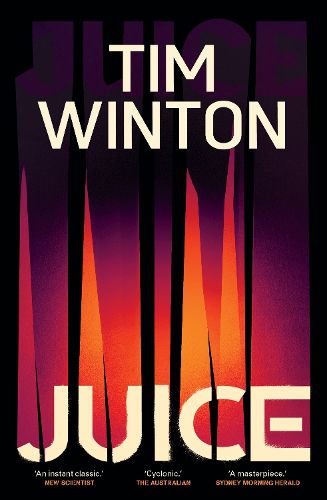
An unnamed man and a young girl are driving in a truck through a blighted stony landscape, surrounded by ash. When they draw into an abandoned mine site a man armed with a crossbow forces them from the truck cab and into a deep hole. The unnamed man does not trust the intentions of their captor towards the girl, and Scheherazade-like he tells his story to ‘the bowman’ both as a way of staying awake to protect the child and to gain the co-operation of his captor.
Set at some time in the future, the world has endured a horrific ratcheting-up of climate change and political breakdown. Temperatures regularly breach fifty degrees, and summer is spent underground in dark, stifling conditions, waiting out the months until winter, when it is finally safe to venture out into the open. Society seems to have broken down into small hamlets, scattered homesteads or gated armed communities. There does not appear to be any government, no religion, no music, no civic life. Cities like Perth and Sydney still exist, protected by walls, but they are fetid and dangerous.
As our unnamed narrator tells us (and the bowman), his father disappeared in a maritime accident when he was young and he was brought up by his ‘staunch’ mother – likewise unnamed- in the outback, growing vegetables in irrigated greenhouses in winter when the weather conditions are more benign. As he reaches adolescence he works salvaging parts from deserted infrastructure and taking their produce to ‘market’ where he barters for the things they need from other desperate, edgy people. It is at this market that he is approached to join the Service, a shadowy organization, that ruptures his world view completely. Brought up in an a-historical world, he learns about the phases of history that have brought the world to this point: ‘The Hundred Years of Light’, followed by the ‘Dirty World’, then the ‘Terror’. There were political choices that could have been made in the past (our present) that could have avoided this complete breakdown, and the wealthy descendants of the fossil-fuel executives, financiers and the lobby groups still shelter in enclaves surrounded by a luxury completely foreign to the depleted populations scrabbling to survive ‘outside’. The Service is committed to ‘acquittals’ – a euphemism for the assassination of whole families, including children- as vengeance for this climate collapse.
And so our narrator lives in two worlds: the spartan existence on the blighted landscape and the other world of secret missions, danger and bloodshed. He partners with Sun, and has a daughter, Esther, but spends months away, ostensibly scavenging, leaving his family on the homestead with his mother while he is called upon to embark on this campaign of murder and retribution that takes him to Utah, the Persian Gulf, and to Asia- all just ‘overseas’ places in this world without nations. The killing does not sit well with him, and each time he returns more and more disturbed, only to find that his wife and daughter have left. The Service keeps all of its operatives ignorant of each other and of the scope of their mission, and it is only as time goes on that our narrator learns that his whole life has been much more touched by the Service than he realized.
He tells all this to the Bowman, who he later learns has also been a Service man. Despite their common experiences, they are not the same. Our narrator’s life was saved by ‘sims’, hybrid simulacra who can withstand the heat and deprivation, but the Bowman believes that all sims should have been annihilated while they could be. Our narrator distrusts the Bowman with good reason, and even when I reached the last sentence of the book, I wasn’t sure quite what it meant.
Juice is similar to Cormac McCarthy’s The Road but the Scheherazade structure of the novel, alternating between the telling of the story at the bottom of a tunnel, and the story itself, means that it does not have the same grim relentlessness of McCarthy’s book. As a committed environmentalist, Winton does not pull his punches, naming the present-day fossil-fuel companies that the Service holds responsible for the climate collapse. In just one part of the novel, his religious faith and love of nature surfaces as well, when our narrator meets with one of the operatives who initially trained him. In what our narrator later says was the most interesting conversation of his life – just one- the operative says:
My mother used to tell me that when Nature dies, God dies along with Her… I guess what my mother meant is that without clean, wild, healthy things that can regenerate and renew themselves, the idea of God is impossible to imagine. (p. 346)
Does it matter if fiction is the vehicle for a political treatise? Not for me, as long as there’s enough depth to the characters to make them something more than mere mouthpieces. I don’t know whether Winton completely succeeded in this, but I wonder if his choice to keep his main characters nameless is not a way of intentionally distancing us as readers. I’m not sure that the introduction of the sims half-way through the book worked either, although it does raise questions about the sentience of artificially-created simulacra, and whether humanity’s only hope is co-existence with them, with the nature of the relation between human and sim left unexplored. There is much that he does not explain but to do so would detract from the earnest howl of despair at our present obtuseness that underpins the novel. He does not explain history, or the remnant technology, but this sparseness reflects the blighted nature of this world where there is no past and no future, just the survival of the season.
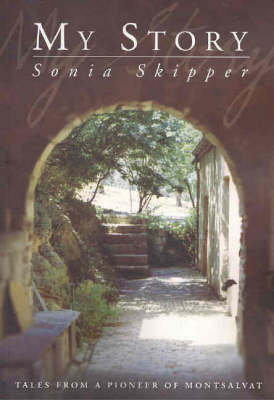
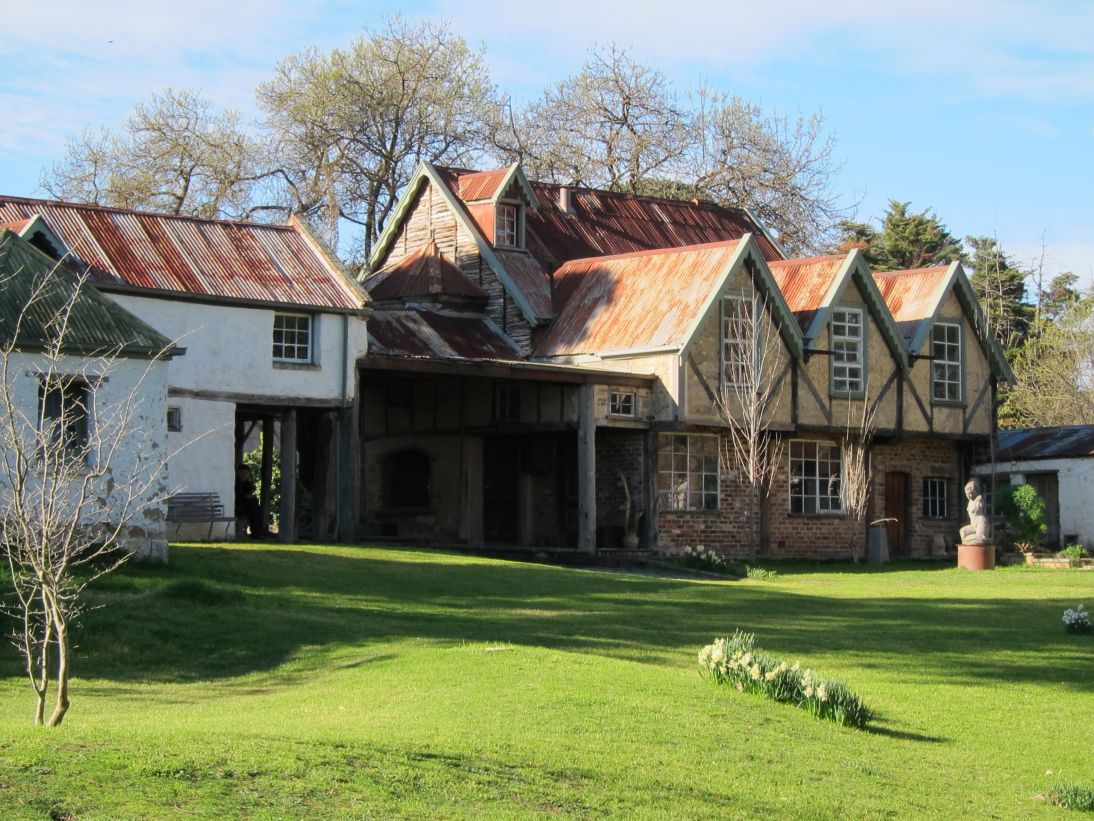
There have been two artists’ colonies in Melbourne that have really fired the imagination of writers, participants and curious neighbours for years. One of these was at Heide, in what is now suburban Bulleen where John and Sunday Reed curated a circle of artists including Joy Hester, Sidney Nolan, John Perceval and Albert Tucker (among others). The other was at Montsalvat in what is increasingly becoming suburban Eltham, overseen by Justus Jorgensen and later his son Sigmund. Both are now open to the public. But in staid Melbourne of the 1950s and 1960s there seemed to be something exotic and rather salacious about these artists’ communes.
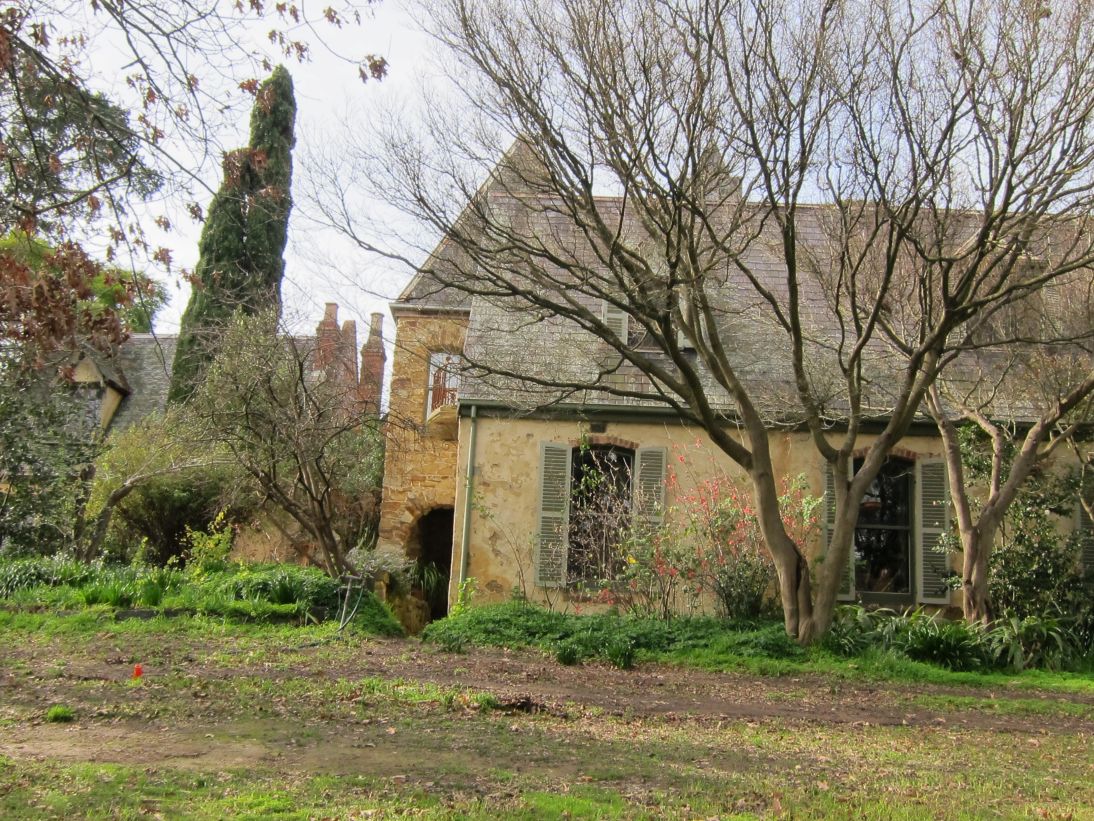
I confess that I read this book not so much to learn about Montsalvat or Eltham, but because the opening chapters deal with Heidelberg and Eaglemont, which is of far more interest to me given my own connection with the Heidelberg Historical Society. Sonia Skipper was the middle child of author and theatre critic Mervyn Skipper and his wife Lena and she spent much of her childhood at Heidelberg, living in a house designed by Walter Burley Griffin that is now known as Skipper House.
Skipper House Outlook Drive Eaglemont
She attended Coreen, a small private school run by the daughters of a local minister and then Heidelberg State School (my own alma mater!). She was not happy at school and always had problems with spelling. As she herself admits, she did not inherit her father’s talent for writing, and this is reflected in the rather unadorned narrative voice that comes through the book. However, for my own purposes, she portrays Eaglemont in the late 1920s and 1930s well. She began attending art classes with Justus Jorgensen, and the family- parents Mervyn, Lena, and their children Helen, Sonia and son Matcham – became increasingly enmeshed with the Jorgensen circle- indeed Mervyn Skipper substantially funded it.
In 1934 Jorgensen became interested in a block of land in Eltham, 17 miles from Melbourne and still rural. ‘Jorgy’ and his wife Lily purchased the land, with Mervyn Skipper’s financial assistance and began building on the land using windows, doors and architectural features from properties being demolished in Melbourne by Whelan the Wrecker and drawing on the weekend labour of his art students. Sonia enjoyed this physical outlet for her energies, and as well as attending art classes in the city, spent much time at Eltham constructing the first buildings. The students’ quarters (later the dining room) and sleeping cubicles for the students were completed, and she seems to have spent a lot of time cooking for the groups of people who descended each weekend. Her elder sister, Helen, became Justus’ lover, and Sonia and her partner Arthur Munday moved there permanently.
However, she chafed under the patriarchal attitudes expressed particularly by Jorgy and the older male artists. This particularly came to the fore when she fell pregnant to Arthur when she was 20 years old. Arthur’s immediate response was “Oh, you will have to get rid of it”.
I was astounded. did he mean I should have an abortion? Well, I wasn’t going to be in that. When I said so he tried telling me all sorts of women had done it. It was simple, no harm done. I was most confused because it seemed to me the very opposite of what I understood the philosophy of the free life had been all about- that people had to take the consequences of their behaviour and be responsible for what came from it…He [Arthur] finally saw Jorgy and told him, and one morning Jorgy gave a long talk about the effect this happening would have on his, Jorgy’s reputation. He talked away for ages, and as far as I could make of it, it had nothing to do with my problem, nobody bothered to ask me what I thought or felt, apparently that didn’t count. Some of the arguments were for abortion, others for kicking me out, or for marriage, all reasoning was related to how Jorgy would be accepted by society, because I was one of his pupils. But what about Arthur? It wouldn’t make any difference to his acceptance. Very little of these arguments made any sense to me. It had to be a bloody comprehensible argument after that, or I didn’t believe those old men of the tribe sitting at the end of the table. They had so much to say about everything; but their only concerns, it seemed to me, were their own needs. (p.81)
She later found that her sister Helen, with whom she always had a conflicted relationship, was also pregnant- to Jorgy himself. Somehow now the fears of society’s censure were put to one side: instead it was now seen as a calculated idea, and now Jorgy said that:
Society would see how, with responsibility and forethought, a man in his situation with an invalid wife and a mistress, with their children, could live in a reasonable way, devoting their energies to the furthering of his work yet living a fulfilling life themselves. (p. 81)
The two cousins, Sonia’s Saskia and Helen’s Sebastian were born within days of each other, followed a few years later by Sigmund (all these children’s names starting with S seems a bit creepy to me). They were brought up at Montsalvat, where Lil (Jorgy’s wife) also lived with Max, her son by Jorgy. Sonia continued to work at Montsalvat, building and stone-carving and painting, while providing food for up to 25 people sitting around the dining room table.
With time, she felt that she needed to escape, and as a reader you sense how suffocating Jorgy had been:
It seemed to me that if I was ever going to be a fully functioning adult I needed to leave the safety of the family and establish my own independence. Had I learnt anything the outside world might need? What could I do to earn a living? This was a problem because Jorgy delighted in telling us we wouldn’t know how to get on in the outside world. Why should he be delighted, was it because he had such dominance over us that we couldn’t escape? Was this something that a teacher should be pleased with? I don’t think so. (p.157)
She did escape, eventually. She moved outside Montsalvat and worked locally with Alistair Knox on the mudbrick houses that Eltham is famous for. She fell in love with Joe Hannan, had a child with him, and bought a house in Research, before moving to Renmark in South Australia, where the asthma that had plagued her since a child improved. She continued to paint and work on her sculptures, and had exhibitions of her work- something that Jorgy always discouraged. Joe died in 2000, and presumably Sonia must have written this memoir prior to that because she speaks of “a romance that lasted for 48 years” (p. 169) and does not mention his death.
This is very much the memoir of an older woman. The copyright date is 2005, and she died in 2008 at the age of ninety. Enough time to carve out a life beyond Montsalvat, and to look back at the Monsalvat experience and its influence on her family and life with a mixture of resentment, pride and nostalgia.
Do I know what’s true about my life at Montsalvat? It has been somewhat sandpapered by time, so what is the reality I’m trying to arrive at, what events have I overlooked? The events that I thought important then, are they the ones I should concentrate on now? The ideas have become part of the person I am now. Just exactly what were Jorgy’s teachings or the added experience of living at Montsalvat I do not know. I’m not an ideas person after all, I am more of a “doer”. (p. 157)
My rating: 7/10 (not for the writing because it’s pretty ordinary, but because I found the subject matter fascinating)
At the moment there’s a Senate inquiry into the new computer Integrated Assessment Tool that is being used to assess eligibility and assign funding levels for aged care service. It is completely automated, and there is no human over-ride function when the algorithm spits out an assessment that is inappropriate, insufficient or just plain wrong. At the inquiry, the first assistant secretary of the Department of Health, Disability and Ageing, Robert Day, said
The no override comes from the fact that that is an objective outcome….If you have these scores from your assessment, you get this level of classification … there’s no discretionary element (Guardian, 3 April 2026)
SPOILERS
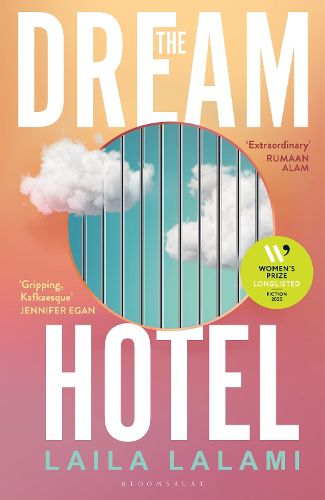
I was reminded of this when reading Laila Lalami’s The Dream Hotel. My library has designated it ‘Science Fiction’, but there’s not much science fiction about it: it’s just an extrapolation of what is already here. Set in an alternative present day and in response to moral panic about the rising crime rate, The Risk Assessment Administration has been charged with investigating suspicious individuals in order to prevent future crimes, and it can draw on myriad data sources in order to do so. American citizen Sara Hussein is pulled from the arrivals line at the airport because her risk score is too high. An archivist by training, she has been attending a conference, and she bristles and pushes back at being flagged as a risk. The risk assessment has picked up on a complaint from a fellow passenger on the plane who was off-loaded before take-off because she assisted him when he was having trouble breathing; her response that her employer paid for her flight was questioned because, technically, she had not yet submitted the receipts to recoup her expenses. But most damaging of all for her assessment was the information that the authorities could access from her Dreamsaver, a device that she -along with many other Americans- used to maximize the value from her sleep. As the mother of young twins, trying to keep her career afloat, she had turned to this device to overcome her insomnia and although she didn’t realize it, there among the terms and conditions was her permission for the data to be handed on to a third party if required by a legal enforcement authority. Her dreams revealed a propensity to violence, they claimed, and so she needed to be assessed further in Madison Retention Centre.
So started her months-long stint in an ‘retention centre’ which increasingly became prison-like with 24 hour surveillance, curtailed freedoms presented as ‘privileges’, and enforced work. The organization contracted to run the Madison retention centre, Safe-X Inc., has its own internal economy. It has contracts with outside clients like film studios to have AI generated video content assessed for its verisimilitude; it has its internal laundry and catering facilities which fall under Safe-X budgets. Communications are provided and monitored by the AI-driven PostPal; there is a commissariat where Residents could purchase goods from their own money or from funds provided by their families. She can receive visitors, but the scheduling program is capricious, cancelling her visits without any recourse. Her Dreamsaver is monitored daily, and periods of detention could be extended at whim by the Attendants. In the narrative, you (and she) are never quite sure what is dream, or increasingly nightmare, and what is real.
What seems to be a Kafka-esque and dystopian situation does come to an end- the book has an ending, after all- when she resists, using time-worn tactics of strike and solidarity. In fact, the book is almost optimistic in its ending:
…isolation is the opposite of salvation…she owes her release to the women who joined together to say not….Freedom isn’t a blank slate..[it] is teeming and complicated and, yes, risky, and it can only be written in the company of others…This is what Madison has given her, even as it has taken so much from her- the knowledge that she isn’t alone, that she doesn’t have to be. (p. 321,322)
This is a fantastic book. I only had ten pages to go to the end, and so I sat on the station as my train went past, wanting to finish it. It seems that so many articles and events are converging: I just read Anna Krein’s The screens that ate school, from The Monthly, 2020; at a recent appointment my doctor asked me if I would agree to HeidiAi Co Pilot for Modern Healthcare. Do I read the screen after screen of Terms and Conditions? Did I take the doctor’s word that the recording of my appointment wouldn’t go any further than her computer? Do parents have the courage to push back against Google and Apple programs in their schools? No, no and no. This book isn’t Science Fiction: it’s a warning.
It’s ironic that often the books that impress me the most are the ones that I delay writing about. I want the story to percolate for a while, and to really craft my response to it – and then by the time I get round to writing a blog post, it has all faded and I can’t remember enough details. However, in this case, the details (and even the plot) don’t really matter because I wouldn’t tell you about them anyway. For me, one of the real joys of this book was that I really didn’t know where it was going to take me next and by the time I got to the end, I felt as if I had been on a very long journey that crossed time and national boundaries. It’s a mystery, domestic fiction, historical fiction all rolled into one. I really enjoyed it but it really is impossible to talk about it in detail without spoiling it for you.
Suffice to say that it spans the years 1945 to 2008 across Korea, Japan and the United States, with a cast of inscrutable characters. It is based around a family: American born Louisa; her Korean-born father Serk who had been raised in Japan before emigrating to America; her mother Anne, estranged from her family and Anne’s illegitimate son Tobias who re-enters his mother’s life as an adult. There’s defiance and stubbornness, coldness and detachment, as well as a suffocating over-solicitousness and emotional games between the adults of the family. But if you’re someone who feels that you have to like a character, you’re going to be challenged because none of them are particularly likeable.
There are so many themes that come through here: secrecy and shame; language and communication; nationality; belonging; family; identity. They are never once mentioned as themes, but they emerge through the narrative and plot.
The title ‘Flashlight’ is well chosen, not just for the ‘ray of light’ motif that appears throughout the narrative, but also for the writing style. The omniscient third-person narrator moves from one character to another, but unlike many recent books that I have read that barely alight on one character before bouncing off onto the next one, this book stayed with each character for long enough that you felt you knew them, and at least can understand their perspective, even if you don’t share it. In fact, as readers, we know the characters better than the characters know each other, or than the characters even know themselves. Although there are connections between each character and the others, the emphasis is on one character at a time, in the same way that a flashlight can only illuminate one thing in isolation.
It is a long book- 445 pages- but I didn’t feel that it dragged. But perhaps that’s because I’m interested in Korean history: I know that other people in the Reading Circle did feel that it was far too long. It’s ambitious; it has a big story; the writer is control throughout and she takes responsibility for her story, instead of expecting the reader to put the bits together.
If there’s any disappointment here, it’s with myself. I know that I haven’t done justice to this book, because the surprises in the plot are the real strength of the narrative. All I can say is, read it for yourself.
Has anyone ever complained so much about reading a book? At 1.6kg, I found it too heavy to hold up while reading it in bed and having recently sprained my knee, I was not keen on ‘tenting’ my knees to lean the book against. At over 1000 pages long, it took two renewals at the library to complete, and even now as I write this review, it is overdue.
So why did I so willingly heft it off the floor each night, to keep reading? Quite simply, because I enjoyed the company of the author and once I gave up any idea of following an argument, I just floated along on his observations – a little bit like reading Proust, really.
The lengthy subtitle of the book is “Journeys Beyond Evil: The Desk Killers in History and Today” and this is the overall theme of the book, but it is intermingled with reminiscence, nostalgia, regret and curiosity as he travels around Europe researching his topic. It could just as easily be a travel book. Attracted to maps from childhood, he maps out the sites of concentration camps of Europe and their accompanying industrial infrastructure, he follows forced marches and places himself in massacre sites, forming his own mental and physical maps. And it could just as easily be an ecological/environmental diary of landscape. For him, the environment in which he holes up to immerse himself in his writing – the Suffolk Coast for Book One in winter; Pembrokeshire in spring in Book Two- becomes part of the narrative as well, particularly when he writes about a hurricane that buffets the cottage in which he is sheltering when the power goes out in the house he has rented.
Gretton himself is an activist as well as author and teacher. In 1983 he co-founded the political arts organization Platform, which describes itself on its website as bringing together workers and communities “to create new, liberatory systems that tackle injustice and climate breakdown”. In particular, it confronts the power of transnational corporations. You can see this emphasis coming through in this book in its focus on corporations; especially that of the German manufacturing, banking and insurance companies that still exist powerfully today, which had flourished in Nazi Germany through its contacts and contracts with the government. He also targets Shell and its influence in Nigeria that looked the other way during the execution of Ken Saro-Wiwa, the activist who died trying to save his land and people from the destruction of Shell’s oil conglomerate. The “desk killers’ that he focuses on here are the managing directors of wealthy, multinational corporations, many of whom he interviewed after they have retired, and the often invisible bureaucrats and office workers who followed the procedures and timetables and the accountants in charge of the financial accounts that made genocide an anonymized, abstraction. There are no innocents here.
Although his focus is on corporations, he also hones in on individuals – most particularly Albert Speer, Hitler’s architect, whose own biography and the work of Gitta Sereny has thrown up so many questions about culpability and redemption. He also spends quite a bit of time on the Wannsee Conference of 20th January 1942, which pulled together as many agencies as possible to discuss the implementation of ‘the Final Solution of the Jewish question’. Of the 15 attendees (there were actually 16, counting the unnamed stenographer), seven held PhDs in law. We only know this because just one copy survived of the thirty copies made at the time. He parallels this with a discussion of the two Washington lawyers, who prepared memos for the Bush administration discussing the legalities and grey areas of torture and ‘enhanced interrogation techniques’.
Then there are the individuals who survived: Primo Levi, Jan Karski, Elie Wiesel. Some of the testimony in these books kept me awake at night, after turning off the light.
He concentrates predominantly on Nazi Germany, and on Nigeria to a lesser degree. But he also turns back to history to take up Gunther Grass’ question about how young people grow up in Britain and know so little about the long history of crimes during the colonial period. He looks at the East India Company and the Opium Wars, the slave trade, the Irish Famine, and what he claims as “the genocide” and the “extermination” of the Tasmanian Aboriginals (a contested question here in Australia, where there is a continuing Tasmanian First Peoples community today)[As an aside, if you’re looking a desk killers, I would have focused more on later bureaucrats and Protectors in the late 19th-early 20th century Australia whose arbitrary and desk-bound decisions did just as much as outright massacres to distort indigenous families and expunge language and culture]. He spends quite a bit of time on Namibia (former German South West Africa) where the systematic killing, detention and forced labour of the Nama and Herero people was a forerunner to actions undertaken by the Nazi government. He looks at the French massacre of between 120 and 200 Algerian demonstrators by the French government on 17 October 1961.
All of which would be pretty grim, continuing for over 1000 pages, if this were all that this book contains. But it’s not. There’s beautiful writing about his father and a wistful recounting of his own torrid, passionate affair with a younger man. There’s information dumps at time, as if you’re reading someone’s research notes. Interwoven are his own childhood memories, his political stances, travel-journey type entries.
It’s big; it’s untidy; it’s completely indulgent but it’s also thought-provoking and very easy to read. My complaints about weight and heft not withstanding, I missed hearing Dan Gretton’s voice when I finished. But perhaps there’s more: apparently this 1000+ pager is just Volume 1 of a two-volume publication. Hopefully the next volume will have an index, which I really missed in a book of this size. Will I read Volume II when it comes out: most probably, if I still have the strength to hold a 1.6 kg book!
My rating: Hard to say. 9?
Read because: I read or heard someone raving about it- can’t remember who.
The subtitle of this book is ‘ecobiographical essays’. What a many-stranded thing biography is becoming! Jessica White, the author of these essays and other academic work in the field, defines ‘ecobiography’ on her website in this way:
While a biography chronicles a person’s life, an ecobiography details how a person’s sense of self is shaped by their environment. My forthcoming essay collection, Silence is my Habitat: Ecobiographical Essays, details how deafness shapes my relationship with different environments, such as the bush, bodies of water, archives, and institutions.
This double focus – i.e. deafness or Deafness (she notes the distinctions of that capital letter) as both identity and medical condition, and the physical environment- permeates these essays, which range across both her personal and academic experiences. I admit that I’m not absolutely convinced that her approach needs the specific genre-descriptor of ‘ecobiography’ : is really a separate strand of biography or just a particular consciousness of environment on the part of the subject or on the part of the narrator?. In locating them as essays, she picks up on the etymology of the word ‘essay’ as her attempt to ‘trial’ and ‘try’ her responses to a subject, and to explore her own identity as woman and writer, after the death of her mother.
There are a number of themes that emerge through this collection of eleven essays. The first, as suggested by the title, is that of deafness. “Silence is my habitat” was a comment that the poet Judith Wright made to Heather Rusden in a 1990 interview, one of the few times that Wright discussed her increasing deafness. Reflecting, perhaps, the emphasis on identity in the intervening thirty years, White seems almost frustrated that there are no specific references to deafness in Wright’s poetry, although she and other scholars have detected it in the ‘negative poetics’ of her work- singing the praises of the natural world while acknowledging the inadequacy of words to describe it. When asked why she had not chosen to write about her deafness, Wright replied “Oh, I wouldn’t say it was a choice. I haven’t felt that it was an important part of my life in that way” (p.74). That could not be said of Jessica White. She writes of how meningitis as a three-year old robbed her of all hearing in her left ear, half the hearing in her right ear, and possibly some scarring on her brain (p. 17). She consciously seeks out writers who are conscious of sound and deafness including Fiona Murphy, poet Ilya Kamisky and the online Deaf History Collection of the writing, images and artefacts of deaf people. She explains the difficulties of architecture and the design of academic teaching at university, and how it has exacerbated the workload of a deaf tutor. She titles her essay about the shutdown of borders with COVID as “We Were All Deaf During the Pandemic”.
White shares with Judith Wright a deep environmental consciousness, which she expresses in her essay on Golden Orb spiders in her essay “Quintessence” and bird song- which she can hear- in the essay “On the Wing”. This alertness to the natural world runs through White’s academic work on Georgiana Molloy, the West Australian botanist who arrived in 1830. Molloy appears in the chapters “Intertwining” and ” Unseamed”, while White’s own grappling with her research and writing about Georgiana Molloy filters across different essays. In “Intertwining” where she describes Molloy’s experience in childbirth and loss of infant children, she explores – very honestly- her own yearning for a child, set against her partner’s refusal to have children, and her own awareness that the time for having a child was passing.
“The Breath Goes Now” focusses on her mother’s death: always a confronting event, the tenor of which is often shaped by the relationship between mother and child. In White’s case, it was her mother who was encouraging her to finish her book on Georgiana Molloy before she died- a comment made only half in just as her mother’s chronic lung weakness was curtailing her activities and life. Indeed, these essays emerged as a response to her mother’s death, when she found the architecture of her book and all those words collapsing. Ah Jessica- the death of the remaining parent is another event to be confronted yet, with all the questions it raises about your own identity as child when you no longer have parents.
These essays are beautifully written, as they approach her overarching themes tentatively, circling around them, advancing towards them, then retreating or splintering off to other safer ground before moving forward (literally essay-ing) again. Most of them are between 10-20 pages in length containing many short shards, like a flow of thoughts, asterisked to separate each one from the other, which is a writing style and fashion I am becoming less enthusiastic about, I must admit. They are very honest, especially those describing her relationship with her partner Bruce: perhaps too honest, when she re-reads them twenty years hence? But this honesty is also what gives the reader a feeling of intimacy with the author: a Garner-esque feeling that you have been having a good chat with an intelligent, sensitive friend.
My rating: 8.5/10
Read because: I encountered Jessica in the Australian Womens Writers Challenge a few years back, was aware of her work on Georgiana Molloy, and was interested to see what she’s doing now. Or does that just mean ‘nosiness’?
I guess that you could say that if a historical fiction book sends you off to internet-land to find out which bits are true, then it has worked. I should have taken more notice of the author’s note which explains that Sara de Vos is a fictional, composite character. But I didn’t and so, yes, there I was half-way through the book, searching high and low for the paintings that are described in the text, trying to find out more about Sara de Vos, only to find myself directed back to publicity for Dominic Smith’s book. So, to save you the search, Sara de Vos is a 17th century fictional character and the paintings described don’t exist, although there are similarities with the few details known about Sara van Baalbergen. Like the Sara de Vos of this book, she was admitted to the the Haarlem Guild of St. Luke and married a fellow painter. None of her works have survived.
SPOILER ALERT
But in Dominic Smith’s book, three of Sara de Vos’ paintings still exist- but which ones? The book opens in New York in November 1957, as a painting by Sara de Vos is stolen from the luxurious apartment of wealthy Marty de Groot, plucked from the wall above the marital bed. It ends up in the lands of Australian art historian, Ellie who is studying de Vos, freelancing in art restoration as a sideline activity. Her rather dodgy associate, Gabriel, asks her to make a copy of it. She asks no questions about where it comes from or to whom it belongs: she doesn’t want to know. It’s an opportunity to really study a de Vos painting close-up but it’s a decision that she regrets for the rest of her life, especially as her career blossoms and she becomes a noted academic and curator of Dutch Golden Age paintings. After assuming that the copy (i.e. forgery) has been resolved through her own contact- and more- with de Groot, it seems that her indiscretion of some forty years earlier is about to bring her undone as what she fears is two copies of the same painting are heading towards Australia, for an exhibition that she is curating at the Art Gallery of New South Wales.
So what was this painting, source of both desire, possession and trepidation? It was At the Edge of the Wood, thought to be painted by Sara de Vos in 1636, depicting a young girl standing against a silver birch, watching skaters on a frozen river as the sun sets. Through the flashbacks to the 1630s that are interwoven through the book, we learn that it was painted surreptitiously by Sara de Vos, who although admitted to the Guild of St Luke- something almost unheard of for a woman- was expected to paint still life pictures within a domestic setting. She and her husband Barent had been expelled from the Guild for painting unsigned landscapes outside of the Guild strictures and her life is falling apart. She is still grieving the loss of her seven year old daughter, and deeply in debt, Barent has deserted her, leaving her to make her own way.
The book, then, has three intersecting strands: Sara’s story in 17th century Netherlands; Ellie’s life in 1950s Europe and ill-advised venture into forgery and later interaction with the rightful owner Marty de Groot, and 2000 in Sydney when three de Vos paintings are heading to upend Ellie’s career. In places it reads like a mystery, and historical fiction, in other places a critique of the art scene and collecting practices, and an exploration of grief and regret. He writes exceptionally well of Ellie as an awkward, young and inexperienced girl far from home, embarrassed by her virginity and alternately attracted to and repelled by an older man who is interested in her for his own purposes. He does conversation well, and his descriptions of paintings are so crisp that you think that you might have seen them once- even though, of course, you couldn’t have. At times his description of painting and forgery techniques drag a little, but they do pay testament to the research that he has undertaken as part of writing this book.
And what was Sara de Vos’ last painting? Ah well, you’ll have to read the book…
My rating:8/10
Read because: Book Group selection, sourced from Yarra Plenty Library Book Groups collection.