
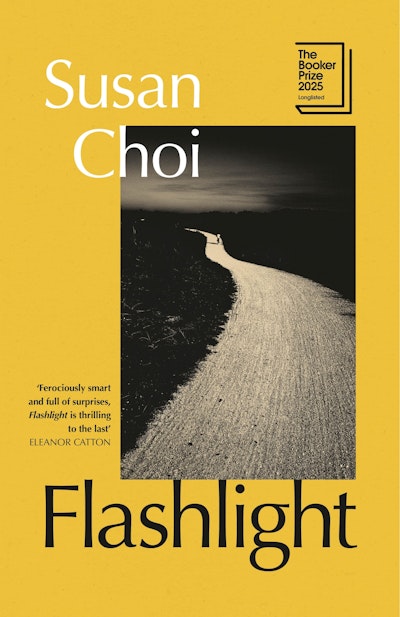
It’s ironic that often the books that impress me the most are the ones that I delay writing about. I want the story to percolate for a while, and to really craft my response to it – and then by the time I get round to writing a blog post, it has all faded and I can’t remember enough details. However, in this case, the details (and even the plot) don’t really matter because I wouldn’t tell you about them anyway. For me, one of the real joys of this book was that I really didn’t know where it was going to take me next and by the time I got to the end, I felt as if I had been on a very long journey that crossed time and national boundaries. It’s a mystery, domestic fiction, historical fiction all rolled into one. I really enjoyed it but it really is impossible to talk about it in detail without spoiling it for you.
Suffice to say that it spans the years 1945 to 2008 across Korea, Japan and the United States, with a cast of inscrutable characters. It is based around a family: American born Louisa; her Korean-born father Serk who had been raised in Japan before emigrating to America; her mother Anne, estranged from her family and Anne’s illegitimate son Tobias who re-enters his mother’s life as an adult. There’s defiance and stubbornness, coldness and detachment, as well as a suffocating over-solicitousness and emotional games between the adults of the family. But if you’re someone who feels that you have to like a character, you’re going to be challenged because none of them are particularly likeable.
There are so many themes that come through here: secrecy and shame; language and communication; nationality; belonging; family; identity. They are never once mentioned as themes, but they emerge through the narrative and plot.
The title ‘Flashlight’ is well chosen, not just for the ‘ray of light’ motif that appears throughout the narrative, but also for the writing style. The omniscient third-person narrator moves from one character to another, but unlike many recent books that I have read that barely alight on one character before bouncing off onto the next one, this book stayed with each character for long enough that you felt you knew them, and at least can understand their perspective, even if you don’t share it. In fact, as readers, we know the characters better than the characters know each other, or than the characters even know themselves. Although there are connections between each character and the others, the emphasis is on one character at a time, in the same way that a flashlight can only illuminate one thing in isolation.
It is a long book- 445 pages- but I didn’t feel that it dragged. But perhaps that’s because I’m interested in Korean history: I know that other people in the Reading Circle did feel that it was far too long. It’s ambitious; it has a big story; the writer is control throughout and she takes responsibility for her story, instead of expecting the reader to put the bits together.
If there’s any disappointment here, it’s with myself. I know that I haven’t done justice to this book, because the surprises in the plot are the real strength of the narrative. All I can say is, read it for yourself.
My rating: 9/10
Read because: March selection for the Ivanhoe Reading Circle.

