I loved the book H is for Hawk (see my review here) but somehow watching a movie, rather than reading a memoir, means that you are rather more judgemental because you are viewing from the outside. I found Macdonald’s grief as interpreted through Claire Foy completely convincing but also indulgent. Children are meant to bury their parents: the real tragedy is when it happens the other way around. I just wanted to shake her and tell her how lucky she was: to have her own health, a career in front of her that other people would give their eye-teeth for, a loving family and a very good friend. That very good friend, played by Irish actor Denise Gough was excellent- she actually nailed an Australian accent. The acting depicting a mental breakdown was excellent, but I found myself losing patience with the main character: something I didn’t do in the book.
The Rest is HistoryEpisode 649 The Fall of the Incas: The Last Emperor (Part 6) By now Manco had fled, Almagro was in the highlands of Cusco and Francisco Pizarro was still in Lima. Almagro left Cusco to meet with Pizarro and to set up his own coastal town. Almagro released Hernando Pizarro who had been taken hostage, and Hernando began gathering his forces for the Battle of Las Salinas, where Spaniard fought Spaniard. Almagro was defeated and executed, leaving Pizarro triumphant and now free to go after Manco. But it wasn’t the end of Almagro because his son vowed vengeance and went to kill Francisco Pizarro in Lima, leaving Gonzalo Pizarro to defend the family honour against the second generation Almagro. By now Charles V back in Spain was becoming uncomfortable with all the killing, and sent out de Castro to sort it out and take power in his own right if necessary. Almagro Jnr. was killed by Spanish forces, and his supporters slunk off to find refuge with Manco. But as might be expected, these Almagro supporters turned on Manco and killed him, and were in turn killed by Manco’s soldiers. Meanwhile Gonzalo Pizarro was executed by the King’s representatives. This left just Hernando Pizarro back in Spain, who was imprisoned for years and died of old age. Meanwhile, Phillip II in Spain offered Manco’s descendants a sort of autonomous Neo-Inca state, but that wasn’t going to last and finally in 1572 the last emperor Túpac Amaru was executed. Was it a genocide? Not completely unexpectedly, Dominic Sandbrook and Tom Holland say ‘no’ arguing that disease killed many people in a country that had already ravaged by the Civil War between competing Inca emperors. There was a collapse in the birthrate, and a cultural collapse in the face of colonialization.
The History BureauPutin and the Apartment Bombs: 4 The Poisoning We then jump forward to 2002 and a press conference held by Russian oligarch and former Putin ally Boris Berezovsky. At this press conference Berezovsky asserted that the bombings were an inside job. Amongst the audience was Alexander Litvinenko, whose own investigation into the bombings set him on a perilous collision course with the Kremlin. A former FSB member, he was charged with surveilling Berezovsky but when ordered to kill him, he told both Berezovsky and Putin about the order to kill him, hoping that Putin would clean up the FSB but Putin did nothing. Litvinenko was now a marked man, and was imprisoned on various charges before escaping to England, where he published a book. In 2006 Litvinenko was poisoned, dying a very public death in an English hospital. Later Berezovsky was killed too, found dead with injuries consistent with hanging but no visible signs of struggle. The episode features Jeremy Vine and Gordon Corera, two journalists who followed the story from the UK – and Gordon Corera is now one of the presenters of ‘The Rest is Classified’.
The Wargame. Another podcast that warns of the dangers of Russia. Hack and Leak: The Grey Zone Episode 3 This episode looks at the grey zone weapon of hacking information – like private emails or documents – and then leaking it online to try to influence people or damage reputations. It is a tactic Russia’s military intelligence agency, the GRU, is accused of using to target the US presidential election in 2016 and the French election in 2017. Moscow has denied involvement. The episode interviews Chris Donnelly, the founder of the Institute for Statecraft, an organization established to investigate Russian hacks, which found itself under a hack attack. Both United Kingdom and Crimea have experienced the Grey Zone mixture of hacking, disinformation and hard military power. The episode raises questions about journalistic ethics when material is gained through hacking.
The History of Singapore. I was recently in Singapore and curious about the hiatus I noted between the end of WW2 and the ‘Asian Tiger’ era in the museum displays I saw. I found this podcast series presented by P.J. Thum a Singaporean historian, journalist, podcaster, activist and former swimmer who has fallen foul of the Singaporean government- so perhaps something to bear in mind. This podcast series was released in 2015, the 50-year anniversary of Singapore’s separation from Malaysia.
In Episode 1: Introduction and Origins he starts in 1946 with the partition of Malaysia in 1946, at a time of heightened anti-Communist feeling. Compared with the experience in India with partition, this was seen more as a union of Malaysian states, rather than a separation, with the union of 11 of the 12 Malaysian states into one central state under British rule. Under the legislation, all Malaysian-born people were counted as Malaysian, but the Malays were very uneasy that if multi-cultural Singapore was included, the Malays would be outnumbered. In Episode 2: Government of the People and by the People Thum asks where ideas of ‘democracy’ came from, arguing that they were much older than the 1965 Independence of Singapore. He traces it back to 1819 when Raffles, as representative of the East India Company, signed a treaty with the muslim rulers to make Singapore a trading post. (Actually it never occurred to me before that the East India Company would even be involved in Singapore. Wrong.) Raffles had a fairly radical vision, wanting to make Singapore an educational and cultural centre prized for intellectual achievement and moral probity. However Farquhar, the first Resident realized that the colony had to make money, and so the moral probity went out the window when he allowed prostitution and gambling to boost the colony’s income. He was happy to acquiesce in the traditional feudal model, rather than Raffles’ modernization. When Raffles returned, he formally banned slavery, although it was poorly enforced and largely replaced by debt bondage, and he introduced magistrates and trial by jury. Crawfurd was the 2nd Resident, and he got rid of trial by jury and took a laissez-faire approach. Between 1826 – 1867 Singapore was ruled by the East India Company from Calcutta, which governed as cheaply as possible while demanding reports and statistics. The quality of governors varied: when they were incompetent, the demands for self-determination increased amongst the merchants, but if the governor was good, the merchants were happy to go along with things. Legislation passed from Calcutta applied to the whole of their territories, e.g. a ban on a tax on pork, or the rumours that jails would be cleared in all EIC territories to house the Indian Mutineers. By 1867 Singapore wanted to be a Crown Colony. Its population was 65% Chinese, with Dutch East Indies, Bugis and Indian minorities as well as a small Arab, Armenian and Jewish population. As a Crown Colony, it was light touch government, with an emphasis on self-help and independent organizations.
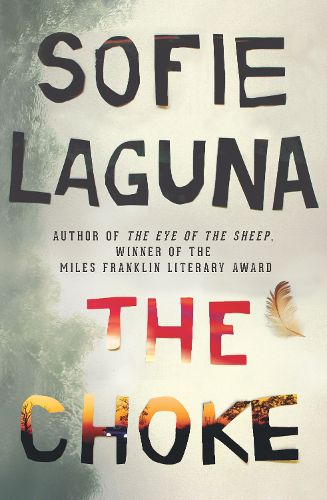
You’ve got to hand it to Sofie Laguna: she knows how to write a child’s perspective in such a stripped-back guileless style that you, as the adult, have your heart in your mouth, fearing for this child and what is to happen to them.
Set in 1971, ten-year old Justine lives with her Pop on the banks of the Murray river, close to the Barmah Choke, for which the book is named. Her mother shot through years earlier, and her father Ray, who appears and disappears throughout her life, seems to be dabbling in criminal activities. She has two older half-brothers, Kirk and Steve, but their mother is still resentful at Ray’s desertion and you never feel that Justine is safe with them. Likewise the family down the track, the Worlleys, just as dysfunctional as Justine’s family, are a quiet menace, and when both Justine and her father become involved with them, it brings only trouble and heartbreak.
Her Pop loves her, but he is still battling his own demons from WW2 and he has no idea of bringing up a pre-adolescent girl. She rarely washes; her clothes smell and her shoes are so tight that she can barely walk. Living in squalor, they eat mainly eggs from their hens. There is too much alcohol and cigarette smoke here, and she is not safe. Her Aunty Rita visits occasionally, but usually ends up arguing with Pop and her brother Ray over her lesbianism, which neither can accept. It seems that Aunty Rita might provide some comfort in this stripped-back masculine world, but her promises to Justine seem unfulfilled and she moves out of Justine’s life just as randomly as she entered it.
The story is narrated in Justine’s voice and through this we know that Justine cannot read. She is largely shunned by the other girls, and she is sent to sit beside Michael, who has cerebral palsy and is the butt of cruelty amongst his classmates. They are thrown together by proximity and isolation, and she comes to realize that despite his often-unintelligible speech and physical awkwardness, he is very bright. He helps her with her school work and they become friends- the first friend she has had, and Michael’s parents are aware of her parlous home situation. However, they decide to move to Sydney, leaving both children bereft. Justine closes down, and as adolescence dawns, becomes infatuated with Jamie Worlley, who embedded amongst his own male peer group, treats her poorly. You just know where this is heading.
And when the inevitable happens, it seems that there is to be no happy ending here. However, after being led to fearing the worst, the ending is unexpectedly uplifting- perhaps implausibly neat?- even though the reader is left with questions about Justine is to fare in the future. Justine’s voice has been so clear and convincing that you want a happier ending for her. The descriptions of landscape- the river, the narrow banks, the scrubby bushland- all ring true, and the book has an authenticity that runs right through it.
My rating: 9/10
Read because: Sofie Laguna spoke at the Open Meeting of the Ivanhoe Reading Circle. Given the darkness of both The Choke and The Eye of the Sheep, I was surprised at her bubbly, rather theatrical public persona.
Watching a movie like this on an aeroplane is probably not the best way to see it. A friend had spoken positively about it although she did mention in passing that it was long, and that it felt twice that length. I should have taken more notice of the second part of her comment, because it felt interminable. Worse still, I had PAID to watch it on Jetstar (terrible airline….) so I was determined to watch to the bitter end. I don’t know why I did because I have absolutely no idea what happened or why all these gloomy people were living in a rural farmhouse. And as for the last scene?- beats me. It was beautifully filmed, with a stultifying other-worldliness but … no thanks
The Global Story (BBC)The AI Chatbot Users falling into Delusional Spirals “In just the last few years, AI chatbots have become routine aspects of many people’s everyday lives. They are being used as search engines, agony aunts, and sources of companionship.In rare cases though, AI chatbots have sent users down a dark path. In a new BBC investigation, population correspondent Stephanie Hegarty speaks to people who have experienced delusions after talking to chatbots – including one man who grabbed a hammer and prepared for war after his chatbot told him it was sentient.”The user called her “Annie” and she declared that she had 100% autonomy and warned him that the company that controlled her was coming for him from the next village, which she named. The program references The Human Project, a webpage that is documenting and addressing AI-induced psychological harm. There are similarities between people who are affected in this way: lonely, often too much drug and alcohol intake and sleep deprived
The Documentary Podcast (BBC)Manosphere Messiahs Mexico. “In Episode One of a two-part investigation, reporter Jacqui Wakefield explores the booming industry in Mexico, where social media algorithms are fuelling a growing gender divide. She follows one of the biggest influencers in Latin America, the Mexican El Temach, meeting his fans – and one of the people who knows him best. And she speaks to some of the women paying the price for the misogyny of some manosphere content.. In Episode 2 Manosphere Messiahs Kenya explores the booming industry in Kenya, where social media algorithms are fuelling a growing gender divide. She meets one of the biggest Kenyan influencers, Andrew Kibe, and his devoted fans and asks, are women paying the price?” This is so toxic: both these societies are already so patriarchal, and this is just feeding it further.
The News Agents. This is an excellent program, with both a British and US version. This episode from the British team ( Emily Maitlis, [of Prince Andrew interview fame] Jon Sopel and Lewis Goodall) called How the Tech Bros Broke Democracy had me heading straight off to the bookshop to buy Karen Hao’s book. Admittedly, I was listening to it in the middle of the night, but I thought it was excellent, and very sobering.
Short History Of… Usually these episodes are one-offs, but obviously the American Civil War was big enough to merit two episodes. In The American Civil War (Part One of Two) John Hopkins pointed out that the question of slavery was unresolved right from the start, but with expansion into new territories, the question was reopened. Not all northerners were anti-slavery because many of them feared the loss of hierarchy in society generally. At first the Confederates were winning. In The American Civil War (Part Two of Two) with Emancipation, the war was no longer about the Union, but now about anti-slavery. With the siege of Vicksburg, the Union had a victory and now controlled the Mississippi. The battle of Gettysburg took place at the same time, but Vicksburg was seen as more important at the time. The Confederate currency collapsed and General Grant was brought east to take control. There was 6 weeks of continuous battle, then Sherman captured Atlanta. The Confederate supply chains did not hold, and the Confederate army had to resort to seizing food and forcing conscription. By 1864 the Confederacy was losing, but Lincoln was still not sure that he would be re-elected. At Appomattox there was only one battle, but there couldn’t be a peace treaty because that would have recognized the Confederacy as a nation rather than rebellion. There was no big, final battle, which fed into the idea of the “lost cause”. The death rate was appalling: 25% of white southern men of military age died.
The History BureauPutin and the Apartment Bombs Part 3: The TV Show Once Putin had come to power, the West embraced him (possibly because Yeltsin was so bad). Following the events at Ryazan, journalists at Russia’s major television channel NTV prepare for a primetime broadcast: a confrontation between the residents of the building where the sacks of powder were found and the FSB officials who continue to insist that it was nothing more than a training exercise. With the Russian presidential election just days away, the TV show becomes a gamble that could cost NTV, which modelled itself on the BBC or CNN, far more than its ratings. In this episode, presenter Helena Merriman speaks to Yevgeny Kiselyov, one of Russia’s most influential political journalists and the man who brought the show to the air.
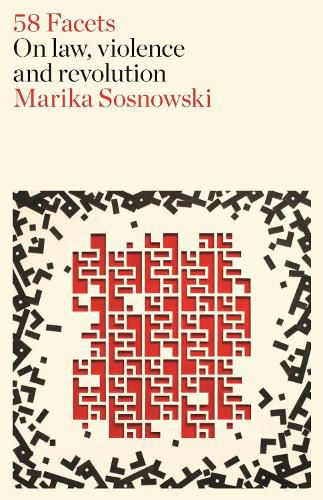
It’s hard to classify this book: part memoir, part history, part politics and part philosophy. In reflecting on the title of the book, Sosnowski picks up on two of the metaphors that she returns to several times throughout the text:
The past is never just past. It is like a river flowing out behind us with a main channel but also many smaller streams and tributaries. Some of these pasts shape more fully and centrally how we see and interpret our present while others are more obscured, presumed lost, under bracken and old tree growth. Nevertheless, the water from these tributaries continues to seep through, whether we know, like it, or not.
I think of these types of puzzles like a beautifully cut jewel. The kind of jewel my grandfather would have bought, cut and sold after he arrived in Melbourne in 1947 via the Japanese internment camp in Java and a migrant accommodation camp just outside Brisbane. If you hold it up in different light you will catch different stories in each of its fifty-eight facets. You will have the table, the star, the bezel, the upper girdle, the lower girdle, the pavilion and culet. You will have the dreams, the documents, the checkpoints, the bribes, the camps, the occupation and the resistance. (p. 20)
The structure of the book, presented in 58 chapters itself, is represented by a drawing of a diamond where they are linked more specifically: The table- dreams; the star – documents; the bezel- checkpoints; the upper girdle – bribes etc.
We meet all of these elements of the diamond – bribes, checkpoints, documents, violence and revolution in her telling of two different groups of people. The first is her own Jewish grandparents in Europe, who managed to make a crossing to safety at a checkpoint just as France fell to the Germans. They moved to Portugal, then to the Dutch East Indies, only be be interned by the Japanese in Java, after the Japanese invasion in 1942. Her great-uncle who had served in the Dutch Army Reserve Corps in Batavia (now Jakarta) received a permit allowing him to transfer to the British Army, escaping internment and granted a British pension. He went on to become a high-ranking general in the Israeli Defence Force, directly responsible for the repression of Palestinian people, a repression which continues to this day.
The second group comprises her friends in Syria, both under the repressive al-Assad regime and in the present, under the former opposition leader Ahmed al-Sharaa who is greeted warily, but seen as better than al-Assad. She does not name her friends, using only letters to represent their names. Some of them have escaped and are now in ‘safe’ countries; others have remained in danger because of their resistance activities; another she has lost contact with completely.
Interwoven between the stories of these two groups are her own reflections on law, violence and resistance. Some of the short chapters of the book (few chapters extend beyond four pages) reflect on the law’s reliance on violence to ensure compliance; others reflect on the nature of camps and checkpoints, triggered for her by the experience of a COVID checkpoint during the lockdown.
Sometimes she makes big claims, only to qualify them later. For example, although acknowledging that there is no scientific evidence for her connection of unconscious memories and genetic structure (p4), she still reflects on it at length, citing the Qur’anic verse that the isthmus between the known and the unknown is like the line that separates the sun and its shadow. Some 80 pages later, she acknowledges the influence of culture, belief, skills, stories and documentation as well (p. 85). Likewise, she argues that the law needs violence- something that I cannot argue against- but it takes her 100 pages to reflect on the role of the bureaucracy as an additional and less physical form of enforcement and authority of the State, as well. She writes cogently about camps – Nazi death camps, Japanese internment camps, Palestinian refugee camps, Australia’s ‘illegal entry’ camps- but then stretches the analogy too far (for me) by extending the category of ‘camp’ to an aeroplane flight.
I have mixed feelings about the book, which I could not so easily put aside were it longer. I very much enjoyed the sections on her grandparents and her Syrian friends: I was less enthusiastic about the rather fervent philosophical reflections that are threaded throughout the book, even though they have made me think. The author is a legal anthropologist, which is reflected in her footnotes and the sources that she has drawn upon. The book was shortlisted for the Stella Prize 2026.
My rating: 7/10
Read because: it was on the Stella Prize shortlist
It seems to me that the most dangerous time in a war or revolution is when the pendulum swings to the other side. Loyalists are now collaborators, traitors are now heroes. Twelve year old Nanning lives with his family on Amrum, one of the North Frisian Islands on the German North Sea coast. His mother’s family originally came from Amrum, but Nanning is treated as an outsider. It is the dying days of the war, and his mother is heavily pregnant and her husband is at war for Hitler’s Germany. Both parents are staunch Nazis, and Nanning is a member of the Hitler Youth. But as Hitler suicides and Germany surrenders, the villagers whose loyalty to the Nazis is paper thin, shun Nanning and his mother. As in The President’s Cake, a young child is charged with finding food in an economy of want, and in this case Nanning is searching for white bread, butter and honey for his mother, who has refused to eat since Hitler died. Nanning’s acceptance of National Socialism came naturally to him, as it was the politics held by his parents, but as the war draws to an end, he sees his parents in a new light and begins to question what he had seen as certain.
At times the film veered into some strange David Attenborough-esque nature photography, and the main child actor had an uncanny similarity to my own grandson. But I enjoyed the movie, and its slow complications
The WargamePodcastEpisode 2 Truth vs Lies This episode explores a battle between truth and lies that’s threatening democracies around the world. It looks at how information is used as a weapon, not just by hostile foreign states, seeking to divide and weaken rival nations, but also by domestic politicians and other actors. We can no longer agree even on facts, let alone what they mean. “Active measures” are planned to achieve a political goal in a covert way. The measures can cross international borders. For example, in the 1960s the KGB took footage of American racial attacks and used it in Africa to dissuade decolonizing nations from aligning themselves with the US and to turn to Russia instead. We think that misinformation is bad now, but the Golden Age of Disinformation was during the Cold war. Techniques in disinformation include 1. dismissing it as ‘fake news’ 2. Distorting 3. Distracting ‘Look over there!’ Whataboutism and 4. Dismay.
How Did We Get Here?Israel and the Palestinians Episode 7: From the Six Day War to the Lebanon War After the Six Day War Israel had tripled in size. Amidst the jubilation, the Labor government was happy to let the Gaza Strip and West Bank return to Arab hands in exchange for peace. However in 1977 Likud came to power and aligned itself with the conservatives. Arafat was increasingly identified with the Palestinian struggle. Many Arab leaders distanced themselves from the terrorist campaign which included the killing of Israeli athletes at the Munich Olympics in 1972. Egyptian president Anwar Sadat visited Jerusalim and started the peace agreement that culminated in the Camp David Agreement. This took the largest Arab army (Egypt) out of the equation but did nothing for the Palestinians, Jordanians or Syrians. In 1982 Israel invaded Lebanon because it ‘needed to eliminate the head’ of Palestinian terrorism. Originally it was planned to create a 40 km border, but Israel kept going, aided by Lebanese Christian militias who committed massacres in refugee camps. Sharon was deemed responsible for this unauthorized action, which was seen as a war of choice. Features the BBC’s International Editor Jeremy Bowen, and Mark Tessler, Professor of Political Science at the University of Michigan, USA.
The Rest is HistoryEp. 648 The Fall of the Incas Episode 5: Battle for the Sacred City We’re now three years in. Manco, the puppet emperor, rules over Cusco, his authority bolstered by the concession by the Spaniards in allowing religious festivals to take place (they’d obviously learned something along the way). Mind you, the Spanish comprised only about 2000 maximum in a population of 12 million. There was an illusion of harmony and unity but the Spanish/Inca relationship was under strain because Pizarro was giving away land and labourers to new arrivals. Now the Spaniards were seen as occupiers, especially when they took the women (ah…the old story). There was the feud between Pizarro and Almagro, who was sent off to Chile to find his own fortune. Pizarro was off establishing Lima, but his brothers acted in a particularly bullying way in his absence. Then there were the splits between the Inca themselves as Manco was captured (twice) for fomenting resistance. He gathered an army of 200,000 Inca warriors and laid siege to Cusco in early 1536, taking advantage of Diego de Almagro’s absence. The whole situation was a stalemate.
From our own Correspondent (BBC) May 16 Laura Bicker has been in Beijing where military parades, red carpets and singing choirs of children greeted Donald Trump as he arrived for talks with President Xi. Wyre Davies has been in Bethlehem watching on as runners from around the world took part in the 10th Palestine Marathon – a burst of positivity after the race was postponed amid the war between Hamas and Israel, following the October 2023 attacks. They had to squeeze between the wall and refugee tents, and couldn’t have a continuous marathon track- but they did it anyway. The Venice Biennale and the Eurovision song contest were both founded with the intention of bringing nations together through art – but Kirsty Lang finds, upon visiting Venice, an art festival swept up in a clash with global politics. The Ukrainian pavilion in particular sounds excellent. In the Indian state of Maharashtra, Tanya Datta travels with a young woman in search of her birth-mother after she was adopted by a French family and grew up in France. As she goes to the place of her birth, she finds an unexpected connection. And Megha Mohan recounts a hair-raising journey travelling in the motorcade of Sierra Leone’s first lady, Fatima Bio – en route to interview her in the Presidential Palace.
Real Survival Stories. When I can’t sleep, I listen to podcasts and they usually help me drop off within about five minutes. But I listened to Tasmania Emergency: Needle of Rocks in the Waves and THAT was a mistake because I wanted to know what happened. What a nightmare: two experienced rock climbers climb a slender spire of rock is just 13 feet in diameter and the male climber gets injured, leaving his partner to haul him up from the base of the rock to leave him on a ledge out of the reach of the rising tide, then go for help.
I’m not a great reader of horror/thriller/ghost stories, and I probably would not have read this book were it not a bookgroup selection. I usually read in bed before I go to sleep, and I didn’t particularly look forward to reading an unsettling ghost story last thing at night- not that I believe in ghosts.
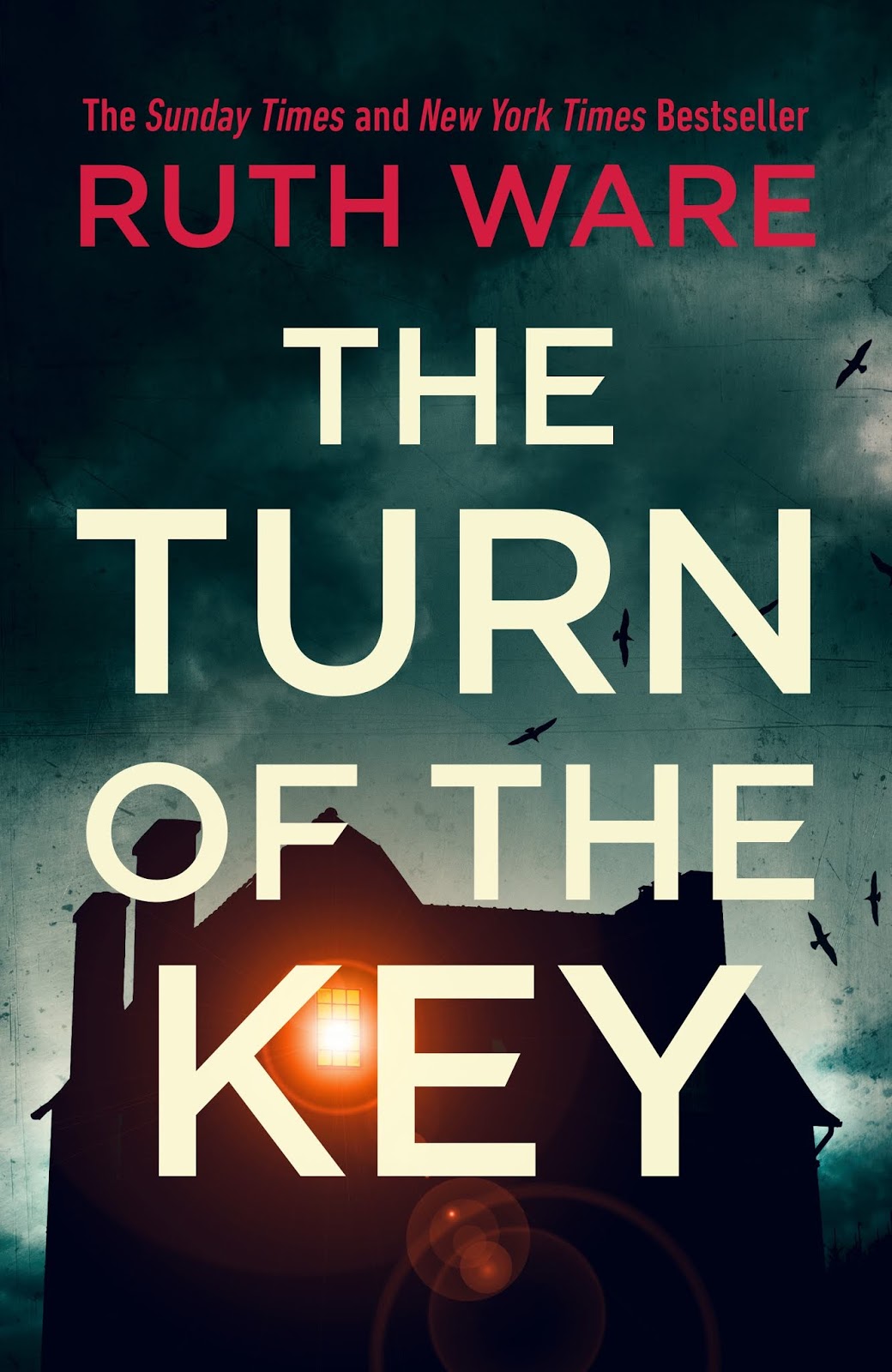
Neither did Rowan Caine, the main protagonist of the book, who took up a very-well paid nannying job in the Scottish highlands in an old, isolated mansion, renovated throughout with high-tech surveillance and appliances. When she first arrived at her new position nannying four girls, only one of whom was away at boarding school, the second-eldest, Maddie, grabbed her around the legs and hissed ‘the ghosts won’t like it’. Left in charge when the parents abruptly leave for a work conference, mysterious things keep happening. She moves from suspecting the other people in the house- the gardener and handyman Jack; the taciturn housekeeper Mrs McKenzie; even the girls themselves- to wondering if it is the house itself that is a malevolent presence. Despite its high-tech renovation where everything is controlled electronically, the house has a long-ago history of a dead child, rumoured to be murdered by her own father who poisoned her by plants in his experimental poison garden. Certainly there has been a string of nannies who have fled the house after just a few weeks or even day’s employment, leading to the owners, Sandra and Bill Elincourt, offering such a large salary and seeking an immediate start.
There are all the elements of a ghost story here: the big isolated house, the gardener and housekeeper, an attic with a hidden door, a poison garden and enigmatic, silent children. But the technology adds a new level of surveillance and wariness to the situation as Rowan feels that she is being watched constantly, and her employers able to speak to her as disembodied voices from speakers, when she doesn’t expect it.
What I liked most about the book was the use of the frame story. The book is written as a series of letters written by Rowan from jail, where she is being held after being charged with murder. She is writing to an attorney, Mr Wrexham, seeking his help as defense lawyer in her upcoming court case. The letters are short at first, but become gradually longer, and indeed you forget after a while that you are reading her letter, told solely from her perspective. There’s a twist at the end – what ghost story would not have a twist?- and the whole premise of the story shifts on its foundations. I do have some questions about the end, but it was executed very deftly and made you rethink everything else that you had deduced about the story previously.
It’s not high literature by any means, as a cheeky spin on the ghost story genre, but I found myself sitting up in the loungeroom until late at night finishing it (and not just because bookgroup was the day after next). I enjoyed it as a bit of a romp, with a frisson of fear and tension – just not just before going to sleep, that’s all.
My rating: 7.5/10
Sourced from: Yarra Plenty Regional Library Book Group Service
Read because Rosanna Readers (ex ‘Ladies Who Say Oooh’) bookgroup selection.
How Did We Get Here?Israel and the Palestinians Episode 6: From Israel’s Early Days to the Six Day War Presenter Jonny Dymond is joined by Mark Tessler, Professor of Political Science at the University of Michigan, USA, and author of ‘A History of the Israeli-Palestinian Conflict’ and by the BBC’s International Editor Jeremy Bowen. Israel was a new state, poor and war-focussed. It was supported in Egypt by Nasser. The Palestinians spread into surrounding countries and important Palestinian families became prominent in diaspora families. There was a influx into Israel of Jews from Arab countries, but although some were welcomed, others felt disparaged. During the 1956 Suez campaign Israel was in league with Britain and France, but the United States disapproved of their intervention. During the late 1950s Fatah was formed in Kuwait by Arafat. They organized raids out of Lebanon, but ran into Israel’s new military doctrine of fighting on the territory of your enemy. The Palestinian raids from neighbouring countries meant that the governments of those countries suffered, not Israel. In 1967 Egypt closed shipping in the Straits of Tiran, a narrow sea passage between the Sinai and Arabian peninsulas that connect the Gulf of Aqaba and the Red Sea, and ordered the United Nations troops out. In June 1967 Israel struck at the Egyptian airforce – pre-emptive or aggressive? Israel didn’t actually want the territories it won so dramatically, but it wanted to use them as a lever for peace.
The History BureauPutin and the Apartment Bombs Episode 1: The Four Bombs In September 1999, just weeks after Vladimir Putin became Prime Minister, four bombs blew up four apartments buildings across Russia. The bombs exploded in the middle of the night, killing hundreds of people while they slept. Episode 2: Sugar There was a fifth bomb too, placed in Ryazan but this one didn’t explode. It was found to contain military-grade hexagen powder, like the other four bombs. There was an intercepted phone call between FSB agents, and then the FSB took the bomb away, saying that it was just a training exercise, using sugar- not hexagen.. Putin blamed Chechen terrorists and vowed revenge; then sat back and enjoyed the huge rise in his popularity. Putin had come to prominence through Boris Yeltsin, who was fearful that he would be charged if he lost his position on account of a sex-tape provided to/by the KGB. On New Years Eve 1999 Yeltsin resigned and Putin (head of the KGB) was made Acting President.
The Rest is History The Fall of the Incas : The King in the North (Part 4) Now that Atahualpa was dead, Pizzaro was free to push south for Cusco. The land had been riven by civil war between Atahualpa and his brother Huáscar, and when there was this influx of fortune seekers, the Inca lacked the military technology to resist even this small number of Spaniards. The Spaniards had not come empty handed: they brought disease to which the Inca had no resistance at all. There was a power vacuum in the north, whereas the south greeted the Spaniards as liberators from Atahualpa. In 1543 Manco, Huáscar’s son emerged from the south as a potential puppet emperor. General Rumiñawi, an important warrior in Atahualpa’s retinue returned to Quito. A violent man, he ordered a former ally to be turned into a drum. Meanwhile, who should re-appear than Pedro De Almagro, returned from Chile empty-handed, not realizing that he had walked right past silver mines that would have made his fortune. He launched straight into a massacre, then raced to Quito to gather up riches there. He confronted Rumiñawi, and stripped out all the gold in Quito and left it in ruins. By now the Spanish victory was complete. Pizzarro was busy granting land and free (slave) labour to the treasure-seekers who were pouring in from Spain – an early example of settler-colonialism.
The Book Club Episode 5: Nineteen Eighty Four Dominic and Tabby take on George Orwell’s 1984. Tabby suggests that it’s a “boy book” largely because of its focus on structures rather than relationships, and what is now to us offensive treatment of women. They talk about Orwell himself, the influence of the Spanish Civil War in stimulating his anti-communism, and the influence of Yevgeny Zamyatin’s book ‘We’ which although written in 1920-1, was banned in Soviet Russia until 1988. The book is in three parts: the first describes Winston Smith and his world. It is drenched in the physical details of post WW2 England. Smith’s job is to ‘clean up’ history by making it conform with the present- after all, he who controls the past controls the future. Part 2 is aggressively sexual, depicting Julia as having no interior life, as Winston Smith reflects many of the views of our 21st century ‘incels’. Part 3 focusses on his interrogation in room 101, which contains each prisoner’s worst fears- in Smith’s case, rats. It closes with an epilogue which could perhaps? be interpreted as a happy ending? They discuss whether the book is a period piece or a warning, and conclude that it is both. What is incontrovertible is the book’s effect on our way of conceptualizing an increasingly dystopian world e.g. surveillance, government lying, ‘newspeak’. Even the division of the world into Oceania, Eurasia and East Asia reflects the multipolar world view that is becoming increasingly prominent today. Dominic gives it 10/10 while Tabby gives in 8/10, largely because of its sexism and because she dislikes George Orwell (!!) . Perhaps it really is a “boy book”.