Tag Archives: life

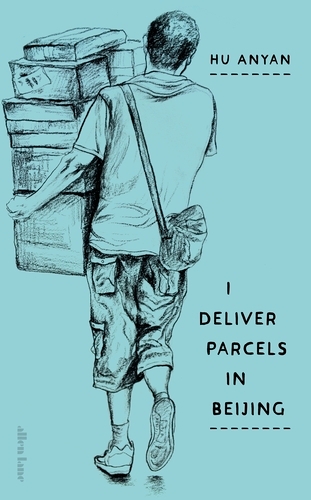
‘I Deliver Parcels in Beijing’ by Hu Anyan

2025,319 p.

Translated by Jack Hargreaves 2025

What a strange book. I picked it up because I had heard that it was a best seller in China, and I was curious to know why. To be honest, having finished it, I still don’t know why this memoir was such a runaway success there, and who its Chinese readers might be.

The story itself is quite simple. The author is a young college-graduate who moves from home to take up a series of poorly-paid unskilled positions over a twenty-year period. His jobs include working in a logistics firm unpacking and packing items, delivering parcels for several courier companies, working in a hotel restaurant, selling bicycles, doing computer-aided artwork on comics, working in a bakery and working in his own companies selling clothes in a shopping mall. As he shifts from province to province seeking work, his accommodation often consists of an apartment partitioned into 5 sq metre ‘rooms’ with only space for a bed and a desk with shared bathroom facilities and only sometimes kitchen facilities. Sometimes he sleeps at the workplace. When working at the bicycle shop, for a 72 hour week, his rent was 1500 yuan per month, leaving him 2000 yuan per month to live on. In some of his jobs, food was provided, although often it was food that was left over. In the logistics job, the work statistics are so harsh that there is no time for toilet breaks and the temperature is so high that he sweats continuously. The hours are punishingly long. The courier job has expectations of customer service while at the same time offering such a pittance that compliance with any customer request puts him out of pocket. Companies take advantage of a three-day unpaid trial period, sometimes there is medical insurance and sometimes not, and employers take any opportunity to ‘stiff’ their workers. Amongst his co-workers he witnesses theft and dishonesty, but says nothing because he has to work alongside them. As he says:

The moral of the this story: When disgruntled, the lowly among us only have each other to pick on, because going after the powerful will only cost us in the end. (p. 202)

I see that the author was born in 1979, in the wake of the Cultural Revolution and at the start of Deng Xiaoping’s economic reforms that took China from a command economy to a market economy. He mentions a sister only once, but he does speak quite a bit about his parents. I found myself wondering how parents from such a starkly different type of economy would advise and equip their children to work in a new economy, unlike anything they had known (much like us as parents and grandparents parenting children who will work in an AI economy that is foreign to us).

My parents had only ever taught me to be kind to others. They failed to mention I also had to stick up for my own interests…Maybe because nobody had ever sat me known to talk it through before. My parents wouldn’t go near the topic. They had spent their whole lives in the same work units; the market economy was completely alien to them. …The thing was, my family was from out of town and had no relatives that lived nearby. My parents are unsociable folk, too. (p. 198)… I was starting to feel like my parents were to blame for all the rotten luck I had with people and work. They should have warned me. Their lessons on how to act had zero grounding in this world. They had said nothing about going after what I wanted, only that I should be frugal. What they told me was the wrong way to behave was exactly how everybody was behaving, and society wasn’t punishing them for it but rewarding the, and not just rewarding them, punishing me (p. 222)

Nonetheless, he did have his parents as a fall-back. Burnt out by the culture of exploitation and competitiveness, intimidated by the effort of having to interact with other people and yearning to have time to read and write, he returns to his parents’ home and in his own words, stays indoors for almost two years (p. 264). He later borrows money from them to set up one of his ultimately unsuccessful businesses. He does have a couple of girlfriends: indeed, it is because he wants to be with one of his girlfriends that he shifts from Guandong Province in 2018 to Beijing. He breaks up with another girlfriend when he is living and working in the store in Nanning, and she shifts overseas. He does not have friends, beyond his workmates and at work he is just as likely to make enemies as friends. I found myself wondering if his flight back to his parents’ home was an early example of tang ping, or lying flat culture, a rejection of societal pressure to over-work, a phenomenon in China particularly after COVID.

The structure of the book is unusual and rather hard to follow with a rather strange arrangement of chapters. The book sprang from a blog post written in 2020 (Chapter 2?) so perhaps that might explain why it is structured as it is. His story starts off in 2017 while he is working in Foshan as a package handler, but the chapter is written when he has been in Beijing for three years. The second chapter focuses on his time as a delivery worker in Beijing, followed his work in a convenience store, then in a neighbouring bike shop in Shanghai in Chapter 3. Chapter 4 is headed ‘Other Jobs I’ve Had’ where he lists jobs 1-8 (1: waiter 2: clothing store assistant 3: gas station attendant 4: fast food chain delivery 5: popsicle wholesaler 6: 3D architectural renderings 7: comic book artist 8: graphic designer for a startup magazine about anime). Jobs 9-11 were:

  • 9: copy shop attendant
  • 10: return to the anime magazine
  • 11: his own clothing store. He then has a lengthy section about writing and reading, complete with extracts from two pieces of his writing. He then continues with the job countdown-
  • 12: (2011) online store
  • 13: property management at a mall
  • 14: bakery shop
  • 15: deli stall
  • 16: selling rear view car cameras and car fresheners
  • 17: the logistics job described in Chapter 1 with D company
  • 18: parcel delivery with S Company
  • 19: parcel delivery with Pinjun Express, both described in Chapter 2.

In the closing pages of the book, as he loses his job with Pingun Express, he observes that he had alternated between two mutually exclusive states: working and writing. He tended to do either one or the other, spending half of his life free of work, and the other half consumed by it (p. 317). He considers the nature of “freedom”, which he considers a matter of consciousness, rather than of what you possess. He observes:

So, by freedom, I suppose I am referring to a personal pursuit of sorts, and self-realization through consciousness of our individual selves- the spiritual essence that differentiates one person from another. If more of us when after this kind of freedom, the world would be a more diverse, more inclusive, more equal and richer place. It would be all the more colorful. The pursuit of freedom is what shapes our individual trajectories, our personal goals, and stops us from having to vie for space on a single narrow path…Maybe it is something we can strive for but never quite attain, and maybe I will never reach it in my whole life, but that doesn’t matter. Because the pursuit is more precious than the attainment, and this holds true for every person and for the world as a whole- like our ideals and our convictions, it is the fulcrum of our lives, not their content (p. 315)

Is this valourization of freedom the appeal of the book to a Chinese audience, I wonder? I can’t even think of the word ‘freedom’ without hearing it come out of George W. Bush’s mouth, and it seems almost antithetical to the choreographed military displays in Tienanmen Square. Is the book’s popularity a somewhat subversive embrace of that? Or was the book a bestseller in China when the recipients of packages ordered online became curious about the lives of the people who delivered them to them? Or is the book popular with the tang ping generation, with him forging the way? At times the book reminded me of George Orwell’s Down and Out in London and Paris but this is no dilettante’s or journalist’s curiosity. The jobs came first and the writing emerged later, and it seems that the author is still oscillating between the two, without the choice to leave it all behind as Orwell did.

Most of all, it made me realize how little I know about China.

My rating: 7/10

Sourced from: Yarra Plenty Regional Library

Read because: I had read an article in the Guardian about it.
More challenges

Well, not only have I fallen behind with my Waking Up Challenges, but I’ve fallen behind in writing about them as well.

Day 5’s challenge was to sit it somewhere for five minutes and write down exactly what I saw,—objects, movement, colors, textures, light- then to write about what emotions or expectations might be influencing what I saw, and how. Well, I sat at my desk, the same desk that I’m typing this at. I have slimline venetian blinds, and so the light was being sliced up horizontally. What I could mostly see was mess: printoffs of music, little notes to myself, piles of folders, books I’ve read and haven’t decided what to do with. Around me, more piles of books and an assortment of ukuleles. My feelings about them all? Obligation and “I should”s. The one thing that made me smile was looking at my desk calendar which I had printed off with photographs of my grandchildren. Listening to the reflection that accompanied this challenge, I must be a person who sees through a glass darkly (which is not, I must admit, how I perceive myself). Or perhaps I should just clean up this desk (another should).

I skipped Day 6 but it looks interesting, and I might come back to that one.

Day 7 was called ‘Leveraging Boredom’ and the challenge was not to use my phone FOR A WHOLE DAY. Well, I soon decided that I couldn’t possibly do that, but what I could do was to not go onto social media, no Wordle, no Google, no Solitaire, You Tube or The Guardian website for a day. It was disturbingly difficult but I’ve been hating how much time I waste each day, especially at night when I get tired. So, instead of scrolling, I finished reading a book I’ve been enjoying and felt much better for doing so. Instead of watching TV and playing Solitaire at the same time, I actually watched the Foreign Correspondent episode I was watching.

Does it matter?

Day 3 of my Real Attention Challenge. Today I had to do one task about 80% as well as I otherwise would, and let that be good enough. Huh!

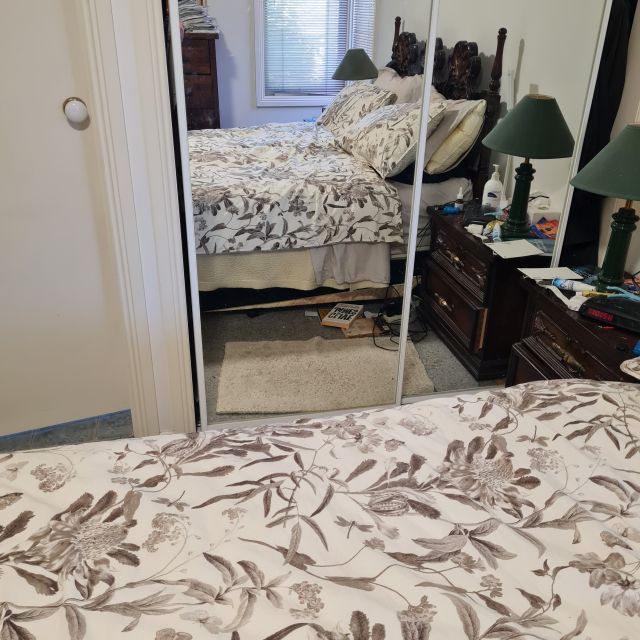
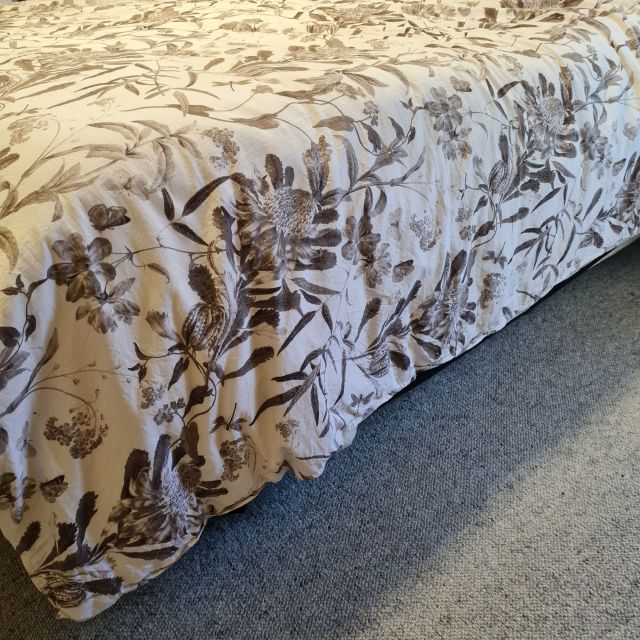
This is my bed. I loathe doonas: give me blankets any day. And don’t get me started on the absence of a top sheet in hotels. Layers, people, layers.

Anyway, we make the bed every morning: sheets (bottom and top), two blankets and a doona in a doona cover more for appearance than anything else. I tuck my blankets in, but Steve doesn’t. Worse still, you can see the blankets hanging out of the side of the bed reflected in the mirror because there’s never enough doona on his side. So every morning I spend a little while walking around the bed, making sure that the doona is even on both sides and tucking in any errant blankets on Steve’s side. I smooth out the wrinkles from the doona, and all is right with the world.

Did it matter? You bet it did. Every time I walked into the bedroom, I’d see the blankets hanging out of the side of the bed and it took every bit of self-control not to run round there, tuck them in and straighten up the doona. It put me in a bad mood for the whole day.

Then just to add insult to injury, I listened to the short reflection that went with this activity, where a man with a smooth voice rationalized his failure to wake up on time on a Saturday morning and get his kid out out of bed to go to kick-boxing by saying that it didn’t REALLY matter. Yes it did! You’re the father- show some responsibility! And if that kick-boxing instructor was a volunteer, that’s a million times worse. That’s the deal: you get your kid here on time, and I’ll teach him.

Does it matter? Yes.

Grrr. I don’t think this challenge is very good for me.

Trying something new

So, I’ve been subscribing to the ‘Waking Up’ meditation app for a few years now. This year they launched the Real Attention 14 Day challenge and I thought ‘why not?’ So Day 1 the challenge was ‘try something new’. Uff…something new. I am the ultimate creature of habit and it took me quite a while to think of something that I’d never done before. In the end I came up with two things

Something New Number 1: Go to Coburg Lake Park.

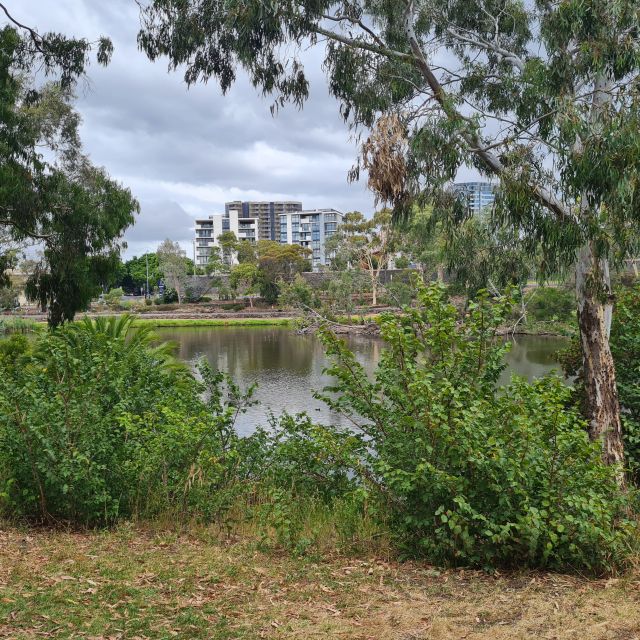
I must have driven past Coburg Lake dozens and dozens of times, but I’ve never actually been to it. It’s on Murray Road, opposite the old Pentridge Gaol which has now been redeveloped into highrise buildings, with shops, cinema etc. all enclosed within the bluestone walls of Pentridge, which can be seen on the other side of the lake in the photo above. I don’t know if I’d really like to live there: it’s just a little bit creepy. The lake is on the other side of the road from the gaol, and is reached by a bluestone bridge. Apparently Coburg had over 40 quarries in the 19th century, and this lake was constructed on the Merri Creek around the time of WW1.

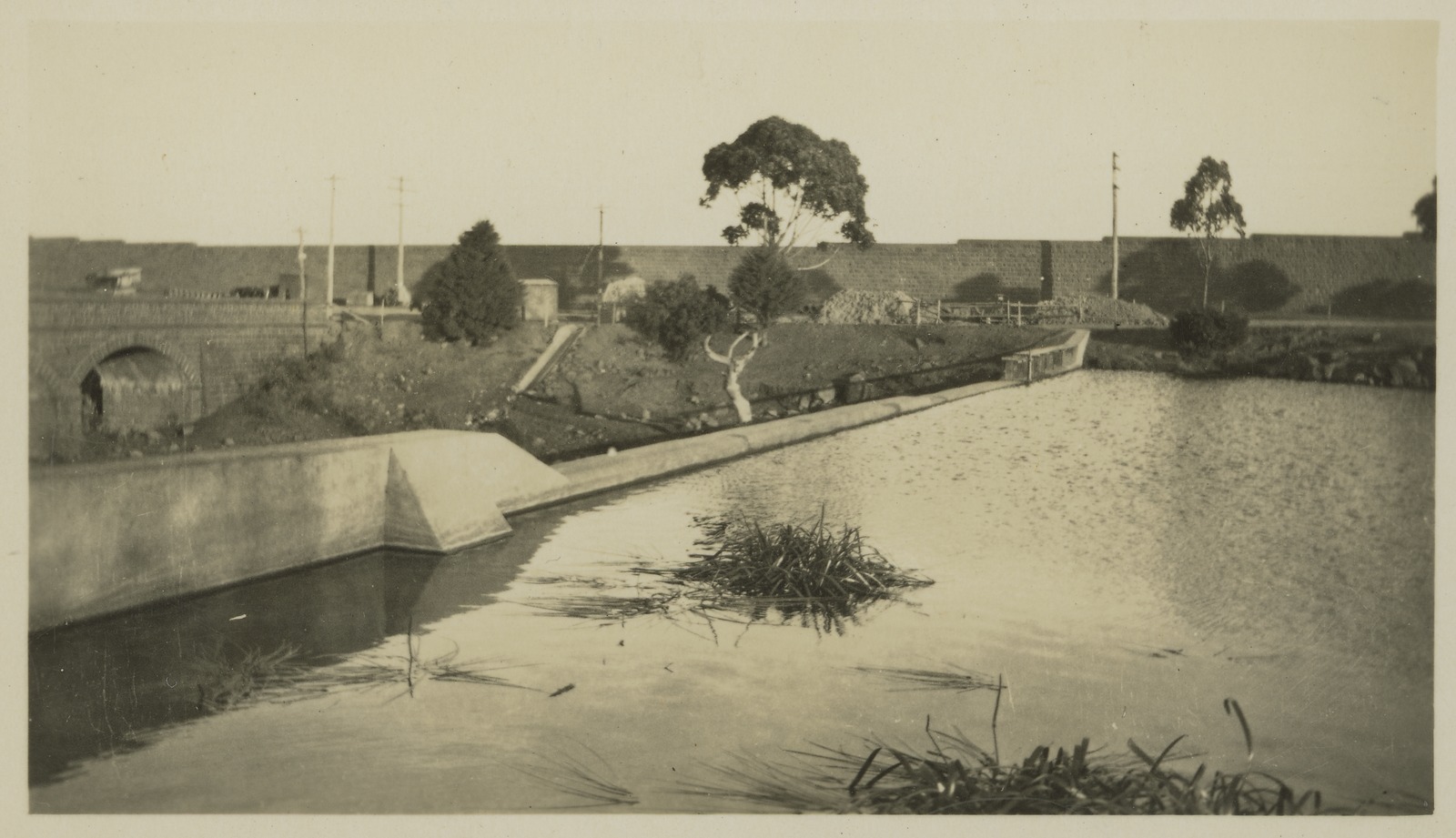
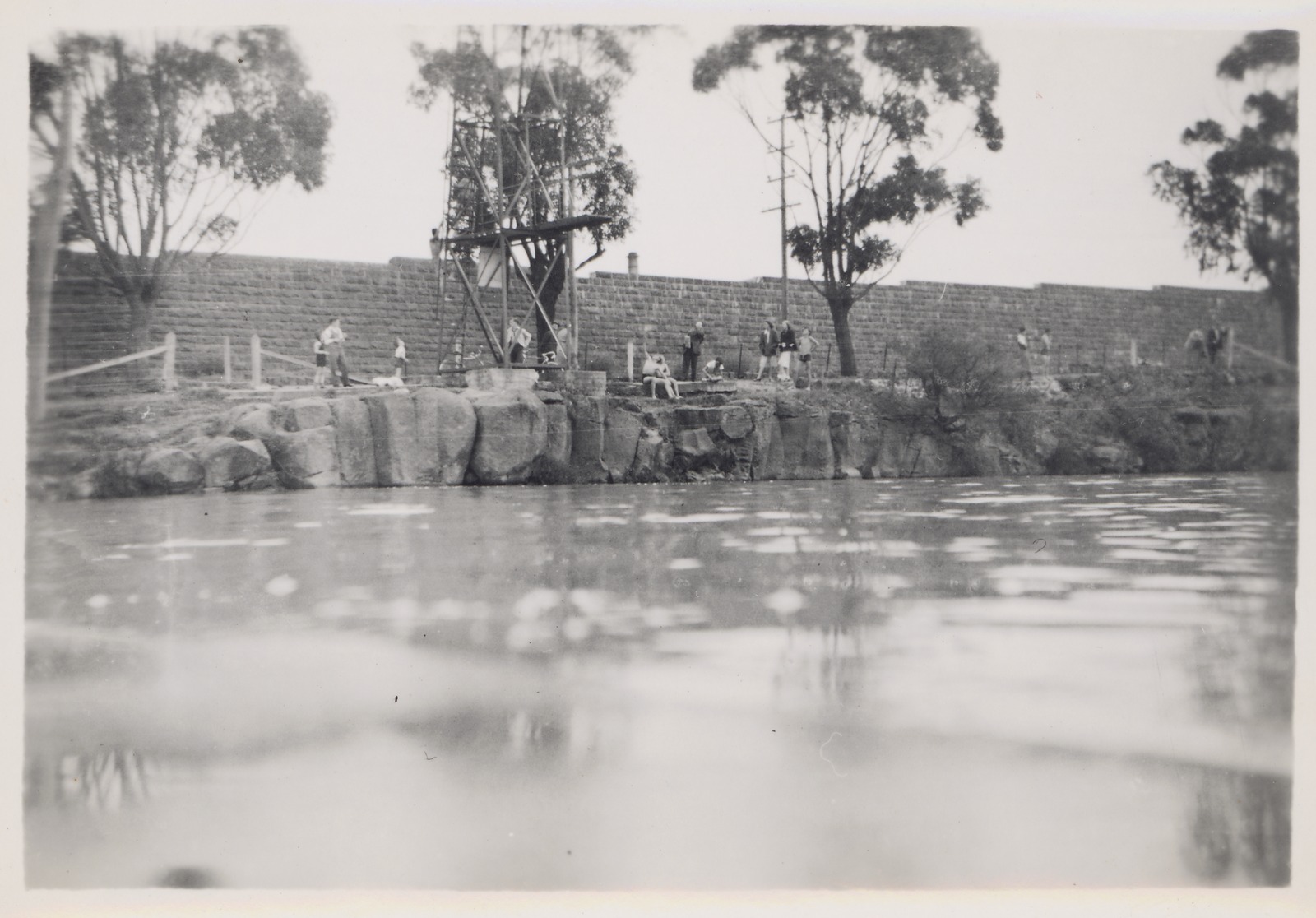
It looked pretty grim when it was first constructed. You can see the Pentridge Wall quite clearly in these photos. Just what you want as a backdrop to a picnic area.

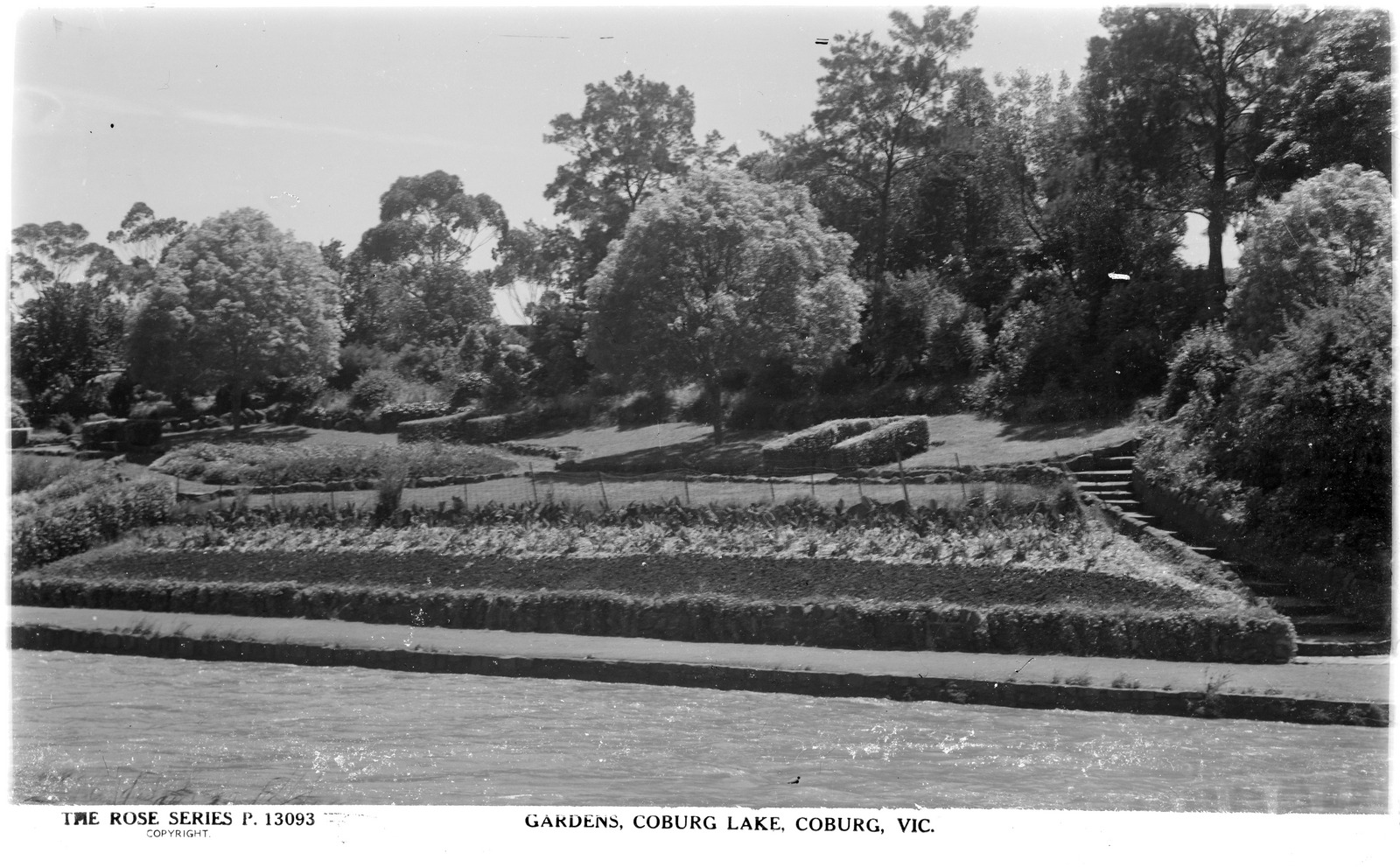
But by mid-20th century it was all looking very formal

SLV http://www.slv.vic.gov.au/ FL16016882.jpg

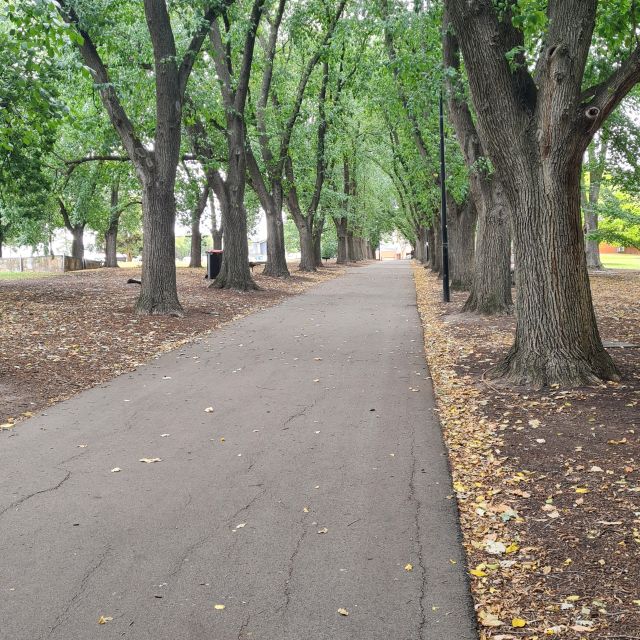
There’s still traces of the formal gardens in the park, especially the Avenue of Honour, which was planted in 1919. Originally there was one tree for each soldier, but now the remaining trees commemorate all Coburg servicemen.

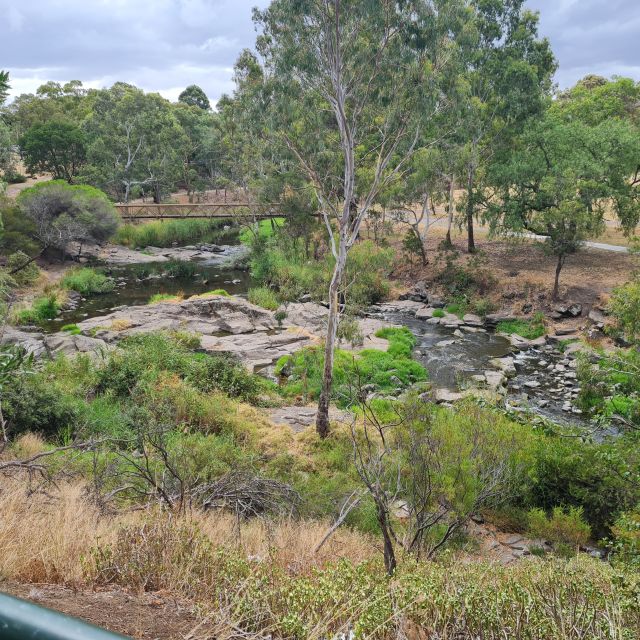
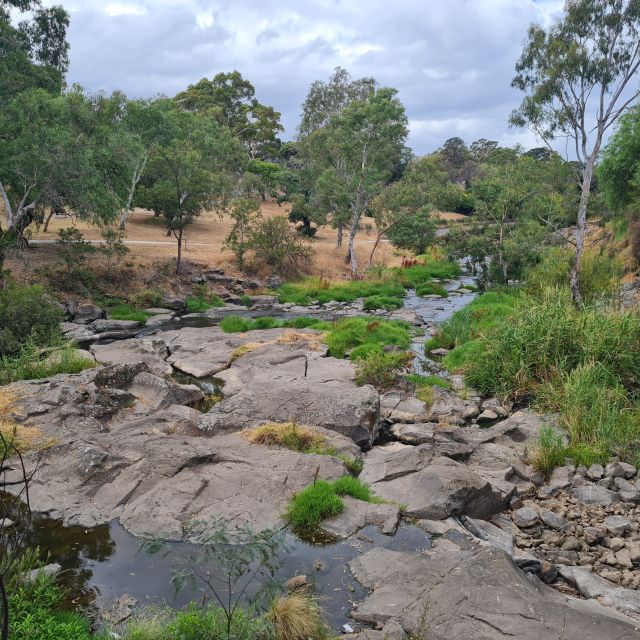
Much of the park, especially around the creek has been de-formalized. Merri (originally merri-merri in Woiwurrung) means ‘rocky’ and you certainly get a sense of the rockiness of this area before it was quarried out and tamed.

I walked along the park, through the gardens and along the creek – a pleasant little amble- until I realized that I had no idea where I had parked the car. The Challenge for today mentioned ‘getting lost’ and for a while that was exactly what I was until I finally crested the hill and saw my little car waiting there for me. So Mission Accomplished.

Something New Number 2

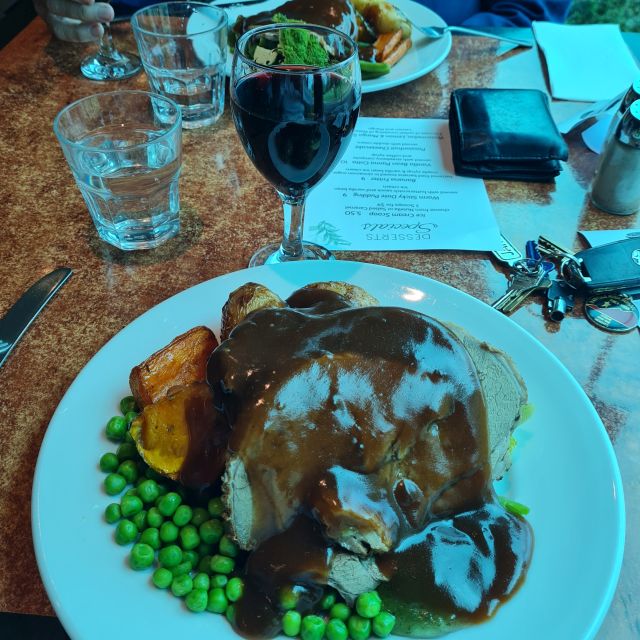
Now, this isn’t really something new because my friend Steven has been doing this for some time, but it’s new to me. He and his friends in the Sunday Roast Club go to a pub and have a Roast of the Day. Now, I have eaten millions of roast dinners, because my mother cooked a roast on Mondays and Thursdays (sausages on Tuesday, chops on Wednesday) and a very nice roast it was too. So nice, in fact, that I have never actually paid to have a roast dinner in a pub or restaurant. So, Something New Number Two was to go to an RSL and pay to have a roast of the day. And, you know, it was just like Mum used to make – none of that ‘jus’ rubbish, but real, thick gravy and roast potatoes, mint jelly, pumpkin and peas. Delicious. Mission Accomplished at Montmorency RSL.

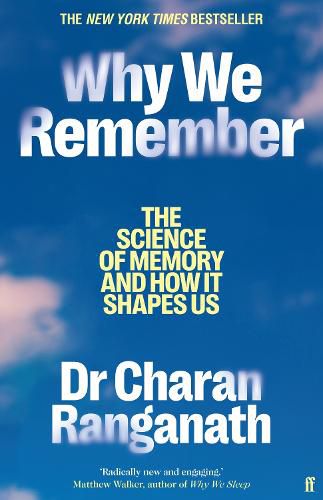
‘Why We Remember: The Science of Memory and How it Shapes Us’ by Dr Charan Ranganath

2024, 194 p & notes

In many ways the subtitle of this book is a better indicator of its content than its headline title. The neuroscientist and memory researcher Dr Charon Ranganath does explore the connection between the evolution of the brain and human social behaviour, but he does this mainly through an exploration of the physical structure of the brain before widening his analysis to a more sociological and legal perspective.

His book starts with the evolutionary ancient structures of the brain: the hippocampus, amygdala and the nucleus accumbens. He then goes on to look at evolutionarily-later developments like the perirhinal and prefrontal cortex and the Default Mode Network. These structural elements of the brain are bathed by neuromodulators like dopamine and noradrenaline. To be honest, I couldn’t really tell you specifically what he argued in relation to these more scientific aspects of his book (I can’t remember!) but while at times he becomes rather technical, the language and approach is fairly low-key so that you don’t feel as if you are reading a science textbook.

What interested me more was the social and behavioural aspects of memory which he also deals with. Memory has evolved to enable us to forget much of what we experience. Instead of being backward-looking, memory plays an important role in orienting us to the new and unexpected, and episodic memory helps us to predict what can happen in the future. It is episodic memory, with its placement of beginnings and endings and its tethering in a specific place and time, that declines most with age, while semantic (i.e. facts and knowledge) memory, which is transferable across contexts, remains fairly constant.

The parts that interested me most were his discussions of memory-construction. A memory is not a grab from a fixed, if sometimes inaccessible, mental film-reel, but is instead the constant retrieval and updating of a memory, with subtle alterations creeping in with every reiteration. Moreover, the story varies depending on the audience for retelling as well, as when family memories are shaped into a story with which to regale listeners. As a local historian who collects oral histories, this is a rather disconcerting thought. And more than merely disconcerting are the implications of evidence in legal cases, where long interrogations and repetitions, and in particular ‘shaping’ questioning, can embed a memory that is different from the original one. Courtroom questioning, which involves retrieval of the memory for an external audience operating on different parameters, shapes memory with sometimes dreadful consequences. It’s all very destabilizing.

I had a recent example of this. I was talking on community radio about our local historical society, and was invited to select two songs and talk about the reason for selecting them. One of them was ‘5.10 Man’ by the Masters Apprentices, which I remember for being presented as a new song by the Masters when they appeared at our school social in 1969. I decided to check the Facebook page for my school, where I knew that there had been a conversation about that social, only to find that other comments made it 1968, and the ‘new song’ being ‘Turn up Your Radio’ (which couldn’t have been right because it wasn’t released then). I found myself questioning my original memory, although self-centred to the last, I’m sticking to my 1969 5.10 Man memory.

Charan Ranganath is no Oliver Sacks. His book is based far more in the laboratory than Sacks’ work, with example after example of rather odd lab tests, often using university students, that add incrementally to the science of memory. I did find his compulsion to praise everybody that he had ever worked with rather cloying as well. He intersperses his analysis with some personal anecdotes that, while being somewhat more ‘memorable’ for me than the scientific parts, were not particularly earth-shattering in themselves, and they lacked the deep empathy of Oliver Sacks’ work. So, interesting enough in its own right, although for me the implications of his work are more thought-provoking than the actual explanation.

My rating: 7/10

Sourced from: Yarra Plenty Regional Library

Read because: I read a positive review in the New Scientist.