Movie: High Rise

When, within the first ten minutes or so of the movie starting I saw a head sawed in half vertically and the skin peeled off, THEN I remembered that this was a J. G. Ballard story. I do not like J. G. Ballard stories (except perhaps for Empire of the Sun).  This was a dystopian, violent nightmare of a movie that I didn’t understand one little bit.

All those four and five star ratings! No, this was too bleak and ugly for this little old lady. I certainly wouldn’t recommend it.


Celebrating 1916 in Brunswick in 2016

Even though it’s only fifteen kilometres from home, apart from a brief house-sitting stint in Brunswick about twenty years ago, attending my doctor’s surgery and the occasional visit to a Turkish restaurant, I have very rarely been to Brunswick. Yet in the last three days I’ve been there twice, both times for events organized by the Brunswick-Coburg Anti-Conscription Commemoration Committee 1916-17.

1916

On Saturday night we attended the Metanoia Theatre at the Brunswick Mechanics’ Institute to see ‘1916’, written by local playwright Neil Cole as part of the centenary of the successful ‘no’ campaign during the two referenda over conscription during WWI.  Of course, a play written with an intent to inform and based on real events (as this play was) faces constraints in characterization and plot that a play written purely for entertainment does not. That given, the performance rocketed along for sixty minutes, tracing the activities and perspectives of three women in the months leading up to the referendum in October 1916. Adela Pankhurst, the estranged daughter from the famous English Pankhurst suffragette family arrived in Melbourne, where she appeared in anti-conscription rallies alongside local suffragist and peace activist Vida Goldstein,  the first woman to stand (albeit unsuccessfully) for Parliament. However, fellow suffragist Milly Woods (the playwright’s grandmother) broke with her former colleague Vida  out of a desire to support ‘our boys’ in the war, when her own family members enlisted and were sent to the front. The interplay between these three women demonstrated the rupture of relationships between activists who had fought for women’s votes as just one manifestation of the general fracturing of public opinion during the referendum. The play consisted of multiple scenes, depicted chronologically, which were supported by visual images on a slide show, and separated by songs of the time, very ably sung by girls from the Brunswick Secondary College.  The lead singer of the chorus, in particular, had a beautiful voice and the three main female characters were well drawn, especially, I thought, the older woman Milly Woods.

Then on Monday, over to Brunswick we went again for a history walk conducted by Michael Hamel-Green, seeing places connected with  local Brunswick anti-conscription activists John Curtin, his mentor Frank Anstey and local schoolmistress and activist Julia Guerin.  Brunswick and Coburg were hotbeds of anti-conscription activities, largely because of the strong dominance of Irish Catholics in this working-class neighbourhood.

We started off in St Ambrose Hall, the hall that was attached to the Catholic primary school next door. One of the few 19th century church halls surviving in Moreland, anti-conscription meetings were held here even though the Town Hall was just next door.  The council worthies tended to be pro-conscription, as were most of the major institutions of the day (schools, churches, local newspapers etc) and so meetings were held in the more amenable surroundings of the Catholic church hall.

John Curtin, the future WWII Prime Minister shifted to Brunswick with his family as a young boy in approximately 1899. For a short while he attended St Ambrose Primary School, until leaving school at age 14, as was common at that time for working-class lads.  When Archbishop Daniel Mannix opened a wing of the school on 28 January 1917 (maybe the one with the 1916 foundation stone?) he made his famous ‘trade speech’ where he characterized WWI as “like most wars- just an ordinary trade war”.

The Brunswick Mechanics Institute, constructed in 1868, was used as the recruiting centre for the war during 1914-18. (It was here that we saw the play 1916 on Saturday night). I’m a little surprised that it was used for recruiting, rather than the town hall across the road, although often the committees of Mechanics Institutes tended to be stalwart and ‘respectable’ men of the district and perhaps they were happy to lend their premises to the enlistment effort.

img_2569

Then into the Town Hall itself and its stunning vestibule covered on all four sides by the names of the 3575 Brunswick men who enlisted.  Those who died were commemorated in a special panel, but it is notable that all enlistees were named, including those who enlisted but did not embark, in alphabetical order, irrespective of rank.

We visited two of the many homes that the Curtin family rented in Brunswick. They lived in the house below for five years between 1903-8 (the longest that they stayed in any one home). By then Curtin was working in a regular job as an estimates clerk with the Titan Manufacturing Company in South Melbourne and his weekly wage of 35 shillings ensured that they could now confidently meet the rent each week- something they had not been able to do previously.  They lived in the cottage on the left hand side, with the arched window.  The four-dwelling terrace has these rather ecclesiastic windows on three of the houses, but the fourth window next door to the Curtin residence has been replaced by a rather unprepossessing aluminium window.  There is no plaque outside this house.  There is now a park beside the house (which has been renumbered since Curtin lived there). The MMBW map shows that during Curtin’s time this was a clay hole, which would have provided clay for the brick factories in the surrounding area.

Not far away is another of the rental properties occupied by the Curtin family (below).  John Curtin lived here with his family between 1913-1915 and it was at this house that he was arrested for refusing to attend the call-up on October 9, just prior to the referendum. At this stage he was working for the Timber Workers Union.  There is a plaque here in the footpath, the only one in Brunswick marking his presence.

Finally, and rather poignantly, we ended up outside the Union Hotel, one of Curtin’s favourite watering holes, close to home and a favourite of the Irish brickworkers.

img_2584a

The walk over, I headed to Jewell Railway Station to catch a train into town. Ah! here’s one of the artworks created along the Upfield railway line out to Fawkner cemetery.  I read about these.

Inside the abandoned ticket window at the unmanned station there’s another little art installation.  It’s of a chemist shop window, but when you look more closely, they’re rather subversive products on sale

And so, as the train bore me the remarkably few stations into the CBD, I bade farewell to Brunswick for now, and its referendum commemorations.  Although, from the sound of the activities that the Brunswick-Coburg Anti-Conscription Commemoration Campaign have planned for next year, I think I may be back….

This Week in Port Phillip 1841: November 1-8 1841

Election time!

The excitement just keeps coming: last week the visit of Governor Gipps and now, this week, the first election in Port Phillip. An election – not for the Legislative Council (that wouldn’t happen until 1843) or for the Melbourne Town Corporation (which wouldn’t happen until late 1842)-  but instead for the Melbourne Market Commissioners.

A reserve for a market had been set aside on the original grid survey, close to the wharf and bounded by  Market, Collins and William streets and Flinders Lane. Liardet’s picture of the market space, show below and painted from memory some forty years later, is striking in its depiction of the stumps of felled trees in the large square space that was used for the market.

the-landing-place-and-market-reserve-in-1839

The Landing Place and Market Reserve in 1839 by W.F.E. Liardet (1878) State Library of Victoria

In October 1839 the NSW Legislative Council passed an act (3 Vic No. 19) permitting the establishment of markets in towns other than Sydney and Parramatta, where there had been markets for some time. By 1840, with its population and trade steadily increasing, the good people of Melbourne wanted a market too. In August 1841  after the stipulated request from householders, the NSW government authorized the election of market commissioners  by public election.

Under the act, the number of commissioners was fixed to the size of the population. If the population was more than 4000 (which Melbourne was), then at least 3 wards would be created with two commissioners each. As a result Melbourne was divided nearly into four wards with the dividing lines being Bourke and Elizabeth Streets, a division which was maintained through most of the 19th century. The franchise was low – an annual rental of £20 or freeholders to the value of £200 – for males only, of course. Bernard Barrett in The Civic Frontier (p 23) estimates that of a total population of about 9000, about 3000 qualified under the property franchise. [You’ll note that Barrett’s number of 9000 was much higher than the numbers reported in the 1841 census. In fact, it’s hard to pin down exactly what the population of Melbourne was. The Geelong Advertiser of 17 July reported a total of 11,728 for the Port Phillip District and 4479 in Melbourne. I’m sure that this election would only have covered Melbourne. Quite frankly, I don’t know.]

In the week or so leading up to the vote, advertisements were placed in the newspapers, requesting a particular candidate to stand. By 2 November, the candidates were:

North West Ward: Messrs F McCrae and Stephen

South West Ward: Messrs Arden, Kerr, Fawkner and Nodin

North East Messrs Simpson, Barry, Dobson and Cavenagh

South West Messrs Porter, Pears and Locks.

The newspaper editors and proprietors are well represented here (Arden, Kerr, Fawkner all in the SouthWest ward, and Cavenagh).  Under the Act, the arrangements for voting were:

Section 18: That every person being qualified and registered as aforesaid and intending to vote at such election shall deliver to the presiding officer a ticket with the names of the persons written thereon for whom he intends to vote, the number of such persons not being greater than the number of persons to be elected, otherwise the said vote to be null and void, and the said ticket so signed by the person presenting it after being read aloud by the presiding officer shall be forthwith deposited in a box, and shall not be withdrawn therefrom until the same shall be delivered to the scrutineers.

Section 14 At the hour of three o’clock on the day of election the box shall be delivered to the scrutineers who shall within forty-eight hours afterwards certify in writing to the police magistrate the names of the persons elected.  [PPG 23/10/41]

As was the custom at the time, this was an open election where after a voter filled in the ballot and his selections read aloud. This was seen to be a public check on the process, as the voter could challenge it immediately if the wrong names were announced and any attempts to ‘steal’ the election could be publicly challenged.

And so, as the Port Phillip Patriot ( the paper with connections to William Kerr and John Fawkner) recorded:

THE ELECTION. Tuesday, the 2nd November, being the day appointed for the election of the Commissioners of the Melbourne Market, at an early hour Thomas Wills Esq. JP, the gentleman appointed by His Excellency to preside at the election, accompanied by Skene Craig Esq, one of the scrutineers, took his seat on the bench at the police office, which Major St John had kindly vacated for the day.  The several candidates who had been put in nomination were also invited to take their seats on the bench.

The number of voters who had registered their qualification was very small as compared with the number whose names should have been on the list, but indeed, it was obvious that up to the last moment (notwithstanding that the press had been laboring to attract public attention to the subject,) the great bulk of the people were not aware whether they were entitled to vote, or even of the Ward in which they were respectively resident.  Generally speaking there was the usual listless apathy displayed which is characteristic of the people in these money-making colonies, but Mr Fawkner and his supporters formed an exception to the rule, the candidate himself being decorated with a blue sash, and his voters distinguished by breast knots of blue ribbon.  Indeed, in Mr Fawkner’s case, the customary festivities of an English election were in some degree observed, open house being kept in the William Tell for all such electors as displayed “the ribbons o’blue” and the walls being placarded in all directions with “Vote for Fawkner and Economy”.  [PPP 4/11/41]

The Port Phillip Gazette (with connections to George Arden) wrote in a similar vein:

As early as possible in the day, Mr Wills JP, appointed by the Governor to act as president on the occasion, took his seat on the Bench, accompanied by Mr Skene Craig, one of the scrutineers; they were joined at a subsequent period of the morning by Mr J. B. Were and Captain Cole.  Among the candidates were also present: Mr W Kerr, Mr J Stephen, Mr J Peers, Mr G Arden and Mr J. P. Fawkner.  As soon as the doors of the Court were thrown open, the electors who had incurred their rights of voting by previous registration, came up in considerable numbers to present their tickets in the prescribed form. Although great good feeling and order was preserved, there was an absence of spirit and a lack of promptness, which resulted probably from the novelty of the power vested in their hands by free citizens. Some little display of blue ribbons, and what we deprecate as being less harmless, some approach to hilarious excess was visible among the electors …The polling was quickest  between the hours of eleven and twelve, flagging after that period, until the close of the proceedings which took place at three o’clock.[PPG 3/11/41]

As was the Port Phillip Gazette’s wont, it had great fun at the Patriot’s expense through a Bob Short anecdote. This article, featuring an ignorant  ‘Bob Short’ (a thinly disguised John Fawkner) and his friends, was an ongoing joke that ran through the Gazette’s pages, playing no doubt on the pre-decimal currency idiom of ‘a few bob short of a pound’ to suggest dim-wittedness.  Is this the start of the traditional Australian sausage sizzle at the election booth?

“HERE’S YER BOB SHORT SAUSAGES!” Such was the shout which startled the electors upon “the first dawn of civic freedom” on Tuesday last. Anxious to obtain a view of the mouthpiece, we elbowed our way through the crowd and observed a man who is professionally known as the “Flying Pieman” covered from heel to truck with blue ribbons, while upon his arm hung a basket, containing about twenty pounds weight of the spicey [sic] article denominated “Bob Short Sausages” and which some of the supporters of that worthy were purchasing and masticating with much apparent gout; while others screwed their faces into divers contortions as morsel after morsel found its way down their throats, and swallowed more in honour of their champion than from any particular relish, or press of appetite.  The articles certainly looked very suspicious; but whether manufactured of the canine or feline race, were admirable representations of that choice Melbourne Commissioner “Bob Short”. [PPG 6/11/41]

Despite this being the first chance for Melbourne householders to flex their electoral muscles, few bothered to vote.  Only 328, or about 10% of eligible householders according to Barrett’s figures, bothered to enrol.

As the Port Phillip Gazette editorialized on 6 November:

…we cannot refrain from remarking on and lamenting the unnatural apathy which has marked the conduct of the residents in carrying out an affair of the first municipal consequence…The qualification for a vote was so low ( £20 rental)  as to render it virtually universal in its operation. Every householder, from the lowest to the highest, had the opportunity of exercising a privilege which, as it was the earliest occasion of its introduction into the colony of New South Wales, should have been claimed with avidity worthy of its character, and in accordance with the enterprise of the people of Port Phillip. [PPG 6/11/41]

The successful candidates were North-west ward: Farquahar McCrae, John Stephen (no election needed as there were only two candidates); South-west ward: George Arden, John P. Fawkner; North-east Ward, James Simpson, William Dobson; and South-east ward: George Porter, John Jones Peers.

The Port Phillip Herald reported that: “The scrutineers have thought it best not to make known the number of votes for each candidate, the tickets and numbers have therefore been sealed up to prevent disclosure” [PPH 5/11/41].  However, the Port Phillip Patriot did give the figures for the south-west ward (where Fawkner, the paper’s proprietor won): Fawkner 62  Arden 47  Kerr 26  Nodin 21.  Twenty four had neglected to vote; and several votes were in dispute.[PPP 4/11/41]

Guy Fawkes Night

Readers of a certain age in Melbourne will remember Guy Fawkes night, building bonfires and setting off crackers.  Although still celebrated in England, it’s largely forgotten in Melbourne now.  It was, however, celebrated in Port Phillip:

GUY FAUX “Pray remember the 5th of November” &c. In humble imitation of the mother country, the rising generation of the province carried out the usual ceremonies and proceedings which obtain in the vicinity of the [?source?] of its origin, and Mr Guido Faux was effigied throughout all parts of the town, and in the evening was consumed at sundry bonfires amidst various specimens of the pyrotechnic art[PPG 6/11/41]

Pony up!

There was an influx of Timor ponies into Port Phillip in early November, and they were sold at auction on 4th November.

ponies

The Port Phillip Patriot reported:

HORSES “The Lombock horses for spirit and powers of endurance resemble those of Timor, but they are in addition much larger and stronger. The present lot have been selected by an experienced judge from the stud of the Rajah of Lombock, and their sale will doubtless attract a numerous concourse of the admirers of “blood, bone and beauty”.

On 8th November, the Patriot reported that the majority of them  sold at prices varying from £13 to £22 each. A second consignment of 112 ponies landed on  The Georgiana,  from Copang, in the Island of Timor. This later group, reported to be in “a very reduced condition” sold for between £8 and £15, while the remaining Lombock horses sold at average price of £14 per head. [PPP 11 November]

A song for November

The Port Phillip Patriot was characterized as the most radical of the three Port Phillip newspapers. I was surprised by this poem published on 4th November which, while extolling the freedom and liberty of Australia, praised the champions of independence Washington and Bolivar as leading stars. Not sure that Her Majesty would be too amused…

scotswa

It’s to be sung to the tune ‘Scot Wha Hay’. So, here’s the tune- feel free to sing along!


And the weather?

Fresh breezes and strong winds; weather generally cloudy with frequent rain, but in inconsiderable quantities. The top temperature for the week was  a balmy 79 (26) with a low of 44 (6.6)  The coldest day for November was recorded on 7th.

Reference:

Bernard Barrett The Civic Frontier, 1979, Melbourne University Press, Melbourne.


1916 at the Brunswick Mechanics Institute

Given my track record of writing about events after they’ve closed, I probably won’t write about this until after it’s finished. So, in case you haven’t heard about it and you might wish that you had, I’m going to see ‘1916’ at the Brunswick Mechanics Institute tomorrow tonight

1916

from the Metanoiatheatre website:

1916

October 25November 5

Anti-Conscription Brunswick Chapter

1916 is about the first No Case for conscription that took place in 1916. The play is set three months prior to the vote, in Brunswick, starring two characters who are feminists and peace movement activists Adele Pankhurst and Vida Goldstein. 1916 will include the rollicking music of the era.   

Written by | Neil Cole

Produced by| Brunswick-Coburg Anti-Conscription Commemoration Campaign

Directed by | Natasha Broadstock

Starring | Harlene Hercules and Marissa Bennett

Tues – Sat 8pm | Sun 2pm

$30

Exhibition: A Brush with Heidelberg

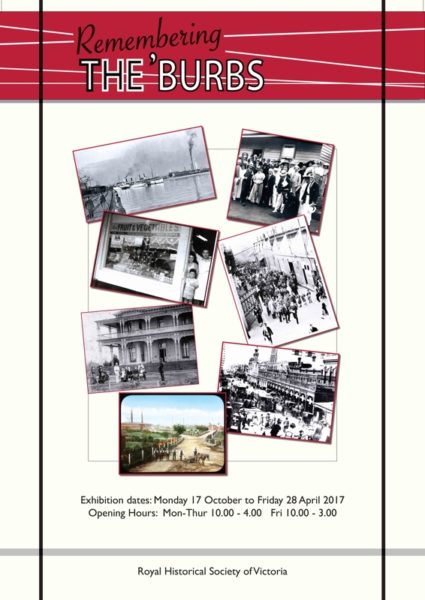
Here I am, writing about other people’s exhibitions and I don’t think I’ve mentioned the exhibition I’m most closely involved with- A Brush with Heidelberg, at the Heidelberg Historical Society closing on Sunday 27 November 2016.

poster-for-exhibition-15-2-16-a4

As you would know if you live in Melbourne, Heidelberg has a long connection with artists.  Most famously, the ‘Heidelberg School’ of Australian Impressionists (Roberts, McCubbin, Streeton, Withers etc)  stayed in Eaglemont during the 1890s and painted ‘en plein air’ in Heidelberg and the surrounding districts.  Then, there’s Heide, named for Heidelberg, across the river where John and Sunday Reed attracted modernist painters like Sidney Nolan, Albert Tucker and Joy Hester.

But other artists- some well known, others less so- have been attracted to Heidelberg, painting the river and its surroundings and also the quaint village of Heidelberg which somehow retained some of its earlier charm.

This exhibition has reproductions and original paintings of Heidelberg scenes, juxtaposed where possible with photographs of the same vista today.  If you know Heidelberg at all, you’ll see familiar buildings and landscapes, and perhaps learn about the history of the building or the painter.

The exhibition, located at the old courthouse in Jika Street (opposite Heidelberg Gardens) is open on Sundays between 2.00 and 5.00 p.m. Entry is $5.00. The exhibition is on for only a few weeks more, closing at the end of November on Sunday November 27.

And we were delighted to receive a commendation for our exhibition at the 2017 Victorian Community History Awards.

img_0367-janine-and-steven-with-the-certificate1

The streets are alive…

…with the sound of cheeping, whining magpies. Ye Gods, who’d be a magpie parent? On and on the young ‘uns nag – “feed me, feed me”- constantly hanging round wanting food.

img_20161031_113544

I have so many questions! Are these magpies here the same ones I see in the next street? Are they the same ones who were hanging around last year? Will they dive bomb me? How smart are they anyway?

And here’s a fascinating little podcast to answer all those questions and more. It was on Radio National’s Offtrack program last week;  it’s called The Colourful Life of the Australian Magpie and you can access it here.

img_20161031_113557

This Week in Port Phillip 1841: 23-31 October 1841

Well, virtually only one thing happened during this week in Port Phillip in 1841- the visit of Governor George Gipps.

governor_gipps

Governor George Gipps. Source: Wikipedia

George Gipps was the governor of New South Wales between 1838 and 1846.  During the Napoleonic Wars  he served in the Royal Engineers, then in peacetime he was deployed in  civil servant positions (as were many Napoleonic War veterans in the first half of the nineteenth century): first as an administrator in the West Indies and then as a Commissioner into electoral boundaries in England and Ireland. As private secretary to Lord Auckland, first lord of the Admiralty, he served on the Gosford Commission in Canada for two years.  New South Wales was his first appointment as Governor.  Based in Sydney, this was his first (and only) visit to Port Phillip, where he was greeted by Superintendent Charles La Trobe, who had previously stayed with the Gipps in Sydney when he first arrived in Australia.

He came alone, leaving Lady Gipps at home.  As he explained in a letter of 29 September to La Trobe:

Lady Gipps has finally decided to stay at home though she desires me to say that she has done so with much reluctance, and that she is very sorry to forego the pleasure of seeing you and Mrs La Trobe as well as your fine District.  She suffers always so very much at see, that I cannot press her to accompany me. [ Gipps to La Trobe 29 September 1841, Shaw Gipps-La Trobe Correspondence p.105]

Gipps’ predecessor Governor Bourke had visited Port Phillip in 1837 but Melbourne was a very different place now in 1841 in size, economic importance and self-confidence. The first immediate  concern of Melburnians was: given that they didn’t know when the steamer carrying him left Sydney, how would they know when he’d arrived in Melbourne?  The Port Phillip Gazette of 23 October reported the arrangements:

The procrastinated arrival of the steamer leaves no doubt that His Excellency’s visit to the Province will take place by that conveyance, and that she has been detained on that account.  Should Sir George be on board, the instant the Seahorse heaves in sight, with the flag indicative of his presence flying, a salute of nineteen guns will be fired from Fort Drake, late Gellibrand’s Point. Upon dropping anchor, the ships in harbor will likewise fire salutes.  The inhabitants of the town will thus have timely notice of the vice-regal presence. [PPG 23/10/41]

This would be the volley of shots that Georgiana McCrae’s son Willie heard on Saturday 23 October, as she recorded in her diary:

23rd After breakfast, Willie said he heard “guns making a noise!” and I knew at once that the Governor-in-Chief, Sir George Gipps, had arrived from Sydney.  He crossed the river on the punt and, at twelve o’clock, made his public entry into Melbourne.  The sound of cheering became very loud, so that I wished to be there, but the pains in my head made it impossible

The Port Phillip Gazette of 27th October gave a description of the arrival

ARRIVAL OF SIR GEORGE GIPPS. “At 8 o’clock on Saturday morning the Seahorse hove in sight, when the distinguishing flag was hoisted at the mast head, denoting His Excellency’s presence on board, a salute of nineteen guns was fired from Fort Drake.  On the steamer’s anchoring, the Water Police Magistrate Captain Gordon, with the other officials at Williams Town, waited on his Excellency. The Inspector of Water Police, Mr Sullivan went in a splendid six-oared mahogany rig (lent for the occasion by the Captain of the Thomas Arbuthnot) to the beach, and conveyed his Honor the Superintendent on board the steamer. Shortly after his Honor’s arrival, his Excellency, accompanied by His Honor, &c proceeded to Williams Town, where he inspected the Customs, Police Office, sick camp &c. and expressed himself highly satisfied with the place.  After remaining on shore some time, his Excellency and staff, with His Honor and Captain Gordon, went to the beach where he was received by the deputation.  Mr Liardet, the landlord of the Pier Hotel, had erected a four gun battery and did honor to his Excellency’s landing by firing a salute; he also had erected a triumphal arch on the Pier, which was carpeted.  They then proceeded to town, followed by a large concourse of the inhabitants of Melbourne [PPG 27/10/41]

The Geelong Advertiser gave a rare physical description of the Governor. I’ve often regretted that, especially at a time when newspapers did not have pictures, writers rarely said what people looked like:

He [ie. Sir George] has a dignified air, and even a stranger might recognise him by that peculiar care-worn expression of countenance which marks those who zealously devote themselves to the arduous duties of a responsible trust  [Geelong Advertiser, 25 October 1841 p.2]

The Port Phillip Patriot gave more details about his reception once he reached town:

At the punt [across the Yarra, near site of Princes Bridge today], not withstanding the briefness of the notice, an immense number of people had congregated, who received His Excellency, on their landing among them, with deafening shouts of welcome.  The procession, which by this time numbered several thousands of individuals, some on horseback, some in carriages, and some on foot, then proceeded, headed by His Excellency the Governor and His Honor the Superintendent up Collins-street to the summit of Batman’s Hill, the multitude cheering as they went along, thence to the signal station [on Flagstaff Hill] and back to town by way of Queen, Collins and Swanston Streets to His Excellency’s quarters at the Yarra Cottage Hotel. [PPP 25/10/41]

That afternoon, the governor and a number of gentlemen inspected the environs of the town then retired to a select dinner party.  The dinner may have been select but the people still had their own celebrations with fireworks and lights:

In the evening, in honour of His Excellency’s arrival, many of the inhabitants of the town had the fronts of their residences brilliantly illuminated, some with variegated lamps, and others with wax candles; the Royal Exchange Hotel, the William Tell and Messrs. M. Cashmore and Co’s premises were particularly deserving of notice.  A bonfire was also kindled in the street in front of the Commercial Exchange, and sky-rockets, crackers and fire-works of every description were to be heard and seen in every direction. [PPP 25/10/41]

On Sunday 24th Sir George attended church at St James. Although there was no ‘established’ church, the Anglican church seemed to have semi-official status, at least in connection with the courts (e.g. church service to open the legal year; Rev A. C. Thomson’s regular attendance at court each month to lead the prayers at the opening of the Criminal sessions). It’s no surprise then that it was St James and not one of the other churches that hosted the vice-regal party.

On Monday 25th October Sir George was up and about at 5.00 a.m. to ride out to Heidelberg to have breakfast with the Resident Judge, John Walpole Willis.  He was back in town by 1.30 when Gipps, La Trobe, the Aid-de-Camp and the Private Secretary arrived at the New Custom House to  to receive an address  from the residents that was presented by Messrs Cunningham, Barry, Mollison, Kilgour and Manning.

Such deference and unctuousness! Here’s the residents’ address:

We the inhabitants of Port Phillip, beg leave to address you Excellency with the assurance of our unfeigned loyalty towards our Sovereign, and of our sincere respect for your Excellency, her Majesty’s representative in New South Wales.

We hail with the highest satisfaction your Excellency’s visit to this district, and we trust your Excellency’s stay will be sufficiently prolonged to offer an opportunity for that full examination into the resources, improvements and wants alike of the town and province which they would seem to deserve

To this examination we respectfully solicit your Excellency’s earnest attention; and should it result in your Excellency’s conviction that we possess the true elements of prosperity and that we are practically working them out, then we trust that your Excellency will afford us the aid which is essential to their more full and rapid development

We sincerely hope that your Excellency’s visit will have the happy effect of firmly establishing that respect and confidence which it is so desirable should exist in our mutual relations; and it is our ardent desire that your Excellency may bear with you, n your return to the seat of government, no ungrateful recollections of Australia Felix [PPG 20/10/41]

And Governor Gipps gave his prepared response:

GENTLEMEN I am happy at length to find myself in the district of Port Phillip. I feel greatly obliged to you for the very kind and cordial reception which you have given me, and I think you particularly for this address.

My stay, gentlemen, amongst you must necessarily be shorter than I could desire it to be; but it will be, I trust, sufficiently prolonged to enable me to form an opinion of the resources of your province, and of the improvements of which it is susceptible, as also of its immediate wants.

To become better acquainted with these latter is one of the chief objects of my visit; to satisfy them, as far as the means at my disposal will permit, I true I need not say is my very anxious desire

Favoured as you are with a district of exceeding beauty and fertility, I cannot doubt that the onward course of your prosperity will be as steady as the first development of it has been striking; and I shall, indeed, gentlemen, bear away with me a grateful recollection of Australia Felix, if I may permit myself to hope that my visit has in any way tended to advance your interests, or to confirm and strengthen those feelings of unanimity and mutual confidence which are no less necessary for the happiness of individuals, than for the prosperity of states.[PPG 27/10/41]

Then the doors were thrown open and the following men were presented to the Governor:

levee1

levee2

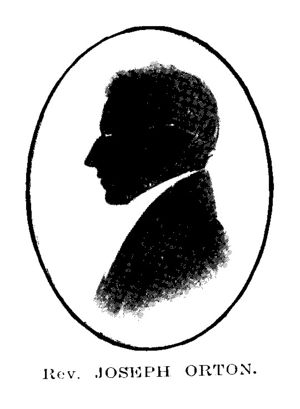
Is there anyone you should know there? Well, the press is there (Arden, Cavenagh, Fawkner, Kerr); the owner of Banyule Homestead is there;  and George Augustus Robinson the Aboriginal Protector was there along with Le Soeuf.  Reverends Thomson (Anglican), Forbes (Presbyterian), Geoghegan (Roman Catholic), Wilkinson (Wesleyan Methodist), Wilson (Anglican), Waterfield (Congregational)  and Orton (Wesleyan Methodist) were there too.

On Tuesday 26th October Gipps and his retinue travelled down to Geelong on the Aphrasia which was gaily decorated with flags. The inhabitants  assembled on the brow of the hill or hastened to the jetty to greet the Governor:

A flourish of trumpets was found wanting but  Captain Fyans made a good show with his police, and, some how or other, mustered a trumpeter who thrilled out the National Anthem, heard for the first time at Geelong, as Sir George stepped ashore.  The hearty cheers of the population made up for what was wanting in form, and the unostentatious manner in which his Excellency landed from the little Custom House boat, and acknowledged the reception he met with, from the gentlemen assembled, gave pleasure to the spectators, some of whom were absolutely astounded to see a governor shake hands. [PPG 30/10/41]

Gipps, La Trobe, Mr Fenwick, Captain Fyans, Mr Addis, Dr Thompson and others rode to the principal points in the settlement at a good speed, headed by Captain Fyans. They crossed Fyans’ Ford by Mr Seivwright’s huts, went up by the Barabool Hills, round by Dr Thompsons house and garden to the breakwater, then halted at the police officer where a body of men presented another address, numerously signed by the inhabitants. Gipps gave a good off-the-cuff reply, which the waiting press  grumbled was not presented to them in written form. He then went to Captain Fyans for a “sumptuous” lunch, to which the gallant Captain had invited a number of the resident gentry.  The remainder of the visit devoted to the examination of public works (e.g. the watchhouse at North Corio, the lock up at South Geelong) At 3.00 p.m. the people assembled again on the shore to bid him farewell, the same gentlemen attended him to the jetty, the steamer saluted with her engine and steered away .  He arrived back in Melbourne at 8.00 p.m. An illumination held that evening by Mr Robinson of the Commercial Inn, and a display of fireworks held on the hill.  The day was kept as a holiday by all.

On Wednesday 27th October he met with the press in the morning. That night was the ball- the social highlight of the trip:

The subscribers to ‘the private assemblies’ gave their second ball and supper at the Exchange rooms, in honor of the Governor, at which his Excellent appeared and in high spirits. The apartments were tastefully decorated with festoons, and the walls beautifully papered for the occasion. Upwards of one hundred and fifty of the elite of rank and fashion of the town and surrounding districts were present, Mrs La Trobe uniting with the “fair” party in adding additional fascinations to the attractive scene. Dancing was continued to twelve o’clock, when supper was announced. The company then partook of a sumptuous repast prepared in Mr Davis’ best style. The following toasts, among others, were appropriately introduced- The Queen, Sir George Gipps, Lady Gipps, Mr La Trobe, Mrs La Trobe &c. His Excellency was particularly happy in responding to the manner in which his own and her ladyship’s health had been drunk, observing that he was extremely sorry that her ladyship had not accompanied him, as she must have felt extremely gratified by the warm and handsome manner in which he had been received. Dancing was then resumed, and kept up with re-animated spirits until five o’clock, when the whole party separated, highly pleased with the enjoyments of the night. [Extraordinary 1/11/41]

Georgiana McCrae was there but, seven months pregnant, did not frock up as much as she might have otherwise. Instead, she adopted a suitably matriarchal dress:

27th….I gave Lizzie my Chellé dress and my wedding-shoes, to enable her to go to the ball in honour of the Governor, at the Criterion, this evening. Went to the ball, but not to dance. Put on my best black satin dress, and a bit of ivy in my hair, so that I felt myself comme il faut.

On the Thursday 28th October Gipps met with deputations of men, each pushing their favourite project, with first a group from the Commercial Exchange lobbying for a port, and then men from the Bridge Company to ascertain whether there was interest in the construction of a bridge over the Yarra.  That night there was yet another dinner hosted by the colonists of Australia Felix but the reports of the dinner are sketchy, as none of the newspaper editors attended when it became clear that they were not being given free entry. The Geelong Advertiser, however, did give a fuller report more than a week later and included transcripts of the various speeches made in a supplement to the paper (apparently written by Mr Meek PPH 9/11/41).

However, two events that were later to rebound on Charles La Trobe occurred at this dinner. The first was that someone- and Judge Willis was to later suggest that it was La Trobe himself- erased a toast to ‘The Press’ from the list of toasts for the evening. This was an accusation steeped in all the confected outrage of press editors at the time, but obviously had sufficient significance that the Executive Council rapped Willis over the knuckles for circulating this accusation.  The second  (and I admit that I’m not sure whether this occurred at the dinner and ball of the previous night, or this public dinner) was that La Trobe very uwisely declared his willingness to play “second fiddle” to Gipps, a thoroughly accurate statement but not one which endeared him to the increasingly bolshie citizens keen for separation from NSW.

The, finally on the morning of Friday 29th October Gipps boarded the Aphrasia at 11.00 a.m. for the last time.

At eleven o’clock, His Excellency embarked on board the Aphrasia, under a salute from the revenue cutter, and proceeded down the river to join the Sea Horse, which had been specially detained for his accommodation a few days beyond the usual period allotted for her stay in the harbour. Upon the arrival of the Governor and suite alongside the Sea Horse steamer, the Battery at Fort Drake, together with the shipping in the harbour, paid the usual compliment of firing a salute. A luncheon was prepared on board, at which the gentlemen accompanying His Excellency were invited to partake. About two o’clock, Sir George having taken leave of all who attended him to the Bay, the Sea Horse weighed anchor.  PPG Extraordinary 1/11/41]
Georgiana McCrae wrote for 29th that she “Heard the guns, announcing the departure of the Governor per Sea-Horse”. And so we, too,  bid fond farewell to Sir George, who was not to visit Port Phillip again.
How’s the weather?
So how did the weather hold up for the vice-regal visit?  Beautifully, as it happens, with “light and fresh breezes with frequent strong winds. Fine open weather generally”, with only slight rain on 29th, the day of his departure.  The top temperature for the week was 76 (24.4) and the lowest 43 (6.1)
References:
Roy Bridges , One Hundred Years: The Romance of the Victorian People,  1934, Herald and Weekly Times, Melbourne.  [online at SLV site]
Hugh McCrae (ed) Georgiana’s Journal Melbourne 1841-1865, 1966 (2nd edition) Angus and Robertson, Sydney
A.G.L. Shaw Gipps-La Trobe Correspondence 1839-1846 , 1989, Miegunyah Press, Carlton Vic.

Movie: The Arbor

Don’t read this posting. Go straight to iview instead and watch this movie/documentary before 1.58 a.m. on November 3, 2016 while it’s still available. It’s one of the most powerful pieces of cinema that I’ve seen in years.

I hadn’t heard of Andrea Dunbar. She was a young British writer who followed the adage ‘write what you know’. What she knew was the wasteland of a Bradford housing estate in Thatcher’s Britain of the 1980s, where the eponymous Brafferton Arbor was a bleak patch of blighted grass, surrounded by terraced public housing with boarded windows.  Her first play was performed at the Royal Court Theatre in London when she was a 20 year old single mother, and her follow-up  Rita Sue and Bob Too was developed as a film in 1987.  She was dead by 1990 at the age of 29, leaving three children by three different fathers.

This film is based on interviews with the family, most particularly her two daughters, conducted by the filmmaker Clio Barnard. The oral interviews have been lip-synced by actors.  I only learned this later, and spent most of the movie, transfixed, wondering whether I was watching a movie or a documentary.  It was only when I recognized the actor who plays Inspector Barnaby in the new Midsomer Murders, and marvelling at his accent, that I realized that it wasn’t a documentary. It is interspersed with documentary footage from the 1980s of Andrea Dunbar, and a performance in 2010 of her play ‘The Arbor’ on the estate itself, watched by the current residents.  I was amused that this extract from the film had subtitles: I found myself craving them on several occasions:

It is a very dark film about intergenerational poverty and harm. Her two daughters have diametrically opposed views of their mother, and it’s so easy to judge.  Absolutely brilliant.

‘Swallowed by the Sea: The story of Australia’s shipwrecks’ by Graeme Henderson

henderson

2016, 203 plus notes

Every edition of each of the three newspapers published in Port Phillip during the early years of the 1840s had a prominently displayed ‘Shipping’ feature. It would list the ships that had arrived  and departed from UK and Australian ports  and their important passengers, then there would be a long list of the progress of various ships along the main shipping routes heading to or from Australia.  I’ve only been on a ship on the open seas once, but I can remember thinking as I looked at the empty waves around us, that it was as if we were the only ship on the ocean. Of course we weren’t: there were ships criss-crossing out of our sight and  modern communications ensured that we were easily trackable and findable.  Ship journeys in earlier times were nowhere near as trackable or findable, as Graeme Henderson’s book shows,  with several of the wrecks he describes still undiscovered.  But, as some of his chapters suggest, even in what seemed to be an ’empty’ sea, mariners’ knowledge of the sea lanes and ports meant that they knew where to go for help, even though it may be thousands of kilometres away.

Graeme Henderson is a maritime archaeologist and was director of the West Australian Maritime Museum for 13 years. He discovered his first shipwreck at the age of sixteen, sparking a life-long passion.  In this book he examines shipwrecks spanning 1622 right through to 2010 on both the west and east coasts of the Australian mainland.  Chapters 1-11 deal with shipwrecks during the mid 19th century when, of course, Australia was completely dependent on shipping for communication and travel.  Two of the  final three chapters deal with shipping losses in World War II (loss of the Sydney and the bombing of Darwin in 1942) and the final chapter brings us right up to the loss of the asylum boat, SIEV 221 which brought visible footage of a modern, but yet somehow timeless, shipwreck right  into our lounge rooms. Continue reading

A book launch at Trades Hall

Tonight I went to the Melbourne launch of the The Conscription Conflict and the Great War, edited by Robin Archer, Joy Damousi, Murray Goot and Sean Scalmer.

conscriptionconflict

And who should be there to launch it than Bill Shorten, the ALP Leader of the Opposition, with a very fine speech. He started by drawing some parallels between Billy Hughes in 1916 with the present day…a new Prime Minister, unable to take his party along with him, who changed his mind on a political stance that twelve months ago he had vehemently attacked and who foisted onto the people an expensive opinion poll in the form of a referendum.  Sound familiar?

img_20161027_185033_crop

While not at all disputing or undermining the recognition of the sacrifice at the front, he pointed out the international uniqueness of the referendum as a way of resolving the conscription question. In the setting of the oldest operating Trades Hall in the world, he noted that this was the geographic, political and emotional centre of the ‘no’ vote in  a debate that certainly did not exemplify the much-lauded ‘golden age of civility’. To the contrary, it was bitter, vindictive and spiteful and far worse than what passes for debate today.  It was really an excellent speech, (whether he wrote it himself or not) – I wish I’d taken notes- and it was very well-delivered. Excellent. [Update: here’s the speech]

He was followed by Robin Archer, one of the editors.  He emphasized that WWI was not, as has been promoted, a period of consensus.  Far from being ‘the birth of a nation’, there was already existing in Australia a precocious progressive environment. Nor was ‘mateship’ on the front a uniquely Australian phenomenon, even though the referendum was.

Then a couple of songs from the Trade Union choir, including Eric Bogle’s ‘The Band Played Waltzing Matilda’ and ‘I Didn’t Raise My Son to Be a Soldier’.

Out into the twilight we went, stopping to admire the replica banners that adorn Trades Hall at the moment.  There’s a picture here of Trades Hall in 1917 festooned with banners.

And here’s the 2017 version:

And you’ll just have to wait for my review of the book!