Monthly Archives: August 2026

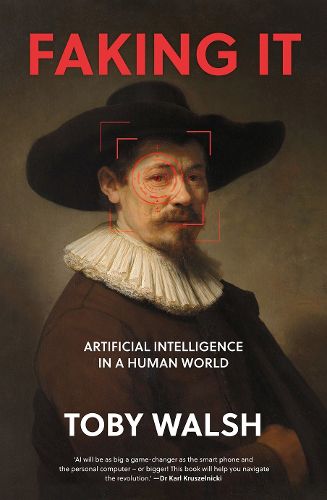
‘Faking It: Artificial Intelligence in a Human World’ by Toby Walsh

2023, 256 p.

In his very first sentence of the preface, Toby Walsh warns us “This book is out of date”. He’s right- it was published in 2023 and it does already feel out of date. In 2018 Walsh wrote a book called 2062, which was the year that he predicted machines would be as intelligent as humans. I wonder if he still feels that way. In reading Faking It in 2026, three years after it was written, it feels as if things are moving much more quickly than he has described them. But, also as he says in the preface

I am confident, however, that the issues raised in this book will not be out of date. Indeed, they will be even more pressing. And this book will be even more useful, as a guide and a warning.

Toby Walsh is Scientia Professor of Artificial Intelligence at the University of New South Wales in Sydney and CSIRO’s Data61. He is a scientist who embraces the potential of AI but has been warning the government of the dangers of unregulated AI for some time as, indeed, he also does in this book. I feel that he takes a balanced approach, neither warning of impending doom but neither is he cavalier about the potential dangers that it could bring.

As suggested by the title, he is adamant about the ‘fake’ nature of AI.

In understanding artificial intelligence, it is also easy to be misled by our own human intelligence. We have a very personal experience of our own human intelligence, so it is hard not to fall into the trap of thinking that artificial intelligence might be somewhat similar.

Much of this turns on how we describe intelligence.

What, then, is intelligence? Loosely speaking, intelligence is the ability to extract information, learn from experience, adapt to the environment, understand and reason about the world. So what, you should ask, is artificial intelligence? Most AI isn’t embodied and situated in the world like our human intelligence, adapting and learning from the environment. How, then, can the intelligence of machines be identified and measured when it is so fundamentally different to human intelligence?

AI researchers do not completely agree on how to define artificial intelligence. But most of us will agree that it is about getting computers to do tasks that, when humans do them, we say require intelligence. These include perceiving the world, reasoning about the world and learning from the world.

His main argument throughout the book is that the artificial intelligence we are building only simulates human intelligence, – in other words ‘faking it’.

This fakery existed right from the start. The Mechanical Turk, a chess playing automaton which debuted in 1770 and toured Europe and the Americas until its destruction in a museum fire in 1854, actually had a person concealed within its metal chest. Mephisto, another chess-playing machine from 1876, was directed from another room using an electro-mechanical connection. Even Alan Turing faked his first chess-playing program, simulating the calculations of the program with pen and paper. And when Elon Musk announced the yet-to-be built Telsa Bot in 2021, it featured a person dressed up in a white full-length bodysuit pretending to be a Tesla Bot and fooling nobody.

He identifies many situations where artificial intelligence is much less impressive than it appears, and where it is designed to deceive us. He starts by looking at the hype and false claims about artificial intelligence; then looks to how AI has tried to fake human intelligence; to create fake real people, and to emulate human creativity. He notes that the technology companies that are developing AI are often indulging in fakery themselves, often indulging in ‘ethics-washing’ that makes them sound more responsible than they are.

In describing ‘the artificial in AI’, he reminds us that psychologists distinguish between intellectual, emotional and social intelligence. AI has the first one covered, but the other two intelligences are less easily replicated. AI machines, as strictly electrical devices, do not have the biochemistry that drives our emotions. Of course, they could be programmed for a level of anger, disgust or fear but our emotional intelligence is informed by our lived experiences: we understand other people’s emotions because they are like our own. Social intelligence, he suggests, is perhaps our greatest superpower. We can empathize with other people because we share the same biology. This, too, can be programmed, but that assumes that people act rationally and in self-interested ways, ignoring the complex, often irrational and sometimes altruistic behaviours of real people.

He urges those working in the field to stop anthropomorphizing the technologies they are developing:

We talk about a chatbot ‘understanding’ a sentence, a ‘self-driving’ car, the computer-vision algorithm ‘recognizing’ the pedestrian, and the possibility of robot ‘rights’. In reality, chatbots don’t understand language. There is no self– no person, no sentient, self-aware intelligence, driving the car, even if the car is driving itself. Algorithms don’t actually recognize objects. And robots need rights about as much as your toaster does.

His final conclusion is that the human in human intelligence is perhaps the most important distinction between us and the ever more capable and artificial machines we are building. He reminds us of the COVID times, when we so much missed physically meeting people, and walking in the real world. It was the real world we craved.

This is a very convivially-written book that is packed with information, and yet it rarely feels overwhelming (with the exception of his examples from mathematics which challenged my non-mathematical human brain). His footnotes are quirky and humourous and he has a wealth of examples and anecdotes drawn from his long history in the field. He is enthusiastic about the potentials of Artificial Intelligence, but adamant that it is not the same as human intelligence and in this I think that he finds the right balance.

My rating: 8/10

Read because: I’m thinking a lot about AI and being human. And it both excites and frightens me (probably more of the latter) because I want to hold on to the human.

Sourced from: purchased Kobo book (hence the lack of page numbers to the quote- a very annoying feature of Kobo)

Postscript: Life, Love and Loss in Australian Letters

2026, 120 p.

I really can’t remember the last proper letter I received from a real person, as distinct from an optometrist reminding me to make an appointment or a real estate agent encouraging me to put my house on the market. It has been a very long time. For a while, the Christmas catch-up letter included with a Christmas card was popular, and I really quite liked receiving them. But as for receiving a letter from a friend for no particular reason – I haven’t received one for a long time.

As a historian who worked mainly with Colonial Office papers, it was always a bit of a thrill when you came across a personal letter as distinct from the “I remain your humble and obedient servant” type letters. It was as if, suddenly, a file has come to life and a real person has stepped out behind the platitudes. Certainly, some of those 19th century letters to and from ‘home’ in Great Britain followed a template as well, with an inordinate amount of time spent on the weather, given that the letter was going to traverse half the globe. Cross-hatched letters were infuriating, and much time was spent puzzling over a word or an abbreviation that a new pair of eyes would pick up in seconds.

Postscript is a selection of letters from the National Library’s huge collection of letters. In the introduction, Lauren Smith from the National Library explains their selection criteria:

The letters we finally selected, which span almost 200 years, are not necessarily the most famous or life-changing or emotional. What they do each contain is something human and real, something that gives us a sense of how much we have in common with those that came before, that gives us a sense of our own history. (p.v)

The letters were then taken up by present-writers, who were asked to choose one of those selected letters and, in response, write a new letter, addressed to whomever they chose, in some way inspired by the original letter from the Library’s collection. Most of the original letters are Australian- although there is a letter from Jane Austen to her sister Cassandra- and the majority of them date from the 20th century. Of course, there’s an imbalance here in that the authors of the original letter could have had no idea that their letter would survive to appear in a book decades later, whereas the current-day authors are quite consciously crafting a letter for publication. Each dyad or triad of letters has a short introduction, explaining who the authors are, and giving a little bit of context to the letter.

Several of the letters are linked by the original and present-day letter-writers sharing the same profession. Sometimes three letters writers are involved. For example, there is a to-and-fro of letters between children’s authors Mem Fox and Morris Glietzman, who are joined by winner of the Children’s Book Council of Australia (CBCA) award, Daniel Gray-Barnett who writes his own imaginary letter to a fellow CBCA award winner Andrea Rowe. Historian Frank Bongiorno writes a letter to the now-deceased Manning Clark, a prominent historian who would have been long retired from academe by the time Bongiorno embarked on his own academic career. In writing to Manning Clark, Bongiorno copied the lead of fellow historian Bill Gammage who also wrote to Manning Clark in 1984- the letter which is in the collection.

Sometimes there is a shared experience. Ranjana Srivastava, oncologist and writer whose column regularly appears in The Guardian writes an imaginary letter to the daughter of one her patients, remembering the recipient’s father and his kindness to her as his specialist. For Srivastava, the prompting letter was written by historian John Barrett, who wrote to his neighbours eight months before his death, telling them of his cancer diagnosis but encouraging them to just “tuck this knowledge away in the back of your minds”.

For me, not all of the letters were equally engaging. The ones that didn’t work for me were more intent on transferring knowledge of ‘what happened next’ to the deceased original correspondent, rather than responding to the emotion of original letter.

Sometimes the chosen recipient mirrored the relationship in the original letter. For example, Jane Austen’s letter to her sister Cassandra (which apparently the National Library holds) is mirrored by Kate Forsyth’s letter to her sister and co-writer Belinda Murray. Just as John Flynn (he of the Royal Flying Doctor Service) writes to his father as he’s about to embark on a new phase of his life, so in turn writer Michael Winkler writes to his sons about his own father.

But the letters I enjoyed most were from Sir John Monash to his 13 year old daughter Bertha where he writes a very detailed letter giving a run-down of what to expect on the railway trip from Spencer Street station to Windomal, a station over the Murray in rural New South Wales. This was matched by letters from poet Judith Wright to her husband and father after having a baby; and then by a letter from historian and author Maggie Mackellar writing to her daughter Arkie as she travels from Manchester to Doha. I’m not really sure why the Judith Wright letters are included here, but the Monash and Mackellar letters are full of the vicarious excitement and sorrow of letting a child move on to the next phase of their life.

When I first heard about this book, I was a bit ambivalent about it, thinking that it would just be a collection of letters. But I really enjoyed it: working out what the links were between the two letters chosen; quite touched by the emotion, often quite repressed, in the older letters that is more openly expressed in the current-day ones; and gaining a sneak peek into the behind-the-scenes life of a famous person. What worked best for me was that it is the perfect book for dipping into, perhaps last thing at night, when you want something to read but don’t want to embark on something lengthy that requires concentration. It’s a very human book, showing communication in an intentional but not self-conscious way in the original letters, and the imagination and emotional sensitivity of the current-day writers in responding to them.

My rating: too difficult to rate, because the letters were all so different. 7/10?

Sourced from: Review copy from NLA via Scott Eathorne, Quickmark Media

Six Degrees of Separation: from ‘Land’ to…

The First Saturday of the month is Six Degrees Day. This meme, hosted by Kate at Books Are My Favourite and Best involves her choosing a starting book, then you linking the titles or themes of six other books. This month she has chosen Maggie O’Farrell’s Land. I had borrowed this from the library, anticipating that it would be on the Booker Prize Longlist for 2026, but not so. Needless to say, I haven’t read it yet. But all of my links are related to the idea of land in some way.

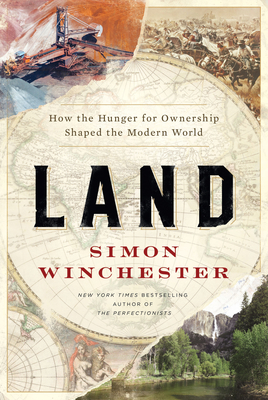
  1. How odd. Simon Winchester’s book Land has the same title as the one we are starting off with. Winchester’s book, however, is non-fiction. The subtitle of his book is ‘How the Hunger for Ownership Shaped the Modern World’, and this is a global history of the mapping, ownership, division, preservation and restoration of the land. To be honest, I haven’t read this yet- but it’s on the pile.
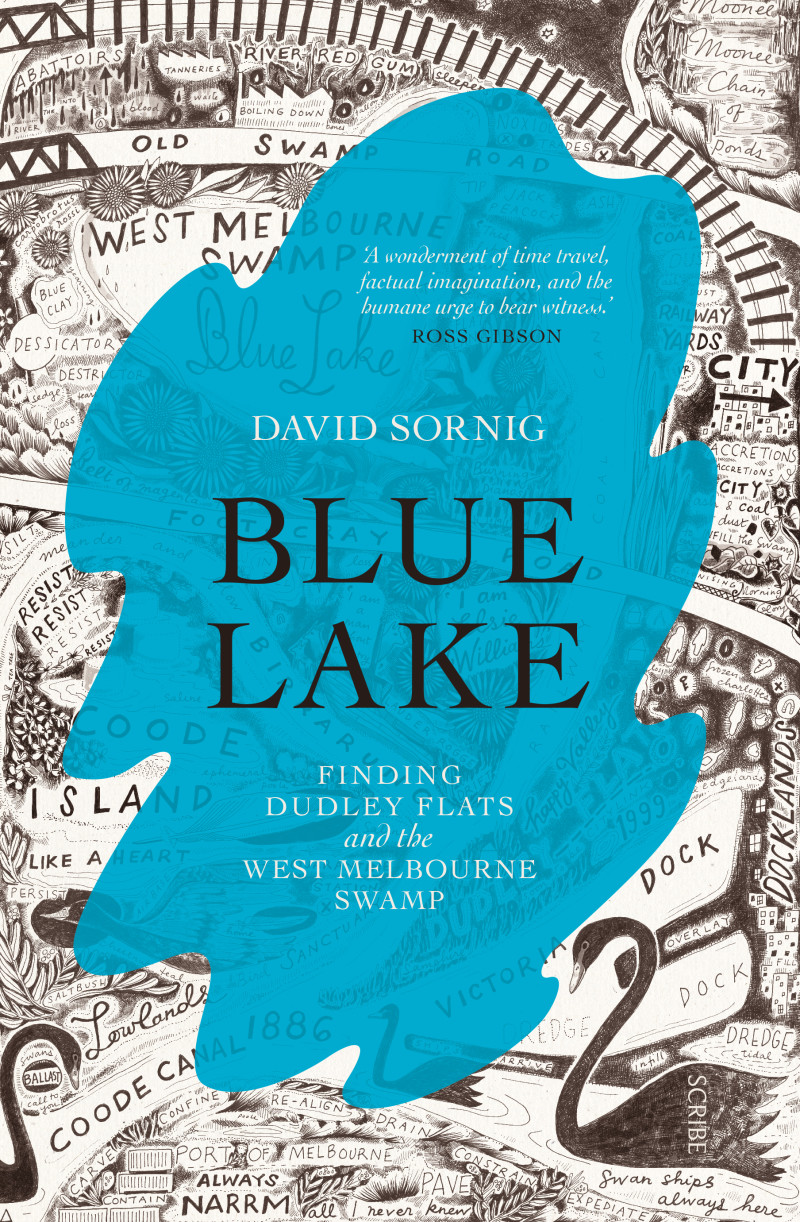
  2. Dave Sornig’s Blue Lake is about a specific piece of land, or more properly swampland, that has been completely engulfed by Docklands and the development of what used to be the West Melbourne Swamp. Previously known as Batman’s Swamp, the North or West Melbourne Swamp, and Dudley Flats it has always been a liminal place. This book won the Judges’ Special Prize, Victorian Community History Awards, 2019. My review is here.
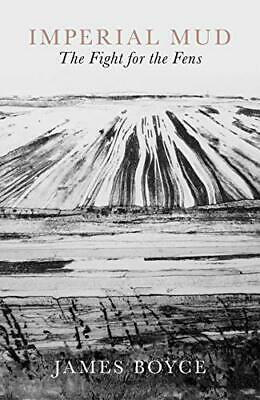
  3. James Boyce’s Imperial Mud: The Fight for the Fens takes us to England where he traces the unique, watery, changeable geography of the marshes of the Fens from 4000 years ago- possibly an area not unlike the swamp in Sornigs’ Blue Lake. The Fens, he explains, are not a precise location, given that the creeks and waterways that constitute them have always been an ever-changing phenomenon, and for much of their history they remained common land until they were drained in the 1950s, only to be inundated again. My review is here.
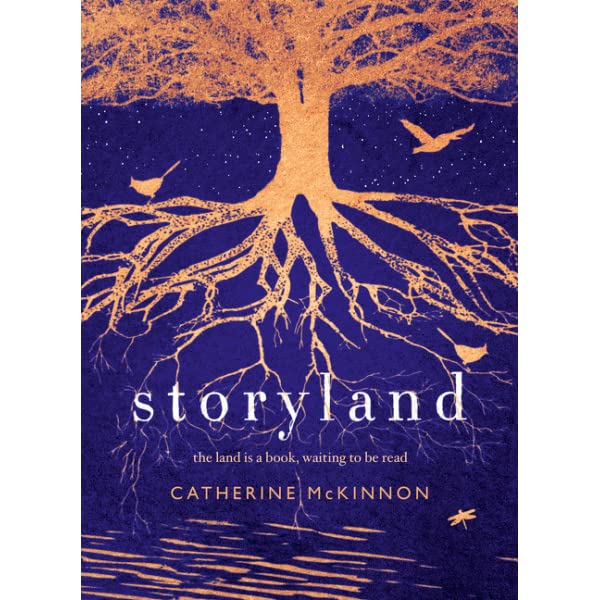
  4. Storyland by Catherine McKinnon is a series of stories set in the same geographical location: around Lake Illawarra (south of Sydney Cove and Botany Bay, near Wollongong). The stories are in a sort of pyramid structure, set in 1796, 1822, 1900, 1998 and 2033-2717 before reversing and going back again. You can read my review here.
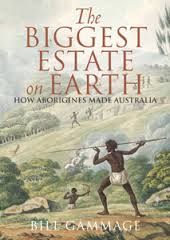
  5. One of the most influential Australian history books I have read is Bill Gammages’s The Greatest Estate on Earth. Gammage’s argument is that, instead of being marginal hunter-gatherers, ‘people’- for that is the terminology he has chosen to distinguish aborigines from ‘newcomers’- farmed prior to 1788. They were not farmers, which is a lifestyle; but they did farm – the activity of tending and shaping landscape. They developed what he calls a ‘template’ of landscape, a mosaic comprising open pasture with few trees, strips of scrub and stubby trees, other plains, then clearly delineated forest. It is an argument that forces us to change our view of the landscape around us. The bushland that we prize as ‘native’ landscape is often not that at all- instead it is product of neglect as the custodians of the country could no longer farm it. My review is here.
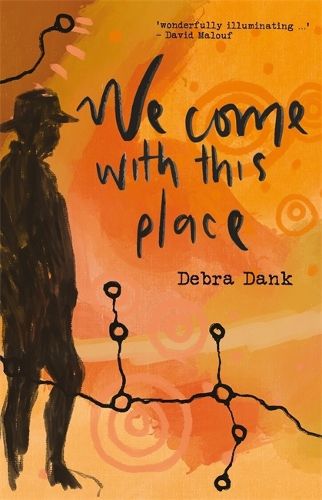
  6. Where Gammage’s book talks about settler blindness to what had been wrought on the land by the First People, Debra Dank’s book We Come With This Place looks at Country from an indigenous perspective. It is a family history telling of the lives of her grandparents (and further back) and parents but she does not necessarily help the reader by giving a straight-forward chronological account. Violence and dispossession seeped through the generations, as did the love and knowledge of Country. It’s a love and knowledge that she is giving to her children, and to us too as readers. My review is here.

Even though O’Farrell’s Land is fiction set in Ireland, I seem to have branched off into non-fiction, and mainly here in Australia, which is not surprising really.

I hear with my little ear: Podcasts 16-23 July 2026

The History Bureau Putin and the Apartment Bombs 6: The Trial In 2003, four years after the apartment bombs, there was a trial of the suspected bombers. Mikhael Trepashkin, who believed that the ‘Chechnyan terrorists’ was a cover-up for FSB involvement , went to a journalist at the Moscow News before planning to appear at the trial to present his evidence. A few days before the trial he was arrested. The trial went ahead without him; the two ‘terrorists’ were found guilty and the case sealed for 75 years. Trepashkin was tried for possession of FSB material and two bullets (which he claims were planted on him) and sentenced to four years jail. Putin was elected for a second time with 70% of the vote. The template for Russian coverup was established: move fast; flood the media; and then seal any investigations. Ten years later Scott Anderson wrote about the bombings in an article called ‘Vladimir Putin’s Dark Rise to Power’ but GQ spiked the story and would not allow it to be published online although it did reappear later.

Short History Of… The Silk Roads (broadcast 23 Feb 2026) Note that ‘s’ in Silk RoadS because there were multiple silk roads, forming a lattice of networks over about 1000 years, spreading from the steppes in the north, Afghanistan in the south and reaching across to Persia and later the Mediterranean in the west, and China in the east. We know of the roads from 9th century BCE with trade between the Greeks and Persians, and in 4th century BCE Alexander the Great travelled along them. Coming from the opposite direction, in 2th century BCE the Han dynasty in China sent an envoy to see what was beyond the steppe horsemen who were blocking their progress, and he came home with tales of wealth and plenty. Now the Han knew that they were just one corner of a global path. Because of danger, traders would form caravans, stopping at pluralistic way-stations along the way. In the 2nd century CE there was a rare period of peace when the Romans, Parthians, Kushans and Han all wanted peace. Trade and goods moved across the Silk Roads, but so did ideas, particularly religious ideas – for example in the depiction of the Buddha. Maths, cartography, artistic systems, astrology all moved across west and east. In late antiquity (approx 550 to 1000 CE) the Sogdians from modern-day Uzbekistan and Tajikistan began operating over huge distances, instead of the small relay-like journeys that had been undertaken in the past. By 610CE the rise of Islam brought new political and social networks, as Arabic became the lingua franca and as pilgrims moved along the silk roads. By the 11thcentury CE the Crusades brought a new age of war fuelled by faith. In the 13th century the Mongols sought to impose the world’s largest contiguous empire. In 1279 Marco Polo traversed the road to meet with Kublai Khan. In the mid 14th century, the Black Death travelled along the Silk Roads. By the 15th century, under the Ottoman Empire, ships linked ports between Europe, Asia and Africa and the dominance of the Silk Roads faded. In the 19th century European explorers and archaeologists rediscovered them. Today, there are new versions of the silk roads, with trains traversing the land, and modern versions like China’s Belt and Road Initiative, or India’s Cotton Route replicating the crossing of the original Silk Roads. Features Peter Frankopan, Professor of Global History at Oxford University, and author of The Silk Roads.