

The First Saturday of the month is Six Degrees Day. This meme, hosted by Kate at Books Are My Favourite and Best involves her choosing a starting book, then you linking the titles or themes of six other books. This month she has chosen Maggie O’Farrell’s Land. I had borrowed this from the library, anticipating that it would be on the Booker Prize Longlist for 2026, but not so. Needless to say, I haven’t read it yet. But all of my links are related to the idea of land in some way.
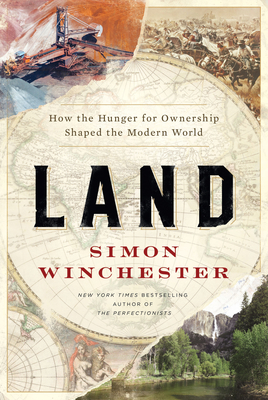
- How odd. Simon Winchester’s book Land has the same title as the one we are starting off with. Winchester’s book, however, is non-fiction. The subtitle of his book is ‘How the Hunger for Ownership Shaped the Modern World’, and this is a global history of the mapping, ownership, division, preservation and restoration of the land. To be honest, I haven’t read this yet- but it’s on the pile.
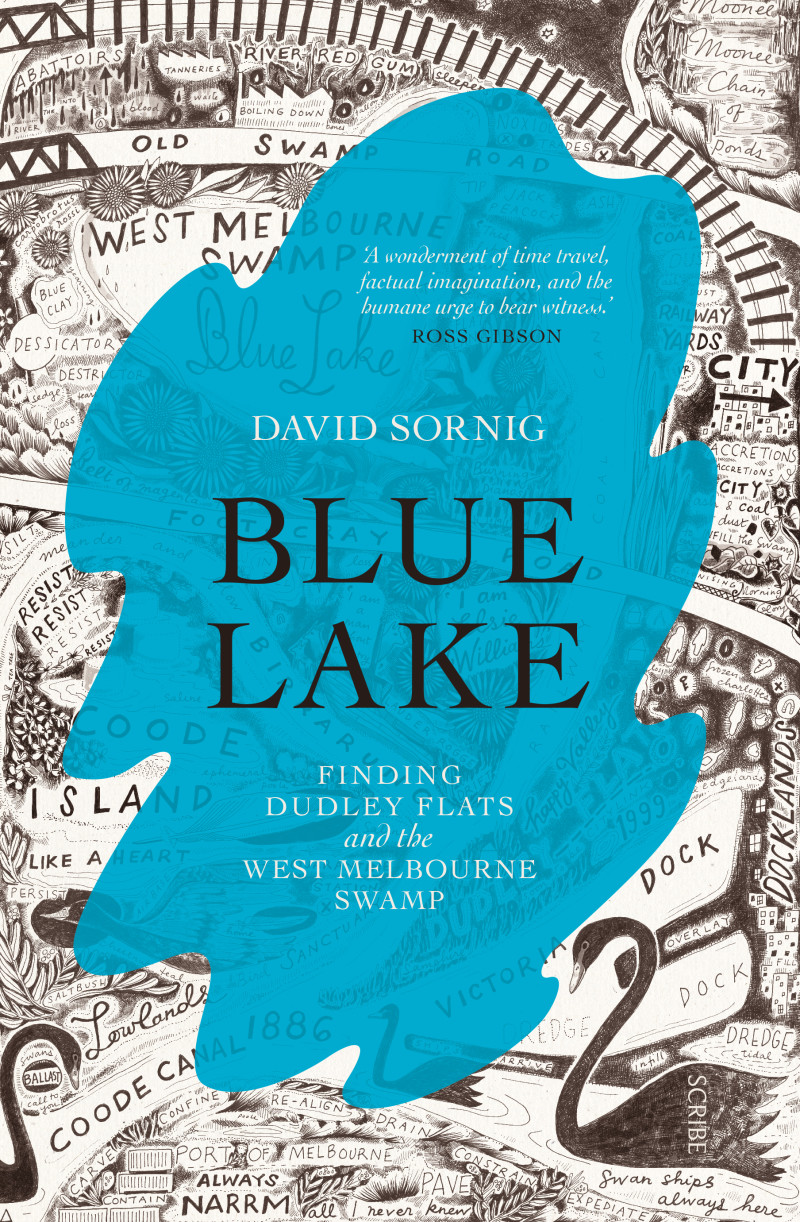
- Dave Sornig’s Blue Lake is about a specific piece of land, or more properly swampland, that has been completely engulfed by Docklands and the development of what used to be the West Melbourne Swamp. Previously known as Batman’s Swamp, the North or West Melbourne Swamp, and Dudley Flats it has always been a liminal place. This book won the Judges’ Special Prize, Victorian Community History Awards, 2019. My review is here.
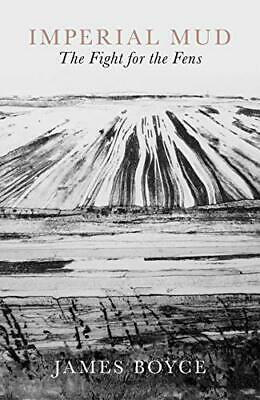
- James Boyce’s Imperial Mud: The Fight for the Fens takes us to England where he traces the unique, watery, changeable geography of the marshes of the Fens from 4000 years ago- possibly an area not unlike the swamp in Sornigs’ Blue Lake. The Fens, he explains, are not a precise location, given that the creeks and waterways that constitute them have always been an ever-changing phenomenon, and for much of their history they remained common land until they were drained in the 1950s, only to be inundated again. My review is here.
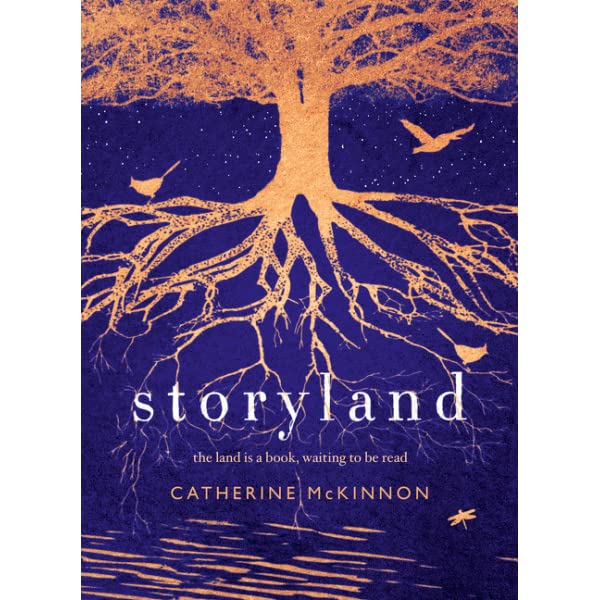
- Storyland by Catherine McKinnon is a series of stories set in the same geographical location: around Lake Illawarra (south of Sydney Cove and Botany Bay, near Wollongong). The stories are in a sort of pyramid structure, set in 1796, 1822, 1900, 1998 and 2033-2717 before reversing and going back again. You can read my review here.
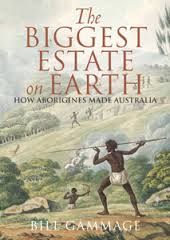
- One of the most influential Australian history books I have read is Bill Gammages’s The Greatest Estate on Earth. Gammage’s argument is that, instead of being marginal hunter-gatherers, ‘people’- for that is the terminology he has chosen to distinguish aborigines from ‘newcomers’- farmed prior to 1788. They were not farmers, which is a lifestyle; but they did farm – the activity of tending and shaping landscape. They developed what he calls a ‘template’ of landscape, a mosaic comprising open pasture with few trees, strips of scrub and stubby trees, other plains, then clearly delineated forest. It is an argument that forces us to change our view of the landscape around us. The bushland that we prize as ‘native’ landscape is often not that at all- instead it is product of neglect as the custodians of the country could no longer farm it. My review is here.
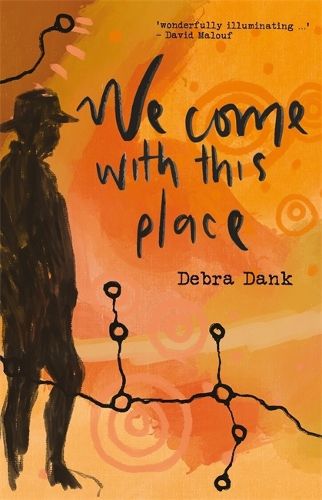
- Where Gammage’s book talks about settler blindness to what had been wrought on the land by the First People, Debra Dank’s book We Come With This Place looks at Country from an indigenous perspective. It is a family history telling of the lives of her grandparents (and further back) and parents but she does not necessarily help the reader by giving a straight-forward chronological account. Violence and dispossession seeped through the generations, as did the love and knowledge of Country. It’s a love and knowledge that she is giving to her children, and to us too as readers. My review is here.
Even though O’Farrell’s Land is fiction set in Ireland, I seem to have branched off into non-fiction, and mainly here in Australia, which is not surprising really.


Well done! A very… down to earth chain!
I’ve never heard of Blue Lake but hope to track down a copy. I’ve always been interested in the many airfields that used to be in the area between Fisherman’s Bend and South Melbourne, squeezed in beside swamps.
Simon Winchester’s books are well-researched so you are not alone in including his ‘Land’ among your choices. I’ll look out for it. I’m not sure how many of the others in your interesting chain will make it over to the UK, but they all look Good Reads.
I saw the title Blue Lake and instantly thought of Mount Gambier, but that obviously isn’t what the book is about!
Fun chain here!
What an interesting chain – I’ve added a couple to my TBR list. I’ve wanted to read Bill Gammage’s book for a while, but the size is a bit daunting!
I didn’t realize that Simon Winchester wrote a book about Land. I will probably read it. I find his nonfiction so interesting.
https://headfullofbooks.blogspot.com/2026/08/6degrees-starting-with-land-and-ending.html
Oh I’ve been AWOL for a while Janine, sorry. I enjoyed your chain, mainly because I love your focus on land. I also linked to Storyland in my chain. I have still to read the Gammage, though it’s on my piles and I heard him speak about it years ago. I’ve read the Dank, which I loved, but the one here that I have been very interested to read since it came out is Imperial Mud. I gave it to a friend who is interested in English history, and he loved it. But I still haven’t read it.