Tag Archives: books

Six Degrees of Separation: From ‘The Correspondent’ to ….

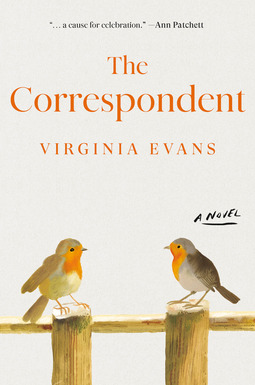
It’s the first Saturday of the month- quite literally- and so it’s Six Degrees of Separation day. This meme, hosted by Kate at BooksAreMyFavouriteandBest involves her choosing a starting book, and then you linking six other books to it. Almost inevitably she chooses a book that I haven’t even heard of, much less read, and this month is no exception with the starting book ‘The Correspondent’ by Virginia Evans.

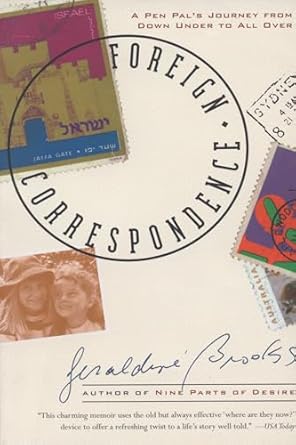
My first thought about a ‘correspondent’ is that of being a foreign correspondent. Geraldine Brook’s Foreign Correspondence, written in 1998, is a book in two halves. The first half is a memoir of growing up in Australia and collecting a number of international penfriends back in the day when you had to wait weeks for a letter from overseas. The second half is about her life as a foreign correspondent, who in her off-duty times catches up with her erstwhile penfriends to ‘investigate’ how their lives have turned out. It’s a great book for baby-boomers and laugh-out-loud funny in places.

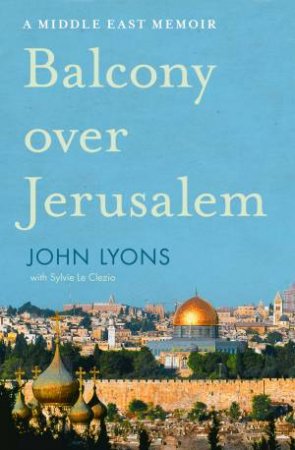
One of the foreign correspondents on ‘our’ ABC that I respect deeply is John Lyons, who is often the target of criticism particularly by conservatives and pro-Israel groups, but whose observations I always find honest and not always comfortable. Balcony Over Jerusalem (see my review here) is a memoir of the six years that Lyons spent based in Jerusalem as Middle East correspondent for the Australian, not a newspaper that I read often. He has worked for most of the media groups in Australia: Murdoch with the Australian, the Sydney Morning Herald and now for the ABC as their Global Affairs Editor. As Middle East correspondent generally, his brief extended to countries beyond Israel. He was there to witness the Arab Spring uprisings and subsequent crackdowns in various countries and the political permutations in Iran, Egypt, Libya, Lebanon and Syria. However, his major emphasis is on Israel, and the politics that have shaped the United States response, which flies in the face of world opinion which is gradually hardening against Israel. It was one of the 5 books given to Australian MPs for summer reading in 2025 on the Israeli/Palestinian conflict for summer reading, endorsed by both Australia Palestine Advocacy Network (APAN) and the Jewish Council of Australia (JCA), and sent with a letter signed by more than 50 writers including Tim Winton, Michelle de Kretser, Charlotte Wood, Benjamin Law, Anna Funder, Trent Dalton and Hannah Kent.

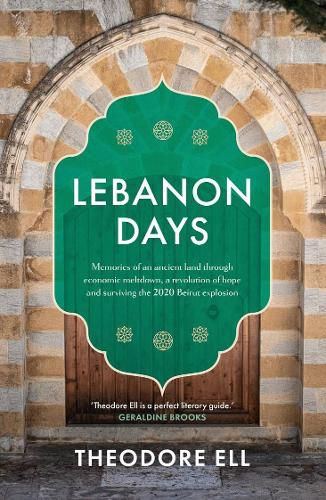
Also in the Middle East is Lebanon Days by Theodore Ell (my review here) It is the story of the two-and-a-bit years between the end of 2018 and the beginning of 2021 that the author spent in Beirut as the partner of an Australian Embassy official- a time in which Beirut roiled under street protests as part of the thowra (i.e. revolution) which was eventually put down by Hezbollah (or as he writes it ‘Hizballah’) and the COVID lockdowns, during a time of economic collapse exacerbated by government corruption, which in turn laid the conditions for the Beirut port explosion that changed his life.

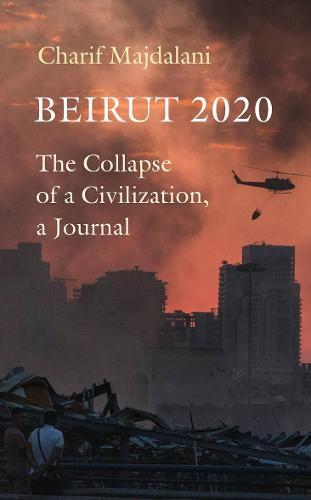
The Beirut Port Explosion of 2020 is the central theme of Beirut 2020: The Collapse of a Civilization by Charif Majdalani (my review here). The English language version starts with a very useful preface ‘Lebanon: the lessons of complexity’ which provides a potted history of Lebanon over 9 pages. It then moves to a series of journal articles, starting on 1 July 2020. His diary entries are interspersed with short explanatory chapters, which expand on the information given in the preface about corruption, protest, the piles of rubbish. The presence of COVID and the refugee influx are mere background details. Still the book inches closer to the explosion that we know is going to happen. This book tries to end on an optimistic note, but it rings rather hollow- especially now.

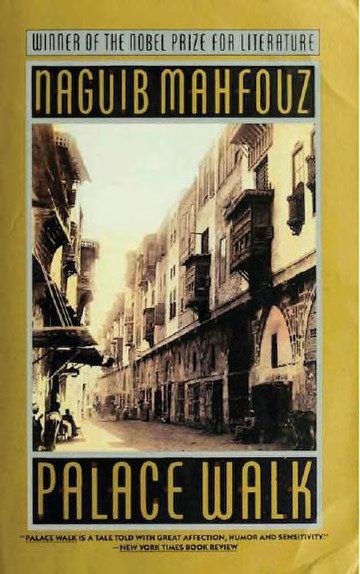
Still in the Middle East, but now historically, with the fantastic Cairo Trilogy by Naguib Mahfouz. Palace Walk is the first book of the trilogy. It is set in Egypt in 1919 during the uprising for independence against British occupation. It is the family story of Al-Sayyd Ahmed in a time of rebellion, when modernity and the adult independence of his children chips away at his sense of traditional authority.

And to round off and to return to the theme of correspondence, I finish with another historical book, Just Send Me Word: A True Story of Love and Survival in the Gulag’ by Orlando Figes (my review here). Moving out of the Middle East to yet another of the world’s troubled areas, this book is based on an archive of letters between Lev Mischenko, who spent eight and a half years on the extreme edge of Russia in one of the gulag camps in the Arctic Circle after WW2 and his partner Svetlana Ivanova. There are maps, photographs, explanations and Figes explains not only the minutiae of labour camp life, but also the sweep of Soviet politics on the outside during the time that Lev was imprisoned. But the real, real strength of this book is Lev and Sveta’s story, and the beautiful, nuanced, tender letters that they shared over this time.

It must be a sign of the times and my own unease over where the world is heading that has dominated my choice of Six Degree books this month. Sorry…but all of these books were excellent, in a time when I think it’s important that we keep looking outwards when all we want to do is curl up and wait for it all to go away.

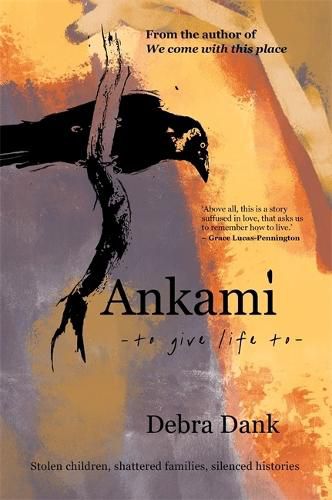
‘Ankami’ by Debra Dank

2025, 152 p.

Both visually and in its subject matter, this third book by Debra Dank and her first We Come With This Place (see my review here) are linked. However, the tone of this book is different: instead of being a celebration of family, country and continuity as her first book was, this book is infused with an anger which is moulded into regret. The beautiful writing is still there, but there’s an injury here as well. I wonder if the timing of this book has something to do with this? It was published in 2025, post-Voice Referendum. I see the defeat of the Referendum as a mean-spirited rejection on the part of white Australia of the responsibility to listen – something that Governments seem happy to do with lobby groups, particular religious groupings and big business, but not our First Peoples whose ‘brand’ we blithely adopt at international events like Olympic Games and tourism advertisements.

She herself acknowledges her anger, which she capitalizes with an Upper Case A. As soon as she awakes, her uninvited bedfellow Anger whispers to her and causes her body to tighten. As she tries to locate where Anger comes from, she moves to “the outskirts of my reminiscence”, where she finds

sombre sub-memories that suggest the what might have beens, the sentient breathing of those who did not have the opportunity to make themselves more substantial by their living, but I find them there all the same, prowling like misshapen birds waiting to tell a calamitous story. I know too much about those birds, their earthly form an unsettling combination of shiny black feathers and yellowish beaks, staring eyes… and about their stories. They are often around, the flapping of their wings and their cawing voices adding to the daily rhythms of my living steps, but inside, with my unseen companion, Anger, they seem to offer obscure warnings of imminent and dire happenings. (p. 34)

So what has happened between her first and second books? Certainly in We Come With This Place there is violence and injustice but her Anger/Regret in this book starts as whispers from aunties who tell her of voices all them kids” that cried at night, and older women in the community who urge her to go up to the islands in the north because her father had family there. When she asked her father, he denied that he had any other unacknowledged siblings. There was an appointment with an Aboriginal agency trying to link up families again that seemed to be fruitless. Then there was the unsolicited and unexpected phone call from a woman who was putting together and thought that they might be related on account of their shared name. There was silence when Debra told her that she and her father were Aboriginal. There was a silence. “Oh well, um, that’s nice. Er, you have a nice day”. (p. 81)

Then there is finally, definitely, the documents that she located in the National Archives.

Time collapsed in those moments of opening the attachments and doing the cursory read that I thought would be adequate to find what I had assumed was waiting to be found. I was looking for an easy telling of names and places and times that I already knew, not this thing that greeted me with a wicked and vengeful eye. In that moment I was so very grateful for those documents but there was an awful, almost hateful, separation too. I discovered that my father had not one sibling but four, who were taken, that my paternal grandmother had given birth to ten children, not the six that I had known about. Those four others seemed to be part of the Stolen Generations, and later, as I sat in silence to process that, I remembered that there had been whispers. (p. 62)

What seems to be particularly galling is that these four children are an absolute void. They are not named, or numbered. The document from the National Archive was a letter advising of the death of her maternal grandmother, the mother of 10 children. Her youngest child had died, and the other living five children were on the Alexandria station. The author of the letter didn’t know where the other children were.(p. 94) When the protector arrived up at Alexandria station, he expected to find the children there, but “I understand it is the practice to trade workers between this one and that”. (p. 87)

In the Redfern speech in 1992, Paul Keating (or Don Watson his speechwriter) spoke of the failure of imagination on the part of White Australia. Despite the bland language of the time, it doesn’t require a great deal of imagination to recognize child removal or slavery.

Here is the ‘Ankami’ of the title: “to give life to”. Her book gives life to these children of the absence. She recognizes that it is not anger, but sorrow at the ‘should have beens’ of these four missing siblings, aunts and uncles, and the web of cousins that might have been wrapped up into the family, as she had been.

I realize that I’m not angry at all, that what I’m feeling is loss, loss that is pervasive and soul deep and profound. I see now that wandering through my body to eventually arrive at what may be close to my soul, that careful travelling gaze found the site that hosts my sorrow. I live with long term loss that is impossible to grieve for because I don’t know who I should miss. I didn’t learn their faces. I didn’t feel their joy or wrath; they never taught me the things they needed to teach me as much as I needed to learn them. Mostly I don’t know how to miss them because they were never there, merely half-imaginings on that opaque edge of my knowing of what should have been, but they’re there in ways that I can never escape because they’re in my blood. And somehow I’m grateful for that because they deserve so much more than to only exist in that horrible arrangement of ink. (p. 177)

Danks spends quite a bit of time in this book talking about fruit cake, which seems a paradox. It is a fruitcake from a recipe brought from Scotland with the ‘settlers’ of her family, that has been handed on from daughter to daughter. She talks about her non-indigenous father-in-law’s stories of his childhood and the perils of surfing and the sea, stories that he had told many, many times before. We all have history, but only one history is told; only one history is recognized.

I think there is a particular kind of superficial living gripped by folk who hear only one history, only one way of thinking…let’s all be truly courageous about owning our entire history and acknowledging all of it, and then be proud- an informed pride, rather than one that is steeped in wilful ignorance. (p. 111-2) …. The central truth in this story is that all Australians now benefit from what was done to my family and to almost all other Aboriginal families in Australia and it can only heal us all to admit that much at least. But I don’t know that such a young country has the maturity to accept that. (p. 179)

It doesn’t. This is what Australia said ‘no’ to.

This book is confronting and asks difficult questions that we don’t want to answer, but it is not bashing you over the head with guilt. As Antonia Pont, who wrote the Foreword notes, the book “circles, spirals, sidles close to, and also confronts legal, political, communal and personal facts and happenings, with a rigorous yet not overplayed scholarly knowledge of the detail” (p.xii) It is a bit like probing the skin around a wound: touch, flinch, but touch again more gently. Such grace in allowing us the space to be so tentative, but still quietly insistent that there is much work yet to be done. ‘Ankami’ has been shortlisted for the 2026 Victorian Premier’s Award. It didn’t win, but it would be a worthy winner.

My rating: 9/10

I hear with my little ear: Podcasts 8-15 March 2026

The Climate Question (BBC) Seeing the cascade of concrete rubble in Lebanon, and the belching smoke from missile and drone attacks on oil and gas infrastructure across the Middle East, I can’t help thinking about the environmental implications of America and Israel’s war on Iran. I’m obviously not alone. In this episode, What’s the Climate Cost of War host Graihagh Jackson chats to two leading experts ( Neta Crawford, Professor of International Relations, University of St Andrews and Dr. Benjamin Neimark, Associate Professor at Queen Mary, University of London) about the carbon footprint of battle itself – the jets, the bombs, the supply lines – and the impact of maintaining armies and bases during peacetime. They discuss Gaza and Ukraine, as well as the current US-Israel war with Iran. They point out that militaries have a huge climate impact even in peacetime, because they are always mobilized, and the procurement of highly engineered weapons has a climate impact too. They point out that the military doesn’t have to report emissions because they received a carveout in the Kyoto accord, and reporting was made voluntary under the Paris climate accord. However, the military are reducing emissions because they are concerned about extreme weather and the instability it causes, and the mass migration which might result.

The Rest is Classified Episode 122 Kim Philby: An Assassin in Spain (Episode 2) By now Philby’s Soviet handlers had charged him with the task of infiltrating the British state- starting with his own father, who was a rather eccentric Arabist. Kim and his friend Tim Milne (the nephew of Winnie the Pooh writer AA Milne) travelled in Europe and witnessed the rise of fascism. He began working as a journalist, and was sent on assignment to hang around with the Nazis. From there he was sent to the Spanish Civil War to cover the right wing forces for the ‘Times’ and was encouraged to get close to Franco. In 1937-8 many Soviet handlers were purged by Stalin, and he was cut loose for a while, with little or no contact with his handlers. In 1939 Germany and Russia signed the Nazi-Soviet pact, which must have really done in the heads of anti-Nazi Communists- all of a sudden they were on the same side! He met Litzi, a sexually liberated Communist, and they married. and went back to England together. Then he was sent by the Times to report on the British army, which of course he fed to Russia, which was still too involved in its own purges to take much notice of him. At this stage, the other Cambridge Five were more successful in infiltrating the British Establishment- for example Guy Burgess was working at the BBC, where he was very well connected. When Burgess was recruited by MI6, he lobbied to get Philby in, although Burgess himself was soon sacked and returned to the BBC and then the Foreign Office. Philby joined the British Secret Intelligence Service after his father vouched for him.

The Rest is History Episode 405 The Nazis in Power: The Nuremburg Rallies (Part 2) From their website

““We did not lose the war because our artillery gave out, but because the weapons of our mind didn’t fire” In September 1934, the Nazis held their sixth annual party conference in the Bavarian city of Nuremberg. The location held a symbolic resonance for the party, being not only the embodiment of an uncorrupted medieval Germany, and the centre of the First Reich, but also a bedrock of anti-Semitism. It was therefore here that Hitler would lay out his terrifying vision for the mighty new empire’s future, promulgating the superiority and purity of the Aryan bloodline. The rally was a pageant of ritualised fanaticism, recalling the majesty of Germany’s mythic past and all the heroism of classical antiquity. It was the first of many such extravagant displays, replete with parades of marching workers, bonfires, and swastikas, as the Nazi propaganda machine, under the leadership of the grotesque Joseph Goebbels, tightened its stranglehold over Germany. Through the popularisation of the radio, Nazi youth organisations, cinema, and even the Olympic Games, German minds were being steadily remoulded…”

There were 700,000 participants at the rally which included speeches, stage performances and parades. By 1935 Hitler announced that the swastika would be the national flag, and very cheap radios were distributed so that people could listen at home. Radio propaganda was also installed in offices, cafes and stairwells. Women were cloistered within a separate sphere, based on inequality and pseudo-scientific theories. They were moved out of legal and educational positions, and in 1934 were limited to 10% of the enrolment at grammar schools, and soon there would be no female enrolment at all. There were no non-Nazi youth groups: instead provision for young people was funnelled through the Hitler Youth and the League of Nations

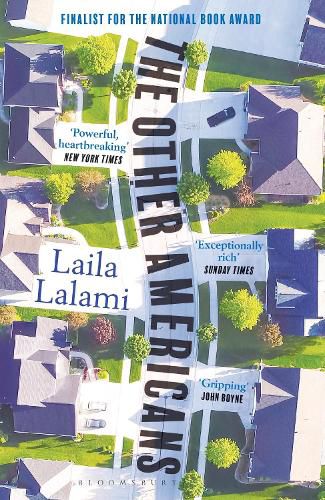
‘The Other Americans’ by Laila Lalami

2019, 301 p.

The front cover of this book shows a stylized drone-view type drawing of a suburb in America, with gabled houses surrounded by lush green lawn and trees. It looks just the way I imagine American suburbia to look, full of Leave-it-to-Beaver and Brady Bunch types. The ‘Other America’ in this book live in a rural town on the edge of the desert and the “other Americans” who live there are very different to this white, sanitized image.

Late at night in a small town in the Mojave Desert, California, middle-aged Driss Guerraoui, a cafe owner who originally emigrated from Morocco, is killed in a hit-and-run accident. It is assumed that it is accidental, but his daughter, Nora, believes that it was a deliberate ‘accident’ even though her grieving mother Maryam and sister Salma do not follow her in her obsession with finding the perpetrator. The local police are brought in, including Coleman, a female officer that we later learn is of African-American descent, and deputy sheriff Jeremy Gorecki, an ex-Iraq veteran who had grown up in the town and had long had a school-boy crush on Nora. Before the accident Nora had been living in Chicago, trying to carve out a career as a musician, and involved with a married man who had not followed through on his pledges to leave his wife. But when her father is killed, she returns to her home town and again becomes involved with the boys she went to school with, including Jeremy and A. J. and his father Anderson, who owned the bowling alley beside her father’s cafe. However, the accident did not go completely unseen. Efrain, an undocumented immigrant, saw the collision but fear of the authorities stopped him going to the police. He only came forward when Nora offered a generous reward, possible because of a bequest left to her by her father (a bequest resented deeply by her sister).

The story is told in a chorus of nine voices, including that of the dead man Driss. Because they are all telling the story from their own perspective, we learn much more than about just the accident and the investigation, which is rather an anti-climax as far as a police procedural goes. We see parallels between Driss and Efrain, both making a life in a new country; we learn of infidelities in Nora’s own family; we see racism and resentment being played out at multiple levels. Because they are told from each character’s point of view, we gain multiple perspectives on the same event but I feel that, as a writing technique, it’s a bit of a cop-out. The voices were not sufficiently different from each other and the author is relieved of the responsibility of tying them together. It has been done before, and it just felt a bit tired as a style.

My rating: 7/10

Sourced from: Yarra Plenty Regional Library

Read because: I have Leila Lelani’s new book reserved, and I thought I’d read one of her earlier works first.

‘Frostquake’ by Juliet Nicolson

2021, 384 p.

Well, it only took five years between hearing a podcast about this book and being inspired to purchase it, and actually reading it. And even then, I was spurred to read it because I’d like to read Andrew Miller’s The Land in Winter, set in the winter of 1962-3, which was short-listed for last year’s Booker Prize. Interestingly, Miller’s book also won the Walter Scott Prize for Historical Fiction, with the events of sixty years ago now considered history.

Frostquake, on the other hand, positions itself very clearly as ‘history’, telegraphed with the subtitle ‘The frozen winter of 1962 and how Britain emerged a different country’. In it, Nicolson argues that the winter of 62-63, the coldest since 1814, crystallised a tension between the old and the new. The old: Winston Churchill, Harold Macmillan, the continuations of the poverty of the Industrial Revolution, with 15 million people still lacking a plumbed-in bathroom. The new: JFK, Harold Wilson, the Beatles, consumer goods like televisions and refrigerators, glass office-blocks.

There are moments when society, however embedded, shifts on its axis. The long and lingering hardships of the paralysing winter of 1962-3 encouraged, even enabled, change: the very effect of shutting down empowered a thawing. Forces of social change that had been building over many years now found their moment of release as they broke through the icy surface. As the country froze it melted. (not sure about the page number because I read this as an e-book)

So what is a frostquake? One of the epigraphs to her book is a definition from an unnamed source:

Frostquake (n) A seismic event caused by a sudden cracking action in frozen soil. As water drains into the ground, it may freeze and expand, putting stress on its surroundings. This stress builds up until relieved explosively in the form of a frostquake (p. vii)

However, this book is not about weather or geology, although the snow and ice that started falling and forming for 10 weeks from Boxing Day 1962 through until to spring give the book its narrative parameters. Instead, this book is far more about people and their overlap with events on a national and world stage, drawn from conversations, memoirs and interviews. Some of these people are unknown: 19 year old Pauline Stone, driving through the mustard-like fog in her Mini Minor; Terri Quaye a 22-year old black jazz singer, Corporal Dennis Osbourne, travelling with his family on the Liverpool-to-Birmingham Express, which collided with the Glasgow-London express because of poor visibility. They each have a small story, of which the weather is just background.

But many of the people that Nicolson writes about are well known: Joanna Lumley talks about the cold at her boarding school; the Beatles are being transformed from scruffy, rather smelly hack musicians playing the clubs and careering from gig to gig into suited songsters who appear on the television; Mick Jagger and the Rolling Stones are London fixtures- Mick and Brian Jones sharing an Edith Grove flat, and with Mick taking on board the advice of Andrew Oldham, 19 year old window dresser at Mary Quant’s shop and music promoter “If you pretend to be wicked, you’ll get rich”. There’s the eruption of satire on the television, with comedians Peter Cook, Dudley Moore, Barry Humphries and Alan Bennett thriving into the 1970s and later. Author Antonia Fraser floats in and out, as does fellow author Penelope Fitzgerald. There’s a lengthy section on Sylvia Plath, who committed suicide in February 1963, in the depth of this cold winter.

Not only do other people, both famous and unknown, appear, so too does Nicolson’s own family. When she talks about spending Christmas of 1962 at her grandfather’s house at Sissinghurst, the penny dropped- Ah! She’s the daughter of Nigel Nicolson, who wrote Portrait of a Marriage, and the ‘Nicolson’ in the publishing company Weidenfeld & Nicolson. And so, she’s the granddaughter of Harold Nicolson, many-partied politician, who supported the decriminalization of homosexuality and the abolition of hanging, opposed the Munich Agreement with Hitler, published Lolita and disagreed with Anthony Eden’s Suez policy. And the granddaughter of Vita Sackville-West, who had died the previous summer.

Her upbringing in a political milieu is reflected in her attention to the Profumo Affair in particular, and the entanglement of the various characters who appear throughout the book. Nicolson herself received a pinch on the bottom from John Profumo, a one-time parliamentary colleague of her father, when he came to see the garden at Sissinghurst some thirty-years later. The glamour of JFK is here too, a contrast to the dowdiness of the Edwardian-figure of conservative Prime Minister Harold Macmillan whose career was derailed by the Profumo Affair. The anxiety of the Cuban Missile Crisis pervades the book, and Britain is being rebuffed from the European Economic Community by Charles de Gaulle.

The writing is quite beautiful. Here she is waking up on the day after Boxing Day 1962 as the snow begins to fall, the most snow they had ever seen in their lives:

The following morning we woke to the peculiar blue-bright light of reflected now filtering through the closed curtains. Instead of disappearing during the night as we had feared it would, the snow was still there, turning the landmarks of the garden- the walls, lawns, statues, urns- into something unrecognizable but unified. The sight was beautiful, its very transience on this familiar landscape making it even more precious. Snow muffled all sound and the silence felt dream-deep. Outside freezing snowballs melted the second they hit the napes of our necks and we tipped backwards on to the lawn, arms outstretched like acrobats, trusting that the mattress of snow would break our fall. Unlike a sandcastle on a beach, absorbed so soon by the waves, our imprints remained, hollows into which we could flop again and again. (Ch 7)

She returns to the silence of the snow-bound world at the end of the book, writing in the midst of COVID which brought its own silence to us. Writing in the winter of 2019-20, the daffodils and forsythia had just begun to blossom, and suddenly the earth felt lit up by yellow flowers.

Sixty years before the winter of 1962-3 the century had just turned and with it the old Victorian regime was dying. Sixty years after the winter of 1962-3 the world turned again, a little more sharply than it should have, unbalancing the stability we take for granted and throwing everyone into a state of profound shock….In December 2019, on a world map shown on every single news channel, a tiny red dot indicated a town in the heart of China, a million, million miles away from England, as the place where a brand new strain of a deadly virus had emerged, one that targeted the lungs, the enabler of breath, of oxygen and of life itself. Eight weeks later the dots had spread, and much of the world map was coloured red. In the autumn of 1962 many felt we were teetering of the edge of absolute destruction with nuclear weapons capable of wiping out mankind. And now, in the spring of 2020, the coronavirus, constantly visualized on screens as a spiky globe, an exotic species of underwater coral, a logo of frightening change, made us feel we were once again staring into the abyss, looking over the rim…. The country lanes were silent not this time because of the muffling of snow but by the absence of traffic. The world was in lockdown. The skies were blue, blue, blue, devoid of aeroplanes, not through mankind’s choice but for its survival. And the birds were going crazy in the sunshine. Nature seemed to have forgiven us not for doubting but for threatening its resilience and had returned once again with an astonishing beauty….Perhaps every half-century or so we need an intervention that is outside our control, an uninvited pause in order for resurrection to take place.

I enjoyed this book. I’m old enough to recognize the things she is writing about- indeed, the author and I are nearly contemporaries, and I do wonder if someone younger would enjoy it as much. It was not at all what I expected, which was a far more journalistic, meteorologically based account, but enjoyed the political and personal approach much more.

My rating: 9/10

Sourced from: purchased e-book

Read because: I heard a podcast with the author.

‘And the Women Watch and Wait’ by Catherine Meyrick

2025, 435 p.

Especially in the wake of the centenary of WWI, there has been no shortage of books about men’s experience in war. They’re usually big fat books, often named for a battleground in large letters, with the (male) author’s name is letters much the same size. Women’s experience- especially the experience of women who didn’t go to war but instead stayed home waiting- is less often documented. And the Women Watch and Wait is based in suburban Coburg in Melbourne, and it captures well the dissonance between suburban life and battlefields far away, the agony of curtailed and delayed communication, and the emotional peril of allowing yourself to fall in love.

Kate is a young country girl who has been sent down to Coburg as company for her Aunt Mary, whose two sons have volunteered and been sent overseas as part of the first contingent of soldiers to be deployed. As well as the excitement of staying in Melbourne, Kate is excited that her boyfriend from Gippsland, Jack, has been sent to the nearby Broadmeadows Training Camp, and there are more opportunities for them to meet up before he leaves than there would have been had she still been in Gippsland. Time is rushing on, as the rumours of the trainees’ departure mount, and she is excited when Jack proposes to her. At this stage, there is still hope that ‘the boys’ will be back by Christmas, and there seems such pressure of time to commit, to get married and start up a married life. Jack leaves with his detachment, and Kate is left with her aunt, working in her aunt’s grocer shop, teetering between excitement to receive mail, and yet fearing what news the mail might bring. News does arrive, and she, along with the women among whom she is living, has to readjust her hopes for the future.

I’m probably a particularly critical audience for this book, because as it happens I’ve been writing a column for the newsletter of my local historical society for the past ten years or so that looks at events at the local Heidelberg level one hundred years previously. Just as Catherine Meyrick would have done in researching this book, I’ve followed the local newspapers closely, consciously looking for women’s experiences, reading every page and even the advertisements and classifieds. This has given me a close-up knowledge of one suburb, (albeit a few suburbs away from Coburg) and how the world-wide events of WWI impacted the social and political life of a community. I must say that she has nailed the local aspects, and I found myself nodding away to parallels that arose in her book which also occurred in Heidelberg.

The book is arranged chronologically by year, starting in 1914 and going through to 1919 with an epilogue. It has over sixty short chapters- too many, I feel- and the frequent changes of location made it feel a little like a screenplay. She integrates political events of the day, like the conscription debates, into her narrative and, again, she captures this big event playing out in small halls and conversations so well. I particularly liked that she explored the WWI experience from the Catholic viewpoint, something that is not represented well in the local newspapers that I have read.

It’s a difficult thing to undertake huge amounts of research, then to let it go in case it smothers the narrative (an advantage that historians have over novelists). At times I felt that small local details were made too explicit, but I’m also conscious that I may have read this book differently to the way that other people might read it. At an emotional level, the book rang true with love, fear, vulnerability and strength being lived out not in trenches but in suburban houses and streetscapes.

My rating: 7/10

Sourced from: purchased e-book. Check https://books2read.com/AndtheWomenWatchandWait/ for availability

Read because: I noticed that the author had linked to several of my posts.

More challenges

Well, not only have I fallen behind with my Waking Up Challenges, but I’ve fallen behind in writing about them as well.

Day 5’s challenge was to sit it somewhere for five minutes and write down exactly what I saw,—objects, movement, colors, textures, light- then to write about what emotions or expectations might be influencing what I saw, and how. Well, I sat at my desk, the same desk that I’m typing this at. I have slimline venetian blinds, and so the light was being sliced up horizontally. What I could mostly see was mess: printoffs of music, little notes to myself, piles of folders, books I’ve read and haven’t decided what to do with. Around me, more piles of books and an assortment of ukuleles. My feelings about them all? Obligation and “I should”s. The one thing that made me smile was looking at my desk calendar which I had printed off with photographs of my grandchildren. Listening to the reflection that accompanied this challenge, I must be a person who sees through a glass darkly (which is not, I must admit, how I perceive myself). Or perhaps I should just clean up this desk (another should).

I skipped Day 6 but it looks interesting, and I might come back to that one.

Day 7 was called ‘Leveraging Boredom’ and the challenge was not to use my phone FOR A WHOLE DAY. Well, I soon decided that I couldn’t possibly do that, but what I could do was to not go onto social media, no Wordle, no Google, no Solitaire, You Tube or The Guardian website for a day. It was disturbingly difficult but I’ve been hating how much time I waste each day, especially at night when I get tired. So, instead of scrolling, I finished reading a book I’ve been enjoying and felt much better for doing so. Instead of watching TV and playing Solitaire at the same time, I actually watched the Foreign Correspondent episode I was watching.

‘The Man in the High Castle’ by Philip K. Dick

1965 (1962) 236 p.

It’s interesting that my copy of The Man in the High Castle should be issued under the Penguin Science Fiction impress, because it doesn’t seem particularly science-fiction-y to me. It was first published in 1962 and envisaged a world in which Germany and Japan had triumphed during WW2, with the action occurring taking place in 1962- i.e. contemporaneously. To my mind it was more an alternative history or counterfactual than science fiction.

The narrative traces through several characters who live in an America partitioned into three. Nazi Germany controls the East Coast, as well as Russia and Western Europe. The east coast itself is divided in two: the remnant United States of America up to the Canadian border, and ‘The South’, both ruled by puppet regimes under Nazi control. The West Coast had been annexed by the Japanese as the Pacific States of America. Between the two regimes is the buffer Rocky Mountain states, where American citizens continue a depressed, oppressed existence.

The novel starts in the Pacific States of America, where businessmen Robert Childan runs a business selling pre-invasion Americana, most of which is counterfeit and manufactured by the Wyndam-Matson Corporation. Childan is contacted by Japanese trade official Nobusuke Tagomi, who seeks a gift to impress a Swedish industrialist named Baynes, who is coming to visit. Baynes, however, is really a Nazi defector who is coming to warn of the incipient activation of Operation Dandelion, a plan for Germany to attack Japan and attain world domination. Meanwhile, there is a banned publication, The Grasshopper Lies Heavy which is circulating surreptitiously, which posits that in fact, the Allies did win. Ostensibly the book is written by Hawthorne Abendsen, the eponymous ‘Man in the High Castle’. Juliana, the ex-wife of secret Jew Frank Frinke, is fascinated by the book, and travels unwittingly with an under-cover Nazi to meet the author, unaware that her companion Joe Cinnadella, has been sent by the Germans to execute Abendsen. It is a repressive and violent society, which has reverted to almost-magical times, with the I-Ching, a book of Chinese divination, guiding the actions of many of the characters, both Japanese and American.

The scenario is fascinating, but unfortunately the characters are not. I confess to losing track of who was who, and I am still bemused by the authorship of The Grasshopper Lies Heavy, although I think that the author intended this ambiguity. The characters are rather mechanical, and it is difficult to feel any connection with any of them. The end of the book becomes bogged down with a fairly metaphysical exploration of the I-Ching.

However, the book does form the political and ‘historical’ background to the excellent Prime four-season series, which managed in its first episode to evoke more sympathy and coherence to the characters than the whole book did. Interestingly, they turned The Grasshopper Lies Heavy into a film, instead of a book, which in a way made the whole scenario more implausible- who has a film projector hanging around in their apartment? Surely a book would be more portable and thus more dangerous. To eke four seasons of the TV series out of a fairly slim volume, obviously it was taken far beyond the original book, but to my mind so far, with far more success in character development than the book. So, for me, The Man in the High Castle is a book with a really fascinating premise which didn’t quite manage to develop its characters, or integrate its metaphysical aspects.

My rating: 6/10

Sourced from: My husband’s bookshelves. I had heard about the book, but never read it or seen a copy.

‘Falling’ by Anne Provoost

1997, 285p

SPOILER ALERT

The twentieth anniversary republishing of this book has come and gone, it having first appeared in Dutch in 1995. I had heard of it, and knew that it dealt with Nazism, and assumed at first that it would be set during World War II. It came as a surprise, then, that it was set in the present day (in 1995) with themes that are probably even more resonant and urgent today than they were in 1995. My copy, collected no doubt from my local little library, had obviously been a school set-text, and the book won many Young Adult awards on its publication.

Lucas has accompanied his mother to Montourin, a small Belgian provincial town, to clean out his late grandfather’s house. The book opens with Lucas standing by the side of the road as his friend Caitlin is brought back from hospital after an accident that occurred three weeks earlier. The narrative then spirals back to explain who Lucas and Caitlin are, how she was injured, and Lucas’ part in that injury. It is written in first person, from Lucas’ viewpoint, thus aligning us as readers with his perspective of events in the weeks leading up to Caitlin’s injury.

On arriving at Montourin, he finds that there is an unspoken edge of hostility towards him and his family, exemplified by Soeur, an old nun in the nearby convent in which American-born Caitlin is staying. He does not understand why, and as he sees his mother sorting through and destroying his grandfather’s documents and belongings, he knows that something is being kept from him. He gradually learns that, after the death of one of his children during the hungry days of WW2 occupation, his grandfather denounced fifteen Jewish children and the nuns who were hiding him in the neighbouring convent, out of grief and resentment that these Jewish children were taking food rations that could have saved his daughter. Some in present-day Montourin shunned his grandfather for this action; others supported it.

Their support was generally unspoken, but outright admiration was voiced by Benoit, a young man older than Lucas, who combines menace, charisma and manipulation in his neo-Nazi outlook. Lucas is drawn into Benoit’s sphere and becomes involved, with varying degrees of culpability, in Benoit’s terrorist plans against the Moroccan refugees who have moved into the town. At the same time, he is attracted to the inscrutable Caitlin who fluctuates between flirt, friend and heartbreaker as she, too, seems to be becoming friendly with Benoit. But when Caitlin is involved in a single-car accident- the reasons for which are unclear- Lucas acts decisively, if precipitously, in a way that will change the rest of Caitlin’s life. I’m not really quite sure about the ending of the book, which is deliberately left obscure, but which struck me as a little melodramatic.

Since 1995 the presence of African refugees in Europe has only increased, as has the prominence and apparent electoral acceptability of neo-Nazi parties. This book is a warning against the slow slide towards fascism, especially for young men with no responsibilities who yearn acceptance from other young men. I can see why it would be chosen as an upper-school text, especially given its urgent relevance today. I’m not sure how it would be received by high school students though- it moves fairly slowly, and I wasn’t particularly satisfied by the ending.

My rating: 7/10

Sourced from: little library

I hear with my little ear: Podcasts 8-15 January 2026

Journey Through Time Episode 27 The Trial that Made Hitler Famous Ep. 2 It wasn’t the Beer Hall Putsch that made Hitler internationally famous, but the trial held afterwards. After the coup had collapsed, Hitler and his group marched through Munich hoping that crowds would join them (they didn’t) and there was a brief shoot-out where four police were killed. Hitler fled Munich, but was arrested. Even though the putsch ended in farce, Hitler saw the trial as a platform. One of the panel of judges in particular was sympathetic to him: he was not forced to wear prison clothes, it was a 24 day trial and he was allowed to make long speeches and cross-examine witnesses himself. He pleaded guilty but nonetheless some judges wanted to acquit him. He received a five year sentence but released after 13 months. He was given special treatment in jail, but it fed his martyr-complex. Once the Nazis gained power in the 1930s, the anniversary of the putsch was celebrated, and in fact Kristallnacht was conducted on the anniversary. The two presenters, David Olusoga and Sarah Churchwell, then went on to draw parallels with the current day.

The Rest is Classified Episode 99: Putin’s Secret Army: Trump, Wagner and Russia (Ep.2) As an entrepreneurial caterer and restauranteur, Prigozhin got into P.R. where he was not beyond indulging in dirty tricks. Because of his PR skills, the Kremlin turned to him. Prigozhin was behind the Internet Research Agency, a troll factory based in Russia employing 800-900 workers. First the Internet Research Agency targetted a domestic Russian audience, particularly demonizing Alexy Navalny. In 2014 after the invasion of the Crimea, it moved its focus to the West, then it looked to the 2016 US election. The Internet Research Agency paid for Facebook ads, often pushing both sides, in order to sow division. At this stage Prigozhin became visible to the FBI, leading to a 2016 FBI indictment. He denied the connection with the Internet Research Agency, and took it to the courts. The title of Peter Pomerantsev’s book sums it up: Nothing is True and Everything is possible. Doesn’t that just describe the world we live in?

The Rest is History. I haven’t listened to my old friends Dominic and Tom for a while, so I scrolled back to 2022 and found a series that they did on Australia’s prime ministers to mark Albanese’s victory. Although Episode 187 is titled Australia’s Prime ministers from Edmund Barton to Robert Menzies, it didn’t give much attention to the early prime ministers (perhaps I was day-dreaming at that point?) and they concentrate on post-WW2 prime ministers. Now, as I found with their episode on the Tupamaros, Dom and Tom might be very good – are very good- on European, British and American history, they’re not so hot on the rest of the world, especially ‘middle powers’ like us, or the Global South. They deal respectfully with Menzies, Curtin, Chifley and Menzies again, but in Episode 188 Part 2 they become a little skittish. They point out that Harold Holt was Australia’s youngest Member of Parliament and succeeded Menzies. They laughed (as do we all) at the unfortunate naming of the Harold Holt Swimming Pool. They think that Gorton was an excellent character, almost French in personality, war hero and larrikin. They question (as do we all) Billy Macmahon’s sexuality and his propensity to steal things (really?). They see Whitlam as a patrician figure, who was brought undone by his plan to borrow petro-dollars during the oil shock. They thought that Fraser looked like the classic Australian, welcomed the Vietnamese and opposed apartheid- and he lost his trousers. By Episode 189 Part 3 they are completely silly, and admittedly, they have plenty to work with here. Hawkie held the world record for sculling a yard of ale, but was economically similar to Thatcher; Keating was impressive but a paradox; Howard was stolid; Rudd was part of a culture of spills; Gillard exemplified The Guardian newspaper in female form; Abbott exemplified the Daily Mail. Turnbull could have been a Labor P.M. ( I rather wish he was, personally) while Morrison exemplified the Man at the Garden Centre and looked like a koala. So as you can see, Dom and Tom’s powers of analysis declined over this three part series, and ended in farce. Perhaps Australia did too.