
Monthly Archives: May 2026

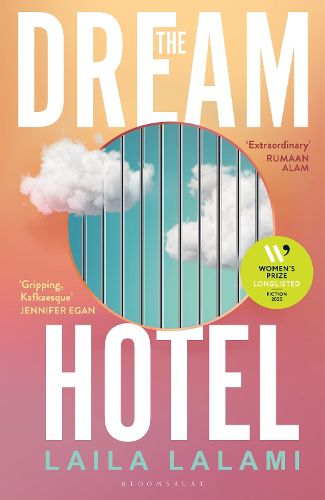
‘The Dream Hotel’ by Laila Lalami

2025, 322 p.

At the moment there’s a Senate inquiry into the new computer Integrated Assessment Tool that is being used to assess eligibility and assign funding levels for aged care service. It is completely automated, and there is no human over-ride function when the algorithm spits out an assessment that is inappropriate, insufficient or just plain wrong. At the inquiry, the first assistant secretary of the Department of Health, Disability and Ageing, Robert Day, said

The no override comes from the fact that that is an objective outcome….If you have these scores from your assessment, you get this level of classification … there’s no discretionary element (Guardian, 3 April 2026)

SPOILERS

I was reminded of this when reading Laila Lalami’s The Dream Hotel. My library has designated it ‘Science Fiction’, but there’s not much science fiction about it: it’s just an extrapolation of what is already here. Set in an alternative present day and in response to moral panic about the rising crime rate, The Risk Assessment Administration has been charged with investigating suspicious individuals in order to prevent future crimes, and it can draw on myriad data sources in order to do so. American citizen Sara Hussein is pulled from the arrivals line at the airport because her risk score is too high. An archivist by training, she has been attending a conference, and she bristles and pushes back at being flagged as a risk. The risk assessment has picked up on a complaint from a fellow passenger on the plane who was off-loaded before take-off because she assisted him when he was having trouble breathing; her response that her employer paid for her flight was questioned because, technically, she had not yet submitted the receipts to recoup her expenses. But most damaging of all for her assessment was the information that the authorities could access from her Dreamsaver, a device that she -along with many other Americans- used to maximize the value from her sleep. As the mother of young twins, trying to keep her career afloat, she had turned to this device to overcome her insomnia and although she didn’t realize it, there among the terms and conditions was her permission for the data to be handed on to a third party if required by a legal enforcement authority. Her dreams revealed a propensity to violence, they claimed, and so she needed to be assessed further in Madison Retention Centre.

So started her months-long stint in an ‘retention centre’ which increasingly became prison-like with 24 hour surveillance, curtailed freedoms presented as ‘privileges’, and enforced work. The organization contracted to run the Madison retention centre, Safe-X Inc., has its own internal economy. It has contracts with outside clients like film studios to have AI generated video content assessed for its verisimilitude; it has its internal laundry and catering facilities which fall under Safe-X budgets. Communications are provided and monitored by the AI-driven PostPal; there is a commissariat where Residents could purchase goods from their own money or from funds provided by their families. She can receive visitors, but the scheduling program is capricious, cancelling her visits without any recourse. Her Dreamsaver is monitored daily, and periods of detention could be extended at whim by the Attendants. In the narrative, you (and she) are never quite sure what is dream, or increasingly nightmare, and what is real.

What seems to be a Kafka-esque and dystopian situation does come to an end- the book has an ending, after all- when she resists, using time-worn tactics of strike and solidarity. In fact, the book is almost optimistic in its ending:

…isolation is the opposite of salvation…she owes her release to the women who joined together to say not….Freedom isn’t a blank slate..[it] is teeming and complicated and, yes, risky, and it can only be written in the company of others…This is what Madison has given her, even as it has taken so much from her- the knowledge that she isn’t alone, that she doesn’t have to be. (p. 321,322)

This is a fantastic book. I only had ten pages to go to the end, and so I sat on the station as my train went past, wanting to finish it. It seems that so many articles and events are converging: I just read Anna Krein’s The screens that ate school, from The Monthly, 2020; at a recent appointment my doctor asked me if I would agree to HeidiAi Co Pilot for Modern Healthcare. Do I read the screen after screen of Terms and Conditions? Did I take the doctor’s word that the recording of my appointment wouldn’t go any further than her computer? Do parents have the courage to push back against Google and Apple programs in their schools? No, no and no. This book isn’t Science Fiction: it’s a warning.

My rating: 9/10

Sourced from: Yarra Plenty Regional Library

Read because: I had read excellent reviews of it.
Six Degrees of Separation: From Wild Dark Shore to Wild Island.

It’s the start of the month again – ye Gods! in May already- so it’s Six Degrees of Separation time. This meme, hosted by Kate at Books Are My Favourite and Best involves her choosing a starting book, then you linking the titles or themes of six other books. Have I read her starting book Wild Dark Shore? Of course not.

  1. Come Inside by G. L. Osborne. I gather that Wild Dark Shore is about a shipwreck, and so is Come Inside, set in Western Australia. A young girl is rescued by a young man after being swept ashore as the only survivor after a shipwreck in 1887. She is unable to remember her earlier life, and her story becomes part of the local folklore, heavily mined by the press at the time, a series of oral histories in the 1940s and then centenary publications a hundred years later. You can read my review here.
  2. The Company by Arabella Edge is a novel based on the shipwreck of the Batavia, which also foundered on the West Australian coast. It is told in the present tense voice of Jeronimus Corneliz, one of the men who took charge after the senior officers left the shipwrecked passengers ashore while they went off in search of water. Rather gruesome.
  3. That Deadman Dance by Kim Scott is also set in Western Australia, and it tells the fictionalized story of first contact between the Noongar peopole. We learn early in the book that Bobby Wabalanginy , the main character, will end up a dishevelled busker-type, entertaining tourists with a patter that combines history, pathos and showmanship. The book opens in 1833-5 with Bobby already ensconced in among the whalers and early settlers on the Western Australian coast. It then backtracks to 1826-30 with first contact, a spearing, accommodation and wariness, and the actions of Dr Cross – a good man who trod carefully in this strange and old land, remembered kindly by the Noongah people who knew him, and claimed and acclaimed as a venerable ‘old pioneer’ by subsequent white settlers who did not. Then forward again to 1836-8 in Part III, followed by 1841-44 in Part IV. There’s an increasing sense of foreboding as the book unfolds. You can read my review here.
  4. Dancing With Strangers by my favourite historian Inga Clendinnen. It’s a contact story too, this time set in Sydney Cove with the arrival of the first fleet, and even though it’s on the other side of the country, it’s as if first contact is following a tragic script.
  5. Truganina by Cassandra Pybus follows that tragic script too, although it is set in Van Diemen’s Land rather than the mainland. In Pybus’ Truganini – as distinct from the ‘last Tasmanian aborigine’ Truganini- we have a flesh-and-blood woman who swims and dives, who struggles through harsh landscapes and complains of having to walk instead of taking the boat, has friendships, loves children, uses her body and her sexuality to get what she wants, and resists being corralled into Chief Protector Robinson’s vision of a compliant, dying race. You can read my review here.
  6. And in a nice bit of symmetry, I end up with Wild Island by Jennifer Livett. It’s set in Van Diemens Land as well, and it’s a riff on Charlotte Bronte’s Jane Eyre. The opening pages have two lists of characters: the first a list of historical characters drawn from the real-life inhabitants of Van Diemen’s Land in the late 1830s and early 1840s; and the second a list of fictional characters, some of whom have been taken from Jane Eyre, others created to mingle with the real-life Hobartians.  The research for this book is exhaustive- and exhausting.  In her acknowledgments at the rear of the book, the author mentions that this book has been forty years in gestation, and I believe it. You can read my review here.

I seem to have spent a lot of time on beaches and shipwrecks in Colonial Australia. But I’m rather pleased with myself being able to link the opening and closing books so well, even if I had to contort myself somewhat to do so!

I hear with my little ear: Podcasts 16-23 April 2026

Foundling. Episodes 1-3 This is a six-part series, presented by journalist Lucy Greenwell and I binge-listened to the first three episodes. Greenwell remembered a story about a baby that was found on the verge in a deserted lane in her village in October 1987. The mother was never found and the baby, Jess, was placed for adoption. So, some 40 years later, Greenwell goes in search of Jess, and when she finds her, Jess is already wondering about her own origins. Jess does a DNA test, and she and Greenwell go back to the village to talk to people who were living there at the time, and one of the villagers suggests that she look at the young women who were working there as nannies at the time. When Jess receives the DNA results, Greenwell realizes that, as a child, she actually knew Jess’ mother who was acting as a nanny in a neighbouring house. Jess finds a half-sister and discovers her mother, but it is a complex relationship that doesn’t turn out as she thought it would.

The Rest is History Episode 644 The Fall of the Incas: Empire of Gold (Part 1) I must confess that I’m not absolutely clear about the Aztecs and the Incas, and I find from this episode that many historians and chroniclers of the time weren’t either, as similar themes and events occur in both of them. Somehow 167 men overcame 24 million Incans. The conquest of the Aztecs was the model. Christopher Columbus’ monopoly was abolished, and now anyone could go to Hispaniola if they shared the proceeds with the Crown. There were rival, feuding networks of Conquistadors, hopping from island to island. The Incas were what is now known as Peru, Western Ecuador, a bit of Colombia and Chile, and they were completely geographically isolated, and unaware of the conquest of the Aztecs. The leader of the expedition, Pizarro, was illiterate, strong and austere, compared with Cortez. In 1524 Pizarro and Diego de Almagro set off exploring, but they were unsuccessful and then in 1526 they set off again. His pilot Bartolomé Ruiz went further south, where he encountered a raft, laden with jewels for inter-tribal trade, so they knew that there was great wealth in the country. Pizarro was recalled to Panama but he refused to go, and only 12 men stayed with him. In 1529 Pizarro went back to see King Charles V and was given a franchise, but not for Almagro (which was to cause problems later). In 1530 Pizarro returned with 200 recruits, including his brothers and six Dominican friars. He promised Almagro the country of Chile, and Almagro stayed behind in Panama. Then Hernando de Soto arrived with more men and importantly, the horses, that struck such fear into the Incas. They crossed into modern-day Peru where they learned of the Inca empire that the Incas themselves called ‘The Realms of Four Parts’. They did not have writing, horses or wheels; it was a totalitarian slave-based society with no private property. There had been a recent civil war in 1532 between brothers Atahualpa and Huáscar which devastated the countryside and splintered the elites. This was the environment into which Pizarro and his men appeared.

How Did We Get Here Episode 3: From the Nineteenth Century to World War I In the 1800s there was still no ‘Palestine’ as such. The Ottomans saw their holdings as provinces, with no territorial identities. Jerusalem itself may have had only 2000 inhabitants. The province was Arabic speaking, with some Turks, Frankish merchants, migrants and pilgrims and travellers. Jews constituted about 5% of the population and they mainly lived in scholarly centres. The European powers each had ‘their’ group to support. The French championed the Maronites, the Russians the Orthodox Christians and Britain the Jews. In 1882 Russian persecution saw the sponsorship of Jewish families to move to what was to become Israel by rich families like the Rothschilds and Montefiores. At this point, Hertzel began talking of a ‘Jewish state’ but there was no sustained ‘Palestinian’ resistance at this stage (the term ‘Palestinian’ was coined by the Ottomans in about 1850). It was still a farming community, and large Arab families sold some land to Jewish purchasers. World War I saw the area become strategically interesting to the European powers. The Sykes-Picot agreement envisaged an internationalized Palestine, with defined spheres of influence for the British, French and Russians. Mark Sykes, the British Middle East expert, later distanced himself from the agreement that bore his name. Episode features Hugh Kennedy, Professor of Arabic at the School of Oriental and African Studies, University of London, Eugene Rogan, Professor of Modern Middle Eastern History at Oxford University, and historian Simon Sebag Montefiore.

Journey Through Time. I decided to journey through time myself, and went back to the first episode hosted by David Olusoga and Sarah Churchwell in April 2025. The Attack That Shook America: German Spies in New York tells the story of the huge explosion on Black Tom Island, an island in New York Harbor next to Liberty Island, since infilled and annexed to Jersey City. The United States was officially neutral, with Germany still operating an Embassy in New York,but the munitions that were stored on the island were mainly exported to the Allies. Von Pappen, who was to reappear on the world stage some 20 years later was working in the German Embassy, and he set up the War Intelligence Centre gathering information in Manhatten. In 1914 Berlin ordered him to sabotage shipping of munitions between US and Europe, and 200 bombings were carried out. Wilson refused to believe that spies were at work, preferring diplomacy. The sinking of the Lusitania caused strong anti-German feeling in US, and Von Pappen was expelled from the US in 1916. Black Tom Island was an obvious target, but no-one tended to take it seriously.