
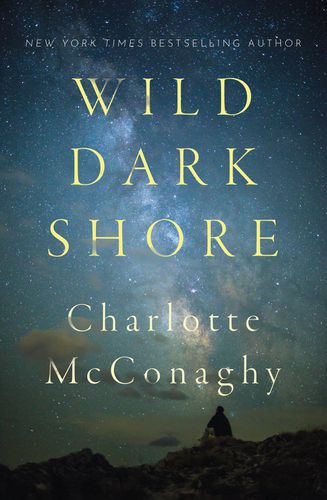
It’s the start of the month again – ye Gods! in May already- so it’s Six Degrees of Separation time. This meme, hosted by Kate at Books Are My Favourite and Best involves her choosing a starting book, then you linking the titles or themes of six other books. Have I read her starting book Wild Dark Shore? Of course not.


- Come Inside by G. L. Osborne. I gather that Wild Dark Shore is about a shipwreck, and so is Come Inside, set in Western Australia. A young girl is rescued by a young man after being swept ashore as the only survivor after a shipwreck in 1887. She is unable to remember her earlier life, and her story becomes part of the local folklore, heavily mined by the press at the time, a series of oral histories in the 1940s and then centenary publications a hundred years later. You can read my review here.
- The Company by Arabella Edge is a novel based on the shipwreck of the Batavia, which also foundered on the West Australian coast. It is told in the present tense voice of Jeronimus Corneliz, one of the men who took charge after the senior officers left the shipwrecked passengers ashore while they went off in search of water. Rather gruesome.
- That Deadman Dance by Kim Scott is also set in Western Australia, and it tells the fictionalized story of first contact between the Noongar peopole. We learn early in the book that Bobby Wabalanginy , the main character, will end up a dishevelled busker-type, entertaining tourists with a patter that combines history, pathos and showmanship. The book opens in 1833-5 with Bobby already ensconced in among the whalers and early settlers on the Western Australian coast. It then backtracks to 1826-30 with first contact, a spearing, accommodation and wariness, and the actions of Dr Cross – a good man who trod carefully in this strange and old land, remembered kindly by the Noongah people who knew him, and claimed and acclaimed as a venerable ‘old pioneer’ by subsequent white settlers who did not. Then forward again to 1836-8 in Part III, followed by 1841-44 in Part IV. There’s an increasing sense of foreboding as the book unfolds. You can read my review here.
- Dancing With Strangers by my favourite historian Inga Clendinnen. It’s a contact story too, this time set in Sydney Cove with the arrival of the first fleet, and even though it’s on the other side of the country, it’s as if first contact is following a tragic script.
- Truganina by Cassandra Pybus follows that tragic script too, although it is set in Van Diemen’s Land rather than the mainland. In Pybus’ Truganini – as distinct from the ‘last Tasmanian aborigine’ Truganini- we have a flesh-and-blood woman who swims and dives, who struggles through harsh landscapes and complains of having to walk instead of taking the boat, has friendships, loves children, uses her body and her sexuality to get what she wants, and resists being corralled into Chief Protector Robinson’s vision of a compliant, dying race. You can read my review here.
- And in a nice bit of symmetry, I end up with Wild Island by Jennifer Livett. It’s set in Van Diemens Land as well, and it’s a riff on Charlotte Bronte’s Jane Eyre. The opening pages have two lists of characters: the first a list of historical characters drawn from the real-life inhabitants of Van Diemen’s Land in the late 1830s and early 1840s; and the second a list of fictional characters, some of whom have been taken from Jane Eyre, others created to mingle with the real-life Hobartians. The research for this book is exhaustive- and exhausting. In her acknowledgments at the rear of the book, the author mentions that this book has been forty years in gestation, and I believe it. You can read my review here.
I seem to have spent a lot of time on beaches and shipwrecks in Colonial Australia. But I’m rather pleased with myself being able to link the opening and closing books so well, even if I had to contort myself somewhat to do so!

