
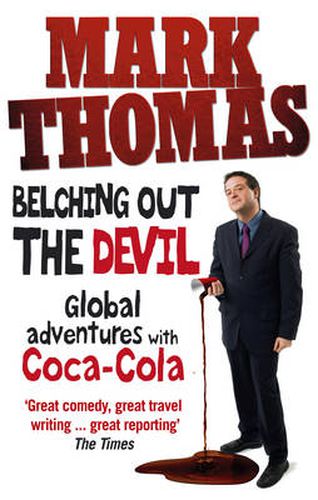
I’m not particularly fond of Coca-Cola. I will have a sugar-free Coke occasionally, but I’d much rather have a juice, or even water. Which is just as well, because after reading this book, any affection I might have felt for Coca-Cola is long gone.
I don’t know who Mark Thomas is. I gather that he’s a comedian and a social activist, and that he was involved in a documentary criticizing Coca-Cola previous to writing this book. Perhaps this is where much of my dissatisfaction with the book lay: an unknown comedian or television personality doesn’t come across as particularly funny when you have absolutely no idea who they are. This book felt like a documentary and I surmised that this was the book tie-in, but it doesn’t appear that it is. A filmed documentary can get away with making the same point through several examples, each in different settings, but in a book it just seemed repetitious. Viewing a documentary is easy: a book takes more commitment, and I felt as if it was going round in circles, eating up precious reading time.
His argument is that Coca-Cola, as a global phenomenon, has a business model that works through subsidiary companies, allowing it to promote an international and western brand (which might have cachet in third-world countries in particular) while turning a blind eye to practices at a local level. Amongst the South American subsidiaries, Coca-Cola washes its hands of anti-union coercion implemented by paramilitaries; in El Salvador children work in the sugarcane fields that provide the sugar; in both India and El Salvador it extracts water for manufacturing that leaves villages parched; and in Mexico in particular- although this would apply in many other countries too- it contributes to obesity and diabetes. In fact, in Chiapas, Coca-Cola has even been incorporated into religious ceremonies.
All of this takes place while The Coca-Cola Company, the multinational, through its shareholder meetings and policy documents claims to exercise Corporate Social Responsibility, papering over all these disreputable practices committed by their subsidiary companies. At the multi-national level, they are replacing the water taken (even though this is not the case), they are ‘monitoring’ child-labour and anti-union activities, they are reducing the amount of sugar in their products. The brand is all important, and this cloaking in ‘corporate responsibility’ and ‘ethical procedures’ is camouflage for practices for which the company takes no responsibility.
All of which is interesting, but which is probably best experienced as a documentary rather than a book. Coca-Cola’s Dirty Secret on SBS gives you much the same information but in just 25 minutes- leaving you time to read something else instead.
My rating: 6/10
Sourced from: Brotherhood Books
Read because: it looked more interesting than it turned out to be.

