Historians on the coronavirus pandemic #2: Warwick Anderson

Australian historian Warwick Anderson has had two essays published on the Somatosphere website, which advertises itself as “A collaborative website covering the intersections of medical anthropology, science and technology studies, cultural psychiatry, psychology and bioethics.” They are running a series of essays called ‘Dispatches from the Pandemic’. Wesley Anderson, both medical doctor and PhD, is Professor of Politics, Governance, and Ethics in the Department of History and the Charles Perkins Centre, University of Sydney. He is a historian of science, medicine and public health. His book Intolerant Bodies: A Short History of Autoimmunity won the NSW Premier’s General History Prize in 2015.

In the first essay Not on the Beach, or Death in Bondi? he looks at the recent closure of ‘iconic’ Sydney beaches after a weekend of crowded sands.  He juxtaposes that scene of people crowded on the beach on a hot day with the other sight, occurring only a few short months ago, of people huddled on the Mallacoota beach under the violent red skies of bushfire. He picks up on the place of the beach in the Australian imagination  (and I find it strange that he didn’t pick up on Greg Dening’s work on beaches), and as an unstable, ambiguous space that signals freedom and yet is surrounded by prohibition in the form of flags, signs and regulations.

The second essay Epidemic Philosophy he examines the pronouncements of various present-day European philosophers (all of venerable years as he points out in parentheses) on the coronavirus pandemic. He starts with Italian philosopher Giorgio Agamben, who in February 2020 proclaimed that it was no worse than seasonal influenza and that social distancing was a deep state conspiracy. Agamben has since moderated his views. A number of his European colleagues distanced themselves from his stance, with varying degrees of optimism/pessimism over the post-COVID world. To be honest, I hadn’t heard of any of these philosophers, but I guess that philosophy is not my field of expertise. Anderson finishes his essay by observing that perhaps the habit of philosophers to sit quietly before coming to a position is the wisest course to adopt.

‘People of the Book’ by Geraldine Brooks

_brooks_people-of-the-book

2009, 496 p.

This book has been sitting on the shelf for a while. Now that my library has closed, I can no longer borrow piles of books that I return unread. Instead I’m having to turn to my shelves full of books that at some stage I felt I simply had to buy and which have remained in their paper bags ever since.  I blame the Little Free Library down in my park too, which calls to me every time I go to the station.

IMG_20150308_153232a

Geraldine Brooks’ People of the Book is a Little Free Library find. I’ve read quite a few of her books (all prior to starting this blog), Foreign Correspondent, March and Year of Wonders, which has been mentioned several times recently. I wasn’t too sure about this one. I knew that it was about a Jewish prayer book. I also knew that she had converted to Judaism, and I’m always a bit wary of people writing from a particular faith tradition.

Brooks’ book is based on the real-life story of the Sarejevo Haggadah, a brilliantly illuminated Jewish prayer book that is used at Passover.  It is on permanent display at the National Museum of Bosnia and Herzegovina in Sarajevo.  It carries a rich and traumatic history.  It was created in Spain around the year 1350 and changed owners after the expulsion of the Jews from Spain in 1492.  It ended up in Venice, where it was passed by the censor of the Inquisition. It was purchased by the National Museum in 1894 and sent to Vienna for work. It was hidden from the Nazis during WWII and was again threatened during the bombing of Sarajevo in 1992.

Using the actual history of the Haggadah, Brooks weaves her own story around the people through whose hands it might have passed during its turbulent voyage. Most of this is sheer imagination, although firmly within the historical constraints of the real-life story. The frame story is that of an Australian conservator,  Hanna, who is called in to inspect the Haggadah before undertaking conservation work on it. As part of her painstaking inspection she notices an insect’s wing, a hair, salt residue and a wine stain. Each of these fragments branches off into the historical aspect of the novel, telling the story of how they came to rest within the pages of the book, to be discovered hundreds of years later.

And so we meet a young Partisan fighter in Sarajevo in 1940; a syphilitic bookbinder in 1890s Vienna; a 17th century Venetian rabbi; a black female Muslim illuminator in Seville in 1480 and a mixed Jewish/Converso family in the same city as the Jews are expelled in 1492.

The Hanna frame story veers close to being a mystery-thriller which sits rather at odds with the historical montages of people associated with the Haggadah over time. As all contemporary stories seem to have, there is a love interest and a problematic relationship with her mother. Brooks, probably quite intentionally, features women in the historical sections, which would have required some dogged research that at times felt heavy-handed.

But what an wonderful idea to use a real-life object that has such a vibrant story, even with all its gaps and silences. Did she need the frame story at all? I’m not really convinced that she did- but then, it would be a different book.

My rating: 7.5

Sourced from: my own bookshelves, from the Little Library in the park

aww2020I have included this on the 2020 Australian Women Writers Challenge.

I hear with my little ear: Podcasts 8-15 May 2020

Heather Cox Richardson.  Once again, her Tuesday 5 May video looks at current political questions through a historic lens. In this episode she talks about the relationship between the Republican party and the Catholic Church, which only emerged in the Nixon era, when he lost the sympathies of many middle-class parents over the Kent State University shootings. She moves on to a brief history of abortion, and how it has become so politicized. A second question was over the possibility of a Constitutional Convention and her fears should one be agreed to. The final question looked at how the judicial branch of government had changed the political landscape over the last 100 years. She goes back further, to the highly conservative 1890-1908 Supreme Court which passed the pro-segregation Plessy v Ferguson case (‘Separate but equal’) and legitimized the invasion of territories and the creation of foreign nationals.  On Thursday 7 May The American Paradox Part 7 she looked at the Depression and WWII, when big government stepped in during a time of emergency.  However, That didn´t stop the forces that were trying to roll back Reconstruction by denying rights to African Americans (and Native Americans too, although the focus is not on them). She looks at the rise of Big C conservatives and their conceptualization (and demonization) of Big L liberals. Ronald Reagan emerges as a symbol of West Coast conservative, anti-government individualism, and McCarthy attacks liberals whom he links to Communism. Really good.

Dan Snow’s History Hit. The coronavirus pandemic has spared us quite a few  big expensive commemorations:the Captain Cook 250th anniversary, and V.E. day and most probably V. J. day too.  But Dan Snow marks V.E. day in his program with an interview with historian Lucy Noakes, from the University of Essex, who has been working on the early to mid 20th century, with an interest in those who experienced the First and Second World Wars, particularly from the perspective of the history of emotions.  (She did her PhD on the Mass Observation project- something that fascinates me). In this podcast, she points out that the way a war is remembered is largely framed by the current questions and issues of the moment – noting the use of the Blitz as a touchstone for the current pandemic lockdown. You can hear it at

https://play.acast.com/s/dansnowshistoryhit/howshouldwerememberww2-

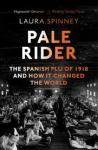
Fifteen Minute History (which often goes over 15 minutes) There have been lots of parallels drawn between coronavirus and the ‘Spanish’ influenza, and this episode looks at it from an American perspective. The guest, Christopher Rose wrote his PhD on a social history of the Egyptian home front during World War One through the lens of public health, which would certainly be a different perspective. The ‘Spanish’ Influenza of 1918-1920 gives a good 15 minute summary.

Revolutionspodcast  At last- we’ve reached the 1905 Revolution.  Well, not quite, because this episode 10.32 The Union of Liberation looks at 1904 when the liberals, who had been pretty quiet for the last 20 years, called for a convention like the Third Estate had done just before the French Revolution. But Tsar Nicholas wouldn’t hear of it, so they held banquets instead in the guise of celebrating the 40th anniversary of the liberal court statues to circumvent the ban on political gatherings. But the Russo-Japanese war is getting worse, and as a calming mechanism on the part of Tsar Nicholas, it’s not going to work. And in 10.33 Bloody Sunday we finally reach the 1905 Revolution. It wasn’t the revolutionaries leading it: instead it was a priest Georgy Gapon who seemed to be playing both sides a bit, and the liberals. He had police protection, and claimed to be supporting the Tsar, but when the army attacked peaceful protesters, all went a bit pear shaped.

NPR I often read the British historian Timothy Garton Ash’s articles. In this podcast from the On Point program, What the U.S. Response to Cornoavirus Says About America’s Role on the World Stage he talks about the great sadness that he feels as an enthusiastic Atlantic historian when he looks at America during the time of coronavirus.  He’s joined by Catherine De Vries, professor of political science at Bocconi University and On Point’s political analyst Jack Beatty. Garton Ash is far more optimistic about America’s potential than the other two commentators, but all agree that if America does manage to redeem itself (after all, US leadership bounced back after Nixon) it will not return to its former prominence.

BBC The Documentary.  Wuhan: the beginnings of coronavirus COVID-19 I started listening to this at 5.30 and missed the start of it. Going back to listen to it by light of day, it was more critical of China’s initial response and coverup than I realized, but I found the description of the rapid and forceful deployment of doctors and harsh lockdown fascinating. There is a backing sound track of people blowing whistles in protest after the death of the doctor who tried to report the outbreak – quite eerie-  I found this Facebook video here but I don’t know about its provenance.


‘The Wooleen Way’ by David Pollock

pollock

2019, 362 p.

I sought out this book after reading an article in the November 2019 edition of The Monthly  (yes, I am just as, if not even more, delayed in reading The Monthly as I am in listening to podcasts.) The article was titled ‘Bait and Switch‘ about the contentious issue of dingo-baiting. At the end of the article it mentioned that one of the protaganists in the dingo/wild dog debate, David Pollock, had changed the landscape of his pastoral property in the Murchison River region, eight hours drive north of Perth. Where there had been dust, there was now grass and shrubs, and while he welcomed the dingoes, he had rid the property of kangaroos and goats, which cause the most damage to the landscape.  I was also prodded into reading this by Ross Garnaut’s recent book Superpower, where he argued that Australia could seize the opportunity to farm carbon-sequestrating plants as a deliberate agricultural and strategic choice.  It was only when I saw the ‘As seen on Australian Story‘ sticker on the front that I remembered seeing advertisements for the program about a farmer who had eschewed traditional practices and opinions of his neighbours in his quest to regenerate his land.

David Pollock is not a natural writer, and there is a self-consciousness about his writing that gives a slightly stilted and defensive tone. Nonetheless, he captured really well the experience of growing up on a remote pastoral property, where his mother’s hospitality in opening her house up to tourists meant that it teetered between profitability and ruin.  He did not necessarily intend to become a farmer, having spent much of his early adulthood travelling the world, and as the second son, it would have been more conventional for his older brother to step into his father’s shoes.  But his father, who was obviously a flexible thinker, asked both sons to spell out their vision for the property…and gave the management to David.

He then goes on to describe his decade-long experiment on returning the land to an earlier state. Unlike his neighbours, he chose to run cattle instead of sheep;  he greatly reduced the stocking rate; he embraced the return of the dingo as a sign of progress;  and he shot the kangaroos and goats that threatened to overrun the property and undo all that he had achieved. This set him up for conflict with his neighbours and with the local Land Conservation District and the Pastoral Land Board. He disdains bureaucrats and distrusts government, but is not backward in asking for welfare. Actually, he’s a pretty prickly fellow, and you can sense why he might alienate people around him.

In many ways, and as he admits, he was ‘saved’ by the publicity that he attracted from the ABC’s Australian Story program. After the screening of the program, money and interest came pouring in, and although he felt uncomfortable about it, Australian Story and the ABC returned several times. The television audience was drawn to the romance of his story, an angle that you feel he tolerates in order to get the larger story out to a larger public.

The book is repetitious in places, largely because he needs to fight the same battle over and over again. At 362 pages, it felt like a long book, and it could perhaps have done with tighter editing. On the other hand, it is his voice that booms through it. He becomes strident at times, which could be a reflection of his personality, or maybe a measure of his passion for Wooleen and his project.

My rating: 7/10

Sourced from: Yarra Plenty Regional Library

I hear with my little ear: Podcasts 1-7 May 2020

podcast

Heather Cox Richardson  Usually Heather Cox Richardson produces two hour-long videos each week. On Tuesdays, it’s her Politics and History  and on Thursdays she talks about American history, using the thesis of her recent book How the South Won the Civil War: Oligarchy, Democracy and the Continuing Fight for the Soul of America. Usually the two videos are quite different from each other, but this time there seemed to be more convergence between them. In her History and Politics talk of 28th April she examined   the myth of ‘voter fraud’ and voter suppression, the way that policies aimed at the poor are continually conceptualized as ‘communism’ and the question of why America does not have a universal health system. In her History video on 30 April, returning to her thesis that American equality depended on there being someone (i.e. blacks, Native Americans, women, Latinx) who was unequal,  she looked at the fightback by whites after Reconstruction in terms of voter (de)registration and suffrage, where white women clamoured for the vote to support their white men. She ended up talking about popular culture in the 1930s-40s (books, film etc.) etc and how they fed (and continue to feed) into the view of Americans as individualistic, government-hating, yearners for a pre-Civil War past. Gone with the Wind gets a serve and so too does Pa in Laura Ingalls Wilder’s Little House on the Prairie series.  (The sound is distracting on these two videos- obviously Facebook has changed something because my Spanish teacher is also having problems with Facebook Live)

Doggerland Having just finished Julia Blackburn’s Time Song, I’ve been listening to a few podcasts about Doggerland, the now submerged plain that joined UK with Europe. Dan Snow’s History Hit has an interview with Simon Fitch, the author of Europe’s Lost World: The Rediscovery of Doggerland  from June 13 2019 which can be accessed here. The BBC’s Books and Authors interviewed Julia Blackburn and Ben Smith, who has released a near-future dystopian novel Doggerland which you can listen to here.  Meanwhile, Melvyn Bragg interviews Vince Gaffney Anniversary Professor of Landscape Archaeology at the University of Bradford; Carol Cotterill Marine Geoscientist at the British Geological Survey and Rachel Bynoe Lecturer in Archaeology at the University of Southampton on In Our TimeDoggerland.

99% Invisible. When a huge shopping mall was built on the site of the old Rhode Island State Prison, artist Michael Townsend watched its construction on his daily run. He noticed a small space that was left accidentally as the building was fitted out. When another shopping mall was built in his own neighbourhood, he and his friends decided to possess The Accidental Room as their own space – for four years!

History Extra  During the shutdown,  I completed Future Learn’s 3 week course on The Scottish Highland Clans: Origins, Decline and Transformation. Afterwards, I listened to Professor Tom Devine (whose work I have enjoyed before) talking on The Scottish Clearances. He pushes back against writers who see this as a form of genocide, instead conceptualizing the clearances as part of a wider capitalist change.


My day at home with the Yarra Valley Writers Festival

yvwf_long

On a cold and showery day, I’m rather glad that I’m not in the even colder Healesville for the Yarra Valley Writers Festival, which is being held online instead. I’ve decided that it’s very strenuous attending an online writers festival, even though I’ve barely moved from my desk all day. Perhaps that’s what makes it so tiring: there are no little breaks moving from one venue to another, no distractions of the book displays, no-one to chat with between sessions.  I am absolutely in awe of fellow-blogger Lisa at ANZLitLovers who has not only managed to pay attention far more assiduously than I have but she has even managed to blog the sessions as they are occurring.  Brava Lisa!

The day started with David Lindenmeyer Saving the Environment: It’s Not Fire & Brimstone, It’s Science. Using a Powerpoint slide-based format, which felt a bit too lecture-y for me (especially when he was in effect just reading the slide), he mounted a strong argument that the major fire threat  to Australia lies in its logged forests,rather than in old growth forests. An old growth forest regenerates better and more quickly than a logged forest, is less likely to have canopy fire in the future, and by their very nature, logging plantations are likely to be closer to houses and infrastructure. Salvage logging in already-burnt fires is the most damaging act of all – and one which is championed by the timber industry. And, as he points out, despite continual demands for access to old growth forest, 92% of forestry employment is in logging plantations.  But check out Lisa’s report for a much more coherent summary of his presentation than mine!

Leading on from David Lindenmeyer’s talk, the next session was called Fire and Climate. The focus on fire was a deliberate choice in planning the writers festival, first because the Yarra Valley is often wreathed in smoke from hazard reduction burning, and second because the 2009 fires surrounded Healesville (where the festival is held) devastating towns in the surroundings, but leaving Healesville untouched- for now. Tony Birch wrote an essay for Meanjin in 2017 (Two Fires – you can read it here) describing accompanying a friend to Christmas Hills after the 2009 Black Saturday fires. The daughter of that friend was Alice Bishop, who was one of Tony Birch’s creative writing students and here on the panel, having written her own book of short stories A Constant Hum, which explores the psychological consequences of bushfire- something that she experienced herself. The last speaker on the panel was Prof. Tom Griffiths, who has written on bushfire with Forests of Ash: An Environmental History (2001) and Living with Fire (co-authored with Christine Hansen, 2012) which emerged from a community history project in the wake of Black Saturday.  Griffiths in particular warned that because of the engulfing media response to coronavirus, we have not yet worked through the emotional and environmental consequences of a fire season – not a specific day that can be identified with a capital letter- that affected the whole continent. There was an interesting interaction near the end of the session where Alice Bishop rather defensively rebutted the question of whether people should rebuild in fire-prone areas, arguing that power lines should be put underground and that it’s a simplistic response. Somehow, I don’t know if Tom Griffiths would agree. Again, Lisa on her blog has done a much better job of this than I.

HastrichContinuing with the environmental theme, Writing About the Natural World featured Chris Flynn whose recent book Mammoth has been receiving quite a bit of coverage, Vicki Hastrich whose Night Fishing I reviewed here and Lia Hills who wrote The Crying Place, which I hadn’t heard of. The session was chaired by Robert Gott, who is almost intimidatingly articulate and intelligent. Apparently there is a huge amount of research in Mammoth, and although Flynn was guided by some historical facts, he gave up trying to direct the narrative along factual lines. Very different types of environments were dealt with by Hastrich (the sea) and Hills (the desert). Hastrich spoke about the landscape of the imagination, while Hills talked about the process of recording her narrative quickly and using voice recognition software that also picked up the sounds of the leaves, wind and birdsong, which she wrote into the book.  And here’s Lisa….

The-Glad-Shout-Alice-RobinsonI’d actually read books two of the three authors featured in the next session Place in the New World Order, although it has probably turned out to be a very unexpected “new world order” than when they were originally planning this festival. The moderator, Elizabeth McCarthy asked them how they were responding to the pandemic, which perhaps was not the best use of the time available, as I’m not sure that any one person’s experience of this strange time is any more momentous than any one else’s. Alice Robinson wrote The Glad Shout  (reviewed here) which is set in the middle of a climate change emergency.  Meg Mundell writer of Black Glass (review), released her 2019 book The Trespassers  which has a pandemic as its premise. I’m not familiar with the four books released by Karen Viggers. Only Meg Mundell starts with ‘place’ when she is writing (in her case, prompted by the Point Nepean Quarantine Station for her most recent book), whereas both Viggers and Robinson used ‘place’ more as an influence on ‘character’. All agreed about the danger of avoiding becoming didactic over social justice issues- Viggers referred to “hovering above”, using the perspective of different characters to explore issues. And again,the indefatigable Lisa….  (How does she have the energy??)

A Writer’s Lot: 50 years but who’s counting was a discussion between two playwrights of different generations, David Williamson and Hannie Rayson. It was a retrospective look at Williamson’s career, where he emphasized the importance of hearing Australian voices on the stage – something that rarely happened up until the 70s and 80s.  At this point, Lisa went for a walk….

I really enjoyed the session How Weird Does Your Family Have to Be? It was moderated by ABCRN presenter Michael Mackenzie, who has his own fascinating life story with a Jewish father who escaped Germany and died just after he was born. The panel comprised Alice Pung (Polished Gem –read before I started this blog ), Richard Glover who wrote Flesh Wounds (which I haven’t read and now want to) and journalist Rick Morton One Hundred Years of Dirt (also unread).  Alice Pung’s family was not ‘weird’ but as Cambodian/Vietnamese refugees, they were traumatized. Glover has emphasized the ‘weirdness’ of his family with a laugh, but his story of an alcoholic father and an absent mother who completely invented a false identity to her family actually reveals sadness and deception. Rick Morton’s father was a brutal man, but his father in turn was abused by Rick’s grandfather who seems a truly malevolent man.  Lisa is back from her walk, so here’s her much better summary.

_tsiolkas_ damascusI’m flagging now- and I’m not even writing lengthy blog posts. Where’s afternoon tea? I’m bailing out after Christos Tsiolkas’ Road to Damascus (my not very favourable review here). Tsiolkas wrote the book to answer his question “How did this religion come to change the world?” He talks about his determination to write something “heretical but not blasphemous” and describes his own story of how he came to write this story about Paul. He also talks about the importance he places on structure when he writes, something which he displays with this book and The Slap with the point of view alternating between chapters. Actually, I liked him much more in this interview than I imagined I would. And Lisa? She has skipped this session and is coming back for Charlotte Wood and The Weekend, which I haven’t read.

I don’t have to drive home, but I think that I’ve had enough for one day. Ooooff. The technology worked well enough in this brave foray into online writers festivals. There was only really a problem with David Williamson, whose broadcast was delayed ironically just after Hannie Rayson admitted that the technology was going well and hoping that she hadn’t “put the mockers on it”. (She did.)  Along with many who were following it on Twitter, I quite enjoyed seeing everybody’s book-lined  studies in varying degrees of tidiness (David Williamson wins the prize for most untidy). I wish that there had been a break between sessions for people who were in for the long haul, rather than back to back sessions with barely a 3 minute break between them. In fact, a short lunch break wouldn’t have gone astray.

But well done, YVWF for being brave enough to forge ahead, and for putting together a rewarding day’s watching and listening. And Lisa? you’re a legend.


‘Time Song’ by Julia Blackburn

blackburn_time_song

2019, 284 p.

Disappeared places have their own special allure, especially when they have sunk to a watery death. I think of towns shifted or submerged during the building of a reservoir (like, for instance Bonnie Doone which was covered by the Eildon Dam or Tallangatta which reappeared when the Hume Reservoir sank so low). Then there are the ‘lost’ lands covered over by the waves. Think Atlantis, or the Theosophists’ Lemuria: huge land masses, supposedly supporting sophisticated civilizations, which are now the stuff of legend.

Rather less legendary, however, is Dogger Bank, which is mentioned every morning on that strange, soporific radio item, the Tide Report on the BBC in England. Dogger Bank is the last remnant hint of Doggerland, which existed in the North Sea and English Channel 18,000 years ago, making what we now know as the United Kingdom a contiguous part of Europe. It was not a land ‘bridge’, which suggests a narrow and tentative link between UK and Europe. Instead it was a fertile plain, with its own coastlines and rivers, with humans roaming across it. It was not a route from one place to another, but a territory in its own right.

People have known about Doggerbank for centuries. Particularly low tides have exposed the remnants of old forests, and the continual calving of the eastern English coastline reveals an ongoing array of fossilized remains and flints. But recent developments like windfarms and extractive industries tell us more today about Doggerbank than we have ever known before. Huge machines have been scooping up the ocean floor, bringing up bones and artefacts, and oil exploration companies have made their geological surveys available to academic archaeologists and palaeontologists, a source of information that they could never, ever have afforded themselves. (So maybe there is something to be said for oil exploration after all).

Julia Blackburn is not a geologist, palaeontologist or archaeologist. She is a poet and author, but in this book she walks the Suffolk and Norfolk coastland of the eastern UK, picking up stones, shells, bones and flints as she walks. She is not alone in this: people have been picking here for years. She talks to these collectors, who show her their hoards, giving her bits and pieces. They exist in a wary relationship with academics, who they often perceive as being too keen to sweep up artefacts to store them away in universities, where they may remain almost as hidden as they were under the ocean for years. But sometimes there are finds which transcend this uneasiness, when the collectors realize the significance of what they have found for the human story, and it becomes a shared endeavour between collector and academia.

This is a beautifully presented book, which has colour plates showing the ice, coastline and river formation of Doggerland 18,000 years ago; the receding ice and flat plain, fractured with rivers and tunnels at 15,000 years ago; the gradual encroachment of water 13,500 years ago; the emergence of a recognizable UK at 10,000 years before present; and the remnant Dogger Island in the middle of the North Sea at 7,000 years ago, the connection between UK and Europe severed. It’s a human story too, that stretches back 1.8 million years, through Homo Erectus, Homo antecessor, Neanderthals and Homo Sapiens, some signified by a few stone tools or human footprints fossilized into the land surface.

There seems to be a spate of beautifully written environmental histories and essays that have been published recently. I’m thinking of Annie Dillard’s Pilgrim at Tinker Creek, David Sornig’s Blue Lake (my review here) and Vicki Hastrich’s Night Fishing (review here).

But it’s also a very human story because of the way she tells it. Her search is narrated almost as a conversational journey, as she meets with this person and that, and as she relates her own reminiscences of places and items she has herself found. Collectors and academics share their enthusiasms with her, and indirectly with us too. There is a lot of science in this book (and her list of acknowledgments at the back of the book demonstrates her debt to academia) but it’s written very much in layman’s terms. Her response to the academic literature is expressed in 18 ‘Time Song’ poems, which intersect the text, each preceded by a black and white drawings by Enrique Brinkmann.

There’s another story here too, a deeply personal one. She tells us in the preface that her second husband died a few years ago. We learn that she had met him when she was eighteen. He was Dutch, and for four years they crossed from one side of the North Sea to the other. They broke up, she married someone else and had children with him. After an absence of 27 years, they met again and married. During their first year of married life they again criss-crossed that North Sea to each other, him living in Amsterdam, her in Suffolk. Like Doggerland he was present, then disappeared; reappearing again and then absent for ever. In many ways, this book is a love poem to him and he is always just below her level of consciousness, just below the surface. Her final, beautiful Time Song is written to him. ‘Time’ is elapsing, but her exploration of Doggerland shows her that things can pass and yet persist, and that the universe has its own rhythm and trajectory, quite independent of us.

There was a pale and almost transparent moon in the sky this morning. The air has become very autumnal. It will soon be my husband’s second death year but because of the strange mathematics of absence, his age no longer increases with the passing of time. At night I sometimes stretch out my hand towards him and wait until I am almost convinced that an answering hand is there, even though I cannot feel it. I’m sure this is quite usual. It’s what people do. (p.11)

This is a beautiful book, contemplative and wise.

My rating: 9/10

Sourced from: Yarra Plenty Regional Library

Off to the Writers Festival

I’m off to a Writers Festival tomorrow (Saturday). A marquee or two; rows of plastic seats; people lining up; sound systems that crackle; the book shop selling all the books talked about…..

Nup. It’s online. It’s the Yarra Valley Writers Festival. I bought my ticket some weeks back, when it seemed as if the prospect of a writers festival  of any type was far distant. Who knows- it may still be far distant. But good on them for making the decision to go online early and I hope it’s successful for them.

Historians on the coronavirus pandemic #1: Frank Bongiorno

As part of my work with Heidelberg Historical Society, I write a column for our newsletter about local events one hundred years ago. During 2019 I wrote a lot about the 1919 Spanish Influenza epidemic, but most of the local information about it was scattered in various newspapers, often in the column advertisements or in reports of council meetings. Our museum holds no local artefacts whatsoever about the epidemic in our collection- no pamphlets, no vaccination papers, nothing.

That’s not likely to happen with this current coronavirus pandemic, with museums and collecting organizations gathering together material, images and reflections right now, for their collections in the future. It’s as if we have a heightened consciousness of being in a historically significant event, no doubt underlined by the constant repetition of ‘unprecedented’, and probably bolstered even more by the news cycle and the ready availability of images worldwide of empty cities and crowded hospital corridors.

I’ve been interested in reading what historians have to say about it all. The factual parallels between this and other epidemics are relatively easy to identify, but I’m interested in what historians have to say about what it all means. And who better to start with than Australian historian, Professor Frank Bongiorno from A.N.U.?

On 29 April Frank, along with Professor John Quiggan  gave a Zoom talk to the Victorian branch of the Australian Fabian Society on the topic ‘Socialism and the Australian Progressive Movement’.

You can access it from the Australian Fabian Facebook page at https://www.facebook.com/australianfabians/videos/619066028823088/

Or Inside Story has a very interesting article drawn from Frank’s talk called “Is history our post-pandemic guide?”  He looks back to WWI/Spanish Flu, the Depression and World War II. For those of who hope that perhaps some good will come from of all of this today, he warns that progressive change never comes from conflict, only from bipartisan consensus, however lukewarm. It’s well worth reading.


‘Night Fishing’ by Vicki Hastrich

Hastrich

2019, 246 p.

What a powerful pull holiday places returned to year after year have on our hearts! For me, it’s the family’s time-capsule caravan down at West Rosebud…oops, Capel Sound. Sixty years. We shared in the oft-returned familiarity other people’s holiday places too. There was our neighbours’ fibro house down at Dromana that accommodated three branches of the extended family at one time in the ‘boys’ room’ with three bunk beds, the smaller girls’ room (because girls were scarce in the family).  The house was still owned by Nana, who had her own bedroom and septic tank toilet (when everyone else had to use the dunny). As a nation, we all sighed at “Ah, the serenity!” when Darryl Kerrigan takes his family up to the house under the electricity pylons at Bonnie Doon in the Australian film The Castle.

Then there was my cousins’ holiday house on the Hopkins River out of Warrnambool, in an old electricity power station, rising up out of the river against a steep embankment. Being a power station, it was a cavernous building, with no natural light. But what a spot- surrounded by bush, and with no-one else around.

It was my cousin’s holiday house that came to mind in reading Vicki Hastrich’s Night Fishing although in her case, it was a cottage against a steep hill that could only be accessed by  water on a Brisbane Water estuary at Woy Woy. Her parents and their friends would take six kids, food, ice and pets to Woy Woy and the continual return there each holiday encapsulated her happiest times, attuned to the tides and the water, drawn to the solitude and unpredictability of fishing and ensconced in the familiarity of returning year after year.

This is a series of essays that have elements of memoir, although there is no over-arching structure to tie them together. At first, not quite sure what is was that I was reading, I wondered if it was a bit like a non-fiction version of Elizabeth Strout’s Olive Kitteridge books, where an oblique reference in one story is picked up by another. It seemed for a while as if that was the organising principle of the essays, but then it didn’t seem to work for the last quarter of the book.

What does tie the collection together is, as the title suggests, the theme of fishing and water. The initial and final stories are both about fishing. In the opening story ‘The Hole’, she and her brother Roger return to a fabled family fishing spot as adults, and in the final story ‘Bucket of Fish’ she heads into her little fibreglass boat The Squid to use up the last bits of fish in the freezer as summer subsides into late autumn.  The eponymous ‘Night Fishing’ story appears half way through, where she decides to go out in her little boat for some night fishing, and loses all sense of direction and location in the darkness.  Others are more discursive, but still with a fishy theme. ‘The Tomb of Human Curiosity’, she and brother Rog go out in The Squid again, this time with a bathyscope, which leads her into a reflection of Galileo. ‘From the Deep it Comes’ starts about about catching salmon, but then diverges into a discussion of Zane Grey.

Not all the stories are about fishing.  In ‘Things Seen’ she reflects on the act of being a witness to things seen, recollecting a family story about Uncle Ev, a returned WWI soldier with PTSD, and moving on to Goya’s 82-plate work The Disasters of War, drawn during the Peninsula War between 1808-1814. The theme of ‘seeing’ is taken up in ‘My Life and the Frame’, where she discusses her work as an ABC camera operator, merging into a discussion of Tiepolo’s painting Allegory of the Planets and Continents, and her sense of failure over writing what she describes as a ‘baroque Australian novel’. Her ‘History of Lawn Mowing’ starts with a tribute to the late Australian writer Georgia Blain, who had her first seizure in her backyard. It then shifts to a reflection of the dirt under the house where she keeps the mower, where asbestos and the shellfish midden of the indigenous people of the place mingle in the dusty dark.

I always find it hard to review short stories, and I guess that books of essays fall into the same category. Explaining them makes them sound flat and trite: they are better read on the page rather than in a review. I do confess to becoming a little bored of the fish, but I loved the sunlight that suffuses her memories of childhood and a treasured place.  I liked that when starting a story, you were not ever quite sure where you were going to end up. And I loved her eye, that was caught by the beauty of the ordinary, and the way that her writing captured it so sharply that you could see it too.

My rating: 8/10

Sourced from: Yarra Plenty Regional Library.


aww2020

I have included this on the database of the Australian Women Writers Challenge 2020.