I hear with my little ear: Podcasts 25-30 April 2020

podcast

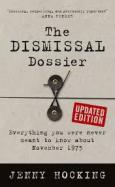
The Eleventh. I’m furious! I maintain the rage! I’ve just listened to Episode 6 The Eleventh, that goes through the events, the machinations and the deceptions of November 11, 1975. Forget that cuddly image of Fraser that he curated during his later years: the man was ice-cold.

Heather Cox Richardson. Her ‘politics and history’ talk on Tuesday  21st looked at the history of impeachment, the nature of the executive order, the difference between debt and deficit and how to convince someone to stop watching FOX news (short answer, you can’t). Her American history talk on 23 April took us to the 1880s and 1890s – a time that I know virtually nothing about in terms of American history. That was when the small states of North and Sth Dakota, Montana etc. were created as an attempt by Republicans to ensure that they could keep power. She talks about the importance of the West, and the use of anti-Chinese legislation to shore up political support. She finishes with the invation of Cuba and the Phillipines and the idea of non-citizen nationals.  This lecture was a bit too detailed and politicy-y for me. Check her Facebook page.

Rough Translation  I’ve had the two-parter, The Search  Part I and Part II on my phone for a while. It’s about the disappearance of Iraqi photo-journalist Kamaran Najim, who became a photographer against the wishes of his religious family. When he was kidnapped after a shoot-out, his family initially joined forces with his westernized friends to search for him. There’s real-life sound here of the attack (I assume that it’s authentic?) and it’s a good, if sad, story.

Judith Lucy- Overwhelmed and Dying  She’s been flogging her misery in her trademark drawl for years, but I have a new appreciation of her since she’s been appearing on Charlie Pickering. She has a new podcast series which is more of the same, but I’m enjoying it. In Episode 1 Blindsided, the sudden breakup of her relationship caterpaults her back into the misery-stakes.

RevolutionsPodcast  Still going with the Russian Revolution, although it’s going to be stretched out even further because Mike Duncan is planning on taking about a four month break between the 1905 Revolution in April and picking up again in October for the 1917 Revolution. He’s going to work on his book on Lafayette between May and October. Anyway, Episode 29 10.30 The SRs looks at the difference in viewpoint between the Socialist Revolutionaries and the Marxists regarding the kulaks and their role in the coming revolution. But they didn’t give up on their assassination activities.  In Episode 10.31 A Big Mistake he examines the Russian-Japanese War, which didn’t go well, especially when Europe decided that they’d leave Tzar Nicholas to hold the line against the Yellow Peril which meant that they didn’t have to worry about Russia on their own doorstep.


‘Lost Letters from Vienna’ by Sue Course

course_lost_letters

2019, 250 p.

When I finished this book, it seemed to me that it spoke much about legacy.

First, there’s the legacy of family heirlooms, letters and stories that filter through from one generation to the next.  Sometimes they are dispersed amongst many members of the family, or more often, deposited with the family member who cares about them most (often much to their own children’s chagrin when faced with the problem of what to do with them). Some families are richer in such legacy than others, and that is certainly the case with Sue Course’s family. If you’ve seen the furniture from the Viennese apartment of Jakob and Melanie Langer and the Gallia furniture in at the National Gallery of Victoria, then you’ve seen the physical legacy of this large, wealthy Viennese family that, as part of the diaspora during the Nazi era, ended up dispersed across the globe.  Then there are letters, and these lie at the heart of this book, written between these separated families over the years and eventually relegated to the top of a cupboard in a modest Melbourne suburban home where they sat undisturbed for 31 years.

When her favourite aunt died in 2000 , the now-retired Sue Course assuaged her grief by cleaning and clearing.

So there I was, getting into the cupboards, pulling out old bags, books, hats and clothes, my husband Laurie’s briefcase, missing since 1962, and there was the cookbook I was looking for in 1965. Squashed in behind all this were hundreds of letters and war accounts, some handwrittten and some typewritten, and all written in German.  The cardboard box collapsed as I removed it from the cupboard, the letters dropping like shot birds falling from the sky.  I began leafing through the skin-thin airmail papers. My German was rusty; I could read it but not scan it. However, what I could determine was that the letter I was holding was written by my mother, Hertha Langer, in 1938, and that others were from her parents, Arthur and Sofie Kary, from that year forward. I was completely overwhelmed. (p.2)

On both her maternal and paternal side, Sue’s family were wealthy industrialists, owning multinational corporations. On her mother’s side there were the Bohm family, who owned one of the biggest hat manufacturing companies in the Austro-Hungarian empire, and the Kary family who were the biggest manufacturers of silk textiles in Europe. On her father’s side, the Gallia family were influential in the gas lighting business and keenly involved in the Secession art movement in Vienna. There were writers, musicians; her great-aunt is preserved in a Klimt portrait. Four generations of Sue’s family lived on the Ringstrasse, in a palatial building divided into large apartments for members of the family.  Her parents were secular Jews, and Sue herself was baptised in an Anglican Church in Vienna, just as described in Elon Amos’ The Pity of It All. But in March 1938, when the Nazis invaded Austria to unite it with Germany in the Anschluss, all this changed.

Sue, who was at that time four years old, and her family escaped early, in September 1938, bound for Australia. Others went to America; others again to England and France. Others stayed, resisting the inexorable stripping away of the privilege they had enjoyed. Theirs is not a story of cattle trucks and concentration camps (although one uncle did end up in Thereseienstadt). Through contacts and planning, the family was able to deposit money in branches of their enterprises in other countries, so that when they finally admitted defeat, and submitted to the wealth-stripping of the Nazi government, there was sufficient money placed elsewhere that they could start again in a much more straitened, safe but hostile environment.

The stories of different groupings in this tightly-woven family network are told in fairly short chapters, arranged thematically whilst moving forward chronologically.  Several members of the family might be dealt with in the same chapter which I found at first a little disconcerting, until I realized that I was listening to someone tell family stories, which often jump between generations and family branches.  The family tree at the start of the book was a welcome addition, and I found myself consulting it frequently. Of course, because she knew it best, she spends quite a bit of time on her Melbourne family, which was probably most distant from the rest of the extended family and most removed from European culture. It’s a perceptive, and faintly damning account of suburban life in the 1950s and 60s, in a society that was wary and hostile towards ‘foreigners’, from the perspective of a family that had known -and no doubt expected to continue to enjoy – a much more privileged and comfortable lifestyle and significance.  As Sue becomes a nurse, marries an English academic, has children and becomes a 1950s housewife, the book becomes a picture of suburban life and changing roles, especially amongst women. She is surprisingly candid in some places, more diplomatic in others. The shift to the 1970s and 80s is a change of direction in the book, and one that moves away from the letters and the family diaspora into the realm of memoir. That brings its own problem of how to finish a memoir- something which could perhaps have been avoided if she finished her book with the arrival of the NGV furniture in Melbourne.

But there’s a second aspect of legacy in this book, too. Sue Course does speak about her work with the Darebin Parklands, but probably only a resident of Alphington/Ivanhoe would know just how significant this work is.  For all of my childhood, the stench from the Alphington tip permeated the suburb, drifting in through train windows, and lying heavy over the Darebin Creek. Through Sue’s work, and that of other Darebin residents, that blighted place is unrecognizable today with trees, billabongs and grasses.


There’s a subtle irony that Sue’s own legacy will be bushland, while her extended family’s legacy has been beautifully worked woodwork. Both legacies have moved into the public realm, in different ways.

Sue is not an academic; she was a nurse. Her telling of the story of her family is told through relationships, with an increasingly suburban, Melbourne-based perspective as the book moves on. Cultural historian and  environmental lawyer Tim Bonyhady, who is Sue Course’s cousin, also wrote about their shared family heritage  in his book Good Living Street. I haven’t read his book (and I want to, once I’ve let this one settle for a while), but I should imagine that they are quite different books.  For a family whose sense of place in Vienna and its bourgeois society was ripped away from them, their granddaughter is very much interwoven into a less constrained, less affluent and less illustrious community in suburban Melbourne. Using the family letters, she paints a rich picture of a Vienna world that is lost, but she also paints a domestic picture of a family re-establishing itself in a newer world, very close to my home.

Sourced from: A friend

My rating: 7

aww2020

I have included this as part of  the Australian Women Writers Challenge


My non-trip in the time of coronavirus # 18: Amazon River Cruise

Well, if I ever do this trip with my son, daughter-in-law and grand-daughter, it won’t be before 2021 (if that) and Baby Nina will be two years old. Which means that we can (perhaps) risk malaria to go on an Amazon River Cruise.

So, we’ll catch a bus to Juliaca Airport and then a flight to Iquitos which will have two stops along the way. My daughter-in-law will love it -all those takeoffs and landings!  There are no roads into Iquitos. The main form of transport within Iquitos is via“motocarro”, a motorcycle with a small, rickshaw-like passenger cabin in the back.

The main reason for going to Iquitos is to embark upon an Amazon River Cruise. I could only find one tour that allowed children under nine years old, so Maniti Eco Lodge it is!  Three days and two nights should be right, I think .

We drive from Iquitos to the port town of Nanay (Bellavista) then travel the 70 km by boat on a two-hour trip. We’ll visit Monkey Island, look for pink dolphins and maybe swim with them in the Amazon River (as if….), go for a nocturnal hike, and sleep in our bungalow by kerosene lamp. Next morning we’ll watch the sunrise over the Amazon, go by boat on a morning wildlife observation trip, go fishing in the afternoon to catch piranhas (in the same river that the pink dolphins are in!), go on a sunset canoe excursion with the opportunity to touch and hold a caiman (what’s a caiman?- of course, an alligator!). Another night in the bungalow, another early morning jungle hike, then back on the boat for a 2 hour trip back to Nanay.

Hmmm.  My Nana-Antennas are quivering. This is no place for a toddler.  No place for a Nana either. Nup. It’s time to come home.

I hear with my little ear: Podcasts 17-24 April 2020

cowboyHeather Cox Richardson. In her Tuesday video (14th April) she talks at length about the history of the American Postal Service which I gather is a topic of some controversy at the moment. In the Thursday 16 April American History video she looks at Reconstruction and the rise of the cowboy in the west. I never did understand cowboys and now I do. This is really good. Access it through her Facebook page  https://www.facebook.com/heathercoxrichardson/

In Our Time. Melvyn Bragg can  be an annoying twat, and is particularly on this program about the Scottish Covenanters in the 16th and 17th century.  As presenter, Bragg just rushes his guests through at breakneck speed, so much so that I barely understood a word. Just as well I’m doing a free online Future Learn course on the Highland Clans.  I’ll come back and listen to the In Our Time program once I’ve finished.

Saturday Extra (ABC) Some interesting segments on Geraldine Doogue’s Saturday Extra program recently. She interviews bestselling historian Tom Holland who writes big fat history books where his name is in a font the same size as the title- something that makes me wary. He has a recent book out called ‘Dominion’ which I must confess does interest me, especially after hearing her interview with him on Christianity’s Modern Legacy.  She also spoke with medical historian Howard Markel about the history of vaccines Part I and Part 2. 

Rough Translation. I’m trying not to listen to much coronavirus stuff on podcasts. There’s enough of it in the newspapers and on the television news. But I was interested in The Coronavirus Guilt Trip which looks at how shame and stigma is being used to combat coronavirus. The first story, from America, sounded too precious and first-world-problemish for me, but the second and third stories were really interesting. The second story was from South Korea, where NPR’s correspondent explains the app that is being used there: a very obtrustive app which reveals far more information than I think Australians would be comfortable with on a publicly-available page, where you can see where the infected person lives, where they worked, when they worked, where they visited etc.  The third story was about Pakistan, where retrenched craftsmen and workers have begun assembling on a street corner with their tools, in order to distinguish themselves from beggars.

My non-trip in the days of coronavirus #17: Lake Titicaca

Puno doesn’t look the most prepossessing town in Peru.  Like all other Peruvian cities, it has a Plaza de Armas, and taken from this drone footage, it has more high-rises than I would have imagined. I wonder how they would stand up in an earthquake- do they have earthquakes there? Oh yes, they do-  they had a magnitude 7 on 1 March 2019.

But the real appeal of Puno is that it is the gateway to Lake Titicaca. You can do a tour which includes a night on Taquile island in a homestay. I must say, viewing all these videos from the comfort of my desk, that there is a much stronger emphasis on the tourist economy here than other places that I’ve been to. I know that people’s livelihoods depend on the sales they make, but it seems to have such a distorting effect on the economy.

So how would I feel about a homestay? Here’s an interesting article about the experience.  I think I’d probably do it- I don’t envisage that I’d be coming back here.  Do they speak Spanish, I wonder? Or Quechua?

My non-trip in the days of coronavirus #16: Cusco-Puno

Would I really subject a 15 month old baby to a 10 hour rail journey? Probably not. But as I’m not really doing this, let’s enjoy the train trip from Cusco to Puno

or if you want a 3 minute video instead (although it is travelling in the reverse direction)


My non-trip in the days of coronavirus #15: Machu Picchu

The reality is that if we had gone to Peru in April 2020, we would have had to miss this whole Machu Picchu leg because we were advised that we shouldn’t take 15 month-old Nina to such a high altitude area.  But given that we didn’t go…… let’s go now.

You could hike for four days…or you could catch the train. I’d catch the train. There’s a few options, but I think I’d go on the Vistadome with the windows in the roof.

Why are all these people called ‘Cody’ and ‘Rory’? Here’s Cody, rudely interrupted by advertising exploring Machu Picchu. What I liked was how he showed the train trip up, waiting for the bus, then puffing and panting to be one of the first people on the peak (my eyes are rolling). Anyway, he got some good shots.

And a slightly more formal National Geographic video. I just can’t imagine what Hiram Bingham would have thought when he saw it for the first time.

Movie: The Invisible Man

Another pre-coronavirus movie. Sigh. Why did I ever take sitting in a movie theatre for granted?

This was really scary!  A spooky story interwoven with domestic violence and surveillance.  Although I must say that I would really like to see a film where Elizabeth Moss isn’t the victim: where she’s the baddie instead.

4.5 out of 5.

My non-trip in the days of coronavirus #14: Q’enco and Maras

I’m still working up to Machu Picchu- leaving it to last.

Quite close to Cusco are the ruins at Q’enco.  It is one of the largest huacas (holy places) in the Cusco region, and like other huacas, it was built amongst naturally occurring rock structures. It is believed that sacrifices and mummification took place there.  ‘Q’enco’ or Q’inqu  is a Quechua word meaning ‘maze’, but it was the Spanish conquistadors who named it that: it is not known what the Inca actually called it. The name refers to the zigzag channels carved into rock where it is thought that the priests poured the sacred chicha, which they drank during the sacrifices.

Close to these ruins are eucalypt forests- yes, eucalypts! Apparently there are very few native trees left in Peru. Eucalypts were brought from Australia especially during the agrarian reform programs of the 1960s and 1970s. They were first promoted as a source for mine supports,  and then as a source for fuel and building materials. They have since discovered that eucalypts dry out the soil and are highly flammable (we could have told them that), and there are now reafforestation projects to replace the eucalypts with Queuña and Chachacomo trees, native to the area.

Well, this is all rather close to Cusco, so let’s venture a little further afield to the Maras Salt Mines, about 40 kms out of Cusco. There are over 5,000 salt ponds, some unused and some owned by families. There is a subterranean spring  which is directed into an intricate system of tiny channels that run down onto the ancient terraced ponds, none of which is more than 30 cm deep. As the sun evaporates the water, the salt precipitates on the walls and floor of the ponds.

The ponds are owned communally, and new families tend to get the outlying, disused ones at first. The size of the pond assigned depends on the size of the family. Last year tourists were banned from walking around the ponds because of people throwing contaminants into them, and now they are restricted to an observation deck.

My non-trip in the days of coronavirus #13: Sacred Valley

The main tourist destination from Cusco is Machu Picchu but I’m going to spend a day or so exploring the Sacred Valley instead.  I would probably go on a one day tour, I guess.

First stop, after about an hour’s travelling is the Mirador de Taray.

From there, we would go to Pisac, which is famous for its markets. For the vegetarian in the family, there is a Potato Park.  Why not? Big banana, big pineapple…although I think this is just a Potato Park. It covers 10,000 hectares, and they have 600 varieties of potatoes, many of which are endemic to the area. It’s a local conservation project, formed by Six Quechua communities joining forces. You can have lunch and guess what’s on the menu? However, I think I’d pay them to stop playing music at us. I confess to only lasting about 2 minutes through this video. It’s like listening to a Grade 3 student learning the recorder.

There are ruins above Pisac, and this young fellow is climbing up to them. He thought that he would avoid the taxi fare.  I would take the taxi, myself.

Yep, that would be me, one of the tourists hopping on and off a bus at the main site.  My, he looks quite peaky by the end.

Then on to Urubamba- and here’s our Aussie narrator again!

Had enough ruins yet?  On we go to Ollantaytambo, which is at a slightly lower altitude. During the Inca empire, it was the royal estate of Emperor Pachacuti, the 9th ruler of the Inca state, who conquered the region and built the town and ceremonial centre. He created the Inti Raymi celebration that we ‘saw’ yesterday. At the time of the Spanish conquest, Ollantaytambo served as a stronghold for the Inca resistance. In 1536 their leader Manco Inka defeated a Spanish expedition, blocking their advance from the high terraces. But knowing that his position was untenable, he withdrew .  There lots of water being piped around the city – generally a sign of wealth and display.

This one is a bit longer, and beautifully photographed.

Back home, I think, going past Chinchero where there are plans to build an international airport to attract visitors direct to Machu Picchu without having to go to Lima first. They are expecting six million people a year to use it by 2023, and there is opposition from historians, anthropologists and scientists who argue that the plateaus and valleys are lined with ritual lines, that the soil is not suitable for an airport, and that it would affect the water supply for Cusco. But contracts have been signed with South Korea, and it seems that it will proceed….well, it would have if not for coronavirus.  There’s a market here  in Chinchero, too. Given that I’m not a great souvenir shopper, I’d probably give this a miss.

Enough ruins for today?  I think so.