Revolutions Podcast: Still the Mexican Revolution goes on. With my recent interest in WWI in Australia, I’ve been alert to the connections between the Mexican Revolution and WWI. Then there were suggestions in some quarters that Mexico should side with Germany against America. Did you know that trench warfare was used in quelling the Mexican Revolution too? The rebels decided that they’d attack the trenches at night, only to be dazzled by floodlights that lit the trench complex.
New Books in Latin American Studies. I’ve only recently subscribed to this podcast. Given the cost of academic books here in Australia, it’s highly unlikely that I will read any of the books discussed, so listening to the authors talking about their books is a good second choice. In a cross-over with New Books in German Studies, historian Daniel Stahl talks about his new book Hunt for Nazis: South America’s Dictatorships and the Prosecution of Nazi War Crimes. It’s a wide-ranging transnational history, dealing with not only South America but the differing and changing responses to calls for extradition over time. For example, during the 1970s when North American interest in the Holocaust was increasing (e.g. film, an second-generation preparedness to talk about what their parents could not) and their demands for extradition of war criminals were becoming louder, many South American countries were led by military generals.
Rear Vision. While I’m in South and Central America (in my head at least, now that I’m no longer there physically), the always excellent Rear Vision has a good podcast that sums up the last twenty years or so of Venezuelan history for a quick-catchup, and another very good podcast explaining how the neo-liberal politics championed by the United States have contributed to the ‘caravan’ of economic and political refugees fleeing Central America.
I’ve recently spent a week as the only Australian in a group of fourteen Americans. While similar in age and political persuasion (mostly) to myself, it struck me how different my attitude towards the government was to theirs. While I might grumble about my government, (and heaven knows I can’t wait until the current crop of muppets departs the political stage), I do not fear my government and indeed optimistically look to it to act as a force for good. I know, too, that although I may be left-of-centre in my politics, even conservative media and acquaintances urge that the “government should do something” about the issues they are complaining about. Despite conservative and business grumblings about red-tape, many people want red-tape once they themselves are being ripped off, and are disgruntled when, because of ineptitude or cronyism, corporations and shysters slip free of it.
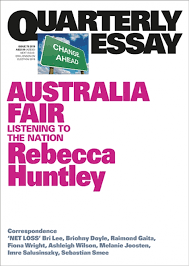
In many ways social researcher Rebecca Huntley’s Quarterly Essay is a shout-out to the ‘sensible centre’ who, in spite of different political affiliations, have felt for some time that the climate really is changing and that ‘the government should do something’; that ‘big business’ and especially the banks are treating us like mugs, and that locking people up indefinitely on Manus Island and Nauru is not really sustainable for ever even though there is still support for turn-backs and off-shore detention. The figures show that the majority (albeit sometimes not a large majority) feel this way, but the government seems to respond only to the noisier, minority view. Huntley makes no secret of her own political leanings, and she writes from the expectation that we will soon have a change of government.
She draws on historian John Hirst’s work, and particularly that of John Keane in his 2016 essay ‘Money, capitalism and the slow death of social democracy‘. She harks back to Keith Hancock’s Australia, written in the 1930s when we were still clinging to the sheep’s back, where he described Australians’ almost instinctive turn to government to provide social good as ‘State Paternalism’ rather than State Socialism, and decried its deadening effect on society and its economy. Most particularly she draws on social research: not the quick four-option polls that are churned out fortnightly in the newspapers, but in-depth qualitative research that tries to uncover the values and priorities behind the opinions.
She points out that despite our disgust for our present crop of politicians, Australian (and especially older Australians) continue to respect the idea of democracy, and see nothing wrong with compulsory voting. They do, however, see a great deal that is wrong in terms of electoral funding and the pressure of lobby groups, especially big business.
This really is an essay, with a linking paragraph at the end of each section leading on to the next, just as we were taught to do in school. In a way, I wish that she had broken free of this template because it tended to infantalize her argument somewhat. Nonetheless, it’s a cheering and rather empowering essay to read at a time when we feel that we’re actually in a position to vote for a changed political landscape. It would make a perfect reading partner to Judith Brett’s From Secret Ballot to Democracy Sausage, which I have not read (but Lisa at ANZLitLovers has) as a way of reassuring ourselves that we can be better than the government and politics that we have at the moment.
After a long break while I was away in South America, I’m back to my routine again, which means a couple of long walks each week and time to listen to podcasts.
Revolutionspodcast.com We’re still going with the Mexican Revolution, which I did at uni. back in the mid1970s. I must confess that I’d forgotten most of what I learnt then, but in Episode 9.16 The Legend of Pancho Villa , good old Pancho Villa in his big hat comes back onto the scene – him I DO remember. And then he teams up with Emiliano Zapata (who I also remember), then the US invades Veracruz, then they swap their loyalites; and then allies fall out and start fighting each other etc. etc. I’ve decided that I need to listen to this podcast with a little more dedication, as I keep forgetting what has happened in the last episode, and now I’m up to Episode 9.20 The Guns of Veracruz, where Pancho Villa starts making mistakes.
Caliphate. I don’t know- all these podcasts where the researcher/podcaster talks about the process of tracking down, interviewing, verifying…it’s all been done before. Although, I do acknowledge that this podcast series was released some time ago, so I’m coming to it late. But I don’t know…I’m wanting something a bit different. Still, these episodes are good to remind us of the grand plans behind the caliphate, and the cold-bloodedness of their attempt to get there. I’m up to Chapter Six: The Paper Trail.
The Pamphlet One of the liberating things about podcasting is that it is relatively cheap to do, and you can listen in to people whom you would otherwise never have heard. As any of you who’ve followed me for a while might know, I am a Unitarian Universalist and attend a small fellowship here in Melbourne. The Pamphlet is presented by two American UUs and is very low-tech and very American-UU-centric. You won’t find any of the production values in ‘Caliphate’ here! But in a two-parter (extended to 3 parts now, I see), they try to track down when the ‘Flaming Chalice’, a symbol used on most UU websites (including ours here in Melbourne), actually became a real, physical object that you could find in a UU service. Their first foray (The Chalice Capers 1) led them to a dead-end when it seemed that the chalice was just a spoof, and the second exploration (The Chalice Capers 2) also raised more questions than it answered.
99% Invisible is a podcast by Roman Mars about design and architecture. In Episode 340 The Secret Lives of Colour, they talk with Kassia St Claire who has written a book of that name. I’ve been deluging my husband with “Did you know…..” facts ever since.
Duolingo Podcasts. Ah! Was this one easier than the others, or have I improved in my Spanish listening comprehension?! Aventuras con mi padre is about a young girl whose father takes the family on ‘adventures’ to places in Venezuela (before it all went wrong).
There is no shortage of memoirs about parents written by their children. Too often, there is an underlying whine of grievance in such memoirs – admittedly, quite often justified- because the parents are too cruel, too self-absorbed or too mad, and the author/child is seeking to blame or understand (and often both at once). Alternatively, there are memoirs of parents bathed in nostalgia, sorrow and yearning: yearning for a return to a simpler time and regret for lost opportunities and all the things the author did not say at the time.
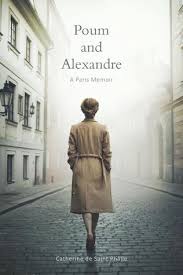
Poum andAlexandre falls into neither of these camps. It’s significant that the title makes no reference to the author at all – there’s no ‘my’ in the title- and the subtitle ‘A Paris Memoir’ emphasizes place. The book is written from the child’s point of view, but the author’s own life, and most particularly her adult life, is largely absent, except in the final section. The book is written in three parts: ‘Poum’ dealing with her mother Marie-Antoinette, nicknamed ‘Poum’ because of a childish game in bouncing down stair ‘poum, poum, poum’; ‘Alexandre’ dealing with her father; and then a final short coda involving both parents.
Both Poum and Alexandre are eccentric. Poum is a disinterested mother, just as happy to stay in bed with her books, as to spend time with her daughter. Alexandre imbues his daughter’s mind with Greek myths, praise for the Magna Carta, and tales of Napoleon. Both parents are drawn to tales of blood and savagery, and they share these with their daughter, irrespective of her age.
Their daughter, Catherine, spends much of her early life away from her parents. Born in England, ostensibly because of the freedoms bestowed by the Magna Carta, she is largely raised by her nanny Sylvia, and Sylvia’s own family. When she finally settles in France, she can barely speak French, and the book is largely devoid of friends or any other contacts other than her family.
Told from Catherine’s point of view, there are many gaps and non-sequiturs. Alexandre is already married and has an older, first family and what seems to be an ever-increasing number of offspring that Catherine gradually learns about, but does not meet. Alexandre and Poum are cousins, and have fallen out with their families over their relationship. Poum tries doggedly to maintain relations with her own family, but there is tension and resentment, and Catherine feels it. This ‘situation’ swirls around Catherine and her parents, marking them out as different and disreputable. Perhaps it’s this exclusion that turns them towards each other in a fey, irresponsible and downright strange way.
Yet there is no judgement here. Catherine describes them with love and acceptance, even though as a reader you find yourself raising a sceptical eyebrow or huffing with disapproval at the sheer irresponsibility that both parents display at different times. The book is beautifully written, and it certainly subverts the chronological memoir genre. It shuttles backwards and forwards, and tells events from multiple perspectives. It withholds as much as it gives. And yet at the end of the book, you realize just how much Catherine has given you as a reader, and you are left with a puzzling and yet rich view of her parents – much how the author finds herself. This is a challenging memoir, but I suspect that I will remember it long after the ‘misery memoirs’ have merged one into another.
Read because: CAE bookgroup selection (mine). And several people on the Australian Women Writer’s Challenge website had read it
I read this book during a week when yet another young girl was raped and murdered walking home in Melbourne. As in 2019, so too in 1930. However, I don’t think that Mollie Dean’s rape and murder elicited the same outpouring of anger and grief in 1930 and at least in 2019 we have been spared the prurient exposure of the flaws of the victim, as distinct from the perpetrator.
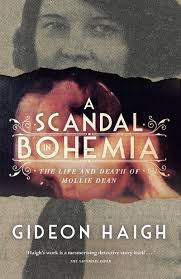
Mollie Dean was violently raped in a St Kilda laneway at the age of twenty-five. She was intelligent, sexually active and she flitted around the edges of the bohemian scene in 1930s Melbourne. There is little hard evidence about her: just a nondescript photograph, a few bureaucratic reports, and some letters. And yet she has lived on, through the artistic and academic world of which she was only marginally a part. She was painted by the man who was one of the police suspects. Her story was incorporated into George Johnston’s My Brother Jack, which has in turn appeared on stage and screen. Other contemporary writers have taken up her story as well: she featured in a play Solitude in Blue and has recently been fictionalized in The Portrait of Mollie Dean.
Mollie is the focus of the book, but it is also a portrait of the artistic scene in Melbourne, with many familiar names: Max Meldrum, Mervyn Skipper, Justus Jorgensen, Nettie Palmer. Being a north-eastern outer suburban girl myself, I was drawn to the Eaglemont and Montsalvat settings, both being familiar to me.
Gideon Haigh’s treatment of Mollie Dean is non-fictional, and there is a long list of sources in the back. It is a very discursive account – rather too discursive – with every possible connection followed up in Haigh’s network of Melbourne bohemianism in the 1930s. As a result, an index was sorely missed as you found yourself wondering whether you had encountered a name previously or whether it was just another addition to the ever-burgeoning list of contacts and connections.
The Massey lectures seem to be the Canadian version of Australia’s Boyer Lectures. The speaker is given a wide scope when they are invited to talk about “whatever they want”. Jennifer Welsh, as a political scientist, chose to speak of The Return of History. She is referencing Francis Fukuyama’s bold declaration in 1989 of ‘The End of History’ and his book, as she says, is the “dancing partner” to her lectures. Each lecture is conducted in a different Canadian city, taking her across the country over the series.
Jennifer Welsh is Professor and Chair in International Relations at the European University Institute in Florence (Italy) and a Fellow of Somerville College, University of Oxford. From 2013 until 2016, she was the Special Adviser to the United Nations Secretary General on the Responsibility to Protect.
In the first lecture “We Were Wrong“, she points out that liberal democracy has had an uneven trajectory, starting with the French Revolution and American War of Independence, with little of the inevitability of success that Fukuyama suggested. Before WWI, she says, there were only ten democracies; they doubled post-WWI but decreased again in the 1930s when the very idea of liberal democracy was questioned. By 1941, there were only nine again and the world looked to be on the edge of “a new dark age” as Churchill put it. The numbers of democracies quadrupled in the 1960s with decolonization and by the late 1980s, when Fukuyama made his bold claim of the “end of history”, half of the world’s population could be said to be living under democracies. However, from the viewpoint of 2016 (and this viewpoint has been oft-repeated since, and indeed intensified), democracy is in trouble. She sees that the world is divided into two groups: a liberal democratic core on the one hand, and on the other a large portion of the world “where the sun of history still shines”. They are separated by a gulf of incomprehension. She cautions us to recognize that liberal democracy was not inevitable. Indeed, she argues, history is back with a vengeance.
In the second lecture ‘The Return of Barbarism’ she argues that while history is returning, it is with a modern twist, exemplified by the IS’ use of swords to behead, similar to in medieval times, and the twenty-first century use social media to distribute that same beheading. ISIS, she suggests, is a product of 21st century interventions in the Middle East, and its spread is rooted in the failure of the Arab Spring. We have seen such things before. She draws parallels between the influx of foreign fighter to ISIS with the bolstering of Republican fighters in the Spanish Civil War, and she reminds us that some of the siege footage coming out of Madaya in Syria evokes the Siege of Leningrad during WWII.
“The Return of Mass Flight”, the third lecture, examines the question of refugees. She points out that in 2015, there were 65 million forcibly displaced people, the highest number in history. One in 113 people was either a refugee, asylum seeker or forcibly displaced. She goes through the development of the UNHCR (which was expected to last only three years) and the creation of the Refugee Convention, and asks ‘What is so different about today’? She points to four things: first, that it is quantitatively different; second, Europe’s response of fences and walls; third, the multiple motivations for immigration and fourth, the reliance on new technology exemplified by images of refugees with smart phones, which tends to undercut our idea of what a refugee should look like.
‘The Return of the Cold War’, Lecture 4, starts off with the Ukrainian Revolution of 22 February 2014 – something that felt momentous at the time, but soon began following a familiar trajectory. At the time of her lectures (2016), events in Syria, the emphasis on power supply through gas lines, and the revival of espionage all seemed to be following an old story too. However, she sees at least three differences between the original Cold War and current events. First, we do not see now the deep ideological challenges that underpinned the Cold War in the 1940s and 50s. Second, the original Cold War was global in scope, whereas now it is in the geo-political realms. Third, the status of both the USSR and US is different. Still, as she warns, it would be possible to get back to Cold War status again, and both sides need to look at their own actions if we’re to avoid that. Instead – and here’s her ‘history but with a twist’ theme coming through again- what we are seeing now is a modern hybrid of ‘sovereign democracy’ where elections are used to delineate the lines of power, and appeals to nationalism insulate the government from outside influences e.g. migration and foreign interference. She draws parallels between the Allied triumphalism at the end of WWI, and the smugness of the 1989 fall of the Berlin Wall.
In the fifth and final lecture, ‘The Return of Inequality’, she says that she’s going to return to the local. Actually, each of the other lectures has an intermission where she speaks to someone local from the city in which the lecture is delivered (e.g. someone of Japanese heritage who was interned during WWII, a director of a refugee centre etc). In spite of her intention to ‘go local’, she directs a lot of attention to the United States, and the increase of inequality world wide. She notes that in this 21st century ‘Gilded Age’ (and she references the original Gilded Age), inequality is bad for society and bad for the economy, it can easily morph into inequality of opportunity, and it has the potential to turn into political power and political influence. She notes that democracy has always been self-correcting and that it has always been anxious. Francis Fukuyama, whose ‘End of History’ thesis sparked her response in this lecture series is still optimistic, but she is more ‘Chicken Little’ than he is.
I enjoyed this lecture series. It was a bit frustrating that I couldn’t download them, so I only listened to them at home through wifi (although I could have paid for them on I-tunes). Still, what a wonderful thing that a lecture series can be accessed months, nay years! after it is delivered, on the other side of the world no less!
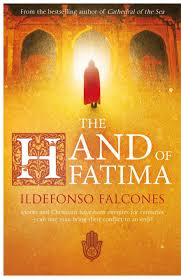
2010, 887 pages – yes, 887 pages. Translated from the Spanish by Nick Caistor
Oooffgghh!! That was a long read! I was about to write that I rarely read big chunky historical fiction books but on reflection, that’s not true. I loved Kristin Lavransdatter, I eagerly await the final volume of Hilary Mantel’s Thomas Cromwell trilogy, and I really enjoyed Amitav Ghosh’s Ibis trilogy. Perhaps it’s that I often read trilogies and suchlike as they are released, several years apart. But I read this book all in one gulp.
I heard about it from a guide who took me on a historic walk in Cordoba last year, and I very much enjoyed reading about places that I had been in Granada, Seville and of course Cordoba.
It is set in 1564, long after the reconquest of Spain by the Christian Kings. However, as we see all too often in the midst of the sectarian wars that still afflict us, mere conquest is not enough to expunge the beliefs, stories and world view of a conquered people. The Islamic Morisco people in 16th century Spain are defeated, but restive, and uprisings erupt across Al Andalus, put down violently with massacres and enslavement on both sides.
Hernando is the son of an Arab woman and the Christian priest who raped her. His stepfather despises him, and he kidnaps Hernando’s one love, Fatima, and takes and mistreats her as a second wife to spite him. He is shunned by the Christians who educate him into their beliefs, and he secretly visits Hamid, an old teacher who educates him into the Islamic beliefs. These two streams of belief, which he can call on when he needs to, mean that he is distrusted by both sides as he moves between the two cultures.
It is his facility with both Christianity and Islamic that drives him to a project to unite the two faiths through the figure of Mary, who is revered by both traditions. I found this part rather tedious and I’m not sure that it was really necessary to the story. But overall, it is a rather driven narrative, which barely takes a breath. Just when you think that things are about to be resolved, yet another twist occurs…and hence the nearly 900 pages.
I hadn’t heard of this book, which is written by a best-selling author. I was surprised for a moment to find that Lisa at ANZLitLovers had read it (until I remembered just how widely she reads) and her review is much more detailed than mine. I wasn’t even sure if it was written by a male or female author, but after reading the sex scenes with too much throbbing manhood for my liking, I decided that the author must be a man. I was not wrong.
To have the book recommended by a Spanish speaker, keen to show the beauties of her cities, is no small thing. It complicates the easy historical concepts of ‘conquest’ and ‘reconquest’, and I very much enjoyed the descriptions. When I was told about the book, I was reassured that I’d be able to find it in translation which is just as well. I doubt that I’ll live long enough to translate a book of nearly 900 pages in Spanish!
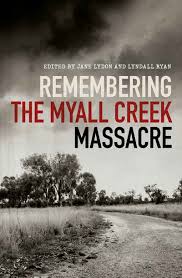
The name should have been a give-away. “Myall” was an old term for “aboriginal” and it was to be expected that any outback station called “Myall Creek” would have – or used to have- a noticeable indigenous presence. Late in the afternoon of Sunday 10 June 1838, eleven armed stockmen, most of whom were expired or convict labourers, rode into Henry Danger’s Myall Creek station near Invernell in north-east New South Wales. Henry Dangar himself was absent; as were the overseer and senior stockmen. The stockmen dismounted and entered a hut where they brought out about thirty Wirrayaraay old people, women and children who had sought refuge there on hearing the stockmen ride in. They led them out, tied with a leather strap, and took them away. Shots rang out; then the stockmen rode away. They returned the next day to burn twenty-eight bodies.
It was an appalling crime, and we know about it because the perpetrators actually faced court, and seven white men were hanged. The massacre itself was not exceptional: massacres had occurred prior to Myall Creek, and they continued afterwards. But the case was marked with controversy, both from observers appalled by it, and squatters and settlers outraged by its legal consequences. It was the last time in the nineteenth century that white perpetrators of frontier massacres were convicted and hanged.
In 2000 a permanent memorial was erected at Myall Creek. Eight years later the Myall Creek Massacre and Memorial Site were added to the National Heritage List. This book, comprising a number of essays by both indigenous and non-indigenous authors, was published for the 180th anniversary. The academic historians represented here – Lyndall Ryan, Jane Lydon, Anna Johnston and John Maynard – are all well-respected within the academy. The earlier chapters focus on the massacre event itself. The final three chapters focus on Myall Creek within the songlines and trading networks of indigenous groups the length of the east coast of Australia and tease out issues of memorialization and reconciliation. The book evokes the harshness of distance and the impunity it confers in Warwick Thornton’s film Sweet Country, even though that was set in a different place some eighty years later.
If you’re not familiar with the Myall Creek massacre, you will be by the time you finish this book, which gives a clear account of the event and the men involved. I did know about it – my own Judge Willis was bobbing around in the background as one of the members of the NSW Supreme Court, but I have been guilty of the “failure of imagination” that Paul Keating spoke of in his Redfern Speech. This book shows that it was all there: unarmed, defenseless, frightened old women and children; white onlookers too intimidated to intervene; wide distances adding a sense of menace, and averted eyes that cloaked these stockmen with the arrogance of impunity.
In Chapter 1 Lyndall Ryan focuses on Henry Dangar, the absentee owner of the Myall Creek station, who chose not to support his employees who reported the crime. In Chapter 2, Patsy Withycombe points out that the ringleader, John Fleming, was the only one of the eleven stockmen who was not a serving or former convict, and he escaped punishment altogether, protected by local squatters. In Chapter 3, Jane Lydon places the international and humanitarian response within the anti-slavery context of the 1830s, focussing particularly on the widely circulated engraving of the prologue to the massacre titled ‘Australian Aborigines Slaughtered by Convicts’ by ‘Phiz’, better known for his illustrations of Dickens’ Pickwick Papers. Chapter 4 looks at the more local response where Anna Johnston examines Eliza Hamilton Dunlop’s poem ‘The Aboriginal Mother’ published in December 1838 and later put to music by Isaac Nathan in 1842. In Chapter 5 Lyndall Ryan asks of the massacre “Was it typical of the time?”. Building on her work on the Massacre Map, she points out that it was. All the perpetrators had been involved in other massacres. It was not unusual for incidents to take place in daylight, or be led by a settler. It was not unusual to tie the victims together and lead them to the site where they would be slaughtered, or burn their bodies afterwards. Such atrocities have their own sickening rhythm and recurrences. Chapter 5, which has multiple authors, links the Myall Creek massacre with another massacre at the Wonomo waterhole, and argues that trade networks and songlines made it possible for different aboriginal groups along the eastern coast of Australia to be forewarned of the struggle which would soon extend to their area too. Chapter 6 ‘Myall Creek Memories’ is a reflection by John Maynard on being asked to give the commemorative address- the first by a non-indigenous historian – in 2015. Chapter 8 co-written by Jessica Neath and Brook Andrew is a compilation of interviews with advisors, architects, academics and scholars of cultural memory, over the question of how Myall Creek should be memorialized (if, indeed it should be) and its relation with other memory-sites related the Holocaust and Genocide. The book is framed by a prologue by Sue Blacklock and John Brown who worked on a reconciliation and covenant relationship between the Uniting Church and ATSI people in 1992. It closes with Mark Tedeschi’s QC’s address delivered in 2017, both as Chief Crown Prosecutor for NSW and the author of his own more legally-oriented account of the massacre and its legal aftermath.
This is an excellent book. The chapters are engagingly written, and if the chapter by Jessica Neath was perhaps a bit tedious in its format, it raised some interesting questions. It makes me wonder: will I live long enough for Australians and their governments to have the maturity and humility to look at the white settler past, and actually do something about an honest recognition and reconciliation that must come one day?
It’s a pity that Keira Knightly was case as Colette in this movie. She’s too well-known and I was consciously aware of that throughout most of this movie, except for one striking scene where she becomes very angry. Dominic West was very good, and disappeared better into the character. I must confess to never having read any of her work, and really knew little about her. Still, an interesting take on celebrity and marketing in the literary world of a century ago.
I rather foolishly promised that I would write the first sentence of each entry in Spanish, so apologies to those who don’t read Spanish, and even deeper apologies to those who do!

 The Resident Judge of Port Phillip