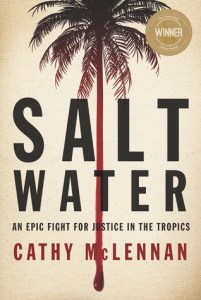
‘Saltwater’ by Cathy McLennan

saltwater

2016, 314 p

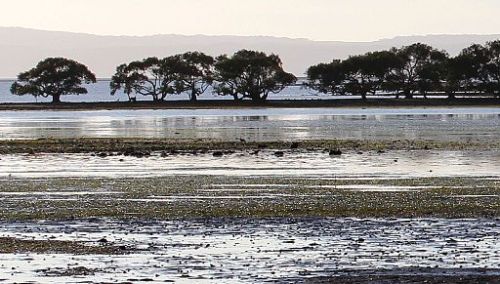
If you go by the cover of this book, with its subtitle “An Epic Fight for Justice in the Tropics”, you’re going to be disappointed. There is a trial in this book, but you won’t have heard of it. It’s just one of what I suspect is an ongoing succession of trials of young aboriginal men, whose lives seemed almost doomed to incarceration by their background of alcoholism, illiteracy and aimlessness. It’s not an ‘epic’ fight for justice, and there’s certainly no victory here.

The book is a memoir written by Magistrate Cathy McLennan, who looks back some twenty years to her first graduate job with the Townsville Aboriginal and Torres Strait Islander Legal Service, when she was aged just 22. She is not of indigenous heritage herself, and although brought up on nearby Magnetic Island, she felt largely overwhelmed working with this indigenous organization. Other non-indigenous barristers came and went, and despite her youth, she was very much thrown in at the deep end. The clerical and administrative staff were indigenous, and she relied on the guidance of aboriginal women working in a liaison capacity.  The male indigenous administrator of the organization was less supportive.

One of her earliest cases involved four young men charged with the murder of a white grog-runner. She was initially convinced of their innocence, and feels blocked by the local police.  The police, however, are not one-dimensional.  Called out to meet with a group of aboriginal people drinking in the park, she was horrified that a very young baby was lying on glass-strewn dirt. Brought right up against the dilemma of child protection vs. fear of another stolen generation, she realized that, in this situation, the police wee just as conflicted as she is.

Running alongside her involvement in this case was her ongoing contact with Olivia, to whom the book is dedicated, an 11 year old the size of a 5 year old, who was continually being locked up for robbery, and was sexually abused repeatedly. Olivia was failed at every turn: by her alcoholic mother, by child services who could do no more than come up with ‘a plan’, and by the ‘justice’ system that was content to shunt her off to Palm Island, where Olivia was even more abused than she was in Townsville.  McLennan bridles against failure at all levels that condemns indigenous children to incarceration. She could see the problem: she had no answers.  Now, twenty years later and as a magistrate, I find myself wondering if she has found a way for the system, that she is now part of, to do better.

The book is written in the present tense, and the prose is fairly pedestrian. She certainly raises many questions, and even if the book is not as “compelling” as its blurb suggests, it does add texture and complexity to a tragic and seemingly intractable situation.

My rating: 7/10

Sourced from: Yarra Plenty Regional Library.

I have added this to the Australian Women Writers Challenge database.

AWW2019

I hear with my little ear: podcasts to 31 Jan 2019

I usually listen to podcasts while I’m walking down to the Heidelberg Historical Society museum on a Monday and/or Thursday, or when walking to Watsonia Library for a Spanish conversation class. (Nearly) everything stops in Australia during the first weeks of January, so I’m only just gradually picking up my usual routine again. Over the last few weeks, I’ve been listening to:

News in Slow Spanish Latino  I listen to this in bites of three stories at a time which is about as much Spanish as I can cope with in one session. Episode #293  had an interesting commentary about the Mexican film ‘Roma’, which has been recognized in several industry awards, and slated for others. Apparently when Netflix showed it in Spain, they subtitled it – even though it’s in Spanish! Not the hard-of-hearing type subtitles, but the hard-copy foreign language ones. Unsurprisingly, this caused quite a bit of offence in Latin America. [Having said this, I often feel that I need subtitles for films from Scotland] To add to the transgression, they used ‘Mother’ instead of ‘Mum’ (rough translation), and substituted the name of a Mexican lolly with a Spanish one. There was such controversy, that Netflix dropped the subtitles.

Rough Translation.  War Poems is an absolutely fantastic episode about two translators working in Afghanistan as the United States flailed around in its policy on engagement with the Afghani population. But it’s about more than this. It had me crying in the train, then telling a total stranger about it. It’s really good.

Presidential. Abraham Lincoln: His hand and his pen. I borrowed ‘Lincoln in the Bardo’ from the library, but didn’t get round to reading this. I had downloaded it to listen to before I read the book because I really know nothing about Abraham Lincoln. I do now. It’s about Lincoln’s love of language in his own writing and in his oratory.

History Hub. While I was on an Abraham Lincoln kick, I also listened to the five- part ‘  series ‘Abraham Lincoln: The Life and Death of a Statesman‘, presented by Brian Schoen.

In Our Time. I must say that Melvyn Bragg is becoming more and more curmudgeonly the older he gets, particularly with women guests I think.  I listened to an interesting podcast about the 12th Century Renaissance, when the Crusades brought Arabic learning to Europe and universities began to be established. In the episode on Anna Akhmotova, I just wanted to give Melvyn a good hard kick.

Caliphate. I know that I’m probably the last person in the world to tune into Caliphate, but I’ve finally started listening to this series about how ISIS recruits and exploits its followers. Rukmini Callimachi, who covers terrorism for The New York Times, is the main presenter in this NPR-y-sounding podcast. I’ve listened to the first two and a half episodes.

Duolingo podcasts Episode 18: La testigo (the witness) is about a young Argentinian girl who inadvertently witnesses the Argentinian dictatorship during the 1970s. If you don’t understand Spanish, you’ll still be able to follow the story, and there’s a transcript as well.

Earshot (ABCRN) Related to the Duolingo podcast was this week’s Earshot program Argentina’s stolen generation, about the ongoing discovery, 40 years later, of the children affected in different ways by the ‘dirty war’ in Argentina in the 1970s, both as children of the ‘disappeared’ and as children of the perpetrators.

99% Invisible. I haven’t seen ‘The Green Book’ film yet, but this podcast called The Green Book Redux is about the original Green Book and how and why it came to be written. It finishes with an excerpt from ‘The Memory Palace’, another podcast I must check out.

A day at Bendigo Art Gallery

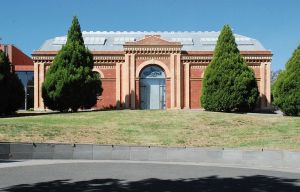
It was stinking hot – again- but because Bendigo was forecast to be much the same temperature as here in Melbourne, we decided to go up to Bendigo Art Gallery.  It’s an excellent gallery, housed in a former Volunteer Riflesmen building, with multiple extensions in the late 1990s and early noughties.

bendigo_art_gallery_2012

The three exhibitions we went to see will all finish on 10th February. The first ‘Frida Kahlo, her photos‘ is a collection of photographs from Casa Azul that includes personal photographs of her family and Frida herself across her life, photographs of her friends and a cache of historical photographs that informed and influenced her work and political ideas.

The second exhibition, ‘Daughters of the Sun: Christian Waller and Klytie Pate’ features two Australian women artists, Christian Waller and her niece Klytie Pate (originally spelled Clytie but changed for esoteric theosophical reasons). I had heard of both artists, but confess that I didn’t realize that they were related. Christian Waller often worked with her husband Napier Waller, and each one’s work influenced the other. Waller’s work reflects her interest in spiritualism and theosophy, and there are examples of her painting, linocuts and stained glass. Most of Klytie Pate’s work was ceramics. I was particularly interested in the mentions of nearby Fairy Hills and Napier Waller House (aka Dr. Blake’s house).


The final exhibition ‘Gothic Beauty: Victorian notions of love, loss and spirituality’ was a mixture of 19th century and contemporary works. The 19th century component examined ideas and practices of  death, grief and mourning while the contemporary works were a reflection and subversion of these older ideas. And check out the hearse- I wonder if it’s for hire?


The rest of the gallery has a very fine permanent collection, but we’ve seen much of it previously and our parking meter was ticking. Besides, it was these special exhibitions that we really wanted to see, and if you want to see them, you’d better get your skates on!

And yes, the art gallery is beautifully airconditioned. Just thought you’d ask.

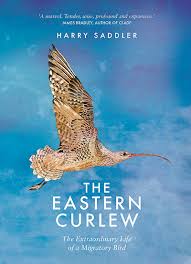
‘The Eastern Curlew’ by Harry Saddler

saddler

2018,  212 p.

What’s the life of a shorebird like? What’s it like to live a life of contact activity, when even your moments of rest are full of wakefulness? To gorge yourself on food twice yearly, and become obese, and burn all that fat off, year after year? To fly wing-to-wing with dozens or hundreds or thousands of your fellow creatures, for days at a time? To find upon your arrival, starving and exhausted, that your feeding grounds have been destroyed? (p. 203)

A couple of weeks ago I listened to an ABC Background Briefing podcast called The Bird and the Businessman. It’s about Toondah Harbour outside Brisbane, where developer Lang Walker wants to build a residential enclave. It’s situated within Ramsar-listed wetlands, but money is talking here. It’s also one of the feeding grounds for the Eastern Curlew, one of the migratory shorebirds that travels each year from Australia to China and Korea to the Arctic to breed, and then flies back again. I don’t think I’ve ever heard a program that made me so angry: listen to it.

toondahharbour

Panthus [CC BY-SA 3.0 (https://creativecommons.org/licenses/by-sa/3.0)%5D, from Wikimedia Commons

The Eastern Curlew is written by a keen birdwatcher, who traces the path of the Eastern Curlew, much as Ann Jones did in her excellent OffTrack series of programs Flying for Your Life.

The book is divided into three sections: Seeing, Moving, Being. The first section, Seeing traces his own growing awareness and fascination with the curlew, then moves on to the misnaming of the Eastern Curlew as Numenius madagascariensis, even though it doesn’t go anywhere near Madagascar.  The chapter ‘The Sea Curlew’ celebrates the indigenous response to curlews, particularly around Roebuck Bay near Broome, where they congregate before heading off to Asia.

Part II, Moving, starts with a chapter about bird tracking. The author then takes us to Dandong, China which he has mistaken as his destination instead of the similarly-sounding Donggang. It is a critical ecosystem for curlews: it is also one of China’s major ports. Netting, channelling, draining and road and seawall construction are all threatening the location. After leaving China, he goes to the mudflats of Ganghwa and the developing city of Gunsan, where the South Korean Government hopes to build a ‘dream hub’, surrounded by the 33-kilometre long Saemangeum seawall. Although the Korean government spouts their environmentally-friendly construction practices, all is not as it seems.

In attempting to justify the intentional destruction of the tidal mudflats at Saemangeum, the South Korean government stated that the birds would simply fly elsewhere. But the birds were never going to relocate. One of the reasons there are so many species of shorebird in the world is that each species has adapted to take advantage of a subtly different niche within tidal mudflasts. Different rivers, flowing to the sea through different geologies, create a wide variety of mudflat ecologies- and, as in any environment, variety in mudflat habitat leads to variety in the species found in that habitat. (p. 151)

Part III, Being, takes us to the Arctic and Lemmenjoki National Park in Finland, and the frantic mating and hatching before the birds leave for the Southern Hemisphere again. The chicks are left to fend for themselves. Then, we head back to the local wetlands in Cheetham in Victoria, where again developers are circling. The final chapter takes us to the Melbourne museum where he inspects the collection of curlew carcasses, collected mainly in 1990 at the Werribee Sewerage Treatment Plant, including object B.17906, a female which was collected nearly forty years earlier. As he closes the drawer,

…it occurs to me that the drawer contains the densest concentration of eastern curlews that I’ve ever seen, anywhere. (p. 198)

This is a beautifully written book. The proof-reader seemed to go a.w.o.l. for a couple of pages, and it jarred so painfully because the rest of the book is so careful and lyrical. The book meanders and goes off onto tangents, but what comes through clearly is the love of watching, the sorrow and anguish at our impotence against larger economic forces, and the feeble beating of a spark of hope that it doesn’t have to be this way.

When it comes to the conservation of migratory shorebirds, moments of hope are too few and too far between. Yet the very exuberance of these birds’ life cycle, the unfathomable vastness of their exertions, itself is a kind of hope: there are few animals in the world so full of life. And if there’s one fundamental truth about life, it’s that it wants to persist. If we can give it enough of a chance to do so, it’ll take that chance. (p.207)

Sourced from: Yarra Plenty Regional Library

My rating: 8.5

The East Asian – Australasian Flyway Partnership (EAAFP)

BirdLife Australia

https://www.facebook.com/saveourbaytoondah/

My blog’s name in books meme

Just as I tend see movies as they’re about to close, or exhibitions on their final days, so too I come to a meme that’s been rattling round the internet for months.  I saw it on Lisa’s ANZLitlovers and she saw it on Travelling Penguin, who saw it on Fictionophile. The rules are:

1. Spell out your blog’s name
2. Find a book from your TBR that begins with each letter. You cannot add books from another source other than your shelves.
3. Have fun looking through your shelves finding books that meet the criteria.

Well, I’ll go with the shortened version of my blog ‘Resident Judge’ which is quite long enough thank-you. And believe me, I have plenty of books on my To Be Read shelves to choose from.

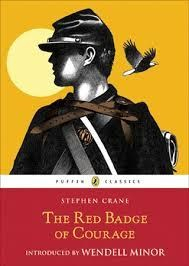
1.R : (The) Red Badge of Courage by Stephen Crane. [Purchased second hand because I like reading about the Civil War]

crane

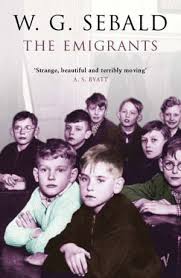
2. E: (The) Emigrants by W. E. Sebald  [Purchased secondhand because I like Sebald]

sebald_emigrants

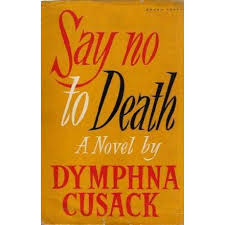
3. S: Say No to Death by Dymphna Cusack  [Purchased second hand because I read somewhere that this was her best book]

cusack

4. I (The) Imaginary Australian Miriam Dixson  [Purchased secondhand because I saw it somewhere]

dixon

5. D Daughter Buffalo by Janet Frame [Purchased second hand because I was on a Janet Frame reading kick at the time]

frame_buffalo

6. E (The) Earth Abideth Forever (A History of Australia Vol IV) by Manning Clark  [Purchased second hand because I have all of Manning Clark’s History of Australia and I haven’t read a single one of them]

clark_earthabideth

7. N Nickled and Dimed by Barbara Ehrenreich [Purchased secondhand because I’d heard a lot about it.]

ehrenreich

8. T Tristessa and Lucida by Miriam Zolin  [Purchased new because her mother taught me at school and I was so pleased that Mrs Zolin’s daughter was published. I am rather embarrassed to say that I am yet to read it.]

zolin

9. J Julia Paradise by Rod Jones  [Purchased secondhand because Hilary McPhee in Other People’s Words said that it was one of the best books they ever published]

jones_juliaparadise

10. U (The) Unknown Industrial Prisoner by David Ireland  [Purchased secondhand because I know That it won the Miles Franklin]

ireland_unknown

11. D Daughter of Fortune by Isabelle Allende [Purchased second hand because I was going to Chile. In the end I didn’t get to read it before or while I was there]

allende_daughter

12. G (The) Great World by David Malouf  [Purchased secondhand because I had heard that it was very good. And I was interested in books about World War I ]

malouf_greatworld

13. E Eilean Giblin: A feminist between the wars by Patricia Clarke  [Received new because I gave a talk at the RHSV]

clarke_eileangiblin

Well, this is sobering. All those books that I simply had to have, and they’ve all just sat there on the shelf waiting to be read. In fact, some of them look better than the pile of books to be read beside my bed. And what a cheapskate I am: most of them are secondhand. [In my defence, the ones that I buy new and full price I generally do read, so they’re no longer on the TBR list]


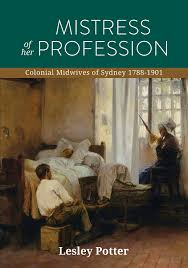
‘Mistress of her Profession: Colonial Midwives of Sydney 1788-1901’ by Lesley Potter

Mistress_Profession

2017, 133 p plus notes.

I suspect that, of all the different types of historians, family historians are probably the most attuned to the world of the midwife. In their family trees they trace those successions of births just two years apart, often over two decades; those births of the baby followed by the death of the mother in the days and weeks afterwards. Most probably, other women were present at these events, but they are largely invisible. It was this invisibility that attracted me to this book.

The author of Mistress of her Profession emphasizes the difficulty of finding these midwives within the sources, but she has managed to locate and name some of them. Having done so, Lesley Potter then aims to

discover not only midwives’ attitudes to midwifery and to understand the kind of midwifery they employed, but also to discover the attitudes of others (patients, doctors, coroners and others in authority) towards them…. the purpose is to bring the colonial midwife to life, to encapsulate her humanness, fraught with all her faults, ideals, values and anxieties: to explain and interpret her past to the present generation. (p. 6)

Her book starts with a case study, one of the eight which separate the chapters. Sarah Ann Hopkins, who boarded the Steadfast from London in 1848 as an emigrant to NSW was a trained midwife, possessing a diploma from Westminster Lying-in Hospital. As a trained midwife, she accepted the temporary position of matron on the Steadfast, working under the supervision of a Dr Read. Seven confinements took place on the ship, and not all had happy outcomes. Twenty-four year old Lydia Lever went into premature labour, triggered by dystenteric diarrhoea (it doesn’t do to think about just how awful that must have been). Her premature baby died, and she died about six weeks later. That same day a second baby was born, this time to 26 year old Jane Calder. The baby died at five days, and the next day Jane Calder’s one year old child died. Twenty year old Matilda Humpreys developed ‘epilepsy’, which was often the diagnosis of eclampsia at the time. Nor did this baby survive.   Four of the babies and mothers did survive, and one of these was Sarah Ann Hopkins herself. Just in this one case study, we have writ large the uncertainty of childbirth in the early nineteenth century.

Potter divides the midwives of colonial Sydney into several groups. First there were the convict midwives, many of whom only became midwives after transportation, using midwifery as a way of gaining respectability and a economic foothold in the colony. The second group were free immigrant midwives, often widows, who had been practising as untrained midwives in their own communities prior to immigration. Third, as the century drew on, overseas-trained midwives emigrated for a range of reasons. Finally, there were colonial-trained midwives who appeared at the end of the 19th century, some of whom were registered with the Australasian Trained Nurses Association.

The books starts with Aboriginal birthing. Probably as a result of the curiosity of early officials and naturalists, there are quite detailed descriptions of indigenous births. Although (and because?) the details in these descriptions sprang from the mindset of ‘otherness’ held by their male writers, they provided more information about actual practices in terms of pain relief and rituals than the European sources about European births did.

Where Potter was able to find such information was in the coroners’ inquests, but even in these there is not the detail that she as historian, and I as reader, wanted to know in terms of pain relief and the actual birth. What is interesting is that most 19th century cases involving midwives charged with misdemeanours associated with childbirth did not advance to higher courts (p. 41). Most often the verdict was ‘visitation by God’ or ‘natural causes’, reflecting the ignorance of an all-male jury.

Of more concern was the charge of ‘for want of medical aid’ , which spoke to the authority relationship between male medical doctors and female midwives- a familiar story even today. Midwives and nurses operated in a legal system that did not recognize them or consider them part of the health system. The law had no precedent  whereby a midwife at fault could be prosecuted, and as a result several midwives whose care was deficient, escaped sentencing. Likewise, the number of midwife-abortionists is unknown, and here too the courts were reluctant to convict.  But as the century progressed, their activities increasingly fell under the purview of the law.

The book traces through the beginnings of maternity care in Sydney, from the Female Factory in Parramatta, through the unsuccessful efforts of Dr Tierney to establish a private lying-in hospital, the development of the Benevolent Asylum, which did not have trained midwives until after 1879 and the gradual increase in private lying-in and maternity homes, especially in the 1890s. Midwifery was a commercial enterprise for women acting independently, and after midwifery training was instituted in the late nineteenth century, employment opportunities within an institutional setting increased. In terms of training, Australia followed the British trends, and midwifery became a certificated qualification, earned through on-the-job training in hospitals. However, as in Britain, midwifery training was kept separate from the training of medical men (although as Potter notes, there were men-midwives). Legislation and registration had to wait until the twentieth century.

I enjoyed the case studies which separated the chapters of these books, which generally illustrate the chapter to which they are attached.  They vary in the amount of detail that Potter was able to uncover, and unfortunately some of them are rather bare-bones, factual accounts. But even this highlights the difficulty of the task Potter set for herself.

I found the law chapters in this book the most illuminating, but even they do not really answer my questions about what it was like to give birth in colonial times. Did they sit? stand? lie? What was the attitude towards making noise? And even the most basic question- what did they do with all that boiling water that people were sent off to fetch in the movies? (or was that just a way of keeping them busy?) I recognize the paucity of the sources, but I do wonder if Potter had access to the records once training moved into more institutional settings which might have shed more light on this. Were there textbooks? Did new, more standardized techniques  replace traditional, ‘old wives tales’?

Potter has brought many of these women out of invisibility by naming them, but I’m not sure that she actually achieved her aim of bringing them to life or explaining and interpreting them to the present generation. I think that perhaps, given the limitation of the sources, her aim may have been too ambitious, and for me, still unmet.

Sourced from: Yarra Plenty Regional Library.
AWW-2018-badge-rose-199x300

I have included this book as part of the Australian Women Writers Challenge.

 

Movie: Vice

There isn’t a moment in this movie when you don’t believe that you’re looking at Dick Cheney.  Where’s Batman in this jowly, stolid man? The really frightening thing is that the philosophy of Presidential and Vice Presidential power that Cheney leveraged hasn’t been changed. And look at who are in the White House now – I am just as apprehensive about Pence as I am about Trump-  operating from the same principles….

My rating: 4/5

‘One Hundred Years of Presbyterianism in Victoria’ by Aeneas Macdonald

1937,  179 p.

I warned you. Yet another commissioned history of the Presbyterian Church, this time to celebrate 100 years since the Rev. James Clow held the first Presbyterian service in Geelong in late 1837. He was in Melbourne to check out the opportunities to set himself up as a landowner: indeed, he bought up big during the November 1837 land sale, purchasing four half-acre blocks on the south-west corner of Swanston and Lonsdale Streets.  His wife and family arrived on Christmas Day 1837 from Hobart. He started his work as a Presbyterian minister informally, encouraging Presbyterians to set up congregations and preaching on Sunday afternoons.

This centenary history covers much the same material as the other histories of the Presbyterian Church in Victoria that I have read. Macdonald is a more lively writer, however, and more attuned to other social and economic events outside the Church.  As it was written post-WWI, he incorporates an assessment of the churches’ cheerleading role during the war, which he admits has changed in the twenty years since then.

He spends two chapters on the Charles Strong controversy in 1883, regretting that

It was the misfortune of Dr Strong and of our Victorian Church that they ever came together, and especially that they came together when they did…In a later generation the story might have told itself in different words and worked itself to a different conclusion (p. 135)

Even writing fifty years later about Charles Strong, Minister of one of the largest and most popular churches in Melbourne, who split from the Presbyterian Church and started his own Australian Church, Macdonald admits that the written record is not sufficient:

The relevant minutes and documents of church courts, the columns of contemporary newspapers and the reminiscences of the few survivors have given us the groundwork of our narrative. On these, too, have been founded such comments as have been made. But had we been able not only to evoke the sequence of events as each arrived, as we have tried to do, but also to show each against the full colour of the background, we might have felt constrained to tell our story differently. That background has now faded completely from the canvas, but then it played what was sometimes a major part in leading men on that side and on this to act as they did and to determine as they did. With it before us what perplexes us now might perplex us no longer; what seems to demand our sympathy might be seen to deserve it not at all. (p. 137)

Ah, welcome to the historian’s world, Rev Macdonald, instead of the world of the chronicler!

In talking about the Church’s shift to social, as distinct from purely theological activity, he talks about Selina Sutherland, the child welfare reformer, who fell out with the Presbyterian Church over its attempt to restrict its welfare to Presbyterian children only. The former Sutherland Childrens Home in Diamond Creek is quite close to where I live, and it had never occurred to me to wonder what it was named after.

He also tells about the Rev P. J. Murdoch, the clerk of the Presbytery of Melbourne South, who was jailed in 1909 for contempt of court  for refusing to hand over a document to Mr Justice Hodges in the Victorian courts. It evoked all the questions of State Vs. Presbyterian court rights which had prompted the Great Disruption in Scotland,  and flowed through Presbyterian churches all over the world. Obviously the question hadn’t been completely resolved in 1909, and indeed there are shades of it still in the churches’ responses to the  Royal Commission into Institutional Responses to Child Sexual Abuse this very year. In a rather chilling final sentence in this chapter that foreshadows the fight again Hitler, he writes from his 1937 perspective:

…the division between the things of Caesar and the things of God has not yet been clearly and finally made. It is conceivable that we might yet have to fight again along that frontier even as the Confessional Churches are having to do in Germany to-day. (p.169)

So- now I’ve read all the ‘official histories’ that I can find about the early Presbyterian Church in Melbourne. Next stop- Malcolm Wood’s history which the blurb tells me is written from a “secular, critical perspective”. I must say that I welcome that. I think I’ve had enough commemorative histories by true believers.

‘The Presbyterian Church of Victoria: Growth in Fifty Years 1859-1909’ by D. Macrae Stewart

PresJubilee

1909, 129 p.

This book was written to celebrate the golden anniversary of the creation of the Presbyterian Church of Victoria in 1859, combining the Synod of Victoria, the Synod of the Free Presbyterian Church of Victoria and the Synod of the United Presbyterian Church of Victoria. There was one section of the United Presbyterians who didn’t join until after 1870, but in terms of golden jubilees, 1859 was the date. (Mind you, the earlier book I read about Presbyterianism in Victoria dated the coming together of different strands of Presbyterianism to 1867 instead.)

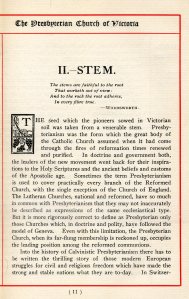
Written as a celebration publication, the text is laid out quite beautifully, with red margins and decorated inhabited initials to mark the start of each chapter. Stewart has used a planting metaphor to organize his chapters, which are titled ‘Seed’ ‘Stem’ ‘Branching’ ‘Pruning and Grafting’ etc.

As this book goes up to 1909, it covers the Charles Strong controversy of the 1880s, which of course had not occurred when Sutherland published his earlier history of the Presbyterian Church in 1877. Charles Strong, who had been the pastor of Scot’s Church in Melbourne (probably the premier Presbyterian church in Melbourne)became the first minister of  the Australian Church in 1885 after being charged with  promulgating unsound and heretical doctrine and resigning his position from Scots Church.  I think that if I’d been alive at the time, I would have been attracted to the Australian Church.

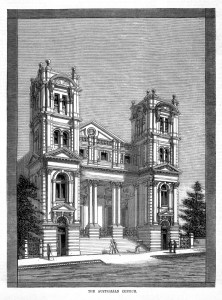
the australian church.

The Australian Church at the eastern end of Flinders Street (near Spring Street). It seated 1200 and opened in 1887 but the Church shifted to more economical premises in 1922. The Australian Church was finally dissolved in 1957. From the Australasian Sketcher. SLV http://handle.slv.vic.gov.au/10381/258170

The book has several plates showing prominent churchmen, mainly of the past but with some contemporary men (in 1909) as well. So many beards!  There are few mentions of women, but there is a section on the Presbyterian Mission Womens Union, famous for its cookbook. I only now realize that I always called it the PWMU rather than PMWU.

The book is curiously silent about the 1890s depression. Perhaps in 1909 it was too soon to discuss such things.

‘The History of the Presbyterian Church of Victoria’ by Rev. Robert Sutherland

1877, 516p.

“Why on earth is she reading this?” you may ask. It’s the first of a few books that I’ll be reading over the next month about the Presbyterian Church and Scots immigration to Victoria, in preparation for an exhibition that Heidelberg Historical Society will be putting on later in 2019.

This book was published in 1877. At the time, it would have been very current as it covers the time “from the foundation of the colony down to the abolition of State Aid in 1875”.  It is steeped in the Presbyterian attitudes of the time in relation to Sunday observance and temperance, and many of the ministers of whom Sutherland writes in a historical sense were still alive (and no doubt, readers of his book) when it was published.  He is careful to note the illustrious sons – always sons- of early ministers of the church who became wealthy contributors to the Presbyterian church and/or members of the Legislative Council of state Parliament. Being an MLC was obviously the ultimate form of success.

In Chapter 1, several women are named. The first is Mrs Turnbull, who was a friend of Rev James Forbes, the first Presbyterian minister appointed to Port Phillip. Mrs Turnbull was

a lady of vigorous understanding, of religious character, and thoroughly acquainted with business. She fully returned to the minister as much information as she received from him, and they were both mutually edified (p. 14)

Then there was Mrs Cumming, whose husband was a fellow-countryman of Rev Forbes:

After speaking a few words with Mr Cumming, the conversation was afterwards principally engrossed by Mrs Cumming, who was a lady fully equal in mental powers to Mrs Turnbull, and of as much firmness. (p. 14)

Miss Drysdale and Miss Newcombe of Geelong get a mention too. “That’s a good start!” I thought.  Unfortunately, after Chapter 1 there are no other women at all in this book, which seems quite amazing, given the emphasis on family in 19th century Christianity.

The attitudes towards aboriginal people are of their time. Given recent research on indigenous land practices described by Bill Gammage in The Biggest Estate on Earth and Bruce Pascoe in Dark Emu, this description of Rev. Clow’s journey to Port Phillip in 1837 is rather discordant:

Moving slowly along the windings of the Yarra Yarra, he saw its broad meadows covered with sterility under the gaze of savagedom, but soon to be clothed with fertility by the hand of civilization (p.10)

In speaking of missions to indigenous people, Sutherland subscribes to a view that Australian aborigines had descended (in both senses) from races with a highly developed civilization. Although now debased, it was felt that on the basis of their complexity of language and marriage practices, there must have been a more sophisticated earlier culture. He supposed that

It is most likely that the aboriginal settlers of Australia were of the poorer classes, who had drifted to the land, in consequence of having lost their way at sea. (p. 424)

Much of the book deals with the Australian replication of the Great Disruption that occurred within the Church of Scotland in 1843.  Just as in Scotland, the Victorian Presbyterian church split: one group adhering to the Established Church of Scotland, another to the Free Church of Scotland and a third distinguishing itself from the other two by eschewing any government financial aid. There are pages and pages of letters and resolutions going one way and then the other.  It seemed as if the schism was about to be resolved in 1855 but no – it all blew up again until 1867 when finally union was achieved (well, nearly completely).  In 1870 when State Aid to churches was discontinued, there was another gathering-in of Presbyterians.  I’ve heard talk of “stiff-necked Presbyterians” and it’s certainly an apt description of these disputes.

There’s much talk of church buildings, particularly in rural areas. In the late 1860s and early 1870s covered by the book, many suburban churches were rebuilt, replacing the earlier wooden buildings that had first been constructed. I was interested to read of St Enoch’s in Collins Street, directly across the road from the current Scots Church. During the schism St Enoch’s was part of the United Presbyterian Church of Scotland bloc, whereas Scots’ Church was aligned the Established Church of Scotland group.

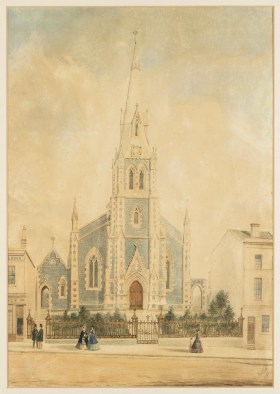
St. Enochs United Presbyterian Church 96 Collins Street East Melbourne

St Enoch’s 1864. State Library of Victoria http://handle.slv.vic.gov.au/10381/403500

St. Enoch’s was built in 1851 and renovated and enlarged in 1864. Once the different branches of the Presbyterian Church re-united in 1867 there was little need for two large Presbyterian Churches directly across the road from each other, so it was turned into an Assembly Hall instead. It was demolished in 1911 and replaced by The Auditorium, while a new Assembly Hall was built on the Scots Church side of Collins Street.