Category Archives: Uncategorized

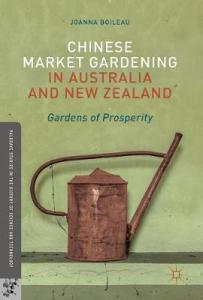
‘Chinese Market Gardens in Australia and NZ: Gardens of Prosperity’ by Joanna Boileau

boileau

2017, 327 p.

Most Victorian country towns and suburbs that had access to a river with a floodplain  tended, at one stage or another, to have a Chinese market garden.  Not just in Victoria either-  there were Chinese market gardens right along the eastern coast of Australia, in Western Australia too, and in New Zealand. They’re largely forgotten now, as most had disappeared by World War II.  However, for about 50 years between about 1880 and 1930 the Chinese market gardens fulfilled an important role in providing fresh vegetables to urban markets.

Joanna Boileau’s book takes a transnational approach, locating these gardeners not just in sites across Australia and New Zealand, but back in China as well. The majority of Chinese immigrants to Australia and the Pacific from the mid19th century onwards came from a restricted area of Southern China, the Pearl River Delta region of Guandong Province.  There, a highly developed agricultural economy had reached the limits of its cultivable land in 1850, leading to mass emigration where single men travelled overseas to earn money to send home to their families. They had little capital, and indeed indebted themselves to family and labour agents in order to make the journey, but they took with them their labour and agricultural skills.

In Australia, the dominance of large scale pastoralism and agriculture for export or mixed farming meant that small scale, intensive market gardening as the sole source of income was considered of low status.  This opened up an economic niche that Chinese labourers filled, lured by the gold rush, but aware of the high prices for vegetables.  They also started up businesses in laundries and furniture making, but discriminatory legislation introduced in Victoria to curtail Chinese business opportunities left them few options other than market gardening and restaurants.

The gardens were run by profit-sharing syndicates of almost exclusively single men. They tended to live beside the gardens in small sheds in poor conditions, where they were often robbed. With time, these syndicates integrated the various occupations involved in food supply: gardening, hawking, running fruit and vegetable stores, and the wholesale fruit and vegetable distribution network.  Between 1910-1920 in Victoria, they attained a virtual monopoly of the business at the time.

But they worked hard. The Chinese market garden was highly labour intensive.  The soil was prepared, straight furrows were dug, seedlings were transplanted from their own seeds, they were watered by bucket over the shoulders two rows at a time, hoed, harvested, and prepared for sale. They were manured with fermented human excrement and urine, that was collected in large stone urns. This technique was admired by some, and abhorred by others.  Unlike European market gardeners, who tended to plant whole paddocks with the one crop, they mixed together different vegetables with differing harvesting times.  They dealt with plants individually, rather than as a bulk crop. Their intent was to have a steady supply of produce, cropped and earning monetary return as soon as possible.

However,  the number of Chinese market gardens began declining after 1910 and by WWII most of them had disappeared. With the enforcement of the Immigration Restriction Act of 1901, there was not a steady influx of new generations, and so the existing market gardeners became older and older. New Italian, Greek and Maltese arrivals were moving into market gardening from the 1920s and 1930s e.g. at Werribee in Victoria, and landowners now subdivided their land instead of leasing it for market gardening.

I suspect that this book has probably emerged from a PhD thesis, with its rather theoretical opening chapter that deals with diaspora, technology transfer, material culture studies and transnationalism. The book covers the eastern states of Australia, and New Zealand, so it really provides a good survey of Chinese market gardening. I found her account of the relationship between Chinese and Maori gardeners fascinating, and it marked a real difference between Australia and New Zealand in terms of the relationship between indigenous people and the Chinese.  Despite the broad scope of its analysis, she also identified individual market gardeners by name, something that the housewives on their back doorstep could do too, because of their familiarity with these men who called weekly with their vegetables.  The subject matter of this book may be rather specialized, but it reads very easily and really fleshes out with individuals a stereotype that has largely disappeared.

Sourced from: State Library of Victoria e-book (did you know that you can borrow them at home?)

Read because: We’re including Chinese Market Gardens in an upcoming display at Heidelberg Historical Society

AWW-2018-badge-rose-199x300

I’ve added this book to the Australian Women Writers Challenge database.

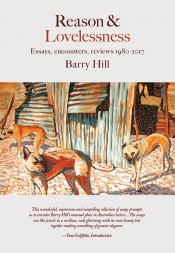
‘Reason and Lovelessness: Essays, encounters, reviews 1980-2017’ by Barry Hill

reason_and_lovelessness

2018, 488p.

This is a big book and it took a long time to read.  ‘Big’ because it’s pushing 500 pages in length, and ‘big’ because it spans  37 years – a whole career.  But it wasn’t just the size that made it such a drawn-out reading experience.  It’s also because the essays are dense with ideas, and I found myself only able to read one at a time.  They were mentally chewy and I wanted to let each one sit for a while.

Barry Hill has hovered on the edge of my consciousness without ever really breaking through.  I was aware that he won plaudits for Broken Song, his biography of Ted Strehlow, and I’ve been vaguely aware of him through the Australian Book Review.  Looking through the long list of publications at the beginning of the book, he’s been writing novels and poems since the 1970s. However, I haven’t read any of them.

I like reading essays, largely because they allow me to meet the author half-way: to sit in on a conversation, if you like.   The essays that I enjoyed most in this collection were where he wrote as a son, writing about his father – an old union man and peace activist-   in ‘Letter to My Father’; or about his mother in ‘Brecht’s Song’.

But many of other essays were more cerebral than emotional.  After an excellent introduction by Tom Griffiths, the book is divided into four parts: Close to Bones; Inland; Naked Art Making, and Reason and Lovelessness, from which the collection takes its name.  Part II (Inland) can be fairly easily characterized as being explorations of  colonialism, with reviews and commentaries on W. E. H. Stanner, Greg Dening and elaborations on his own work on Ted Strehlow.  He has really enticed me into moving Broken Song up from ‘one day’ to ‘soon’ as far as my own reading is concerned. He really does not like Bruce Chatwin’s Songlines at all (I haven’t read that one, either).  In Part III (Naked Art Making) there are several essays on Lucien Freud, John Wolseley and the Australian artist Rod Moss whose work is on the front cover.   Parts I and IV are more diverse, several of them based on interviews with poets, writers and artists. In Part IV in particular there are steps of logic that seem to link the essays together.

But I must confess that for many of these essays, I felt left behind.  I hadn’t read the work or the author he was discussing, and on the few occasions when I had, I realized the richness of what I was missing.  (e.g. his essays on Greg Dening and Robert Manne;  his excellent essay about William Buckley who lived with the Port Phillip Wathaurong people after escaping from the convict settlement at Sorrento in 1803, his essay on George Orwell).  Reading through his essay on Ezra Pound, I asked my very-widely-and idiosyncratically-read  husband “Have you ever read any Ezra Pound?”.  He had  (of course), and then went on to talk about several of the things that Hill discussed. ” Well, have you heard of Rabindranth Tagore?” I asked him.  Again, yes he had, and again mentioned things that Hill had also covered. “YOU should be reading this book!” I told my husband, and I meant it. There’s a conversation going on here, but I’m not part of it.

Should that matter? I found myself thinking of Montesquieu of all people, and the beguiling ease with which he draws you into his conversation. I rarely felt that same ease with Hill’s essays, beyond the more personal ones about his own family.  Perhaps that’s because in many of these essays, he’s writing as a critic.  Summarizing the content of a work is not part of the role of the critic, and there’s an implicit assumption that the reader is familiar with the work under discussion.  That is the  reader that Hill is writing for; not someone on the outside looking in.  Several of the essays are reflections on interviews and conversations he has conducted with writers –  Christina Stead and Rai Gaita – underlining that he is part of their milieu.  As a poet, he writes about other poets – Fay Zwicky, Shonagon (the author of The Pillow Book)- and he shares in own poetry in several of the essay.

Given that these essays were written over thirty-five years, they have probably been selected to resonate with the 2018 political climate. ‘The Mood We’re In: circa Australia Day 2004’ was given as an Overland lecture, and it captures that strange era of Latham-esque politics.  He still rages over the Bush/Blair/Howard invasions of Iraq and Afghanistan, and his feeling of impotence when protests across the world were futile permeates his essays ‘The Uses and Abuses of Humiliation’, ‘Poems that Kill’ and ‘Human Smoke, Bared Throats”.  There is not – mercifully- even a breath of Trump.  I suspect that he would find Trump almost beyond words.

This is not an easy book, written by “a truly learned man” as Tom Griffiths notes in his introduction. It demands intellectual chops and familiarity with an eclectic and erudite reading and artistic menu that strays far beyond my knowledge. I felt a bit intimidated by it, frankly.

Sourced from: a review copy from Monash University Publishing.


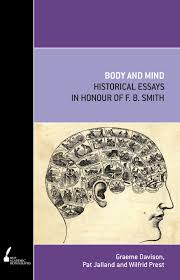
‘Body and Mind: Historical Essays in Honour of F. B. Smith’ ed Graeme Davison, Pat Jalland and Wilfred Prest

Smith_BodyandMind

2009, 240 p

What an unexpected delight! I borrowed this book when I was working on Catherine Helen Spence a few months back, because I wanted to read Susan Magarey’s chapter about Spence’s domestic life.  In addition to Margarey’s chapter,  I found a collection of fascinating essays written by academics who worked alongside or as graduate students of ANU historian Francis Barrymore (F.B) Smith, a historian of whom I’d largely been unaware, I thought.

Smith, who was born in Hughesdale, was a history of British and Australian history: indeed, he believed that Australian history should be studied as part of the British world. His own publications straddled both British and Australian contexts on themes of political action,  freethought religion, medicine and public health. These interests can be seen in the chapters of this book, which arose from a festschrift by his former students and colleagues to which he reluctantly agreed.  He died in 2015 and one of his former students and one of the editors of this collection, Graeme Davison, wrote this obituary. Several of the essays allude to his grumpiness and scepticism but also to his enthusiasm and encouragement.  Without fail, each of the chapters testifies to his contribution to the intellectual development of the various authors.  And what a list of authors! At the back of the book are listed the PhD students he supervised including  among many others, Graeme Davison, David Walker, Janet McCalman, Susan Magarey (nee Eade), Joy Damousi, Frank Bongiorno, Michael Roberts, Craig Wilcox, Malcolm Wood, Janet Doust and Barbara Dawson, nearly all of whom I have read at some stage and many of whom have appeared in this blog.

So- what of the chapters? Graeme Davison’s chapter looks at James Kay, whom I didn’t recognize until I remembered  Kay-Shuttleworth  the public health reformer (who I must confess I thought were two separate people). His chapter ‘Sociology and Self-Knowledge’ combines an analysis of Kay’s reform work alongside his love interest in Helen Kennedy, the daughter of one of his most influential patrons.  It is followed by Michael Roberts’ chapter ‘Politics and Public Health in the Age of Palmerston’ which explores political action and reform and the role of research and philanthropy. I really enjoyed Alex Tyrell’s chapter ‘A ‘Cold Water Bubble’? The Mid-Nineteenth Century British Water Cure and its Adherents’ which examines hydropathy, the cold water treatment, and its relationship with mysticism, quackery, alternative medicine and public health. Joanna Burke, from Birkbeck College UCL, author of An Intimate History of Killing, presents ‘The Malingers’ Craft: Mind Over Body in Twentieth Century Britain and America’ which takes as its launching point Edward Casey, a young Cockney soldier who, once caught up in WWI, feigned mental illness to avoid battle. The chapter goes on to consider the development of  psychology during wartime.

Geoffrey Best moves to a more autobiographical approach in his chapter ‘Education, Empire and Class: Growing Up in a New London Suburb in the 1930s’, reflecting on his own childhood in Osterley, a ‘middle-classes’ suburb.  This chapter ends where the next one begins, when Pat Jalland complicates the ‘stiff-upper-lip’ response to the Blitz in her chapter ‘The Peoples War: Death in the Blitz’.  By taking several biographical accounts of the grief and emotional shut-down that followed the sustained bombing, she compares this with the present-day emotional response to public tragedy.

The chapters then shift geographically from Britain to Australia – or, as is made clear in Phillipa Mein Smith’s chapter Australasia – incorporating New Zealand and Australia.  Her chapter ‘Retracing Australia: The History of a British Idea’ roves across public health, military and trade in looking sideways between Australia and New Zealand. It seems a particularly relevant chapter given New Zealand’s only-slightly-tongue-in-cheek campaign to ensure that they are not dropped off the map, starring Prime Minister Jacinda Adern.

I just loved Janet McCalman’s chapter ‘To Die without Friends: Solitaries, Drifters and Failures in a New World Society’ which examined demographic and epidemiological data that arose from the charity files of the Lying In Hospital in Melbourne, tracing the health and life outcomes of babies born in straitened circumstances from 1857-1900 up to the end of the open period for death certificates in 1985. As she points out, the information provided in Victoria’s very detailed death certificates required the presence of an informant who knew the names and birthplaces of family members in the past. For men and women estranged from their families, or at the end of a life of marginality and mobility, it is likely that this information remained unknown. She also, in half a page, proposes a pithy analysis of the trajectory of the ‘underclass’ cohort from the gold rushes through to the 1950s.

Then there’s Magarey’s excellent chapter on ‘The Private Life of  Catherine Helen Spence 1825-1910’ which had drawn me to the book in the first place, followed by the only chapter that actually speaks about F.B. Smith as a historian.  Written by military historian Peter Edwards, ‘A Tangle of Decency and Folly, Courage and Chicanery but above All, Waste’: The Case of Agent Orange and Australia’s Vietnam Veterans’ describes Smith’s own work as a historian in contributing a chapter to the official history of the Vietnam War. Smith reviewed the evidence arising from various commissions and enquiries into the effect of Agent Orange and, despite his own sympathies and convictions about war, concluded that Agent Orange was not the cause of veterans’ suffering – a conclusion, reached also by others, but completely imbued with politics.

And it was reading this last chapter that I remembered that I had read F. B. Smith after all. Last year I read his small booklet on the conscription debates in 1916 and 1917. It was barely more than a pamphlet, aimed at school students (in fact, I’m sure that I used it back in 1972 when I did HSC) but it combined policy, political and moral questions succinctly.  Ah- so it was that F. B. Smith!

Looking back at these various chapters, each self-contained and accessible, written by top-notch historians, they are all a reflection of Smith’s own work and influence. They also demonstrate the ripple effect of research: that others pick up one academic’s ideas and interests and make them their own, adding to and deepening the conversation and taking it forward.

Sourced from: La Trobe University Library

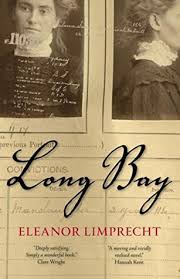
‘Long Bay’ by Eleanor Limprecht

limprecht

2015, 309 p.

I’m such a hypocrite. “Never let the facts get in the way of a good story!” I say, when I’m spinning up some dross into narrative gold. But “Fidelity!” I demand when I’m reading an imagined biography – not necessarily fidelity to the facts, mind you,  but faithfulness to the time, dialogue and worldview of the characters.

In this case, Eleanor Limprecht has allowed the facts to get in the way of a damned good story by very conscientiously citing verbatim a letter from the Long Bay Women’s Reformatory as the frontispiece to her book.  I didn’t realize it at the time, but once I reached that point in the narrative, the suspense that she had sustained so well about her character’s fate broke down and I wished that I hadn’t read the frontispiece.  But other than this, I think that Limprecht has pulled off the feat of combining research into a real character with a fictionalized narrative that is true to the evidence.

Rebecca Sinclair, as you can tell from the title and front cover, ended up an inmate of the Long Bay Women’s prison. She had a hard childhood and adolescence, working as an outworker seamstress alongside her mother in the inner suburbs of Sydney in the 1880s. Largely to escape this straitened life, she married Don, who is largely under the control of his mother, and is a liar and wastrel.  In Limprecht’s telling, it is largely because of Don’s influence that Rebecca ended up in jail. I’ll leave her to explain how and why.

The story is told in the present tense, a tense which (as I have said often before) I find uncomfortable to read (and even though I’m using it myself as I write this!) There are some infelicities in the dialogue which at times sounds too late 20th century, but by tethering her book in authentic legal documents, she doesn’t stray too far.  Her depiction of Rebecca Sinclair is fleshed-out and human, and if at times the research bones become apparent, Limprecht’s character is convincing enough to stay in your mind after you’ve finished the book.

Sourced from: Yarra Plenty Regional Library

My rating: 8/10

I have included this for the Australian Women Writers Challenge 2018.

AWW-2018-badge-rose-199x300


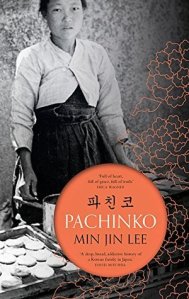
‘Pachinko’ by Min Jin Lee

pachinko

2017, 485 p.

Back in the early 1970s, at the age of 18,  I went to Japan with a Rotary group.  It was a very wholesome tour, but I do recall seeing two things which perplexed me at the time, but I understand better now. They were both in the same building, as I recall: a largish building, similar to an RSL. There was a large, dimly lit bar, with drunken men in white shirts and ties, crooning along off-key to an instrumental soundtrack that I now recognize as karaoke. At the time- and indeed now over forty years later – I couldn’t work out why male office workers (and they were entirely male) would want to make a fool of themselves in this way.  On another floor was what I was told was a pachinko parlour, likewise windowless and dimly lit except for the carnival lights around the pachinko machines. I couldn’t really make sense of the machines, which seemed like a mixture of pokie and pinball machine.  But when I saw the title of this book, I knew exactly what  pachinko was.

I came to read the book solely on the say-so of Whispering Gums Sue’s reading group  who selected this book as one of their favourites for the year. When I put it on hold at the library late last year , I found that almost eighty people were ahead of me.  Three months later I picked it up, read the back blurbs and my heart sank.  “Oh no!” I thought as memories of Falling Leaves and Amy Tan sprang to mind, dreading another three-generation Asian family saga mired in the author’s own autobiography that ends up in America with a self-entitled middle-class, middle-aged woman alternately intrigued and repelled by the lives of her grandmother and mother.

But I need not have worried. In her acknowledgments at the back of the book, the author notes that the story originated in a lecture she heard about Koreans in Japan, where a boy bullied by his classmates in his year book, jumped from a building and died. Fascinated by the failure of Japanese-born Koreans to be recognized as Japanese, and the scant prospect of this changing in the future, she researched further and conducted interviews.  These people may be historical victims, she conceded, “but when I met them in person, none of them were as simple as that”.  I think that the origins of this book in historical situation, rather than genealogy, is what lifts it right out of the pack of Amy-Tam-clones.

The book is divided into three parts: ‘Gohyang/Hometown 1910-1933’, ‘Motherland 1939-1962’ and ‘Pachinko 1962-1989’. Within these parts, the narrative is told chronologically, with jumps of perhaps three or four years, shifting between Korea, which Sunja leaves permanently, and Nagano, Osaka, Yokohama and Tokyo in Japan where she raises her family.  The story starts in 1910, the year of Japan’s annexation of Korea, when Hoonie, a good man hampered by his cleft palate and club foot, marries a poor young rural girl, Yangjin.  They have a single surviving daughter, Sunja.  When Sunja falls pregnant to a married man, Hansu, her situation is relieved by another good man,  the Christian preacher Isak, who marries her and takes her to live with his childless brother Yoseb and sister-in-law Kyunhee in Japan.  Sunja’s first-born son, Noa, grows up believing that Isak is his father, while his real father, Hansu, by now a gangland leader, is an ever-present, watching presence.

The tumultuous events of the second half of the twentieth century (comfort women, Japan during WWII, the communists in North Korea, the US involvement in the Korean war, the American acceptance of Christianized South Koreans as immigrants) all occur off-stage. They are not unimportant, because they form the background to the family’s situation as ongoing outsiders, too frightened to return to the silence of North Korea, accruing wealth and remaining distrusted by the Japanese. The pachinko industry is mired in the Korean underworld, but it lures the family as the only means of progress when education – held up as the path of responsibility – has its limitations. The pachinko game stands as a metaphor for life, where the game is tweaked and manipulated, but it draws its players on for just one more play, in the hope that this time, there will be a win. Life, like a pachinko game, “looked fixed but … also left room for randomness and hope.”

I really enjoyed this book.  It’s long, and not for nothing does Lee cite Dickens in her epigram to Part 1 of the book (“Home is a name, a word, it is a strong one; stronger than magician ever spoke, or spirit answered to, in strongest conjuration”). The book evoked Dickens in its sweep and length, and I found it entirely engrossing, luxuriating in a whole Easter Sunday to sit and finish it in one big gulp.

Source: Yarra Plenty Regional Library (e-vent-ually)

Read because: Sue’s book group enjoyed it

My rating: 9/10

A couple of days in the Wimmera Part II

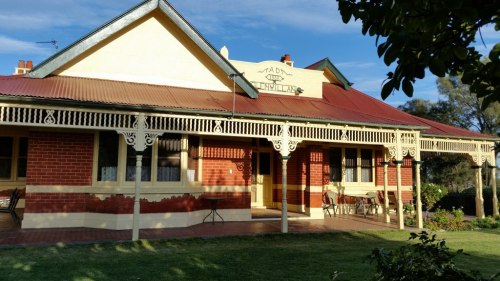
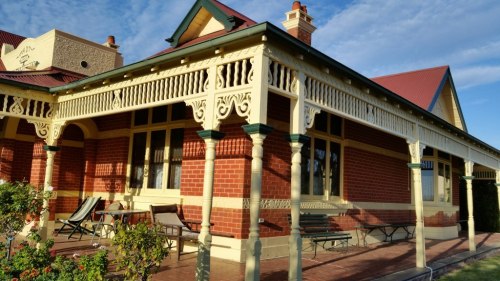
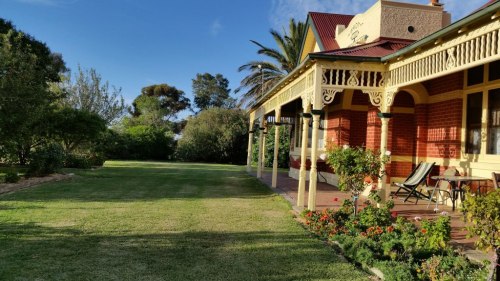
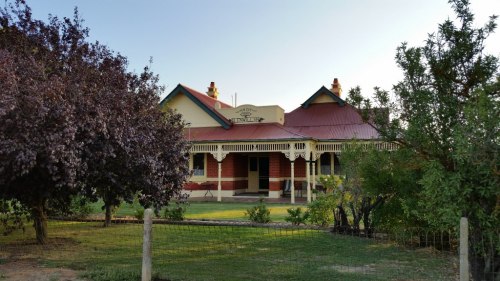
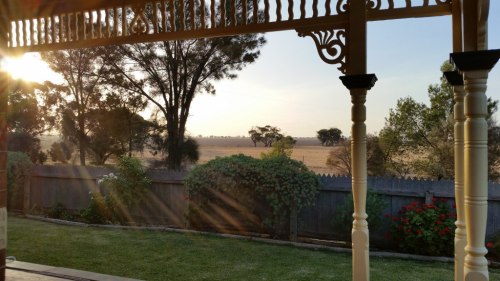
Dusk was falling as we turned into our accommodation for the next two nights: a fantastic pastoral homestead at Wallup called Glenwillan. The date on the front of the homestead references 1888, the date that the three McRae brothers – Duncan, John and Farquahar- selected this property in the Mallee. It was cleared and sown with wheat and oats, as well as running sheep.  Glenwillan was constructed in 1912 using bricks from Stawell at the cost of £1500. It is now owned by the great-grandson of Farquahar McCrae. At first I was very excited, thinking that it was Georgiana McCrae‘s brother-in-law Farquahar, but it’s a different branch of the family.

20180419_081935_small20180419_082027_small20180419_082059_small20180419_082103_small20180419_171352_small20180419_171459_small20180419_171542_small

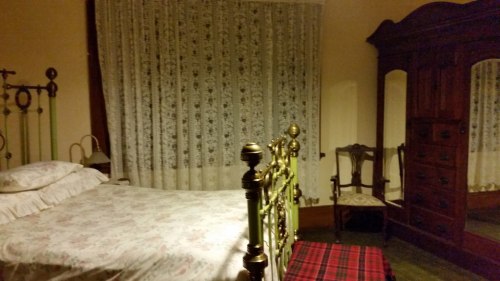
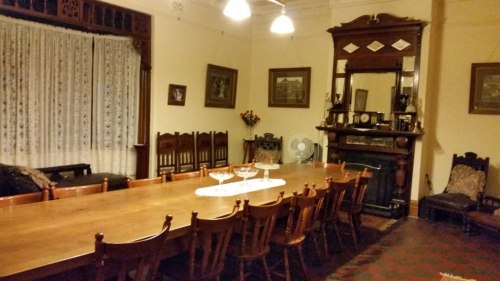
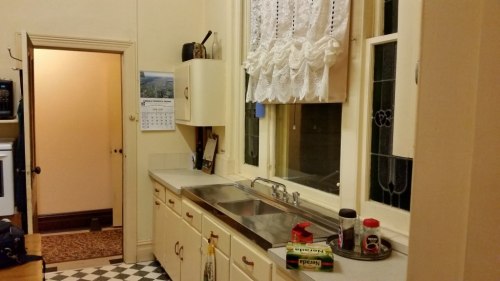
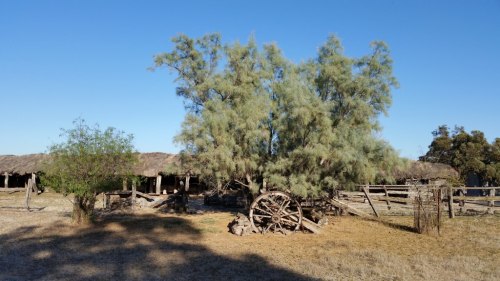
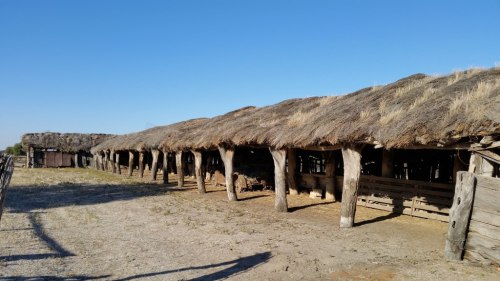
We had the whole place to ourselves! What fun I had, checking out the photographs and paintings of McCraes long passed on the walls and admiring the original furniture- especially the huge dining table which was larger than original envisaged because the furniture maker could not bear to cut up such a beautiful length of wood.  The 1950s kitchen felt just like a Nana’s Kitchen.  At the back of the homestead were thatched stables, which were amazingly dry.

20180418_183002_small

Our bedroom

20180418_183044_small

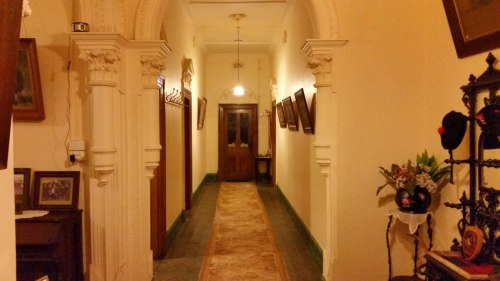
The hallway.  As a notable local, Farquahar McCrae and his wife attended the Proclamation of Federation at the Exhibition building in 1901, and there was a lot of memorabilia from that occasion.

20180418_183200_small

Just look at that table! Just beautiful

20180418_183247_small

The sort of kitchen that should have the smell of scones cooking wafting from the oven

20180420_084856_small20180420_084939_small

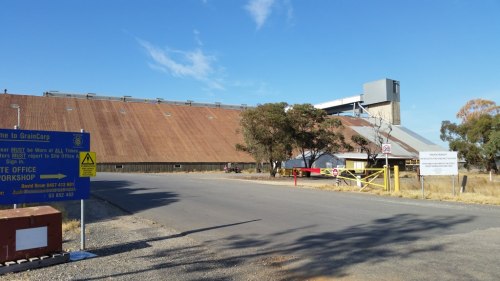
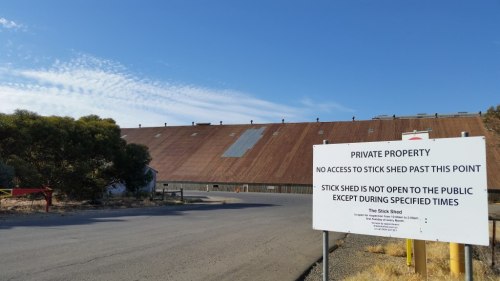
Next time I come up this way – and I will, just for Glenwillan itself – I’m going to make sure that the Murtoa Stick Shed is open. [Check out the link- it shows the inside] It’s open on the first Sunday of each month between 10.00 and 2.00.  It’s HUGE. It was built in 1941 to accommodate the wheat harvest during the war, and unlike other sheds of its type, it had a concrete floor.  It’s on the National Heritage Register. It’s so big that I couldn’t fit it into the one shot.

20180419_092230_small20180419_092301_small

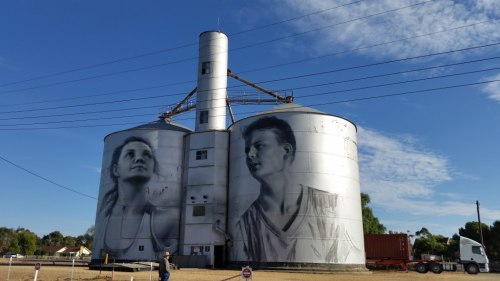
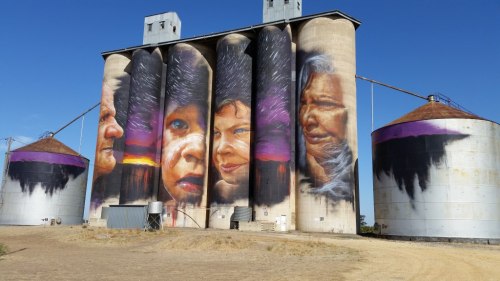
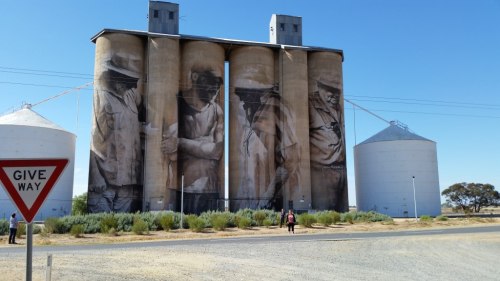
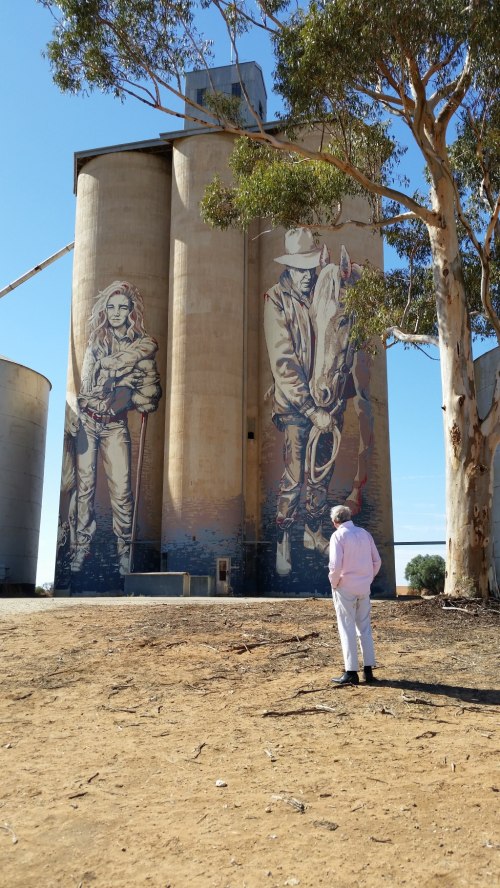
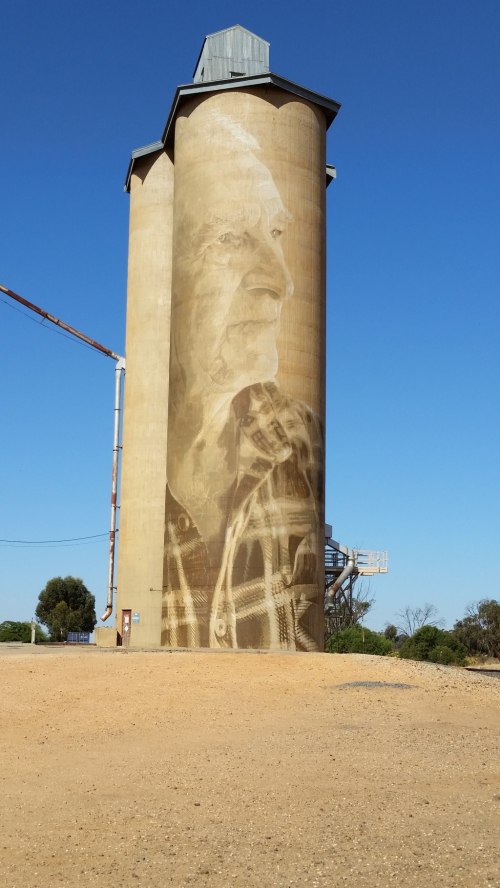
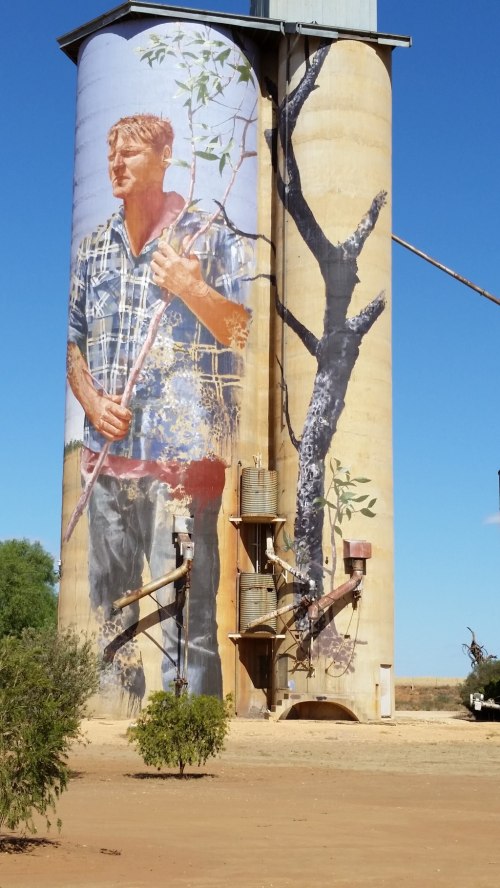
The whole impetus for this little trip to the Wimmera was to see the Silo Art Trail. This fantastic tourist initiative has funded artists to paint the disused wheat silos along the railway sidings in the Mallee area.  I notice that other towns (e.g. Benalla most recently) are also funding silo art. These ones in the Wimmera are a celebration of farming men and women, and to a lesser extent a nod to the continuing indigenous presence in the area.  The silos were built during the 1930s, and are between 28 and 50 kilometres apart. Some are on the outskirts of town; others are just on the siding with nothing else there. What a brilliant idea.

20180419_094102_small

Rapanyup, Artist: Julia Volchkova, featuring two Rapanyup young people, in their netball and Aussie Rules attire.

20180419_105638_small

Sheep Hills, Artist: Adnate. His mural depicts Wergaia Elder Uncle Ron Marks and Motjobaluk Elder Aunty Regina Hood, along with two young children.

20180419_112905_small

Brim, Artist: Guido van Helten.  The first of the silo murals, it was completed in 2016 and depicts an anonymous, multi-generational quartet of male and female farmers.  And yes, that’s me standing at the bottom, along with anonymous photo-bomber (who was very apologetic!)

20180419_115323_small

Rosebery, Artist: Kaff-eine. Completed in late 2017, it captures a young female farmer and a contemporary horseman.

20180419_123936_small

20180419_132041_small

Patchewollock, Artist: Fintan Magee.  Completed in late 2016, this is a portrait of Nick ‘Noodle’ Hulland, a local farmer.  [Just as well that pipe isn’t located any higher!] An interesting ‘flaking’ effect in the painting – at least, I hope it IS an effect and not the real thing.

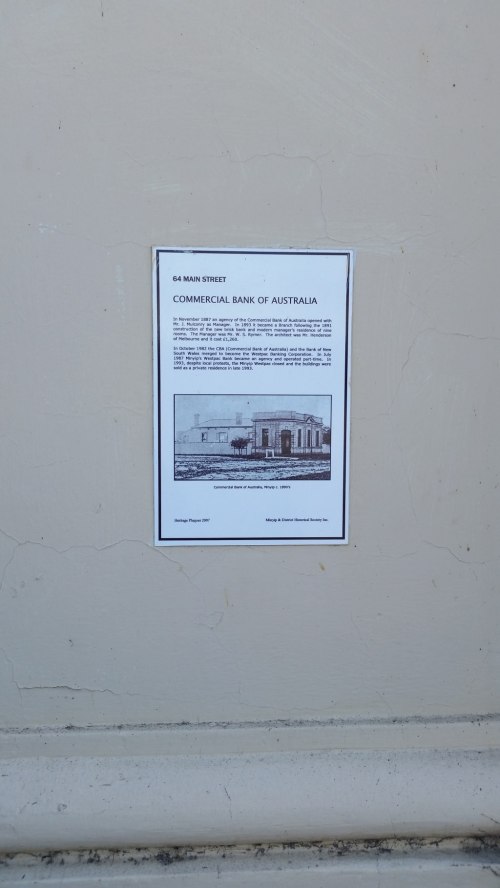
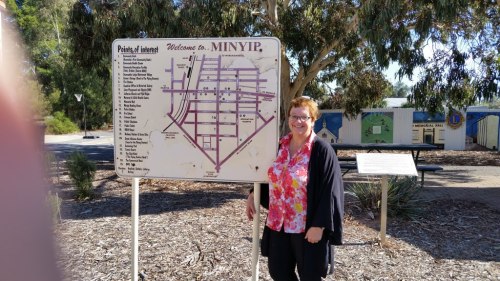
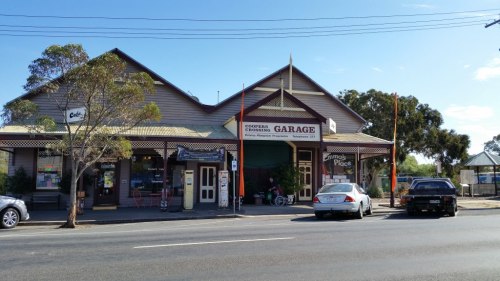
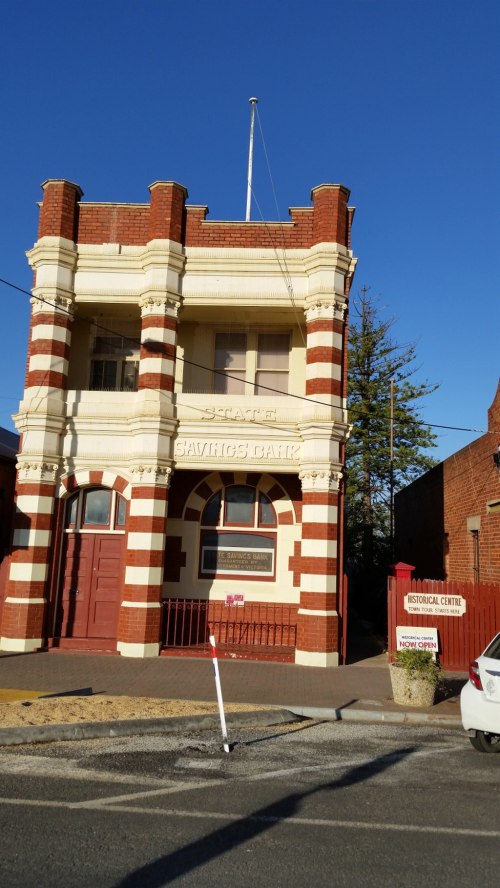
I mentioned in Part I that I felt that the Grampians/Gariwerd were resting on their touristic laurels a bit.  That certainly couldn’t be said of the Silo Art Trail.  I was really impressed with the little town of Minyip, where the local historical society had developed a trail of plaques up and down the largely deserted main street.  Minyip was used as the set for filming The Flying Doctors television series, and the only cafe in town was named ‘Emma’s place’ for one of the characters in the series.  I think that the whole idea is a wonderful tourist feature that entices city folk like us to an otherwise pretty remote area.

20180419_102433_small

One of the plaques on, in this case, the disused Commercial Bank building.

20180419_104206_small20180419_104341_small

We stopped off at Warracknabeal on the way home where, once again, we were lucky enough to find the historical society open.  This time, it was located in the old State Bank Branch.  When the bank closed, it was handed over to the Historical Society ‘as is’, complete with all the internal banking furniture.  It is a wonderful time capsule of a time when tellers wrote in your passbook, and there was a bank manager who actually knew you. Upstairs, in the bank manager’s quarters, there is a good display of a wide range of Warracknabeal artefacts, including the contents of the pharmacist’s shop. Really worth stopping off to visit, for the banking chamber alone.

20180419_163226_small

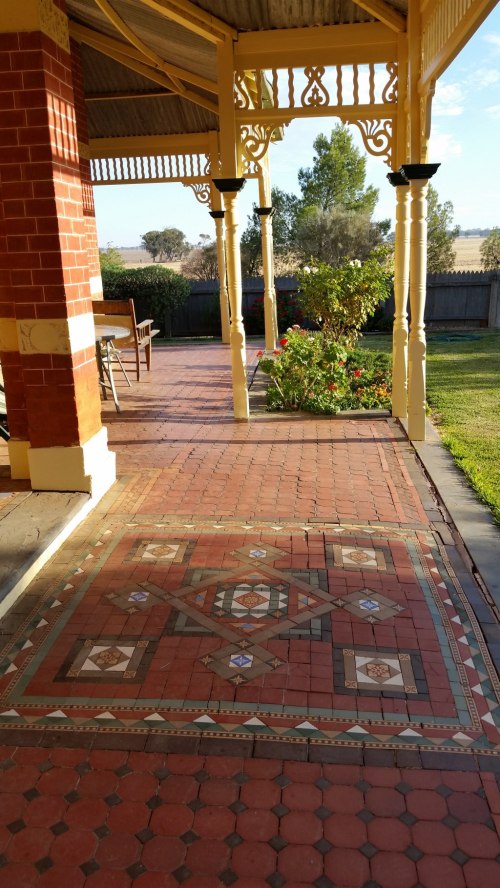
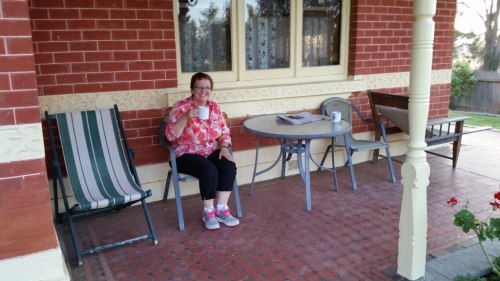
We returned home to Glenwillan,  where we sat on the front porch with our books before returning to the very good Creekside pub at Warracknabeal some twenty kilometres away.  That night we turned off all the lights and stood in the back yard of the homestead, gaping at the stars in the vast sky.  Just think of it – they’re there every night but we just can’t see them in the city.

And so, eventually, we turned for home. We seemed to pack a lot into just three nights. It was great.

A couple of days in the Wimmera: Part I

In our retired state, we are no longer restricted to school holidays for trips away but we seem to have found new shackles: the U3A timetable! Steve conducts classes in beginner French at our local U3A so he prefers not to miss classes. Fortunately, our U3A terms do not start until the week after school returns, to give members who’ve been minding their grandchildren for a fortnight a bit of breathing space.  So, now that school is back, off to the Wimmera we headed for a couple of days. For those not familiar with the Wimmera, it’s located to the northwest of Melbourne, near the border of South Australia, and it’s a flat, arid dryland farming area.

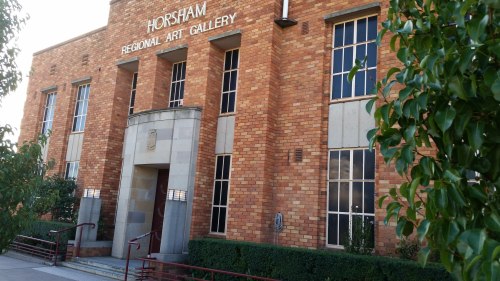
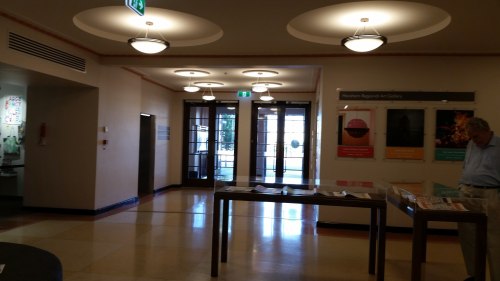
We spent our first night at Horsham, the main population centre of the Wimmera, some 300 kms from Melbourne. We got there in time to visit the Regional Art Gallery, and a very fine gallery it is too. It was constructed in 1938-9 and is quite reminiscent of Heidelberg Town Hall.  A recent refurbishment really enhances its art deco features.
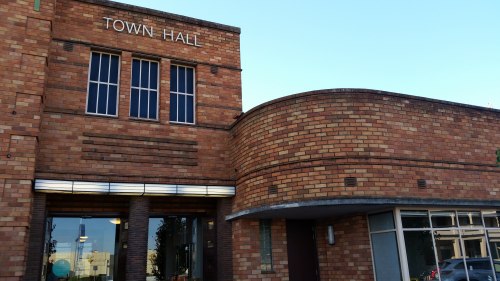
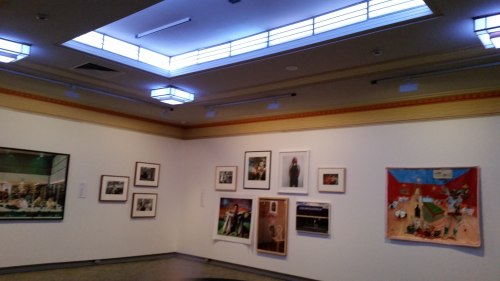
20180417_161756_small20180417_161725_small20180417_161322_small20180417_160602_small

It has a terrific collection, largely based on the gift of its major benefactor, Mack Jost. There’s most of the Australian artists you know represented there, with a strong emphasis on modernist work,  but I hadn’t seen any of them before. Well worth a look.

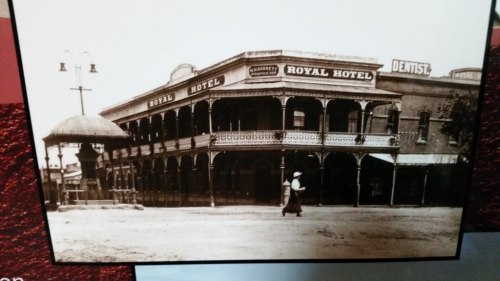
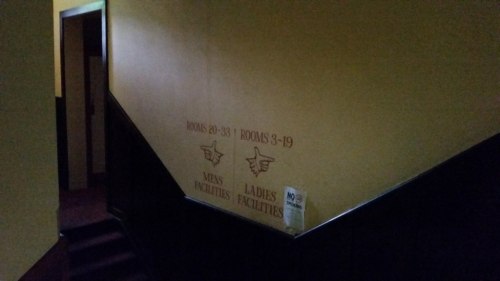
I really don’t like motel rooms much, so when we saw that the Royal Hotel had accommodation, we thought that might be fun.  Once the cast iron balcony came down in the 1960s, it lost a lot of its charm.
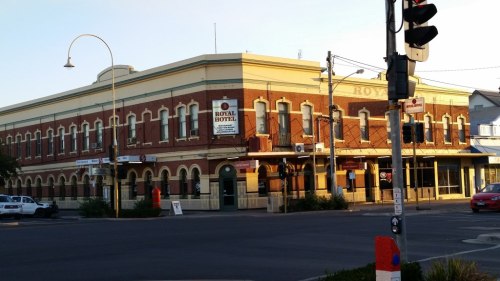
20180417_173911small20180417_200257small

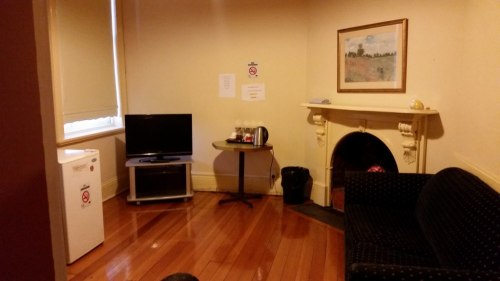
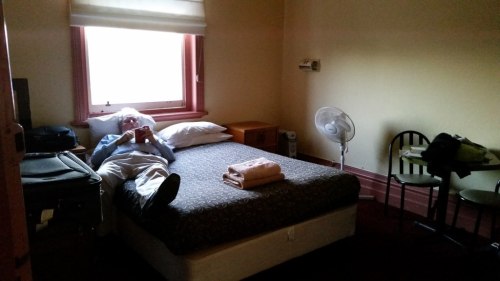
Hey- at only $60.00 a night, you can’t expect the Hilton.  The bed was comfortable, the hot water was hot and the Parma Night excellent. And it has a certain rustic charm.
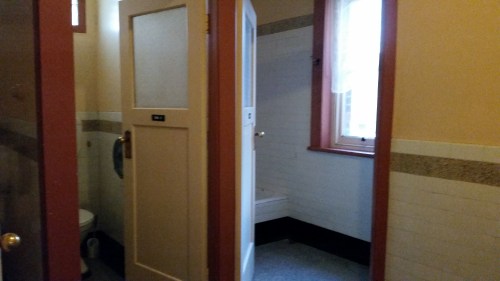
20180417_175650

Shared bathroom

20180417_175728_small

20180417_175745_small

The small but functional lounge

20180417_175826_small

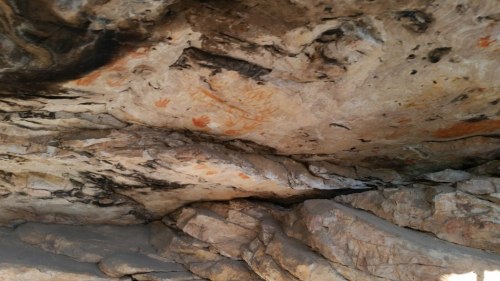
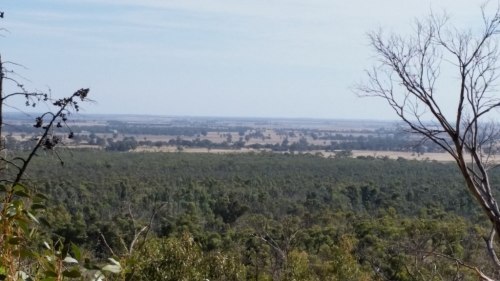
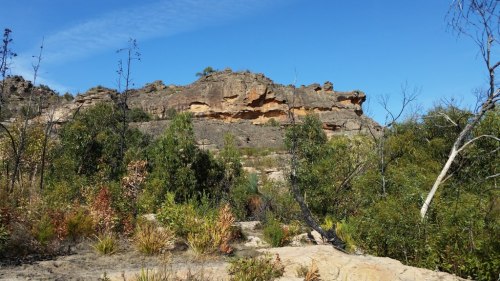
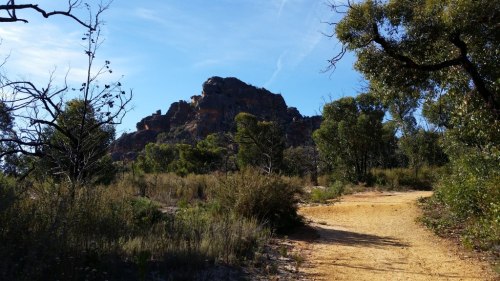
On Wednesday we backtracked a bit to the Grampians – or rather, Gariwerd- to see the aboriginal rockart in the National Park.  The area was hit by bushfires in 2014. It has grown back well, especially in comparison with Marysville which seems to have taken longer to revegetate, but I don’t know….I feel as if  Gariwerd /the Grampians have dropped the tourist ball a bit.  Their signage at the rock art sites was poor, with signs defaced or faded to the point of illegibility.   It’s an important part of Gariwerd – dammit, I’m going to use the indigenous name, even if they won’t – with its approximately 200 rock art sites comprising 80% of the Southern Victorian rock art. Five of them are open to the public, and we saw three of them.

First, Gulgurn Manja. It’s in a cave in a rocky outcrop, overlooking the valley. The handprints were made by children.
20180418_094613small20180418_094716_small20180418_095212_small20180418_095455_small

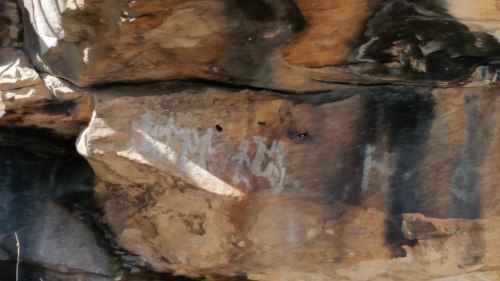
Then a bit further on to Ngamadjidj Shelter. Actually, a lot further because we got lost. Again, a bit of decent signage wouldn’t have gone astray.  This art has sixteen white figures, which is unusual because figures were usually painted in ochre. No one knows exactly what it means, because the traditional lifestyle of the  Jarwadjali people had been destroyed before it would be documented.
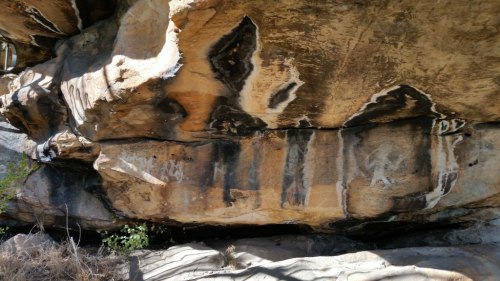
20180418_111354_small20180418_111404_small

Finally, Bunjil’s Shelter, near Stawell. This site is very significant because it’s the only depiction of Bunjil, the creator of the land, the people, the plants, the animals and the law.   You can see the presence of burnt trees around the site. Shame about the cage protecting it, but it’s necessary unfortunately.
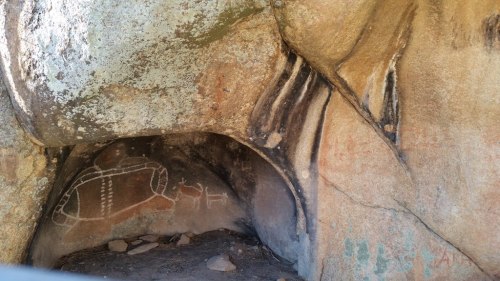
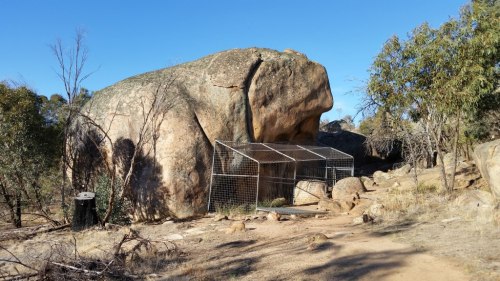
20180418_160803_small20180418_161018_small

Actually, I hadn’t realized how well the sculptor Bruce Armstrong had referenced the stone above the Bunjil drawing when he created the Bunjil statue in central Melbourne that is rapidly disappearing amidst all the high-rises near Southern Cross (always Spencer Street) station.
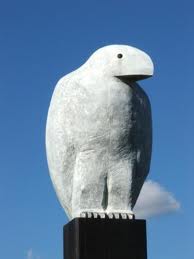
bunjilstatue

We called at Zumsteins Picnic Area.  It, too, was burnt out in 2014.  It was quite disorienting because it looked nothing like the way I remember it, with deciduous trees and kangaroos everywhere.  This article from 2013 shows how it was prior to the fire.  The signage was damaged here too,  with images torn from the information boards, exemplifying what I mean by ‘dropping the tourist ball’.  I wouldn’t have thought that it would take four years to replace.
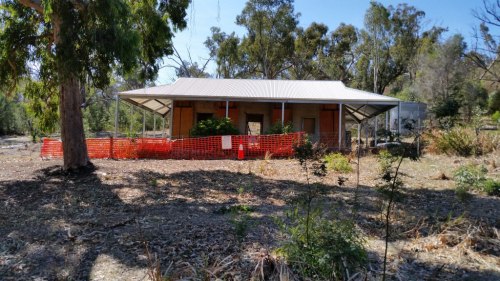
20180418_120314_small20180418_120442_small

There was a similar sense of dislocation when we visited Brambuk Cultural Centre. When I was there years ago, the distinctive curved roofline of the Brambuk Centre stood out, but it is now surrounded by trees, and obscured completely by a rather ordinary National Park centre.  Unless you knew otherwise, you wouldn’t even be aware that Brambuk was behind the National Parks building. It seems that plenty of money has been lavished on the National Park building, but the displays at Brambuk itself could do with some care.  On the top level the information boards from the excellent Koorie display are arranged in a haphazard way, and they are looking rather tired and worn. Are local politics at play here? Methinks they are.
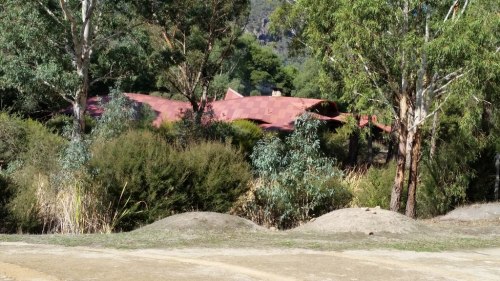
20180418_142140_small

The distinctive roof of Brambuk Cultural Centre
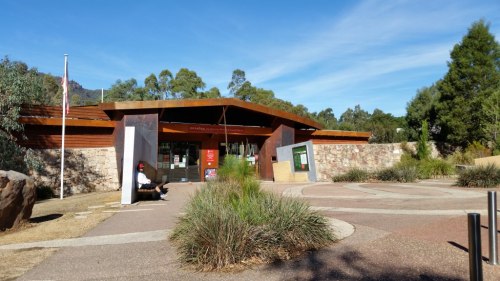
20180418_142454_small

The National Park Centre

The afternoon drawing to a close, we just managed to catch the Stawell Historical Society while it was still open. It is located in the old Pleasant Creek courthouse, as is my own Heidelberg Historical Society, but through a combination of a generous bequest and council and government funding, the administrative offices and records of the Society are in a brilliant new office building adjoining the court house. They have extensive records of families and newspapers, and very impressive temperature controlled store rooms.  The courthouse holds various honour boards from local organizations, a good photograph display from the 1860s -so early!- and a modelled streetscape.
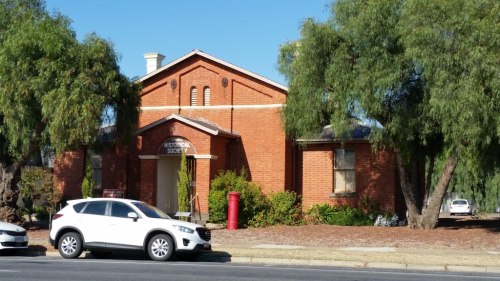
20180420_102359_small

It was past the closing time for the Historical Society, and so we headed for our accommodation for the night. $60.00 a night at the pub in Horsham last night…what will tonight bring?



‘The Autumn of the Patriarch’ by Gabriel Garcia Marquez

AutumnofthePatriarch

1975, 240p.

I cannot tell a lie: I don’t think that I’ve ever been as glad to finish a book as this one.  It was a difficult book anyway, and my choice of reading platform was disastrous.  I was reading it on an e-reader and then had to swap to a tablet when the e-reader kept crashing (I suspect that the size of the file is too big for it).

Why so difficult- apart from the technology? Because it is the same story told six times, with variations between each telling, and because there are very, very few full stops.  You could go pages and pages without a pause.  In this regard, it is similar to the short story ‘The Last Voyage of the Ghost Ship’ that I read earlier this year. But a technique that was quirky and interesting in a short story became suffocating in a full-length novel.  I found myself thrashing through the text, as if I were drowning, waiting for somewhere to take another gasp of air. Because I was reading it electronically and the table of contents in such a large omnibus edition did not go down to chapter level, it was not easy to flip through to find where the chapter ended, for fear of losing my place – I’d never find it again.  In fact, I didn’t know where the book itself ended, and as the next chapter started up with the same story again, I began to despair lest I never reach the end of this book.

But I think that that’s how Garcia Marquez wanted you to feel. The story is about an unnamed dictator in an unnamed Caribbean island, who just does not die. Well – he does, ostensibly, in the first chapter where he engages a double to deflect any assassination attempts, and the double dies as a result. But in the succeeding chapters, his death is foreshadowed, but he just doesn’t die.  In a decrepit palace that is invaded with creepy-crawlies during the night, the Patriarch wanders from room to room, locking up the house, playing dominoes with other old dictators that he has imprisoned, raping the young women in the women’s quarters until he finally falls asleep on the floor, his arms cradling his head, only to wake up again the next morning and do it all again.

His country is submerging into debt and decay, and he is kept in power by his debtors, after they have pillaged the nation, causing him to even sell them the sea. He is uneducated and he forces the church and the people to deify his mother after she dies. Although impotent against his international debtors, he has absolute power within his own country, ordering mass deaths at will.  But he is fearful of losing his power, which is why this lonely figure wanders the house at night.

I read this story as part of a course that I am doing through Coursera called Gabriel Garcia Marquez: Between Power, History and Love, delivered in Spanish. Of course, I read the book in English: my mind just boggles at the thought of translating such complex sentences! After hours of translating, I worked out what the lecturers were saying, and their comments certainly added to my enjoyment of the story, but also highlighted to me how much is lost when reading an author who makes so many references to other (Spanish) texts.  I would never have picked it up, but the book pays homage to and subverts at least two other texts: Christopher Columbus’ account of the discovery of the Americas, and a poem ‘The Triumphal March’ by twentieth-century Nicaraguan poet Rubio Dario.  Well- both of those would have just slipped right past me!

The other point made by the lecturers was that this book, one of three ‘historical’ novels by Garcia Marquez, was published during the 1970s. The Patriarch is not named, but he could be any one of the dictators who have emerged from Latin America, and continued to do so when the book was published ( Pinochet in Chile, the Dirty War in Argentina etc).  It is part of a genre of Latin American ‘dictator novels’, but Garcia Marquez’s Patriarch is none of them and all of them.

Worth reading?  Yes – but be prepared for a really difficult read. And buy or borrow it as a real book. It’s just too hard to read electronically.

‘The Trauma Cleaner’ by Sarah Krasnostein

krasnostein

2017, 257 p

After I finished reading this remarkable book, I tried to think of other biographies (as distinct from memoirs) I had read of living people. I found myself rather stumped.  There’s Bernadette Brennan’s recent literary biography of Helen Garner Helen Garner and her Work but at that point, I came to a dead end. I don’t read celebrity biographies. I suppose that the political biographies issued under the Quarterly Essay imprint (e.g. on Turnbull, Abbott, Gillard) might qualify, although I tend to think of them more as commentary than biography.

But The Trauma Cleaner is a biography of a living, breathing woman, of whom you would have known nothing had not Sarah Krasnostein written this book.  Sandra Pankhurst is a cleaner, based in Melbourne, engaged in cleaning the places you would not want to be.  The rooms in which people have died unnoticed for months; the apartments where young people have died abruptly of a drug overdose; the homes where filth exudes out from under the doors into the unkempt front yards; the homes with a veneer of order on the outside that harbour an interior palimpsest of hoarded squalor that the owner cannot control.

Sandra , who owns and manages Specialized Trauma Cleaning (STC) Services, is a hands-on worker. Not only does she know all the tricks in the trade of stain removal, but she knows the limits that timber, carpet and plaster can bear: that sometimes a built structure just cannot be salvaged from the human misery it has contained. She handles people with professional skill, particularly hoarders who have either self-referred or been referred by agencies, but she gets her own hands dirty too.  She disguises her judgment of people’s weaknesses and trauma well; or perhaps she genuinely doesn’t judge.  Because she has had her own trauma too.

Told in alternating chapters, we learn that Sandra was born Peter. She had a terrible childhood in Footscray – and just as the houses that STC deals with are surrounded by normality, so too a childhood of abuse and emotional deprivation was surrounded by neighbours, other kids, street kerbs and suburban disinterestedness.  She had been a husband and father before her sex reassignment surgery; she had also been a drag queen, sex-worker, hardware store owner and wife.

Krasnostein accompanies Sandra as she is at work, flinching at the stench and drawn by the same fascinated horror that I felt as I read about the different jobs.  That same fascinated horror pulls the reader through Sandra’s story too.  Krasnostein talks with Sandra, who admits that there are whole chunks of her story and chronology that are missing through drug use or psychological blockage. She also talks with Sandra’s associates, tracks down people who have known Sandra over her life, trawls through documentary evidence. She clearly likes Sandra, and admires her, but at one point in particular, she is very angry with her. She knows that her relationship with Sandra is as brittle and contingent on acceptance as every other relationship that Sandra has had.

This is a beautifully written book. As it goes on, Krasnostein reveals herself as well, although I found this less satisfying, almost as if as author she was bumping her subject out of the spotlight, with a ‘look at me too- I’ve suffered’. Perhaps that’s unfair.

I commend Text Publishing for the photographs.  They’re colour photographs and well placed in the text, tethered in the chronology of the surrounding pages instead of pre-empting the story. They come in three groups, oddly spaced throughout the narrative. You see Peter and Sandra right at the point you’re reading about.  I found myself turning back to these photographs often.

I have been asking everyone I know ‘Have you read The Trauma Cleaner??’ and urging them to do so. I found it absolutely compelling and disturbing, and literally stayed up all night to finish it.  It won the Victorian Prize for Literature and the Victorian Premier’s Prize for Non-Fiction in 2018, and it fully deserves its success.

AWW-2018-badge-rose-199x300

I’ve read this as part of the Australian Women Writer’s Challenge.

Strange things from the box of photos No 4

You might remember that we were going through a box of photos, looking for images that could be used in Dad’s memorial service. Ever the historian, I was attracted to things that my brother wasn’t.

Oh dear. My maternal grandmother was an anti-vaxxer.

img566