Monthly Archives: April 2026

I hear with my little ear: Podcasts 16-23 March 2026

The Rest is History Episode 406 The Nazis in Power: Hitler’s Road to War (Episode 3) War was at the centre of Hitler’s project. He downplayed it at first by focussing on his internal enemies and promulgating the popular theory of lebensraum or “living space”. Although suspicious of him, the army went along with this. But international treaties and the enforced demilitarization in the Ruhr put him in a weak position to wage war. Quite frankly, the Nazi government was broke. The government spent money building factories and autobahns, all of which had an undisclosed military purpose. Britain and the allies were softening too, recognizing that the war reparations were too harsh, and Britain undermined the Allies stance by allowing a navy. Hitler pulled Germany out of the League of Nations and the Geneva Convention on Disarmament, and called yet another plebiscite (which he won) to authorize his actions. He signed a 10 year non-aggression pact with the Poles, and decided to introduce conscription and increase the army size to 500,000 (even though under the Versailles Treaty it was supposed to be limited to 100,000). Although the Allies were displeased, these measures were very popular in Germany, although there were food shortages. Hitler decided to send the Army into the Rhineland, and the British and French did nothing. By 1936 Hitler started to see himself as the Messiah, rather than the John the Baptist figure he had purported to be before. By November 1936 he formed the Axis with Italy and Japan, and on 9 November 1937 a meeting was held to plan to annex Austria.

The Rest is Classified Episode 123 Kim Philby: Communist Double Agent in London Kim Philby’s moment in the sun has finally arrived: he has been recruited by MI6 and asked to join the anti-communist division. With access to intelligence beyond his wildest dreams, this is Philby’s chance to show the Russians what he’s made of. After lapse in security meant that all the existing agents in Germany had had their cover blown, he was given responsibility for locating Nazi spies, especially in Spain and Portugal, where he had contacts. He was by now separated from Mitzi, and had a new woman Aileen Furse with whom he would have four children. In the summer of 1943, MI6 shifted operations to London, where they were located closer to the American secret service and Philby cultivated a friendship with James Jesus Angleton who was later to become one of the founders of the CIA. Once the Soviet/Nazi pact fell apart, Philby’s Soviet handlers were now Allies, and it was easier to pass papers from UK, US and Germany to them. Still Moscow was wary of him- was he a double agent? Was his information too good? The Soviets couldn’t believe that the UK wasn’t spying on them. By 1944 Philby was back in the Soviet’s good books, and the British decided that, really, they should be spying on Russia. Irony of ironies, Philby was given the job as head of Section 9, the anti-Soviet section, and the US was told that any information should be handed direct to Philby!

Journey Through Time Episode 67 The Spanish Civil War: The Death of Democracy By 1939 Franco declared victory, and many Republican fighters fled to France, where they joined the Resistance and especially the Free French Movement. By now there was the convergence of the Spanish Civil War and Nazism. Orwell had by now become well known, Hemingway wrote For Whom the Bell Tolls and Gellhorn honed her journalism by reporting on civilian experience. The genre of ‘war reporting’ became more prominent and romanticized. The International Brigade and Lincoln Brigade were treated with suspicion as McCarthyism became stronger. After WW2, Franco’s Spain got a bit of a free pass, and with its anti-Soviet stance was courted for nearly the whole 40 years of the dictatorship. This willed blindness which only came to an end with the third generation that wanted to know more about what happened during the Spanish Civil War. The war is still contested in Spain, where archaeology is uncovering events and graves that people intentionally forgot. Moving to current events, the presenters David Olusoga and Sarah Churchwell ask: When is it too early to fight totalitarianism? Is Ukraine in the 21st century what Spain was in the 20th century?

Witness History Triumph of the Will: A Nazi propaganda film (9 March 2026) Leni Riefenstahl, once described as Adolf Hitler’s favourite filmmaker, gave several interviews where she denied that her films were propaganda and distanced herself from the Nazis. It had been arranged that she would film the Nuremberg rally of 1933, but Goebbels complained about her inclusion. The following year she was invited to film again, and she claims that she needed to be persuaded to do so, because she was inclined to refuse. There were 170 film crews at the four-day event, and it took 7 months to edit the resulting film. She saw it as an artistic challenge, and indeed she did use pioneering techniques, especially involving movement, in the film. She was arrested and charged after the war she was found to be a “fellow traveller” but was not charged with war crimes.
‘The Last Painting of Sara de Vos’ by Dominic Smith

2016, 372 p.

I guess that you could say that if a historical fiction book sends you off to internet-land to find out which bits are true, then it has worked. I should have taken more notice of the author’s note which explains that Sara de Vos is a fictional, composite character. But I didn’t and so, yes, there I was half-way through the book, searching high and low for the paintings that are described in the text, trying to find out more about Sara de Vos, only to find myself directed back to publicity for Dominic Smith’s book. So, to save you the search, Sara de Vos is a 17th century fictional character and the paintings described don’t exist, although there are similarities with the few details known about Sara van Baalbergen. Like the Sara de Vos of this book, she was admitted to the the Haarlem Guild of St. Luke and married a fellow painter. None of her works have survived.

SPOILER ALERT

But in Dominic Smith’s book, three of Sara de Vos’ paintings still exist- but which ones? The book opens in New York in November 1957, as a painting by Sara de Vos is stolen from the luxurious apartment of wealthy Marty de Groot, plucked from the wall above the marital bed. It ends up in the lands of Australian art historian, Ellie who is studying de Vos, freelancing in art restoration as a sideline activity. Her rather dodgy associate, Gabriel, asks her to make a copy of it. She asks no questions about where it comes from or to whom it belongs: she doesn’t want to know. It’s an opportunity to really study a de Vos painting close-up but it’s a decision that she regrets for the rest of her life, especially as her career blossoms and she becomes a noted academic and curator of Dutch Golden Age paintings. After assuming that the copy (i.e. forgery) has been resolved through her own contact- and more- with de Groot, it seems that her indiscretion of some forty years earlier is about to bring her undone as what she fears is two copies of the same painting are heading towards Australia, for an exhibition that she is curating at the Art Gallery of New South Wales.

So what was this painting, source of both desire, possession and trepidation? It was At the Edge of the Wood, thought to be painted by Sara de Vos in 1636, depicting a young girl standing against a silver birch, watching skaters on a frozen river as the sun sets. Through the flashbacks to the 1630s that are interwoven through the book, we learn that it was painted surreptitiously by Sara de Vos, who although admitted to the Guild of St Luke- something almost unheard of for a woman- was expected to paint still life pictures within a domestic setting. She and her husband Barent had been expelled from the Guild for painting unsigned landscapes outside of the Guild strictures and her life is falling apart. She is still grieving the loss of her seven year old daughter, and deeply in debt, Barent has deserted her, leaving her to make her own way.

The book, then, has three intersecting strands: Sara’s story in 17th century Netherlands; Ellie’s life in 1950s Europe and ill-advised venture into forgery and later interaction with the rightful owner Marty de Groot, and 2000 in Sydney when three de Vos paintings are heading to upend Ellie’s career. In places it reads like a mystery, and historical fiction, in other places a critique of the art scene and collecting practices, and an exploration of grief and regret. He writes exceptionally well of Ellie as an awkward, young and inexperienced girl far from home, embarrassed by her virginity and alternately attracted to and repelled by an older man who is interested in her for his own purposes. He does conversation well, and his descriptions of paintings are so crisp that you think that you might have seen them once- even though, of course, you couldn’t have. At times his description of painting and forgery techniques drag a little, but they do pay testament to the research that he has undertaken as part of writing this book.

And what was Sara de Vos’ last painting? Ah well, you’ll have to read the book…

My rating:8/10

Read because: Book Group selection, sourced from Yarra Plenty Library Book Groups collection.

Six Degrees of Separation: From ‘The Correspondent’ to ….

It’s the first Saturday of the month- quite literally- and so it’s Six Degrees of Separation day. This meme, hosted by Kate at BooksAreMyFavouriteandBest involves her choosing a starting book, and then you linking six other books to it. Almost inevitably she chooses a book that I haven’t even heard of, much less read, and this month is no exception with the starting book ‘The Correspondent’ by Virginia Evans.

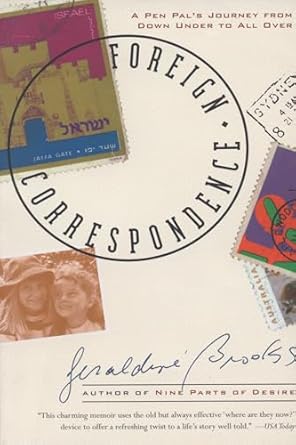
My first thought about a ‘correspondent’ is that of being a foreign correspondent. Geraldine Brook’s Foreign Correspondence, written in 1998, is a book in two halves. The first half is a memoir of growing up in Australia and collecting a number of international penfriends back in the day when you had to wait weeks for a letter from overseas. The second half is about her life as a foreign correspondent, who in her off-duty times catches up with her erstwhile penfriends to ‘investigate’ how their lives have turned out. It’s a great book for baby-boomers and laugh-out-loud funny in places.

One of the foreign correspondents on ‘our’ ABC that I respect deeply is John Lyons, who is often the target of criticism particularly by conservatives and pro-Israel groups, but whose observations I always find honest and not always comfortable. Balcony Over Jerusalem (see my review here) is a memoir of the six years that Lyons spent based in Jerusalem as Middle East correspondent for the Australian, not a newspaper that I read often. He has worked for most of the media groups in Australia: Murdoch with the Australian, the Sydney Morning Herald and now for the ABC as their Global Affairs Editor. As Middle East correspondent generally, his brief extended to countries beyond Israel. He was there to witness the Arab Spring uprisings and subsequent crackdowns in various countries and the political permutations in Iran, Egypt, Libya, Lebanon and Syria. However, his major emphasis is on Israel, and the politics that have shaped the United States response, which flies in the face of world opinion which is gradually hardening against Israel. It was one of the 5 books given to Australian MPs for summer reading in 2025 on the Israeli/Palestinian conflict for summer reading, endorsed by both Australia Palestine Advocacy Network (APAN) and the Jewish Council of Australia (JCA), and sent with a letter signed by more than 50 writers including Tim Winton, Michelle de Kretser, Charlotte Wood, Benjamin Law, Anna Funder, Trent Dalton and Hannah Kent.

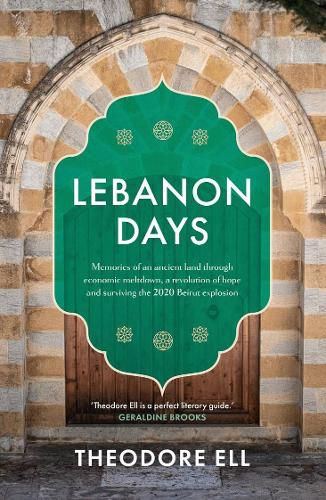
Also in the Middle East is Lebanon Days by Theodore Ell (my review here) It is the story of the two-and-a-bit years between the end of 2018 and the beginning of 2021 that the author spent in Beirut as the partner of an Australian Embassy official- a time in which Beirut roiled under street protests as part of the thowra (i.e. revolution) which was eventually put down by Hezbollah (or as he writes it ‘Hizballah’) and the COVID lockdowns, during a time of economic collapse exacerbated by government corruption, which in turn laid the conditions for the Beirut port explosion that changed his life.

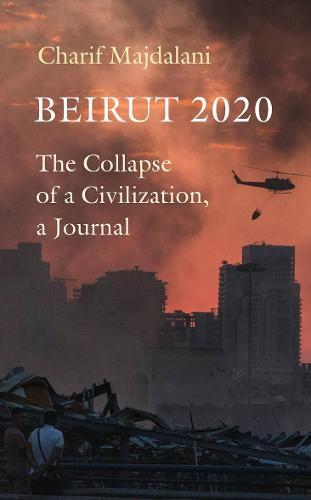
The Beirut Port Explosion of 2020 is the central theme of Beirut 2020: The Collapse of a Civilization by Charif Majdalani (my review here). The English language version starts with a very useful preface ‘Lebanon: the lessons of complexity’ which provides a potted history of Lebanon over 9 pages. It then moves to a series of journal articles, starting on 1 July 2020. His diary entries are interspersed with short explanatory chapters, which expand on the information given in the preface about corruption, protest, the piles of rubbish. The presence of COVID and the refugee influx are mere background details. Still the book inches closer to the explosion that we know is going to happen. This book tries to end on an optimistic note, but it rings rather hollow- especially now.

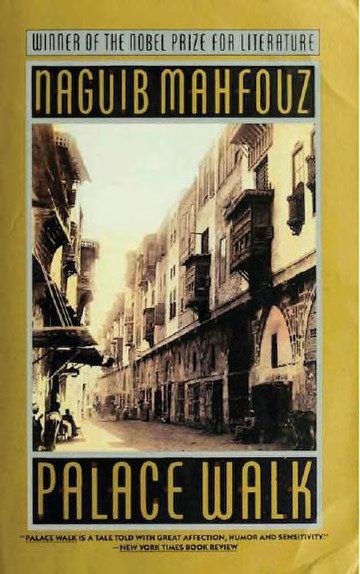
Still in the Middle East, but now historically, with the fantastic Cairo Trilogy by Naguib Mahfouz. Palace Walk is the first book of the trilogy. It is set in Egypt in 1919 during the uprising for independence against British occupation. It is the family story of Al-Sayyd Ahmed in a time of rebellion, when modernity and the adult independence of his children chips away at his sense of traditional authority.

And to round off and to return to the theme of correspondence, I finish with another historical book, Just Send Me Word: A True Story of Love and Survival in the Gulag’ by Orlando Figes (my review here). Moving out of the Middle East to yet another of the world’s troubled areas, this book is based on an archive of letters between Lev Mischenko, who spent eight and a half years on the extreme edge of Russia in one of the gulag camps in the Arctic Circle after WW2 and his partner Svetlana Ivanova. There are maps, photographs, explanations and Figes explains not only the minutiae of labour camp life, but also the sweep of Soviet politics on the outside during the time that Lev was imprisoned. But the real, real strength of this book is Lev and Sveta’s story, and the beautiful, nuanced, tender letters that they shared over this time.

It must be a sign of the times and my own unease over where the world is heading that has dominated my choice of Six Degree books this month. Sorry…but all of these books were excellent, in a time when I think it’s important that we keep looking outwards when all we want to do is curl up and wait for it all to go away.

‘Ankami’ by Debra Dank

2025, 152 p.

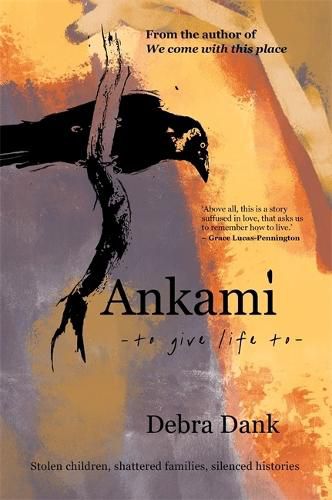
Both visually and in its subject matter, this third book by Debra Dank and her first We Come With This Place (see my review here) are linked. However, the tone of this book is different: instead of being a celebration of family, country and continuity as her first book was, this book is infused with an anger which is moulded into regret. The beautiful writing is still there, but there’s an injury here as well. I wonder if the timing of this book has something to do with this? It was published in 2025, post-Voice Referendum. I see the defeat of the Referendum as a mean-spirited rejection on the part of white Australia of the responsibility to listen – something that Governments seem happy to do with lobby groups, particular religious groupings and big business, but not our First Peoples whose ‘brand’ we blithely adopt at international events like Olympic Games and tourism advertisements.

She herself acknowledges her anger, which she capitalizes with an Upper Case A. As soon as she awakes, her uninvited bedfellow Anger whispers to her and causes her body to tighten. As she tries to locate where Anger comes from, she moves to “the outskirts of my reminiscence”, where she finds

sombre sub-memories that suggest the what might have beens, the sentient breathing of those who did not have the opportunity to make themselves more substantial by their living, but I find them there all the same, prowling like misshapen birds waiting to tell a calamitous story. I know too much about those birds, their earthly form an unsettling combination of shiny black feathers and yellowish beaks, staring eyes… and about their stories. They are often around, the flapping of their wings and their cawing voices adding to the daily rhythms of my living steps, but inside, with my unseen companion, Anger, they seem to offer obscure warnings of imminent and dire happenings. (p. 34)

So what has happened between her first and second books? Certainly in We Come With This Place there is violence and injustice but her Anger/Regret in this book starts as whispers from aunties who tell her of voices all them kids” that cried at night, and older women in the community who urge her to go up to the islands in the north because her father had family there. When she asked her father, he denied that he had any other unacknowledged siblings. There was an appointment with an Aboriginal agency trying to link up families again that seemed to be fruitless. Then there was the unsolicited and unexpected phone call from a woman who was putting together and thought that they might be related on account of their shared name. There was silence when Debra told her that she and her father were Aboriginal. There was a silence. “Oh well, um, that’s nice. Er, you have a nice day”. (p. 81)

Then there is finally, definitely, the documents that she located in the National Archives.

Time collapsed in those moments of opening the attachments and doing the cursory read that I thought would be adequate to find what I had assumed was waiting to be found. I was looking for an easy telling of names and places and times that I already knew, not this thing that greeted me with a wicked and vengeful eye. In that moment I was so very grateful for those documents but there was an awful, almost hateful, separation too. I discovered that my father had not one sibling but four, who were taken, that my paternal grandmother had given birth to ten children, not the six that I had known about. Those four others seemed to be part of the Stolen Generations, and later, as I sat in silence to process that, I remembered that there had been whispers. (p. 62)

What seems to be particularly galling is that these four children are an absolute void. They are not named, or numbered. The document from the National Archive was a letter advising of the death of her maternal grandmother, the mother of 10 children. Her youngest child had died, and the other living five children were on the Alexandria station. The author of the letter didn’t know where the other children were.(p. 94) When the protector arrived up at Alexandria station, he expected to find the children there, but “I understand it is the practice to trade workers between this one and that”. (p. 87)

In the Redfern speech in 1992, Paul Keating (or Don Watson his speechwriter) spoke of the failure of imagination on the part of White Australia. Despite the bland language of the time, it doesn’t require a great deal of imagination to recognize child removal or slavery.

Here is the ‘Ankami’ of the title: “to give life to”. Her book gives life to these children of the absence. She recognizes that it is not anger, but sorrow at the ‘should have beens’ of these four missing siblings, aunts and uncles, and the web of cousins that might have been wrapped up into the family, as she had been.

I realize that I’m not angry at all, that what I’m feeling is loss, loss that is pervasive and soul deep and profound. I see now that wandering through my body to eventually arrive at what may be close to my soul, that careful travelling gaze found the site that hosts my sorrow. I live with long term loss that is impossible to grieve for because I don’t know who I should miss. I didn’t learn their faces. I didn’t feel their joy or wrath; they never taught me the things they needed to teach me as much as I needed to learn them. Mostly I don’t know how to miss them because they were never there, merely half-imaginings on that opaque edge of my knowing of what should have been, but they’re there in ways that I can never escape because they’re in my blood. And somehow I’m grateful for that because they deserve so much more than to only exist in that horrible arrangement of ink. (p. 177)

Danks spends quite a bit of time in this book talking about fruit cake, which seems a paradox. It is a fruitcake from a recipe brought from Scotland with the ‘settlers’ of her family, that has been handed on from daughter to daughter. She talks about her non-indigenous father-in-law’s stories of his childhood and the perils of surfing and the sea, stories that he had told many, many times before. We all have history, but only one history is told; only one history is recognized.

I think there is a particular kind of superficial living gripped by folk who hear only one history, only one way of thinking…let’s all be truly courageous about owning our entire history and acknowledging all of it, and then be proud- an informed pride, rather than one that is steeped in wilful ignorance. (p. 111-2) …. The central truth in this story is that all Australians now benefit from what was done to my family and to almost all other Aboriginal families in Australia and it can only heal us all to admit that much at least. But I don’t know that such a young country has the maturity to accept that. (p. 179)

It doesn’t. This is what Australia said ‘no’ to.

This book is confronting and asks difficult questions that we don’t want to answer, but it is not bashing you over the head with guilt. As Antonia Pont, who wrote the Foreword notes, the book “circles, spirals, sidles close to, and also confronts legal, political, communal and personal facts and happenings, with a rigorous yet not overplayed scholarly knowledge of the detail” (p.xii) It is a bit like probing the skin around a wound: touch, flinch, but touch again more gently. Such grace in allowing us the space to be so tentative, but still quietly insistent that there is much work yet to be done. ‘Ankami’ has been shortlisted for the 2026 Victorian Premier’s Award. It didn’t win, but it would be a worthy winner.

My rating: 9/10

I hear with my little ear: Podcasts 8-15 March 2026

The Climate Question (BBC) Seeing the cascade of concrete rubble in Lebanon, and the belching smoke from missile and drone attacks on oil and gas infrastructure across the Middle East, I can’t help thinking about the environmental implications of America and Israel’s war on Iran. I’m obviously not alone. In this episode, What’s the Climate Cost of War host Graihagh Jackson chats to two leading experts ( Neta Crawford, Professor of International Relations, University of St Andrews and Dr. Benjamin Neimark, Associate Professor at Queen Mary, University of London) about the carbon footprint of battle itself – the jets, the bombs, the supply lines – and the impact of maintaining armies and bases during peacetime. They discuss Gaza and Ukraine, as well as the current US-Israel war with Iran. They point out that militaries have a huge climate impact even in peacetime, because they are always mobilized, and the procurement of highly engineered weapons has a climate impact too. They point out that the military doesn’t have to report emissions because they received a carveout in the Kyoto accord, and reporting was made voluntary under the Paris climate accord. However, the military are reducing emissions because they are concerned about extreme weather and the instability it causes, and the mass migration which might result.

The Rest is Classified Episode 122 Kim Philby: An Assassin in Spain (Episode 2) By now Philby’s Soviet handlers had charged him with the task of infiltrating the British state- starting with his own father, who was a rather eccentric Arabist. Kim and his friend Tim Milne (the nephew of Winnie the Pooh writer AA Milne) travelled in Europe and witnessed the rise of fascism. He began working as a journalist, and was sent on assignment to hang around with the Nazis. From there he was sent to the Spanish Civil War to cover the right wing forces for the ‘Times’ and was encouraged to get close to Franco. In 1937-8 many Soviet handlers were purged by Stalin, and he was cut loose for a while, with little or no contact with his handlers. In 1939 Germany and Russia signed the Nazi-Soviet pact, which must have really done in the heads of anti-Nazi Communists- all of a sudden they were on the same side! He met Litzi, a sexually liberated Communist, and they married. and went back to England together. Then he was sent by the Times to report on the British army, which of course he fed to Russia, which was still too involved in its own purges to take much notice of him. At this stage, the other Cambridge Five were more successful in infiltrating the British Establishment- for example Guy Burgess was working at the BBC, where he was very well connected. When Burgess was recruited by MI6, he lobbied to get Philby in, although Burgess himself was soon sacked and returned to the BBC and then the Foreign Office. Philby joined the British Secret Intelligence Service after his father vouched for him.

The Rest is History Episode 405 The Nazis in Power: The Nuremburg Rallies (Part 2) From their website

““We did not lose the war because our artillery gave out, but because the weapons of our mind didn’t fire” In September 1934, the Nazis held their sixth annual party conference in the Bavarian city of Nuremberg. The location held a symbolic resonance for the party, being not only the embodiment of an uncorrupted medieval Germany, and the centre of the First Reich, but also a bedrock of anti-Semitism. It was therefore here that Hitler would lay out his terrifying vision for the mighty new empire’s future, promulgating the superiority and purity of the Aryan bloodline. The rally was a pageant of ritualised fanaticism, recalling the majesty of Germany’s mythic past and all the heroism of classical antiquity. It was the first of many such extravagant displays, replete with parades of marching workers, bonfires, and swastikas, as the Nazi propaganda machine, under the leadership of the grotesque Joseph Goebbels, tightened its stranglehold over Germany. Through the popularisation of the radio, Nazi youth organisations, cinema, and even the Olympic Games, German minds were being steadily remoulded…”

There were 700,000 participants at the rally which included speeches, stage performances and parades. By 1935 Hitler announced that the swastika would be the national flag, and very cheap radios were distributed so that people could listen at home. Radio propaganda was also installed in offices, cafes and stairwells. Women were cloistered within a separate sphere, based on inequality and pseudo-scientific theories. They were moved out of legal and educational positions, and in 1934 were limited to 10% of the enrolment at grammar schools, and soon there would be no female enrolment at all. There were no non-Nazi youth groups: instead provision for young people was funnelled through the Hitler Youth and the League of Nations