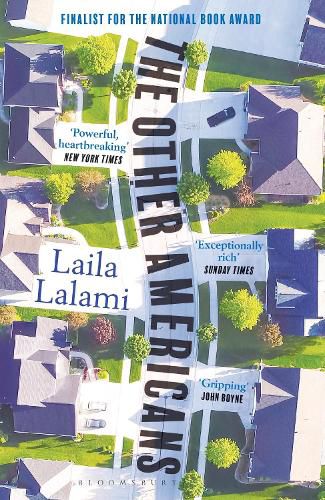
The front cover of this book shows a stylized drone-view type drawing of a suburb in America, with gabled houses surrounded by lush green lawn and trees. It looks just the way I imagine American suburbia to look, full of Leave-it-to-Beaver and Brady Bunch types. The ‘Other America’ in this book live in a rural town on the edge of the desert and the “other Americans” who live there are very different to this white, sanitized image.
Late at night in a small town in the Mojave Desert, California, middle-aged Driss Guerraoui, a cafe owner who originally emigrated from Morocco, is killed in a hit-and-run accident. It is assumed that it is accidental, but his daughter, Nora, believes that it was a deliberate ‘accident’ even though her grieving mother Maryam and sister Salma do not follow her in her obsession with finding the perpetrator. The local police are brought in, including Coleman, a female officer that we later learn is of African-American descent, and deputy sheriff Jeremy Gorecki, an ex-Iraq veteran who had grown up in the town and had long had a school-boy crush on Nora. Before the accident Nora had been living in Chicago, trying to carve out a career as a musician, and involved with a married man who had not followed through on his pledges to leave his wife. But when her father is killed, she returns to her home town and again becomes involved with the boys she went to school with, including Jeremy and A. J. and his father Anderson, who owned the bowling alley beside her father’s cafe. However, the accident did not go completely unseen. Efrain, an undocumented immigrant, saw the collision but fear of the authorities stopped him going to the police. He only came forward when Nora offered a generous reward, possible because of a bequest left to her by her father (a bequest resented deeply by her sister).
The story is told in a chorus of nine voices, including that of the dead man Driss. Because they are all telling the story from their own perspective, we learn much more than about just the accident and the investigation, which is rather an anti-climax as far as a police procedural goes. We see parallels between Driss and Efrain, both making a life in a new country; we learn of infidelities in Nora’s own family; we see racism and resentment being played out at multiple levels. Because they are told from each character’s point of view, we gain multiple perspectives on the same event but I feel that, as a writing technique, it’s a bit of a cop-out. The voices were not sufficiently different from each other and the author is relieved of the responsibility of tying them together. It has been done before, and it just felt a bit tired as a style.
My rating: 7/10
Sourced from: Yarra Plenty Regional Library
Read because: I have Leila Lelani’s new book reserved, and I thought I’d read one of her earlier works first.
As a local historian and having lived all my life within a 10 km radius, I have a strong sense of place, but I acknowledge that it is not the same as the First People’s sense of Country. That’s Country with a capital C, and there’s no ‘the’. It’s just Country, and I respect First People’s embeddedness in it, but deep down I know that don’t really understand it in the same way. Debra Dank’s We Come With This Place is probably the best explanation and expression of it that I have read.
Dank is a Gudanji/Wakaja woman: teacher, wife, mother and grandmother. She grew up in Camooweal in Queensland but her family, are from the south-western Gulf of Carpentaria and their dreaming is the three travelling Water-women, birthed from the salt water, who became the first tellers of stories and grew the country as they moved through it. The Water-women, and the knowledge of water runs through this book, opening and closing the narrative. This is probably the only conventional part of the telling, as different generations’ stories are interwoven without clear signposting, and as pain and abuse occur over and over again.
The introduction to the Yoorook ‘Truth be Told’ report spoke of putting First Peoples’ Stories against the written, European histories. A number of years ago, historian Ann McGrath wrote a history Born in the Cattle (1989), which used oral histories to tell the stories of Indigenous people living on pastoral stations in the Northern Territory, a ‘no-shame’ job which enabled the cattle workers and their families to live on Country, maintain traditional obligations, and earn a living. It seemed a rather rose-tinted analysis even at the time, and seems even more so thirty years later with our later knowledge of the Stolen Wages, and the Massacre Map. Dank herself gives a different view of the pastoral workers’ life through her father’s story, and through her own as well, as she spent several living on stations with her family, where they were treated with varying degrees of acceptance.
Her father, Soda, was born on the banks of the birthing creek on Wakaja Country, on what became known as Alexandria Station. After witnessing his mother being raped, and accused of poddy (calf) stealing and pursued by white co-workers on the path of vengeance, he escaped the Station and crossed the Queensland border into Camooweal, where he met Dank’s mother and married her and established a family. The indigenous community is not necessarily supportive of marriage between indigenous partners: Soda’s mother-in-law, an Indigenous woman who was protective of her status in a small, tightly-knit Methodist community, reported Debra’s birth to the Aboriginal Protector, who at that time had the power to take lighter-skinned children from their families. It didn’t happen in this case. Debra’s mother, who had benefited from Westernized schooling, put a heavy emphasis on education, and indeed she oversaw not only her children’s education when the family was living on a pastoral station, but that of the station-master’s children as well. Her father could neither read nor write. Her love for both parents is unmistakable, but she is clear-eyed about domestic violence within her family, and the recurrent injustice, racism and pain that recurs across the generations.
Despite her maternal grandmother’s hostility, Dank had a close relationship with her grandparents and from them she learned about Country. Her descriptions of camping, of tramping through desert scrub looking for water, and the vast landscape are beautiful. Through a series of short chapters, she tells of the lives of her grandparents (and further back) and parents but she does not necessarily help the reader by giving a straight-forward chronological account. At times, I found myself flipping back to see whose story it was – her father’s? Her grandfather’s?- but I’m sure that this is intentional. Violence and dispossession seeped through the generations, as did the love and knowledge of Country. It’s a love and knowledge that she is giving to her children, and to us too as readers. The cyclical story pattern reflects First People’s story-telling and its sense of time and patterns. She uses language as well, without the support of a glossary at the back, and so you need to deduce the meanings of words which, ever the teacher herself, she uses several times within a few paragraphs so that you can work out the context.
I was particular struck by one passage where she describes looking for food in desert country with her father, on land that was not their country. I realized that our Acknowledgements of Country embody similar sentiments, but without the promises of benign intention.
We had been cautious when we approached. Dad had been extra careful to talk to that place and to assure the old people there that we were coming to gather some food, and to let them known who we were and where we had come from. He went on to tell them we meant no harm and we would take only enough to feed us on that day, that our country and our people, like us, were grateful to be given food there. We would leave enough to share with the turkeys that would arrive soon, he assured those that dwelt there. And they were kind to us. We had enough to satisfy our needs, but it was always like that. Talk to the country, talk to old people, talk, talk, talk. Talk your story into this place to sit there with the ancestors. (p. 104)
If only we were able to acknowledge country so honestly.
This book was shortlisted for several awards in 2023, and it won four categories in the NSW Literary awards, the Australian Literary Society Gold Medal and the University of Queensland Non-Fiction award that year. It deserved such recognition. It is very, very good.
My rating: 9/10
Sourced from: Yarra Plenty Regional Library
Read because: I borrowed her most recent book about her family story, and I realized that I should read the original book first.
Well, it only took five years between hearing a podcast about this book and being inspired to purchase it, and actually reading it. And even then, I was spurred to read it because I’d like to read Andrew Miller’s The Land in Winter, set in the winter of 1962-3, which was short-listed for last year’s Booker Prize. Interestingly, Miller’s book also won the Walter Scott Prize for Historical Fiction, with the events of sixty years ago now considered history.
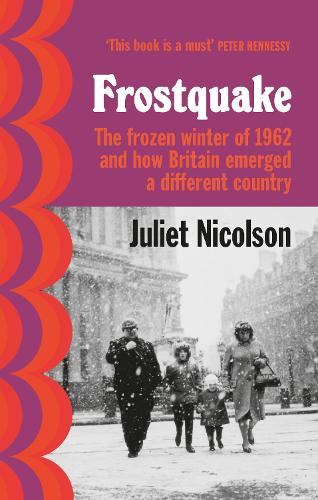
Frostquake, on the other hand, positions itself very clearly as ‘history’, telegraphed with the subtitle ‘The frozen winter of 1962 and how Britain emerged a different country’. In it, Nicolson argues that the winter of 62-63, the coldest since 1814, crystallised a tension between the old and the new. The old: Winston Churchill, Harold Macmillan, the continuations of the poverty of the Industrial Revolution, with 15 million people still lacking a plumbed-in bathroom. The new: JFK, Harold Wilson, the Beatles, consumer goods like televisions and refrigerators, glass office-blocks.
There are moments when society, however embedded, shifts on its axis. The long and lingering hardships of the paralysing winter of 1962-3 encouraged, even enabled, change: the very effect of shutting down empowered a thawing. Forces of social change that had been building over many years now found their moment of release as they broke through the icy surface. As the country froze it melted. (not sure about the page number because I read this as an e-book)
So what is a frostquake? One of the epigraphs to her book is a definition from an unnamed source:
Frostquake (n) A seismic event caused by a sudden cracking action in frozen soil. As water drains into the ground, it may freeze and expand, putting stress on its surroundings. This stress builds up until relieved explosively in the form of a frostquake (p. vii)
However, this book is not about weather or geology, although the snow and ice that started falling and forming for 10 weeks from Boxing Day 1962 through until to spring give the book its narrative parameters. Instead, this book is far more about people and their overlap with events on a national and world stage, drawn from conversations, memoirs and interviews. Some of these people are unknown: 19 year old Pauline Stone, driving through the mustard-like fog in her Mini Minor; Terri Quaye a 22-year old black jazz singer, Corporal Dennis Osbourne, travelling with his family on the Liverpool-to-Birmingham Express, which collided with the Glasgow-London express because of poor visibility. They each have a small story, of which the weather is just background.
But many of the people that Nicolson writes about are well known: Joanna Lumley talks about the cold at her boarding school; the Beatles are being transformed from scruffy, rather smelly hack musicians playing the clubs and careering from gig to gig into suited songsters who appear on the television; Mick Jagger and the Rolling Stones are London fixtures- Mick and Brian Jones sharing an Edith Grove flat, and with Mick taking on board the advice of Andrew Oldham, 19 year old window dresser at Mary Quant’s shop and music promoter “If you pretend to be wicked, you’ll get rich”. There’s the eruption of satire on the television, with comedians Peter Cook, Dudley Moore, Barry Humphries and Alan Bennett thriving into the 1970s and later. Author Antonia Fraser floats in and out, as does fellow author Penelope Fitzgerald. There’s a lengthy section on Sylvia Plath, who committed suicide in February 1963, in the depth of this cold winter.
Not only do other people, both famous and unknown, appear, so too does Nicolson’s own family. When she talks about spending Christmas of 1962 at her grandfather’s house at Sissinghurst, the penny dropped- Ah! She’s the daughter of Nigel Nicolson, who wrote Portrait of a Marriage, and the ‘Nicolson’ in the publishing company Weidenfeld & Nicolson. And so, she’s the granddaughter of Harold Nicolson, many-partied politician, who supported the decriminalization of homosexuality and the abolition of hanging, opposed the Munich Agreement with Hitler, published Lolita and disagreed with Anthony Eden’s Suez policy. And the granddaughter of Vita Sackville-West, who had died the previous summer.
Her upbringing in a political milieu is reflected in her attention to the Profumo Affair in particular, and the entanglement of the various characters who appear throughout the book. Nicolson herself received a pinch on the bottom from John Profumo, a one-time parliamentary colleague of her father, when he came to see the garden at Sissinghurst some thirty-years later. The glamour of JFK is here too, a contrast to the dowdiness of the Edwardian-figure of conservative Prime Minister Harold Macmillan whose career was derailed by the Profumo Affair. The anxiety of the Cuban Missile Crisis pervades the book, and Britain is being rebuffed from the European Economic Community by Charles de Gaulle.
The writing is quite beautiful. Here she is waking up on the day after Boxing Day 1962 as the snow begins to fall, the most snow they had ever seen in their lives:
The following morning we woke to the peculiar blue-bright light of reflected now filtering through the closed curtains. Instead of disappearing during the night as we had feared it would, the snow was still there, turning the landmarks of the garden- the walls, lawns, statues, urns- into something unrecognizable but unified. The sight was beautiful, its very transience on this familiar landscape making it even more precious. Snow muffled all sound and the silence felt dream-deep. Outside freezing snowballs melted the second they hit the napes of our necks and we tipped backwards on to the lawn, arms outstretched like acrobats, trusting that the mattress of snow would break our fall. Unlike a sandcastle on a beach, absorbed so soon by the waves, our imprints remained, hollows into which we could flop again and again. (Ch 7)
She returns to the silence of the snow-bound world at the end of the book, writing in the midst of COVID which brought its own silence to us. Writing in the winter of 2019-20, the daffodils and forsythia had just begun to blossom, and suddenly the earth felt lit up by yellow flowers.
Sixty years before the winter of 1962-3 the century had just turned and with it the old Victorian regime was dying. Sixty years after the winter of 1962-3 the world turned again, a little more sharply than it should have, unbalancing the stability we take for granted and throwing everyone into a state of profound shock….In December 2019, on a world map shown on every single news channel, a tiny red dot indicated a town in the heart of China, a million, million miles away from England, as the place where a brand new strain of a deadly virus had emerged, one that targeted the lungs, the enabler of breath, of oxygen and of life itself. Eight weeks later the dots had spread, and much of the world map was coloured red. In the autumn of 1962 many felt we were teetering of the edge of absolute destruction with nuclear weapons capable of wiping out mankind. And now, in the spring of 2020, the coronavirus, constantly visualized on screens as a spiky globe, an exotic species of underwater coral, a logo of frightening change, made us feel we were once again staring into the abyss, looking over the rim…. The country lanes were silent not this time because of the muffling of snow but by the absence of traffic. The world was in lockdown. The skies were blue, blue, blue, devoid of aeroplanes, not through mankind’s choice but for its survival. And the birds were going crazy in the sunshine. Nature seemed to have forgiven us not for doubting but for threatening its resilience and had returned once again with an astonishing beauty….Perhaps every half-century or so we need an intervention that is outside our control, an uninvited pause in order for resurrection to take place.
I enjoyed this book. I’m old enough to recognize the things she is writing about- indeed, the author and I are nearly contemporaries, and I do wonder if someone younger would enjoy it as much. It was not at all what I expected, which was a far more journalistic, meteorologically based account, but enjoyed the political and personal approach much more.
Especially in the wake of the centenary of WWI, there has been no shortage of books about men’s experience in war. They’re usually big fat books, often named for a battleground in large letters, with the (male) author’s name is letters much the same size. Women’s experience- especially the experience of women who didn’t go to war but instead stayed home waiting- is less often documented. And the Women Watch and Wait is based in suburban Coburg in Melbourne, and it captures well the dissonance between suburban life and battlefields far away, the agony of curtailed and delayed communication, and the emotional peril of allowing yourself to fall in love.
Kate is a young country girl who has been sent down to Coburg as company for her Aunt Mary, whose two sons have volunteered and been sent overseas as part of the first contingent of soldiers to be deployed. As well as the excitement of staying in Melbourne, Kate is excited that her boyfriend from Gippsland, Jack, has been sent to the nearby Broadmeadows Training Camp, and there are more opportunities for them to meet up before he leaves than there would have been had she still been in Gippsland. Time is rushing on, as the rumours of the trainees’ departure mount, and she is excited when Jack proposes to her. At this stage, there is still hope that ‘the boys’ will be back by Christmas, and there seems such pressure of time to commit, to get married and start up a married life. Jack leaves with his detachment, and Kate is left with her aunt, working in her aunt’s grocer shop, teetering between excitement to receive mail, and yet fearing what news the mail might bring. News does arrive, and she, along with the women among whom she is living, has to readjust her hopes for the future.
I’m probably a particularly critical audience for this book, because as it happens I’ve been writing a column for the newsletter of my local historical society for the past ten years or so that looks at events at the local Heidelberg level one hundred years previously. Just as Catherine Meyrick would have done in researching this book, I’ve followed the local newspapers closely, consciously looking for women’s experiences, reading every page and even the advertisements and classifieds. This has given me a close-up knowledge of one suburb, (albeit a few suburbs away from Coburg) and how the world-wide events of WWI impacted the social and political life of a community. I must say that she has nailed the local aspects, and I found myself nodding away to parallels that arose in her book which also occurred in Heidelberg.
The book is arranged chronologically by year, starting in 1914 and going through to 1919 with an epilogue. It has over sixty short chapters- too many, I feel- and the frequent changes of location made it feel a little like a screenplay. She integrates political events of the day, like the conscription debates, into her narrative and, again, she captures this big event playing out in small halls and conversations so well. I particularly liked that she explored the WWI experience from the Catholic viewpoint, something that is not represented well in the local newspapers that I have read.
It’s a difficult thing to undertake huge amounts of research, then to let it go in case it smothers the narrative (an advantage that historians have over novelists). At times I felt that small local details were made too explicit, but I’m also conscious that I may have read this book differently to the way that other people might read it. At an emotional level, the book rang true with love, fear, vulnerability and strength being lived out not in trenches but in suburban houses and streetscapes.
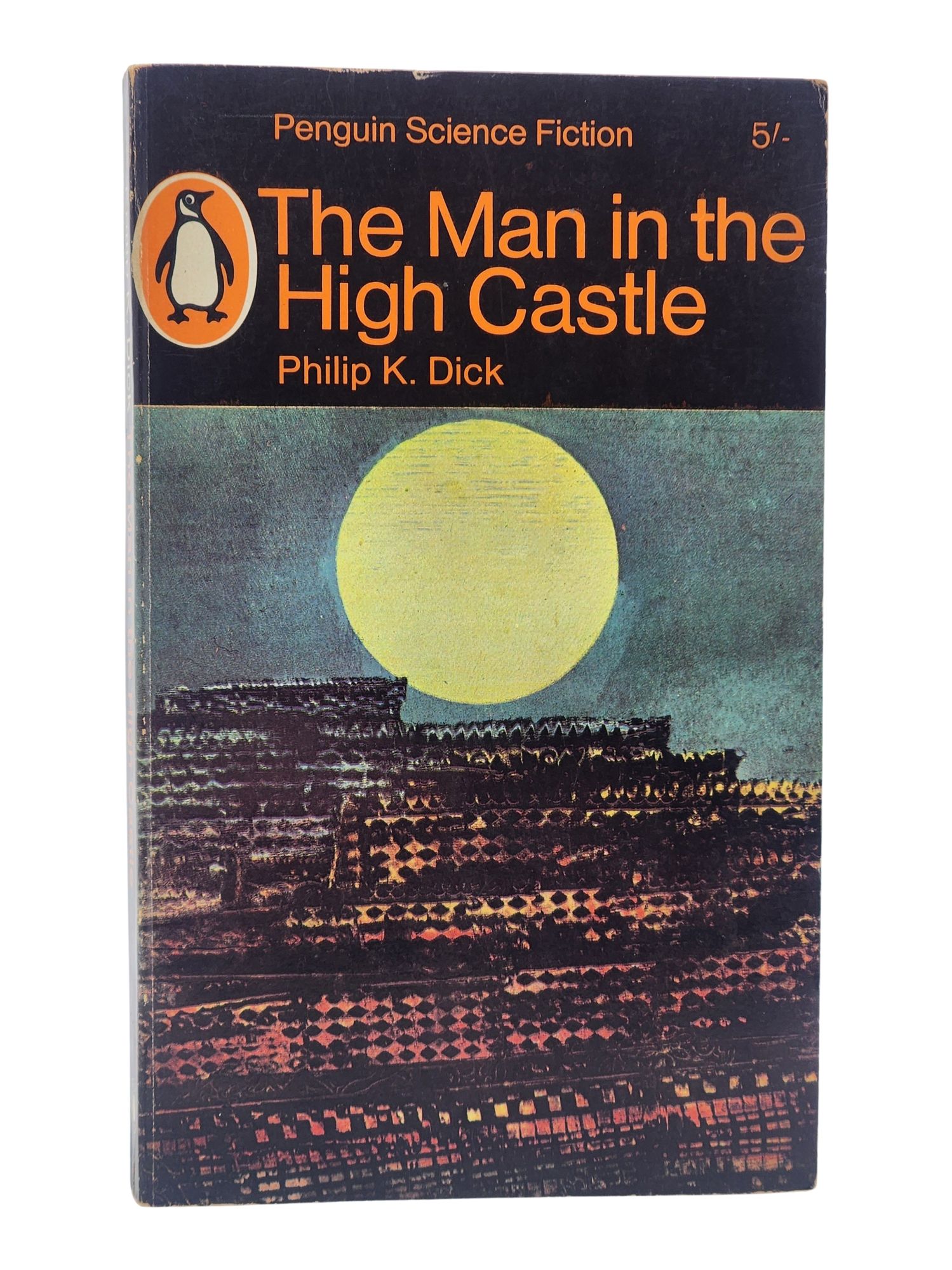
It’s interesting that my copy of The Man in the High Castle should be issued under the Penguin Science Fiction impress, because it doesn’t seem particularly science-fiction-y to me. It was first published in 1962 and envisaged a world in which Germany and Japan had triumphed during WW2, with the action occurring taking place in 1962- i.e. contemporaneously. To my mind it was more an alternative history or counterfactual than science fiction.
The narrative traces through several characters who live in an America partitioned into three. Nazi Germany controls the East Coast, as well as Russia and Western Europe. The east coast itself is divided in two: the remnant United States of America up to the Canadian border, and ‘The South’, both ruled by puppet regimes under Nazi control. The West Coast had been annexed by the Japanese as the Pacific States of America. Between the two regimes is the buffer Rocky Mountain states, where American citizens continue a depressed, oppressed existence.
The novel starts in the Pacific States of America, where businessmen Robert Childan runs a business selling pre-invasion Americana, most of which is counterfeit and manufactured by the Wyndam-Matson Corporation. Childan is contacted by Japanese trade official Nobusuke Tagomi, who seeks a gift to impress a Swedish industrialist named Baynes, who is coming to visit. Baynes, however, is really a Nazi defector who is coming to warn of the incipient activation of Operation Dandelion, a plan for Germany to attack Japan and attain world domination. Meanwhile, there is a banned publication, The Grasshopper Lies Heavy which is circulating surreptitiously, which posits that in fact, the Allies did win. Ostensibly the book is written by Hawthorne Abendsen, the eponymous ‘Man in the High Castle’. Juliana, the ex-wife of secret Jew Frank Frinke, is fascinated by the book, and travels unwittingly with an under-cover Nazi to meet the author, unaware that her companion Joe Cinnadella, has been sent by the Germans to execute Abendsen. It is a repressive and violent society, which has reverted to almost-magical times, with the I-Ching, a book of Chinese divination, guiding the actions of many of the characters, both Japanese and American.
The scenario is fascinating, but unfortunately the characters are not. I confess to losing track of who was who, and I am still bemused by the authorship of The Grasshopper Lies Heavy, although I think that the author intended this ambiguity. The characters are rather mechanical, and it is difficult to feel any connection with any of them. The end of the book becomes bogged down with a fairly metaphysical exploration of the I-Ching.
However, the book does form the political and ‘historical’ background to the excellent Prime four-season series, which managed in its first episode to evoke more sympathy and coherence to the characters than the whole book did. Interestingly, they turned The Grasshopper Lies Heavy into a film, instead of a book, which in a way made the whole scenario more implausible- who has a film projector hanging around in their apartment? Surely a book would be more portable and thus more dangerous. To eke four seasons of the TV series out of a fairly slim volume, obviously it was taken far beyond the original book, but to my mind so far, with far more success in character development than the book. So, for me, The Man in the High Castle is a book with a really fascinating premise which didn’t quite manage to develop its characters, or integrate its metaphysical aspects.
My rating: 6/10
Sourced from: My husband’s bookshelves. I had heard about the book, but never read it or seen a copy.
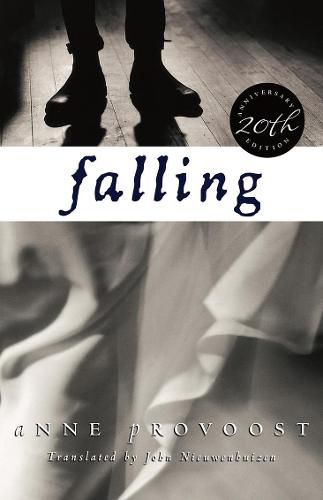
The twentieth anniversary republishing of this book has come and gone, it having first appeared in Dutch in 1995. I had heard of it, and knew that it dealt with Nazism, and assumed at first that it would be set during World War II. It came as a surprise, then, that it was set in the present day (in 1995) with themes that are probably even more resonant and urgent today than they were in 1995. My copy, collected no doubt from my local little library, had obviously been a school set-text, and the book won many Young Adult awards on its publication.
Lucas has accompanied his mother to Montourin, a small Belgian provincial town, to clean out his late grandfather’s house. The book opens with Lucas standing by the side of the road as his friend Caitlin is brought back from hospital after an accident that occurred three weeks earlier. The narrative then spirals back to explain who Lucas and Caitlin are, how she was injured, and Lucas’ part in that injury. It is written in first person, from Lucas’ viewpoint, thus aligning us as readers with his perspective of events in the weeks leading up to Caitlin’s injury.
On arriving at Montourin, he finds that there is an unspoken edge of hostility towards him and his family, exemplified by Soeur, an old nun in the nearby convent in which American-born Caitlin is staying. He does not understand why, and as he sees his mother sorting through and destroying his grandfather’s documents and belongings, he knows that something is being kept from him. He gradually learns that, after the death of one of his children during the hungry days of WW2 occupation, his grandfather denounced fifteen Jewish children and the nuns who were hiding him in the neighbouring convent, out of grief and resentment that these Jewish children were taking food rations that could have saved his daughter. Some in present-day Montourin shunned his grandfather for this action; others supported it.
Their support was generally unspoken, but outright admiration was voiced by Benoit, a young man older than Lucas, who combines menace, charisma and manipulation in his neo-Nazi outlook. Lucas is drawn into Benoit’s sphere and becomes involved, with varying degrees of culpability, in Benoit’s terrorist plans against the Moroccan refugees who have moved into the town. At the same time, he is attracted to the inscrutable Caitlin who fluctuates between flirt, friend and heartbreaker as she, too, seems to be becoming friendly with Benoit. But when Caitlin is involved in a single-car accident- the reasons for which are unclear- Lucas acts decisively, if precipitously, in a way that will change the rest of Caitlin’s life. I’m not really quite sure about the ending of the book, which is deliberately left obscure, but which struck me as a little melodramatic.
Since 1995 the presence of African refugees in Europe has only increased, as has the prominence and apparent electoral acceptability of neo-Nazi parties. This book is a warning against the slow slide towards fascism, especially for young men with no responsibilities who yearn acceptance from other young men. I can see why it would be chosen as an upper-school text, especially given its urgent relevance today. I’m not sure how it would be received by high school students though- it moves fairly slowly, and I wasn’t particularly satisfied by the ending.
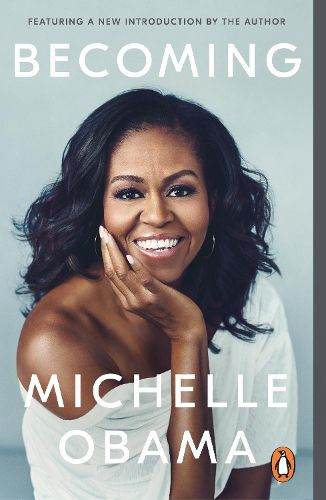
I had not had much interest in reading this book, deterred perhaps by the glamour shot on the front cover. Even though I very much enjoyed Barak Obama’s Dreams From My Father, I wasn’t particularly drawn to reading a First Lady’s life story, thank you very much. But it was a Book Group selection, and conscientious Book Grouper as I am, I resolved to read the book and I am so glad that I did. There was much more in this book that I might ever have anticipated.
The preface started with really good writing. It’s post-Presidency, and Michelle is alone in the house for almost the first time (excepting the security guards down in the garage). Her daughters are out, Barak is not at home, and she decides to make a grilled cheese sandwich. There’s no one to make it for her, no-one to say “Mrs Obama, let me get that”, no one to look askance at her desire for such homely comfort food. She sits on the back doorstep, and eats the sandwich.
The book proper is divided into three parts: Becoming Me, Becoming Us, and Becoming More. Becoming Me traces her early upbringing on the South Side of Chicago, where her remarkably hands-off parents bring her up to be an intelligent, independent young woman, super-organized and conscientious, ambitious and methodical. Becoming Us chronicles her relationship with Barak Obama, and her switch from corporate law to the non-profit sector. The ‘us’ expands to include her two daughters, born through IVF, and the tension she feels between being a professional woman, and a mother. Barak is becoming increasingly involved in politics, first as a state congressman, and then as presidential candidate, although she is often angry and resentful of the demands that politics make on their relationship. Becoming More takes us into the Obama presidency, and the weird home-life this imposes on their family. She needs to carve out her own identity as First Lady, even though this is a role that is not of her choosing, and she struggles to keep some sense of normality for her daughters.
The book is very honest. Barak comes over as a highly intelligent if selfish man, infuriating in his messiness, chronic lateness and lack of attention to detail. She for her part comes over as rather controlling and chronically insecure about whether she is good enough. The awareness of being a black woman in a predominantly white political milieu accompanies her always. She talks about the strains in their marriage as her life is subsumed into his ambitions, and her eventual decision to keep some sort of family routine of dinner and bedtime which Barak has to accommodate to, instead of the other way around. Her mother is a saint: I don’t know that I would get up at 5.00 a.m. to mind my grandchildren while my daughter went to the gym- if fact, I know that I wouldn’t (just in case any of my children get ideas).
She does not even try to hide her contempt for Donald Trump, which hardened even more when he won the Presidency. Trump’s actions in demolishing the East Wing seem even more egregious now, after reading about an engaged First Lady who opened the White House up to many people, through that very East Wing that no longer exists.
At first, I was so impressed with the writing in this book that I was rather disappointed when I learned that it had been ghost-written, or at least written with other people. Does that matter, I wonder? For me, probably yes, because I feel that her writing has been mediated through the other author, and I feel disappointed that the words are not hers. But this doesn’t detract from the honesty that pervades this book. She doesn’t once mention the word ‘feminist’ but the tensions between motherhood, professionalism and politics reflect the viewpoints of a modern, engaged intelligent woman that the world was lucky enough to have as First Lady for eight years.
My rating: A rather surprising 8.5
Read because: Reading Group Book
Sourced from: Darebin Library as part of their reading groups program.
Journey Through Time Episode 26 The Failed Nazi Coup (Episode 1) The Munich Beer Hall Putsch was the time when Hitler could have, and should have been stopped. In 1923 there were dozens of far right parties with paramilitary wings. The Treaty of Versailles had demanded the loss of lands still in German hands (much as Russia is demanding of Ukraine now). Particularly in conservative Bavaria, the German defeat was blamed on the ‘stab in the back’ from progressives and Jews. Knowing the importance of visual images, and inspired by the Italian fascists’ March on Rome, on 8 November 1923 Hitler and approximately 600 supporters marched on the beer hall Bürgerbräukeller, where Gustav Ritter von Kahr—the Minister-President of Bavaria was speaking. They surrounded the hall, and held von Kahr and other speakers at gunpoint in an adjoining room until they declared their support for the uprising . Although Hitler had the crowd in the hall eating out of his hand, the expected crowds outside did not materialize and the whole thing collapsed in farce.
In Our Time Another one from the archives. Little Women features Bridget Bennett Professor of American Literature and Culture at the University of Leeds; Erin Forbes Senior Lecturer in African American and U.S. Literature at the University of Bristol and Tom Wright Reader in Rhetoric and Head of the Department of English Literature at the University of Sussex. The podcast starts of with Louise May Alcott’s lifestory, emphasizing her parents’ eccentricity for the time and the influence of the Transcendentalists. Alcott herself was a prolific writer, although much of it was ‘sensation literature’, mainly written under the pseudonym A. M. Barnard. She did not particularly want to write for a teenaged girl market (not that there was a concept of ‘teenager’ at that time), but she was manipulated into writing it by her publisher who promised to publish her father’s book in return. Little Women was published in two parts. The first part was modelled on Pilgrim’s Progress, with the four girls each trying to overcome their personal flaws. Part 2 follows their adult lives. She didn’t want to write this one either, so she intentionally married Jo off to the Professor, who was not likely to appeal to many readers. The panellists then go on to talk about the film depictions of Little Women over time, and the way that increasingly there has been a conflation between Jo and Alcott herself, particularly in the most recent Greta Gerwig version.
The Documentary (BBC)When Christian Nationalists Came To Town The small Tennessee town of Gainesboro population 900, overwhelmingly Trump voters (80%), is disconcerted when a large parcel of land is bought up by a conservative developer with the aim of forging an “aligned” community based on shared values like “faith, family, and freedom“. It attracts young men, looking for a traditional family life and holding a particular view of the role of the church in society, and the locals don’t like it.
The Rest is ClassifiedEp.98 Putin’s Secret Army: The Rise of Prigozhin (Ep.1) Even though Prigozhin was known as ‘Putin’s chef’, he was never actually a cook: instead, he was a restaurateur, among many other things. He was born in 1961 in St Petersburg (the old Leningrad) to a middle class family, but he left school early and fell into bad company. From petty crime he escalated to a robbery with violence at the age of 18 and was sentenced to 13 years in a penal colony. He was released in 1990, as the old Soviet Union was collapsing. He started off by selling hot dogs, then moved into grocery stores, casinos, clubs and restaurants. At the same time, Putin was working his own way up in the thuggish capitalism of the 1990s. Prigozhin became Putin’s catering man, and President Putin brought the Japanese Prime Minister and G. W. Bush to Prigozhin’s restaurants when they visited. In 2011 Putin became Prime Minister, then moved back to being President. When protests broke out (and Putin hates protests), Putin turned to Prigozhin.
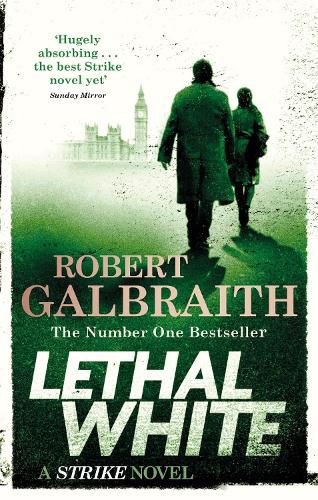
Cormoran Strike books, written by J. K. Rowling under the nom-de-plume Robert Galbraith, are for me a long-form type of comfort food. Very long-form, because like the Harry Potter books, these seem to be getting longer. Lethal White is the fourth in the series, and it comes in at a hefty 784 pages.
Detective stories are a genre, with recurring themes which are both part of their appeal and part of their frustration. In the case of the Cormoran Strike books, how long can Galbraith keep the unresolved sexual tension (UST) between Strike and Robin going? This book starts off with Robin’s wedding to the insipid Matthew. Surely a marriage should dampen any progress in the UST realm, but this is not to be. But how many more volumes can Galbraith keep this going? And surely if the UST becomes resolved, that will be the end of their relationship because who wants a married-couple detective agency? And on an unrelated theme, why doesn’t Comoran do something about his throbbing stump where his leg was amputated? Surely additional surgery is in order, or a new prosthesis or something! Moreover, how many more times is Robin going to end up in peril as the case draws to its close? Although, having said that, poor Nikki in ‘Silent Witness’ spends much of her time kidnapped and threatened- it seems to go with the territory that the female investigator- while her male counterparts need to work out how to ‘rescue’ her. But I guess that all these formulaic aspects are part of the genre.
Set during the London Olympic Games, Strike is approached by mentally ill man, Billy, who says that he saw a child being buried years ago. Is it true? At the same time, Strike contracted by politician Jasper Chiswell (Chizzle) to investigate blackmail for something that was not illegal years ago, but now is. As it turns out, the two cases are connected.
Meanwhile, Robin has married Matthew-and she is unhappy from the start. Strike encounters his past lover, Charlotte, who is now pregnant with twins and unhappily married too. Strike is in an uncommitted relationship with Lorelei, who wants more from the relationship than he can give.
Galbraith introduces a huge range of characters into the book, but somehow manages to keep control of them all. I like the way that the author has Comoran or Robin sit down and mentally draw the whole case together, neatly encapsulating it for this reader who can find herself completely confused. It’s like drawing a deep breath, before plunging underwater again. Within this complex ensemble, Galbraith has a number of pairs (fitting, really, for a parliamentary detective story where ‘pairing’ is part of the political scene)
Each chapter is headed by an epigraph from Henrik Ibsen’s play Rosmersholm (1886). I must admit that I don’t know the play, and Dr Beatrice Groves has done the work of drawing the links between Lethal White and Ibsen’s play. As with many of Galbraith’s books, the reason for the title is with-held until well into the book. In this case, we need to wait until Chapter 42 to learn that Lethal White is not a form of cocaine, or the nick-name of a thug, but instead is a horse disease.
I’m not normally a detective-fiction fan, but Galbraiths are different. I will keep turning to the Cormoran Strike series when I have tired of other genres or want to escape from non-fiction into a well-plotted if formulaic series that keeps me reading until far too late at night.
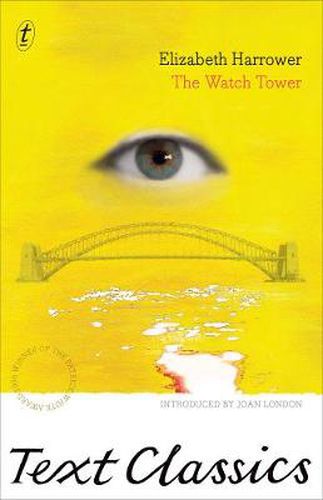
I often find that there is a sort of brittle formality about books written in early-mid twentieth-century Australia, echoing the slightly-British, self-conscious tone of newsreaders and documentary narrators that you hear in black-and-white footage from the 50s and 60s.This book, first published in 1966, and reissued by Text in 2012 starts off in a similar way. The scenario of two sisters, Laura and Clare, being brought into the headmistress’s office to hear of their father’s death and their removal from school evoked children’s books of the past (Frances Hodgson Burnett’s A Little Princess, anyone?) The focus at first is on sixteen-year old Laura, who had had aspirations to be a doctor like her father, and she is more conscious of the economic and social fall in their circumstances when their fey and selfish mother turns to Laura to be the breadwinner of the family. At this stage, neither Clare nor her mother are particularly well-rounded characters, Clare (seven years younger than Laura) being merely childish and her mother Stella a languorous, demanding presence who decides to sail back ‘home’ to England, leaving the girls to fend for themselves.
Instead of a medical degree at university, Laura finds herself packed off to business college and a secretarial job at a box factory, owned by Felix Shaw. Although she feels no great attraction to him, when Felix Shaw proposes to her – largely as an economic arrangement – she accepts, seeing it as a means of financial security for herself and her younger sister Clare. Felix offers to support Clare to go to university- a dream that Laura had had for herself- but this promise is soon broken once Laura and Felix are married. I can’t really decide whether Felix is a complex character or a caricature. He almost willfully makes unwise financial business decisions, selling off mildly successful companies to spivs and incompetents, while expecting Laura to pick up a heavier work burden as a result. They are not poor: they live in a large house overlooking Sydney Harbour, and he enjoys driving luxury cars dangerously while abusing everyone else on the road. He sells the house – the one thing that Laura loved- from under her to underline her financial impotence in this dependent relationship.
Harrower skillfully juxtaposes the glittering sunshine of the Harbour, with the darkness of their house. It is as if a shadow lies over this beautiful home and its extensive gardens. The book is set in the 1940’s and 50’s, and although neighbours are aware of the arguments next door, nothing is done to help them. In fact, in spite of living in the midst of other houses and working with other women, Laura and Clare are socially isolated, with Felix’s happiness their main concern.
The term ‘coercive control’ did not exist when Harrower wrote this book, but all the signs are there: the emotional blackmail over the prospect, later withdrawn, of Clare’s university education; the changeability of mood; the oscillation between extravagant generosity and meanness; the rigidity in expectations for the women in his life compared with his own recklessness. Felix is physically violent towards Laura, and the possibility of sexual violence towards her sister Clare lurks in the shadows.
Most insidious of all is Laura’s own coercion of Clare to remain in the family home as a peacemaker and mediator, and her adoption of Felix’s own sense of victimhood as a reason to make her stay. Felix has made his own wife the enforcer. At times Laura dreams of an escape, but faced with the consequences, she represses her own will and becomes an extension of Felix.
Meanwhile, as the novel progresses, Clare becomes the main focus when she resists the narrowing of her own horizons and as all of the colour leaches out of Laura. The arrival of Bernard, a young refugee, to stay in the house to convalesce breaks the spell, even though for a while it seems that he, too, is going to be lured into Felix’s orbit by the promise of academic support, similar to that offered to Clare. In fact, there is a latent thread of repressed homosexuality in most of Felix’s relationships with other men, be they fellow entrepreneurs or employees.
The threat of violence runs through this book and it is clearly felt by Laura and Clare as they scramble to meet Felix’s standards and demands. Knowing, as we do, the physical danger to women at the point where they finally decide to leave a coercive partner, as readers we feel unsafe as Laura, and increasingly, Clare contemplate an escape
The title ‘The Watch Tower’ is interesting, because it can be interpreted in many ways. It has connotations of punishment and incarceration, which the beautiful house on the Harbour becomes. But it also suggests a lookout as well, and as the book progresses Clare is increasingly looking out, to a wider world, even while Laura becomes more deeply entombed in her relationship with Felix.
So, for a book which I thought was going to be rather insipid and old-fashioned, I found a book that in many ways predates Jess Hill’s See What You Made Me Do (my review here). I read this as part of the Ivanhoe Reading Circle’s program, and one of the questions raised was whether we know of another Australian book of similar vintage that deals with the issue of what we now recognize and name as ‘coercive control’. I haven’t read it, but I suspect that Elizabeth von Arnim’s Vera treads similar ground (The Pastor’s Wife (my review here) does too, to a lesser extent. I can see why Michael Heyward at Text Publishing re-published this book. Unfortunately, it reads just as true today – possibly even more true now – as it would have sixty years ago.
My rating: 9/10
Sourced from: Brotherhood Books
Read because: November book selection for Ivanhoe Reading Circle.

 The Resident Judge of Port Phillip