Essay: The great acceleration

Thomas_Parker_Electric_car

Thomas Parker Electric Car 1880s. Source: Wikimedia

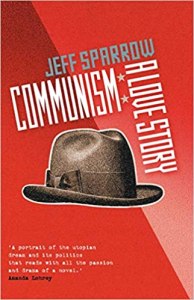
Jeff Sparrow.  The great acceleration.  Overland Issue 236 Spring 2019

I had no idea that there was an electric car industry in the early 20th century – did you? And that of the 4200 vehicles produced in the US by 1900, fewer than 1000 relied on internal combustion. The majority used either steam or electricity.

This essay looks back to the early response to those great disruptors, the first automobiles, and the way that people-power was pushed aside by the powerful automobile companies, which managed to blame pedestrians for being hit by cars!

This is a really interesting essay.

‘The Mandibles: A Family 2029-2047’ by Lionel Shriver

shriver_mandibles

2016,  402 P.

[Spoilers ahead]

My local library has taken to labelling their fiction book collection as ‘Romance’ ‘Australian’ or in this case, ‘Humour’.****  Anyone reading this book for a chuckle would be sadly disappointed. Sure, there are spikes of satire and parody, but this dystopian novel could only be called ‘humour’ by someone who shares its libertarian, anti-Government, gun-toting politics. And that sure ain’t me.

[****And don’t get me started on my library’s determination to turn itself into a bookshop by grouping books into ‘Travel and History’ and ‘Mind and Body’ and leaving you to work out the category. Sheesh.]

In 2029 the Mandibles ( get it? jaw bone, consumers etc.) are a wealthy family, waiting on the elderly patriarch to die and allow the fortune to trickle down to his son, Carter Mandible, former newspaper editor, and his expatriate author daughter Enola. Carter’s children, Avery and Florence, and grandchildren are waiting on the inheritance too. Avery and her economist husband Lowell live an affluent lifestyle with their three children Savannah and sons Goog and Bing (get it? names of search engines). Living a more abstemious lifestyle, Florence works in a homeless shelter as a community worker, with her husband/partner Esteban from Mexico and son Willing  (get it? I don’t know if I do. I tired of Shriver’s smartarsery with naming. He was the most competent one there, so perhaps Willing and Able?)

There had been rumbles of trouble brewing before 2029, when the book opens. In 2024 all internet-based infrastructure had failed, a crisis five years later known as the Stoneage or “Stonnage”. It was just a blip – although the government and power companies insisted that all payments to them be made by old-fashioned cheque – and by 2029 it was seen as a problem largely overcome. The real problem came in 2029 when a supranational currency known as the ‘bancor‘ (actually proposed by John Maynard Keynes in 1940) made the American dollar redundant in international trade. Mexican-born POTUS Alvarado defaulted on America’s debt. Deciding to go it alone, the American economy relied on the surrender of all gold reserves and the strict prohibition of the use of the bancor.  Almost overnight the Mandible fortune had been wiped out, along with the middle-class professions which American’s indebtedness had made possible.

Margaret Atwood has famously said in relation to The Handmaid’s Tale that she only wrote about things that had already occurred somewhere in the world at some time. Dystopian fiction – especially in the near future –  is at its best, I think, when it just extrapolates slightly from current events. In this regard, Shriver does pretty well. Our increasing acceptance of digital monetary transactions, the rise of China and Russia as world powers, the increasing Latin-Americanizing of the United States – all these things are happening now, and the book doesn’t demand a great deal of imagination to accept the scenario she is drawing.

But the scenario itself calls from her a great deal of explanation – too much explanation – much of which is carried through conversations at dinner parties and when the much-reviled economist Lowell and his smartypants son Goog and nephew Willing hold forth about the economy.

However, once the scenario has been established, the indignities and implications of economic collapse in our soon-present world mount up. What happens when the toilet paper runs out? How does a family deal with dementia when aged care is impossible?

Shriver squibs it a bit when she leaps from 2029 to 2047 in one jump. The establishment of a new, equally uncomfortable world order is glossed over, and here the politics of the book take over. It’s off to Nevada we go, with no Big Government looking into your bank account, with 10% taxation, with people taking responsibility for themselves.   It’s no Utopia, as the Nevadan keep telling themselves, but it’s freedom. And at this point, my Australian lefty-ness starts to arc up and I remember that I’m not particularly  enamoured of Lionel Shriver as a polemicist.

That said, I have found myself thinking about this book quite a bit since I finished it. When I first started it, I was also watching the excellent Years and Years on SBS On Demand, which I found a bit confusing as they both deal with near-future dystopias. Once I settled into Shriver’s book, and left behind the explanations and moved into the family dynamics, I was transfixed. I still don’t like where I ended up though.

My rating: 8/10

Sourced from: Yarra Plenty Regional Library

I hear with my little ear: Podcasts 1-7 February 2020

Revolutionspodcast.com Back to the Russian Revolution.Episode 10.25 Senseless Dreams picks up again with Csar Nicholas II who was crowned in May 1896. He seemed to gather ill-omens as he went: marrying a week after his father’s funeral, after which everyone went back into their mourning weeds; his wife sleeping in Marie Antoinette’s bed when they visited Paris, and then the Khodynka Tragedy, a stampede during the coronation festivities that left 1389 (!!) people dead. After his coronation, he proved himself to be conservative and easily swayed.  Not a good start. Episode 10.26 The Far East takes us to the other side of Russia, where the Trans-Siberian railway ends up at Vladivostok, entangling Russia in the tensions between the Japanese, Chinese and Koreans. Add to this, Nicholas’ almost innate racism and this isn’t going to end well either.

Backdoor Broadcasting Another Australian voice recorded at the Birkbeck Institute, this time that of Professor Victoria Haskins from the University of Newcastle on 2 November 2017. In “Stories My Great-Grandmother Didn’t Tell Me or Family History and the Memories of Nations” she talks about her discoveries of her great-grandmother’s activism  when she herself was at a rather low and disspirited point in her academic career. For her great-grandmother, this activism within conservative circles on behalf of aboriginal people was deeply personal because of  family connections, and it propelled Haskins into a new research direction. I must look for her book One Bright Spot.


Werombi_Bushfire

Werombi bushfires. Creator: Helitak430 Wikimedia Commons

Rear Vision (ABC) 2 Feb 2020 The story of fire in the Australian landscape is excellent, and should be compulsory listening for those who are calling for a quick, national, urgent response to this summer’s terrible bushfires. Notable historians Tom Griffiths, Steven Pyne, Bill Gammage and David Bowman talk about the history of fire in Australia- and yes, we have always had fire – and the differentiated response that is needed, especially in times of climate change. “Local, ecological and historical” are the watchwords, and I hope that the Royal Commission takes this advice on board.

‘Furious Hours: Murder, Fraud and the Last Trial of Harper Lee’ by Casey Cep

cep_furious-hours

2019, 274 pages & notes,

[Spoilers ahead]

To Kill a Mockingbird is one of my favourite books. I used to teach it for Year 10 English, and every year as I re-read it in preparation for teaching it again, I enjoyed it more and more. Even now, just hearing the music in the opening shots of the film brings tears to my eyes.  I didn’t want to spoil my pleasure of Mockingbird by reading Go Set a Watchman, and I came to this book, with Harper Lee’s name prominently circled on the front, with a degree of trepidation. I needn’t have feared.  Harper Lee didn’t end up writing her book about Rev Willie Maxwell, but if she had, I think that it might have sounded somewhat like Casey Cep’s book.  Barak Obama named it as one of his best reads for 2019, so I was keen to finish it in case there were holds on it at the library. Strangely, I could have probably reborrowed it after all. Not to worry- I was so thoroughly engrossed that I happily just settled in for a good long read.

It’s almost three books in one. Part One ‘The Reverend’ tells the story of Reverend Willie Maxwell, a keen purchaser of insurance policies on the lives of people close to him who were later found dead. There was no evidence, forensic or otherwise, to link him to the deaths, but as the deaths continued to occur and the insurance payouts continued to accumulate, it certainly looked very suspicious. Then, someone close to his last victim took the law into his hand, and the brilliant defence lawyer who had ensured that Rev. Willie Maxwell kept being found innocent, was suddenly defending the man accused of killing his former client.

Part Two, ‘The Lawyer’, shifts its attention to this brilliant defence lawyer, aspiring Democrat politician Tom Radney, who found it difficult to be elected in Alabama. He turned to the law instead, and this is the story of the trial. It goes through the trial day by day, with the moves and counter-moves. In the crowded courtroom, so reminiscent of the courthouse where Tom Robinson was defended by Atticus Finch, there was a small, middle-aged female writer. It was Nelle Harper Lee.

Part Three ‘The Writer’ focuses on Harper Lee. I hadn’t realized to this point how autobiographical To Kill a Mockingbird had been, and although I knew of her friendship with Truman Capote, I didn’t realize that he was the real-life Dill Cunningham! This section traces Lee’s life, from childhood in Monroeville, through the success of To Kill a Mockingbird, her struggle to get another novel published, her journalism and assistance to Capote with In Cold Blood and her final days.  In aiming to write her never-published (and perhaps never-written) proposed novel The Reverend, based on Rev. Willie Maxwell’s courtcase, Lee was moving out of her comfort zone. The critique of racism in To Kill a Mockingbird would not apply in this courtcase where an African-American man killed an African-American preacher.

This book is beautifully written, just as evocative as Harper Lee’s work is. I don’t know if the author has tried to channel Lee’s style, or whether it’s a natural sympathy with it.  In a book with three themes like this, it would not be surprising if one section was more engaging than the other, but this is not at all the case.  It is a sensitive depiction of the craft of the writer, and an evocative description of 1970s Alabama.

It is excellent

My rating: 10/10

Sourced from: Yarra Plenty Regional Library

I hear with my little ear: Podcasts 25-31 January 2020

rn_presentsMyths of War. This really is an excellent program, even though I’m rather disconcerted that Mark Dapin sounds quite old, even though he’s actually younger than I am! He also sounds more English than I thought he would, given that he emigrated here in 1989. In Episode 5: Was There Ever a Battle for Australia? he follows Dr Peter Stanley in challenging the idea of a Battle for Australia Day,  (a celebration which dates only from 2008)  and the idea that there was an actual Battle for Australia. Certainly, people were fearful during WW2, especially during 1942 (and I think that Kate Darian-Smith’s On the Home Front captured this beautifully), but he notes that there wasn’t actually one battle, but a series of Allied battles. He argues the Japanese Army didn’t actually land in Australia or have plans to do so (the Solomon Islands, Papua yes, but not Australia; air bombing of Darwin and subs in Sydney yes, but as a way of distracting attention and disrupting the Allies rather than actual invasion and occupation). Instead, the idea of a ‘Battle for Australia’ arose in the 1990s, with the 50 year anniversary in 1995, promoted largely by the children of WWII veterans. He speaks with Dr Karl James from the AWM, who suggests that the Keating-era emphasis on Kokoda risks sidelining the Rats of Tobruk and El Alamein, battles without the easy availability of tourism to keep them in the public consciousness. Episode 6 The Thai-Burma Railway and the Bridge on the River Kwai does not at all refute the suffering of POWs working on the Thai-Burma Railway.  But if you’ve visited ‘The Bridge on the River Kwai’ in your travels, it’s a tourist invention that isn’t even on the River Kwai.  And the ‘mateship’ on the Railway that John Howard lauded so fulsomely was not exclusive to Australian soldiers. In Episode 7 Gay Servicemen in Vietnam, he rejects Bruce Ruxton’s views about the impossibility of gay servicemen, focusing instead on gay soldiers who wanted to serve in Vietnam.  He continues this theme in the final episode 8 Vietnam: The War’s Forgotten Supporters, reminding us that the majority of Australia’s supported compulsory military service- it was the Vietnam part that was controversial.  Just as in WWI, with the white feather movement, we don’t want to ‘own’ those pro-war supporters any more. And just as in WWI, our ideas about Vietnam have been shaped largely by the film industry, especially American cinema.  This is a fantasic series- check it out.

History Extra and Start the Week. I’ve just finished reading The Human Tide by Paul Morland, so I searched out a few podcast interviews where he talks about his book. It’s a long book, and often a podcast interview encapsulates it.  The History Extra interview from May 2019 How Population has shaped world history is a good summary with him one-on-one. The Start the Week interview from February 2019 (BBC) has an interesting panel of guests: Paul Morland (who reprises much of the same information), Julia Blackland whose recent book Time Song – Searching for Doggerland is about the disappearance in approx. 5000 B.C. of a land bridge that connected the east coast of England with Europe, and Diarmaid Ferriter, whose book The Border: The Legacy of a Century of Anglo-Irish Politics has been very apposite, given the concern about the border with Ireland in Brexit times.

‘Learn Spanish with Stories for Beginners’ by Claudia Orea

orea_learnspanish

124 p.

To be honest, I had forgotten that I had ordered this as a Kindle book. I don’t have a Kindle as such (I do have a Kobo) and I only read Kindle books on my tablet. I started reading it, then joined in a group reading of La Distancia Entre Nosotros by Reyna Grande instead.  Once I finished the novel, I remembered that I had this book half-read.

So I find myself in the position of being able to compare a ‘real’ book (albeit a Young Adult book) with a book consciously written for beginners. The ‘real’ book wins hands down. I found myself having to look up about 4-6 words per page in Grande’s book, and it was interesting that the further I went on, the fewer words I had to look up. Most of the words I needed to look up were verbs.  Even if I didn’t recognize the word at first, I was able to work in out in context. In Orea’s short stories, on the other hand, there were many more words that were unfamiliar to me, and they were mostly nouns. Being short stories, and with short sentences, there were far fewer contextual cues. And I suppose that because it is an instructional text, there was a conscious decision to focus on ‘building vocabulary’, hence the long list of new words at the end of each story.

Several of the stories were in the present tense, which is fair enough for a beginners’ book.  However, a number of the stories were either a) boring or b) downright weird. Take for example ‘Las Apariencas Engañan’ (Appearances Deceive). It’s about a man who pimps up his girlfriend to go cruising looking for men, except that the girlfriend is an alligator who eats them.  Hmmm.  However, I’m not a great short story fan in English either – especially when the short story is very short – and so I’m probably not the best judge.

The stories themselves are about 1500 words in length, and after each paragraph there is a vocabulary list. This is good, because you don’t have to go rummaging around at the back of the book or in a dictionary – the words are right there when you need them. There are multiple choice comprehension questions at the end of the story, and I found them useful. There’s then a short summary in Spanish, followed by the same summary translated into English.  There are audio recordings which I didn’t download.  I found the length good, because reading in another language is tiring. I could only read about 2 or 3 pages of Grande’s book in one sitting.

Would I read another book like this? I don’t think so. The words were too disembodied and the stories too banal or too weird. I’d prefer a news article e.g. in BBC Mundo or a book written for its story rather than for its instructional value.

I hear with my little ear: Podcasts 17-24th January 2020

Malcolm_Turnbull_PEOBackground Briefing (ABC). I’m still cleaning out files from my over-stuffed phone, and I stumbled on Burning Down the House, which was recorded in the wake of Scott Morrison’s overthrow of Malcolm Turnbull – was it only a year and a half ago? (recorded 2 September 2018)  As a Labor/Green voter, there’s a wistful naivete about programs recorded before Labor lost the unloseable election last year. Hugh McKay said that people craved policies that saw them as more than economic units – well, he was wrong there, wasn’t he? Negative gearing and franking credits won the day.

Rear Vision (ABC) We’re fed up to the back teeth in Australia hearing about the Second Amendment every time there’s another gun massacre in the US. But this episode takes a different perspective, by looking at The American Gun Industry historically.  It goes right back to the War of Independence, where it was only the decision by France, Spain and the Netherlands to secretly ship arms to the colonists (as a way of getting back at the British) that made it possible for them to win. The colonists decided never to be at the mercy of international gun manufacturers again, and so the government decided to establish a gun industry. For all the “I’m an individual with a gun” strutting that goes on, 40% of gun sales today go to government contracts rather than individuals. Eventually, the quality and longevity  of the guns produced meant that the industry had to look at building in obsolescence, so that people would keep buying them. The Austrian Glock and the Italian Beretta competed with the US gun companies as well.  Add to that the frisson of fear, especially after Barak Obama became President, and the gun industry and NRA was off and running.

Earshot (ABC)  Where the bloody hell were you is a four-part series, riffing on Our Marketer in Chief,  Scott Morrison’s Tourism Australia advertisement.  Presented by Dee Madigan, who often appears on the Gruen Transfer, this feels as if it should be on television, but the advertisements they feature have embedded themselves so much into our consciousness, you only have to hear the jingle or background music to be able to visualize it.  Episode 1  When Television Arrived in Australia discusses the shift from radio advertising into television, and notes that advertising was an industry that attracted ‘creatives’. Not that there was much creativity for Australian advertisers- they were expected to just mirror American campaigns. Episode 2 When the TV Jingle Reigned Supreme  looks at the ‘golden days’ of the 1970s and 1980s when an Australian voice was finally let loose on the airwaves – not always a good thing!     Episode 3 When TV advertising went mad was about the introduction of market research into the advertising industry, meaning that the marketing strategy came from the ‘strategic plan’ rather than from the creativity of the agency. Episode 4 When the Tobacco Ads Came Down talks about the rise of social advertising by government. There’s a really good, affecting section here about a doctor talking (and weeping) about why he joined BUGA-UP.  It’s an interesting little series if you’re old enough to remember the 60s and 70s, and a bit of a wallow in auditory nostalgia.

Big Ideas (ABC). Two more blasts from the past.  First, a panel discussion at the Perth Writers Festival on 23rd February 2018 featuring Kim Scott and Helen Garner. Called Literature Matters, it was a bit ho-hum really. I think I would have felt a bit cheated if I had attended in person. Another from February 2018 is Angela Merkel- the private person behind the German chancellor is perhaps misnamed, because Merkel’s unofficial American biographer Kati Marton, is having a lot of trouble finding the private person, just as nearly every other biographer has. Still, an interesting podcast.

Backdoor Broadcasting. Another recording of an academic seminar, this time the 2018 Hayes Robinson Lecture presented by Royal Holloway. The speaker is Phillipa Levine, and her talk is titled The Empire Has No Clothes: Nudity and the Imperial Imagination. Obviously a practiced speaker, she presents clearly and without rushing as she traces through attitudes towards nudity as art as distinct from nakedness in depictions of exotic colonies, the use of the ethnographic postcard, and the ‘white slave’, always depicted disrobed but demure amongst those lascivious heathens.  The website has the Powerpoint slides that she is discussing.  Interesting and well presented.

Outlook (BBC) The Black Woman Who Cared for a Clansman. Stephanie Summerville was brought up very differently to the other Afro-American kids in her neighbourhood. Her father wouldn’t let her play, talk and share interests with the other kids, propelling her instead towards a middle-class, intellectual future. But when she dropped out of college, she found herself working as a personal carer. It was her first job, and she needed the job, but then she realized that her patient was a Clansman.

Myths of War (ABC) I recently read Mark Dapin’s book Australia’s Vietnam, where he challenged many of the myths that had grown up about the response to soldiers on their return from Vietnam. In this series, he looks at other myths about Australia’s involvement in war.  In Episode 1 The white feather women and their unwelcome gifts,he looks at those women who supported the war, a group not often embraced by present-day feminists (Judith Smart and Marion Quartly and their work on the National Council of Women and the Australian Womens National League excepted). Episode 2, Gallipoli: ANZAC mis-remembered is a real hum-dinger and very much in the Honest History mode. So many half-truths and transpositions from film (especially Peter Weir’s Gallipoli) that have become embedded in the national imagination. Episode 3 General Sir John Monash: a flattering self-portrait challenges the recent adulation of Sir John Monash and the rather outlandish claims made for his military prowess. Episode 4 Changi and the POWs behind the wire argues that (again, largely through a television program), ‘Changi’ has become short-hand for all POW experience, and that compared with the death marches, it was a relatively self-governing, already-existing prison with little presence of Japanese guards. He is not arguing that there was not atrocity, but it didn’t necessarily happen at Changi.

‘Damascus’ by Christos Tsiolkas

_tsiolkas_ damascus

2019, 440 pages

This book has received a lot of hype and good reviews, but I don’t know if I really like Tsiolkas’ work much. I was lukewarm about The Slap and I was confronted by Dead Europe, which I read before I started blogging.

Damascus is similar to The Slap in that it has interwoven narratives that jump back and forwards in time. At the same time, the sordidness and physicality of the book reminded me of Dead Europe. However, overlaying this is the presence of lots of research – a year’s worth, Tsiolkas claims- that somehow clags up the narrative at the same time as making it visible in your mind’s eye.

The book is told in separate parts, without chapters, although the text is separated by scene break icons.  It’s a hard book to find your way around, and there is no table of contents.  It starts with Saul in 35A.D.; Lydia in Antioch in 57 A.D. (the only female narrator) in a long 86 page chapter titled ‘Hope’); Saul II in 37 AD; Vrasas the prison guard in Rome in 63 A.D. in a Chapter ‘Faith’; Saul III in 45 A.D.; Timothy in Ephesus in 87 A. D. in a chapter titled (you guessed it) ‘Love’; and Saul IV in 57 A. D.  The Saul sections are narrated in the third person present tense; the other sections in the first person present tense.

Tsiolkas captures well the political status (or lack thereof) of the early Christians in a Roman society, and clearly portrays the philosophical/political differences that emerged within the first generations of the dispersed Christian community. Saul, Thomas and Timothy are the main characters, whose relationships were interwoven with doubt, intransigence, Jew/Gentile/Roman hostility, with an undercurrent of mostly repressed homosexuality.  There is a lot of violence in the book, with Roman punishments graphically described, and a lot of mud, shit and blood.

Probably what disappointed me most was the feeling that I was reading a historical fiction from the 1940s or 1950s – think Lloyd C. Douglas’ The Robe (1942) or Taylor Caldwell’s Dear and Glorious Physician from 1958.  Or more recently, perhaps Colleen McCulloch’s First Man in Rome which was as far as I got through her Masters of Rome series before I gave up because of the muddy writing and poor editing. I can’t complain about the editing in Tsiolkas’ book, but there was a dusty, old-fashioned turgidity about this book too, spiced up though it was with the sexuality and physicality that you might expect from a Tsiolkas book.

Frankly, my high expectations were a bit disappointed.

My rating: 7

Sourced from: Yarra Plenty Regional Library.

“Darling, I’m going to Charlie: A Memoir” by Maryse Wolinski

wolinski_charlie

2017, translated from French by H. J. Stone, 127 p.

“Darling, I’m going to Charlie” were the last words that Maryse Wolinki’s husband of 47 years, Georges, called out to her as he left for work on 7 January 2015. “Charlie” was Charlie Hebdo, the satirical newspaper for which Georges had worked as a cartoonist for many years.  By lunch time that day, Georges had been killed, along with eleven of his colleagues in a terrorist attack by two gunmen, brothers Saïd and Chérif Kouachi.

In this memoir of their marriage and Georges’ murder, his wife (herself a journalist) goes through that morning almost in slow motion. As readers, we know what is going to happen, and the slow recounting of each step and mis-step is almost excruciating. She is ordered home after the shooting; no-one contacts her; her son-in-law tells her the news by telephone. There is an unreality about the police procedure as it unfolds, all too late.

The book is told very simply, but elegantly. The chapters are short, and there is a restrained rawness about her narrative.

Georges’ and Maryse’s marriage seems very French: separate bedrooms, a lingering sensuality and desire even after 47 years, a rented apartment in Paris with bookshelves and windows over-looking trees, food well-cooked by Georges.  Elizabeth Kubler-Ross’ seven stages of grief are all on display here. She refuses to believe it; she pretends to herself that he is on vacation and will return soon; she wants to detail every event and contingency; and she becomes angry.   She discovers that despite an earlier fire-bombing and threats to the director of publication, there was union pressure to downgrade the security protection of the Charlie Hebdo offices. The first-responding police wore completely inadequate protective gear, and arrived on bicycle. She blames herself for not pressing harder when Georges seemed distracted by the future of the newspaper: did he know about these threats?

The remaining staff at Charlie Hebdo kept on working. The edition published after the massacre was the best-selling ever, and it topped up Charlie Hebdo’s precarious resources. The renewed sales brought their own tensions, though, and the newspaper moved to a new (and I think, admirable) ownership model where 70% of the profits were ploughed back into the paper, and the shareholders had to actually work there. Huge demonstrations were held world-wide, declaring “Je Suis Charlie”.

There is an acceptance at the end, but it’s a slow, draining acceptance.  She draws comfort from the post-it notes her husband had left for her over the years, and pastes them onto a wall. She packs up her husband’s office and donates it to a museum, she ‘moves on’ as the literature would want us to say, not from him, but for him.

My rating: 8/10

Sourced from: Yarra Plenty Regional Library.


Movie: A Beautiful Day in the Neighbourhood

I don’t think that Mister Rogers’ Neighbourhood ever showed on Australian television. It started in 1968, the same time as Sesame Street, which did make it onto Australian screens. I think that perhaps, even then, Mister Rogers would be a little bit too saccharine and preachy for Australian audiences. Where Sesame Street went for cognitive development, Mister Rogers went for emotional and -dare I say it- spiritual development. I don’t know, even now, if I feel particularly comfortable amongst such goodness.

Tom Hanks is absolutely brilliant in this film. Stay for the end and keep watching the credits to see a clip of the real Mister Rogers. And the real life Esquire magazine article mentioned in the film is here – Can You Say …Hero?  It’s a beautiful piece of writing. And the real life author Tom Junod wrote another article recently about him in the Atlantic Magazine, after the film had been made, and it’s almost just as beautiful as the original.

My rating:  4.5 stars