Russell Crowe was excellent in this movie as Herman Göring, but I’m not so convinced that Rami Malek was the best choice for the psychiatrist Douglas Kelley, who was engaged to assess the prisoners’ fitness to stand trial. I’m a bit wary of ‘based on a true story’ films and suspected that it had been manipulated for dramatic effect. But then I listened to the podcast Based on a True Story Episode 378 Nuremberg with Jack El-Hai, who wrote The Nazi and the Psychiatrist on which the film was based. The major difference was that Douglas Kelley wasn’t even there during the trial, having been promoted and returned back to America. Otherwise, the film was fairly faithful to the events.
In the Shadows of Utopia Season 2, Episode 17 Death from above 1969: Operation Menu and Nixon’s Madman Theory President Lyndon Johnson announced that he would not stand for re-election on 31 March 1968. This brought the Rolling Thunder campaign to a close, but the bombing was to continue for five years longer. The $2bn price tag of Operation Menu had sucked out all the money that LBJ hoped to devote to the Great Society, which could only proceed with an increase in taxation. Back in Cambodia, Sihanouk began talks with the United States, sparked by Jackie Kennedy’s visit, because the Communists were not stopping the Khmer Rouge. Sihanouk threw himself into his film career, writing and starring in ‘Shadow over Angkor’ in 1968. Perhaps this was just escapism, or maybe he was trying to portray himself as being Khmer above all. The economy was stagnant and corrupt so he opened up casinos, and the Phnom Penh casino was soon contributing 9% of the country’s income. Education was increasing, but the link between urban and rural life was being hollowed out, leading to general dissatisfaction. The Civil War continued into 1968, with the armed struggle in the provinces providing a way of training up soldiers, but the government’s response was brutal. The Communist Party of Kampuchea (CPK) had more success in the north-east, where Pol Pot was, and in the south west. The CPK now had peasants and students, thus integrating both town and country. Sihanouk launched a raid against the CPK and with the arrest of members, he realized the networked nature of the party, but he explained this as being an example of Vietnamese infiltration. By September 1968 there were at least 9 large Viet Cong bases in Cambodia, with 6000 Viet Cong soldiers on Cambodian soil at any one time.
Meanwhile, Nixon (or at least his representatives) went behind the peace talks, suggesting to the South Vietnamese that the Republicans would offer them a better deal, should the Republicans win. From the US missile crisis, the South Vietnamese took the lesson of standing firm- they didn’t know about the side deal with Turkey that enabled the missile crisis to be defused. Meanwhile, there was a top secret bombing of the COSVN (the North Vietnamese) headquarters in Cambodia by B52s (not even the head of the Air Force knew about it), then there was a shift to carpet bombing. Holding the “madman” theory, Nixon gambled on the fact that he had nuclear weapons and could do anything to intimidate the North Vietnamese. The ‘menu bombing’ (i.e. Operation Breakfast, Operation Lunch, Operation Dinner, Operation Dessert) was not the cause of Pol Pot’s rise, and the numbers killed were not as much as popularly believed. Sihanouk did not approve of the bombing, but he didn’t ask for the carpet bombing to stop either.
Journey Through TimeEpisode 49 The Paris Commune: France Wages War On Its Own (episode 4) Bismarck released 60,000 Prisoners of War, which the French government at Versailles was able to turn against Paris. Now the Civil War was official, with the French government fighting against its own capital. Starting May 21 1871, 130,000 government troops commenced “the bloody week”. The Commundards had no defence plan, and in Houseman’s newly designed Paris, revolutionaries were not able to barricade themselves in the narrow streets as they had in the past. What they did have was too little, too late. The government troops slowly and methodically took Paris, with mass executions targetting working class areas. Government buildings were fired, and the city was ablaze, with the Louvre saved by rain. Women, dubbed ‘petroleuse’ were blamed. The Commune was crushed, with wide scale arrests, summary trials and the establishment of prison camps. By 1880, the Communards were amnestied and allowed to return. One of the female ringleaders, Louise Michel, was sent to New Caledonia, then ended up lecturing in London. The Commune was soon mythologized, but the sense of bitterness towards Prussia (Germany) underpinned the harsh conditions imposed by the Versailles Treaty, where Clemenceau, who had much anti-Prussian feeling through his earlier involvement with the Commune, was one of the architects.
The Philosopher’s Zone Innocence and ‘child rescue’ in the colonial imagination. This episode was first aired on 16 March 2025. It features historian Joanne Faulkner, the author of Representing Aboriginal Childhood: The Politics of Memory and Forgetting in Australia. She talks about the treatment of the ‘street arab’ children of the London streets, who were scooped up by Christian philanthropists, including Thomas John Barnardo, who used photography as a way of staging ‘before’ and ‘after’ photographs to garner donations for his children’s homes. She then extends this discussion to the depiction of indigenous children in Australia, who were rendered in a ‘piccaninny’ style in photographs and household objects, to be rescued by the colonizer. Children were depicted outside the context of their own birth family and society, as ‘waifs’ like the London street children.
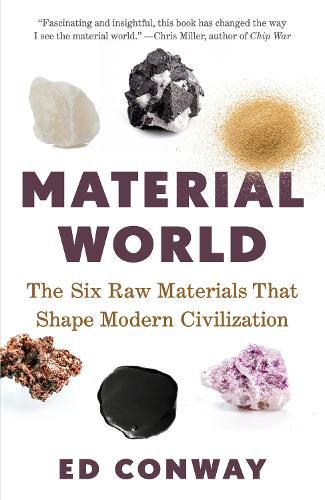
When my son said that this was his favourite book of 2025, I took notice. When I told him that I had borrowed it from the library, he hedged a bit, saying that he didn’t know if I’d like it. He’s wrong: I loved it. I could barely put it down over the three days that I read it: sand, beach and grandchildren notwithstanding.
I’m not a particularly science-y person, but this book is far more than ‘just’ science. Like a Mark Kurlansky book (think Salt, Cod etc.) it combines science, history and travel, but it also packs quite a bit of political analysis as well. I’m writing this on 5 January 2025 as the reality of Trump’s bombing of Venezuela and imposition of US oil interests is sinking in, and Conway’s comments about autarky (i.e. the policy of being self-sufficient that underlies Trump’s ‘America First’ policy) seem particular apposite right now. Ed Conway is the economics and data editor of Sky News and a columnist for The Times (London), which are right-wing connections that do not engender my trust. However these contexts are not particularly apparent in Conway’s book, except perhaps for the ultimately optimistic viewpoint with which he ends the book. Quite apart from his politics, his journalist background equips him with the eagle eye for a good anecdote and the ability to bring the narrative back onto more general-reader territory when it threatens to wade into technologically and scientific details.
In the introduction he identifies himself as a denizen of what he calls ‘the ethereal world’:
…a rather lovely place, a world of ideas. In the ethereal world we sell services and management and administration; we build apps and websites; we transfer money from one column to another; we trade mostly in thoughts and advice, in haircuts and food delivery (p.13)
He distinguishes this from ‘The Material World’, which undergirds our everyday lives by actually making things work, often through companies whose names are unknown to us, but which are more important than the brands that use their output:
…operating stuff in the Material World….you have to dig and extract stuff and turn it into physical products…a difficult, dangerous and dirty business (p.14)
He chooses six raw materials – sand, salt, iron, copper, oil and lithium- which are not only important substances in the world, but are the primary building blocks of our world and have fuelled the prosperity of empires in the past. They are the very hardest to replace. These six materials form the basis of products several steps up the chain: sand, for instance, is the basis of silica which underpins optical fibre and the concrete and cement that makes modern high-rise cities possible. In analysing these materials, he traces back their ‘discovery’ to ancient civilizations, often by accident or through observation, before being intentionally created with processes that often form the basis of present methods. Concrete, for example, was ‘discovered’ three times: there is evidence of cement use in Neolithic ruins in Turkey that date back more than 10,000 years; the Bedouins created concrete-like structures in 6500BCE, and the Roman used a form of concrete in many of their buildings before the recipe was lost for hundreds of years following the fall of the Roman Empire. The discovery of On Architecture by Roman architect Vitruvius, and its translation into French and English, triggered the 18th and 19th century quest for new concoctions to replicate or surpass the Roman recipe (p. 75). Perhaps because he is a British journalist, he highlights deposits in the British Isles rather more than we would think of today, and both German and British ingenuity are highlighted, as well as American. Thomas Edison makes several appearances, but the complete absence of any women at all highlights the male-dominated nature of science and invention.
The structure of the book has a sense of symmetry that I find appealing: six raw materials examined in six parts, each with three chapters, an introduction to the book and a conclusion. I can’t vouch for the reliability of his information, but each time I exclaimed “Hey, did you know…?” to my much more scientifically-oriented husband, he already did know and what he knew aligned with the information in the book.
Unlike many in the media companies and publications he works for, Conrad does not deny the reality of climate change and the environmental degradation that occurs as part of the mining and extraction of his six materials. However, as he points out, the production of an environmentally harmful material was often prompted by the desire to replace an earlier, even more harmful energy source which would have brought about an even more devastating environmental impact. e.g. coal replacing wood, kerosene replacing whale oil, or polyethylene replacing gutta-percha from the rapidly disappearing Malaysian guttapercha tree. It is this pattern that contributes to his optimism about our ability to mitigate climate change in the long term, if we can overcome the short-termism of the political cycle and make financial and lifestyle sacrifices for an unborn generation- actions for which there is equivocal evidence so far.
However, he is not completely Panglossian. Australia, and Rio Tinto in particular come in for trenchant criticism over the destruction of the Juukan Gorge for the extraction of iron ore. As he points out, part of the luxury of living in the ‘Ethereal World’ is that we can shunt the environmental impacts of our lifestyle into the ‘Material World’ which often happens to be a third world country. Wealthier countries, like Chile and Australia to a lesser extent are starting to question the environmental costs when the extraction occurs in their country instead of someone else’s.
Despite the shift towards autarky promoted by Trump in particular, and turbo-charged by the world’s realization of the precariousness of supply chains during COVID, the story of these six materials is also the story of globalization. Here in Australia we see the shipping out of raw materials (especially to China), but the circulation is much broader than this, with the finished product integrating multiple processing steps from right across the globe. Such processes make the world more inter-connected than America/Australia/China first politicians might desire.
The Material World is – well, material- but it has political implications. While the rest of the world panics about China’s dominance of the battery supply chain, China panics about its reliance on the rest of the world for its raw materials- hence China’s Belt and Road strategy. Particularly in relation to the production of advanced silicon chips, security is uppermost in the attempt to prevent industrial espionage and to make sure that China does not gain this ability. Ironically, China is unlikely to develop the hyper-pure silicon from which the silicon chip ‘wafers’ are made because the crucibles to melt it are available (so far) only from a single site at Spruce Pine, in North Carolina, operated by only two companies, Sibelco (Belgium) and the Quartz Corp (Norway). This raises the unsettling question of the effects of a landslide on the road that winds to Spruce Pine, or the malicious spraying of the mines with a particular chemical. But this single source is unusual: there is usually another source or another product to take the place of a threatened material. His six materials highlight the international reach of companies based in one country, and the diversification of such companies into new processes as part of the evolution of products and materials.
This evolution of products and materials lies at the heart of the optimism of the book. We have worked out how to turn complex products into commonplace and increasingly cheap items (for example solar panels and semiconductors). Although he has chosen six materials for his analysis, they are intertwined: batteries are just as reliant on copper as they are on the lithium inside them; steel inside concrete is a better building product than either alone. Even though we need to keep extracting materials to make the very ambitious transition to net zero, with solutions like hydrogen and wind turbines requiring huge amounts of energy, there is one major difference. In the past we used fossil fuels to burn, but now we are using them to build.
For years, people assumed that it would be impossible to make iron and steel at the scale we can today. Rediscovering the recipe for concrete seemed like a pipe dream. Scientists doubted that we would ever be able to tame extreme ultraviolet light, let alone use it to mass produce silicon chips. Will we look back in a decade or two and wonder why we ever fretted about producing enough hydrogen to back up the world’s energy grids, or why we struggled to generate copious power from the hot rocks deep beneath the earth?…If there is one lesson you should take from our trip through the Material World, it is that with enough time, effort and collaboration, these things usually happen….Humankind has, since its very first days, left a visible imprint on the earth. There is no point pretending otherwise. It is part of our story. It has allowed us to live longer, more comfortable lives than ever before. It has enabled us to fill the planet with more individuals than anyone could have imagines, with 8 billion brains and 8 billion sets of hopes and dreams. We are also capable of living far more sustainable, cleaner lives, diminishing our destruction and contamination and living in closer harmony with the planet. We will do so not by eschewing or dismissing the Material World, but by embracing it and understanding it. (p. 443)
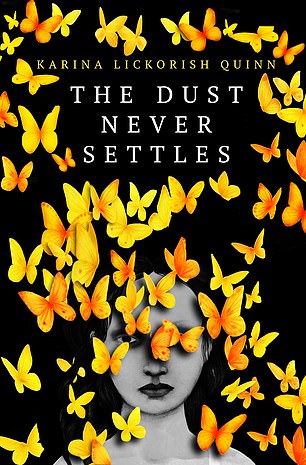
I don’t very often read a book just on the basis of a blurb alone, but in this case I did. Paul Lynch, the author ofProphet Song spoke highly of Quinn’s book in author interviews and his blurb describing it as ‘a mesmerising feat of imagination and a masterful debut’ graces the back cover. It’s a beautiful front cover, and the yellow butterflies evoke Gabriel Garcia Marquez, to whom this book owes quite a debt.
Anaïs Echeverría Gest has returned to her childhood home in Peru after an absence of several years in England. The family is expecting her to sign the papers authorizing the sale and inevitable demolition of her grandmother’s house, la Casa Echeverría in order to free up the inheritance. The house, which is a character in its own right, is a large yellow colonial mansion and garden overlooking the shacks and slums built by squatters on the dry plain behind the house called Los Polvos de Nadie y Nunca (the dusts of no-one and nothing) during the Agrarian Reforms of the 1960s. As soon as she steps over the threshold, she is assailed by the memories of the house- not just her life in that house, but the memories of the house itself- and the ghosts of family members and employees who had lived and worked there. Time seems to stretch and contract in the house; one minute the rooms are intact and the furniture dusted and lights illuminated, and the next minute the house is derelict and dark.
Anaïs has left her fiance Rupert Napier, a thoroughly English gentleman, in order to come home to Peru. She is curiously detached from Rupert, telling herself that she loves him but never really feeling it, and she is likewise ambivalent about her pregnancy. The future baby exists as a little pink fish in the corner of her vision, and as her pregnancy progresses the little fish changes shape until it is a huge, snapping lobster. When Rupert comes over to Peru, probably at the request of the extended family who are frustrated by Anaïs’ refusal to sign the papers, he brings with him all the Englishness of his family, an Englishness that Anaïs resented in her own English father’s refusal to acknowledge his second family in Peru, choosing instead to stay with his wife in England.
The house, built at the turn of the century, has seen multiple deaths, that are only just hinted at: a baby whose cries still echo through the house, the suicide of her Aunt Paloma and most importantly, the death of a 17 year old maid, Julia Álvarez Yupanqui who died when she fell (jumped?) from a window. As Julia falls from the window, the Earth falls away from her and is like a sheet of cloth; she sees Time “spread like an ocean, flowing this way and that, tossing up moments, driving them forwards on the crest of a wave then swallowing them again, pulling them back into the deep“. (p. 96) A disembodied presence, Julia wanders unseen through generations of the Echeverría family, right back to the Conquistadors and through centuries of dispossession, enslavement, poverty and violence. The people of Los Polvos, who saw her fall, believe that she has become a saint- and indeed, it seems that she has, as she walks unseen through history dispensing kindnesses as she passes.
It was not only the Polvorinos who saw her fall: Anaïs did too, crouched under a geranium bush. She becomes electively mute, and is seen by a succession of psychiatrists and doctors who try to make her talk. Anaïs could see the ghosts in the house and the adult Anaïs has a tenuous grasp on reality, and you are never really sure whether she is going mad.
So the story shifts back and forth between two realities: that English reality (denoted by chapters with English numerals) and the Peruvian reality in chapters with Spanish numbers. The Spanish chapters follow the disembodied Julia Álvarez Yupanqui and take us on a meandering journey through Peruvian history. There is an exhaustive list of characters in the appendix of the book, divided into the Echeverría family and a longer list of historical and imagined characters who feature in small, passing vignettes as Julia crosses the earth. These vignettes are beautifully written and draw you in just enough to feel disappointed as Julia passes by, leaving that narrative thread hanging loose. Reflecting the tragedy and complexity (and complicity) of various generations of the Echeverría family, there is a convoluted family tree that challenges the one found in One Hundred Years of Solitude with its seventeen Aureliano Buendías.
The complexity of this book is both its great strength, and its greatest weakness, particularly as the book goes on. The last quarter of the book is Julia’s journey through history, and Anaïs’ story drops away. I found myself having to consult the list of characters at the back of the book, having ‘met’ these characters earlier in the book but having forgotten them in the cavalcade of ghosts passing by. I enjoyed the frequent use of Spanish, which she paraphrases in the following sentences, but I don’t know if I would have felt that way had I not been able to read Spanish.
Because this book is just as much about time, land and colonialism as it is about individual people, it reminded me of Alexis Wright’s Carpentaria, which was similarly shape-shifting and which caused you to think “am I even understanding this?” In fact, I often said that out loud while I picked it up each night, enjoying the experience of reading it, but unable to hold it all in my head.
I like magical realism, but many people do not. This is a really ambitious, fearless book, and I suspect it is more memorable for its overall shape than for its details. It is flawed, but it’s very good.
My rating: 9/10
Read because: I loved Paul Lynch’s Prophet Song and I thought- if he loves this book, perhaps I will too. I did.
This book should have ticked all my boxes: set in Melbourne, written by a much-loved Australian author, written with a nanna’s-eye (and I do embrace my nanna-dom). But it sounded as if it would be a bit slight, and I probably wouldn’t have read it had it not been an Ivanhoe Reading Circle selection, read and discussed amongst all the other nannas.
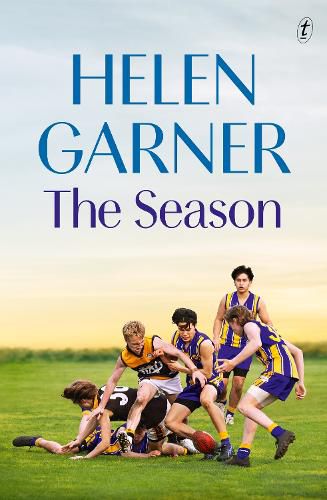
Even Garner herself sounded a bit ambivalent about the whole project, admitting that she wrote the book because she needed something to do, but didn’t have the energy to embark on one of her investigative non-fiction books. It traces the footy season of her grandson Amby’s under-16s footy team, at the J. J. Holland reserve in Kensington. As she always does, Garner conveys a strong sense of suburban place, and in this case, the football ground she describes so closely fitted with the oval that I walk through to my volunteer job in Kensington that I actually researched the club and found that, indeed, it is the J. J. Holland reserve. She’s there for the team’s matches; she’s there for their training sessions on cold weekday nights, and she’s there for the conversations in the car driving there and back.
Although ostensibly about football, it’s even more about young men growing into masculinity, and at under-16 Amby is at that liminal stage, with signs of the little boy still visible under the swagger of adolescence. Garner’s daughter lives next door, and she has a strong and enviable relationship with her grandchildren, especially Amby. At the same time, she is aging and feeling irrelevant and frustrated by her increasing deafness. In places she veers into idealization of these young men, seeing them as warriors, and even admitting to a slightly ‘off’ recognition of their adolescent sexuality (Garner has always been, and remains, perhaps more honest than she should be).
It is the football season that gives this book its beginning and ending, and the book was more a reflection than a plot-driven story. I had feared that it would be slight, and unfortunately it was.
My rating: 6.5/10
Sourced from: purchased e-book
Read because: October 2025 selection for the Ivanhoe Reading Circle.
The Global Story (BBC)The Death of Reading This episode was based on a recent essay by James Marriott ‘The Dawn of the Post-Literate Society’ which can be found on his Substack here. Both the essay and this discussion go back to the mid- 1700s when the spread of reading beyond the elites meant that power no longer had to be performed visually, but could be disseminated and reinforced by the written word. Marriott draws on Neil Postmans work ‘Amusing Ourselves to Death’, and argues that beyond the concern about the decline of reading in the 1990s, the spread of the smart phone from 2010 onward has led to a steep drop in educational standards. With the rise of TikTok and Instagram, we are returning to the primacy of visual display – a sort of counter-revolution in thinking and perception.
Journey Through Time Episode 48: The Paris Commune: Can the City of Light Govern Itself? After the uprising over the cannons on Montmatre, the radicals took over, but with no leader, they split almost immediately. Auguste Blanqui would have been the leader, but he was in prison (as indeed he was for whole decades of his life). Supplies were allowed in, but Paris was still lunder siege. Napoleon III’s column was pulled down, although it was later re-erected. Elections were held with 4 days to give the leaders legitimacy with the result that there was an anti-nationalist government but otherwise, the movement splintered. The new government started issuing executive orders (and don’t we know about THEM!) to separate church and state, provide rent relief and soldier pensions, provide free secular and compulsory co-education, cap salaries, and give workshops to co-ops. So far, all normal socialist fare, but also they imposed decimal time (10 day weeks, 10 hour days etc), banned night baking as a labour market reform for bakers, and banned croissants (can’t remember why). They treated legitimate and illegitimate children equally and had same and equal pay for teachers. The army was a citizen’s militia, and army discipline broke down almost immediately. 150,000 people per day fled Paris, where there was constant violence but no terror as such (in Revolutionary terms). From afar, Marx was interested but because he didn’t support the French International, he waited a while before writing about it. Women were influential in organizing, but they were not inspired by feminist or suffragist ideals. To get Auguste Blanqui released from prison, they took hostages which backfired on them. There were small mini-communes in the rural towns, but essentially Paris was on its own.
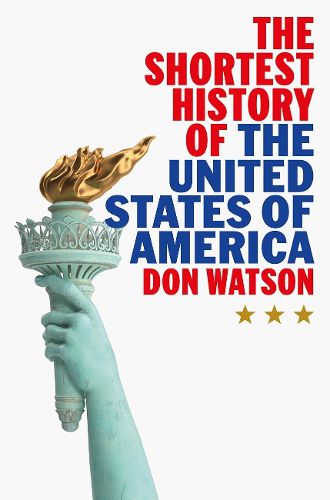
I’ve always been a bit puzzled by the ‘Shortest History’ part of the title of this series of books published by Black Inc dealing with world history, many written by Australian authors. Declaring to be the shortest history seems rather definitive and pugnacious, and almost a challenge to later authors to become even shorter. The blurb for the series claims that the books can be read in an afternoon -something that I doubt, in this case – but certainly they are a work of concision and discipline on the part of the author, in being able to confidently assert a fact or event in a single paragraph instead of hedging with qualifications, nuances and debates. Of course, much is elided in such an approach, but there is also a bracing forthrightness about a sweeping history that needs to tie together so many small details into an overarching narrative.
Don Watson comes to the task as a historian in his own right, political speechwriter, and a commentator on current-day American society and political culture. As well as his American Journeys published in 2008 (my review here), he has been a regular contributor to the Black Inc./Schwartz stable on American politics with three Quarterly Essays: No.4 Rabbit Syndrome: Australia and America (2001), No 63 Enemy Within: American Politics in the time of Trump (2016) (my review here) and most recently in 2024 with No. 95High Noon: Trump, Harris and America on the Brink, which I reviewed here. With The Shortest History…. he is writing as an outsider, and a long-term, well-informed watcher as well.
His outsider status is most apparent in the opening chapters of the book, where he makes clear that there were competing European powers – England, France, Spain, Netherlands, Sweden- that put ‘boots on the ground’ on what was to become American territory. Drawing the distinction between the 1776 establishment of the United States, and the history of ‘America’ starting in 1492, he goes even further back 20,000 years to the first peoples, and the early introduction of enslavement that followed early European ‘discovery’. In what, perhaps, might be characterized as ‘black armband history’, he continues to turn the spotlight around onto First Nations and Black experience as the narrative of United States history marches forward…always forward.
The book progresses chronologically, but the chapters are thematic. In his introduction Watson notes that:
While the history of the United States is to an uncommon degree a history of ideas, it is equally the story of men and women testing the truth of those ideas against experience: in politics, in churches, on frontiers, in cities, in industries, in battle, in homes, in schools, in Hollywood, in literature and in music. (p. xiv)
Watson places strong emphasis on ideas: on the intertwined Puritan ideas of harsh punishment and discipline set against competing ideals of individualistic self-reliance, which in turn existed alongside traditions of social justice, education, communitarianism and democracy. He notes the influence of Enlightenment philosophers and the scientific revolution in providing an intellectual framework for their grievances and the language to express it through the Declaration of Independence, Constitution and the Federalists papers. He puts his historian hat on to discuss Turner’s Frontier thesis on the ‘freedom’ of the frontier in the popular imagination and he notes the recurrent waves of religious ‘awakenings’ and the struggle between order and chaos-‘ the American id and the American superego’ (p 58). Challenging these were the ‘maniacal appetite for wealth’ whetted by the financial opportunities following the Civil War, and especially during the ‘Gilded Age’ of the 1890s which pushed aside “the restraining influences of conscience and religion, or the egalitarian principles implied in the country’s democratic creed” (p.94) The Civil War, in his telling, had a long advent of compromises on the part of the North, which was well aware of the incompatibility of slavery with the ideals espoused in the republic’s founding documents.
Although we know the political landscape in the United (huh!) States today as being Republican and Democrat, the meaning of both words has changed over time. To be ‘republican’ was to champion the idea of the American republic, and it was not necessarily democratic. The nature of the parties changed over time, with the immigrant influx between 1890 and 1920 shaping the cultural and political evolution of urban America:
The Democratic Party evolved into the party of both the burgeoning multiethnic cities and the reactionary South, while the Republicans remained the voice of white Protestant provincial America. (p. 112)
Looking at the policies of Presidents over time, particularly in the Progressive era, it is not easy to distinguish to which party the president belonged. For example Woodrow Wilson was a southerner from the Democratic Party, and a progressive as well as a segregationalist. Kennedy did not like Martin Luther King, and he had little interest in domestic politics. Nixon was mad, but he was the most liberal republican of the century excluding Teddy Roosevelt (p. 187). Some Presidents receive more attention than others. Probably because of current-day parallels, President Andrew Jackson receives more attention than he might have in a book written 30 years ago. For a former speechwriter for Labor Prime Minister Paul Keating, I was surprised that he was so critical of FDR. It seemed to me that the emphasis on presidential personality and actions received more emphasis in the latter part of the book, within the time of Watson’s own memory, I would guess. Interestingly for a historian, he ascribes ‘luck’ as an important factor that determined a President’s actions and reputation.
This is not just a political history because Watson interweaves popular culture, including music, Hollywood and literature, as well as broader social movements including Communism and anti-Communism, evangelical religion and protest movements. However, the political emphasis does mean that it is a predominantly male history, with political actors Eleanor Roosevelt and Hillary Clinton receiving more attention than other women in his narrative. As the book moves on, the early emphasis on indigenous and Black history is muted and where it is mentioned it is mainly in political terms. Particularly in the post-WW2 years, he integrates conformity, consumerism and commercialization into the “American Dream”, which was very much restricted to white America:
Nothing spoke more eloquently of the American dream than the bustling heartland towns, their Main Streets lined with mom-and-pop stores, barber shops, diners, ice cream parlours, theatres and movie houses, with Fords and Chryslers and De Soto Coronados parked in rows; and, just beyond them, unlikely numbers of regularly attended churches, schools, sports stadiums and public swimming pools (p. 154)
Watson started his book in the introduction, with the attack on the Capitol building on 6 January 2021. At first, I thought that this reflected Watson’s own expertise and reputation as a commentator on American affairs, but when he returns to 6 January at the end of the book as part of his argument, it is as a historian.
The United States was born with one foot in the Christian church and the other in commerce. It might equally be said that it had a foot in the high ideals of religion and the Enlightenment and a foot in the frontier philosophy of whatever it takes. The loathing felt for the liberal elites, and for intellectuals in general, was an old one, and the failure of liberals and intellectuals to understand either the people who loathed them or the degree of their loathing was just as old. The ‘Washington swamp’ was not new [and] …the coonskin hats and the shaman’s horns in the Capitol building were as if lifted from a picture in my childhood Davy Crockett book…All these gestures to contemporary grievance connected to threads of belief and myth, and patterns of ideological dispute, that are as old as the country itself. Extraordinary, even ‘unprecedented’ as the insurrection of 6 January 2021 seemed, it occurred in the same grindhouse of uncrossable divides and undying fixations.” p. 261
I guess that only time will tell if Watson’s decision to start and finish the book with Trump was a narrative framing, or whether it is a historical analysis in its own right. Only in coming years will we know whether Trump II marks a whole new phase, or whether as Watson suggests in 2025, the Trump presidency reflects a continuity that flows across the United States’ history. By its very nature, a ‘short history’ with its abridgments and encapsulation, is probably best placed to provide an answer.
The Rest is HistoryEpisode 580: The Irish Civil War: The Assassination of Sir Henry Wilson (Part 1) In this week’s episode, Tom and Dominic are joined by historian Ronan McGreevy, to discuss the pivotal assassination of Sir Henry Wilson, whose death launched the tumultuous Irish Civil War. Sir Henry Wilson was the MP for Northern Ireland, and an Irish Unionist. He had served in the British Army, and as a leading figure in the British Army he urged the British government to crack down on the IRA, a group which he saw as a military problem, rather than a political problem. On 22 June 1922 he was scheduled to open a memorial at Liverpool St station, which he did. On his return home, three men waited for him and shot him six times on his own doorstep. The gunmen escaped by taxi, but were surrounded by a mob. Two of the assassins were ex-soldiers themselves and part of the Irish diaspora. Meanwhile an election held in Ireland led to acceptance of the Treaty, but the anti-Treaty dissidents took over the Four Courts, where they were issued with an ultimatum by the (Irish) government to remove themselves. Among the dissidents, the issue was not so much partition, but the Oath that parliamentarians would have to pledge, not in words but in the level of independence that an Irish parliament would have. The IRA itself split, but the majority was anti-Treaty. Sectarian violence increased in Northern Ireland, and Wilson became the public face of the Unionist stance. So who ordered the assassination? Historian Ronan McGreevy, the guest on the podcast, has argued that it was the Irish Republican Brotherhood, a secret oath organization from 1858), headed by Michael Collins. The two assassins were hanged after a 1-day trial and the anti-Treaty dissidents were removed from the Four Courts. The Civil War had started.
Journey Through TimeThe Paris Commune: The City that ate its Zoo (Episode 2) With the so-called Government of National Defence negotiating with the Prussians, Paris now saw itself as the defender of France. One of the first things to be done was to hold an election, to affirm the legitimacy of the leaders. And who should be elected as Mayor of Montmartre but Georges Clemenceau, who was to end up as Prime Minister of France. Perhaps his anti-German sentiments during and after WWI sprang from this early experience with the Prussians. However, despite the stance taken by the Parisians, in the rural villages people wanted peace at any price so a divide sprang up between Paris and its surrounds. As the Prussians increased the siege, people ate first their horses, then their pets, rats and the zoo animals excluding the hippopotamus (too hard to kill and cut up) and the monkeys (too much like us). As with Gaza today, there was disease and incessant shelling, and eventually in January 1871 the Government of National Defence capitulated. Ruinous reparations were imposed on France as part of the surrender, and the Prussians would continue to occupy until the reparations were paid. Meanwhile the German Empire settled in at Versailles, just to rub salt into the wounds, and their insistence on parading through the streets angered the Parisians even more. Elections were held, and the rural/Paris split continued. The 300,000 armed guardsmen in Paris refused to surrender so the National Government at Versailles decided to confiscate their weapons. The Guardsmen and the parisian crowds moved the cannons onto Montmatre (the Sacre Coeur church wasn’t there then- it was a very poor neighbourhood) and in March 1871 the women rushed to Montmatre to stop the seizure of the cannons by the National Guard troops.
The Rest is Politics US edition I listen to this podcast every week, but there’s no point documenting it because things change so quickly. But Episode 132 The Mistakes that led to Trump is more historical, looking at the economic decisions that led to the populism that brought us The Orange One. (Just to ensure that I will never be admitted to US). The 1944 Bretton Woods agreement emphasized stability in the post-WW2 international economy, but in August 1971 Nixon took the US dollar off the gold standard, which at that time was a lowly $31 per ounce! The globalization and off-shoring mantra was that a rising tide lifts all boats, and China was admitted to the World Trade Organization as an emerging market, something that Donald J Trump opposed even then.
The EconomistThe Weekly Intelligence: Operation Midas. Wow. This podcast really got me thinking. It involves the corruption scandal in Ukraine, which led to the dismissal of President Zelensky’s Chief of Staff, Andrei Yermak. The police force in Ukraine is so corrupt that an alternate corruption watchdog structure was established, comprising the National Anti-Corruption Bureau of Ukraine (NABU) and the Specialized Anti-Corruption Prosecutor’s Office (SAPO). These were the two bodies that Zelensky was trying to get rid of, until such huge public and Western government pressure forced him to leave them alone. NABU and SAPO uncovered a huge corruption crisis where officials skimmed off millions from the state nuclear energy commission with scant regard to the effects of decaying and damaged infrastructure on the population. Why? Zelensky claimed that it was to get rid of Russian influence, but was it just to protect himself. I’d thought of Zelensky as one of the ‘good guys’ but perhaps there are no ‘good guys’ here. I’m sure that this destabilization is just what Russia wants, but is there a real and continuing problem of corruption in Ukraine?
Whenever I drive past the flashing lights of ambulances and police at a road accident, I think of the couple of minutes before that collision: the conversation that would have been abruptly cut short, the reason the occupants were in the car, how they would have got up that morning oblivious to how their lives were going to change in the next 12 hours.
This is pretty much the same impulse that led Leigh Sales to write this book. As a journalist, she had been on the media side of many interviews and stories about people whose lives changed dramatically. She had also had her own brush with death when a placental abruption in what had been a normal pregnancy led suddenly to a life-threatening situation, and fears for both her baby’s life and her own. Shaken by the experience, she came to believe that we are all vulnerable to sudden, unexpected change and yet we do not live that way. Why?
Her book revolves around the case studies of various people, some of who became caught up in ‘newsworthy’ events, others who experienced the death of a loved one (something that we all face) or had suffered a catastrophic injury or illness. The chapters are re-tellings of her interviews, interwoven with some ‘easy to digest’ research which veers at times into pop-psychology, and her own reflections of how she would have responded in similar circumstances.
Some of the people and the events described are well-known: Louise Hope, who as well as suffering from MS, was also one of the hostages in the Lindt Cafe siege in Sydney in September 2002; Walter Mikac who lost his wife and two daughters in the Port Arthur killings; James Scott, the ‘Mars Bar’ man who disappeared in Nepal and Stuart Diver, who survived the Thredbo landslide but his wife did not. Others are less well-known, Matt Richell, who died in a surfing accident, Juliet Darling whose husband was killed by her psychotic step-son and Michael Spence, the vice chancellor of the University of Sydney, whose wife died within 3 weeks of her cancer diagnosis, leaving him with five children.
As it happens, the first two case studies are both of people with deep Christian faith. In the case of Michael Spence, it was precisely because of his religious faith that she interviewed him, even though Sales herself is not a believer. As a former-believer myself, I found myself dreading that the book was going to become religious tract. It didn’t, but I still found it strange that she was to organize her case studies in this way, giving such prominence to faith and a belief in a higher purpose for suffering.
She locates herself as a journalist in these retellings, having presented many of the news stories herself. She tells us that she often becomes tearful during her interviews, perhaps as a counter to the perception of the sang-froid of the television presenter. The intensity of media scrutiny led several of her interviewees to engage a publicity agent to manage media appearances. This did not always work out well: you glimpse the newshound in her when she talks about James Scott, dubbed ‘Mars Bar Man’. He was advised by his agent not to name the chocolate that was his only food, in the hope that he could secure a sponsorship deal later. It wasn’t actually a Mars Bar, but instead a Cadbury’s chocolate, but when he fudged (terrible pun) the brand of the chocolate in an interview, the interviewee (Richard Carleton) sensed obfuscation and toughened his questions. Although Carleton came in for criticism for the ferocity of his questioning, Sales admitted that she would have done the same thing once she sensed evasiveness.
She returns several times to the idea that, having had one dreadful thing happen to you, you were inoculated against further trauma. Statistically, this is not logical even though emotionally, it is. She seems to feel that Louise Hope’s MS should have been enough, without the Lindt siege, and she spends some time on the idea of the ‘jinx’ on the women that Stuart Diver (Thredbo) has married, his second wife having died with breast cancer. Diver speaks of being a ‘memory locker’- capturing and keeping happy times for when the bad times come – but Sales seems somewhat resistant to such a stoic and clinical response to pain.
She devotes several chapters to people who helped: Detective Norris who accompanies a grieving wife to the morgue; counsellors Jane Howell and Wendy Liu at the morgue; Mary Jerram at the coroner’s office; pastor Father Steve who has a strong belief that families should see the body.
All of this is told in an intimate, rather confidential tone of voice. I used to listen to Chat 10 Looks 3, the podcast she made with political commentator Annabelle Crabb (still going, I see) and this book had much the same sort of feel to it. Interesting, personal but something that you could listen to (read) without much effort or challenge.
My rating: 7/10
Read because: Bookgroup Ladies selection. Now that the CAE has wound up, we have no identity!
Sourced from: Darebin Libraries Book Group collection.
The Rest is HistoryEpisode 614: Walt Disney: The Great American Storyteller. So there I was, on my evening walk through the suburban streets of Rosanna, laughing my head off at the start of this episode where Tom Holland regales us through a truly terrible rendition of ‘When You Wish Upon a Star’, while Dominic intones the words. But the reality is that this song is burned into my memory as the theme song of Disneyland, which I rarely got to hear as I was usually bundled straight into bed (at 7.30!) unless we were visiting family friends all the way out in Croydon- miles away! It took awhile to all pile into the car, and so I got to hear the song. Mum and Dad would put the back seat down, and we would lie down in the back, watching the orange sodium street lights until we were asleep.
Enough reminiscing. After murdering the song Tom and Dominic redeem themselves by really capturing just how new Walt Disney’s early animations were, starting with Steam Boat Willy in 1928. The sound was fully synchronised to the action, and the cartoon characters actually had their own personalities. The Three Little Pigs in 1933 introduced brilliant colour, and Snow White (1937) was seen as the supreme achievement in animation with thousands upon thousands of drawings. Pinocchio won an Oscar in 1940, and it was followed by Fantasia and Bambi, which presented a particular challenge in depicting animals realistically and yet with human features. They draw a parallel between Walt Disney and Steve Jobs (Apple) in that they both worked in a field where technology was in its infancy, they are linked to California, and moving on from their own ‘tinkering’ from interest, they became the public face of a wealthy corporation. But Walt Disney and his brother Roy were not wealthy at first, and the company nearly went broke during WW2. Losing the licensing rights for his first creation ‘Oswald the Lucky Rabbit’ spurred Walt Disney to ensure that he always maintained tight control of licensing- something that exists to this day. Politically, Disney became increasingly conservative, especially after a strike in 1941 over unionization, which was a PR disaster for them, and he publicly aligned himself with Joseph McCarthy. He continued to make films (Cinderella etc) but they were not of the same quality as his earlier films. By the 1950s he embraced television and produced the hugely popular Disneyland. He died in 1966, by which time opinion had turned against many of his films, which were accused of being infantalizing, commercial and sentimental. This criticism was strongly voiced by P. L. Travers, who resented Disney’s treatment of her Mary Poppins character. Really interesting – and a good recovery from that terrible opening song.
Episode 615 Disneyland: The Modern American Utopia This episode looks at the construction and place of Disneyland within Walt Disney’s imagination and American life. It was conceived during the 1940s, after the success of Snow White, when Disney was looking for something new. He was obsessed with train sets, and even had a life size train built in his house. He at first conceptualized Disneyland as a miniature travelling village, and in 1951 he sent out a team to investigate museum displays and historical recreation parks (which US is into in a big way). At this point Tom and Dominic become more historical as they trace though the development of pleasure gardens and entertainment parks, starting with the oldest park in Copenhagen in 1580 that was built beside the tourist attraction of a spring. The Vauxhall Gardens were established in London during the Restoration era. They kept the riff-raff out by charging 1 shilling, which is about $150 in today’s currency- similar to the price of a ticket to Disneyland. But by the mid-19th century it had gone downmarket, and it closed in 1859. The first carousel was built in 1790s France, and by 1861 a steam-driven carousel was opened in Boulton UK. Fred Savage was the Father of 1860s rides, developing the switchback ride by 1888. Disneyland was conceptualized as a theme park, rather than a park with rides. To cover the huge expense, Disney entered into an arrangement with ABC Television to present 26 television episodes, which became hugely popular. At the end of the 1950s he bought a huge parcel of land in Florida, where he planned to build Disney World as a housing village for his workers, but he died before this eventuated. On reflecting on Disneyland Tom and Dominic observe that it’s a reflection of one man’s biography and vision. It is a total immersion experience, with ‘cast members’ rather than workers, and the rides are stories, rather than thrills. There is an emphasis on order, just as there was in Vauxhall Gardens, and although it has the past and the future, there is no present.
There’s then a Bonus Episode with an interview with Bob Iger, the head of Disney today. It’s a bit boring, so don’t bother. But it is interesting that Disney is now a corporation that needs to provide shareholder value, and that it has now purchased the stories from other franchises.
Journey Through Time I’ve only just started listening to this podcast, hosted by historians David Olusoga and Sarah Churchwell, I started listening to the episodes about the Paris Commune, without really knowing quite what it was, or when it occurred. The Paris Commune: France’s Bloodiest Revolution Episode 1 looks at the 1871 Paris Commune where a combination of soldiers, students, women and artists governed Paris of 72 days, independent of the government. It is not as well known as the French Revolution of 1789, but it was more violent. Paris had been modernized since the French Revolution with Haussman’s massive public works program between 1853 and 1870. The Commune began with France’s humiliation at the hands of Bismarck’s Prussia, who had deliberately fomented war to forge German nationalism. Napoleon III took the bait, but ended up captured, with the Second Empire in ruins. The Third Empire was soon established outside Paris, but it just replicated the status quo. Bismarck surrounded the still-walled city of Paris, thinking that it would soon fall, and when it didn’t, he decided to starve them out. A large government delegation escaped Paris and set up outside. Meanwhile the Parisians were starving, and when they heard rumours that the government was about to surrender, a country-wide uprising occurred on the 31 October. However, the uprising quickly collapsed in the provinces, and so Paris now felt that it was fighting on alone.
The Documentary (BBC)The Shiralee: D’Arcy Niland’s 1955 Australian western. A western? I don’t remember it that way. The BBC blurb mentions the 1957 movie starring Peter Finch, but Bryan Brown also made a version in 1987. Anyway, Kate Mulvaney is doing a stage version with the Sydney Theatre Company (the run finished at the end of November 2025) and this is an audio diary account of her writing the screen play and watching the performance come together in rehearsal.


 The Resident Judge of Port Phillip