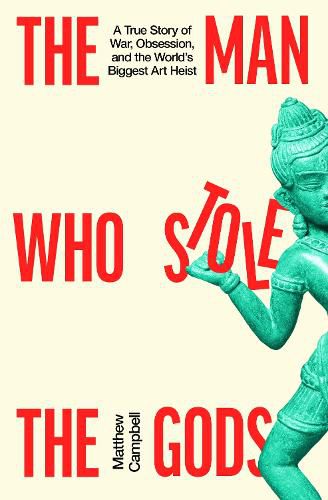
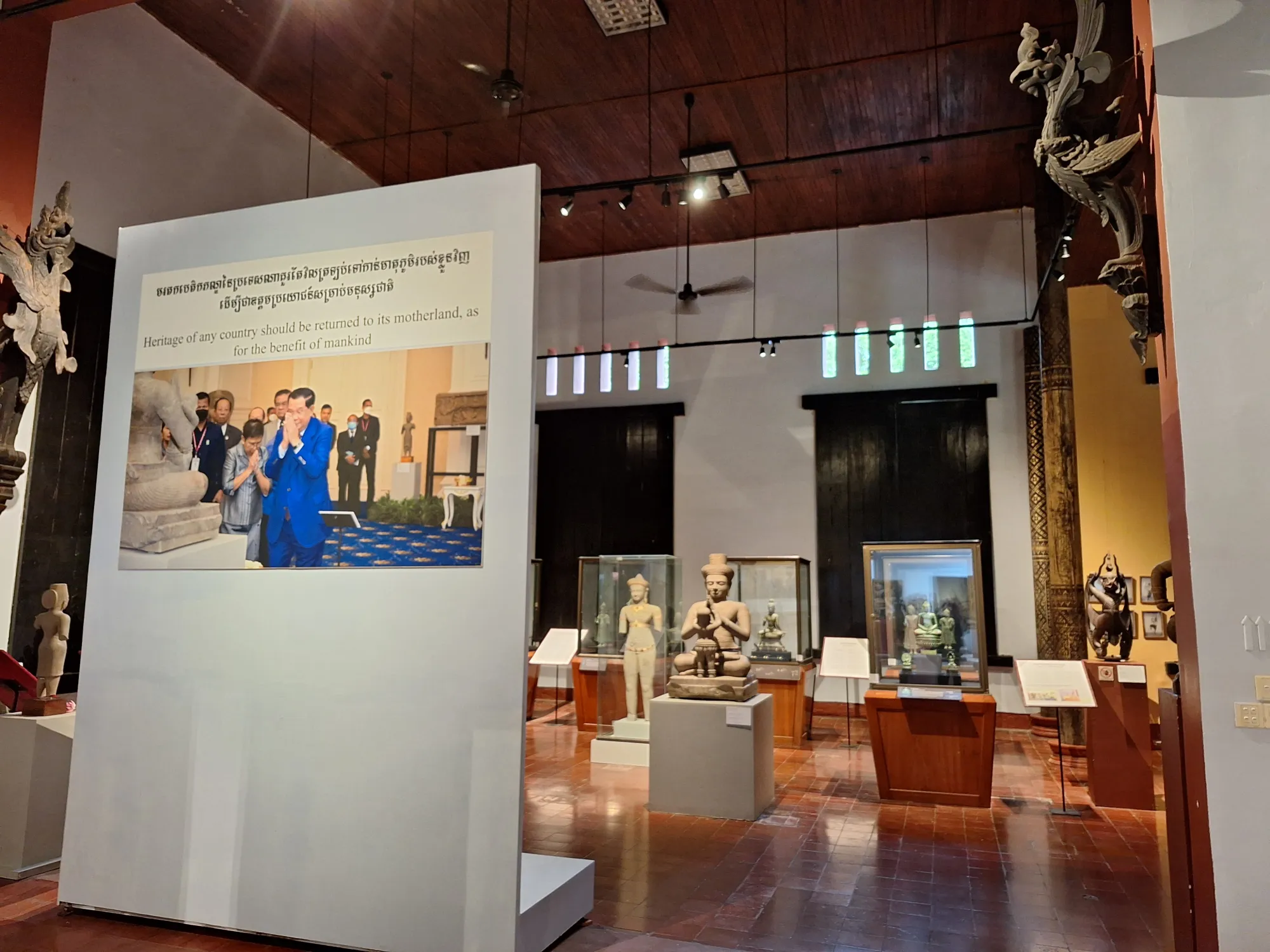
When I last visited the National Museum of Cambodia in 2024, there was a special gallery devoted to artefacts that had been returned from overseas museums. Alerted as we are to stolen artefacts by the ABC Program ‘The Things the British Stole’ and Australian’s own disgruntlement at the British Museum’s refusal to return the Gweagal Shield, I was interested to see the celebration of the return of Cambodia heritage objects. But having read this book, I will take even more interest next time because right there, in the middle of the picture is the statue of the Hindu God Shiva and his son Skanda (rendered as a little boy standing before Shiva) which is one of the cultural artefacts specially named in this book.
The ‘man who stole the Gods’ was British expatriate and Bangkok resident Douglas Latchford, who was first entranced by Cambodian artworks in the 1950s. By the 1970s, having become very wealthy as manager of an ‘agency’ bringing consumer goods to Thailand he was in a position to indulge his passion for Cambodian artefacts, following the example of an American spy Jim Thompson, who was a major collector. He channelled much of his stolen bounty to the Metropolitan Museum of Art through Thomas Hoving, its 36 year old director who was ambitious to bolster the Met’s collection during the boom years following WW2. His successor was Martin Lerner, who was appointed chief curator of Indian and Southeast Asian art at the Met. For the Met collectors, Douglas Latchford was their man.
Latchford had two passions. One of them was young Thai bodybuilders, and after a failed sham marriage to a Thai women which yielded a daughter, Julia, he was free to surround himself with powerfully built young men. His other passion was ancient Cambodian stone.
Latchford had an encyclopedic knowledge of Khmer civilization, attained through study, travel and incessant collection. He was generally dismissive of art historians and academics. He became a trusted partner to Spink & Son in London, Britain’s premier source for Asian antiquities, and developed a near-monopoly on the artefacts that he sent to UK. However, the 1970 UNESCO Convention on the Means of Prohibiting the Illicit Import, Export and Transfer of Ownership of Cultural Property meant that the artefacts he was sending had to have a minimally plausible origin story. He established a relationship with scholar Emma Bunker, who despite few publications to her name and no PhD, had sufficient academic reputation to convince buyers that their intended purchases would not fall foul of the 1970 UNESCO convention. She managed to obtain letterheads from legitimate dealers who had operated prior to the 1970 cutoff and had a signed letter from a prominent now-deceased Spink executive so that she could generate the paperwork to attest that the artworks had secure provenance. He also could draw on the reputation of Nancy Wiener, a prominent New York art dealer with a gallery on East 74th Street.
Meanwhile, suspicions were arising about Latchford’s activities, both in Cambodia and the United States. In US Special Agent Brendon Easter from the Department of Homeland Security (huh- perhaps they do act well sometimes) and Alexander Wilson, a prosecutor at the Southern District of New York court investigated the proposed sale by Sotherby’s Auctions of the Duryodhana, an important artefact excavated from Koh Ker. In Cambodia, archaeologist Bourdonneau excavated ruins and found pedestals where statues had been removed. Bradley Gordon, an attorney in Phnom Penh, led a team of young Cambodian lawyers acting from the Cambodian side.
Most importantly for the investigation, they found Toek Tik, who had been one of the men who had excavated the artefacts over many years. Living first under the Khmer Rouge, and then through the civil war which followed the Vietnamese invasion to topple Pol Pot, he was now old and sick and remorseful that he had ever been involved in the theft of Cambodia’s gods. Although unable to read and write, he had a good memory for what was located where, and he was able to lead investigators to the sites where the pedestals and remnants stood, making it possible to link the exported artefacts and the location.
But as the net closed in, it was never certain that the artefacts would actually be surrendered, even though it could be proved that they had been looted after the 1970 Convention (indeed, right up to the 1990s). One heavy purchaser from Latchford was Jim Clark, a computer-technology millionaire who had made his money through Netscape (remember Netscape?), who had spent $35 million on 30 pieces between 2003-2007 via Latchford, on the say-so of forged documentation. Julia Latchford, Latchford’s daughter and heir, found that her financial movements were circumscribed by the legal scrutiny under which Latchford’s affairs had been placed, and in 2021 she signed an agreement with the Cambodian government to return all of his Khmer works. Investigators found themselves poring over architectural magazines that featured luxury homes, in order to focus their search for particular objects.
Works from the Clark and Latchford collections found their way back to Cambodia, but most disturbing for me was the intransigence of the Metropolitan Museum of Art. While I note that two more pieces were returned on June 10 2026 to join the fourteen others returned in 2023 that I saw while in Phnom Penh, it wasn’t certain that the Met would relinquish custodianship.
The book’s focus is the stolen artefacts, but along the way it gives a good history of Cambodia generally for people who are not familiar with it. Matthew Campbell puts his journalistic skills to good use, combining his investigative work in tracking the networks across multiple continents, with a succinct telling of Cambodian history. I’ve been working on improving my knowledge of this history, but I admit that I hadn’t realized the length or tragedy of the civil war following Pol Pot’s overthrow. There is nothing good that can be said about the Khmer Rouge, but they did not intentionally damage the temples, and much of the looting that took place occurred during the civil war period when the whole society was in turmoil. That wealthy museums like the Met should take advantage of this societal breakdown, and so recently, is shameful.
It is right that these gods should be back in Cambodia where they belong. They have outlasted collectors, connoisseurs, museum curators, gallery owners, and the impoverished men who were drawn by the (meagre) money they were offered to dig up their own heritage. And that’s just the way it should be:
The artworks that had determined the course of Latchford’s life were as eternal as anything crafted by human hands. When he discovered them, they had already survived for a millennium or longer, silent witnesses to the rise and fall of kings, the arrival and retreat of new religions, and, ultimately, the ravaging of the nation that had created them, in the service of an ideology that would have been incomprehensible to their makers. To obtain them and hold on to them, to hoard them and profit from them, Latchford had stolen, lied, and cheated, ruining relationships and breaking laws. But even this intense connection was transient. Immortality was the preserve of gods in stone and bronze. (Ch. 28)
My rating: 8.5/10
Sourced from: purchased e-book (hence the absence of page numbers in my quotations)
Read because: my son in Phnom Penh recommended it. There’s a two-part ABC podcast about it called Kidnapping the Gods
The First Saturday of the month is Six Degrees Day. This meme, hosted by Kate at Books Are My Favourite and Best involves her choosing a starting book, then you linking the titles or themes of six other books. But this month was a little different because instead of Kate choosing the book, you were invited to start with your bookgroup’s current read. I attend two book groups: the first group with about 7 of us now called ‘Rosanna Readers’ was in the past a CAE bookgroup, and the second is the Ivanhoe Reading Circle, a more formal, meeting based group that was established in 1920. During September, the Reading Circle read Hannah Kent’s Always Home Always Homesick.
This book is a memoir of Kent’s sojourn in Iceland as a 17 year old on a Rotary exchange visit, her love for Iceland and its inspiration for her first book Burial Rites which was published to great acclaim after a spirited bidding war for publishing rights.
It would come as no surprise that I chose Burial Rites as the first link. As probably everyone knows, the book is a ‘speculative biography’ of Agnes Magnusdottir, who was executed for murder in Iceland in 1829. Awaiting sentence, she is interned on a remote farm, where enforced proximity draws her into the circle of her keeper’s family. (See my review here)
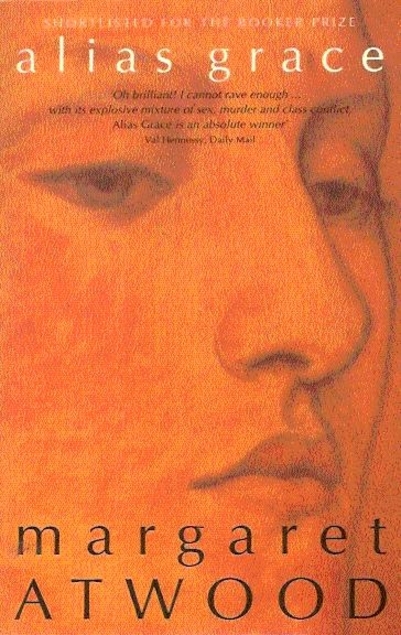
In writing Burial Rites, Kent looked to Margaret Atwood’s approach to writing Alias Grace, also about a woman charged with murder. Atwood had written “Where mere hints and outright gaps exist in the records, I have felt free to invent”. I read Alias Grace before starting this blog, but there are similarities between the two books both in subject matter and approach.
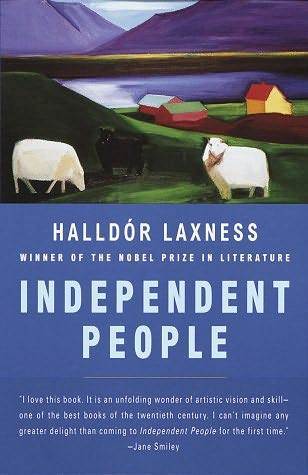
Always Home, Always Homesick is about the author’s love for Iceland and the continuing pull it exerts upon her. Kent references Haldor Laxness’ Independent Peopleseveral times, and to be honest, I think that it’s the only book that I have read set in Iceland. I read this 23 years ago, long before this blog and I can’t remember much of it except the bleakness of the sheepfarmer living his stubbornly independent life in a turf hut in the bitter cold.
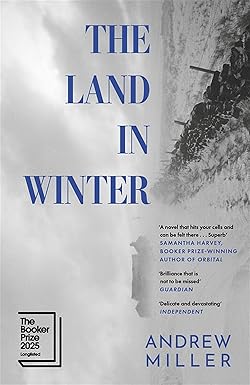
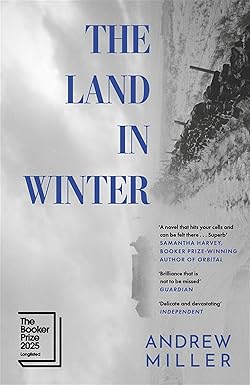
While we’re in the cold, I just recently read Andrew Miller’s The Land in Winter which is set in a small English village in the winter of 1962-3 when England was plunged into freezing conditions between Boxing Day 1962 until the spring of 1963. It’s a very domestic story of two neighbouring families, set in an exceptional climate event. It was shortlisted for the Booker Prize last year, and I think it would have been a very worthy winner (but it wasn’t). My review is here.
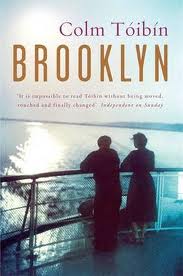
As denoted by the title, much of Hannah Kent’s book Always Home Always Homesick addresses the theme of homesickness. Could any writer have done it better than Colm Toibin with Brooklyn? The film was fantastic- perhaps even better than the book? My review here.
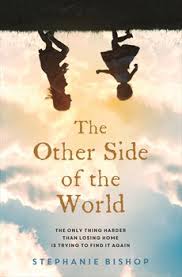
Homesickness going the other way is addressed in Stephanie Bishop’s The Other Side of the World a beautifully nuanced book about nostalgia, motherhood and the sense of ‘home’. Set between 1963 and 1966, English-born Charlotte has been plunged into rapid motherhood, long before she feels ready. Ground down by the sheer mindlessness and fatigue of dealing with babies, she acquiesces in her husband’s dream of emigrating to Australia and ends up in stark, hot, sun-drenched Perth. My review is here.
A very fiction-y Six Degrees for me this time but I’ve managed to move between Australia, Iceland, English, Brooklyn and Ireland.
Bukele: el señor de Los sueños I’m rather proud of myself for reaching the end of this series, spoken completely in Spanish (although I admit to having to read the Spanish transcript alongside it). I’ve been listening to it for literally months, with a long gap in between. I finally listened to Episode 6 today, where Bukele has stacked the court and congress sufficiently to obtain a consecutive period as president, even though this is explicitly outlawed in the constitution. There is a final Extra episode, where they discuss the way that Bukele has become a role model for other Latin American countries that want to ‘solve’ their problem with gangs. If you can speak Spanish, it’s really worth listening to. You can find all the Spanish episodes here.
The Daily El Nino is Back. And Worse Than Ever There’s a lot of talk about the upcoming El Nino event. This is a very clear episode featuring Chico Harlan, the global climate correspondent for The New York Times. He points out that the El Nino event takes place in a rectangle in the Pacific Ocean that stretches from the South American continent at Peru and across to Hawaii. Temperatures have already gone up .5 degree, and are expected to reach 2degrees- and maybe even 3 degrees- which makes it a mega El Nino. The effect is often seen in the years following the El Nino event (which is called El Nino because Peruvian native people noticed dead fish washing up on their shore in November/Dec and they called it El Nino de la Navidad – the child/son of Christmas). The problem is that we are facing a mega-El Nino at a time when we also have climate change, which is likely to make it more extreme. There is no scientific consensus over separating out El Nino from climate change: they may be affecting each other, or maybe not and we don’t have the records to prove whether El Ninos are becoming stronger. But perhaps 2027 with its mega El Nino will give us a preview of what is coming.
Journey Through TimeEpisode 36 The Art of Manipulation: The History of Reality TV Episode 2 Here Sarah Churchwell and David Olusoga return to the American Family program from the 1970s that we left in Episode 1. The family featured, the Louds, already had a rocky marriage and the program showed a family undergoing a divorce. Many people began judging them, and as the first Reality TV victims the parents felt that they had to engage with the criticism. However, their gay son Lance was the first Reality TV star. He was already out to his family, but the show put a human face onto a social phenomenon. The BBC produced a similar show in 1974 called The Family, but unlike the American show, they chose a working class family, exposing the family to an open season of judgement. The next iteration of reality TV was a program called Living in the Past which had groups of adults and their children living in an Iron Age village c.200 BCE. They stayed there for 13 months- something that would not be allowed today, especially with children, but the camera was only there one day a week. What changed Reality TV was technological change. Film was expensive, and American Family required a 25 hrs of filming to generate 1 hour of television, and it took one year to edit. Once magnetic tape was invented, it was possible to film 1000 hours cheaply to generate that hour, and it could be computer-edited quickly . In 1992 MTV used this technology to present The Real World, where they brought in a group of young people into a plush apartment in different cities for each of their 33 (!!) seasons. The casting was manipulated to evoke conflict, and there was a ‘confession booth’ where the participants were interviewed. But it wasn’t just the cast that was manipulated: the audience was manipulated as well. It became increasingly gamified, with challenges set and the format was syndicated throughout the world.
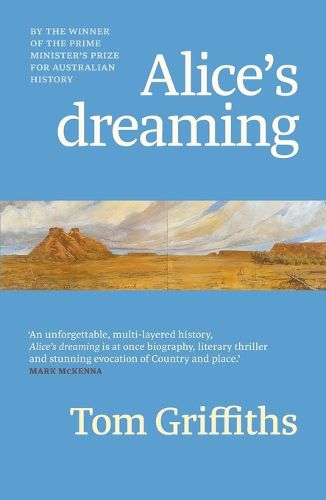
I don’t think that I’ve ever started a review of a history book with a spoiler alert, but in the case of Alice’s dreaming, I do. You might think that there could not possibly be spoilers in a history, but when a history is as multilayered and reflective as this one is, you’re best off reading it yourself without knowing what’s going to come next. A master historian- one of my favourites- Tom Griffiths takes us on a journey through anthropology, history, literary production, detective work, personal biography, family history and historiography all in one book. Like Griffith himself in writing this book, I found myself alternating between having my eyes opened, and then stepping back with skepticism and disillusionment, until being persuaded to join Griffiths where he sits historically now.
So don’t read my review- read the book yourself, and then come back to me.
2026, 320 p. & notes
SPOILERS
As a fourteen-year-old, the future historian Tom Griffiths came across a dusty book on the ‘Australiana’ shelf of his school library called Where Strange Paths Go Down. It was written by Alice Duncan-Kemp, drawing on her childhood memories from the 1900s growing up among the Mithaka people on Mooraberrie station in the Channel Country of outback south-west Queensland. Little was Griffiths to know that the information in the book that he held in his hands in 1971, and the other volumes published by Alice Duncan-Kemp, would be drawn upon (albeit not exclusively) when the Mithaka people finally gained Native Title over 33,752 square kilometres of Mithaka Country in 2015. Nor could he have known that he, himself, would be writing about Alice’s work in 2026.
Alice Duncan was born in 1901, one of three sisters and one brother who died of diphtheria in 1903, aged four. Her parents were Scottish-born William Duncan and Laura Davis, the daughter of a Sydney solicitor. William had managed pastoral properties in the outback, and in the early 1900s purchased Mooraberrie. Although he owned Mooraberrie, he always considered the Mithaka as the rightful owners and referred to them as the ‘landlords’. He died in 1907. Although Laura considered selling Mooraberrie after her husband’s death, she instead stayed there with her daughters. The children were brought up by First Peoples nursemaids, particularly Mary Ann who, with her head wrapped in a scarf and her long skirts, took the three girls on Country, with the other children who lived around the station where their parents worked either as domestic labour or as stockmen. When she was older, Alice joined the pastoral workers, both Black and white, camping out during mustering. Thus Alice was imbued with a strong sense of Country that never left her: observant about plants and animals, alert to colour and landscape, free to accompany the station workers on mustering work around neighbouring stations and waterholes, curious about the stories, practices and lifestyles of the Mithaka people but aware that some knowledge was kept from her.
The Mithaka considered Alice to be ‘twice-born’ because as a two-year-old she escaped drowning in the flooded Bulloo River when the buggy in which she was lying collided with a bauhinia tree in the swirling waters. When she was a little older, she was given a secret name ‘Pinningarra’ in a ceremony on a sacred flat-topped lookout, and she was called ‘Mingari’ in everyday life. At the age of five, she experienced a vision, with an authoritative voice declaring ‘You must go among these people and learn from, and about them, before it is too late’. She believed that she ‘was endowed with the breath of the Dreamtime’. (p. 60-61) She was to have a third revelation when she returned to Mooraberrie after two years schooling in Sydney and saw it all afresh (p. 159)
Part One of the book, titled ‘Alice in Wonderland’ draws on Duncan-Kemp’s writings to describe the world of Mooraberrie. In three chapters ‘Walkabout’ ‘Mustering’ and ‘Dreamings’, Griffith has crafted an integrated picture of Duncan-Kemp’s childhood from her works. The world that Alice describes is, indeed, a ‘wonderland’, with a bounty of food available, full of birds and studded with plants that burst from the soil when the water arrived, and criss-crossed by people. She describes the goose corroboree of the Pelican people at Kingadurka Lagoon, where 1000 magpie geese were killed as part of the ceremony- but importantly, only 1000 birds as these were breeding birds. She is told the Dreamtime stories, particularly that of Yammacoona, who Mary Ann told her was “Mother- all the same- you and me” (p. 65)
This Wonderland was not to last. In Part Two ‘War and Peace’, Griffiths steps into his Historian Shoes to locate Duncan-Kemp’s books amongst the historiography of Indigenous/Settler relations. Chapter 4 ‘Invasion’ places Mooraberrie station among the spread of cattle, “the shock troops of empire” (p. 56) as pastoralists followed the footsteps of white explorers who were themselves following the Aboriginal routes pointed out by their guides (p. 89). There was a link between the pastoralists of the Western District of Victoria and the Channel Country as the sons of the 1840s Port Phillip pastoralists followed their fathers’ example in ‘opening up’ the outback in Queensland and northern NSW. In fact, one of the Mooraberrie workers, Moses, had been taken down to Victoria and educated there (possibly at Scots College?) and could break into a clipped, English accent when he wanted to. Along with the pastoralists came frontier violence. There had always been violence on the frontier, but “on the Australian frontier, early violence was often intimate and personal. You generally knew who you were killing” (p. 95)
This wasn’t the case with the Native Police, described variously as a ‘paramilitary’ or ‘counter-insurgency’ (p. 95) force, comprised of men drawn from other districts, under the control of white commanders (see David Marr’s Killing for Country review here) who acted under the direct control of the Executive Council of the colonial administration (p.95). More than a dozen massacres are known and remembered in the Channel Country, targeting large ceremonial gatherings, transforming the waterholes -‘the precious jewels of the arid country’- into a grim rollcall of places of death.
Massacres are not bullet points on a map with great blanks in-between in spite of the ubiquitous settler folklore that ‘there were no massacres here.’ Rather, they were rivers of blood flooding the whole landscape, braided streams and channels of violence greater than we know and more horrific than we can imagine. War was everywhere at once and more than human, desecrating the Dreaming and eviscerating the ecology. Massacres were epicentres of disruption that generated aftershocks that are still felt today. (p. 100)
Into this tragedy, Alice Duncan-Kemp brings us two points of light. The historian in Tom Griffiths takes both these events, and locates them amongst other similar events that took place in other places in Australia.
The first event is the Debney Peace, a gathering that took place on a tract of Country, the ‘Common Ground’ of the Pharmaleechie Channel in May 1889, some twelve years before Alice’s birth, and thus unwitnessed by her. George Debney, the white leaseholder of Monkira Station rode 100 kilometres to participate in a Mulka-mukana, meaning ‘the vow of peace and the seal of goodwill’ orchestrated by First Nations people, and grafted onto an existing event in the Aboriginal calendar. It was possibly as much about the relationships between various First Nations clans as about dealing with the white intruders (p.109) but Debney played his allocated role in this highly orchestrated and ritualized ceremony as a pastoralist who was known for his protection of local people from the Native Mounted Police.
The second event was her description of Kooroongoora, a resistance cult that emerged around the turn of the century, where First Nations workers who had been ‘taken in’ by the pastoral stations were challenged to return to traditional practices and to resist the power of white culture and white law. There is no ‘smoothing of the dying pillow’ here: instead it is an act of rebellion and resistance, drawing on traditional law rather than the white man’s weapons.
The Kooroongoora sang and danced its way across Country; it was a cult, a millenarian movement anticipating social change; a travelling series of storytelling performances that strengthen the Law. It brought bird and wind corroborees and vivid historical pageants that were practised and perfected in secrecy among the sandhills and then performed with power and precision. (p.146)
Part 3 ‘Stranger than Fiction’ returns us to Alice and her writing- and here, things take a strange turn. Alice began writing her first book Our Sandhill Country in 1910, carrying a notebook with her, and creating a “midden of fragmentary scribblings” that she left for her descendants (p. 162). It was a book that would not be published until 1933, just before and as part of the wave of interest in outback Australia, exemplified by Walkabout magazine (1934-1974) whose tattered copies lingered in the doctors’ and dentists’ waiting rooms of my childhood. By now she was married, with her own children, and there was talk of selling Mooraberrie to Sidney Kidman, who had coveted it for years. Her next book did not appear for nearly twenty years, although she had conveyed her knowledge through correspondence with Dr L. P. Winterbotham, the honorary curator of anthropology at the University of Queensland, who peppered her with questions about rituals, ceremonies and beliefs. She was aware of the work of pioneering white women anthropologists like Daisy Bates, Olive Pink (see my review here), Ursula McConnel, Phyllis Caberry and Catherine Berndt. She was also part of the lineage of daughters of pastoral families who became champions of Aboriginal people, like Jessie Street, Mary Bennett (see my review here and here), Mary Durack and Judith Wright. Where Strange Paths Go Down was printed in 1952, followed by Our Channel Country in 1961. In 1964 a large combined volume of Alice’s first two books was released, with a rearrangement of the chapters and the insertion of drawings and illustrations drawn from all over Australia, mixing up rare photographs of Mithaka people that Alice would have known, with generic portraits from anywhere.
But it was her next manuscript, submitted to Angus and Robertson, that was to change the course of her career, and Tom Griffiths’ research. Although originally accepted for publication, it was then returned to her and her contract cancelled when similarities were noted between her work and that of the Laurens Van der Post (much admired to Prince and now King Charles). Duncan-Kemp did not challenge the claim and said that she had not understood copyright. Griffiths provides samples of Van der Post’s and Duncan-Kemp’s work side by side, and it’s quite clear that there are identical phrases in both. But who copied whom? Van de Post has himself been described as a serial plagiarist, liar and fabricator (p. 194) Did he draw on Duncan-Kemp’s work, or did she draw on his? Here Griffiths turns detective, looking at the circulation of Duncan-Kemp’s drafts. It seems that she drew on other authors here in Australia too, and the uncertainty about the provenance of her work has led to it occupying an ambiguous position: dismissed by some as scribbling, yet by others including Dr Winterbotham who described her letters to him as “the fullest and most scientific knowledge that I have received from any correspondent”.
So what is a historian to do? Griffiths, who has been deeply influenced as a historian by what came to be known as the ‘Melbourne School’ of ethnographic history could not be further from the Keith Windschuttle-led History Wars of the late 1990s, where errors and infelicities were seized on with glee. But parts of Duncan-Kemp’s work do lie at the intersection of history, politics and legal process. If her work is fraudulent, then that matters. As Griffiths points out “Detail matters very much in history…No detail, no history:
It is detail that imprints the story in memory and song. History, like ecology, is grainy and organic: it is earthed in locale and it’s about intimate communities and relationships, both visible and unseen. To glimpse an understanding of history’s workings, you need to build a whole picture, detail by detail. A single detail can change things, releasing chaos in the system. So yes, detail matters. (p.248)
And so, in Ch 9 he embarks on a slow reading of the whole of Alice Duncan-Kemp’s writings- published and unpublished, working page by page, with pen in hand. He draws maps; he records minor figures, he looks for collaborations, he checks again meteorological and astronomical data, and verifies Alice’s observations against more ‘scientific’ observations.
Part 4: The Way Home draws together family and country history. In a way, these chapters seem a little out of place- particularly the ‘Family’ chapter, but as Griffiths points out:
Under Australian law, the winning of Native Title requires family history. It requires proof of social and geographical continuity in a landscape of savage dispossession…In 2015 Native Title was awarded to Mithaka people after a decade and a half of hard work in archives and the bush, much of it documenting family history, discerning genealogies and mapping connections to Country. (p. 286)
Chapter 10 ‘Family” starts with Griffiths visiting Channel Country in 2000, hoping to meet Aboriginal residents of the district, only to be told that they had ‘disappeared’ and that any Aboriginal people who might happen to be there had drifted in from elsewhere. (In fact, we had a similar experience in Cobram in Victoria about 10 years ago when we were told with a straight face that there were no Aboriginal people there). In a rather stinging rebuke, he takes aim at the commemorative histories written by Peter and Sheila Forrest, including one for the Barcoo Shire Council in 2014, which Griffiths sees as a
…third wave of dispossession, following murder and removal: a tsunami of white history commissioned by government. Just as squatters seized land in a flood of registered documentary claims, so have shires consolidated conquest by publishing official histories (p.260)
And so Chapter 10 is a counter to these commemorative histories and the family histories of pastoralists by bringing forward the parallel family histories of Mithika families as a counterpoint to that of the Duncan-Kemp family. In these ‘other’ family histories, we see the history of Indigenous policy writ large. Bill Gorringe, who probably would have known of the Duncan family on Mooraberrie and possibly even met young Alice, was born under a giant coolibah tree near Eyre Creek at around the same time as Alice was born. His father, a white boundary rider on the rabbit-proof fence, had to struggle against the state authorities to marry Nuncaleer, a Mithaka woman who was removed from him several times. Bill was educated at Birdsville, and boarded at the Bluff, a station managed by young Celsus Morton, known for his casual violence and cruelty (whose story was told by his great-great grandson Rick Morton in One Hundred Years of Dirt– my review here). Within Bill’s extended family we see removals and exile to Palm Island, the fractionalization of identities into ratios of blood, and the geographical and social separation of pastoralists from their workers. Uncle Bill and his second wife Aunty Ivy became important teachers of culture to the Aboriginal diaspora, and the Gorringe family was interlinked with the Debney family of the Debney Peace.
Chapter 11 ‘Country’ returns to where Alice started with her descriptions of plants, insects, water and humans. Griffiths had visited it in 2009, when
I had to look at everything out of the corner of my eye. Every historical fact and insight had to be gained against the inclination of the pastoral landholders (p.306)
But by 2019, he visited at the invitation of Josh Gorringe as part of a research team led by Mithaka people, and he found that his “eccentric private interest had become a vital common quest” (p. 306) Alice’s identification of the numbers of original Aboriginal populations had been supported by records of Europeans visiting the regions; her archeological reports had been bolstered by archeological studies on Mithika Country. And so how does Griffiths himself locate Alice’s writings?
Alice was trying to write a world outside the text into text, and a world outside her culture into the history of her country- and, indeed, into the history of the world. It was an act of translation, fraught and difficult, imperfect, a labour of love (p. 235)…Alice struggled all her life to deal with the strangeness and immensity of her childhood experience, which was so out of kilter with her society and so readily denied by it. She wrestled with ways of understanding and depicting the Mithaka world and was in awe of its majesty. She was not in control of her material: it overwhelmed her. Every thread of culture she tried to follow was unending and so intertwined with other threads that she became entangled- not in a mess, but in a deeply complex, cohesive world undergoing traumatic change. A world she knew only partially and was challenged to encapsulate (p. 238)
Yes, she drew on other works, especially those of Lauren van der Post as a stylistic device to ‘improve’ her own writing; and yes, she co-opted the work of other anthropologists without attribution. Yes, she included things that she did not witness herself, although others did. But
…Alice participated in the most profound and important of Australian conversations: that between extraordinary First Nations individuals and curious newcomers like the Duncans who were identified as potential brokers of knowledge under threat. For Alice it was a respectful conversation about everything that matters- about life, cosmology and Country, about the earth and the stars, the past and the future (p. 320)
This is beautifully written, restrained, reflective book invites us into this conversation as well. I fully expect to see it up there next year on the various prize lists for Australian history. Read it.
When I think of ‘historical fiction’, I summon up women in richly brocaded gowns, like Anne Boleyn , or perhaps thin, grey-streaked victims of the industrial revolution stepping from the pages of a Zola or Dickens. I don’t really think of the 1960s as being ‘historical’ because I was there. But historical the 1960s certainly are, and that sense of a past that is somehow separate from us pervades this book.
The winter of 1962-3 was an intensely bitter one, with England plunged into freezing conditions between Boxing Day 1962 until the spring of 1963. Juliet Nicolson’s Frostquake (read my review here) describes the time perfectly, and made me even keener to read this Booker Prize 2025 nominated book. It’s strange that I have read so many books set in a future beset by a climate emergency, but here is one set in the past- and what a difference that makes.
The book revolves around two couples in a small rural English village. Dr Eric Parry is one of the two local doctors in the village . His late father had started work on the railways early, and he had worked his way up to superintendent of the Birmingham New Street railway. He is married to Irene, whose family are of a higher social status and whose sister Veronica lives in America. Despite Dr Parry’s surface respectability, he is involved in an affair with Alison, who lives nearby, with her wealthy but thuggish husband and son.
Across the fields is the second couple: Bill and Rita. Bill’s father was a post-war refugee, probably Jewish, who had made money under suspicious circumstances, including as a slum landlord. Despite his city upbringing and his private school education and largely as a way of distancing himself from his family, Bill had purchased a small, barely-productive dairy farm. He was joined there by Rita, who had worked as a dancer in a bar. She had her own complex background: working in a bar where the line between ‘hostess’ and prostitute was faint. A tawdry and circumscribed relation with the bar owner Eugene culminated in an abortion in a nondescript house where none of the women looked or spoke with each other. We meet her father, Martin, one of the patients at the nearby asylum, and we learn that he had been one of the photographers who had documentated the liberation of the Belsen concentration camp. He was the patient who found the body of Stephen Storey, a 19 year old man due for release, who had committed suicide using the medication prescribed by Dr. Parry, the event with which the book starts.
The war is not far distant in 1962. Buildings are still bombed out, there are still Anderson shelters in people’s backyards, and conditions are still straitened. This is not at all the Britain of Carnaby Street or the Beatles which lay just ahead. Belsen and WWII had shaken not only Martin Lee in the asylum, but the influx of refugees, like Bill’s father, and the presence of people with numbers tattooed on their arms reminded everyone of what they had just lived through, even if they had not fought themselves. In the same way that the snow falls on the countryside, muffling everything and making it shapeless, so too the knowledge – spoken and unspoken- of the evil that had been exposed is silenced, made secret and not spoken of.
The action of the novel takes place over a short period of time, starting on 7 December 1962 and finishing on 12 January 1963, with an undated epilogue. The focus of attention shifts from one character to another of the quartet – Eric Parry, Irene Parry, Bill Simmons and Rita Simmons (nee Lee)- and it did take me a little while to realize which character was central in each unnumbered, short chapter. In essence: the two women, both pregnant at the same time and neighbours, form a friendship, despite the difference in their backgrounds and social standing; Bill decides to approach his father for money to establish an automated mega-dairy to replace the family-bound nature of the small farm; Irene finds out about her husband’s affair and Rita returns to her old haunts and friends in the nightclub district.
These small, crystalline domestic dramas are overlaid by the historical detail of the times and a specific weather phenomenon. Miller has really done his homework here (aided, I wonder by Nicholson’s book?) and he captures perfectly the social practices (heavy smoking and drinking, even among pregnant women), the domestic decor of houses, the clothes, the entertainments and to a lesser degree the political climate of 1962/3. The quiet shutting down of transport, power and trains, evoking for present-day readers the COVID shutdown, is a historically accurate depiction of a climate disaster, without the theatrics.
I loved the combination of this minute detail alongside characters who are fleshed out, conflicted and flawed. I really enjoyed this book, and I’m looking forward to reading Flesh which pipped it for the Booker Prize in 2025. I think that, set in a time which is not often written about – that grey, straitened England of the early 1960s- this book is likely to stand the test of time. It’s a very quiet book, and all the more powerful for its restraint.
My rating: 9.5/10
Sourced from: Yarra Plenty Regional Library. It has taken about six months for the loan to become available.
Read because: I knew it was a Booker Prize shortlisted book from 2025, and I very much enjoyed Juliet Nicholson’s Frostquake.
Tocqueville Road TripEpisode 2: Against All Obstacles. Alexis de Tocqueville visited Sing Sing prison in the 1830s and in this episode John Prideaux, The Economist’s US Editor visits the prison in 2026. In spite of (or because of?) the American Dream that is supposedly available to everyone, Americans seem to be particularly censorious of those who choose the wrong path. Prideaux speaks with prisoners on the Sing Sing Prison College program which has reduced the 28% recidivism rate to only 2%. Tocqueville admired the spirit of voluntary organization in America in the 1830s, but nearly 200 years later this highly successful program remains in the hands of voluntary providers, and certainly does not extend to other states. I’m enjoying this series and this is the last free episode…will I splash out for digital access to the rest of it?
The Rest is History Continuing on with the series looking at the national anthems of teams likely to do well in the World Cup, now Dominic and Tom turn their attention to the German National Anthem with Episode 679 Germany: The Song Hitler Stole (Pt 3) . We tend to think of it as ‘Deutschland über alles’ but that is the first verse, that was sung during Nazi times, whereas the national anthem today uses the third verse. The tune was written by Haydn in 1797 based on a folk song and the words were originally God Save the Emperor (meaning the Austrian emperor) and it was known as the Austrian song. The tune was reused when German intellectual August Heinrich Hoffman wrote ‘The Song of the Germans’ in 1841- and note that ‘Germany’ didn’t exist at that time. The first verse ‘Deutschland über alles’ was an appeal for the separate German monarchs to combine to create one nation. Instead of being an incitement to domination as it was in Nazi Germany, it was a call for the ideal of Germany. Prussia had its own anthem- a direct rip-off of God Save the King and ‘The Watch on the Rhine’ was more popular. ‘The Song of the Germans’ just mouldered away until 1890s when it began to catch on, and it was taken up by WWI German soldiers. During the Weimar Republic there was debate over both the flag and the national song, and in a spirit of compromise, ‘The Song of the Germans’ and its first verse was adopted to appease the Right. The Horst Wessell song, which the Nazis sang alongside The Song of the Germans was an answer to the Internationale. After WW2 West Germany didn’t have an anthem at all, although Ode to Joy was used. In 1952 the third (not first) verse of the Song of the Germans was adopted. East Germany had a separate anthem but after the fall of the wall, it was decided to stick with the Third Verse version.
The History BureauPutin and the Apartment Bombs: Hindsight (Episode 7) Twenty five years after the bombings and this final episode of the series (there is one additional spin-off episode) returns to the journalists they have interviewed over the previous six episodes to ask: who do you think bombed the apartments? Some journalists (one called David- couldn’t catch the surname) think that the bombs were the work of experts and the only people who had that expertise were FSB. Scott Anderson who wrote the article called ‘Vladimir Putin’s Dark Rise to Power’ can’t prove it but he thinks that Putin was behind the bombings. Yevgeny Kiselyov who was involved with the television program following the failed Ryazan bombing thinks that the FSB was involved, and that there were other suspicious deaths as well. However, journalist Steven Lee Myers from the NYT thinks that it’s a conspiracy theory. Putin didn’t need to order the bombings, and the Chechen war had already started. He thinks that it was Chechen terrorists, who also captured theatres and blew up schools and planes. BBC’s Gordon Corera thinks that it’s plausible that it was the FSB but just doesn’t know. Andrew Harding, also from the BBC is puzzled by the failed Ryazan bombing and says that there is no clear answer. He has spent time with Chechan leaders, and believes that if an opportunity presented itself, Chechnya would take it, so it’s not impossible. But what if it was BOTH an FSB and Chechen act? Steven Lee Myers thinks that the FSB was so corrupt that it could collaborate with terrorists if the price was right. Even if we had proof now, 25 years later, nothing would change. Jeremy Vine of the BBC reminds us that we need to remember the context- the West wanted to have a positive view of Russia’s future. But the bombings aren’t forgotten: at a 2024 Crocus City Hall attack, ‘Ryazan’ and ‘sugar’ surged as search terms again. So the story is still alive.
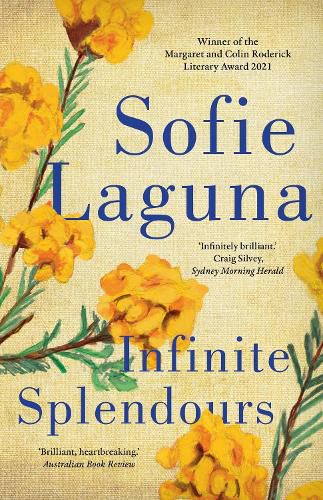
I don’t know why I read Sofie Laguna’s books: I feel restless and anxious the whole way through them. But actually, I do know why I read her- she is masterful in entering into a vulnerable child’s mind and putting the pain and precariousness of the situation onto you, as a reader. But they’re not easy reading.
Ten-year-old Lawrence and his brother Paul live with their mother on a large block at the foot of the Grampians in Western Victoria. Their father had died as a pilot during WW2 and their mother has her own childhood traumas. The book starts in 1953 and Laguna spends nearly 100 pages establishing the rural simplicity of the brothers and their innocence in their small country house with the mountains of the Grampians- especially the large Mt Wallis that dominated the chain of mountains – a constant presence against the sky. Lawrence is a bright boy and a good artist; his brother Paul less so. Their mother is strict in the way of 1950s parents, and she works as a bookkeeper at the nearby dairy. Their closest neighbour is Mrs Barry next door, who sees the boys in the backyard as she tends her vegetable garden.
Their lives have been changed, though, by the arrival of their Uncle Reginald, their mother’s brother, who had been absent for many years. Their mother and Reginald had had a disrupted childhood, and their mother had always credited Reginald with her survival- although her survival from what she never says. Reginald and his mother are like two rather creepily affectionate teenagers, dancing to the record player in the lounge room, drinking Teachers whisky at night. Reginald encourages her to go out dancing, offering to mind the boys. Paul is wary of Uncle from the start, and wants him to leave. Lawrence is flattered by Uncle’s interest in him and his art, and Uncle starts giving Lawrence little gifts, “as our secret”.
You know where this heading, and it does. After 130 pages, Lawrence’s life ruptures.
He is a changed boy. He begins to stammer, he falls ill and unable to put into words what has happened, he lashes out as his brother Paul, whom he wanted to protect from Uncle. Uncle is long gone. He takes off, despite his sister’s pleadings to stay, and she is left crushed by his disappearance. Years pass, and instead of the bright future that beckoned, he takes up a job at the dairy where his mother works, where he is mocked by the other works for his stammer.
It is at the dairy that, as a 24 year old, he encounters ten-year old Colin, the son of one of the workers. With the same sense of sickening inevitability that you felt when reading of Uncle’s increasing attention to Lawrence, you see him repeating the same pattern with Colin. Laguna snatches her characters from danger at the last minute, although Lawrence goes on to become a recluse, holed up in his childhood home now that his mother has died, dependent on his brother Paul to negotiate with the world that has no patience for his stammer. He is isolated in the countryside now that his neighbour Mrs Barry has died, with only his love of painting to sustain him. He paints obsessively, painting Mt Wallis over and over, and filling the house with canvases.
More years elapse, and we meet him again in 1994, now in his sixties, dirty, disturbed and isolated. When a new family moves into what was Mrs Barry’s house next door, he is furious at the intrusion of other people into his life. The mother, Rachel, is friendly but wary of their strange neighbour, and her adolescent daughter Tanya is mocking and derisive. Ten year old David, however, is drawn to Lawrence and once again as a reader you know what is going to happen.
As in her other books, Laguna pulls the story away from absolute despair at the end, although possibly less so in this book. As with the other books, it is told in the child’s voice and this stunted, damaged voice is maintained even though Lawrence is now over sixty years old. It’s strange: Sofie Laguna spoke at a recent Ivanhoe Reading Circle, and her bubbly rather dramatic persona belies the vulnerable and hurt children that she writes about. Alongside fellow Australian author Sonia Hartnett, who also writes about children growing up in brutal worlds, I wish that both these talented, lyrical writers could break out of this child-misery genre and write a completely different book. Perhaps I am more critical of this book because I only recently read Laguna’s The Choke (my review here) and the two books are too similar.
It is risky for a writer to write from the point of view of a child abuser, even though she sympathetically depicts Lawrence as a damaged, tortured soul. Nonetheless, as a reader you come to fear for any child that comes into his orbit, despite your knowledge of Lawrence’s background which has caused him to be this way. I started to feel a bit as if Laguna was manipulating her readers: she holds the tension for a long time about Uncle’s intentions for Lawrence, and having not one but two ten-year-old boys come into Lawrence’s orbit is a form of ratcheting up the tension, only to release it, then repeat. I know that Lawrence’s painting was a form of displacement, but Laguna’s descriptions of his works was laboured and overdone.
I don’t know what to think about this book. It is beautifully written: it is a sensitive topic written with insight and sympathy (too much sympathy??). But I think that the author played too much with the reader’s emotions and attention, and I don’t know if I want to read another of her books if it is like this one. Not for a long while, anyway.
My rating: 7/10
Read because: Rosanna Readers Book Group
Sourced from: Yarra Plenty Regional Library Book Group Program.
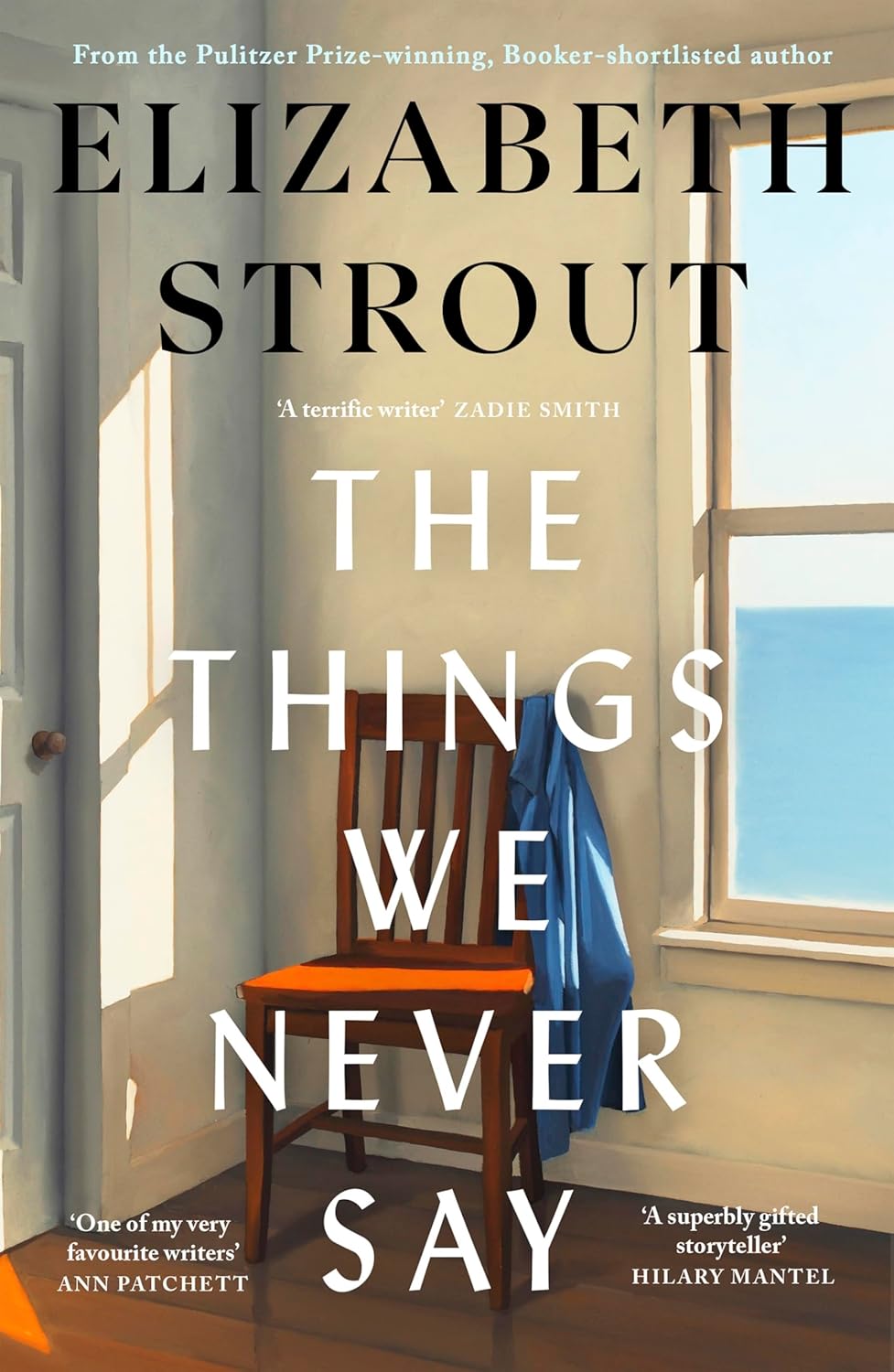
Much as I love Elizabeth Strout, there is a sameness about her books with their liberal-voting middle class characters and East Coast US setting. The Things We Never Say falls into the same category, and as with her other books, the wisdom and compassion that she shows to her characters seem to reflect the life-stage that the author is at herself. In this regard, I tend to see her as a slightly more literary Anne Tyler.
Artie Dam is a middle-aged high-school teacher, married to his wife Evie for over thirty years, with one adult son, Rob. In many ways, he has fallen on his feet financially, as he and his now-deceased sister Maria were the children of a working-class couple, his mother suffering from mental illness. His wife Evie, on the other hand, was the daughter of a wealthy family and now Artie and his wife live in the beach-side house that Evie had inherited from her parents. Not everything had been easy though: Evie had had difficulty conceiving, and their son Rob was driving in a car accident that killed his passenger Heather Morrison. It is probable that Heather had been giving him a blowjob while driving, but neither Artie nor Rob divulged this during the police enquiry. And now, over ten years later and despite career, house and family Artie is unhappy to the point of considering suicide. It is only when he nearly dies in a boating accident that he realizes that he doesn’t really want to die after all, and takes up his life with a renewed sense of purpose.
However, all of this is to be ruptured when his son Rob shows him a letter that Rob had received from Reginald MacDonald, a thin and humorless neighbour with whom, along with his raucous wife Flossie, the family had socialized before Reg died and Flossie moved to Florida to live with her daughter. The letter to Rob, written on Reg’s deathbed, divulged that Reg was actually Rob’s father, conceived after a three month affair after many years of Evie’s infertility. Artie had never suspected in any way that Rob was not his son, although once he found out it became clear that Rob bore absolutely no resemblance to him. Evie, unaware that Rob had received this letter from his biological father, continued the pretense as she had for the past twenty-five years.
Artie is torn between telling Evie that he knows, but subconsciously wants to punish her by holding this knowledge against her. Rob does not tell his mother either, and indeed the relationship between Artie and Rob deepens with the shared knowledge of this betrayal. For a while it seems that infidelity is everywhere. One of Artie’s students Danny Marino is struggling with his own parent’s breakup which, by coincidence Artie learned of when Danny’s father, a plumber, came to fix a tap and ended up sobbing sitting on the bathtub, ruing his ignorance of the affair. A teaching colleague at school, Anne Merrill, confides in Artie that her husband was again ‘straying’, having had an affair some years earlier.
Meanwhile, despite feeling that he has all of this under control, Artie is acting out of character too. He begins shoplifting, but when caught stealing two shirts in a menswear shop, the owner does not report him to the police out of respect for Artie’s position as a schoolteacher. This shoplifting is mirrored by the lightfingeredness of Rachel, a new girlfriend of Rob’s after Rob’s own marriage faltered with the pianist Francesca, whom both Artie and Evie liked much more.
Artie is increasingly struck by the vapidity and hollowness of the interactions of the people around him.
So blind we humans are- so blind. To each other and to ourselves, moving through life as though through shadows, putting out a hand in the dark and thinking we have touched someone. And maybe we have…But mostly we travel through life unsighted, grasping only the smallest details of one another’s selves, including our own. Thinking all the while that we can see. (p. 57)
Artie does see his students, as he negotiates their classroom politics. I must say that, for me, the classroom sections were imbued with too much Happy Days/ Donna Parker 1950s glow, with none of the racist and hormonal posturing that pulsed through the classrooms I taught in, and which I am sure has not disappeared today. But as the book goes on, he becomes increasingly jaded with teaching and the lack of authenticity between people.
As the book progresses, Strout begins to intersperse flash forwards in parentheses, telling us as readers that in two years someone will be dead, or that Rob will be out of a job and living in Europe. I quite enjoyed this little bit of literary time-travelling, which seemed less prominent in the first half of the book. The book does have chapters, but they are comprised of consecutive small sections, sometimes separated by asterisks, sometimes not.
By the end of the book, he returns his mind to the question that he had asked earlier: “Why don’t people ever say anything real?”. He has just learned of a neighbour’s attempted suicide- something that he could very easily have done himself in the opening chapter of the book- but now he knows:
…now he knew why. Because to say anything real was to say things that nobody wanted to know. Or if they wanted to know, they would not care in the right way. Or even understand. It was a private thing, to be alive. He understood this now. (p. 180)
The book is very contemporary, dealing with the second election victory of Donald Trump. Strout’s liberal (small-L) political leanings are clear to see, and she does capture well the polarized nature of American society right now. This book is longlisted for the Booker Prize and I’m almost certain that it will be shortlisted. I do wonder about politics in books, though, and whether this will cruel its chances. Literature is always political, but not always so overtly, and authors have the right- even the responsibility- to speak out. But that’s easy when you share the political views that are being expressed: would I feel the same if the book was expressing a conservative, rightwing or libertarian political stance that is the antithesis of what I believe? Would I still see the literary value in the book, or would it distort my reading? After all, I’ve never read an Ayn Rand book, and very much doubt that I would, on principle.
I enjoyed reading the book, but that was because I saw myself mirrored in it: liberal, middle-class, middle-aged (who am I kidding?) It was an up-scale form of comfort reading, but I think that a Booker Prize winner should be more than that.
This book is the third in a trilogy by Douglas Stuart, the first being the Booker Prize winning Shuggie Bain (see my review here) and Young Mungo. As with his debut novel, there’s expectations that this is a Booker Prize contender – we shall see – and without having read his second book, I can see many parallels between Shuggie Bain and John of John.
In this book, Stuart changes the setting from 1980s Glasgow to Harris, an island in the Outer Hebrides, Scotland in the 1990s. The book opens with young Cal Macleod returning home from art school, having been summoned home by his father, John, on account of Cal’s grandmother’s increasing ill health. It is not a willing homecoming. Cal, with his long dyed hair and op-shop clothing resents returning to the smallness of Harris and his father’s violence, while his father John is dismissive and even ashamed of his son’s appearance.
There are many dyads in this book. There’s John and his son Cal: the father a strict Free Presbyterian deacon, sheep farmer and cottage weaver who generates cloth for a crafts enterprise which insists on traditional methods in an almost pre-Industrial ‘putting-out’ system; his rebellious but cowed son John-Calum (Cal), hiding both his homosexuality and his homelessness from his father. There’s John and Ella: John still living on in the cottage belonging to his ex-wife; the elderly Ella staying on in the house with her former son-in-law, whom she dislikes, in order to be there for her grandson Cal when he returns home briefly. There’s John and his neighbour Innes MacInnes who, unknown to Cal, have had a clandestine homosexual relationship over many years, which fractured John’s marriage when his wife Grace discovered it, leading her to leave her home and son Cal and establish a relationship and new family with John’s brother on the other side of the island. There’s Cal and Doll; growing up together on Harris, having shared an adolescent homosexual relationship which Cal would like to re-establish against Doll’s reluctance.
Secrets and shame abound. John dreads news of his relationship with Innes getting out and jeopardizing his role as upright Presbyterian in his church and in the eyes of his son. Cal hides from his father his own homosexuality and the dire straits he was in as an art-school student on the mainland. Grandmother Ella hides from everyone her own understanding of the fraught dynamics of the family.
As with Shuggie Bain, there is a feeling of ‘stuckness’ here that leadens the book. As a reader you find yourself wondering if and when any of these characters are able to move beyond their shame and constrictions. Religion is a suffocating influence and John’s love for his son is manifested through violence and belittling. And as with Shuggie Bain, I felt unsatisfied by the ending, which seemed too tidy. Cal returns to university; the single mother Isla, who everyone expected Cal to marry, takes over the cottage, and Innes, and then John, finally get the courage to live their own lives beyond the island. All too neat, for me. Perhaps Stuart himself cannot bear to leave his characters in their predicament.
As well as his depiction of the paralysis of the relationships between the main characters, for me the real standout of this book was his description of landscape. I felt cold just reading it and it seemed just as wet, windswept and dour as ‘Shetland’ and other northern television shows I watch. The relationship between John and his namesake lie at the heart of the book, but I think that it’s the setting that I will remember best
So, Booker Prize shortlist?- yes, I think so. Will it win? – for me, a little too much like Shuggie Bain
My rating: 8/10
Sourced from: Yarra Plenty Regional Library
Read because: I’m in a group which is following the Booker Prize
Journey Through TimeThe History of Reality TV Episode 1: Why We’re Obsessed with the Traitors. Well I’m not- in fact, I think that Traitors is only just reaching Australia now? This episode from October 7 2025 starts with historian David Olusoga talking about why he agreed to appear on the UK version. We tend to think of reality TV as a recent phenomenon, but it actually started with radio in 1947 with Candid Microphone, hosted by Allen Funt. This spawned Candid Camera, which I remember, which was made possible by 16mm cameras. The first ‘fly on the wall documentary’ was An American Family which heralded the convergence of reality TV and documentary. Filming began in 1971 for PBS and it featured the Louds (hah!), a couple with their five children . The 1970s were a period of social experimentation (e.g. the Milgram experiment) and the Louds became the first reality TV stars.
The Global Story I don’t normally list the Global Story episodes that I listen to because they’re often quite topical. However, the episode The US-Saudi Arabia Nuclear Deal: Could it all go wrong? deals with what seems to be the dead-in-the-water nuclear deal that Trump decided to make conditional on Saudi Arabia signing up to the Abraham Accords, which I can’t see happening. However, it goes back in time as well. BBC security correspondent Frank Gardner points out that it was the United States that gave Iran its first nuclear reactor back in 1967. Other Middle East countries are likely to feel miffed: Egypt, Türkiye and UAE don’t have enrichment facilities. The differing fates of Libya and North Korea show the difference between holding a warhead (or 60 warheads) or not.
The episode Is Cuba Waging a ‘campaign of subversion’ against the US? challenges the 100 page report issued by the US. State Department.Michael Bustamante, a professor of history at the University of Miami discusses the report, which sees Cuba as the capital of 21st century capitalism. Although Cuba has a long history of support to left wing and communist movements, especially through the 1966 Tri-Continental Conference (Africa, Latin America, Black nationalism), and even though it has had high level espionage capability in the past, Bustamante does not agree that Cuba is the existential threat to the United States that the report suggests. By the way, I recently saw a good YouTube documentary called Cuba After Castro: The Island in the Crosshairs. It only premiered in June 2026 and it features Miguel Díaz-Canel, Cuba’s first leader born after the Revolution. It goes for about an hour and a half, and it’s really worth watching.