Plenary Panel: Big Questions in History- History for Life
In introducing this plenary session, Penny Russell enumerated a slew of Big Questions in History, but they boiled down to “what is the relevance of history to contemporary society?” Six historians responded, ostensibly in ten minutes each, so of course they only had time to approach the question from one perspective alone.
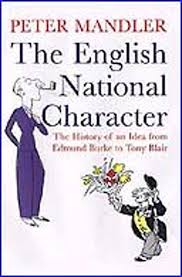 Peter Mandler, who as an overseas visitor has limited experience with Australia, took a historical approach to history in the United Kingdom (as one might expect a historian to do!) The 18th century gentlemanly use of history and classics for diplomatic purposes gave way in the 19th century to the use of history for nation building, the invention of tradition and commemoration: functions it still fulfils today. The 20th century saw the rise of subaltern histories and an emphasis on place, family and the individual. He noted the popularity of military history in Australia aimed at a middle-aged male market, whereas in the United Kingdom there is the enduring popularity of Tudor history and histories of everyday life in different historical eras.
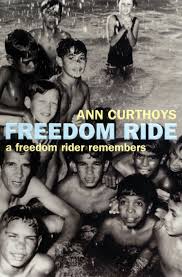 Ann Curthoys spoke on historians and public memory, using her own experience as the author of a book on the Freedom Ride of the 1960s, which she attended as a non-Indigenous participant. After being almost forgotten in the 1980s, this event has been more recently memorialized in books, film, radio and re-enactments. She has found her book, and even more importantly, her diary as a 19 year old student, used almost as a ‘guide book’ for Freedom Ride commemoration- becoming by default a keeper of public memory.
 Mark McKenna looked to Manning Clark, the subject of a biography he has written, and questioned why he was so successful in connecting with a larger audience and popularizing Australian history. Part of it, he thinks, was his way of speaking, but there was also a strong element of self-promotion, where his telling of the story of writing his six volumes of history became part of that history. While we don’t need another Manning Clark, especially in the diverse and unpredictable media of today, the importance of communication is paramount, as is the “disciplined imagination” of history.
 Catherine Freyne of the much-loved and sadly missed ‘Hindsight’ program on Radio National reflected on her experience at this AHA, the first that she has attended as a paid-up delegate. In her previous career as presenter of ‘Hindsight’, she had trawled through the AHA program, contacting people for future program. She posed the question: much-loved though ‘Hindsight’ was, would it meet the criteria for relevance? Podcasts on the RN website have given programs a long shelf life and can provide the references and further reading that an audio program cannot. Historians don’t need to rely on radio networks: they can do it themselves (although she did play a cautionary clip on the dangers of production clichés in podcasting!). She now works with the City of Sydney, which has made a strong investment in public historians, and a marketing study they had conducted had highlighted the market segmentation of history (did I detect a collective shudder?) into skimmers, delvers and divers. She particularly noted the power of alternating anecdote and analysis that historians use in storytelling (e.g. in This American Life) and referred in particular to Maria Tumarkin’s insightful essay ‘This Narrated Life’.)
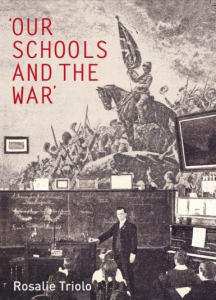 Rosalie Trioli spoke from her perspective as a lecturer in history method in teacher preparation courses. Some students come to history method as former history students themselves: others have had no experience of history in the later years of school at all. She spoke of the importance of the teacher who sees history all around them in conveying a love a history to their students. The reality is that few history students taught by such teachers will actually visit museums, historical societies etc, even though we might wish that they will. But history as a subject develops transferrable vocational skills, is the basis of lifelong learning and critical literacy and can lead to informed leisure choices (e.g. not graffiti-ing the local war memorial!) Teachers need to be more pro-active in defending the place of history in curricula.
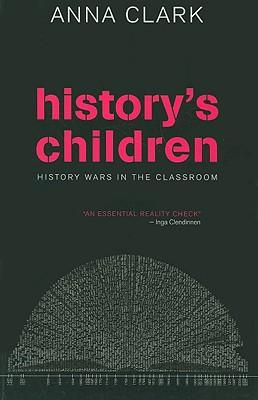
 Anna Clark carried on from this, based on her study of history in schools. She noted the popularity of family and personal history, rather than the periodized, political history that is deemed ‘good’. There has been an explosion of the historical market, and yet at the same time, we bemoan ignorance. How does nostalgia affect history?
Unfortunately there was a lot here, and too little time to unpack it!
Quakers and Missionaries
The two speakers in this session are collaborating in writing a work on the Quaker transnational settler, Thomas Mason. It is a pity that they presented in the order that they did, because Kristyn Harman’s paper gave a fuller picture of Thomas Mason, whereas Eva Bischoff’s presentation addressed methodological questions that made more sense once you had the background information about the man. So, I’ll reverse the order in which they spoke for this summary.
 Kristyn Harman came across Thomas Mason, also known as ‘Quaker’ Mason when writing her book Aboriginal Convicts, which dealt with Indigenous convicts sent from Cape Colony, New Zealand and from within the Australian colonies themselves to Van Diemen’s Land, a gazetted penal colony which could receive convicts from across the empire. Mason had been resident in New Zealand, and when a group of Maori prisoners were transported to Van Diemen’s Land, he was called on as an ‘expert’ in dealing with them. He himself had left New Zealand at much the same time, feeling uncomfortable about settler/Maori conflict. Ironically, (given their own frontier history) Van Diemen’s Land settlers were outraged by this too, and the Maori prisoners were visited by a stream of curious supporters including the artist Prout who made several striking portraits of them. Mason advised that the Maori prisoners should be kept separate, be given Christian education and not restrained in any way, and kept busy. They were sent to Maria Island Probation station (a relatively mild penal settlement). Four of the five returned (one died; his body repatriated to New Zealand in the 1990s). When the prospect of gazetting NZ as a penal settlement arose, Maori themselves objected. In 1851 Mason returned to New Zealand, bringing fruit trees and has become noted for reshaping both the physical and cultural landscape.
Eve Bischoff is also writing about Thomas Mason, but in a different way. Marsh, as a Quaker was a literate and prolific correspondent, and she has already been working on an associated project about Quaker settler families. There are two related approaches that can inform such work: the network approach of mobile, interconnected elite families in general (Laidlaw, Lester) and the individual or family approach used by, for example, Linda Colley in Elizabeth Marsh (see my review here) or Foster’s recent Private Empire. She notes, however, that the biographical approach rests on the European idea of the individual and identity, and that it conceptually favours coherence and continuity and thus loses non-linearities. She then turned to the methodology of microhistory, which involves: 1. detailed analysis of actors 2. reconstruction of their social roles; 3 critical reflection of the narratives employed by actors and researcher (this is where it diverges from close reading) 4.play with scales of reference (Levi On Microhistory 2001). As she explained this, I wished that I had heard this paper about six months ago because they I would have had a name for what I have been doing!
And then, because the session finished early, I slipped into the next room to catch the last paper in the History on Screen session and to hear Clare Corbould speak on Roots, the book and miniseries and the correspondence it generated from readers to both Arthur Haley the author and David Wolper, the producer. Roots was published in 1976 and the miniseries was shown in 1977. It was a television phenomenon. It was screened on consecutive nights (largely from a fear that it would tank) and thereby became an intense, shared, national experience. The letters received from both white and black viewers, of varying educational levels and diverse experience in writing such letters, had been collected in David Wolper’s archive, which has since been closed. Many letters from white Americans either emphasized the ‘understanding’ that the program had engendered amongst viewers- although for many writers this remained attitudinal rather than political. Others, however, seeing America under siege at the time (oil shock etc) pointed to the need for whites and blacks to work together and criticized the program for raising issues that should be left untouched. Other hostile white letter writers felt that the debt had been paid because their family ancestors had fought in the Civil War. African American writers pointed out the fear of redress on the part of whites. The program had a huge effect on interest in family history. Armenian Americans began lobbyingd Wolper to make a similar series for their ethnic group- but he went on to make- wait for it, The Thorn Birds!
Colonial military cultures
James Dunk returned to a well-furrowed field in examining the Rum Rebellion, (now more properly called the 1808 rebellion because it involved more than just rum) but from a very different perspective. He did not stop at the governor under the bed, or the court martial, but instead followed the protagonists in their later life and found a prevalence of suicides, depression and anxiety. He argues that this madness (“the Botany Bay disease”) should be seen as part of the story- and indeed, part of the strain of the colonial project itself, as well as the moment of rebellion.
Trish Downes turned to the convict soldiers and sailors who were involved in the exploratory expeditions of men like Oxley, Sturt and Mitchell. She notes the attention to Irish and Scots convicts as a sub-group of the convict population, but even more numerous were military convicts- men who either had been, or were still, serving soldiers and sailors who had been convicted for a variety of crimes including desertion, mutiny and theft. Although tried in military courts, transportation was not an approved sentence, so the offence needed to be reassigned so that the punishment could take place. Although transported, they brought with them their military and technical skills which were highly valued by explorers. Some military convicts volunteered for expeditions in the hope of regaining their dignity; others became ‘career’ expeditionists, embarking on multiple expeditions often with the same leader. There was a painful irony in choosing ex-sailors to carry a boat into the interior in the quest for the inland sea. Despite the opportunity to do so, only one absconded.
Finally Paula Byrne (whose work I have often read) spoke of her study into the sensibilities of groups of people, rather than individuals, using letters, journals and documents to examine the language they used to describe and define themselves. This is an aspect of her work on the family and associates of Ellis Bent. She identified four features of this group identity amongst the military. First, the concern for money. Soldiers enriched themselves from booty, and NSW did not offer such opportunities (although it did offer land). Officers sent to the colonies faced years without prizes. Second, violence was an inherent part of a shared military identity. Sydney Harbour was a fortified garrison; they enjoyed hunting as a leisure activity; they used military language in describing their work. Third, they focused on entertainments rather than ‘things’ (as settlers tended to do). Finally, they often made use of the classics in their letters, an affectation amongst military men. They were conscious of conversations (perhaps on the look-out for duelling opportunities) and their women were known for being loud.
Colonial Imaginaries
This was a rather diverse group of papers. Judith Jonker described the 1854 Sydney exhibition, one of a series of local colonial exhibitions held in preparation for the Paris International Exhibition that was to be held in the following year. There had been an earlier exhibition in London during 1851 but the Australian contribution had been a private venture, and the exhibition was ordered by the simplified classifications based on the old rubric of ‘animal, vegetable, mineral’ and arts and manufactures. This Sydney exhibition used the same classifications, although the Paris International that followed adopted new, more complex classifications of exhibits. Advertisements were placed in the Sydney newspapers, inviting collectors to make their geological collections available for display, and Jonker examined a number of these exhibitors. Rev William Branwhite Clarke was the major exhibitor, but it was also an opportunity for a small number of women exhibitors to make their collections available as well (even though there were no female naturalists in their own right). Many more women participated in the arts and manufactures section, which was a safe public place to display female activity. The geological displays were accompanied by a catalogue containing essays which enhanced the reputation of Australian science.
Nick Brodie gave a fascinating presentation on work he is doing in collaboration with Kristyn Harman on Governor Davey’s Proclamation to the Aborigines- you know the one, with diagrams showing that if whites kill natives, they will be executed, and that if natives kill whites, they will suffer the same fate. But do we know the Proclamation? He argued convincingly that we think we know more about it than we do. There are seven ‘original’ boards, although the one that is best known was supposedly donated to the Tasmanian museum by a man working at the Supreme Court House in 1858. A copy was displayed at the Melbourne Intercolonial Exhibition of 1866, but it showed a different date and had a different reported conversation at the bottom of the poster. An oral history at the time led to its designation as being Governor Davey’s Proclamation, but this has since been muddied by an attribution to Governor Arthur. Then there is yet another poster that has been described but not found, depicting a far less even-handed legal approach and conveying a different message entirely. All in all, fascinating detective work- and I’m keeping my eyes peeled for the journal article!
And the last presentation for the day was by Michael Warren. He located his question within the long-running debate over the extent to which settler colonialism constituted genocide. However, his interest is in the settlers’ fears of ‘depredation’ and how they presented themselves as victims of Indigenous violence in order to leverage official protection. In particular he referenced an article in the Sydney Gazette that warned that there would be an attack at the next full moon, when the Jervis Bay aborigines would join forces with local groups to annihilate the white settlers. He is working within an emotional dialectic, and a ‘history of the emotions’ approach, and taking a comparative approach utilizing both New South Wales and Van Diemen’s Land.
And so, thus ends Thursday.