Category Archives: Uncategorized

Missing in Action

Oh dear, my blog is falling apart.  I haven’t written a ‘This Week in Port Phillip 1841’ entry in weeks; I have half-finished reviews languishing in the ‘drafts’ folder for so long that I can barely remember the book and the 1000-post milestone came and went without fanfare.

Why? you may ask. This is why.

IMG_2359a

IMG_2356a

After the last little doggie died we decided to replace the carpet. We had had four little doggies in the house and the little gentleman dog (who- believe me- was NO gentleman!) had made his presence smelt.  To replace the carpet, we had to move all the bookshelves and if we were going to do that then we may as well have the house painted at the same time.  And get new downlights.  And buy  new blinds to replace the verticals leading out to the deck. And clean the other curtains. And wash the windows properly. And buy a new couch.

My father, who lives in our back unit, is away on a cruise so it seemed an ideal time to  get all this done. So we’ve moved into Dad’s unit temporarily and piled up all our furniture and books in the rumpus room in the middle.

IMG_2355a

Steve is looking a bit startled, working on his computer in the freezing cold, reflected in the dressing table mirror

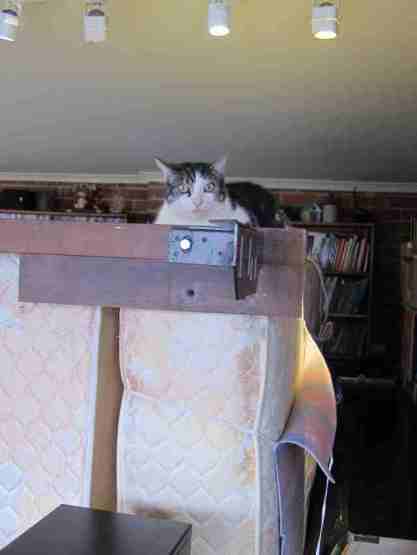
And the cat is not impressed one little bit.

IMG_2344a

I think I might join her, actually.

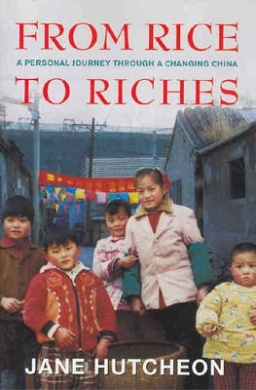
‘From Rice to Riches’ by Jane Hutcheon

Hutcheon

2003, 355 p

It’s odd how companionable one comes to feel with an ABC foreign correspondent who has been chatting to you from the television over many years. ‘Jane Hutcheon, ABC, Beijing’ sounds very familiar, as does ‘Barbara Miller, ABC, London’ or ‘Martin Cuddihy, ABC, Nairobi’ (and will I ever forgive my son for not introducing me to him when he was right there? Probably not.) I can remember feeling quite upset for Eric Campbell, seeing him so visibly distraught after the death of his camera man in Iraq in 2003.

Jane Hutcheon, with her cheeky smile, and respectful curiosity (on full display at the moment in her current program One Plus One) has long been one of my favourite foreign correspondents. I’ve been aware that this book was available some years ago, and I’m surprised (and rather disconcerted) to find that it was published thirteen years ago!

Jane was born and grew up in Hong Kong, the daughter of a Eurasian mother and an Anglo-Celtic father whose family had been involved in colonial trade in Asia since 1851. Both parents were journalists. As a young Asia Television (Hong Kong) reporter, she covered the handover of a captured Taiwanese China Airlines crew in 1986 and the first visit of a British sovereign to China later in 1986. By the mid 1990s she was the Australian Broadcasting Corporation’s China Correspondent, covering the return of Hong Kong to China, the rise of Falun Gong and the Tenth Anniversary of the Tiananmen Massacre.

Her appointment as the China Correspondent for the ABC, then, combined personal and professional curiosity and in the early chapters of the book she combs over her family history ties as a way of integrating her own family story with the larger narrative of Chinese history from the mid 19th century on.  As she says near the end of the book:

When I went to China as a correspondent I hoped to discover what the essence of ‘being Chinese’ was all about, to understand why my ancestors had been drawn to its shores more than one hundred and fifty years ago…Though the world is now a different, much more convenient place, I tried to live the adventures of my ancestors.  Eventually, I began to love living in china for less deep-rooted reasons. It was like discovering a rare, antique carpet. The first time you look at it, it appears old and dusty. But after brushing off some of the dust, you notice amid the wear-and-tear the incredible colours that have stayed vibrant, despite the passage of time. After admiring the colours, you notice intricate patterns that tell a story about where the carpet was made, the life of its owner, and how it came to survive to the present day.  Soon, the carpet doesn’t look so old and dusty anymore; it becomes intriguing. (p. 354)

Hutcheon has organized her book by food: Pig’s Face, Slippery Noodles, Shanghai Stir-Fry. The names are a (very) little pun on the more serious theme of each chapter. For example, she deals with her own family history, the Opium Wars and the history of Hong Kong in her chapter ‘Colonial Chop Suey’. She deals with China’s strained relationship with both Taiwan and Tibet in the ‘Renegade Dumplings’. In ‘Spiritual Dim Sim’ she examines Christianity, the Zhao Tianjun temple, Falun Gong and Qigong, while the ‘Big River, Little Fish’ chapter deals with the Three Gorges Dam and its influence on the villagers who used to live on its boundaries.

Each chapter introduces us to many informants, just as an extended ‘Foreign Correspondent’ episode might do.  Interviewing people who have a different perspective to the ‘official’ line often involves deceit and disobedience,  and recent events with Peter Greste and the emergence of Reporters Without Borders and PEN remind us that writing and reporting can be dangerous in a way that might not have been so much the case in 2003.  She is often tailed by not-very-intelligent intelligence, and the Cultural Revolution and  Tienanmen Square are palpable presences in the background amongst her interview subjects.  She speaks to many people, and in this regard the book has the feeling of being an extended documentary feature, with people speaking their piece before the interviewer moves onto the next angle.  Fortunately, where she refers back to a character she has mentioned before, she explicitly names the chapter where the character previously appeared.   There’s also an index, a generous and unexpected feature in a book of this type.

Overwhelmingly, though, I found myself wishing that I was reading it thirteen months after it had been written rather than thirteen years later.  She foreshadows the insistence on ‘one China’ which is still asserted today and writes of the burgeoning and aspirational Chinese middle class that fueled the resources boom here in Australia in the decade after the book was published.  Less visible to her then was the military assertiveness of 21st century China, Muslim unrest in China in the context of a terrorist-nervous world, and the recent slowdown of growth in China that Australia seemed so blithely oblivious to.   None of this is Hutcheon’s fault, of course, but it does toss the ball back into my own court to find out what happened next.

aww2016 I have counted this towards my tally for the Australian Women Writers’ Challenge.
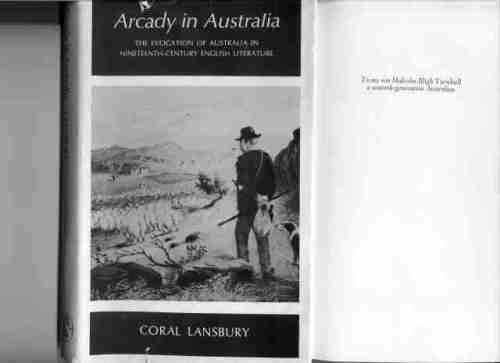
An interesting dedication

There’s been talk over the last couple of weeks about Malcolm Turnbull’s personal story. I was interested to see the dedication in his mother Carol Lansbury’s book Arcady in Australia, published in 1970 after she had married John Salmon in New Zealand.Lansbury_Turnbull

“To my son Malcolm Bligh Turnbull a seventh-generation Australian”.

This Week in Port Phillip in 1841: May 16-23 1841

WARNING: Aboriginal and Torres Strait Islander readers are warned that the following post contains names and images of deceased persons.

There are three indigenous deaths that were mentioned in the news this week, each demonstrating a different aspect of frontier clashes between indigenous Australians and settlers.

DEATH OF ‘JACK’

Well, I think that we all knew that this wasn’t going to end well.  In the last posting of This Week in Port Phillip 1841  dated May 8-15, we read the report of the surgical amputation of the leg of ‘Jack’, an indigenous prisoner brought down to Melbourne to face murder charges over the death of a convict overseer. Such drastic surgery, and not unexpectedly….

On Sunday at about noon, the Aborigine named “Jack” upon whom amputation was performed a few days since, died in the Hospital. Ever since the operation was performed “Jack” has exhibited considerable symptoms of restlessness, tearing off the bandage, and continually getting out of bed, thereby injuring the stump and causing inflammation, which terminated in death. (PPH 18/5/41)

AN ATTACK UNPUNISHED

An extraordinary edition of the Port Phillip Herald on 19 May reported the Supreme Case of R v Jenkins and ors. In this case William Jenkins, William Martin, John Pennington, Edward Collins and Robert Morrison were jointly indicted for shooting at an aborigine, with intent to maim, disfigure and disable him, at Cumberland Creek. They were also charged with a second count of intent to do grievous bodily harm.

In a detailed breakdown of the case, Paul Mullaly explains that the ‘disturbance’ took place in early February 1841 on the Boral Creek outstation of the Lodden River station owned by Messrs Dutton, Darlot and Simson. There had been rumours from the local aborigines that the ‘Goulburn blacks’ were coming to kill shepherds and steal sheep, and so the accused men, all assigned servants (i.e. convicts) went to the outstation one evening, followed by Henry Darlot the next morning.  The next afternoon, there was a confrontation between the assigned servants, some of whom were armed, and two Aborigines known as Tommy (otherwise Goudu-urmin) and Abraham (or Jemmy- named in the PPH article as  Manharger-bun).  Morrison was grabbed around the neck by Abraham, who tried to take his pistol, while other aborigines were nearby, stealing items from around the outstation.  The white men claimed that spears were thrown at them and that they fired in response. Abraham and Tommy were wounded and Morrison was released without injury.  It is likely that Tommy died (although there is no mention of a body)  but Abraham did survive.

The matter came to the attention of Assistant Aboriginal Protector Edward Stone Parker who was responsible for the Loddon District. He instituted an enquiry, and took depositions from the men involved. And that was the problem.  According to the practice at the time, the accused could not give evidence on oath, only a statement about the evidence already collected.  The common law maxim “no one is bound to accuse himself” (or nemo tenebatur prodere sipsum for the Latin-readers amongst us) applied, and in Blackstone’s words the fault of the accused was ‘not to be wrung out of himself, but rather to be discovered by other means, and other men’.  But what if the only people present were all accused, with the only other witnesses excluded from giving evidence because they were Aboriginal?

Parker submitted the case to the Crown Prosecutor, James Croke, who chided Parker for taking depositions from men who were alleged to have committed the offences. Parker replied that there was another witness, Joseph Maddox, who rode up after the shots had been fired.  During the case, which Judge Willis recorded in his casebook, Joseph Maddox was the only witness.  At this point the Crown Prosecutor ‘relinquished the proceedings’ and Willis directed the jury that the “prisoners were perfectly justified in shooting in self defence”. The prisoners were acquitted.  Willis upbraided Parker for taking improper depositions- a theme which the Port Phillip Herald took up with glee in an editorial on 21 May headed “THE BLACK PROTECTORS

If anything be calculated to arouse the indignation of a free, and besides, a British people, to a sense of the wrongs they have suffered, and the awful dangers to which they are exposed by the tyranny of the Protectorate, and the attempted subversion of the principles of the British constitution by its ignorant officials; and if there be any thing that will come home to the feelings or address the reason of a should-be protecting Government, it is the case to which we have now adverted.  The whole system of the Protectorate is rotten at the core; reform cannot be introduced; its constituent elements are subversive of every principle of equity, or justice, and being thus radically bad, must be wholly extirpated from the province.  The Protectors as a body, instead of a blessing, have proved a curse to the community at large, and as such we will not lose sight of them until they are removed from place and power.  (PPH 21/5/41 p.2)

A DEATH IN CUSTODY

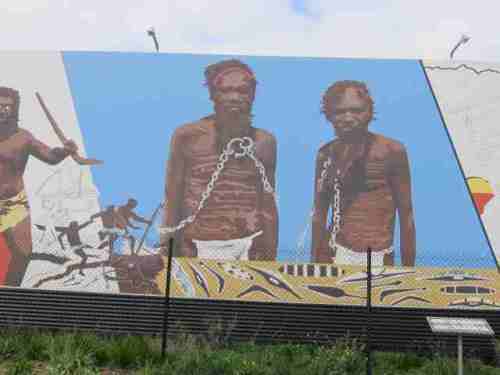
Along St Georges Road in Northcote, in front of the oval that abuts the Aboriginal Advancement League, there is a large mural.  It was originally erected in a temporary car-park on Ruckers Hill in 1983, but was shifted to its current location in 1988. It became increasingly dilapidated and in 2013 it was dismantled, digitally photographed, updated and re-erected and stands proud and confronting again.


Probably the most disturbing section of all shows two indigenous men chained together around the neck.  The image came from Western Australia in the early twentieth century, but in May 1841 a similar case came before the Supreme Court in Port Phillip.

IMG_2316a

On December 6 1840 mounted constables Michael Goodwin and Thomas Connock arrived in Melbourne with an indigenous prisoner, Jag.ger.rog.rer, known as ‘Harlequin’. He was about 19 years of age, and had been arrested on warrant near Yackandandah and brought to Melbourne for trial. He was delivered at the watchhouse in poor health, with a chain around his neck and died on 8 December. It had been a eight day journey of 153 miles, with Jag.ger.rog.rer chained and on foot for all but 14 miles.

The Aboriginal Protector, George Augustus Robinson wrote a long report on ‘Harlequin’s’ death in his journal on 10 December 1840. There was quite a bit of official discomfort about this death in custody.  James Croke wrote to La Trobe that

I must candidly confess that the disease of which Harlequin died was superinduced by the manner in which he was made to travel (and that there is evidence of that fact I am quite satisfied) the escort are as guilty of his death as if they had shot him without justifiable cause. (Croke to La Trobe 12 Feb 1841 VPRS 19 41/232)

In a later letter Croke said that he thought that not just the final two escorts, but all constables responsible for Harlequin’s custody should be examined. This was carried out, after some skirmishing between Police Magistrate Simpson and Protector Robinson over responsibilities for conducting inquests and taking depositions. The case came before Willis in the Supreme Court on 17 May 1841 when Goodwin and Connock were charged with manslaughter. A report of the case from the Port Phillip Gazette can be found here and Willis’ notes from his Case Books with a commentary from His Honor Paul Mullaly can be found here.

The journey that ended so tragically for Jag.ger.rog.rer went like this:

On 29th November 1840 Sergeant Rose of the Mounted Police took Jag.ger.rog.rer into custody from Ewing’s station. At this time he reported him to be in good health and able to work well. He was marched 14 miles to the barracks on the Hume, a seven-hour journey. On arrival,  the handcuffs were removed and replaced with a small horse chain, weighing from half a pound to a pound, and a padlock weighing a quarter of a pound. This was done, the court heard, because the chain “was considered the easiest way of securing the black, so that he could travel without pain”. Sergeant Rose then handed him over to the charge of Troopers Byers and Rowley who took him the ten miles to Barber’s station, at the rate of about three miles and a half per hour. They slept the night there, with the prisoner secured by handcuffs on his wrist, a pair on his legs and a chain passed through and secured on the outside.

The next day they set off at 7o’clock, with Jag.ger.rog.rer reported to be in good health, eating his bread, meat and tea well. It took all day to reach Mr Reed’s on the Ovens River, a distance of 35 miles. He was handcuffed the whole way, with the chain held by one of the troopers. “Harlequin spoke so much English as to make himself understood, but made no complaint of being tired, or that he wished to stop.”

On 1 December they departed Reed’s station at 7.30 and arrived at Broken River, 30 miles distant, at sundown where he was given into the custody of Corporal Kershaw. The corporal started off the following morning with Jag.ger.rog.rer secured by a collar chain, the leather around his neck and the strap through a link of the chain, with a padlock. They travelled 28 miles along a bushy road that was not easily travelled.  Harlequin rode two miles, and they stopped at one of the Seven Creeks.

On 2nd December they proceeded to the Goulburn, about 29 miles. About twelve miles before arriving, Jag.ger.rog.rer complained of a pain in his side after eating heartily. He was permitted to rest for two hours and travelled the rest of the journey on horseback.  He was handed over to Sergeant Keely who was told that the prisoner had complained of a pain in his side. They stopped here for a couple of days

On 4th December it was reported that Jag.ger.rog.rer (Harlequin) was sick, that he coughed and appeared very ill. On 5th December he was given into the charge of  Goodwin and Connock to take him to Melbourne as quickly as they could. A chain, four feet in length, weighing about two pounds and covered with cloth was placed around his neck. It was reported that the chain was not a noose, and could not tighten around the neck.  The prisoners, who were not ordered to stop at any particular place, travelled about 35 miles that day, stopping at Mr Green’s station.

They arrived in Melbourne at about 4.00 o’clock on the 6th December and he was taken to the Watch-house. By this time he had a ‘dog chain’ around his neck and the chain was so tight that it was not possible to pass a ringer between the chain and Jag.ger.rog.rer’s neck.  His face was swollen, he had difficulty breathing and when the chain was removed, he threw himself down on his back.  Dr Cussen was called and when he attended he found Jagger-Rogger sitting on the floor of his cell, rather hot and feverish, but Cussen conclused that “he had all the symptoms of a man who was excessively fatigued”. However, the next morning, the fever was worse and he was removed to the hospital where he was administered a mild purgative.  On the 8th he was given more active medicine but died either that night or early the next morning.

The doctor considered

the fever to have been caused in this  case both from fatigue and mental depression. …[He] did not think that travelling 75 miles in two days in the month of December in Australia Felix, with chains on the hands and neck would be sufficient to cause death, providing there was no undue pressure on the neck.  The pain in Harlequin’s side must have been spasmodic or muscular; if it had been inflammatory, it would have gone on so rapidly as to have impeded the journey in a very short time. Never saw a case where mental anxiety caused a fever so rapid in its effects as to cut off life in two or three days. (PPH 18/5/41 p.3)

This was the end of the Crown case. At this point, Willis told the jury that, on hearing the evidence, he was duty-bound to instruct that there was no culpable excesses by the prisoners; that Dr Cussen’s evidence showed that the pain in the side was not caused by the manacles, and that he had been treated kindly and given provision whenever he had stopped.  The jury immediately returned a verdict of not guilty “deeply regretting the loss of life occasioned by the neglect of some parties”.

[I haven’t been able to find any information about the distance usually travelled when escorting prisoners.  The speed of 3 miles per hour seems to be a generally acceptable walking pace today, but I cannot imagine that this speed could be sustained over rough country. The only image that I have been able to find of a prisoner escort dates from 1855 where S.T. Gill sketches five prisoners being transported in a cart. It is not clear whether they are chained by the neck or not]

References:

Paul Mullaly Crime in the Port Phillip District 1835-51 (Hybrid, Melbourne, 2008)    pp.  61-62; 353-357; 365-369

Judge Willis Casebooks  http://www.historyvictoria.org.au/willis/index.html


.


Exhibition: Somewhere in France

SWIF_eventbrite-top-banner-01

Baillieu Library’s current exhibition ‘Somewhere in France: Australians on the Western Front’ is on show until 26 June 2016.

Our commemorative attention has been directed towards the Western front this year,  now that the Gallipoli commemorative caravan has moved on. This exhibition is not, as you might expect, mired in the trenches but instead looks at life away from the front, as young soldiers, nurses and volunteers explored villages, attended theatre performances and encountered new food and culture.  There’s a particularly chilling gas mask on display in one of the cases which reminds us that the front was always present, and the mention of listening to a gramophone while in the trenches highlights the paradox of a war fought along such a small ribbon of contested land.

The exhibition displays contemporary diaries and letters, photographs and ephemera drawn from the University’s collection of material donated by former students, most particularly Ray Jones and Alfred Rowden White. Current day students have researched the material and created two short video presentations based on the stories of Melbourne soldiers and Red Cross workers who ended up ‘Somewhere in France’.

For more information see here.


And so…

Who IS this ridiculously happy person?

S160525LA002-PA138a

‘Caledonia Australis’ by Don Watson

caledonia

1984, republished  1997 (this review) and 2009. 255 p. & notes.

Actually, I hadn’t intended reading this Don Watson book at all.  I was reading the first chapter of his more recent, award-winning book The Bush and found myself reminded that before Watson was a Monthly correspondent, a commentator on public discourse or Paul Keating’s speechwriter, he was a historian.  His book Caledonia Australis was already on my bookshelves, and having recently had the experience of reading two books from the edges of a historian’s career as I did with Michael McKernan (see here and here), I decided to put the more recent book aside in order to return to Watson’s earlier book.  After all, I reasoned, it would do a disservice to the earlier book to read it after the larger, more mature work, honed by over thirty years of writing.  My assumptions were unfounded. I haven’t yet returned to The Bush but Watson’s Caledonia Australis,  a more consciously historical work, stands proudly on its own two feet.  Watson was a damned good writer in 1984, just as he’s a damned good writer in 2016.

We see in this 1984 book the subtlety that Watson would later display in his exploration of Paul Keating in his Portrait of a Bleeding Heart.  It does not have the trappings of an academic text: it does not have footnotes or an index and its reference list is only loosely tied to the chapters.  It does, however, make a strong historical argument which has maintained its currency- has indeed become stronger- since its initial publication in 1984 and reissue in both 1997 and again in 2009.

The first part of Watson’s book is not about Australia at all, but instead the Scottish Highlands.  I’d heard of the Highlands clearances, but I’d assumed that people were shifted directly from their Highland ancestral homes onto ships to the New World as part of a global diaspora.  But, as Watson points out, there was an in-between period where Highlanders were forced onto the coastal edges where they were forced to work in kelp-harvesting. Kelp was prized as an industrial additive for the soap, linen and glass industries and had become lucrative when imports of Spanish barilla (a salt-tolerant plant) were heavily taxed during the 1790s.   The shifting of the Highlanders to the coast and the attempted suppression of the language and culture of this ‘backward’ people was seen as an ‘improvement’ measure that, fortuitously for the large lords, freed up the land for the importation of sheep. When the duties on barilla and salt were reduced in the 1820s, the kelp market collapsed, and it was at this juncture that the ‘improvers’, especially on the isles of Skye and Mull,  looked to emigration and particularly the large, clan-based Scottish emigration schemes in Canada and Australia.

And so, by Chapter 4, we have ‘Highlanders at Large- the Kurnai at Home’. Both by an accident of timing and also as a result of clan networks, Scottish settlers explored and appropriated the lands of the Kurnai people of what we now know as Gippsland but which  Scottish explorer Angus McMillan christened ‘Caledonia Australis’.   Across the seas come the Highlanders, a clan-based culture, where the land was the basis of their identity, where history and legend were passed through song and dance, where the supernatural world co-existed with the natural one. And here in Chapter 4 they meet the Kurnai with a parallel culture, with similar qualities to their own:   clan-based, with land as the basis of their identity, history and legend passed through song and dance, with a co-existent supernatural and natural world. There was, however, no recognition of these affinities. Charged with their Calvinistic faith, the former Highlanders dispossessed the Kurnai, turning over their land to sheep just as had happened to them in Scotland.

In the second half of the book Watson hones in on Angus McMillan,  who has been lionized as one of the pioneers of Gippsland in both myth and physical memorials. McMillan is, in effect, the Highlander in Caledonia Australis writ large.

Angus_McMillan_portrait

Angus McMillan Wikipedia

Watson traces the rivalry between McMillan and the driven, publicity-conscious professional explorer Strzelecki in their competing claims to have ‘discovered’ Gippsland. The Highland temperament manifested itself in both exploration and frontier settlement behaviour.  Clan connections and a shared sense of righteousness drove the Scots settlers into their dogged but ultimately fruitless search for the White Woman of Gippsland. Their prickliness, pride and sense of mission had a much darker side as well.

Watson writes:

There were three types of squatters on the Australian frontier: those who thought that their right to the land was qualified by an obligation to treat the Aboriginal inhabitants with kindness; those who believed that their right was conditional only on extermination; and those who combined murder with kindness. (p. 223)

The squatters of Gippsland, Watson writes, were fickle and dangerous and McMillan exemplifies this third type of squatter. McMillan

-half steering his way, half being blown-arrived in the new province and from that moment seemed to embody every paradox the frontier could throw up: making its history and being made by it, writing its story and engineering its secrets, living through all manner of triumph and torment and leaving a legend which put his life beyond our reach, ending up a cliche, a block of stone (p. xix)

When the nephew of his patron Captain Macalister was killed by Aborigines, McMillan was most probably responsible for drawing together the ‘Highland Brigade’ of his neighbours and retainers who, bent on revenge, massacred between 60 and 150 Indigenous Australians at the Warrigal Creek massacre, and beyond.  Yet, this same man was also lauded for his “sympathetic interest” in indigenous people and became in the last years of his life the Aborigines’ protector.  Murder and kindness: a chilling combination.

In his introduction to the 1997 edition of this book, Watson writes that his original intent in writing this book was

to give a more sympathetic portrait of the pioneers than any I had ever encountered.  I wanted to give them blood as well as bones; religion, motives, choices, memories, identity, ancestors, an inheritance of their own (p.xxvii)

This doesn’t sound like the aspirations of a historian whose work, through this book,  became associated with those derided by the New Right as promoting ‘black armband history’. We know, from Watson’s later work on the deadening effect of managerial language and ‘Weasel Words’ that he is impatient and dismissive of ‘political correctness’. But, he argues, “It can hardly hurt a mature society to know that its founders were capable of evil as well as good.  An immature society can only benefit”(p. xxvi)

Hence the importance of McMillan:

The harder we look at McMillan the more we see the patterns of our collective experience and the elements of our contemporary dilemma.  The harder we look at him the more signs we see of the kindness and brutality, self interest and charity, memory and amnesia, decency and hypocrisy that has characterised public and private dealings with Aboriginal Australia from the beginning to the present day.  And the harder we look at the society McMillan came from the more we see how the dispossessed everywhere tend to follow the same path to material and spiritual poverty: in the nineteenth century the Australian Aborigines were not the only ones to be first cast as dangerous and unruly savages, and then left stranded between pity and contempt- and then thrown still further adrift from humanity by Social Darwinism. (p. xxviii)

No: this process had engulfed Highlander society, which in turn subjected the Kurnai people to the same fate.  The last words of Caledonia Australis are “..the irony was lost”. Irony, at its most powerful, does not need a spotlight or announcement, but emerges quietly and insistently out of the material itself.  Just as it does in this book.

Movie: The Silences

I only just caught this at Cinema Nova before it disappeared. It’s a documentary memoir by feminist film maker Margot Nash, based on her own family story.  In her voice-over that opens the film, she explains that after her mother died, she and her sister couldn’t agree on the epitaph to put on her grave.  They both had a very different view of their mother, and this is Nash’s reflection on the ambivalent feelings she holds towards her mother and the secrets that lay within their family.

Visually, the documentary is a montage of images from photograph albums and clips from Nash’s other films, and it relies heavily on Nash’s voiceover to provide the narrative thread. What power a story-teller has in her hands, to expose others and mould a story to make it hers! And yet, just as when reading a book with an unreliable narrator, I found myself resisting her questions and her reworkings, largely because I was uncomfortable with the self-centredness of her endeavour.  While seeking nuance and adult explanation, there is still a childish, underlying protest at being locked out and being given only partial knowledge.  The film maker, who is very present in this documentary, is older than I am. Does she not have (as I do- along with most older people, I should imagine) an accumulated store of regrets, elisions, utterances and actions  that she, too, might want kept secret- or at least, private? Can there be no generosity in respecting others’ secrets? I found myself feeling complicit and disturbed by this movie, although I’m pleased that there was no pat solution, but instead a very human ambivalence.

QE62:’Balancing Act’ by George Megalogenis

quartleyessay

Balancing Act: Australia between Recession and Renewal

Quarterly Essays, with their generous word length of about 25,000 words often provide a deeper analysis of current topics than you’re likely to find in newspapers and magazines.  The most recent Quarterly Essay, however, didn’t really offer me much that I hadn’t already read in other progressive-side publications like Crikey, the Monthly or the Saturday Paper.  

George Megalogenis  starts with a quick overview of the past thirty years of Australian politics and the imposition of the “open model” of the economy during the Hawke/Keating years. His aim, Megalogenis says, is to explore how to augment this open model in a time of transition. In particular, he looks critically at the past fifteen years, with six wasteful years under Howard as the proceeds of the mining boom were squandered and six combative years under Abbott.

History, he claims, shows that the governments that transformed the economy were generally Labor ones and not conservative- in particular Curtin and Hawke.  He notes that in both these cases, Labor had remade itself after a period of opposition: something that the current Liberal/National coalition has not done with Abbott on his wrecking-ball spree during his time in opposition. He notes that the rapid change of prime ministers is not necessarily a present-day aberration because in the first ten years of Federation there were seven changes of Prime Minister. However, the crucial difference was that there was continuity of policy rather than the “throw it out” mentality with each swing of the electoral pendulum that we have sen in recent decades.

Rather than harking back to the golden reforming days of Hawke and Keating so beloved of economic writers, he turns instead to the post-war reconstruction activities of Curtin, Chifley and Menzies as exemplars of policy-driven and infrastructure-led responses to changed circumstances. Such policies were not the preserve of any one side of politics and  similar policies, he suggests,  might hold the key to the shift from recession to renewal so heavily promoted by our ebullient Prime Minister.

This Week in Port Phillip 1841: May 1-7

NEVER A MORE EXCITING TIME TO BE…A BUTCHER!

On the 4th May, the butcher, George Jackson, advertised that he would be opening up his premises in Queen Street:

The undersigned begs respectfully to inform the inhabitants of Melbourne that he will commence business This Day, Tuesday the 4th Inst as a Butcher in that new shop, next to the stores of Messrs Thomas Enscoe and James in Queen Street, where he hopes by strict attention to business and always keeping the best of meat on hand at the lowest renumerating price to merit a share of public approval’ GEORGE JACKSON. (PPH 4/5/41)

According to the editorial of the very same paper, there was no more lucrative time to be a butcher, although the editorial writer characterized it more as price-gouging than ‘agility’. Sheep averaging 60lbs in weight could be purchased at 12/6d a head, and after deducting the value of head and pluck, suet and skin at 2/6d, the cost would be 10s.  The meat was retailed at 5d per pound, the whole carcass thereby producing 25s or 150% profit.   Likewise cattle averaging 700lbs could be purchased for £8/15/- and retailed at 6d per pound of £17/10/- thus leaving a net profit of £8/15/- or 100% profit.

But what about expenses? The Port Phillip Herald editorialist estimated the staffing and ongoing costs of a butchering establishment to be:

  • 2 butchers; one for slaughtering the other for cutting up or serving in the shop at £2 5s a week or £117 each per year
  • One clerk/collector and one overseer/stockman at £150 per week
  • Expenses of horse, cart, driver &c £120 per annum
  • Rent £200

Mr Jackson seemed to make a go of it.  There was still a George Jackson, butcher, in Queen Street in 1847 (although its not clear from the Victoria before 1848 website whether it’s the same George Jackson or not).

…OR A MILLER!

Mr John Dight from Campbelltown in Sydney arrived in Port Phillip in early May and announced that he would be building a water-driven mill at what is now known as Dight’s Falls. He had purchased land in the district in 1838 and had already established a successful milling operation in Sydney.  He used the same name, Ceres, for the Port Phillip mill. Construction of the mill from bricks from Van Diemen’s Land also involved the construction of an artificial weir which forms the ‘falls’ today.

Mr Dight who arrived in Melbourne on Hans from Sydney, a few days since, intends erecting a water flour mill on the banks of the Yarra Yarra at “Gardiners Falls” about two miles from town.  At starting, two pairs of stones will be worked, but an extra pair may be added should it be found necessary. A mill of this description has been long wanted, and will be found a valuate acquisition to the town. Operations are to be commenced forthwith.

Falls of the Yarra  at Dights Mill.

Fall of the Yarra at Dight’s Falls by Charles Norton 1855, State Library of Victoria

http://handle.slv.vic.gov.au/10381/50610

TWO DEATHS

In the Supreme Court sitting at the end of April, Judge Willis announced that he wanted to clear out the jail of unresolved cases that had been in abeyance waiting for his arrival. His attention fell on two indigenous men who had been held in custody for murder since August 1840, awaiting the transmission and return of depositions to Sydney. By this time, both men were gravely ill. Willis read to the court a despatch from the Secretary of State to Governor Gipps dated 31 December 1839 relating to the treatment of Aborigines, and read extracts from the Report of the Select Committee of the House of Commons 1837. Willis attributed their illness to their long period of confinement and pointed out that there was as yet no evidence and there had been no cross-examination of witnesses. He asked that the men be taken to hospital and put under the care of the Aboriginal Protectors. (PPH 30/4/41)

It was too late:

Yesterday another inquest was convened at the Lam Inn, Collins-Street, upon view of the body Kongho Marnee, an aboriginal, who died in the Government Hospital on Saturday last. The deceased was one of the blacks committed in August last year, on suspicion of murder. The unhappy creature, from the time of his commitment, appeared labouring under an impression that he would be hanged, and had been pining away from the time of his commitment until the period of his death. Dr Cussen who examined the body, gave it as his opinion, that deceased had come to his death from the confinement he had undergone, combined with a broken spirit. The body exhibited no tangible disease.  The Jury returned a verdict of “Died by the visitation of God.”

And then, days later another death:

On Monday night an inquest was held at the gaol, before Dr Wilmot, Coroner, on view of the body of an Aborigine, named We-na-baer-nee, brother of Kohoga Marnee..who died at the hospital on Sunday morning, almost immediately after hearing of the death of his relative: the sympathetic affection even in the bosom of this savage appeared too finely strung to bear up against the loss.  The Jury returned a verdict of ‘Died by the visitation of God.”

Visitation of God indeed.

A RUCKUS IN THE STORE SHIP

My, my- I think that there’s mischief afoot between the Captain and young Eliza:

Eliza Baynes or Collin, assigned to Captain Passmore of the Samuel Cunard, store ship, was charged by her master with entering the cabin of that vessel on Sunday night about eight o’clock, having between her lips a short dudeen   [a short tobacco pipe made of clay], the fragrance from which rose in mimic clouds and penetrated to the most secret recesses of the cabin, rendering it anything but pleasant to the nostrils.  Captain P. not approving of this course of proceeding, requested she would proceed on deck, and there inhale the perfume and bestow its fragrance on the desert air; no sooner were the orders given, that Eliza seized a tumbler from the table and discharged it at the head of Captain P. who fortunately avoided the missile by a dexterous shifting of his position- his starboard whisker only being grazed as it whizzed by.  The interesting Eliza, not satisfied, danced a pas scul on a wash-hand-basin, which was quickly reduced to fragments, upon which she was given in charge.  In defence the virago hinted something about “the Green Eyed Monster: but took nothing by her motion

The Bench expressed surrpise that, being an assigned servant, she had been allowed to come to Port Phillip contrary to regulations. After all, Port Phillip was ostensibly not a convict colony, but there were in fact many assigned servants attached to settlers who had come from Sydney or Van Diemen’s Land.   Capt P replied by Mr Eyde Manning had signed the permission and that the prisoner had come down with Mrs P in the Clonmel (you’ll remember that the Clonmel was later wrecked on the Gippsland coast)

Captain Passmore would not have to put up with her smoking in his cabin in future.  She was returned to the Female Factory in Sydney at Capt. P’s expense. (PPH 7/5/41)

HOON DRIVING

On Friday a drunken drayman named Welsh, while in a state of intoxication and seated upon his dray, flogged his horse most violently; the animal started off down Williams-street at the top of its speed, and in its career narrowly escaped running over the Rev Mr Orton and two other gentlemen; rounding into Flinders Street, at the wharf, the draw came in contact with a large stone and was capsized, jerking the driver within a few inches of the Yarra Yarra.  Upon being brought before the Police Magistrate the following day, he was fined 20s for the furious driving  (PPH 7/5/41)

AND THE WEATHER?

The highest temperature for the week was 78 (25.6) and the lowest 41 (5 celsius). There were light winds on 1st and 2nd and a gale on 3rd. [Odd- this sounds very much like this week in 2016, which also had a gale on 3rd and temperatures this week of 25 degrees] The weather was damp and cloudy until 4th, afterwards bright and clear.