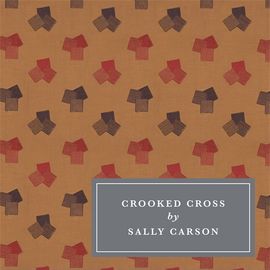
It’s happened a couple of times that I have read two books in close succession, only to find that the books speak to each other, and are long afterwards fused together as a reading experience in my mind. This was the case with Crooked Cross, first published in 1934 and recently re-released by Persephone Books this year. It might be 90 years old, but it soon became a publishing phenomenon- and I can see why.
It must have been as close as possible to being contemporary when it was published in 1934, as it deals with a six-month period between Christmas Eve 1932 and Midsummer night 1933. Of course, we know what is going to happen, but neither the characters in this book nor its author do. As it is, there is something queasily anxious about Christmas Eve in a small mountain town in the Bavarian mountains, where the Kluger family – parents and three young adult children eldest son Helmy, daughter Lexa and much-indulged younger son Erich- are celebrating Christmas. The family has been in straitened circumstances: the father’s wages have been reduced and eldest son Helmy has been unemployed for several years. Giddy with the prospect of soon marrying her fiance Moritz, Lexa has resigned her job, while Erich has returned for Christmas from his seasonal job as a ski-instructor, with the occasional dalliances with clients on the side. In amongst the carols and the snow and the midnight church service, there is a photo of Hitler on the piano, adorned with holly. Just a mention, an aside, but National Socialism is to embed itself within the family, and change the trajectory of their lives.
Lexa finds herself forced to choose when her fiance Moritz, a converted Jew, is sacked from his position at the hospital, and is increasingly confined to a small flat where he lives with his father. Meanwhile, her two brothers, and eventually her father too, join the Nazi party which provides jobs and identity to a generation of men who were emasculated by the years after WWI. The party becomes more and more embedded and normalized in everyday life, and the cost of being outside the party and its ideology becomes steeper.
It is impossible not to draw parallels with current events, which is no doubt why this book has been republished now. It ended on a cliff-hanger, and I was excited to find the next book, The Prisoner, which was published in 1936, followed by A Traveller Came By which appeared in 1938. Unfortunately these books, which like Crooked Cross were published almost in real time, have not yet been re-released. As it is, they form a little time capsule of contemporary awareness, shaped only by events and perceptions at the time rather than historical fact seen in retrospect. They came to an end with the author’s death of breast cancer in 1941 at the age of just 38. She was not to know just how prescient she had been.
The Rest is HistoryEpisode 578 The Irish War of Independence – Bloody Sunday (Part 3) As with the previous two episodes, Dominic and Tom are joined by Irish historian Paul Rouse. I knew about the 1972 Bloody Sunday, but not about the Bloody Sunday that took place on 21 November 1920. It started with the IRA targetting about 19 men in Dublin, shooting 15 dead in 8 locations. It was personally ordered by Michael Collins himself. Not all the victims were intelligence officers, and not all were English. That afternoon there was a football match at Croke Park. The football authorities were warned to cancel it, but they decided to go ahead because the park was already half-full. At 3.30 trucks, and 15 minutes after the game began, trucks arrived. Shooting began from the outside (this is important because the British claimed that the shooting began from inside), and there was a stampede and crush. There was blowback in England with acts of violence, followed by reprisals against the IRA, who found it hard to get arms. Finally a ceasefire and truce was announced, and negotiations began.
The Human Subject (BBC) This is the final episode in the series. If the second-last episode about deep-brain stimulation seemed a bit ho-hum, this one certainly made me angry. The Trauma Victims and their Blood tells the story of Martha Milete, who was shot in 2006 when masked men invaded her house. Without ever giving consent, she found herself part of an experiment into Polyhaem, a form artificial blood which would certainly be a boon to emergency medicine, but which initially caused heart attacks in all of the first ten subjects, with two of them dying. These terrible results caused the product to be shelved but in 1996 a change in the FDA regulations meant that there was no need for individual consent from trauma patients- which is how Milete found herself part of the experiment. Instead, Polyhaem had to gain ‘community consent’, which they interpreted as giving a Powerpoint presentation at the hospital, and the initial provision of blue bracelets that had to be worn 24 hrs a day opting out (they soon ran out and it took a year to replenish them). Appalling.
Witness History (BBC) I love this program. Ten minutes- enough time for a walk home from the station- and really interesting. Orson Welles Broadcasts War of the World has interviews from various people who were involved on the radio program broadcast on the night before Halloween in 1938. I’d forgotten that H.G. Well’s short story ‘The War of the Worlds’ was set in England. When Howard Koch wrote the radio play, to be performed as part of a weekly program, it was a very boring show. So it was decided to set it in a real location in New Jersey, and to present it as a live broadcast which had interrupted the programming for the night. Up to six million people tuned in, unaware that they were listening to a radio play, and it prompted mass panic. There’s an interview with Orson Welles himself, as well as with the script writer and the producer John Houseman. Really good.
Rear Vision (ABC) America’s Radical Left Part I and Part 2 looks at the history of the left in America. Part I looks at the religiously-driven radicalism of early America and the failure to create a dedicated ‘labour’ party in United State. This failure was tied up with other competing ideas about colour and ethnic identity, and the Republican and Democratic parties were canny enough to co-opt some of the Left’s ideas- enough to undermine support for a minority party which might not gain power. Part 2 looks at the effect of the Soviet Union on Left politics, McCarthyism and the rapid re-emergence of Left ideas under the Black Power movement. The election of Zohran Mamdani to New York mayor and the persistence of Bernie Sanders shows that the Left isn’t dead yet.
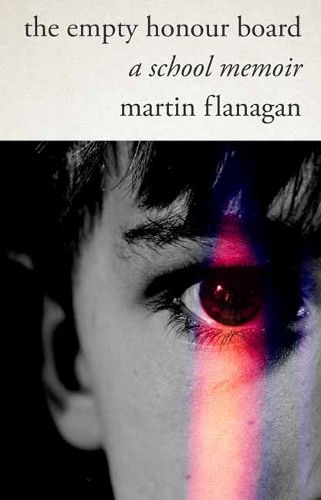
When it comes to the Catholic Church and sexual abuse of children, there is little space for nuance without it being mischaracterized. However, nuance is what we find in Martin Flanagan’s memoir of his school days at an un-named Tasmanian Catholic boarding school between 1966-1971. As he says in his opening line “I was warned against writing this”. Not only was there the danger of stirring up pain and controversy, but there was the danger of being forced to rethink one’s own story that had seemed certain.
By the time you get to my age-67 at the time of writing- people’s sense of their personal history has taken a mythological turn. Most of us cling to the notion that there is meaning in our lives and, whether we know it or not, arrange the furniture in our minds- our memories- accordingly. We acquire a personal mythology, and personal mythologies, when they clash can do so violently. This is a region where demons lurk. (p. 2)
But as a stream of claims from former student from his school surfaced, the demons found him:
Each disclosure took me back to a time in my life when I thought I inhabited a concrete reality. Now that concrete reality was bending and breaking like buildings in an earthquake. (p.3)… Behind the issue of what actually went on at my school on an island off the southern coast of the world’s most southern continent, global forces were at play- ancient controversies to do with the Catholic church, the Pope, the authority of priests, celibacy, the Vatican’s exclusive maleness and the epidemic of sexual abuse that has followed it around the world. Somewhere inside all that of that, being thrown about like a leaf in a storm, was me, my story. (p.8)
Flanagan was not sexually abused himself – or at least, he did not perceive that he had been sexually abused. But at the age of sixteen he was invited into the room of one of the priests where the priest, Eric, gave him a massage with his pyjama bottoms removed, face down on the priest’s single bed, nude from the waist down. After a vigorous massage of his legs with oil, he rolled over and the priest glanced at his limp and uninterested cock. “End of story” (p. 86)
Completely inappropriate though this clearly is, Flanagan did not consider himself to have been sexually abused, even though other people thought that he had been. As far as he is concerned, “to be abused you must surely feel as if you’ve been abused”. He feels that he was inoculated from a strong response because he never did believe in the Catholic church, and because by then he was already quite certain in his own sexuality.
However, he knew other boys who were sexually abused by the priests. At much the same time as this happened to him, he was the school captain, and he was led by another boy to where he found a 12 year old shaking and shuddering in his pyjamas, with a spray of semen up his back. He and other boys reported the priest to the school rector. Some thirty years later, he gave evidence against one of the three priests from the school who were charged with sex crimes.
Flanagan may not have been sexually abused but he was abused by the ingrained cruelty of the school that filtered down through the priests and bubbled up among the boys themselves. He felt ashamed of many things: his abject begging not to get the cuts for some minor misdemeanour, his failure to intervene when he saw other boys being bullied, his desperation to appease the bullies who had decided that he was a ‘teller of stories’ as a ‘fear like a sort of radiation illness infiltrated my being’. (p.74). Years later, he began having panic attacks at night. For about six months he was in mental tumult until
In the end, one hot day I was standing beside a blackwood tree in the paddock beside our little home, when a shadow hurried across the grass towards me. With it came a great fear that I was about to be extinguished or swallowed up, and I cried out ‘I have a right to be!’. Pure madness, I know, but I’m glad I did it. Glad I shouted at my shadow. At the negative imprint of those early years. I have a right to be, everybody has a right to be. What do I believe in? Human dignity. (p.102)
What saved him was sport, especially football, and writing about sport. It was through sport and writing that the boys he had gone to school with, now men, circulated back into his adult life. These men came with their own stories, their own pain and the author’s response and reconciliation with this shared, and yet so private, experience takes up the last third of the book. The report that he had made as school captain on discovering the shivering boy in his pyjamas all those years ago resurfaced as part of the controversy over the school 43 years later. He reads the letter from the rector to the head of the order detailing the report that Flanagan himself had made, which the rector described as ‘fooling around’. Here he learns about the evasions and plans to withdraw the priest from classes, to move him around the state, or divert him into working on the school magazine. As a result of the Royal Commission into Institutional Sexual Abuse that he learns about ‘Father GMG’, sent to his school to avoid the repercussions of another interaction of a sexual nature, who is moved from one school to another. There is a pattern here.
Over the years, the author attends three Catholic ceremonies. The first was a vigil at St Ignatius, Richmond as 25 year old Van Tuong Nguyen was hanged in a Singapore jail for drug running. The second was Ned Kelly’s funeral in a Catholic Church in Wangaratta in January 2013. The third was a Ritual of Lament in 2021 run by his old school. He struggled over whether to go: he didn’t like ceremonies; he feared inauthentic emotion; he feared doing it the ‘wrong way’. He went.
What is striking about this book is the way that Flanagan holds many things in tension: acknowledgement that the same men who whipped him also imbued in him a love of literature and writing; disgust at the sexual abuse and yet compassion for the situation that, at least for the priest that he gave evidence against, he
could be well described as a maladjusted, sexually immature, lonely individual… [who] had virtually no possibility of a sexual relationship with a woman given his living circumstances. (p. 7)
He accepted the word that two of the priests at the school were unaware of what was going on amongst their brother priests. He did not characterize what he observed at his school as a long display of cynical behaviour. Instead,
[W]what I see at the core of this whole business is abject human isolation surrounded by a floundering belief system. (p. 142)
The book is not divided into chapters, and although it moves forward chronologically, it is divided into dozens of small shards, separated by asterisks. It’s almost as if the truth he is grappling to explain is also fragmentary, without an overarching structure that can be imposed onto it. There is some sort of resolution – not ‘closure’- with the Ritual of Lament performed by the now-coeducational school, no longer an all-boys boarding school. He sees this book, which was almost finished at the time of the Ritual of Lament, as his way of honoring the experience from 40 years ago as he sees it now. He speaks only for himself.
The old school’s honour board doesn’t have an entry for my last year. Perhaps it’s because the following year the school started a new era by going co-ed, perhaps it’s because my last year ended in a scandal. The tide of golden print records the year – 1971- but after that are empty spaces of varnished wood. The real names in this book are my honour board, although the list, I must add, is far from complete. (p.11)
Let’s just jump ahead, shall we? I have been listening to podcasts between September and November, but many of them have been current affairs podcasts, which just come and go.
This is the story of patient B-19, a 24-year old who, in 1970, walks into a hospital in Louisiana troubled by the fact that the drugs he’s been abusing for the past three years are no longer having the desired effect. He claims he is “bored by everything” and is no longer getting a “kick” out of sex. To Dr Robert Heath’s intrigue, B-19 has “never in his life experienced heterosexual relationships of any kind”. Somewhere along the way, during the consultations, the conclusion is drawn that B-19 would be happier if he wasn’t gay. And so they set about a process that involves having lots of wires sticking out of his brain. Julia and Adam hear from science journalist and author, Lone Frank, author of The Pleasure Shock: The Rise of Deep Brain Stimulation and Its Forgotten Inventor.
Actually, I wasn’t particularly shocked by this episode. It was the 1970s after all, time of ‘Clockwork Orange’, and brain stimulation and operant conditioning was all the go. While most of us wouldn’t see being gay as something that had to be ‘cured’, I do wonder if truly deviant behaviour that would otherwise see a person incarcerated for life (an inveterate child abuser?) might not still turn to methods like this?
The Rest is History Episode 606: Enoch Powell Rivers of Blood With Nigel Farage on the loose, it seems appropriate to go back to revisit Enoch Powell and his ‘Rivers of Blood’ speech. As Dominic and Tom point out, Enoch Powell is better remembered than a lot of Prime Ministers are, and he influenced Thatcher and inspired the Brexiteers. He was born in Birmingham in 1912 and was a precocious child who seemed destined to be a classics scholar. He had no interest in women, but he was obsessed by Nietzsche. He was a Professor of Greek at Sydney University by the age of 25 (I didn’t know that!), but he really wanted to be the Viceroy of India (as one does). He fought in WW2 but not in a combat role. He was a Tory, but he was often critical of the party, and championed English nationalism in Parliament in his hypnotic droning voice. He decriminalized homosexuality, was anti-Vietnam, anti-US but economically very dry. Despite the influx of Windrush and British/Pakistani immigrants in the late 1940s, immigration was seen more as a regrettable necessity rather than a national issue. At first Powell did nothing about the reported ‘white flight’ from areas like his electorate of Wolverhampton, but by 1964 it was recognized that immigration had to be controlled to avoid the ‘colour question’, a question supercharged by television of unrest in Montgomery and Alabama in the US. Why did Powell change? He argued that he was representing the views of his electorate, and he held up an ideal of the English people and became more radical as a way of distinguishing himself from Heath. In 1967 there was an influx of Indians from Kenya after Kenyatta expelled them and an Act was passed to restrict immigration. The Labour government introduced a Racial Relations Bill in 1968 which prohibited racial discrimination in areas like housing. When the Tories decided to quibble over the details but accepted the principle of the bill, Powell was furious and this was the impetus for the ‘Rivers of Blood Speech’, which was publicized beforehand, so television crews were there to record it. He was sacked as Minister for Defence, but he had strong support on the streets. He never distanced himself from violence, but he was wrong- there were no rivers of blood. And until now Tories wouldn’t touch the issue again.
The Rest is HistoryEpisode 577: The Irish War of Independence: The Violence Begins (Part 2) After their largely ceremonial electoral victory in 1917, Sinn Fein established an alternative shadow government which had cabinet positions, courts and issues a Declaration of Independence. It wanted to attend the Paris Peace Conference, but it didn’t get a seat at the table. The IRA was recruiting heavily, but the majority were more involved with logistics and protection rather than firing guns. The conflict hotted up in the early 1920s when the IRA began attacking police barracks and courts. There was a mass resignation of police, and they were replaced by ex-army soldiers, the notorious ‘black and tans’ and auxiliaries. In 1921 the Flying Columns and IRA intelligence ramped up, with localized violence. But this violence was not necessarily a sectarian war, but it certainly had sectarian aspects.
In Our Time (BBC). Apparently Melvyn Bragg is stepping down from In Our Time after 26 years. He is 85, after all, and he was starting to sound a bit quavery. So, they’re dipping back into the archives and they replayed an episode on Hannah Arendt from 2017. She was born to a non-observant Jewish family in Hanover in 1906, a family that was so non-observant that she was surprised when she found herself singled out as being Jewish. She had an affair with Heidegger, but then he became a Nazi. She was a classicist, and she maintained this interest throughout her life. She escaped to America in 1941 as a refugee, where she developed English as her third language. In her book Eichmann in Jerusalem, she warned of a new sort of atomized evil, like a fungus, and she saw Eichmann as thoughtless, rather than evil. Actually, I hadn’t realized that she was anything other than a political writer: she was just as focussed on the human condition as politics.
This episode covers the Tet Offensive of early 1968. Lachlan links the media coverage of the event, with the extreme scenes in Saigon, to the reality of the offensive and what the communists hoped to achieve. It was a failure of intelligence, and the Viet Cong intended it to be the start of a revolution. Five or six major cities were taken, and there was a 6 hour fight in the US Embassy, but there was no follow-up.In Hue, perhaps the most stunning battle of the offensive took place, as for four weeks the city was occupied by the NVA and NLF. During this time, as a brutal campaign of house-to-house combat took place, the communists embarked upon a reign of terror to reshape the city they had taken, at least 2800 civilians were murdered. The US held off bombing for the first 10 days, but then they smashed the city. In the second week the US still hadn’t taken it back, but by the third week the US and South Vietnamese took it back. Hanoi admitted that expected uprisings had not occurred. The US media emphasized the surprise North Vietnamese victory and there was a turning point as Walter Kronkite described the situation as a stalemate.
The Rest is HistoryEpisode 583 The Lion, the Priest and the Parlourmaids: A 1930s Sex Scandal The story of Harold Davidson, the Rector of Stiffkey (sometimes pronounced ‘stuckey’ for some insane English reason) challenges you as a listener to either judge him with the obloquy he deserves, or to take a more ‘charitable’ view of him as a naive man mis-cast into the clerical profession, who had been framed and punished unjustly. He was a Church of England minister who took an intense interest in young girls of easy virtue, and he became known as the ‘Prostitutes’ Padre’. He ended up being defrocked, after the Bishop of Norwich launched proceedings against him for immorality. His courtcase revealed multiple occasions of pestering, but there was only one main witness against him. Always a frustrated stage-performer, he spent the rest of his life as a Blackpool showman trying to raise the money to appeal his case, ending up being mauled by a lion as part of the sideshow. Tom and Dominic become a little silly during this episode, but it does lend itself to farce.
History’s Heroes. I must admit that I’m a bit wary of any podcast that proclaims to deal with ‘heroes’, but I was interested in the story of NZ plastic surgeon Harold Gillies, the subject of Saving Face with Harold Gillies, a two-part episode. Born in New Zealand, he trained and lived in England, and when World War I broke out, he went to the front where he worked on men who had suffered the appalling facial injuries, many of which were sustained when raising their heads above the trenches. World War I changed the nature of war: 300 men in 1914 were equivalent to 60,000 in Napoleon’s time. On the front, he recognized the importance of the work of dentists, who were better at facial reconstruction than doctors were, He pioneered the use of the ‘flap’, where skin from one part of the body was reattached to other parts of the body over a long series of surgeries (although looking at the Wikipedia entry, I don’t know that the results of the flap were much better than the original surgery). In fact, the results are so poor that perhaps Harold Gillies could be considered by the The Human Subject podcast, which looks at some of the barbarities that were carried out in the name of science. After the war, he moved into cosmetic surgery and gender reassignment surgery – indeed he carried out among the first female-male and male-female surgeries. The second episode features interviews with his son and grandson, who query somewhat the heroic status awarded to Harold Gillies, while still maintaining pride in their connection to him.
El Hilo. I’ve been appalled looking at the prison regime introduced to El Salvador by Nayib Bukele, and this 6-part series does a really good dive (if very critical) into Bukele and his policies. I’m listening to it in Spanish, and reading the Spanish transcript. However, it is possible to get an English translation of each episode here. Episode 1: Someone Like Bukule (link is to the English translation) goes to his childhood as the grandson of Palestinian immigrants, and the son of a politically engaged businessman and commentator. His political career started off with a mayoral position in Nuevo Cuscatlán, before moving on to become the mayor of San Salvador. Episode 2 Move Fast and Break Things (Muévete rápido, rompe cosas) (I don’t think there’s an English transcript) follows his career as he becomes the President, breaking the hold of the Left on the presidency by presenting himself as an outsider to the political system (even though he had been involved in mayoral politics). Despite making many populist promises during the campaign, then warns of “bitter medicine” required to solve the economic and social problems of El Salvador.
Global Roaming (ABC) And blow me down if Geraldine and Hamish don’t devote this week’s episode to Nayib Bukele as well. Meet the ‘World’s Coolest Dictator’ features an interview with Vera Bergengruen who is one of the few Western journalists to have interviewed Bukele for a TIME profile. She emphasizes Bukele’s ‘poster child’ status amongst other Latin American countries moving to the right, and his stratospheric popularity, even among families that have a family member incarcerated in his terrible prison system. Good, but it lacks the depth of the El Hilo series (only to be expected as this is a single half-hour episode compared with six one-hour episodes)
Missing in the Amazon (Guardian)Episode 5: The Fightback. In Lula da Silva’s first presidency, there had been a 50% reduction in deforestation. When he returned to the presidency in 2023, it was the closest election result in Brazilian history. After Bolsonaro had given carte blanche to illegal operations in the Amazon, Lula reactivated the special forces to apprehend the mining barges and illegal fishing. However, poverty, the size of the Amazon and organized crime mean that there are low sentences and big money. Pelado was a mid-level commander in an operation conducted by Ruben Villar (there are different versions of his name) AKA ‘Colombia’, a warlord withh strong political connections. Will he ever face court? (update as of 22/7/25- The Federal Court of Amazonas has accepted the prosecutors’ case against ‘Colombia’ ) Episode 6: The Frontline In June 2025 Dom’s book How to Save the Amazon was published. Ironically, despite Lula, it is just as dangerous today and if Dom and Bruno embarked on the same expedition, there would probably be the same result. His friend Betto thinks that Lula has squandered the opportunity to confront organized crime, while others are more optimistic, hoping that Lula wins the next election in 2026.
I read this book some time ago, and reading back my review, written so carefully to avoid spoilers, I had no idea what the ‘twist’ was at the end of it. I shouldn’t have been so delphic! Anyway, I think I must have interpreted what the film portrays as a visualization as being a fact in the book – or at least, I think it was a visualization. I found myself more worried on film to see the obvious power imbalances with this white, blonde academic luxuriating in her rent-controlled New York apartment, blithely ignoring the hispanic people who were doing their jobs, and twisting the rules about ‘service animals’ ( a term so vague that it is meaningless) to keep a dog which was far too large for an apartment.
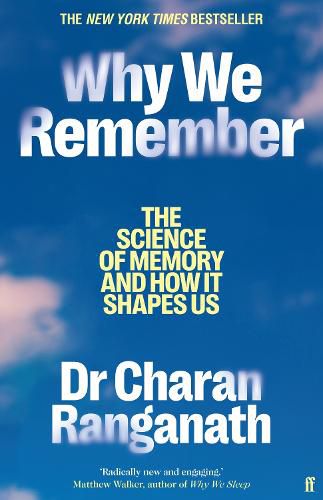
In many ways the subtitle of this book is a better indicator of its content than its headline title. The neuroscientist and memory researcher Dr Charon Ranganath does explore the connection between the evolution of the brain and human social behaviour, but he does this mainly through an exploration of the physical structure of the brain before widening his analysis to a more sociological and legal perspective.
His book starts with the evolutionary ancient structures of the brain: the hippocampus, amygdala and the nucleus accumbens. He then goes on to look at evolutionarily-later developments like the perirhinal and prefrontal cortex and the Default Mode Network. These structural elements of the brain are bathed by neuromodulators like dopamine and noradrenaline. To be honest, I couldn’t really tell you specifically what he argued in relation to these more scientific aspects of his book (I can’t remember!) but while at times he becomes rather technical, the language and approach is fairly low-key so that you don’t feel as if you are reading a science textbook.
What interested me more was the social and behavioural aspects of memory which he also deals with. Memory has evolved to enable us to forget much of what we experience. Instead of being backward-looking, memory plays an important role in orienting us to the new and unexpected, and episodic memory helps us to predict what can happen in the future. It is episodic memory, with its placement of beginnings and endings and its tethering in a specific place and time, that declines most with age, while semantic (i.e. facts and knowledge) memory, which is transferable across contexts, remains fairly constant.
The parts that interested me most were his discussions of memory-construction. A memory is not a grab from a fixed, if sometimes inaccessible, mental film-reel, but is instead the constant retrieval and updating of a memory, with subtle alterations creeping in with every reiteration. Moreover, the story varies depending on the audience for retelling as well, as when family memories are shaped into a story with which to regale listeners. As a local historian who collects oral histories, this is a rather disconcerting thought. And more than merely disconcerting are the implications of evidence in legal cases, where long interrogations and repetitions, and in particular ‘shaping’ questioning, can embed a memory that is different from the original one. Courtroom questioning, which involves retrieval of the memory for an external audience operating on different parameters, shapes memory with sometimes dreadful consequences. It’s all very destabilizing.
I had a recent example of this. I was talking on community radio about our local historical society, and was invited to select two songs and talk about the reason for selecting them. One of them was ‘5.10 Man’ by the Masters Apprentices, which I remember for being presented as a new song by the Masters when they appeared at our school social in 1969. I decided to check the Facebook page for my school, where I knew that there had been a conversation about that social, only to find that other comments made it 1968, and the ‘new song’ being ‘Turn up Your Radio’ (which couldn’t have been right because it wasn’t released then). I found myself questioning my original memory, although self-centred to the last, I’m sticking to my 1969 5.10 Man memory.
Charan Ranganath is no Oliver Sacks. His book is based far more in the laboratory than Sacks’ work, with example after example of rather odd lab tests, often using university students, that add incrementally to the science of memory. I did find his compulsion to praise everybody that he had ever worked with rather cloying as well. He intersperses his analysis with some personal anecdotes that, while being somewhat more ‘memorable’ for me than the scientific parts, were not particularly earth-shattering in themselves, and they lacked the deep empathy of Oliver Sacks’ work. So, interesting enough in its own right, although for me the implications of his work are more thought-provoking than the actual explanation.
My rating: 7/10
Sourced from: Yarra Plenty Regional Library
Read because: I read a positive review in the New Scientist.
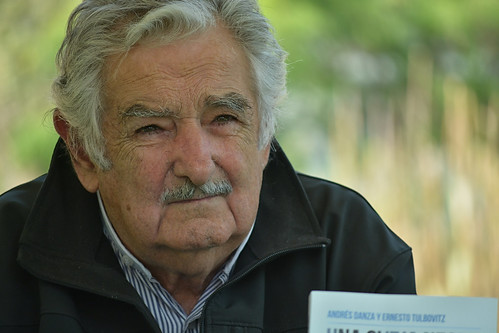
“Pepe” Mujica Cordano was a Uruguayan politician, revolutionary and farmer who served as the 40th president of Uruguay from 2010 to 2015. He died on 13 May 2025. He was imprisoned for 14 years and tortured as a member of the Tupamaros guerillas, and on his release he threw himself into politics. The times suited him: there were a number of left-wing Latin American governments at the time, and the economic situation was good for Uruguay. He never took a salary while he was President, and tootled around in his little blue Volkswagon, continuing to live in his very humble house. After his Presidency, he remained much as he had been while President, giving wide-ranging and wise interviews to journalists.
Today, the United States has a grifter and braggart as President. You could not find a more stark contrast than Pepe Mujica.