Well, both these days were a bit ho-hum. Day 10 Looking Deeply into your Food involved eating mindfully, contemplating a small piece of food in its color, shape, texture, light, and shadow, then imagining its history: the dirt, the crops, the hands that harvested it. Well, I chose a white peach, which had a very strong peachy smell, very juicy and no doubt had a completely industrialized history as it came from a supermarket.
Day 11 Alone with Others involved going somewhere in public, sitting comfortably and watching people come and go, paying special attention to how your sense of self changes in the presence of complete strangers. I actually do this often. Sometimes I get involved (at a distance) from their situation- eavesdropping on their conversations, trying to work out where they’re going and who the people around them are- but other times I observe them as if I’m going to write about them, formulating my descriptions of them in my head. To be honest, I am a rather nosy person, although I rationalize it as being ‘interested’.
Day 8 was quite easy. Called ‘Practising Stoicism’, this challenge involved offer a sincere compliment or expression of gratitude—to a coworker, a barista, or a stranger on the sidewalk. Stoicism has a reputation of being dour but there’s also the aspect of making other people’s lives better. I didn’t find it hard to offer a compliment to a fellow volunteer at the historical society: I did it first, then thought- “hey, I can use that for my challenge”. She seemed rather pleased at the compliment, and I felt pretty good about it too. I actually do try to compliment people just as a matter of course.
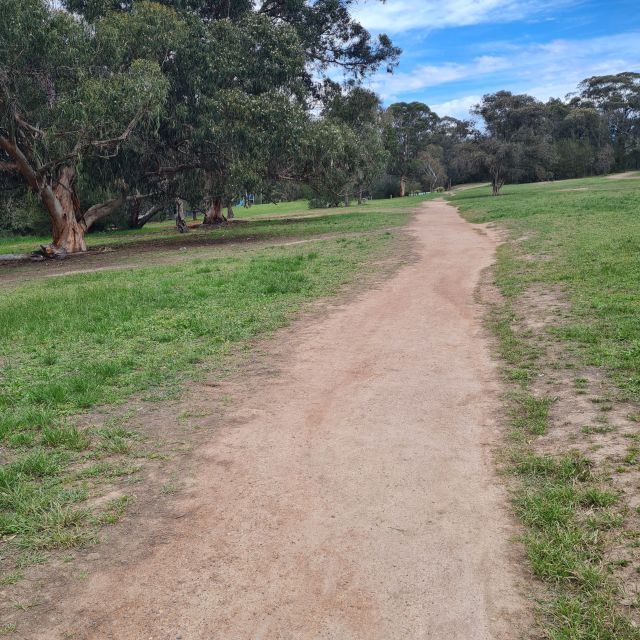
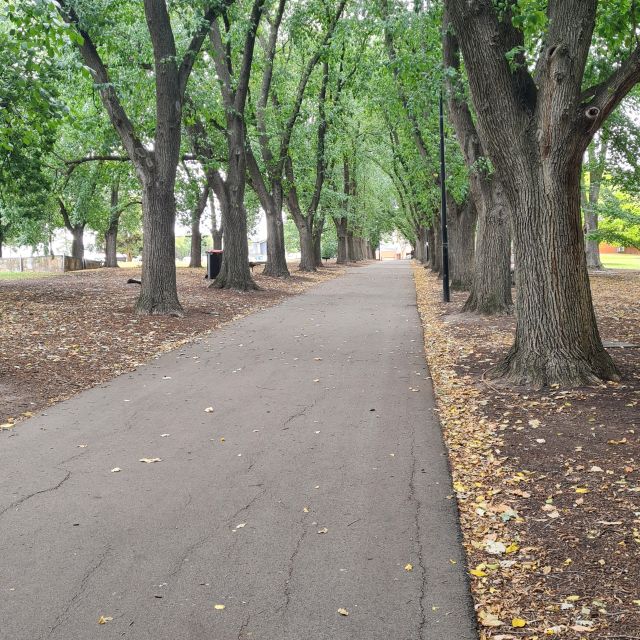
Day 9: Adventurous Listening required taking a walk in your neighborhood and choosing 5 sounds that capture the energy of where you live. I walk down to the museum every Monday anyway, through a long narrow park that was previously a golf course. The five sounds I heard were quintessentially Rosanna Parklands: 1. the loudspeaker from the Monday morning assembly at Rosanna Golf Links Primary School. In fact, there may have even been competing assemblies, because I think I heard the assembly at Rosanna Primary School as well, on the other side of the railway line. 2. A train going past. One of the things I love most about where I live is the easy accessibility of the train. 3. The crunch of gravel as people walked towards or past me. Rosanna Parklands always has people walking there, any time of day. It’s a very popular park. 4. Magpies. Being a decommissioned golf course, there are large expanses of open space which the magpies just love. Such an Australian sound. 5 The radio blaring from a builder’s ute. Because blocks are fairly large here, there is lots of redevelopment going on. For some reason, tradies HAVE to have the radio full volume to regale neighbours and passers-by with Bloke Radio.
I was listening for the sounds which best exemplified the park, and there was no surprise in any of them: I could hear each of them any Monday morning. However, sustained listening for quintessential sounds did make the walk seem faster.
Actually, I took this photo last November before the heat and lack of rain turned everything to brown. And I have no idea why there is no-one there.
Well, not only have I fallen behind with my Waking Up Challenges, but I’ve fallen behind in writing about them as well.
Day 5’s challenge was to sit it somewhere for five minutes and write down exactly what I saw,—objects, movement, colors, textures, light- then to write about what emotions or expectations might be influencing what I saw, and how. Well, I sat at my desk, the same desk that I’m typing this at. I have slimline venetian blinds, and so the light was being sliced up horizontally. What I could mostly see was mess: printoffs of music, little notes to myself, piles of folders, books I’ve read and haven’t decided what to do with. Around me, more piles of books and an assortment of ukuleles. My feelings about them all? Obligation and “I should”s. The one thing that made me smile was looking at my desk calendar which I had printed off with photographs of my grandchildren. Listening to the reflection that accompanied this challenge, I must be a person who sees through a glass darkly (which is not, I must admit, how I perceive myself). Or perhaps I should just clean up this desk (another should).
I skipped Day 6 but it looks interesting, and I might come back to that one.
Day 7 was called ‘Leveraging Boredom’ and the challenge was not to use my phone FOR A WHOLE DAY. Well, I soon decided that I couldn’t possibly do that, but what I could do was to not go onto social media, no Wordle, no Google, no Solitaire, You Tube or The Guardian website for a day. It was disturbingly difficult but I’ve been hating how much time I waste each day, especially at night when I get tired. So, instead of scrolling, I finished reading a book I’ve been enjoying and felt much better for doing so. Instead of watching TV and playing Solitaire at the same time, I actually watched the Foreign Correspondent episode I was watching.
Reach out to someone you haven’t spoken to in a while. Your message needn’t be long or detailed, but make it sincere: “You crossed my mind today, and I’d love to reconnect.”
Or, if you have some extra time and know the person’s address, consider sending a handwritten note.
Well, this all felt a bit cheesy to me, although that might be a bit defensive because I am certainly not good at keeping connections going. I often think of people, but I just don’t take that last step. So I rang my former sister-in-law and had a chat with her. I don’t think I properly entered into the spirit of this one.
Day 3 of my Real Attention Challenge. Today I had to do one task about 80% as well as I otherwise would, and let that be good enough. Huh!
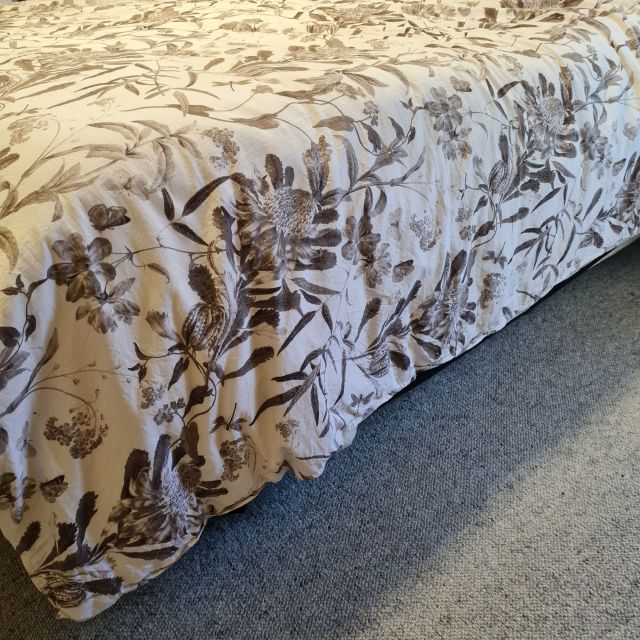
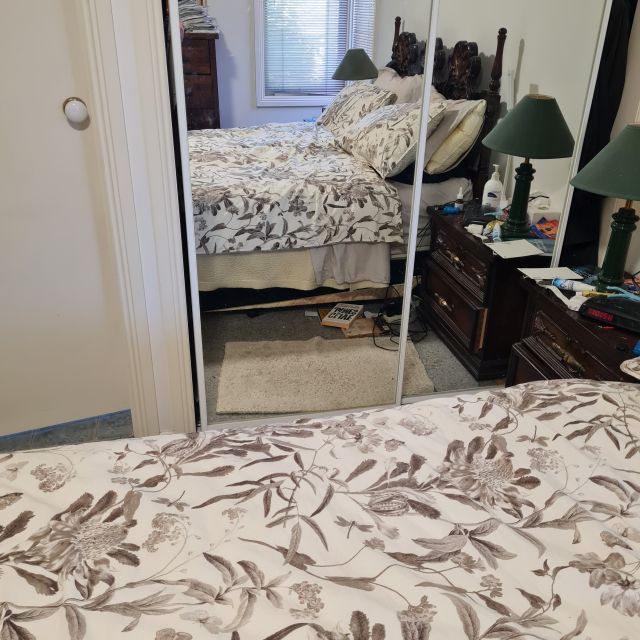
This is my bed. I loathe doonas: give me blankets any day. And don’t get me started on the absence of a top sheet in hotels. Layers, people, layers.
Anyway, we make the bed every morning: sheets (bottom and top), two blankets and a doona in a doona cover more for appearance than anything else. I tuck my blankets in, but Steve doesn’t. Worse still, you can see the blankets hanging out of the side of the bed reflected in the mirror because there’s never enough doona on his side. So every morning I spend a little while walking around the bed, making sure that the doona is even on both sides and tucking in any errant blankets on Steve’s side. I smooth out the wrinkles from the doona, and all is right with the world.
Did it matter? You bet it did. Every time I walked into the bedroom, I’d see the blankets hanging out of the side of the bed and it took every bit of self-control not to run round there, tuck them in and straighten up the doona. It put me in a bad mood for the whole day.
Then just to add insult to injury, I listened to the short reflection that went with this activity, where a man with a smooth voice rationalized his failure to wake up on time on a Saturday morning and get his kid out out of bed to go to kick-boxing by saying that it didn’t REALLY matter. Yes it did! You’re the father- show some responsibility! And if that kick-boxing instructor was a volunteer, that’s a million times worse. That’s the deal: you get your kid here on time, and I’ll teach him.
Does it matter? Yes.
Grrr. I don’t think this challenge is very good for me.
Day 2 of the Real Attention Challenge was to go on a short walk and to choose to focus on one thing only, instead of sweeping your gaze around.
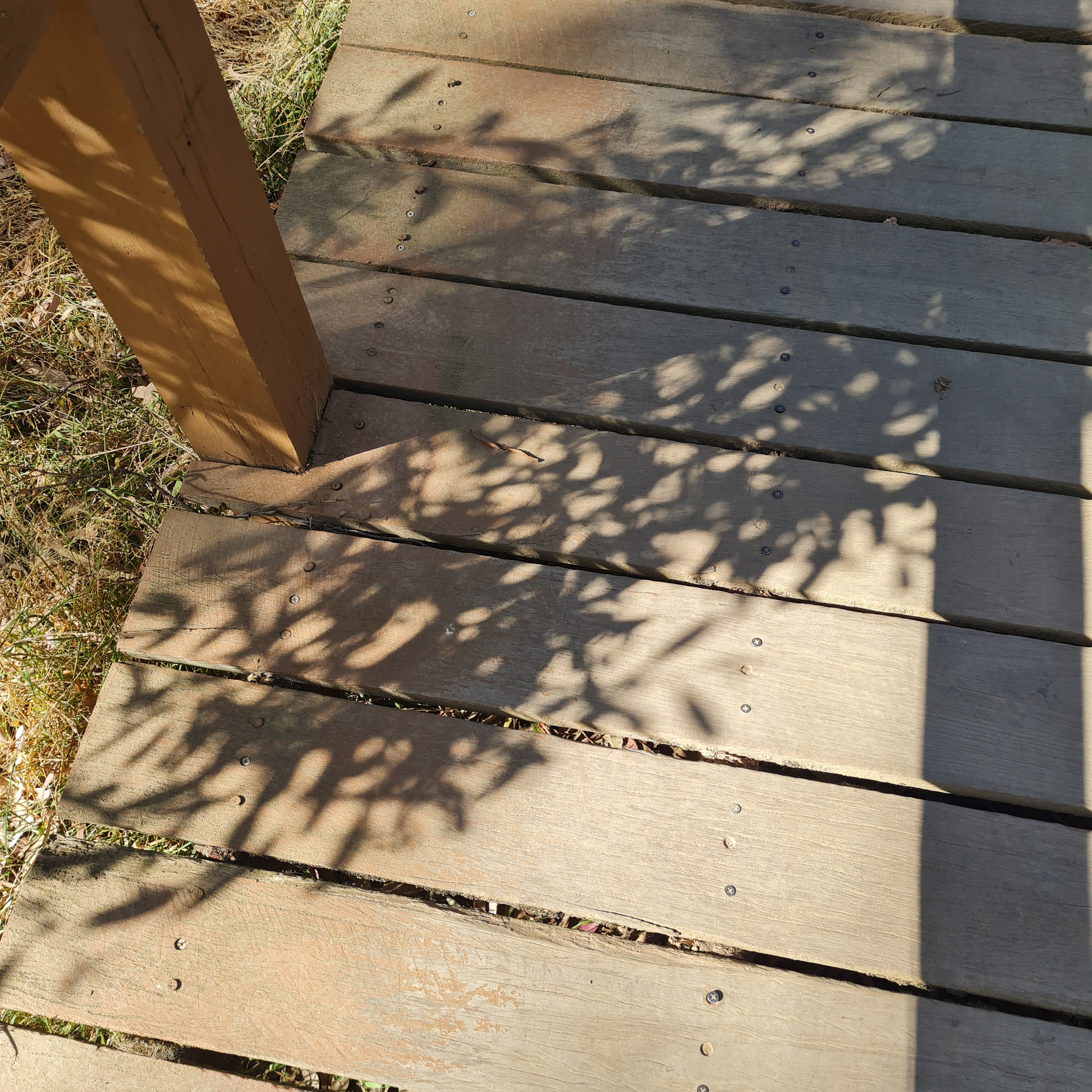
Well the walk part was easy because on Mondays I always walk to the museum in Heidelberg through the Rosanna Parklands. It was quite breezy this morning, so I decided to focus on the shadows from the trees.
I noticed the shadows of the leaves moving, as if they were dancing, and the thick density of the shadows thrown by the tree trunks. I did get a bit distracted by all the dogs running up to me, and I had to consciously fix my gaze on the ground when I passed people, instead of greeting them as I normally would. I felt a bit anti-social and I hope I didn’t pass anyone I know!
So, I’ve been subscribing to the ‘Waking Up’ meditation app for a few years now. This year they launched the Real Attention 14 Day challenge and I thought ‘why not?’ So Day 1 the challenge was ‘try something new’. Uff…something new. I am the ultimate creature of habit and it took me quite a while to think of something that I’d never done before. In the end I came up with two things
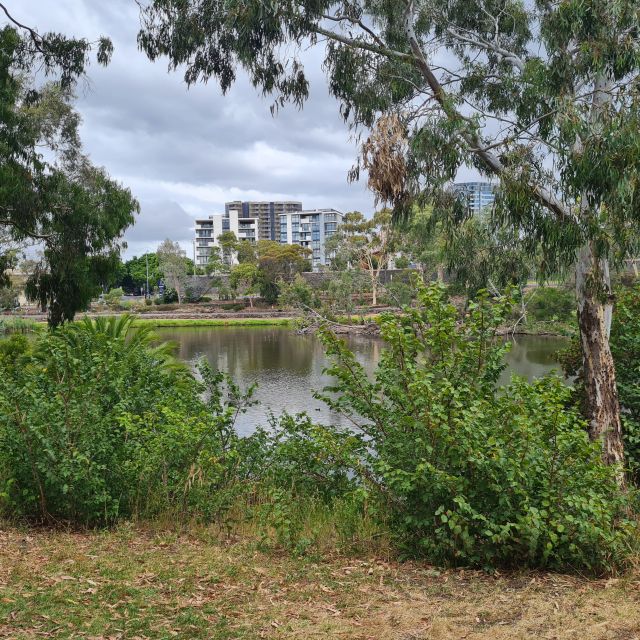
Something New Number 1: Go to Coburg Lake Park.
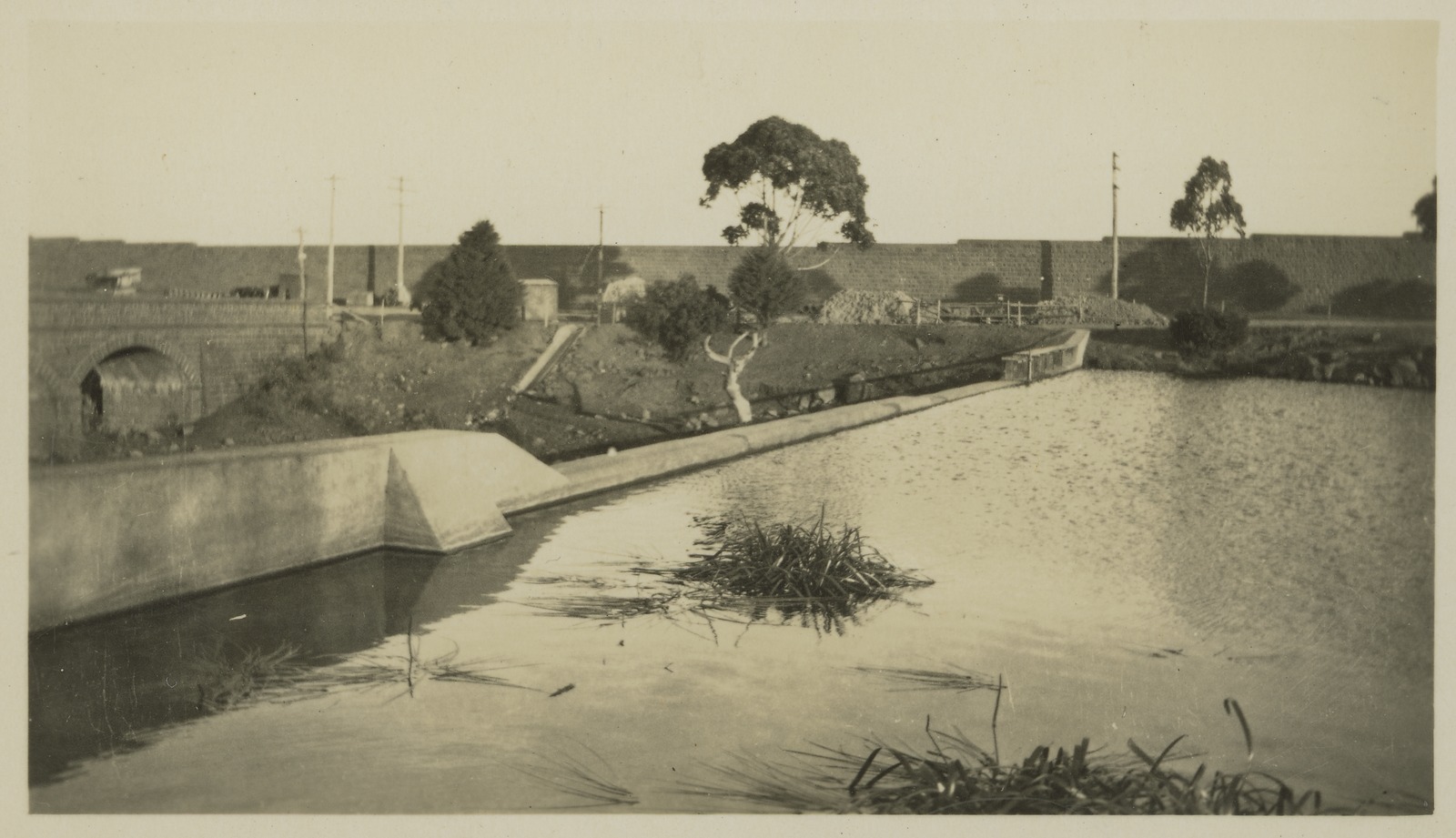
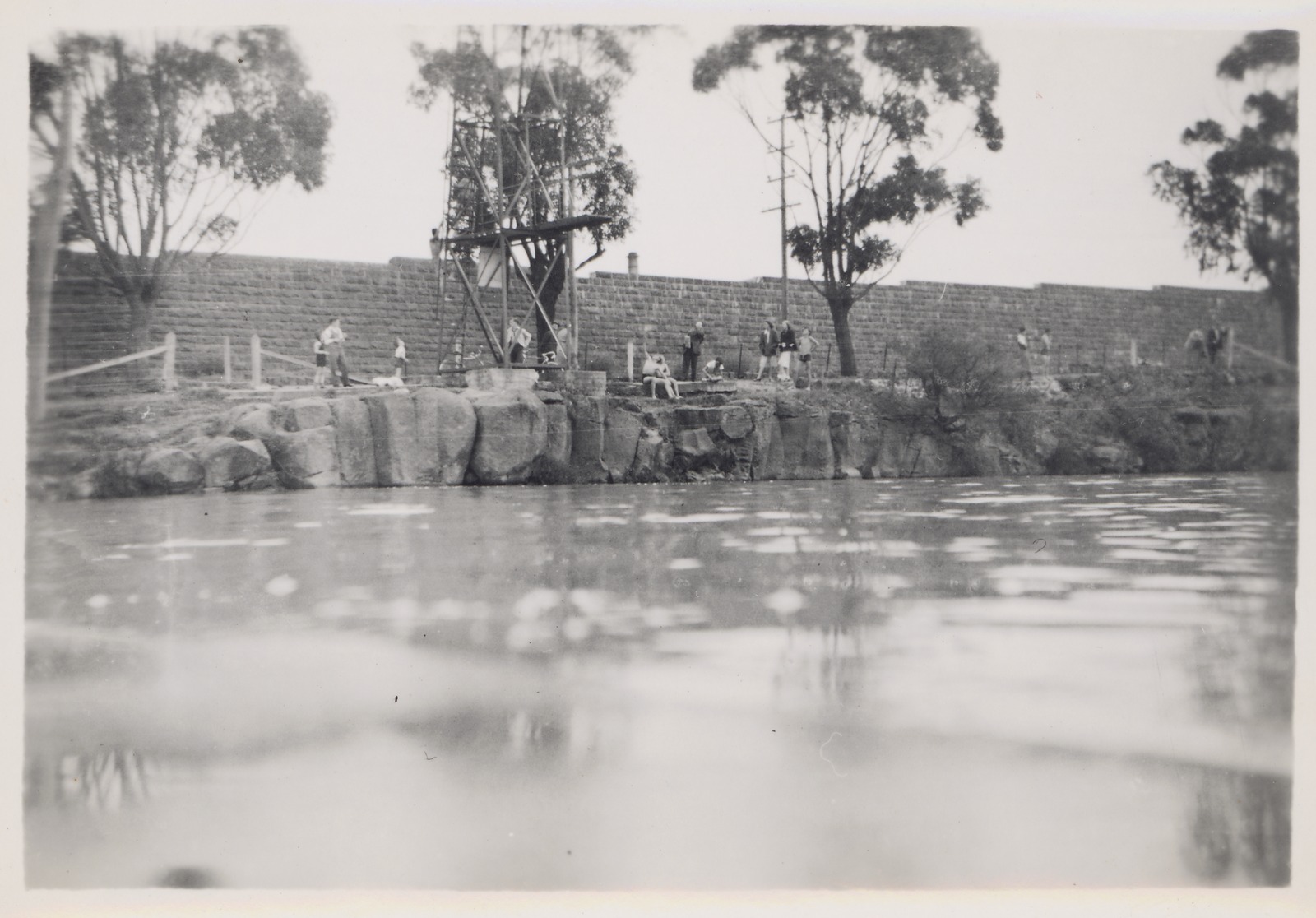
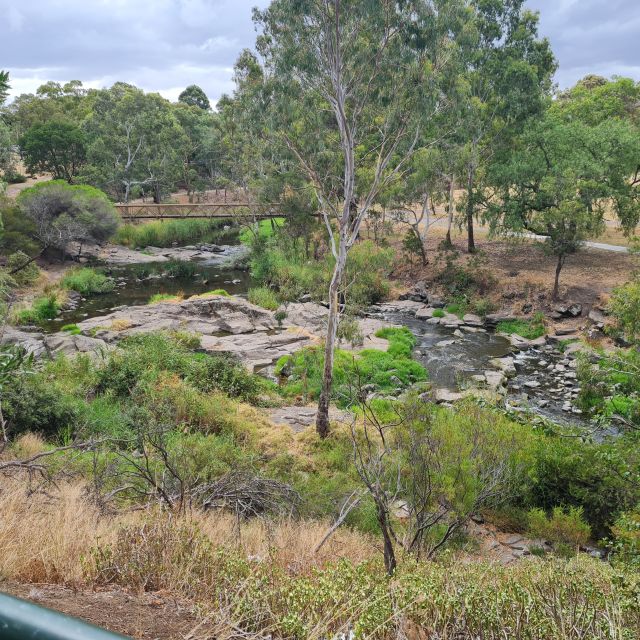
I must have driven past Coburg Lake dozens and dozens of times, but I’ve never actually been to it. It’s on Murray Road, opposite the old Pentridge Gaol which has now been redeveloped into highrise buildings, with shops, cinema etc. all enclosed within the bluestone walls of Pentridge, which can be seen on the other side of the lake in the photo above. I don’t know if I’d really like to live there: it’s just a little bit creepy. The lake is on the other side of the road from the gaol, and is reached by a bluestone bridge. Apparently Coburg had over 40 quarries in the 19th century, and this lake was constructed on the Merri Creek around the time of WW1.
It looked pretty grim when it was first constructed. You can see the Pentridge Wall quite clearly in these photos. Just what you want as a backdrop to a picnic area.
Coburg Lake 1927 SLVDiving Tower 1948 SLV
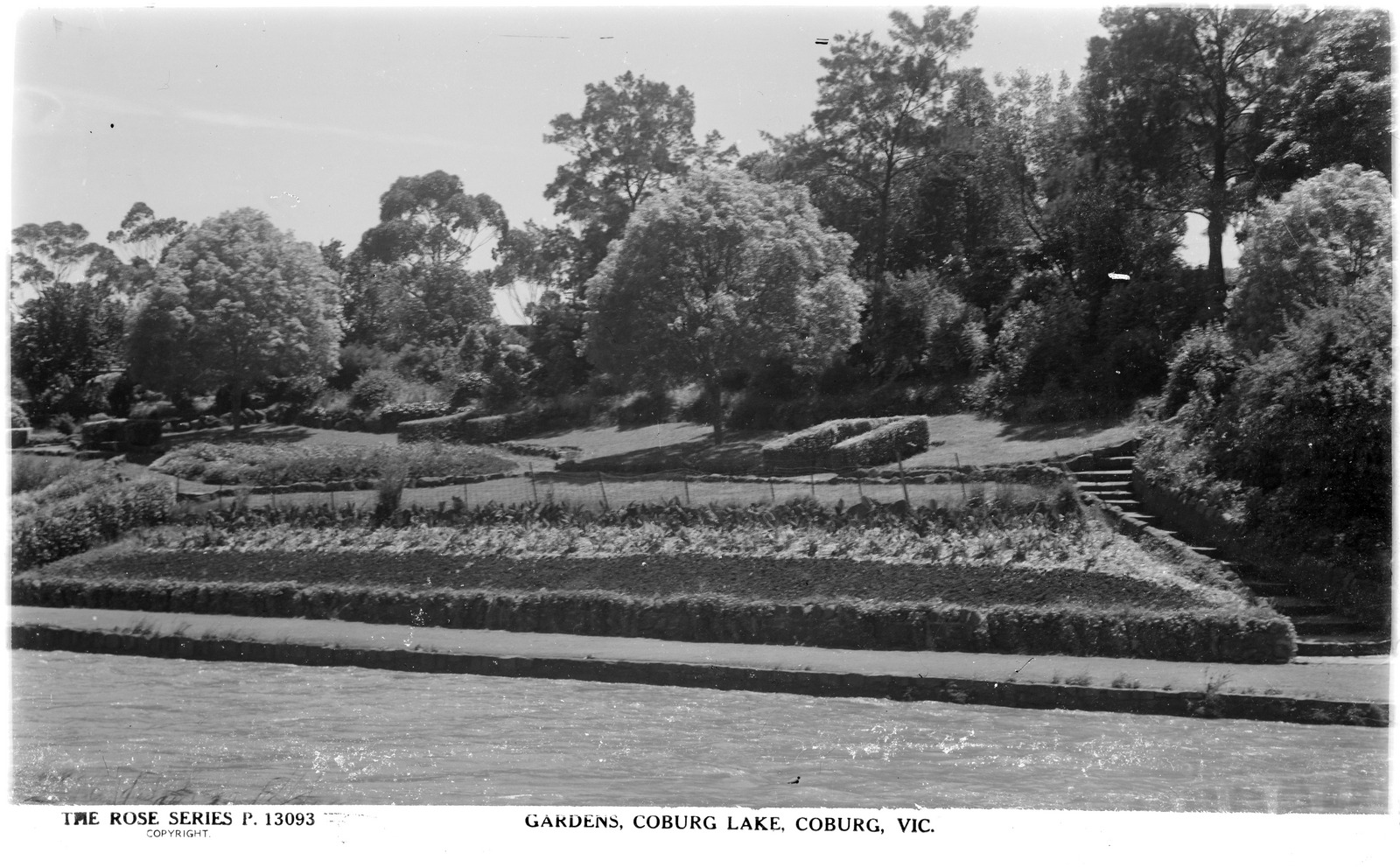
But by mid-20th century it was all looking very formal
There’s still traces of the formal gardens in the park, especially the Avenue of Honour, which was planted in 1919. Originally there was one tree for each soldier, but now the remaining trees commemorate all Coburg servicemen.
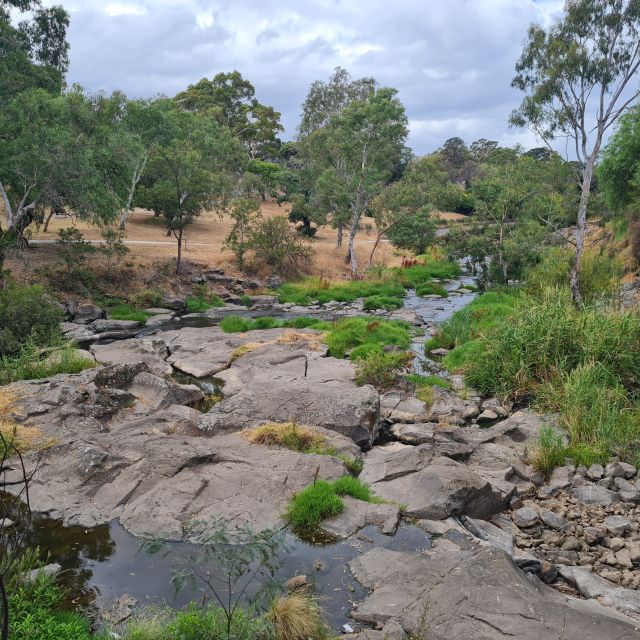
Much of the park, especially around the creek has been de-formalized. Merri (originally merri-merri in Woiwurrung) means ‘rocky’ and you certainly get a sense of the rockiness of this area before it was quarried out and tamed.
I walked along the park, through the gardens and along the creek – a pleasant little amble- until I realized that I had no idea where I had parked the car. The Challenge for today mentioned ‘getting lost’ and for a while that was exactly what I was until I finally crested the hill and saw my little car waiting there for me. So Mission Accomplished.
Something New Number 2
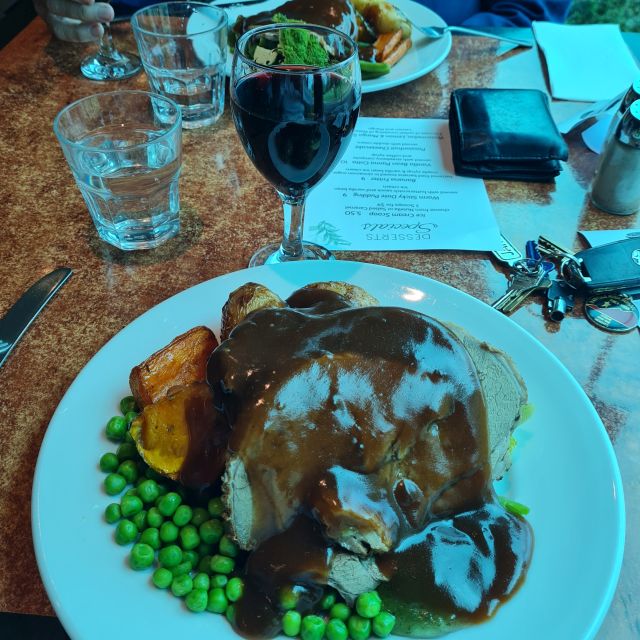
Now, this isn’t really something new because my friend Steven has been doing this for some time, but it’s new to me. He and his friends in the Sunday Roast Club go to a pub and have a Roast of the Day. Now, I have eaten millions of roast dinners, because my mother cooked a roast on Mondays and Thursdays (sausages on Tuesday, chops on Wednesday) and a very nice roast it was too. So nice, in fact, that I have never actually paid to have a roast dinner in a pub or restaurant. So, Something New Number Two was to go to an RSL and pay to have a roast of the day. And, you know, it was just like Mum used to make – none of that ‘jus’ rubbish, but real, thick gravy and roast potatoes, mint jelly, pumpkin and peas. Delicious. Mission Accomplished at Montmorency RSL.
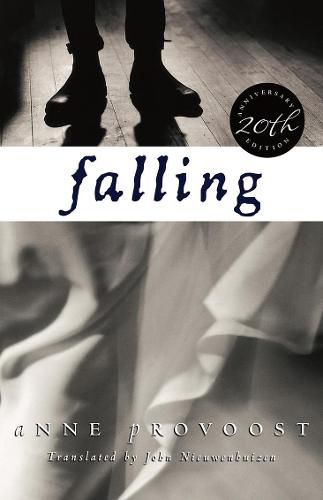
The twentieth anniversary republishing of this book has come and gone, it having first appeared in Dutch in 1995. I had heard of it, and knew that it dealt with Nazism, and assumed at first that it would be set during World War II. It came as a surprise, then, that it was set in the present day (in 1995) with themes that are probably even more resonant and urgent today than they were in 1995. My copy, collected no doubt from my local little library, had obviously been a school set-text, and the book won many Young Adult awards on its publication.
Lucas has accompanied his mother to Montourin, a small Belgian provincial town, to clean out his late grandfather’s house. The book opens with Lucas standing by the side of the road as his friend Caitlin is brought back from hospital after an accident that occurred three weeks earlier. The narrative then spirals back to explain who Lucas and Caitlin are, how she was injured, and Lucas’ part in that injury. It is written in first person, from Lucas’ viewpoint, thus aligning us as readers with his perspective of events in the weeks leading up to Caitlin’s injury.
On arriving at Montourin, he finds that there is an unspoken edge of hostility towards him and his family, exemplified by Soeur, an old nun in the nearby convent in which American-born Caitlin is staying. He does not understand why, and as he sees his mother sorting through and destroying his grandfather’s documents and belongings, he knows that something is being kept from him. He gradually learns that, after the death of one of his children during the hungry days of WW2 occupation, his grandfather denounced fifteen Jewish children and the nuns who were hiding him in the neighbouring convent, out of grief and resentment that these Jewish children were taking food rations that could have saved his daughter. Some in present-day Montourin shunned his grandfather for this action; others supported it.
Their support was generally unspoken, but outright admiration was voiced by Benoit, a young man older than Lucas, who combines menace, charisma and manipulation in his neo-Nazi outlook. Lucas is drawn into Benoit’s sphere and becomes involved, with varying degrees of culpability, in Benoit’s terrorist plans against the Moroccan refugees who have moved into the town. At the same time, he is attracted to the inscrutable Caitlin who fluctuates between flirt, friend and heartbreaker as she, too, seems to be becoming friendly with Benoit. But when Caitlin is involved in a single-car accident- the reasons for which are unclear- Lucas acts decisively, if precipitously, in a way that will change the rest of Caitlin’s life. I’m not really quite sure about the ending of the book, which is deliberately left obscure, but which struck me as a little melodramatic.
Since 1995 the presence of African refugees in Europe has only increased, as has the prominence and apparent electoral acceptability of neo-Nazi parties. This book is a warning against the slow slide towards fascism, especially for young men with no responsibilities who yearn acceptance from other young men. I can see why it would be chosen as an upper-school text, especially given its urgent relevance today. I’m not sure how it would be received by high school students though- it moves fairly slowly, and I wasn’t particularly satisfied by the ending.
Big Ideas (ABC) This talk, recorded at the University of Technology Sydney’s Vice Chancellor’s Democracy Forum on 14 May 2025 features Sarah Churchwell, who is one of the presenters of the Journey Through Time podcasts that I’m enjoying. She is the author of The Many Lives of Marilyn Monroe, Careless People: Murder, Mayhem and The Invention of The Great Gatsby, Behold, America: A History of America First and the American Dream, and The Wrath to Come: Gone with the Wind and the Lies America Tells. From the ABC website it says: Sarah Churchwell takes you on a gripping and confronting journey into America’s recent past to explain its extraordinary present, starting with dark story at the heart of that American classic Gone with the Wind. Knowledge lies at the heart of a healthy democracy, and its many custodians include libraries, universities, cultural institutions, and a free and independent media. So what happens when these institutions are intimidated, dismantled or destroyed, as is happening in America right now, under the government of President Donald Trump? I really enjoyed it.
The Birth Keepers- the Guardian. The Birth Keepers This year-long investigation by Sirin Kale and Lucy Osborne looks at Emilee Saldaya and Yolande Norris-Clark, two influencers who made millions selling a radical version of free birth where women would birth ‘wild’ with no medical intervention whatsoever through their Free Birth Society. I was appalled by the length of time that some of these women laboured after their waters had broken, and the hands-off attitude of a baby ‘choosing’ to take a breath. Despite having no formal medical training, these two doulas created courses that have ensured that the Free Birth movement has moved world-wide, while netting them a fortune. There are six episodes.
Short History Of.. Having seen the film Nuremberg, I decided I’d listen to Short History’s take on The Nuremberg Trial. I was far more impressed with this podcast than I expected, fearing a couple of kids giggling, but it was very professional and the narrator has a lovely voice. At the Moscow Conference of 1943 it was decided that Germany would be held criminally responsible for the atrocities committed during the war, but this was uncharted territory. Churchill wanted the death penalty, without trial; Stalin wanted a judicial trial but with the outcome already decided, America wanted the Germans treated as any other judicial process. One of the problems was that the Germans’ actions were not crimes when they were committed. In the end the prosecutors settled on four charges (i) conspiracy to wage aggressive war, which encompassed the crimes before the war began (ii) crimes against peace (iii) war crimes (iv) crimes against humanity. It was decided that the trials needed to take place in Germany in front of the German people. They would try 24 people, comprising a cross-section of high ranking officials across all sectors, although in the end there were only 21 defendants. It was not difficult to find defence lawyers, because many lawyers craved the spotlight in an exotic social environment. They did not use witnesses, but documents. In the second week they showed film of the concentration camps, which had a seismic impact. Hermann Göring was the ringleader of the defendants: he and Speer were the most forceful, the rest were rather pathetic. 12 were sentenced to death, 7 others were imprisoned and there were 3 acquittals. Within 10 days all appeals were rejected. The hanging equipment arrived on 13 October, but on 15 October Göring suicided before his execution which was scheduled that night. The International Military Tribunal packed up at the conclusion of the first trial. There were twelve other Nuremberg trials, but the first one was the only truly international trial.
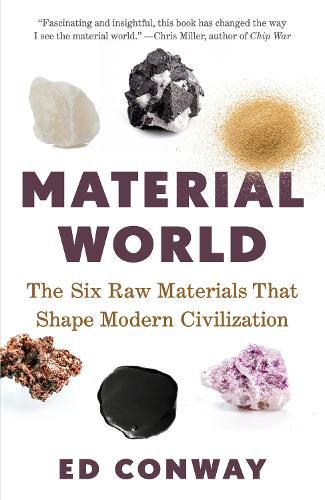
When my son said that this was his favourite book of 2025, I took notice. When I told him that I had borrowed it from the library, he hedged a bit, saying that he didn’t know if I’d like it. He’s wrong: I loved it. I could barely put it down over the three days that I read it: sand, beach and grandchildren notwithstanding.
I’m not a particularly science-y person, but this book is far more than ‘just’ science. Like a Mark Kurlansky book (think Salt, Cod etc.) it combines science, history and travel, but it also packs quite a bit of political analysis as well. I’m writing this on 5 January 2025 as the reality of Trump’s bombing of Venezuela and imposition of US oil interests is sinking in, and Conway’s comments about autarky (i.e. the policy of being self-sufficient that underlies Trump’s ‘America First’ policy) seem particular apposite right now. Ed Conway is the economics and data editor of Sky News and a columnist for The Times (London), which are right-wing connections that do not engender my trust. However these contexts are not particularly apparent in Conway’s book, except perhaps for the ultimately optimistic viewpoint with which he ends the book. Quite apart from his politics, his journalist background equips him with the eagle eye for a good anecdote and the ability to bring the narrative back onto more general-reader territory when it threatens to wade into technologically and scientific details.
In the introduction he identifies himself as a denizen of what he calls ‘the ethereal world’:
…a rather lovely place, a world of ideas. In the ethereal world we sell services and management and administration; we build apps and websites; we transfer money from one column to another; we trade mostly in thoughts and advice, in haircuts and food delivery (p.13)
He distinguishes this from ‘The Material World’, which undergirds our everyday lives by actually making things work, often through companies whose names are unknown to us, but which are more important than the brands that use their output:
…operating stuff in the Material World….you have to dig and extract stuff and turn it into physical products…a difficult, dangerous and dirty business (p.14)
He chooses six raw materials – sand, salt, iron, copper, oil and lithium- which are not only important substances in the world, but are the primary building blocks of our world and have fuelled the prosperity of empires in the past. They are the very hardest to replace. These six materials form the basis of products several steps up the chain: sand, for instance, is the basis of silica which underpins optical fibre and the concrete and cement that makes modern high-rise cities possible. In analysing these materials, he traces back their ‘discovery’ to ancient civilizations, often by accident or through observation, before being intentionally created with processes that often form the basis of present methods. Concrete, for example, was ‘discovered’ three times: there is evidence of cement use in Neolithic ruins in Turkey that date back more than 10,000 years; the Bedouins created concrete-like structures in 6500BCE, and the Roman used a form of concrete in many of their buildings before the recipe was lost for hundreds of years following the fall of the Roman Empire. The discovery of On Architecture by Roman architect Vitruvius, and its translation into French and English, triggered the 18th and 19th century quest for new concoctions to replicate or surpass the Roman recipe (p. 75). Perhaps because he is a British journalist, he highlights deposits in the British Isles rather more than we would think of today, and both German and British ingenuity are highlighted, as well as American. Thomas Edison makes several appearances, but the complete absence of any women at all highlights the male-dominated nature of science and invention.
The structure of the book has a sense of symmetry that I find appealing: six raw materials examined in six parts, each with three chapters, an introduction to the book and a conclusion. I can’t vouch for the reliability of his information, but each time I exclaimed “Hey, did you know…?” to my much more scientifically-oriented husband, he already did know and what he knew aligned with the information in the book.
Unlike many in the media companies and publications he works for, Conrad does not deny the reality of climate change and the environmental degradation that occurs as part of the mining and extraction of his six materials. However, as he points out, the production of an environmentally harmful material was often prompted by the desire to replace an earlier, even more harmful energy source which would have brought about an even more devastating environmental impact. e.g. coal replacing wood, kerosene replacing whale oil, or polyethylene replacing gutta-percha from the rapidly disappearing Malaysian guttapercha tree. It is this pattern that contributes to his optimism about our ability to mitigate climate change in the long term, if we can overcome the short-termism of the political cycle and make financial and lifestyle sacrifices for an unborn generation- actions for which there is equivocal evidence so far.
However, he is not completely Panglossian. Australia, and Rio Tinto in particular come in for trenchant criticism over the destruction of the Juukan Gorge for the extraction of iron ore. As he points out, part of the luxury of living in the ‘Ethereal World’ is that we can shunt the environmental impacts of our lifestyle into the ‘Material World’ which often happens to be a third world country. Wealthier countries, like Chile and Australia to a lesser extent are starting to question the environmental costs when the extraction occurs in their country instead of someone else’s.
Despite the shift towards autarky promoted by Trump in particular, and turbo-charged by the world’s realization of the precariousness of supply chains during COVID, the story of these six materials is also the story of globalization. Here in Australia we see the shipping out of raw materials (especially to China), but the circulation is much broader than this, with the finished product integrating multiple processing steps from right across the globe. Such processes make the world more inter-connected than America/Australia/China first politicians might desire.
The Material World is – well, material- but it has political implications. While the rest of the world panics about China’s dominance of the battery supply chain, China panics about its reliance on the rest of the world for its raw materials- hence China’s Belt and Road strategy. Particularly in relation to the production of advanced silicon chips, security is uppermost in the attempt to prevent industrial espionage and to make sure that China does not gain this ability. Ironically, China is unlikely to develop the hyper-pure silicon from which the silicon chip ‘wafers’ are made because the crucibles to melt it are available (so far) only from a single site at Spruce Pine, in North Carolina, operated by only two companies, Sibelco (Belgium) and the Quartz Corp (Norway). This raises the unsettling question of the effects of a landslide on the road that winds to Spruce Pine, or the malicious spraying of the mines with a particular chemical. But this single source is unusual: there is usually another source or another product to take the place of a threatened material. His six materials highlight the international reach of companies based in one country, and the diversification of such companies into new processes as part of the evolution of products and materials.
This evolution of products and materials lies at the heart of the optimism of the book. We have worked out how to turn complex products into commonplace and increasingly cheap items (for example solar panels and semiconductors). Although he has chosen six materials for his analysis, they are intertwined: batteries are just as reliant on copper as they are on the lithium inside them; steel inside concrete is a better building product than either alone. Even though we need to keep extracting materials to make the very ambitious transition to net zero, with solutions like hydrogen and wind turbines requiring huge amounts of energy, there is one major difference. In the past we used fossil fuels to burn, but now we are using them to build.
For years, people assumed that it would be impossible to make iron and steel at the scale we can today. Rediscovering the recipe for concrete seemed like a pipe dream. Scientists doubted that we would ever be able to tame extreme ultraviolet light, let alone use it to mass produce silicon chips. Will we look back in a decade or two and wonder why we ever fretted about producing enough hydrogen to back up the world’s energy grids, or why we struggled to generate copious power from the hot rocks deep beneath the earth?…If there is one lesson you should take from our trip through the Material World, it is that with enough time, effort and collaboration, these things usually happen….Humankind has, since its very first days, left a visible imprint on the earth. There is no point pretending otherwise. It is part of our story. It has allowed us to live longer, more comfortable lives than ever before. It has enabled us to fill the planet with more individuals than anyone could have imagines, with 8 billion brains and 8 billion sets of hopes and dreams. We are also capable of living far more sustainable, cleaner lives, diminishing our destruction and contamination and living in closer harmony with the planet. We will do so not by eschewing or dismissing the Material World, but by embracing it and understanding it. (p. 443)