Category Archives: Uncategorized

Movie: Birds of Passage

I’ve avoided watching Narcos and all those drug films set in Colombia. This is one different, however. It shows the effects of the drug trade on an indigenous family over a number of decades, as they become more affluent and family loyalties are stretched and broken.  Mainly in Wayuu dialect, there isn’t much Spanish, and it’s pretty fast and indistinct.

Interesting, both as a story and as visual anthropology.

My rating: Four stars

I hear with my little ear: Podcasts 22-31 October

Empires of History Podcast. The Ottoman Series. I’ve decided to join a class at my U3A on the History of the Ottoman Empire. I missed the first class and am feeling a little out of my depth, so I’ve downloaded this series. It’s American and I’m not sure whether it’s complete or whether he ran out of puff, because the last one was in June this year. Who knows, perhaps it’s a long time between episodes. Even though many of the names are unfamiliar, he doesn’t move so quickly that they all merge into a big muddle. He’s obviously reading it from pages (which you can hear rustling) and the production values are pretty basic, but I’m finding it interesting and useful. However, the special episode with historian John McHugo was pretty ordinary.  I’m up to Episode 8 The Thunderbolt Strikes, Dec. 19, 2018.

In Our Time Another podcast that’s been hanging around on the phone for ages, and first recorded in 2016 is 1816: The Year Without A Summer. During 1815 Mt Tambora erupted in Indonesia, the largest eruption in recorded history. This episode has a volcanologist , a historian and a professor of literature who discuss the world-wide ramifications of this eruption. It caused famines in post-Napoleonic Europe, it might have triggered the west-ward movement of anti-slavery Americans across the mid-west, and the wild weather it provoked kept the Romantics inside their holiday home in Geneva, making up stories like Frankenstein.  It’s an interesting application of big history onto an abrupt environmental intervention.

Earshot (ABC). I must confess that you’re NOT likely to hear “Quick- an emergency!- we need a historian!!”  But in the case of Mosul, when it felt to ISIS, a historian was just what was needed to report the facts of what was happening, on the ground, when journalists could not get there. At great personal danger Omar Mohammed created the Mosul Eye blog (which still operates).  This Earshot Episode Mosul Eye This is his story.

99%Invisible Apparently Toronto has a love/hate relationship with its raccoons. Who knew?- I didn’t even see a raccoon while I was there. In fact, have I EVER seen a raccoon? Anyway, apparently they get into the rubbish and strew it around, so the City authorities contracted a design company to design a raccoon-proof compost bin.  They had to lock securely, so that the raccoons couldn’t get in, but they also had to open automatically because they were collected by a truck with a motorized arm (like the trucks we have here in Melbourne) The resulting bin, described in Raccoon Resistance had a sort of dial-lock, but would it defeat the raccoons??  The website has videos which had me cheering for the raccoon. (The answer is no…)

The Documentary (BBC). Professor Elizabeth Dore conducted the first large-scale oral history project in Cuba in thirty years, and this podcast Cuban Voices is based on some of the interviews she conducted. This episode was put together after the selection of Miguel Diaz-Canel to replace Raoul Castro in 2018. Her respondents talk about the shortages during the Special Period, and some speak with nostalgia of the time before Cuba was opened up to tourism.

Assignment (BBC)  Genoa’s Broken Bridge. In August 2018 the Morandi bridge in Genoa collapsed. Opened in 1967, it was one of the longest concrete bridges in the world, connecting Genoa with the rest of Italy, and Italy with Northern Europe.  When it collapsed, killing 43, questions began to be asked about its construction methods and the effects of privatizations.

The History Listen (ABC) Historian Ruth Balint talks about her mother’s recipe book in Cooking for Assimilation. Her mother Evi, came to Australia with her husband and baby son in 1938 after Hitler marched into Vienna, before the wave of post-war European immigration from 1945 onwards.  Her recipe book, written first in Hungarian but increasingly in English, documents her mother’s growing network of neighbours and friends in that time-honoured tradition of recipe-swapping.

Letters of Love in World War II. I can’t bear to keep listening because I’m using them up and there’s only two more left after this.  But I can’t bear to not listen because I want to hear what happens next. In Episode 6 Germany: On the Approach, it is 1944 and Cyril is in Europe, going through France and then across to Germany as the German army is in retreat. Interestingly, they start re-numbering their letters to each other from ‘1’ again after Cyril’s short break in England.

Outlook (BBC) I’m quite claustrophobic, and the idea of diving INTO an iceberg makes me feel lightheaded. It might look beautiful, but all that calving and grinding and moving….no thanks. The Diver Trapped Inside an Iceberg tells the story of Jill Heinerth, photographer and explorer who eventually decided that perhaps it was dangerous after all.  30 Oct 2019


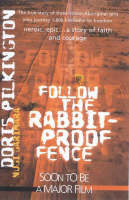
‘Follow the Rabbit-Proof Fence’ by Doris Pilkington (Nugi Garmimara)

pilkington_rabbit

1996, 135P.

Am I the only person in Australia who has not read ‘Follow the Rabbit-Proof Fence’ or seen the movie? I suspect that I am.

First published in 1996, reprinted in 2000 and released as a movie in 2002, it is the story of Molly (14), Daisy (11) and Grace (8) who were forcibly removed from their families and taken to Moore River Native Settlement in 1931. The three girls escaped and walked home 1600 km in three months through the West Australian desert, orienting themselves in the huge expanse by following the rabbit-proof fence, a long fence intended to stop rabbits from entering the West Australian pastoral district.

Doris Pilkington is Molly’s daughter, but she knew little of her mother’s history until her aunt told her. Pilkington, like her mother and aunt, was also part of the Stolen Generation. She, too, ended up at that same Moore River, having been separated from her mother Molly at the age of four, and not seeing her again for more than twenty years. She didn’t learn the story of her mother and aunt’s escape for another ten years after that. (You can read more about the writing of the book here).

I was surprised that much of the book was history- it took up to p. 75 (in a 135 page book) for the girls to escape.  This history started with white invasion, tribal leader Kundilla (I’m not sure whether he was a historical figure or a narrative device); whalers; Swan River; and the decline of Aboriginal society.  She emphasizes the Mardudjara people as the traditional owners when white settlers brought their cattle, and describes the ‘coming in’ to the stations. Her focus is particularly  Jigalong station between 1917-1931. I was reminded here of Ann McGrath’s 1987 history Born in the Cattle which provides a nuanced account of Aboriginal cattle workers, the texture of station life, and the symbiotic relationship between pastoralists and workers.

From p. 75 on, the story fits into a more familiar ‘Voyage and Return’ narrative. Once the girls have started on their trek, she uses historical documents to support her narrative e.g. the correspondence of A. O. Neville (Protector of Aborigines) and copies of telegrams that criss-crossed W.A. The girls are by no means lost: they know where they are, and so do many other people in the homesteads, who offer them hospitality and then go on to report them to the Protector. In the end, the bureaucratic decision is made that it would be too expensive to retrieve them, and they are just let go.

In many ways, the postscript is most damning. Molly, along with her two daughters, was sent again to Moore River. She absconded again taking her 18 month old daughter and leaving Doris  behind. She retraced the walk that she did nine years earlier to return to Jigalong, only to lose her remaining daughter as well, when she was taken by the authorities. Both Daisy and Gracie would have been viewed as ‘successes’ under the assimilation policy of the time. Both married and were employed as domestic help. Daisy ended up moving to a Seventh Day Adventist Mission after her husband’s death.

This book has been a favourite on school reading lists for many years. Larissa Behrendt has written an essay for this school audience, which raises some interesting points.

I imagined that this book would be more emotional and angry than it is. The front-loading of history at the start of the story does make it somewhat abstract, and there is a flatness in the telling that I didn’t expect. I’m sure that on the screen, the landscape would be stark and featureless, but in the book more emphasis is placed on how Molly ‘reads’ the country, rather than on what it lacks. I look at some of the blurbs for later editions and the movie, which highlight ‘adventure’ and ‘courage’. These things are here in the book, but so too is unspoken love and knowledge for country, a quiet and stubborn determination, and a slow-burning injustice.

My rating: 7/10

Read because: CAE bookgroup choice.

AWW2019

I have included this on the Australian Women Writers’ Challenge database.


I hear with my little ear: Podcasts 7-21 October 2019

I’ve fallen behind so I’ll compress these into one entry

Letters of love in World War II. In Episode 5 D-Day Visitations we are now in 1944 and Olga is surprised and delighted by Claude’s fleeting visit home to take control of a new tank. The short visit rekindles their relationship which was looking inexplicably rocky in the last episode.  I’m enjoying this so much that I only listen to one episode at a time to make it last longer.

Rough Translation. This podcast seems to have changed direction this season. It used to be about a concept and how it was expressed in different cultures. The episode Mom in Translation is more about how the individual changes when in a different culture. In this episode, an American mother married to a soldier of Filipino background shifts with their young children to Japan, where now she is the odd one out with her blonde hair and pale conmlexion. Her little primary-school-aged son, who never fitted into the American schools on army bases, decided that he wanted to attend a Japanese school, which meant that she had to readjust her ideas about mothering.

Revolutionspodcast. The Tsar might have done the progressive thing by emancipating the serfs (one of those give-with-one-hand-take-with-the-other arrangements whenever some powerful group is threatened by losing an ‘entitlement’) but he was still the No. 1 Assassin Target amongst radicals.  In The Tsar Must Die, we hear about the multiple near misses that man had…. for a while.  In Episode 10.16 The Russian Colony we hear about the different radical groups in the 1870s and 1880s. I found this one a little hard to follow – too many Russian names to listen to!

History Workshop  In Concentration Camps and Historical Analogies, historian Dan Stone unpacks the idea of a ‘concentration camp’, challenging the accusation that Trump’s migrant detention centres qualify as such. His definition has the inmates of a concentration camp removed completely from judicial oversight and any system of justice. He distinguishes between the Nazi extermination camps and concentration camps, arguing that people did not stay for any length of time in the Nazi camps, and that these should not be used as the template for a concentration camp. He demonstrates the wide range of concentration camps across 19th and 20th century history.

Outlook (BBC) Identical twins often have a special bond, and when Alex Lewis lost his memory after a road accident, his identical twin Marcus helped him to rebuild his lost memories.  In The painful secret I hid from my twin, there’s a very textured story of memory, secrets and identity.  It’s difficult listening, but very good. It’s the basis of a documentary released on Netflix and some cinemas called “Tell Me Who I Am”.

Earshot. While we’re into some difficult listening, ‘The Call: Inside the Christian Brothers‘ is also very good but challenging. The Christian Brothers have really been brought into disgrace in the Royal Commission against Institutional Sex Abuse, and this program has interviews with two former Christian Brothers who joined as mere pre-adolescent boys.  What a stuffed-up system.

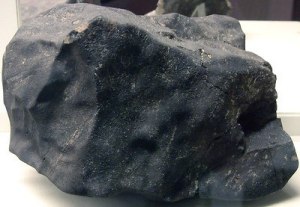
Murchison_meteorite

Carbonaceous chondrite (Murchison Meteorite) by James St John https://www.flickr.com/photos/jsjgeology/14601493358

Off Track When I was in the Atacama Desert in Chile (says she casually), I visited a meteorite museum. In The unlikely tale of the Murchison meteorite, we learn that good old Murchison also has a very rare meteorite that sits in its local historical society. 4.6 BILLION years old. I can’t even think of a number that big. Meteorites from this shower have ended up in museums in many countries.


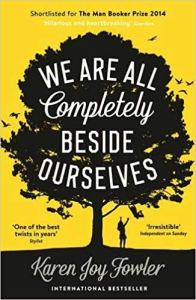
‘We Are All Completely Beside Ourselves’ by Karen Joy Fowler

Fowler_WeAreAll

2014, 336p.

One of the problems with writing a book that is almost completely reliant on a big narrative twist in the middle is that you can’t really review it, without spoiling it for others. So, I won’t do either- review it, or spoil it.

The book is told in the conversational narrative of an American woman looking back over her childhood, which was ruptured when her sister left.  And I’ll leave it at that.

How would I have reacted to this book without the ‘great reveal’, I wonder? Probably not as favourably, because there’s a sort of shocked delight in going back over your assumptions when you’ve had them turned upside down.

Once you’ve read the book, do an image search for the front cover. It’s interesting that some of the front cover designs give away the story much more than the cover on the version I read (above).

Read because: it was a CAE bookgroup selection

My rating: 7/10

I hear with my little ear: Podcasts 24 – 30 September 2019

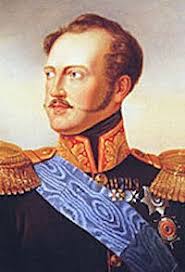
nicholasIRevolutionsPodcast continues on, and Mike Duncan’s project of following through different revolutions across the globe and over time is really bearing fruit as he is able to draw connections between one revolution and the other. In Episode 10.13 Orthodoxy, Autocracy and Nationality he looks at Czar Nicholas I and his repressive response to revolutionary fervour both in the 1820s (when the whole of Europe was nervous) and in 1848 when revolution emerged in many countries. His response of Orthodoxy, Autocracy and Nationality certainly has resonances in Russian history today. Then in Episode 10.14 The Tsar Liberator, the Crimean War exposes the rot at the core of Russian society, and moves on to the new Czar Alexander who finally bites the bullet and deals with the Emancipation of the Serfs. I found lots of parallels between the Emancipation of the Serfs in Russia and the Emancipation of Slaves in the British Empire- the need to ‘buy off’ the property owners and the burdens placed on the ‘liberated’ people.

Duolingo The podcast Autostop en Afghanistán (Hitchhiking in Afghanistan) has been hanging around on my phone for a while. It’s about an Argentinian travel writer who decides to hitchhike through Afghanistan, as a counter-narrative to the rhetoric of the war on terror. Did you know that one of the Spanish terms for ‘hitchhike’ is ‘viajar a dedo’ which literally means ‘travel by finger’? Mixed English and Spanish, with a transcript available – and there’s always Google Translate.

Soul Search.  Simon Schama is one of my favourite narrative historians, and his voice is immediately recognizable in this podcast Simon Schama’s Story of the Jews, recorded in coversation with Paul Holdengraber (never heard of him!) at the Sydney Writers Festival. His second book of a planned trilogy of the story of the Jews, Belonging,  has been released recently.

Background Briefing. Another podcast that’s been on the phone, the podcast Welfare to Worse caused a bit of a fuss when it was released in August of this year. It’s about the Parents Next progam, and the unhealthy relationship between private providers, who are paid for keeping people ‘on the books’ and Centrelink, who are happy to shift onto those providers the onus for deciding whether people (particularly single mothers) need to meet interview, work and training requirements to keep their government payments. Having responsibility for eight children, and homeless is no guarantee that a private company won’t deem you suitable for ‘a program’. Meanwhile, the government keeps parroting “the best form of welfare is a job”.

Earshot. We’re aware of deep fakes as a political danger, but there’s another form of fakery where an image of a  woman’s head (and its nearly always a woman) is photoshopped onto pornographic material, to make it seem as if she is a porn star. This happened to Noelle Martin in My Fake Naked Body: one woman’s story of image-based abuse. She doesn’t know who is creating these images, and as she has found, it is almost impossible to remove them.

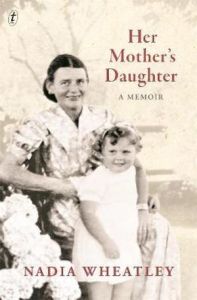
‘Her Mother’s Daughter’ by Nadia Wheatley

Wheatley_Mothers_Daughter

2018, 352 p.

I’ll be honest: I don’t really like the ‘parental memoir’ books, even though I seem to keep reading them.  You know the ones I mean, where a child (often already an established writer) writes the biography of one of their parents, interweaving it with their own memoir and ‘journey’ in trying to understand their parent/s. I’ve read my share of them, historian Jim Davidson writing about his father; Biff Ward writing about her historian father and his wife; Catherine de Saint Phalle writing about her Parisian parents Poum and Alexandre; Marie Munkara writing from the point of view of a member of the Stolen Generations re-discovering her family; Anne Summers writing about her mother and a painting, and Magda Szubanski writing about her family and coming out.

That’s a lot of books for a genre that I’ve said I don’t like. I am uncomfortable with the stripping-bare of a parent who cannot defend their actions, and I dislike the sense of long-held grievance that often permeates a child’s judgement of their parent, no mater how long ago these childhood events occurred.

So why, then, did I read this ‘parental memoir’? I think it’s probably because I admire Nadia Wheatley as a biographer through her excellent biography of Charmian Clift The Life and Myth of Charmian Clift and I was interested to see how a professional biographer/historian deals with the problem of writing a hybrid biography/memoir. [It was this methodological curiosity that led me to read Davidson and Summers, and will probably lead me to Jill Roe and Brenda Niall one day.] More immediately, it was as a response to reading excellent reviews by Jonathan Shaw and Sue at Whispering Gums.

The title of Wheatley’s book Her Mother’s Daughter is an act of claiming back her relationship with her mother. She was told by family that because she was only nine when her mother died, she couldn’t possibly remember her. Besides, she was told, her mother would have hated her Leftist policies. It was in reconstructing her mother’s life as an adult, from what people told her about her mother, and drawing on her own memories written at the time of her mother’s death in a valiant attempt to stop them dissipating (surely the act of a future writer and biographer!) that she realized that her mother would not have rejected her because of her politics and that she was, indeed, more of her mother’s daughter than her wider family recognized.  The choice of title is also an act of distancing herself from her father, to whom she was often likened, and with whom she had a fearful, strained relationship. His behaviour, as her research proved, was even darker than she realized as a child.

The book is written in four parts. The first section ‘Neen’ tells of the early life of Wheatley’s mother Nina Whatley, born in 1906 in northern NSW, whose own mother died while Nina was young. Her life seemed destined to end in nursing her much-loved elderly father and her less-loved stepmother, but World War II was her escape, when she enrolled as a nurse and worked with the 6th A.G.H. in Greece and Palestine. After the war she worked in refugee camps with Displaced Persons with the United Nations Relief and Rehabilitation Administration, taking up a position of responsibility that saw her nicknamed “Miss UNRRA”.

It was in these camps that she met the English doctor, Dr (John) Norman Wheatley, as described in Part II ‘Nina and John’. Dr Wheatley was married (although separated) at the time, and unknown to Nina he had a darker side that manifested itself through his alter ego ‘Mr Black’, a legal identity that he used for gambling, dodgy enterprises, affairs.  Already here as a reader you sense the perils for Nina in finally marrying Dr Wheatley. Their affair, while it was clandestine and without responsibilities, filled their weekends with liaisons, parties and travel. When Neen unexpectedly fell pregnant, he did not welcome the child, and Neen returned home to Australia to have her child.

Part III ‘Nina, John and Nadia’ is the longest section of the book, and it conveys well the anxiety evoked in this little girl by her father’s capricious, heedless and manipulative behaviour. They shift from one house to another as her father’s enterprises turn sour. Her sardonic father plays mind-games with both mother and daughter, with his menacing repetitions “do you understand?” when telling or showing Nadia aberrant  anecdotes and images. When Neen complains of chest pain, he ignores her, dismissing the pain as psychosomatic, a diagnosis too easily conveyed and shared amongst the male-dominated psychiatric fraternity. It was a dismissal that probably robbed Neen of years of health.

In the final Part IV, after Neen’s death, Nadia goes into the care of a school friend’s family; a paid arrangement she later learns, and one where she is vulnerable. The relationship with her father, already brittle, petered out.

Looking over this summary, there’s not a lot of joy here. Disappointments and betrayals, when they occur, seem inevitable. Yet, the book does not have the howl of grievance that too many parental memoirs have, perhaps because Wheatley’s intent is to recover her mother in order to identify with her, instead of to judge. The judgement is directed towards her father instead.

There is a narrative distance between Wheatley the author and Wheatley the character, and I think it is this detachment and – is ‘professionalism’ the word?- that makes this book a work of biographical reconstruction as much as memoir.  Most of it is written in the third person, but occasionally Nadia Wheatley the adult biographer breaks into the narrative, commenting on information that she has uncovered, responding with scepticism, regret or shame (as when she realizes that Neen’s inheritance of the family home had caused such resentment in the family). Wheatley has brought her biographer’s eye to her own family, contextualizing it within the mores and expectations of the time, filling in background information about the refugee schemes after WWII and psychiatric medicine during the 1950s, particularly in relation to women. She is explicit about her sources – her mother’s letters (often quoted verbatim), interviews and conversations with family members,  discussions with people who knew Neen – as a way of testing her own reality and memory against those of other people. Although the structure of the book is mainly chronological, it skips back and forth, shifting between third and first person. It is a deft book, written with confidence. Its emotional tone is dispassionate, and you, as a reader, do the emotional work of being enraged at people’s self-centredness, fearful of what seems inevitable, and hollowed by grief and unfairness. That Wheatley has brought you to this place is a testament to her skill as a writer.

Sourced from: Yarra Plenty Regional Library as an e-book

My rating: 9/10
AWW2019I have included this on the 2019 Australian Women Writers Challenge database

 

I hear with my little ear: Podcasts 16-23 September 2019

Letters of Love in World War 2. Have I mentioned that I’m really enjoying this series? In Episode 2 North Africa: Lost Messages, Cyril is sailing off to Egypt, but Olga doesn’t really know quite where he is. The mails are interrupted, and there are whole weeks of silences.  In Episode 3 Siege of Tobruk: Battlefields and Reality,  Cyril writes Olga a long,18 page letter after the battle of Tobruk. It’s surprising that it got through the censors, but I guess the battle was over by then and it didn’t matter what information he gave. His long letter, full of battle, is interwoven with her gentle letters about life back home, shifting house, just getting on with things. I’m not surprised  by their anti-facism, but they are both rather radical and even pro-communist.

RevolutionspodcastEpisode 10.12 The Decembrists led an uprising against the Tsar as part of the revolutionary ferment during the 1820s. But it didn’t go well. Mike Duncan has been doing these Revolutions podcasts for years and years (literally) and now it’s all paying off as the connections between the different revolutions become clear.

Outlook (BBC) A year ago Brazil’s National Museum burnt down.  In Keeping my country’s burned past alive, one of the anthropologists talks about the loss of artefacts relating to the indigenous Wari’ people, although fortunately she had digitized many of the voice recordings that were destroyed. She, and her fellow museum workers, decided to get tattoos to mark their grief at the loss of the museum.


Movie: The Australian Dream

I felt ashamed as I watch this. I had forgotten just how decorated Adam Goodes is (was), and I hadn’t realized that he knew so little about his family’s story. His stance against racism was treated with contempt and I just wanted to shrivel up watching Sam Newman, Andrew Bolt and Eddie Maguire. The film operates largely at the emotional level, and I think that Stan Grant lets Australia and the footballing fraternity off too lightly.  And as if that isn’t bad enough, the comments under the YouTube video are horrible reading. Nothing has been learned.

My rating: 4/5

I hear with my little ear: Podcasts 8-15 September 2019

Letters of Love in WW2  I’ve only just started listening to this, but it’s very touching. After their parents have died, adult children and grandchildren find a cache of letters in the attic. They are the letters that Cyril and Olga sent to each other after Cyril went off to fight WW2, having only been married three months. They are beautifully read, and there’s a short commentary from the family at the end of episode 1. Episode 1 is around July 1941 when Cyril sails towards Egypt. [I didn’t know that women were offered 50% off the cost of joining their husbands at war]. Cyril, in particular, writes beautifully.

Lectures in History. You know- I somehow avoided doing American History the whole way through high school, and I know more about Canadian colonial history than I do about American colonial history. Colonial America before the Revolution seems to me to be a fairly evenhanded explanation.

Money Box (BBC). I’m listening to a money program?? (I’m doing a talk about Work at my UU fellowship- that’s the only reason why.) Universal Basic Income – Can It Work? is a panel discussion about Universal Basic Income- how does it differ from current and historical provision? What have the trials found? Can it work?

Revolutionspodcast  Episode 10.11 War and Peace picks up at the death of Catherine the Great, just before Napoleon came on the scene.  Her son Czar Paul came to a bad end and Czar Alexander enters the picture. The podcast gives a fascinating account of the Napoleonic Wars from Russia’s point of view- did you know that Czar Alexander captured Paris? (I didn’t)

IMG_20190220_094158_smallBBC Assignment. . Colombia’s Kamikaze Cyclists is about young teenagers who career down the steep hills surrounding Medellin in Colombia on specially modified bikes without any safety gear. These kids live in the slums that cling to the sides of the mountains surrounding Medellin.


Start the Week (BBC) Jared Diamond has a new book out – Upheavals: How Nations Cope with Crisis and Change. In it, he argues that there are parallels between an individual facing a crisis, and a nation facing a crisis. As he did in ‘Collapse’, he uses different societies to illustrate his thesis. In this panel discussion of his book, Jared Diamond and national crisis,  there’s quite a bit of talk about Brexit and Trump, but he also talks about Finland and Meiji Japan. And little old Australia gets a look-in too.