Author Archives: residentjudge

Jersey Boys

We went to see Jersey Boys the other night. Terrific!  Although I must say that all of the grey heads in the audience were a bit disconcerting – mind you, I’d be one of them myself if I did not have such an intimate relationship with the dye-bottle.  But it really was Baby-Boomers-Big-Night-Out.

The Four Seasons were just part of the soundtrack of my childhood and adolescence.  They were just THERE.  I really had no idea what they looked like- now why was that?  We’ve had television all my life (my parents bought one when I was one year old, to watch the Olympic Games) but I don’t remember ever seeing them on television.  We sometimes watched the Ed Sullivan show, but I don’t think we watched American Bandstand- we only watched the Australian one.  I think I was more aware of what British bands looked like.  In fact, I think I assumed that they were black.  Or were they the Four Tops?

But here they are, in case you (like me) don’t know what they looked like

And here’s another. Makes me realise how very, very good Jersey Boys was- you really had a sense of being there watching it

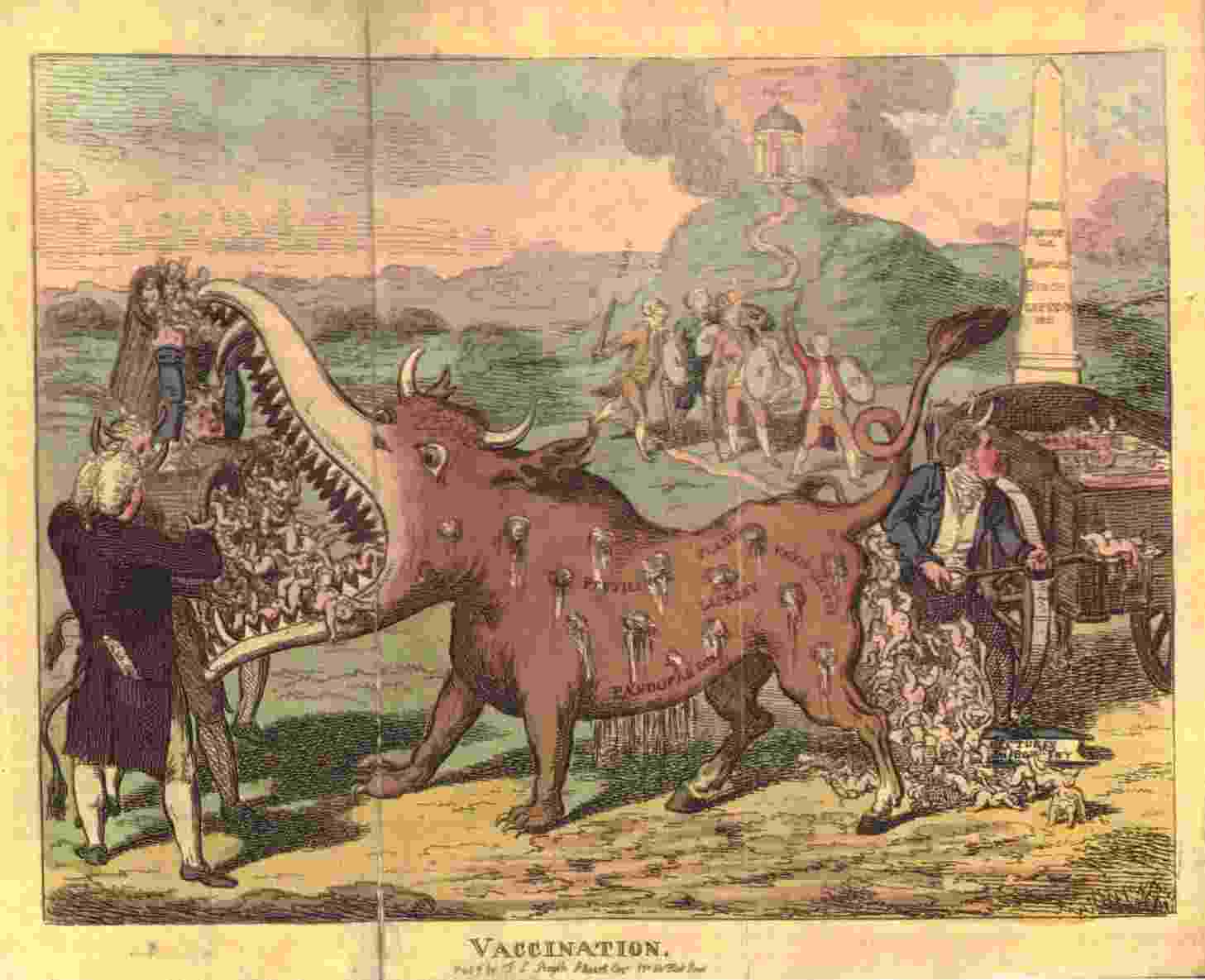
Vaccination time

I really should be doing other things, but I noticed this in the Sydney Free Press of October 1841.  (This is one of the periodicals reproduced as part of the Australian Cooperative Digitisation Project, available at the NLA site.  It’s separate from the Australian Newspapers digitisation project also at the National Library site. These are small runs of Australian serials published between 1840-5. What an embarrassment of riches we have here with these digitized papers!)

Smallpox had been carried on an American ship of war from Tahiti, where smallpox was prevalent.  The ship had touched at New Zealand and in response the Government reprinted this notice from two years earlier.

Colonial Secretary’s Office

Sydney 29th July 1839

In order to avert the calamities which must necessarily follow if the Small pox be introduced into the Colony, and to keep up a constant supply of Vaccine Lymph, His Excellency the Governor directs it to be notified that children will receive vaccine gratis, if taken to any of the public hospitals, or Colonial Surgeons throughout the colony, every Tuesday at eleven o’clock in the forenoon.  But as the operation itself, without any proof of its having taken effect, would be insufficient security to the public mind, His Excellency has been pleased to direct, that a charge of one shilling shall be deposited for every child vaccinated, which sum will be returned on the presentation of the child on the next vaccination day.

His Excellency very strongly recommends parents and guardians to avail themselves as early as possible, of the means thus afforded to them of taking this necessary and proper precaution with respect to all children not already vaccinated

By His Excellency’s Command

E. DEAS THOMSON

Interesting to see in this public notice the appeal to the hip-pocket nerve. Bring ’em back next immunization day and we’ll pay you! There’s an idea for Rudd’s health plan and perhaps the Republicans in America might feel more comfortable about this rebate scheme instead of Obama’s health insurance plan.  If Nana survives her hip transplant, we’ll pay you!

I really don’t have time to comment further- I should be doing other things instead of thinking about scabs and lymphs.
There’s a fascinating article by Michael J Bennett called “Smallpox and Cowpox under the Southern Cross: The Smallpox Epidemic of  1789 and the Advent of Vaccination in Colonial Australia” from the Bulletin of the History of Medicine, 83, 1, Spring 2009.

And just to make sure we’re not too relaxed and comfortable as we survey our little dimpled smallpox vaccination scars on our upper arms, I’ll leave you with this.

Memory and history

Collective memory? No. Myth and memory? Nup. It’s all about me- it’s the historian’s memory- or lack thereof.

I’ve been writing away for the past couple of weeks on a little topic in my thesis that has me all excited and flustered.  I’m not going to go into specifics- not that I want to keep it from you, of course, but I must be a little circumspect and besides, who will buy “Judge Willis the Soap Opera” if I divulge all here?  But I’ve been quietly rubbing my hands in glee, anticipating interest from well, all of about twenty people in a particular thing I’ve found.  It was, as my earlier supervisor John Hirst would have said “a knock-down argument”.

Except that I found it. And lost it. And now I can’t find it again.

It’s a letter that I’m looking for.  I thought that I remembered seeing it typed up amongst a collection of other letters.  I think I can remember a rush of excitement seeing it- AH HA! There it IS- in writing! And can I find it now?? No…

I’m rather obsessive about my record keeping. I could pretend that it’s because I’m a methodical person, but the truth of the matter is that, commencing this thesis at a relatively advanced age, I’m frightened that my memory is going to go before I get it written.  I know that I sound like a hypochondriac, but perhaps you should consider my mother’s strong family history (five of seven siblings) who have suffered neurological illnesses of one type or another.  I’m watching my mother’s brain slowly turn to cement, and I’m losing the Mum I love bit by bit.  So my fears are not completely groundless.

So, I turn to technology. In my research mainly I’ve been working on letters, dispatches and newspaper articles.  I have an Access database that lists them chronologically by writer, recipient, topic, location 1, location 2 (because many of these letters are found it several locations). There are literally thousands of them – 1444 the last time I looked.

Books and journals go into Endnote.

I’m a fairly quick touch typist (faster than I could write by hand) so it’s no hardship to type up documents and I code them in NVivo.  N Vivo is intended as a qualitative research software program, but you can use it to code the themes in any sort of document or artifact.  I use it at a fairly basic level for data recovery only.  When you want to find all the material you have coded on a particular theme, it collates it into one document.  When I type up notes on a book or journal, it goes into NVivo as well.  Of course, this is the weak spot- if I don’t code the document, then I won’t find it in NVivo.  But I usually print out a hard copy and tick off on the top once I’ve put it into Access (if applicable), Endnote and N Vivo.

So how have I lost this letter?  I just don’t know.  I have a fairly vivid dream life- did I just DREAM that I read it?  I can’t work out why I didn’t make a note of it somewhere; why I just put it back into its plastic sleeve. And yet I have my chapter plan written a couple of weeks ago where I can see that I thought then that I had read it.  I must have read it in-between entries on my other ‘secret’ blog that I write about my thesis-writing because I don’t mention it there.  I’ve found one small reference, and another letter that perhaps I had misinterpreted.  Did I just misread it? Did I conflate the two?  I’m distrusting myself, and that’s not a good thing.

For those of you writing history, how do you keep a track of everything you have?

‘Lady Franklin’s Revenge’ by Ken McGoogan

2006, 435p & notes

The author of this book has written several biographies related to arctic exploration and one senses that he came to this biography almost grudgingly.  His other biographies focus on Arctic heroes- John Rae, Samuel Hearne and Elisha Kent Kane.  Amongst these male explorers, Lady Jane Franklin must have seemed an obsessed, vindictive, indulged woman, intent on pushing forward her husband’s reputation to the expense of others’.   Perhaps McGoogan still feels that way, but it seems that he found much more in Jane Franklin than he expected to.

Well educated and well-to-do, Jane Griffin did not marry John Franklin the Arctic explorer until she was thirty-seven years old.  He was a fleshy, dull man and she was driven and ambitious and she used her connections to procure a position for him on the Mediterranean, and later as Governor of Van Diemen’s Land.  She was an inveterate traveller, heading off for months and sometimes years at a time, accompanied by her iron bedstead which she insisted on having assembled for her on her travels.

The author is Canadian, with a readership no doubt attuned to Arctic themes.  But as an Australian, Lady Jane Franklin is far more familiar to us as the Governor’s wife; we see her in Richard Flanagan’s Wanting; we know of the Franklin River, and her diaries while travelling to Melbourne and Sydney have been well-mined. In fact, there seems to have been quite a Lady Jane Franklin revival recently.

McGoogan captures well the limitations of women’s financial position and influence in Victorian Britain.  He describes well the small-colony political machinations surrounding the dismissal of the VDL Colonial Secretary Montagu, and the lumbering, stiff style of Colonial Office politics and communications.  Lady Jane Franklin has money in her purse to bankroll numerous expeditions in search of her husband when he disappears into the Arctic white and she uses her connections with Dickens, the media, the American government and the Admiralty well.

There is much detail in this book- rather too much, I thought.  He does rise above the mass of detail to make informed and informative observations about gender, patronage, love, women’s position, memory and memorialization, but sometimes it is engulfed by too much information. Of course, Jane Franklin is a generous source: she diarized her life extensively; there is a wealth of communication; the Colonial Office and British bureaucracy built their edifice on paper and she used the public sphere to her advantage.  It is an embarrassment of riches- oh to have that as a problem! but I can see that sometimes you just have to say ‘enough’.

Masters and servants: a Labour Day reflection

It’s Labour Day here in Victoria, celebrating the awarding of the eight hour day to the stonemasons employed at Melbourne University in 1856.  The idea of eight hours work, eight hours recreation and eight hours rest seems rather quaint in our deregulated, open-all-hours economy.

During Judge Willis’ time in Melbourne, labour relations (a terminology not even dreamed of at the time) were governed by Master and Servant legislation.  Such legislation was an empire-wide concept whereby relationships between employers and employees were governed by contracts that were enforceable by magistrates and where breaches by employees were punished.  The New South Wales legislation promulgated in 1828  was even harsher than the corresponding English statute because it provided up to six months imprisonment for absenteeism and desertion, double the penalty in the English legislation.  Labour shortages were an ongoing problem in the colonies, although during the 1840s depression workers were exhorted not to keep insisting on their wages because it would only push their employers into insolvency (huh- I’ve heard THAT before!).  The legislation applied to the overwhelming majority of workers including, at first, independent contractors as well as hired servants and apprentices.  Domestic servants, and especially female domestic servants were expressly included because of perceptions of scarcity and troublesome character, and to prevent them absconding.  The Act was modified in 1840 but still remained heavily weighted towards the employer, although cases for non-payment of wages were reported in the newspapers as well.  This legislation was generally heard by the Police Magistrate in the Police Court.

So, in the Port Phillip Herald on the 24th January 1843 we have an item headed “Female Impudence”

At the police office, on Thursday, Jane Kelly preferred a charge against Mr J. Cade of the River Plenty, under the Masters’ and Servants’ Act, inasmuch as she had been in the service of the said Mr John Cade as a maid of all work, he refused to pay the balance of wages due to her, 24s.  The defendant on being asked by the Police Magistrate if he denied “the soft impeachment” ungallantly said, the fair Jane had got drunk last Sunday evening, disturbed the whole family with her vagaries, while in that unenviable state of oblivion and would not go to her own bed, but wanted to come to his, and to effect her purpose broke open the window of his bed-room. Here an angry discussion ensued between the parties as to who had the best right to the bed in question, the complainant contending the bed was hers, and the defendant with equal pertinacity urging his claims to it.  The bench consisting of the police magistrate, Mr Airey, and Capt. Smith endeavoured to solve the point by ascertaining its position in the house, but nothing definite from the conflicting statement of the parties could be arrived at. The complainant at last said the least the defendent said on that subject the better as he had bit her finger and endeavoured to take liberties with her, which charge was indignantly denied by the defendant, who expressed his honest indignation at her impudence in endeavouring to force an entrance into his bed-room. The court and bench were frequently convulsed with laughter at their mutual recriminations, and the police magistrate suddenly discovered her as an old acquaintance who had formerly endeavoured to force an entrance into the bed-room of Mr Boyd, who was so alarmed on the occasion as be compelled to have recourse to the protection of the police: she had since been in gaol several times for misconduct, and under all the circumstances the bench dismissed the case, to the no small mortification of Miss Jane, whose countenance, which had been before sprightly and gay, now assumed a dark and down-cast hue.

Or, another report in the Port Phillip Herald of 28th June 1842 where  a servant girl took her employer to the Police Court for non-payment of wages.

On Saturday, at the Police Office, in a case for the recovery of wages, by a servant girl from her master, Mr Murray a late arrival, the defendant stated in his defence that in the place where he came from, in Scotland, three pounds per annum was the rate of wages which he was willing to allow her, but as she had made an application for the return of a certificate she had received from her clergyman, and which he held, he refused to give it up, he having himself paid 2s 6d for it before leaving home.  Major St John [the police magistrate] after having patiently heard both sides of the case, immediately directed the payment of the wages due, and that the certificate of character should immediately be given up, and that he would himself pay the half-crown, which he presented to Mr Murray.  The latter, however, said he could not give it up as he had it not, whereupon the Major ordered him to sit down and write her out a receipt for the document, which Mr Murray did without specifying whether it stated that her character was good, but was forthwith directed to add the fact to the receipt, as the poor girl, like many others, had nothing but her character on which to depend.

It wasn’t just women who fronted the courts.  An item headed “Cakes” of 4th January 1842:

A person whose name like his trade was A. Baker, summoned his master on Saturday last to the Police Office for wages due: the latter in his defence stated that the man engaged with him as journeyman Baker, but proved a traitor to his name and profession, being neither baker nor tradesman, having lately spoiled a family Christmas cake, by flattening the nose of the white sugared Queen seated thereupon. On being reproved therefore he offered to perform the like service for his master “if he was game” for which the latter stopped payment until advised to stump up by the Bench.

It seemed fitting to spend Labour Day at the movies seeing George Clooney in “Up in the Air”

I assume that the last segment of talking heads was just to reassure us, in case we didn’t already know, that life is really about family and loved ones in your backpack.  And I just shake my head in amazement that somehow Americans assure themselves that they can stand on their own two feet and don’t need “big government” and that having a health insurance system tied so closely to employment status is a good idea. Sheesh.

References:

Michael Quinlan ‘Australia 1788-1902: A Workingman’s Paradise?’ in Douglas Hay and Peter Craven Masters, Servants and Magistrates in Britain and the Empire, University of North Carolina Press, 2004

Review of ‘Masters, Servants and Magistrates in Smith Book Review

‘The Europeans in Australia A History Vol 2: Democracy’ by Alan Atkinson

2004 , 339 p. & notes.

I’d been looking forward to reading this book for some time.  I bought Volume 1: The Beginning some time ago at an incredibly cheap price, courtesy no doubt of some intricate global book industry policy structure, and was instantly engrossed by such a different way of telling.  So- what to do?  Relish the series and honour its author’s vision by reading it in its intended order starting with Volume 1?  Or jump ahead into Volume 2, which after all, is the period that I am more interested in, and go back to Volume 1 later? In the end the exigencies of library renewal periods and the imperative to actually write this section of my thesis (as distinct from doodling around reading it)  won out, and so Volume 2 it was.

I was reassured in reading the Foreword that perhaps I would not be too hampered by not having read Volume 1.  He reprises some of the main themes, and speaks of how he is going to pick them up and introduce new themes in this second volume. The series, he says, is meant as “a history of common imagination in Australia” (p.xii)- not identity, but imagination- not just through the views of powerful individual men, but the imagination of large numbers of people considered together.  The change over the decades 1820s-1870 was in part generational, and also a product of the revolutions in communications, literacy and ‘systems thinking’.   He identifies the broad argument of the book and how the chapters contribute to its larger themes.

Which is a good thing, because I have to admit that during the reading of the book, I kept berating myself for not “getting it”.  Despite the title, which suggests a political text, this is a book about imagination, experience and ideas- all intangible entities that are best seen through their expression in individuals’ actions.  I enjoyed his vignettes and careful interweaving of the experiences of men and women, convicts and intellectuals, but I kept feeling as if the bigger themes were running through my fingers like sand.  In a review of the book, Ged Martin observes that

The reviewer too must soar to catch the author’s winged heels: this is a pointillist history…Atkinson’s meaning flows subliminally and is not easily pinned down. As he enigmatically puts it: ‘ vivid things are to be glimpsed merely on their passing our window.’ (p. 286)

I’m relieved to read this: I was beginning to think that perhaps I was being particularly thick. Within the parameters of his large, important themes, the detail is written almost as a stream of consciousness that meanders between ideas.  An example- Chapter 13 Railway Dreaming, which was perhaps my favourite chapter.  I’m not alone in focussing on this chapter- other reviewers (see below) seem to have been attracted to this chapter too.  Why, I wonder? Is it because, like me, they shook themselves and sat up straight and ordered themselves to “Start concentrating!”?  Or was it because, over half way through, suddenly you become aware of how Atkinson is working through his argument?  Is it the writing, or the reader?  He starts this chapter speaking of the democratic settlement- a three sided concept with politics on one side, commerce and enterprise on the other, and the way government worked as the third section.  He talks about systems, which are exemplified by gynaecology as a form of objective tenderness, and studies of inner-urban slum life and disease where disease was  often caused by water supply. Australia was now a richer place; chemistry and consumerism led to the development of glass bottles; glass and iron was used in London’s Crystal Palace and also in railways- Dickens wrote of ‘railway dreaming’ and the Moonians.  Railway dreaming in Australia included ideas of federal co-operation; there was thrill and terror in train-travelling; and Australia’s first serious train accident occured in 1858.  Mrs de Courcey, a travelling piano-teacher was injured in it.  She needed to work because her husband was ‘deranged’, and she said that she herself became ‘deranged, almost, for a time’ from the injuries she sustained.  Lunatic asylums were developed; a leading physician was Frederick Norton Manning, who was an apostle among the lunatics of Queensland. Queensland itself was a kind of hallucination; and then follows a potted history of the development of Queensland.

I found myself just letting go,  swept along by this assured and insistent whirlpool of ideas, but often found myself gasping for air, wondering where on earth I was going. It was with almost a sense of relief that at I turned to the Afterword and discovered that, really, I had understood the direction after all.  Turning back to the Foreword at the start of the book again, I  found that, yes,  he had done all that he had promised and more and that yes, there was an argument there had I had followed, almost without realizing it.

This series is written after Atkinson has spent thirty years reading, study and talking.  The period of time covered in this book (from about 1820s to about 1870s) is very much Atkinson’s ‘patch’, given his work on Push from the Bush which accompanied the 1838 volume of the Australians series. It has been likened to Manning Clark’s opus in its vision, and as with Clark  it is a creative,  idiosyncratic and personalised sweep that tells much, but certainly doesn’t give you “what happened and when”.  It is not a book for novices.

The book itself is divided into three sections, each prefaced by a description of insects in Australia to highlight a theme:  a locust swarm “Still they Kept Coming”;  the noise of cicadas “Their Method of Utterance”; and the disturbance of tightly packed insects in a decayed log of wood “The Masses Unpacked.”  The final image of the book is of a log that contained two ant nests: the first forming a thick crust, which when broken open revealed a complex labyrinth of ant-architecture.

The two ant-nests, old and new, might be taken to stand for the two generations that are described in this volume- the generation that coloured life around the 1830s and that of the goldrush years and after.  The notion of an intricate way of life given over and replaced by something new certainly matches what I say here.  At length, the habits of earlier days seemed to be, in the minds of the young, as dried up and useless as Moore’s “great city”. The Europeans in Australia made for themselves another mental habitation, like the ants.  Like the ants, moreover, they were gatherers from the world beyond, living by traffic and communication.  In rehousing themselves they drew their main materials, all that coloured glass, all those entrancing ideas, from Britain and the United States. (p. 339)

The poetry of his narrative, the bravery of his history-writing, the aurality of his perspective (because this is a ‘noisy’ history) are all breath-taking in their novelty and audacity.  I did enjoy the book once I reached the end of it, a bit like reaching the end of a water slide.  It was a long climb up; I wondered on the way down whether I was going to go over the edge; and probably- probably- I’d like to climb up and do it again.

Some other reviews:

Ged Martin review-  I can’t get the link to work but it’s a PDF document that should download at  http://www.nla.gov.au/openpublish/index.php/ras/article/download/288/346

Marion Snell’s review at Politicalreviewnet at

http://www.politicalreviewnet.com/polrev/reviews/AJPH/R_0004_9522_323_1007582.asp

Paul Pickering http://www.api-network.com/main/index.php?apply=reviews&webpage=api_reviews&flexedit=&flex_password=&menu_label=&menuID=&menubox=&Review=4493

‘Balzac and the Little Chinese Seamstress’ by Dai Sijie

No, I’m not the last person in the world to read this book.  I read it for a second time, for my Council of Adult Education bookgroup a.k.a “the ladies who say ooooh”, so named by my daughter for our loud ejaculations and bursts of laughter.

So I already knew that it was the story of two young men, the sons of  so-called ‘intellectuals” who were sent to a remote and primitive Chinese village as part of the process of re-education following the Cultural Revolution. After deviously coming into possession of a suitcase of translations of largely 19th century French novels, they decide to share them with the tailor’s daughter, the Little Seamstress, with whom both boys are in love, as their own form of ‘re-education’.

I’m always a little wary of books written by expatriates: not dismissive by any means, but aware that the act of leaving springs from disillusionment and opportunity, and that the narrative may not be untouched by the need to justify the departure.  But this book, although probably somewhat autobiographical given the history of the author, does not dwell on the hardships of their exile.  The poverty and the grinding labour they are put to is not where their real life is.  Instead it is in their resistance and subversion of the situation in which they are placed.

On re-reading it, I appreciated it anew as a bitter-sweet coming-of-age novel, as all good coming-of-age novels are, and as a variation on the Pygmalion story which, like the the original, does not end as the ‘re-educator’ intends it to end.

I haven’t seen the film, but “the ladies” assure me that it is beautifully done.

‘Sidetracks’ by Richard Holmes

2000, 410 p.

As you know, I’ve become enamored recently of the writings of the biographer Richard Holmes- in particular his autobiographical works ‘Footsteps’ and now ‘Sidetracks’.  He’s been a prolific biographer over the last 30 years and in the prologue to Sidetracks he lists his major biographical subjects and the outcomes of his work:

1969-70 : Chatterton (an essay, no biography)

1971-74: Shelley (a biography Shelley, the Pursuit)

1973-79: A Gothic Victorian (many sketches, no biography)

1975-79:  Gautier and Nerval (sketches, translations, unpublished biography)

1979-80: Scott and Zelda Fitzgerald (a single sketch)

1980-85: A Romantic Traveller (sketches, finally Footsteps)

1986-87: William Godwin and Mary Wollstonecraft (an essay, no biography)

1982-89: Coleridge (half a biography, Coleridge: Early Visions)

1990-94: Johnson (a fragment of biography, Dr Johnson & Mr Savage)

1994-98: Coleridge (second half of a biography, Coleridge: Darker Reflections)

1999… A Runaway Life (but, as he says “that could go anywhere”)

His book Sidetracks consists mainly of essays that have been published elsewhere (particularly The Times), with 2 radio plays- the one on Nerval I wrote about here, and a second play “To the Tempest Given” about the death of Shelley.  The short-ish essays in this book, as the title of the collection suggests, follow up on peripheral characters and suggestions that he passed by while working on his “main” topics.  As they have been written as stand-alone newspaper articles, they are engaging works that quickly familiarize the reader with sufficient contextual information to make sense of the story- often framed as a single event or problem- that he lays out and then explores, sometimes via a meandering route, with us.

My favourites were the two radio plays on Nerval and Shelley, and a real historian’s delight- the essay ‘Lord Lisle and the Tudor Nixon Tapes’, written in 1982.  This essay describes the cache of over three thousand letters written to and by Lord Lisle, Henry VIII’s civilian governor who served in Calais, the last English outpost on the continent. His correspondence was seized when he was placed under house arrest as part of the machinations of the Tudor state machine.  It is said that he ended up in the Tower, where, as a privileged prisoner he was exercising on the ‘leads’ of the tower and spied the King’s barge floating down the wintry Thames.  He called hoarsely to the King for mercy: the King heard him and pardoned him.  The letters have been compared with Pepys’ diaries as a source of “eavesdropping” on history, and after surviving fire, flood, and the Blitz, they came into the hands of Muriel St Clare Byrne, who worked on them for fifty years, culminating in a six-volume publication of nearly 4,000 pages and close to two million words.

The essays in this book are loosely grouped, tied together by a theme of place (e.g. France and Paris) or tangentially related to one or another of his major biographical characters (e.g. Shelley; Boswell; Gothic authors).  Each part is prefaced by his own statement about the essays that is interwoven with a reflection on his growth as a biographer.  I found myself laughing out loud at his description of watching someone reading one of his newspaper essays on a train.

It was a salutary experience.  Over several minutes an expression of lively interest steadily faded to one of judicial blankness, soon followed by deep and blameless sleep. (p. 136)

He verbalizes one of the biographer’s (and indeed, the historian’s) ongoing anxieties:

This question of how the biographer achieves authenticity, now began to trouble me.  How much is constructed from broken evidence, a scattered bundle of letters, the chance survival of a diary? How much is lost, forgotten, changed beyond recognition? What secret thoughts are never recorded, what movements of the heart are never put into words? And more than this, by the very act of biographical empathy, how much does the biographer create the fiction of a past life, the projection of his- or her- own personality into a story which is dramatically convincing, even historically correct, but simply not the human truth as it happened? (p. 197)

He speaks of biography as a human exchange: “a handshake across time”, an “act of human solidarity, and in its own way an act of recognition and of love.” (p. 198)

There is love in this book; and  so, I found myself going all goo-ey inside when he reveals his relationship with the writer Rose Tremain, with whom he spent four months in Paris, “looking for some literary expression of the passionate understanding which had brought us, so late and so unexpectedly, together” (p. 319).

In fact, I think I’m a little in love with him myself.

‘Ransom’ by David Malouf

2009, 224 p.

In this book Malouf takes a couple of lines from the Iliad, where King Priam travels to recover the body of his son Hector, who died on the battlefield as a revenge killing.  His body has been dragged behind a chariot, day after day,  in a fury of grief and revenge by the crazed Achilles.  From the interstice of Homer’s brief telling of this paternal act of love, Malouf fashions a small jewel of a story about love, masculinity, fatherhood and fame.  I use the word “fashions” deliberately because as you’re reading it, you’re very much aware of the careful weighting of each word and the crafting of the images. It is deeply poetic in places, and makes you as a reader slow down, re-read, and roll the words around in your mouth, savouring them.

His plan is to travel incognito to meet with Achilles: to speak with him man-t0-man and father-to-father to ask that Hector’s body be released to his family.  Instead of travelling in state, he decides to travel with an unlettered carter named Somax and his mule-drawn cart, selected almost at random from the market where Somax awaits work as he does every day.  This small book is the story of the short journey they take together, and Priam’s encounter with his son’s enemy.

Priam is powerful, and yet powerless to stop the desecration of his son’s body at the hands of his enemy.  His is an act of paternal love, and yet in terms of fatherhood, his relationship with his many sons (borne of many wives) is sterile and formalistic with none of the intimacy that Somax has had with his sons before their deaths.    Priam is feted as the wise king, and yet he knows little of the world outside his own palace walls.

Both Achilles and Priam are aware, through the prescience granted to them by the gods, of the past and the future and their own place in stories to be told in the future.  Achilles is fired by grief , rage and bursting masculinity; Priam, as an older man, is aware of the contingency of a life’s journey and the life not lived.  My favourite part of the book was where he considered the other life he could have had, if his sister had not ransomed him from captivity as a boy. Despite his wealth and position, he is haunted by this other-life and feels somehow inauthentic.

Time in the book seems suspended, like a drop of water  shimmering from a branch before it falls.  The war has dragged on for years and it has that nightmarish quality of an never-ending, intractable stalemate.  Achilles drags Hector’s body behind his chariot, hour after hour, day after day and yet the gods renew it each night so that the nightmare goes on.  The trip in the cart itself takes only a day, and yet it feels much longer.   The meeting with Achilles occurs abruptly.

In the afterword, and in interviews at the launching of this book, Malouf alludes to the wartime experience of his childhood, and indirectly today in Iraq and Afghanistan, where war seems intractible and never-ending.   I don’t really think that this book needs contextualizing in this way.  It stands in its own right as a book that, perhaps, only an older man could have written. There’s a timelessness about the themes and the literature from which it springs, that does not need to be historicized.

There is a dreamlike quality throughout the book, as with many Greek myths.  Gods materialize in a thickening of the air and shift shapes between the prosaic and the ethereal.  The world of the gods works to its own whims: the world of men has a rhythm and meaning of its own.  And as with much of Malouf’s work, the imagery is crystalline and quite, quite beautiful.

Kathleen Fitzpatrick and Jessie Webb

In Macintyre and Thomas’ book The Discovery of Australian History 1890-1939, two chapters are devoted to Kathleen Fitzpatrick and Jessie Webb– both from the University of Melbourne.  As the editors point out, there were no women appointed to chairs of history between the years 1890-1939 or indeed, until much later. I’ve just been flicking through the ADB to see if there were others they could have included and women historians are certainly thin on the ground, despite the fact that women made up a large proportion of history honours students.

I recently heard a pod-cast about Jessie Webb, (picture here)  presented by Ron Ridley at the Royal Historical Society of Victoria in May 2009.  You can download his talk here (lots of other good podcasts here too). Ridley wrote the book Jessie Webb: A Memoir in 1994.  Such a long career, with so much experience in teaching history- senior lecturer, acting professor-  but as was common at the time, not really in the running for a chair in her own right.

As for Kathleen Fitzpatrick, (picture here)  I read her book Solid Bluestone Foundations about eight years ago, before I returned to university.  I wish I had time to re-read it: at the time I enjoyed it mainly as a memoir of 1920s upper/upper middle class, privileged Melbourne.   The granddaughter of the J.P. Buxton real-estate founder, and the daughter of a Catholic/Protestant marriage, she always felt under-educated (despite attending Melbourne’s best girls’ school at the time) and certainly Oxford sneered at her colonial degree.

I haven’t read her work on Sir John Franklin (as it happens, I’m reading a book about Lady Jane Franklin at the moment just for fun), and she didn’t ever publish her work on Charles La Trobe which I certainly would have read, had it been.   Susan Davies, who wrote the chapter on her in The Discovery of Australian History, suggests that perhaps she abandoned her La Trobe biography because Alan Gross had entered the field with a competing biography, although she may well have decided not to continue before this.

In fact, she seems to have doubted her own ability throughout her career, in a way that does not seem apparent in the other male biographies in Macintyre and Thomas’ book.   Here she is, writing to Max Crawford in 1951, after the reviews of her book on Franklin began to appear in the Australian and English journals and newspapers.

Thank you for the kind words from the Bulletin of Historical Literature on Franklin, which bring balm to a bruised soul.  The bruising was caused by a review in the Times Literary Supplement of March the 9th.  Why doesn’t one, at one’s advanced age, and in view of not being inexperienced in the art of being slapped, why doesn’t one cease to mind? I minded so much as to stay awake all night and then to get violently sick.  Not that I was denounced.  It was just another summary, plus a few derogatory remarks, calculated to make the whole performance seem dull beyond words, and slightly ridiculous.  Not one kind word, even for my hard work, which indeed was only a cause for reproach, ‘overloaded with the minutiae of petty affairs’ or words to that effect.  Of course I know and tell myself all the answers, such as that a writer should be concerned with his work and not with his reputation etc…  (Davies in Macintyre and Thomas p. 163)

So very human and symptomatic, I suspect, of a male-dominated intellectual environment where women’s achievements were easily overlooked.

References:

Susan Davies ‘Kathleen Fitzpatrick: Sculptor with Words’ in S. Macintyre and J. Thomas The Discovery of Australian History 1890-1939,  Carlton South, Victoria, Melbourne University Press 1995.

Susan Janson ‘Jessie Webb and the Predicament of the Female Historian’ in S. Macintyre and J. Thomas The Discovery of Australian History 1890-1939,  Carlton South, Victoria, Melbourne University Press 1995.

Also:

Jayne’s review of Solid Bluestone Foundations here.