Author Archives: residentjudge

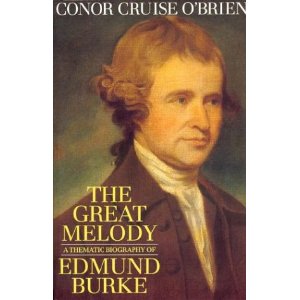
‘The Great Melody’ by Conor Cruise O’Brien

The Great Melody: A Thematic Biography and Commented Anthology of Edmund Burke

1992,  618 p

I’m not in the habit of reading 600 page tomes about eighteenth-century history in bed before sleep, and I must admit that it took me about six weeks to get through this book.  The eighteenth-century is a foreign country to me in a way that the nineteenth-century isn’t, and I have a towering pile of other books that I should be reading instead- so why was I reading this?

One reason was the subtitle “A Thematic Biography”.  I find it hard to clearly say what my own writing is- I can say what it isn’t  (not a straight biography; not a judicial biography) but somewhat harder to say what it is.  I wasn’t quite sure what a “thematic biography” is, or how it differs from any other biography.

The second reason was that I keep coming across quotations from Burke, or people who quote him.  Edmund Burke (1729?-1797) was a statesman, orator, writer and member of the House of Commons. He was known as a “Rockingham Whig” at a time when there were not so much political parties as constellations of politicians who would cluster around a particular individual- perhaps similar to the “Petro Georgiou Liberals”- not a party in its own right, but a political flavour exemplified by one person. I know that he came to be associated with conservatism and yet I’ve heard him described as a classic liberal as well.  On consulting my Penguin Dictionary of Quotations, I find him well represented (more than George Bernard Shaw and Macaulay; nowhere near Milton, Pope and Shakespeare!) although it seems that he didn’t say that “All that is necessary for the triumph of evil is that good men do nothing” even though it is often attributed to him.  What he did say was

When bad men combine, the good must associate;else they will fall, one by one, an unpitied sacrifice in a contemptible struggle. (Thoughts on the Cause of the Present Discontents).

  I’m aware of ‘Burke’s Law’ that could be used to remove colonial officials and -importantly for my work- judges from their colonial posts.  I knew that Burke was a great orator, and that he had been bitterly critical of the French Revolution right from the start….and that’s about it.

O’Brien identifies this book as a thematic biography because it is not so much about Burke as a man – certainly his intimate family life, his marriage, his friendships are almost completely absent- as about the four main political issues on which he became known as spokesman.  O’Brien picks up on two stanzas of a W. B. Yeats poem ‘The Seven Sages’

American colonies, Ireland, France and India

Harried, and Burke’s great melody against it

and argues that ‘it’ is ‘ abuse of power’. Burke saw, and deplored, abuse of power exemplified through Britain’s declaration of war on the American colonies, the Catholic question in Ireland, the widespread admiration of the early days at least of the French Revolution, and in the failure in Parliament of his attempt to impeach Warren Hastings in India.  It is a thematic biography in that the chapters circle between Ireland, America, India and France in a roughly chronological fashion, darting back in several places to revisit the idea of the ‘great melody’. The book assumes familiarity with these issues, and the minutiae of British Parliamentary Politics  and I struggled with the Indian section in particular.  I do now, however, know what Barry Jones was getting at with the Governor General of Bengal question on Pick-a-Box

O’Brien suggests that, despite identifying himself as a member of the Anglican communion of the Church of Ireland, Burke actually followed his mother’s Catholicism, and although claiming a Quaker school as the site of  his first education, he may have instead attending a Catholic hedge-school.  Burke’s sublimated and unacknowledged Catholicism, he argues, was the lens through which he decided his stance of the issues of American, French and Indian political events, even though he never clearly identified it as such.

The second theme that runs through this book is O’Brien’s own dispute with historians, particularly those influenced by Louis Namier who have questioned Burke’s significance and highlighted the inconsistencies in his approach.  He certainly doesn’t hold back against these “pullulating insects of trivialising calumny” (p. 306) and he does so far too often.  At times he draws a very fine line.  He criticizes, for example, Lucy Sutherland and others of the Namier school for conflating  “documentary gaps” and “silence”-

But the two are not the same; not by any means.  A documentary gap often reflects a period of particularly intense communication. The people concerned are not in correspondence, because they are in daily conversation…What an eerie place, …is eighteenth century London, once it has undergone Namierisation! This is a world in which no one ever talks to anyone else.  All communication is in writing.  The spaces between the bouts of penmanship are filled with silence. Anything that doesn’t get written down doesn’t happen. (p.333)

Yet O’Brien himself makes much of Burke’s silences, especially over Ireland, both as a revealing political stance and as a sign of Burke’s inner psychological tension.  I’m a bit uncomfortable about extrapolating from the utterances and silences of the public record in Burke’s own writings and in his Parliamentary speeches-  ‘performances’ for a specific political and strategic purpose- and psychological explanations of the inner man.  However, in trying to capture the inner man O’Brien is constrained by his material, given that Burke himself destroyed all personal papers, and this work is rooted deeply in the public arena.

The other part of the subheading is “commented anthology”, and much of the book quotes directly and at length from Burke’s own words.  There was a great deal of this, and while bristling with lacerating observations and wit in places, there was also a lot of high-flown rhetoric that flew right past me propped up in bed with my eyelids drooping.  Alas, I found nothing about ‘Burke’s Law’ but I do think that I have a more nuanced perception of Burke and his influence both on parliamentarians at the time and later.
Wonnangatta

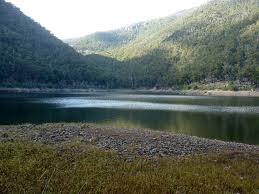
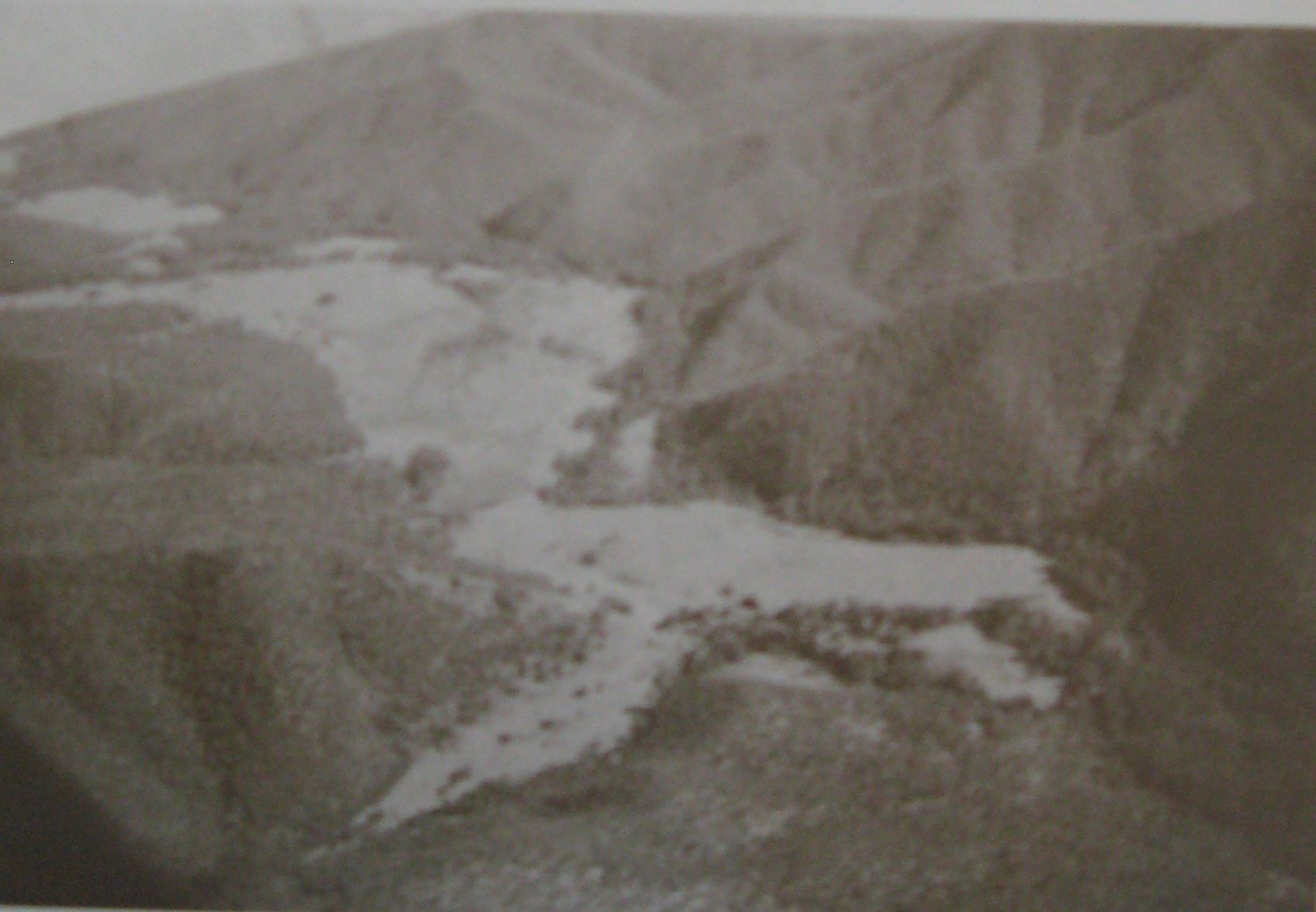
Inspired by the ‘Pioneers of Bushwalking’ exhibition,  I turned to an article in the most recent Victorian Historical Journal about the Melbourne Walking Club’s trek to Wonnangatta in Easter 1936.  The article, written by one of the walkers is written in the rather flippant, “what-an-adventure!” tone that we use for holiday emails or blogs today. What really intrigued me in the article was a photograph accompanying the article, now part of the RHSV archives, showing Wonnangatta homestead as a mere speck on a wide, grassed plain that opened up amongst the folds of the surrounding mountain peaks.  The photograph below is not the one in the article but it gives an idea of the remoteness of Wonnangatta and the splendour of the landscape.  What particularly struck me was that there are no roads at all.

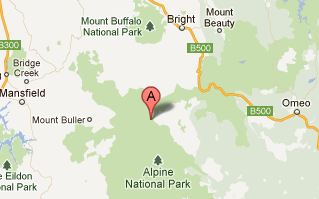
Wonnangatta was, until late in the 20th century, Victoria’s most remote high country cattle station.  It is located in the high country east of Mansfield and as late as 1947 it could be claimed that there were no records of a wheeled vehicle ever visiting it (although the claim was qualified by noting that a dray was built in-situ at Wonnangatta and two bicycles were carried in). It is two-and-a-half day’s horse ride from Mansfield, and a day-and-a-half from Dargo.

It is ironic that in many ways Wonnangatta was more accessible in the 1860s than it was a hundred years later (after which four-wheel drives became more common).  During the 1860s Gippsland gold rush a number of small towns sprouted around the Crooked River, Snake Creek and Jungle Creek diggings, connected by a pack-horse trail. Twenty to thirty horses would be saddled with two padded flaps on either side, joined at the top with iron loops like an inverted U to which hooks were attached and loads secured.

Wonnangatta at the time lay on this trail, and was visited by William Bryce and his pack-train who brought supplies to Oliver Smith who had settled there with his sons, his second ‘wife’ and her son Harry from a previous marriage.  Bryce decided to bring his wife and six children there as well, and the men from the two families worked together to build Wonnangatta Homestead.

What an isolated life for these two families!  Ellen Smith died in childbirth in 1873, giving birth to twins who both died within a week.  Oliver Smith quit the station with his sons, signing it over to Bryce and did not return, although his youngest son Harry did come back later.   Two years later, Mrs Bryce also gave birth to twins, attended only by her thirteen year old daughter. A year later the ninth and  final child, Cornelius, was born.

Wonnangatta Homestead itself consisted of two parts.  The first section, constructed jointly by Bryce and Oliver and Harry Smith consisted of five rooms, and this was extended by a second section of nine rooms, joined to the first by a covered verandah.  Bryce employed a cabinet maker to assist with the construction, and he built furniture from locally grown blackwood that was so heavy and well-constructed that it was left behind when the homestead was sold in 1914 to pastoralists who let it fall into disrepair when they used it as a storage shed.  In the main bedroom was a triple-doored wardrobe almost ceiling height with a large drawer at the base; there were carved mantlepieces, and elaborate sideboards, tables, chairs and ottomans.  The house was wall-papered in a green-and-gold design throughout (even the kitchen!), although in later years this was covered by layers of newspapers.  The homestead survived the 1939 bushfires, only to be burnt down some time between a visit in 1955 and the next visit two years later in 1957.

Although remarkable for its remoteness, Wonnangatta may have remained largely unknown except for two murders which occurred there in December 1917/January 1918.  The body of the caretaker, Jim Barclay was discovered by one of Wonnangatta’s first white occupants, Harry Smith, who lived in (relatively) nearby Eaglevale, by now an elderly man, who used to call in one every three weeks or so with the mail.  At first the cook John Bamford was suspected of the murder, but his body was also found some months later.  The mystery was never solved, despite wide coverage of the inquests and investigation in the newspapers.

The mystery of the murder is the main focus of a small publication on Wonnangatta called The Saga of Henry Smith by Geoffrey H. Mewton, with contributions by B. Alex Trahair and Ellen Walsh.  This is a small, typewritten publication of 24 pages, written in Melbourne in October 1984.  It comes with a rather forthright claim to accuracy:

This is a historically accurate account of some of the events which took place in the Wonnangatta Valley in northern Gippsland and the surrounding mountainous country from the early 1860s until the year 1945 when Harry Smith died.  This area is probably the most isolated and remote part of Victoria and until recently was unknown to most people, except of course to the few inhabitants themselves and the very occasional and more adventurous walker. … Before commencing writing I had read many books on the general subject of the mountains and the people who lived in them and with the exception of Wallace Mortimer, I was so surprised to find many authors giving inaccurate accounts of these people, particularly regarding the mysterious murders which occurred there, that I felt in necessary to make an accurate record.

The following is therefore the outcome of talks with people who lived in this country…Nothing is mentioned that is not from first hand information from talks with the people involved.  Nothing is the result of gossip or hearsay. (Foreword)

A similar claim to accuracy is found in the aforementioned Mortimer book History of Wonnangatta Station by Wallace Malcolm Mortimer, published in 1980:

This book is not intended as a novel, but simply as a document of facts.  There is very little information in this book that is hearsay; all statements have been checked and verified by documents, or are quoted from first hand knowledge.  In the course of research hundreds of miles have been travelled, and no stone has been left unturned in an attempt to gain the truth. (Author’s Note).

Neither book names the perpetrator/s of the murders, although they both hint that the authors, like their informants from the Wonnangatta area, know but they ain’t telling.

It is no doubt a reflection of their time and purpose, but both books blithely assume (despite the very name of the homestead and the nearby river) that this vast, grassed area was some kind of untouched pastoral Eden, lying waiting to be discovered.  Of course, such a fertile, watered expanse would have been well known to the local aboriginal people who had incorporated it into their  dreamings, along with all the mountains and waterways of the surrounding areas.  This is mentioned, almost in passing on p. 63 of Mortimer’s book where Bryce and another farmer, Riggall were the first white people to see Lake Tali Kargn in the heart of the forest near Mt Wellington, closer to Dargo.

As Mortimer notes:

Evidently during one of Bryce’s visits to Glenfallock he was out riding with Riggall and an aboriginal who worked on the station.  As they approached a certain tract of the country the aborigine, who was very old, became agitated and told them not to go any further because of the evil spirits.  This only spurred their curiosity and they rode on and found no evil spirits but the mountain lake.  Tali Karng is aboriginal for “Little Lake”, and the aborigines believed that it was inhabited by evil spirits because they could see water running into the lake but no evidence of water running out. (p.63)

Where the Mewton book clearly focusses on Harry Smith, who had a rather ‘Clancy of the Overflow’ reputation, I was less clear about the intent of the Mortimer book.  However, this all came clear in the final chapters where he mounts a lengthy argument for the building of a road between Buffalo and Wonnangatta as a way of opening up tourism, driving and forestry traffic between Gippsland and the high country.

I’m rather glad to think that his pleas fell on deaf ears, although it does seem from a Google search that 4 wheel drivers, deer stalkers and bushwalkers make their pilgrimages there.  It was also the site of a mountain cattlemen’s protest ride in recent years as part of their lobbying to have National Parks re-opened for cattle grazing. How curious that politics should reach all the way to this remote spot.

References:

Brennan, Nial ‘Historical Aspects of the Wonnangatta Valley’ Victorian Historical Magazine, vol 22, 1947, pp. 67-84  (available online at SLV)

Davey, Trevor W. ‘The Trail to Wonnangatta’ Victorian Historical Journal Vol 82, No. 2 November 2011 p.217-235

Hogan, Peter ‘The Trail to Wonnangatta, Easter 1936: Introduction’ Victorian Historical Journal Vol 82, No. 2 November 2011 p.212-216

Mewton, Geoffrey H. The Saga of Harry Smith, Melbourne, typescript, 1984

Mortimer, Wallace Malcolm History of Wonnangatta Station, Melbourne, Spectrum Publications, 1980

Trove

Argus 28 February 1918

Argus 1 March 1918

Argus 2 March 1918

that’s enough- search for yourself!!!

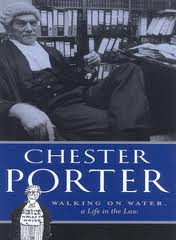
‘Walking on Water: A Life in the Law’ by Chester Porter

2003, 309 p.

One of the high points of my CAE bookgroup meetings (a.k.a. The Ladies Who Say Ooooh)  is when the book for the upcoming month is fished up out of the plastic box and brandished with a flourish. I’ve found recently that one advantage of actually doing some work on my thesis is that I am no longer likely to look at the next month’s offering and think “Damn, I’ve already read it!”. When our book for our final meeting was revealed last month, I found myself thinking “Good grief, who on earth chose this?” because it was Chester Porter’s memoir Walking on Water: A Life in the Law.

At first I thought that I’d never heard of the man, but I soon realized that I had without realizing it.  Most famously, he worked as Counsel assisting the Royal Commission into the convictions of  Lindy and Michael Chamberlain case, and he successfully defended Det. Sergeant Roger Rogerson on a bribery charge. He was known as “the smiling funnel web” and the title of the book comes from a quip directed towards him that “Chester Porter Walks on Water”.

Even though I encountered this book as part of my “off-duty” reading, I was very happy to read it in relation to Judge Willis.  The little gremlin of self-doubt that lives in my head regularly derides my ability to write about a man of the law (albeit a 19th century colonial man of the law) when I have no experience of that milieu at all.  The 19th century judicial culture is something that I am deducing for myself, largely from negative evidence of Willis’ breaches of judicial etiquette, rather than from any deliberate exposition of it by an insider.   So what did this book, written by a late twentieth century Australian barrister show me?

First, that even though a man might be a highly educated, brilliant barrister, he is not necessarily a successful memoirist.  Although Porter clearly expresses a number of opinions about the law, they are hedged with qualifications and nimble logical footwork. The book reads like a series of mini-essays which, from a reader’s perspective, made it easy to abandon a chapter or two if one’s attention was wandering.  There was no discernible overarching structure or motif to tie the book together.  In several places it was quite repetitious and the prose was doggedly careful. His daughter is the late poet Dorothy Porter, but whatever else she gained from her father- and I am sure that there is much- there is little poetry here.

Second, the book shares with military memoirs that felt need on the writer’s part to doff one’s hat (wig?) to learned colleagues, by praising them, rather formulaically, in passing.  Hence, many of his associates are named with the bracketed annotation (now SC; now QC, now Supreme Court Judge).  Given this emphasis on naming his colleagues, it seemed strange that there was no index.

I found myself wondering about the audience for the book. The frequent greetings-in-print that he gives to his colleagues suggests that he sees them as one readership, but the careful explanations and observations about the law are aimed at a more general lay readership.  The author comes over as a somewhat stilted, and rather old-fashionably decent man, able to look back at his life and acknowledge mistakes, and reticent about his family and private life.

Nonetheless, a book can work on one level while being perhaps less successful on another.  Despite my qualms about the structuring and language of the book, I found myself listening carefully to the radio report of evidence given recently by Ian Macdonald  at the recent Independent Commission Against Corruption hearing. It was another cross-examiner at work because Chester Porter retired eleven years ago, but as I listened I found myself thinking about the construction of a chain of questions and responses as an intellectual and rhetorical exercise. And as I read about the successful appeal of Jeffrey Gilham a few days ago, Porter’s warnings about expert testimony, the demeanor of witnesses and the shortcomings of police evidence loomed large in my mind.

My rating: 6/10

Read because: it was a face-to-face bookgroup choice

Copy sourced from: Council of Adult Education Book Groups

‘Pioneers of Bushwalking’ Exhibition at the RHSV

I’m up to my habitual practice of catching an exhibition in its closing days again. This time it is the ‘Pioneers of Bushwalking’ exhibition at the Royal Historical Society of Victoria.  It was officially launched on the 24th of October by that intrepid bushwalker, Tim Holding M.P. and closes this coming Friday 9 December.

Between 2004 and 2010 the RHSV was donated archival material from the Melbourne Walking Club  including photograph albums, maps and archival material. The club was founded in 1894 as a male-only enterprise: a status which it (rather surprisingly)  still holds today, although women are welcome to attend ‘many’ of their events as ‘visitors’.  Early on it encouraged race-walking, and the exhibition shows two Edwardian gentlemen strutting along in that curious gait. However, it seems that a major part of their activities involved bushwalking, particularly in the high country mountain areas.

The photograph albums in particular are fascinating.  They are beautifully presented and labelled, and they document trips particularly in the 1930s around Healesville, Gippsland and the snowfields.  It looks to be a damned uncomfortable hobby, sleeping on groundsheets under the stars, or under tents with do-it-yourself waterproofing.  There’s a curious flavour to the exhibition though- lots of jolly-ho, rather private-boys’-school humour, and an unsettling hint of homophobia in one particular publication discreetly placed on a lower display shelf.

Looking at the names of the stalwart members, I was attracted by the name ‘Chris Bailey’, a now-deceased but well known Ivanhoe resident who was, among many other things, President of the Heidelberg Historical Society and heavily involved in conservation of the Yarra River. My husband noted R. H. Croll, prominent in athletic, literary and arts circles.

I thought of both these men whose names seem to pop up in varied contexts as I browsed the glossy magazine that came with The Age this morning.  It lists Melbourne’s 100 most “influential, inspirational, provocative and creative” people for 2011.  The 100 are arranged by theme: ‘provocateurs’ (the men and women shaking things up around this place); ‘power partnerships’ (when two heads are much better than one); ’cause and effect’ (the people encouraging us to give a little bit- or a lot; ‘social glue’ (Who brings everybody together to make things happen?); ‘bright ideas’ (Why didn’t we think of that?) ; ‘My first time’ (i.e. people’s debut events);   ’20/20′ (twenty inspirational people all in their twenties); ‘global sensations’; ‘changing lives’ (making a difference to people’s lives; ‘music’ and ‘from these hands’ (creative people).  Just flipping through, there is a strong entrepreneurial theme running through them, along with activism, sport, politics,and an emphasis on youth- although that may well just be me getting older!

I wonder what themes a similar list for the early 1900s would emphasize?  I think that early 1900s examples could be found under each of these headings- for example, there would be examples of young men, clever inventions, and provocateurs- but I think that the language to talk about them would have been different.   I’m sure that formal clubs and societies, organized with archives and meetings (just like the Melbourne Walking Club), would be far more prominent than the more ephemeral and individual-based networks that we see today.

‘James Stephen and the British Colonial System 1813-1847’ by Paul Knaplund

If ‘Yes Minister’ were true (and who’s to say it isn’t?) ‘The Policies of Rt. Honorable James Hacker MP’ might more correctly be described as ‘The Policies of Sir Humphrey Applebee’.  Likewise, when considering the colonial policies of Peel and Russell, as I did recently,there is a Sir Humphrey-like character at work there too: Sir James Stephen, the Permanent Undersecretary of State for War and the Colonies.  He acted as Permanent Undersecretary between 1836 and 1847, but his involvement with the Colonial Office extended from 1813 when he commenced work as legal counsel there.  As a result, he served under, by my reckoning, thirteen different Secretaries of State, several of whom had multiple rides on the ministerial merry-go-round.

The Stephen family is a prominent English family, many of whom worked as colonial judges and legal officers, and hence moved in the same orbit as Judge Willis.  Another branch of the family extended into ‘arts and letters’ through Sir Leslie Stephen (of the Dictionary of National Biography fame) and his daughter Virginia Woolf.  The family ethos was strongly Evangelical, with links to the Clapham Sect and the anti-slavery movement.

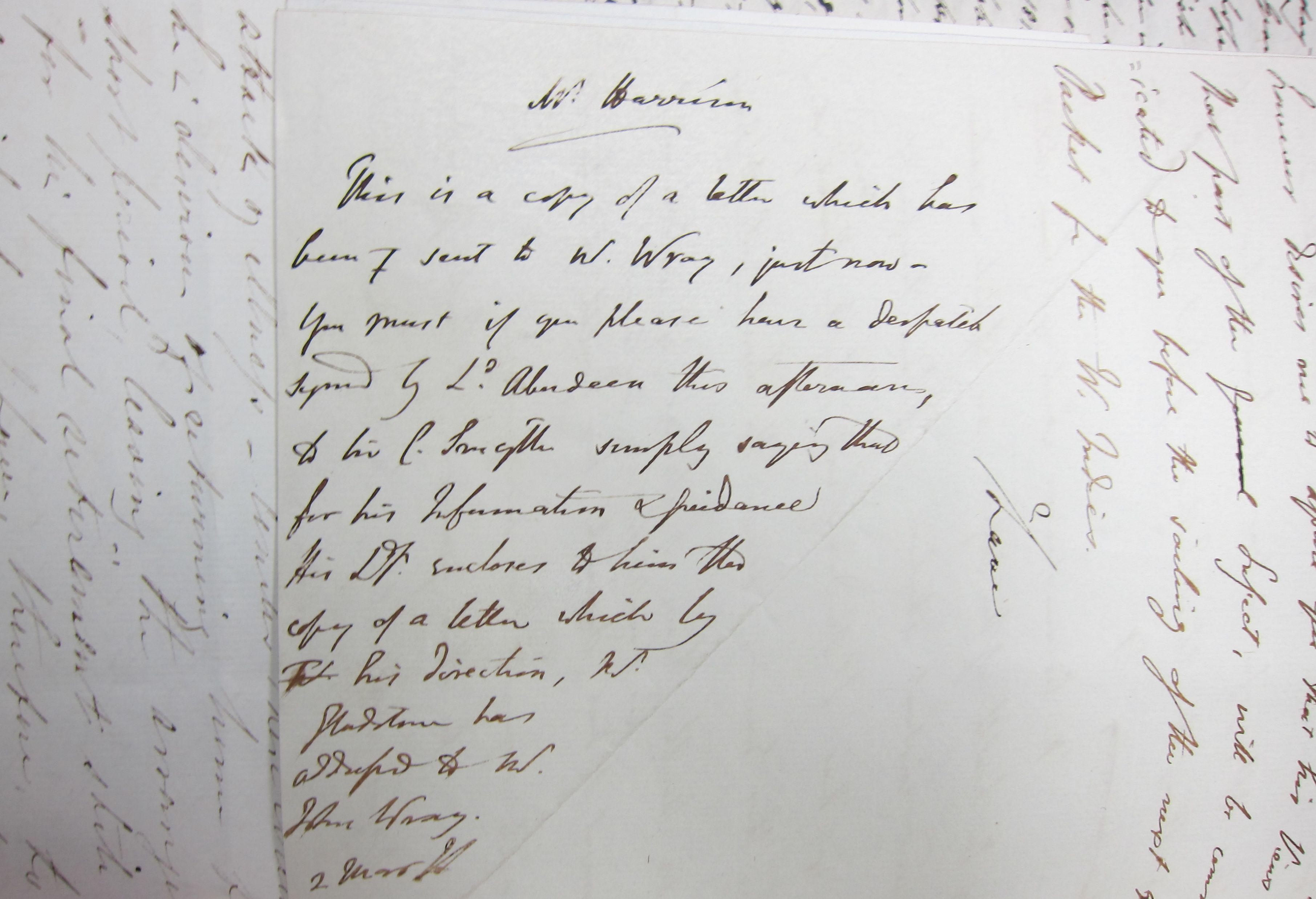
When you’re looking at the Colonial Office records, there are little glimpses of Sir James Stephen in many places.  As part of his drive to introduce more efficiency into the Colonial Office, he introduced a stamp system by which a document would move up and down the bureaucratic ladder, from civil servant to civil servant, up to the Secretary of State and back down again, with each initialling and dating in the designated spot on the document as it made its progress through the Colonial Office.

Where it was felt that a comment should be made, the edge of the document was turned over to make a dog-ear, and the civil servant or politician would make an annotation written at right angles to the rest of the document,  asking a question, or making a comment to the next person up the chain.  If the issue raised was a curly one, it might bounce back and forth between two civil servants with comment and counter-comment until it moved further up or down the bureaucratic ladder.

On occasions, James Stephen would write a longer memorandum that would be attached to the document in question.  In the archives today, these memoranda stay with the original correspondence, each carefully hived off into the files for the each specific colony.   This colony-specific focus tends to obscure the fact that, in any given week, the Colonial Office was dealing with the small dramas and mind-numbing minutiae of British colonies across the globe.  Yet there were commonalities among the types of issues that crossed the CO desks, and the response to them was underpinned by a broader, consistent theory of empire, largely embodied in Sir James Stephen’s bureaucratic contribution.

This book takes as a whole James Stephen’s attitudes and advice on colonial policy across the portfolio and over the thirty-odd years that he was at the Colonial Office.  There is, of course, contradiction and change in his opinions as the empire itself changed: I’m sure that Stephen would have agreed with the aphorism attributed to John Maynard Keynes (“When the facts change, I change my mind. What do you do, sir?”). Nonetheless, there are  bedrock beliefs in James Stephen’s annotations and memoranda that Knaplund draws out in this book.

One of these was his suspicion of colonial adventurers on the lookout for quick profits.  In particular, he was wary of the Wakefieldians who returned his distrust with the sobriquets ‘Mr Mother Country’ and ‘Mr Over Secretary Stephen’ and very public ridicule.  He was insistent on safeguarding humanitarian principles in relation to slavery, transportation and prison policy, and indigenous policy.  He was particularly distrustful of the West Indian plantation owners and their influence on the local legislature and judicial system.

His mode of operation was to always support the governor on the ground in the colony rather than laying down prescriptive policy from the Colonial Office.  As long as no-one other than the colonists were being hurt by what he perceived as bad policy, he was happy to let it stand.  The colonists themselves would realize their own error, he reasoned, and the Colonial Office would be in greater odour for intervening rather than letting the colonies reap what they sowed legislatively.

He was also supportive of self-government, probably moreso than his political masters.  He viewed self-government as an inevitable developmental process, arguing that the colonial children would soon grow into adolescence and demand a more adult relationship with the mother country.

He was, apparently, a painfully shy man, describing himself as “virtually without skin” and rather ascetic by nature, eschewing cigars after having just one and enjoying it too much.  He was a prodigiously hard worker and the breadth of his knowledge of events and personalities across the empire is mightily impressive.  He was in many ways the corporate memory of the Colonial Office, even though the Secretaries of State that he served under sometimes disregarded or over-ruled his advice.  Nonetheless, his is another voice in the chorus of Colonial Office policy, and one that cannot be overlooked.

The great Great Melbourne Telescope

When I hear the term ‘GMT’, I automatically think of Greenwich Mean Time.  Those of an astronomical bent, apparently, think of the Giant Magellan Telescope, four times more powerful than existing telescopes, and scheduled for completion in 2018.   But there’s another GMT too- The Great Melbourne Telescope, which I heard about at a lecture at La Trobe last week given by Richard Gillespie, the author of a recently-released book of the same title.  And a great little story it is too.

John Herschel, the son of the inventor William Herschel, first turned the telescope to the southern skies at the Cape of Good Hope in 1834-8, and in 1849 the British Association for the Advancement of Science called for a large reflecting telescope to be erected in the southern hemisphere.  Four years later they teamed with the Royal Society to create the Southern Telescope Committee to assess designs and seek funding.   The Cape of Good Hope, Sydney and Tasmania were considered as possible sites, but thanks to effective lobbying by William Parkinson Wilson of the University of Melbourne and support from the Victorian Government flush with post-Gold Rush wealth, the telescope was placed in Melbourne.  It was not the largest telescope in the world- that honour went to Lord Rosse’s ‘Leviathan of Parsontown’ in Ireland until 1917 but it was the second largest telescope at the time, and more importantly it was the largest steerable equatorial telescope, scanning not just up and down but across the skies as well.

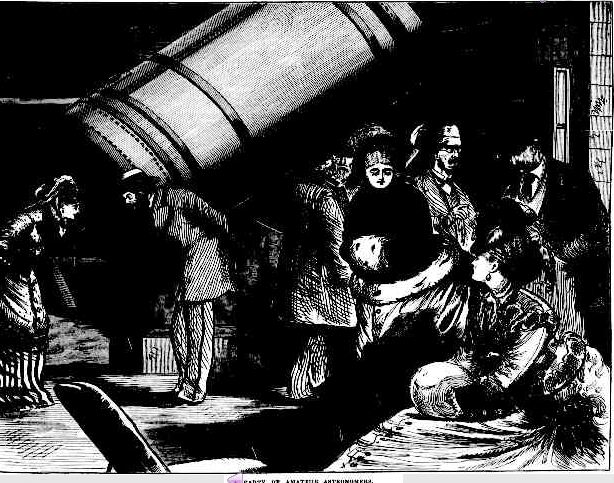
It was the pride of Melbourne- and why shouldn’t it be.  The Irish-built telescope opened in a purpose built house in the grounds adjacent to the Botanic Gardens in June 1869. Its close proximity to Government House meant that the governor and visiting dignitaries and their ladies could pop in for a squizz (literally).  A brilliant image of the moon captured by the camera attached to the telescope in the 1870s was distributed to schools, libraries and Mechanics’ Institutes  throughout Victoria.  The “Great Melbourne” referred not only to the telescope, but to the self-image of Melbourne itself at the time as a centre of learning and civilization in an international context.

But technology and invention does not stand still, and other telescopes were devised with superior design and capacities surpassed the GMT.  Its lens became tarnished and by the 1940s the telescope was dismantled and moved to Mt Stromlo Observatory where it formed the skeleton of a new improved telescope, overlaid with new technology and materials.  This updating was an ongoing process and more than half of the original telescope was harvested in 1984 by Museum Victoria as a historical artefact.  The GMT was barely recognizable, visually at least, as the technology that had evoked such pride seventy years earlier.

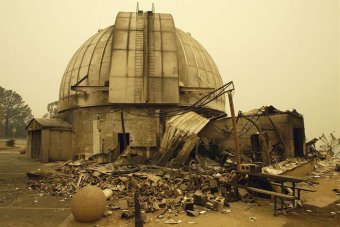
In 2003 the Mt Stromlo Observatory was destroyed by fire, including the cannabalized remnants of the GMT. But,- and here there’s a flush of parochial pride- the fire stripped away all the plastic and modern metal, leaving the original cast iron skeleton of the telescope. Alongside the parts that had been harvested earlier, 90% of the original telescope still exists in one form or another.

The original telescope house still exists on the grounds of the former Observatory side, now part of  the Botanic Gardens.  There are plans to restore the house and the telescope and make it available again to the public which involves a balancing act between restoration and the re-creation of a :century telescope.  They won’t, for example, be using a speculum lens again that caused so much grief and expense in the original telescope.  They’re trying to raise a million dollars- which seems chicken-feed in these corporation days- hence the publication of this book (which I assume will be available at Museum Victoria even though it doesn’t seem to be in the bookshop yet).

Marvellous Melbourne: Queen City of the South

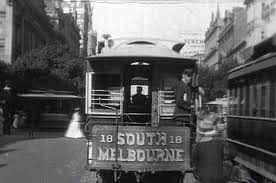
What a fantastic video! A horse-drawn Melbourne c.1910; verandah-ed shops; a stuffed-full museum; Federal Government house; a footy match; cable cars; ships in the Yarra.  I’ve seen snippets of it before, but never the whole thing.

There are certainly worse ways to waste 14 minutes of your life.

Marvellous Melbourne

‘The River’ at Bundoora Homestead

A wet, humid day and nothing to do on a Saturday afternoon so up we went to Bundoora Homestead to see their current exhibition ‘The River’. I’ve written about Bundoora Homestead previously.  It’s a beautiful Federation-era house, well worth seeing in its own right.

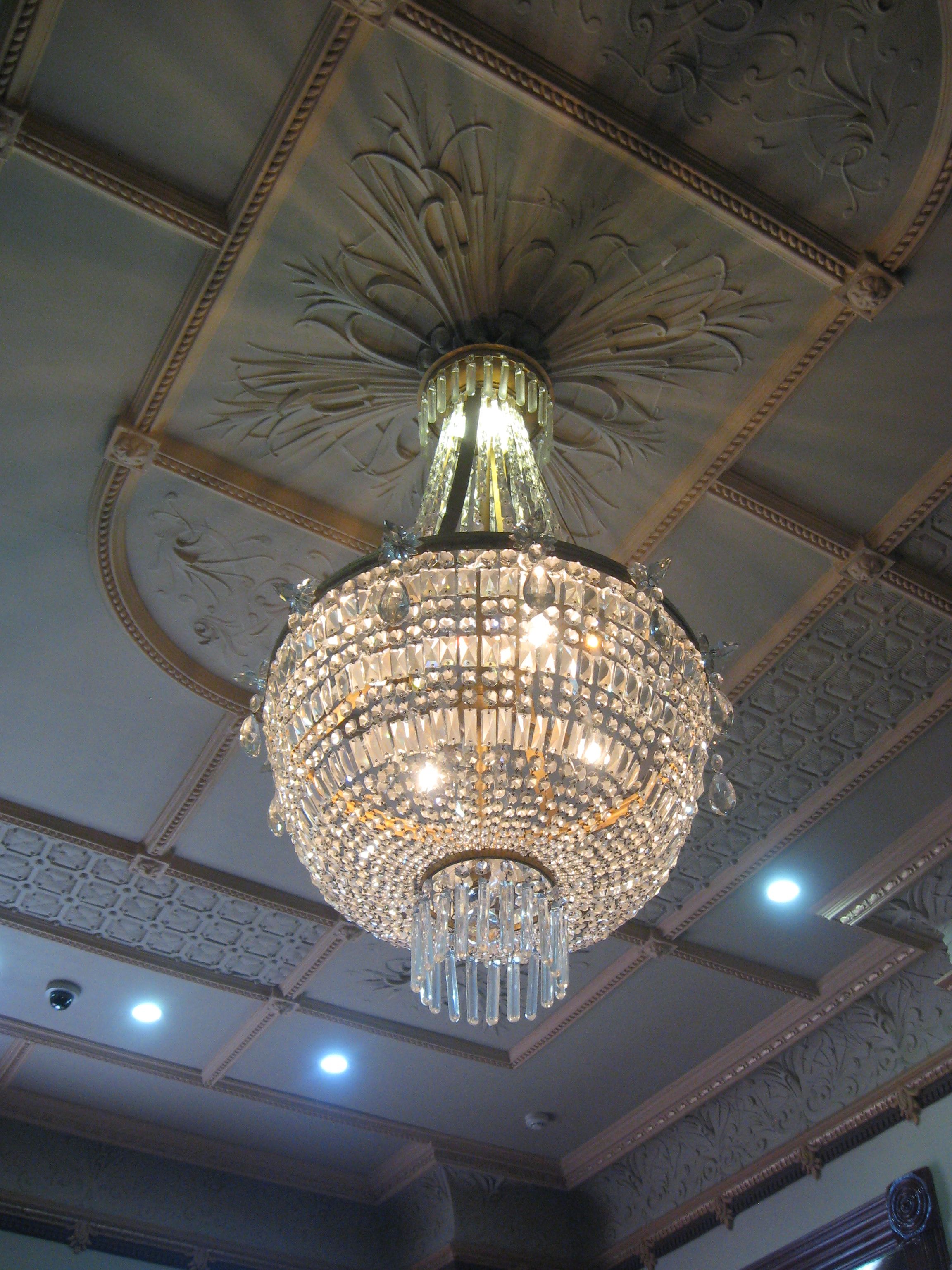
Chandelier in dining room, Bundoora Homestead

Another homestead that was once a gallery, Banyule Homestead, is very much in my thoughts at the moment.  More than ever I realize that if you value a gallery or a library or a museum,  then you need to visit it- you need to walk right through that door and go in.  In the case of Bundoora Homestead, it’s free and it literally costs you nothing: the gain is all yours.

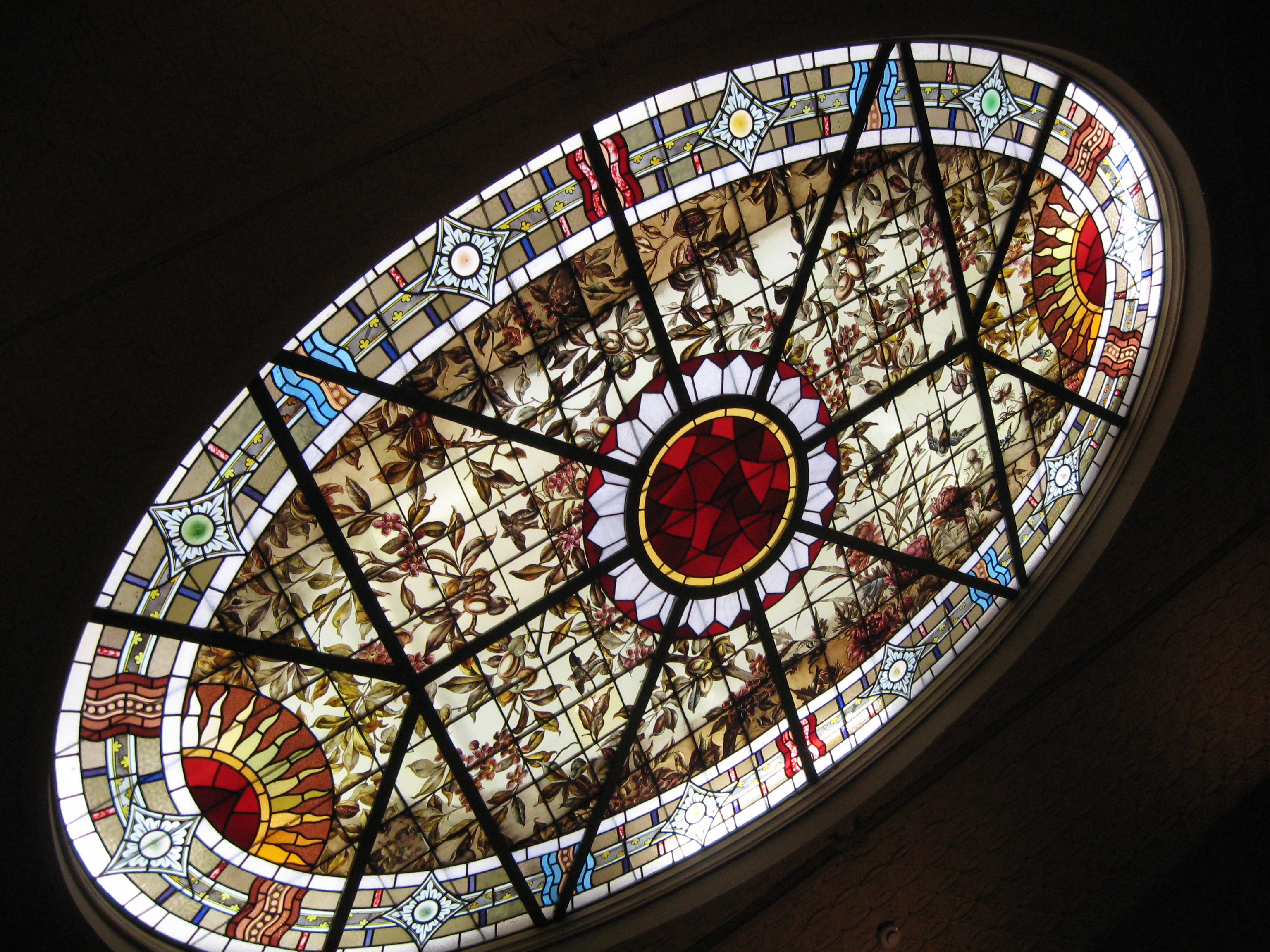
Stained glass skylight, Bundoora Homestead

The current exhibition is called ‘The River’ and it centres on Melbourne rivers (well, creeks) the Merri  and the Darebin Creeks. In recent years of drought these creeks have dwindled to small puddles connected by a fitful ribbon of water.   One of the joys of the recent rains this year has been to look down from a train into the city, as you cross over the creek, and to see the water gushing and tumbling along waterways that had seemed so dismal just a few years ago.

The exhibition contains well-known works, most particularly Burtt’s depiction of the purported signing of the Batman treaty and several Heidelberg school paintings of river scenes around Melbourne, as well as 19th century photographs and engravings.  These are juxtaposed against more recent works on the Merri and Darebin Creeks, including reflections on the ‘treaty’ painting and more surreal and threatening depictions of these urban places.  There will be a lecture panel this coming Thursday 24th November at 2.00 discussing Burtt’s painting.

This is a terrific exhibition. I’ve seen reproductions of the Batman painting before, but not the original, and I was delighted to see Sarah Susannah Bunbury’s painting of her house on the Darebin Creek in 1841.  I liked the sense of fun in many of the modern depictions, and it was lovely to see it in a beautiful suburban gallery, close by to the two rivers featured in the exhibition itself.


Uplifting Quotes for the Uninspired Historian #12: Hazel Rowley

I was saddened to read that Hazel Rowley died in March this year. It’s timely that I should write this post aware that the French department of the University of Adelaide is hosting a day-long tribute to her this coming Saturday 19th November. One of the  conundrums of the internet is the status of a website of a person who has died. Should it be left as it was? Does updating it somehow detract from its integrity, or does it honour the person’s ongoing relevance? Hazel Rowley’s website has been taken down this route by her sister.

I enjoyed reading Rowley’s 2007 LaTrobe University/Australian Book Review lecture “The Ups The Downs: My Life as a Biographer”, which is available on the ABR archives page (you’ll need to scroll down almost to the bottom of the page).  Once again, I haven’t actually read any of the biographies she has written, but this comment about the art of writing biography struck a chord with me:

Biographers carry a big responsibility.  They have someone’s life in their hands.  What’s unjust is that, if you read a dull biography, you come away thinking that person’s life was dull.  In reality it’s almost never the life that’s the problem; it’s the narration.  No wonder people are wary of biographers.  It’s hard enough to die; we don’t want some dullard turning our lives into insipid gruel.

Uplifting Quotes for the Uninspired Historian #11: Ged Martin again

p. 31 It is difficult to imagine that any historian would claim total survival of evidence for any episode of the past.  Indeed some might wearily conclude that far too much evidence has survived, especially if it consists of archival mounds that they must quarry to ensure that their own research is comprehensive, even though the documents were never designed to help their enquiries in the first place.  Some are tempted to defend their own specialized research by insisting that enough of the materials needed to form an explanation have survived.  This assertion, which is often the only basis on which the scholar can go to work, ultimately rests on the internally contradictory premise that we can identify the materials needed for an explanation even though we cannot be sure that we know everything about the problem we seek to explain.

Ged Martin Past Futures: The Impossible Necessity of History, 2004 p. 31

I was flipping through my notes looking for something this morning, and I noticed this quote from Ged Martin- a historian whom I keep encountering because of his work in Canadian, Australian and empire contexts.  I’ve already cited some of his wisdom previously, but I am particularly aware of him at the moment because I recently read an article of his that was exactly on the topic I needed at exactly the right time.  It was about empire federalism -surely a topic to make the hairs on the back of your neck stand up, yes? It was a fairly old article from the 1970s, located through Google Scholar, but it was exactly the sort of article that you would have fallen upon as if it were a gold nugget in the pre-computer days because it has exhaustive footnotes.  In particular, he had located evidence (by his own admission, sometimes small and oblique) of the stance of various politicians between 1820 and 1870 on the issue of the colonies being represented in the British Parliament.  As I gazed at these long footnotes, ranging across letters, speeches to Parliament and newspaper articles, I shook my head in awe at how long it must have taken and how much reading must have gone into that one footnote.

Then I thought about the opening line of Donna Merwick’s Death of a Notary. This is an unusual book, with a lyrical narrative in the first half, supported by ‘Notes and Reflections’, heavy-duty historical footnotes and nuts-and-bolts in the second half. And I do mean ‘half’- in terms of length and rigour, the two parts are equally balanced.  The opening line of the first half of the book is:

He was the only one. He was the only man to have committed suicide in the town’s seventeenth-century history.

Donna Merwick came out to speak to us during my honours year, and she talked about that first line, and the sheer amount of research that went into making such a definitive statement.  Would I ever feel confident enough to make such a statement?, I wonder.  So often I am paralysed by the fear that there is another source, another archive, that sits just on the other side of the line in the sand that I have drawn when I tell myself “Stop. You have enough. Just write.”

Sometimes I wonder if the sheer availability of texts now through the internet is drowning us, but then I look at Martin’s footnote,  and the Notes and Reflections in Merwick’s book. I consider the paper-based  research tools available in the 1970s, and try to imagine researching with a typewriter and a pile of catalogue cards and my complaint about the deluge of material seems rather lily-livered. I am humbled by the hard work and sheer doggedness such research reveals.