Author Archives: residentjudge

‘One Hundred Years of Presbyterianism in Victoria’ by Aeneas Macdonald

1937,  179 p.

I warned you. Yet another commissioned history of the Presbyterian Church, this time to celebrate 100 years since the Rev. James Clow held the first Presbyterian service in Geelong in late 1837. He was in Melbourne to check out the opportunities to set himself up as a landowner: indeed, he bought up big during the November 1837 land sale, purchasing four half-acre blocks on the south-west corner of Swanston and Lonsdale Streets.  His wife and family arrived on Christmas Day 1837 from Hobart. He started his work as a Presbyterian minister informally, encouraging Presbyterians to set up congregations and preaching on Sunday afternoons.

This centenary history covers much the same material as the other histories of the Presbyterian Church in Victoria that I have read. Macdonald is a more lively writer, however, and more attuned to other social and economic events outside the Church.  As it was written post-WWI, he incorporates an assessment of the churches’ cheerleading role during the war, which he admits has changed in the twenty years since then.

He spends two chapters on the Charles Strong controversy in 1883, regretting that

It was the misfortune of Dr Strong and of our Victorian Church that they ever came together, and especially that they came together when they did…In a later generation the story might have told itself in different words and worked itself to a different conclusion (p. 135)

Even writing fifty years later about Charles Strong, Minister of one of the largest and most popular churches in Melbourne, who split from the Presbyterian Church and started his own Australian Church, Macdonald admits that the written record is not sufficient:

The relevant minutes and documents of church courts, the columns of contemporary newspapers and the reminiscences of the few survivors have given us the groundwork of our narrative. On these, too, have been founded such comments as have been made. But had we been able not only to evoke the sequence of events as each arrived, as we have tried to do, but also to show each against the full colour of the background, we might have felt constrained to tell our story differently. That background has now faded completely from the canvas, but then it played what was sometimes a major part in leading men on that side and on this to act as they did and to determine as they did. With it before us what perplexes us now might perplex us no longer; what seems to demand our sympathy might be seen to deserve it not at all. (p. 137)

Ah, welcome to the historian’s world, Rev Macdonald, instead of the world of the chronicler!

In talking about the Church’s shift to social, as distinct from purely theological activity, he talks about Selina Sutherland, the child welfare reformer, who fell out with the Presbyterian Church over its attempt to restrict its welfare to Presbyterian children only. The former Sutherland Childrens Home in Diamond Creek is quite close to where I live, and it had never occurred to me to wonder what it was named after.

He also tells about the Rev P. J. Murdoch, the clerk of the Presbytery of Melbourne South, who was jailed in 1909 for contempt of court  for refusing to hand over a document to Mr Justice Hodges in the Victorian courts. It evoked all the questions of State Vs. Presbyterian court rights which had prompted the Great Disruption in Scotland,  and flowed through Presbyterian churches all over the world. Obviously the question hadn’t been completely resolved in 1909, and indeed there are shades of it still in the churches’ responses to the  Royal Commission into Institutional Responses to Child Sexual Abuse this very year. In a rather chilling final sentence in this chapter that foreshadows the fight again Hitler, he writes from his 1937 perspective:

…the division between the things of Caesar and the things of God has not yet been clearly and finally made. It is conceivable that we might yet have to fight again along that frontier even as the Confessional Churches are having to do in Germany to-day. (p.169)

So- now I’ve read all the ‘official histories’ that I can find about the early Presbyterian Church in Melbourne. Next stop- Malcolm Wood’s history which the blurb tells me is written from a “secular, critical perspective”. I must say that I welcome that. I think I’ve had enough commemorative histories by true believers.

‘The Presbyterian Church of Victoria: Growth in Fifty Years 1859-1909’ by D. Macrae Stewart

PresJubilee

1909, 129 p.

This book was written to celebrate the golden anniversary of the creation of the Presbyterian Church of Victoria in 1859, combining the Synod of Victoria, the Synod of the Free Presbyterian Church of Victoria and the Synod of the United Presbyterian Church of Victoria. There was one section of the United Presbyterians who didn’t join until after 1870, but in terms of golden jubilees, 1859 was the date. (Mind you, the earlier book I read about Presbyterianism in Victoria dated the coming together of different strands of Presbyterianism to 1867 instead.)

Written as a celebration publication, the text is laid out quite beautifully, with red margins and decorated inhabited initials to mark the start of each chapter. Stewart has used a planting metaphor to organize his chapters, which are titled ‘Seed’ ‘Stem’ ‘Branching’ ‘Pruning and Grafting’ etc.

As this book goes up to 1909, it covers the Charles Strong controversy of the 1880s, which of course had not occurred when Sutherland published his earlier history of the Presbyterian Church in 1877. Charles Strong, who had been the pastor of Scot’s Church in Melbourne (probably the premier Presbyterian church in Melbourne)became the first minister of  the Australian Church in 1885 after being charged with  promulgating unsound and heretical doctrine and resigning his position from Scots Church.  I think that if I’d been alive at the time, I would have been attracted to the Australian Church.

the australian church.

The Australian Church at the eastern end of Flinders Street (near Spring Street). It seated 1200 and opened in 1887 but the Church shifted to more economical premises in 1922. The Australian Church was finally dissolved in 1957. From the Australasian Sketcher. SLV http://handle.slv.vic.gov.au/10381/258170

The book has several plates showing prominent churchmen, mainly of the past but with some contemporary men (in 1909) as well. So many beards!  There are few mentions of women, but there is a section on the Presbyterian Mission Womens Union, famous for its cookbook. I only now realize that I always called it the PWMU rather than PMWU.

The book is curiously silent about the 1890s depression. Perhaps in 1909 it was too soon to discuss such things.

‘The History of the Presbyterian Church of Victoria’ by Rev. Robert Sutherland

1877, 516p.

“Why on earth is she reading this?” you may ask. It’s the first of a few books that I’ll be reading over the next month about the Presbyterian Church and Scots immigration to Victoria, in preparation for an exhibition that Heidelberg Historical Society will be putting on later in 2019.

This book was published in 1877. At the time, it would have been very current as it covers the time “from the foundation of the colony down to the abolition of State Aid in 1875”.  It is steeped in the Presbyterian attitudes of the time in relation to Sunday observance and temperance, and many of the ministers of whom Sutherland writes in a historical sense were still alive (and no doubt, readers of his book) when it was published.  He is careful to note the illustrious sons – always sons- of early ministers of the church who became wealthy contributors to the Presbyterian church and/or members of the Legislative Council of state Parliament. Being an MLC was obviously the ultimate form of success.

In Chapter 1, several women are named. The first is Mrs Turnbull, who was a friend of Rev James Forbes, the first Presbyterian minister appointed to Port Phillip. Mrs Turnbull was

a lady of vigorous understanding, of religious character, and thoroughly acquainted with business. She fully returned to the minister as much information as she received from him, and they were both mutually edified (p. 14)

Then there was Mrs Cumming, whose husband was a fellow-countryman of Rev Forbes:

After speaking a few words with Mr Cumming, the conversation was afterwards principally engrossed by Mrs Cumming, who was a lady fully equal in mental powers to Mrs Turnbull, and of as much firmness. (p. 14)

Miss Drysdale and Miss Newcombe of Geelong get a mention too. “That’s a good start!” I thought.  Unfortunately, after Chapter 1 there are no other women at all in this book, which seems quite amazing, given the emphasis on family in 19th century Christianity.

The attitudes towards aboriginal people are of their time. Given recent research on indigenous land practices described by Bill Gammage in The Biggest Estate on Earth and Bruce Pascoe in Dark Emu, this description of Rev. Clow’s journey to Port Phillip in 1837 is rather discordant:

Moving slowly along the windings of the Yarra Yarra, he saw its broad meadows covered with sterility under the gaze of savagedom, but soon to be clothed with fertility by the hand of civilization (p.10)

In speaking of missions to indigenous people, Sutherland subscribes to a view that Australian aborigines had descended (in both senses) from races with a highly developed civilization. Although now debased, it was felt that on the basis of their complexity of language and marriage practices, there must have been a more sophisticated earlier culture. He supposed that

It is most likely that the aboriginal settlers of Australia were of the poorer classes, who had drifted to the land, in consequence of having lost their way at sea. (p. 424)

Much of the book deals with the Australian replication of the Great Disruption that occurred within the Church of Scotland in 1843.  Just as in Scotland, the Victorian Presbyterian church split: one group adhering to the Established Church of Scotland, another to the Free Church of Scotland and a third distinguishing itself from the other two by eschewing any government financial aid. There are pages and pages of letters and resolutions going one way and then the other.  It seemed as if the schism was about to be resolved in 1855 but no – it all blew up again until 1867 when finally union was achieved (well, nearly completely).  In 1870 when State Aid to churches was discontinued, there was another gathering-in of Presbyterians.  I’ve heard talk of “stiff-necked Presbyterians” and it’s certainly an apt description of these disputes.

There’s much talk of church buildings, particularly in rural areas. In the late 1860s and early 1870s covered by the book, many suburban churches were rebuilt, replacing the earlier wooden buildings that had first been constructed. I was interested to read of St Enoch’s in Collins Street, directly across the road from the current Scots Church. During the schism St Enoch’s was part of the United Presbyterian Church of Scotland bloc, whereas Scots’ Church was aligned the Established Church of Scotland group.

St. Enochs United Presbyterian Church 96 Collins Street East Melbourne

St Enoch’s 1864. State Library of Victoria http://handle.slv.vic.gov.au/10381/403500

St. Enoch’s was built in 1851 and renovated and enlarged in 1864. Once the different branches of the Presbyterian Church re-united in 1867 there was little need for two large Presbyterian Churches directly across the road from each other, so it was turned into an Assembly Hall instead. It was demolished in 1911 and replaced by The Auditorium, while a new Assembly Hall was built on the Scots Church side of Collins Street.


‘The Valley at the Centre of the World’ by Malachy Tallack

tallach

2018, 352p.

I can’t remember quite why I borrowed this book when I saw it on the ‘New Books’ shelf at the library. Perhaps I’d heard good reviews of it or maybe it was its setting in Shetland that attracted me. I enjoy Shetlands on the ABC and I heard a cracking interview with the author of Vera and Shetlands, Anne Cleeves. What ever drew me to it, it’s a beautiful book that I almost didn’t want to end. It surprises me that the author is a young man. The book felt as if it were written by an older person (think, perhaps Marilyn Robinson’s Gilead or perhaps Elizabeth Strout’s work) in terms of its treatment of the relationships between people, infused with a sensitivity to place and space.

The Valley at the centre of the world is exactly that – a single valley with just five houses clinging to The Road that runs above and parallel to ‘The Burn’, the waterway that runs to the sea. The use of ‘The’ is intentional: there is only one. In its harsh but beautiful isolation, there is a timelessness about The Valley, although people are coming and going. Older man David has lived there all his life, as did his father and grandfather before him. Although he does not consciously think of it this way, he owns the valley.  His wife Mary, came there thirty years ago and their daughters Kate and Emma have both shifted away.  Sandy, a newcomer, was their daughter Emma’s partner and came back with her to the Valley but the relationship has broken up. He stayed on when Emma left, and with a respectful relationship to his inlaws (do you have inlaws if you’re not married?) and now landlords, he takes over the cottage and croft left vacant when Maggie, a very old inhabitant dies. There is Terry, a morose alcoholic single father, and Jo and Ryan, who have shifted into the Red House from the city, with Ryan a go-getter spiv taking advantage of the cheap rent. Finally, there is Alice, a crime writer (who reminded me not a little of Anne Cleeves herself) who has moved to the valley after the death of her husband. She has decided, somewhat presumptuously I think, to write about the Valley and is particularly drawn to Maggie as a character, hoping to find some secret or depth about this woman who had spent her whole life in the Valley.

The book revolves around the lives of this small group of people, who each have their griefs and flaws. It is a slow book, just as life itself in The Valley is slow. Soap opera? Perhaps, but it’s soap opera written with insight and generosity.

What is striking is the use of dialect in the conversation. There’s a glossary at the front, but it’s more the sentence construction and small words that slows you down as a reader. I don’t subvocalise or even mentally vocalise when I read, so this was a strangely auditory reading experience for me.

I really loved this book, and didn’t want it to finish.

My rating: 9/10

Sourced from: Yarra Plenty Regional Library


Movie: The Favourite

What a hoot! The historical bio-pic is given an eccentric and irreverent treatment in The Favourite.  Set in the court of Queen Anne (i.e. 1702-1714) , it tells of the power struggle and changing dynamics between three female protagonists: Sarah Churchill the Duchess of Marlborough, Abigail Masham and Queen Anne herself. To be honest, I knew nothing about Queen Anne (except the furniture) and in this film she is ’embodied’  in the same way that the many depictions have ’embodied’ Henry VIII. It is often filmed through a warping fish-eye perspective, and the music is scratchy and discordant.  The humour, language and costumes are deliberately anachronistic. Olivia Colman is absolutely brilliant, with her face conveying myriad emotions, often within the one shot. I’m not absolutely convinced about the lesbianism – female friendships are notoriously hard to read, especially at a distance of 350 years – and I’m not sure about all these murder attempts. But, it seems that the basic facts of the story are accurate but fooled around with, very prettily and archly, for a 21st century audience.

My rating: 4/5

Looking forward: 2019

These are not resolutions- they’re challenges!

  1. To read twenty books in the Australian Women Writers Challenge 2019
  2. To read sixty books overall in my Goodreads challenge.
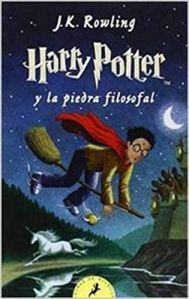
  3. To finally finish reading Harry Potter y la piedra filosofal in Spanish (it’s taken about six months so far)

Looking back: 2018 in review

This seems to be the time of year when people review their reading and viewing progress over the last year, so I’ll add my two-bits.

During 2018 I read 57 books that I reviewed on this blog (I actually read more but I’m ‘saving’ them for when I have no posts). Of these 36/57 were by women, which doesn’t surprise me. I’m involved in the Australian Women Writers Challenge, and that tends to steer me towards women writers.

I mainly read Australian works, with 35/57 being written by Australians, although not necessarily set in Australia. Of these 35, 24 were written by Australian Women, again probably reflecting the AWW challenge.

I lean towards non-fiction, with 37/57 falling into the non-fiction category. Of these 37, twenty were ‘academic’ non-fiction, both history and biography, which I distinguish from other non-fiction by the presence of footnotes and/or a bibliography.

As far as most memorable reads go, I started the year well with Phillipe Sands’ East-West Street and finished it with David Sornig’s Blue Lake.  Along the way and with hindsight, I really enjoyed Janet McCalman’s Journeyings, Sarah Krasnostein’s The Trauma Cleaner, and Judith Brett’s The Enigmatic Mr Deakin.

I saw 27 movies over the year, eight of which were subtitled. If I were to nominate a New Year’s resolution (which I won’t) then it would be to see more international films.

And that was the year that was.

Australian Women Writers Challenge 2018 completed

I can never remember how many books by Australian women writers I aimed to read in any given year. I seem to have read about twenty a year for the past few years, and 2018 was no exception, with a total of twenty-two books. And once again, even though I promised myself to read more fiction, I didn’t seem to get round to it – in fact, I can’t believe that I read so little!

History

“Girl Talk” by Gwenda Beed Davey

“And the Women Came Too” by Anne Marsden

“The Battle Within: POWs in Post-War Australia” by Christine Twomey

“Journeyings: The Biography of a Middle Class Generation” by Janet McCalman

“Six Bob a Day Tourist” by Janet Morice

“Chinese Market Gardens in Australia and New Zealand” by Joanna Boileau

“Australian Ways of Death” by Pat Jalland

Current Affairs

“Follow the Leader” by Laura Tingle

Biography

“The Enigmatic Mr Deakin” by Judith Brett

Unbridling the Tongues of Women” by Susan Magarey

“The Unusual Life of Edna Walling” by Sara Hardy

“Frank Hardy: Politics, Literature, Life” by Jenny Hocking

“The Trauma Cleaner” by Sarah Krasnostein

“Swanston: Merchant Statesman” by Eleanor Robin

Memoir

“Ever Yours C. H. Spence” ed by Susan Magarey

“Almost French” by Sarah Turnbull

“The Year Everything Changed:2001” by Phillipa McGuinness

“From Strength to Strength” by Sara Henderson

Fiction

“A Week in the Future” by C. H. Spence

“The Museum of Words” by Georgia Blain

“Long Bay” by Eleanor Limprecht

“Mothers Grimm” by Danielle Wood


‘The Children Act’ by Ian McEwan

McEwan_ChildrenAct

2015, 224 p.

Like On Chesil Beach which preceded it, this book is quite short and has a similar tremulous, sinking, hold-your-breath feeling about it. It is named for the UK legislation of 1989 the Children Act which rules that “When a court determines any question with respect…to the upbringing of a child… the child’s welfare shall be the court’s paramount consideration”.

The child in this case is Adam Henry, just three months short of his eighteenth birthday, who along with his parents, is refusing a blood transfusion rendered necessary by treatment of cancer because they are Jehovah’s Witnesses.  The hospital, aware that time is running out, brings the case to the court, where it rests before High Court judge, Fiona Maye.

‘My Lady’ Justice Maye has come before other excruciating moral cases before in her capacity as judge with the Family Division, most particularly a case about the enforced separation of conjoined twins. In deciding this current case under such tight deadlines, she decides to go to the hospital to visit Adam Henry, who she finds to be highly intelligent, articulate and engaged. McEwen really knows how to built the tension as he reports her long-winded finding to the court, just as it would have been experienced by the gallery filled with family and journalists.

At the same time that professionally Fiona Maye is dealing with this, her own personal life is unravelling. After a long marriage with both partners working, her husband Jack announces that he wants to have an affair, now that the spark has gone from their marriage.  She is hurt, furious and ashamed. She has seen many ruptured families in her professional life, but somehow felt aloof from all that.

A professional life spent above the fray, advising then judging, loftily commenting in private on the viciousness and absurdity of divorcing couples, and now she was down there with the rest, swimming with the desolate tide (p.49)

It’s only a small book, and I don’t want to give too much away. At heart is the question of how much responsibility Fiona has for Adam’s wellbeing both professionally and personally.

Adam’s case is just one in a long professional life, and I felt that McEwan turned too didactic in his backgrounding of the other cases she had heard. It felt clunky and contrived.  The ending is not as I expected it to be, and could perhaps be seen as a letdown. I didn’t see it that way, however.  I don’t believe in karma, and there is often no symmetry or fairness in consequences. The book has the same chilliness that many of McEwan’s books express, while dealing with pain and regret. Somehow it seems a very English combination.

I read this for my bookgroup, and it was my choice from about two years ago. It has taken some time for us to receive it! As it happened, we read it in November, just as the film was on general release.

My rating: 8.5

Read because: CAE bookgroup

‘Mothers Grimm’ by Danielle Wood


wood_mothersgrimm

2014, 212 p.

When I was little, my mother gave me her copy of  ‘Children’s Treasure House”, printed in 1935. It was a huge book- some 700 odd pages, with stories from a range of mainly British authors, and a sprinkling of Hans Christian Anderson and the Brothers Grimm. It had beautiful art deco illustrations, including colour plates. Few of the stories were rewritten for younger readers, and the fairy stories were left with their darkness and thinly veiled menace. There were plenty of  absent mothers, bad mothers and step mothers, but the good mother was always absent. It seems that the story can only begin once the Good Mother gets out of the way.

In her prologue to her collection of long short stories Mothers Grimm, Danielle Wood reminds us that the archetype of the Good Mother still surrounds us, in advertising, in magazines and in impossibly well-groomed women in your playgroup. Written in the second person, she invites the reader into an identification with a less glowing model, the not-very-good, ambivalent, rather resentful mother instead. She does this through four lengthy short stories, each titled with a single word, that have at their base the sort of archetypes that emerge in the tales of the Brothers Grimm. I can sense the presence of those archetypes (e.g. Hansel and Gretel in ‘Cottage’), but I must confess that I’m struggling to put my finger on the exact story or character for some of the others.

The four stories are all set in the present day, with women as the main characters and men playing only bit parts. The women here are sisters and mothers, and they are flawed. Some are exhausted, others guilt-riven, some manipulative, others cruel. The stories are long enough to really develop the characters and draw you into identification – not necessarily sympathy- with them. At about 40-50 pages in length, they are just the right length for me as a reader: able to be read in one sitting, and meaty enough that you don’t’ want to turn to the next one, but just let it sit instead.  They are Australian stories without going all ‘Henry Lawson’ on the reader; they are urban and current and thoroughly relatable.

But looking at the publisher’s blurb on the front cover (which to be fair, the author has limited control over), I found myself wondering if I had read the same stories. “Wickedly dark, astonishingly funny, happy endings not guaranteed” it reads.  Dark, certainly but I found too much truth in them to be funny, and there are certainly no happy endings here, just realistic, stuck-with-it ones. As life is.

My rating: 9/10

Sourced from: Yarra Plenty Regional Library.

Other reviews:

Sue at Whispering Gums enjoyed it, and did a much better job than I in identifying the source stories!

AWW-2018-badge-rose-199x300

I have included this on the Australian Women Writers Challenge 2018 database.