Tag Archives: travel

I hear with my little ear: Podcasts 25-30 November

The Rest is History Episode 614: Walt Disney: The Great American Storyteller. So there I was, on my evening walk through the suburban streets of Rosanna, laughing my head off at the start of this episode where Tom Holland regales us through a truly terrible rendition of ‘When You Wish Upon a Star’, while Dominic intones the words. But the reality is that this song is burned into my memory as the theme song of Disneyland, which I rarely got to hear as I was usually bundled straight into bed (at 7.30!) unless we were visiting family friends all the way out in Croydon- miles away! It took awhile to all pile into the car, and so I got to hear the song. Mum and Dad would put the back seat down, and we would lie down in the back, watching the orange sodium street lights until we were asleep.

Enough reminiscing. After murdering the song Tom and Dominic redeem themselves by really capturing just how new Walt Disney’s early animations were, starting with Steam Boat Willy in 1928. The sound was fully synchronised to the action, and the cartoon characters actually had their own personalities. The Three Little Pigs in 1933 introduced brilliant colour, and Snow White (1937) was seen as the supreme achievement in animation with thousands upon thousands of drawings. Pinocchio won an Oscar in 1940, and it was followed by Fantasia and Bambi, which presented a particular challenge in depicting animals realistically and yet with human features. They draw a parallel between Walt Disney and Steve Jobs (Apple) in that they both worked in a field where technology was in its infancy, they are linked to California, and moving on from their own ‘tinkering’ from interest, they became the public face of a wealthy corporation. But Walt Disney and his brother Roy were not wealthy at first, and the company nearly went broke during WW2. Losing the licensing rights for his first creation ‘Oswald the Lucky Rabbit’ spurred Walt Disney to ensure that he always maintained tight control of licensing- something that exists to this day. Politically, Disney became increasingly conservative, especially after a strike in 1941 over unionization, which was a PR disaster for them, and he publicly aligned himself with Joseph McCarthy. He continued to make films (Cinderella etc) but they were not of the same quality as his earlier films. By the 1950s he embraced television and produced the hugely popular Disneyland. He died in 1966, by which time opinion had turned against many of his films, which were accused of being infantalizing, commercial and sentimental. This criticism was strongly voiced by P. L. Travers, who resented Disney’s treatment of her Mary Poppins character. Really interesting – and a good recovery from that terrible opening song.

Episode 615 Disneyland: The Modern American Utopia This episode looks at the construction and place of Disneyland within Walt Disney’s imagination and American life. It was conceived during the 1940s, after the success of Snow White, when Disney was looking for something new. He was obsessed with train sets, and even had a life size train built in his house. He at first conceptualized Disneyland as a miniature travelling village, and in 1951 he sent out a team to investigate museum displays and historical recreation parks (which US is into in a big way). At this point Tom and Dominic become more historical as they trace though the development of pleasure gardens and entertainment parks, starting with the oldest park in Copenhagen in 1580 that was built beside the tourist attraction of a spring. The Vauxhall Gardens were established in London during the Restoration era. They kept the riff-raff out by charging 1 shilling, which is about $150 in today’s currency- similar to the price of a ticket to Disneyland. But by the mid-19th century it had gone downmarket, and it closed in 1859. The first carousel was built in 1790s France, and by 1861 a steam-driven carousel was opened in Boulton UK. Fred Savage was the Father of 1860s rides, developing the switchback ride by 1888. Disneyland was conceptualized as a theme park, rather than a park with rides. To cover the huge expense, Disney entered into an arrangement with ABC Television to present 26 television episodes, which became hugely popular. At the end of the 1950s he bought a huge parcel of land in Florida, where he planned to build Disney World as a housing village for his workers, but he died before this eventuated. On reflecting on Disneyland Tom and Dominic observe that it’s a reflection of one man’s biography and vision. It is a total immersion experience, with ‘cast members’ rather than workers, and the rides are stories, rather than thrills. There is an emphasis on order, just as there was in Vauxhall Gardens, and although it has the past and the future, there is no present.

There’s then a Bonus Episode with an interview with Bob Iger, the head of Disney today. It’s a bit boring, so don’t bother. But it is interesting that Disney is now a corporation that needs to provide shareholder value, and that it has now purchased the stories from other franchises.

Journey Through Time I’ve only just started listening to this podcast, hosted by historians David Olusoga and Sarah Churchwell, I started listening to the episodes about the Paris Commune, without really knowing quite what it was, or when it occurred. The Paris Commune: France’s Bloodiest Revolution Episode 1 looks at the 1871 Paris Commune where a combination of soldiers, students, women and artists governed Paris of 72 days, independent of the government. It is not as well known as the French Revolution of 1789, but it was more violent. Paris had been modernized since the French Revolution with Haussman’s massive public works program between 1853 and 1870. The Commune began with France’s humiliation at the hands of Bismarck’s Prussia, who had deliberately fomented war to forge German nationalism. Napoleon III took the bait, but ended up captured, with the Second Empire in ruins. The Third Empire was soon established outside Paris, but it just replicated the status quo. Bismarck surrounded the still-walled city of Paris, thinking that it would soon fall, and when it didn’t, he decided to starve them out. A large government delegation escaped Paris and set up outside. Meanwhile the Parisians were starving, and when they heard rumours that the government was about to surrender, a country-wide uprising occurred on the 31 October. However, the uprising quickly collapsed in the provinces, and so Paris now felt that it was fighting on alone.

The Documentary (BBC) The Shiralee: D’Arcy Niland’s 1955 Australian western. A western? I don’t remember it that way. The BBC blurb mentions the 1957 movie starring Peter Finch, but Bryan Brown also made a version in 1987. Anyway, Kate Mulvaney is doing a stage version with the Sydney Theatre Company (the run finished at the end of November 2025) and this is an audio diary account of her writing the screen play and watching the performance come together in rehearsal.

I hear with my little ear: Podcasts 8-15 September 2025

The Rest is History Episode 576 The Irish War of Independence Part I. The Rise of the IRA Between 1909-11 Britain wanted to give Home Rule, but the Northern Irish unionists didn’t want it. World War I froze any progress on the question. Then, during the war, in 1916 the Easter Uprising took advantage of the opportunity of Britain being otherwise distracted, but it was quickly crushed, leading to the arrests of between 1000-1500 people. 187 were imprisoned, and 14 were executed, including Roger Casement. The Nationalists used the deaths for propaganda purposes in the midst of UK apathy. The Unionists, who constituted about 30% had influence in the British cabinet butBritain was taking an each-way bet as Sinn Fein became more prominent. Arthur Griffith, the founder of Sinn Fein, worked as a printer, and organized boycotts and agitation and stood for by-election. Michael Collins was a military organizer within Sinn Fein, not just a gun runner. He emerged when the other leaders were jailed in 1917. De Vallera was the President, and Griffith was the Vice-President of Sinn Fein and they accepted the aim of an independent Irish Republic. In December 1918 there were elections held in the UK and Ireland with an enlarged electorate, with 70% of electors voting for the first time. It yielded a Sinn Fein victory.

The Human Subject The Man With the Artificial Windpipe was Andemariam Beyene, an engineering student from Eritrea studying in Iceland. In 2011 he was desperate for a cure for the large tumour that had been discovered in his trachea. He had tried surgery and radiotherapy and nothing had worked.Dr Paolo Macchiarini, Karolinska Institute’s star surgeon presented himself as Andemarian’s best and last option. He proposed an experimental treatment – but one that had never been done before on a human being. Andemariam would be the first. Unfortunately, he agreed to it. Macchiarini was a good publicist, and published the results of the surgery soon afterwards- too soon, because Andemarian died, as did all three patients who had this surgery. Macchiarini ended up being jailed for 2 1/2 years, and his papers were retracted.

I hear with my little ear: Podcasts 1-7 July 2025

The Rest is History Episode 555: 1066 Slaughter at Stamford Bridge This was in effect the last battle between the Vikings and the Saxons, with two doomed characters each representative of their cultures. Harald Hardrada was 56 years old, and although he hadn’t previously been interested in invading England, he was now because of the need for money, the desire to be the next Cnut and because he was psychologically restless and warlike. He landed with 300 longships and possibly 10,000 men north of Yorkshire, where there were many Danish connections. There he joined forces with Harold Godwinson’s own brother Tostig (boo, hiss) at the Humber. It was a hot day, and it is possible that the Norse left their armour off, because they were unaware that Godwinson had rushed from London with his army, picking up men as he went. Harald was killed at Stamford Bridge, but glowing with success, Harold Godwinson did allow his treacherous brother Tostig to return to Norway. Then blow me down, who should arrive by William of Normanby, ready for a fight!

History Extra Podcast Owain Glyndŵr:Life of the Week The blurb on the website says “Famed for his dramatic and determined revolt against English rule in the early 15th century, as well as his bold vision for an independent Wales, Owain Glyndŵr has gone down in history as a symbol of Welsh resistance and a national hero.” Well, I’d never heard of him. To be honest, I didn’t like this episode much- it assumed too much knowledge of Welsh/English history. I’m not sure if I have this right, and I don’t have enough interest to check. As Wales was a colonized region, the rich and well-connected Owain served in the English armies, then went home for about 10 years. During 1400 rebellion broke out in Wales, taking advantage of the intra-English rebellion. His lands were confiscated, then an outbreak of violence saw a Welsh victory in 1402. The first native Welsh Parliament in 100 years was held in 1404 and in 1406 Owain wrote a long treatise on the Welsh State. The Welsh had French support at first, but when the French support split, the war reverted to a Peasants Rebellion. Owain never accepted a pardon from the English for his role in the resistance, and we don’t know what happened to him.

I hear with my little ear: Podcasts 16-23 June 2025

In the Shadows of Utopia Season 2 Episode 8 Rolling Thunder in Vietnam, Clouds over Cambodia Time Period Covered 1964 – 1967. Despite LBJ’s doubts about the wisdom of escalating the war in Vietnam, it seemed to be set in stone by 1964. The Vietnam War was really the resumption of an earlier war. The Vietnam Workers Party resolved to mobilize large numbers of North Vietnamese and NLF fighters quickly in order to win a victory before the US got involved. In August 1964 the Tonkin Gulf episode was an over-reaction, but LBJ used it to justify his stance on the war and he was rewarded with an increase in popularity. Meanwhile, the Cambodian communists in Vietnam were becoming increasingly resentful, wanting to start an armed struggle back home, but discouraged by the Vietnamese because they were friendly with Sihanouk. Pol Pot found himself feeling sidelined. He visited China on the eve of the Cultural Revolution as a friend of revolution, and he liked the idea of continuous revolution, especially drawing on the rural peasantry, as put forward in the Little Red Book. But although he received the support of Chinese officials, China also did not want to encourage armed struggle as they too were friendly with Sihanouk. In 1966 Pol Pot returned to Vietnam, then on to Cambodia, but his progress home was hampered by heavy bombing. The Cambodian Communists conducted a study session in 1966 where they decided to change their name from the Cambodian Workers Party (which matched the Vietnamese Workers Party) to the Communist Party of Kampuchea (CPK) and moved their office to avoid the surveillance of the Vietnamese. Pol Pot was determined to prepare for armed struggle in the rural areas. But things were changing in South East Asia as the 1965-6 aborted Communist coup in Indonesia led to heavy repression. In Cambodia, Sihanouk was losing his magic, with the stagnant economy, disaffected youth, internal repression and border skirmishes as Thailand and the US pursued the Viet Cong into Cambodia. Conservatives were becoming disillusioned with Sikanouk’s ‘both ways’ approach that saw him rejecting the west and maintaining a relationship with North Vietnam and China. The left never like Sihanouk anyway. There was increasing resentment at Sihanouk’s involvement in film-making and acting- apparently they were bad films, focussing on the elite. In 1966 there was another election but this time Sihanouk didn’t select the candidates, leading to a new assembly that was not completely in his control. Lon Nol was chosen as Prime Minister as he was still loyal to Sihanouk and popular with the army and Buddhists. Sihanouk went off to France, but things changed in his absence.

The Human Subject (BBC) The Farmers and the Goat Testicle Transplants. In 1916 a farmer walked into a
Dr John R. Brinkley’s surgery in the small town of Milford, Kansas, complaining of a ‘flat tyre’ (i.e. erectile dysfunction). The doctor suggested a transplant of goat’s testicles as the solution to his problem and Brinkley’s career as a xenotransplant surgeon took off. He had his own radio show, where he spruiked patent medicine, and unsuccessfully ran for government, claiming that the election was ‘stolen’ (sound familiar?) He was engaged in multiple court cases, and ended up losing his licence to practice and was called a quack. Interesting.

I hear with my little ear: Podcasts 8-15 May 2025

In the Shadows of Utopia Season 2, Episode 6 is the third part of this detour into Vietnamese history which I have found really interesting. The Path to the Second Indochina War – Part Three: Agent Orange, Kennedy… covers the years 1961 – 1963. The first tests for Agent Orange were carried out in 1961, and the program began in 1962. The nerve agent dioxin was included as part of the manufacturing process. JFK was a very close election, so now South East Asia was HIS problem. At this stage, Laos was seen as more of a problem. Kruschev announced his support for wars of national liberation, and Kennedy began escalating the war, although covertly and only as a half measure. The number of ‘military advisors’ was increased from 600 to 1600. Diem supported the defoliation program using Agent Orange, and a South Vietnamese navigator was placed in each plane as cover for the American involvement, despite US military unease about its use. After bombing with defoliants, villagers were moved to ‘strategic hamlets’, which was supposed to isolate villages from contact with the communist insurgency. Meanwhile, the Buddhist crisis that led to the self-immolation with which this little excursion into Vietnamese history began, came to a head in 1963. It had started earlier with the Buddhist Revival Movement in the 1920s. It clashed with Diem’s vision of putting Catholics into positions of power. After the protests and act of self-immolation, Diem was convinced that the Communists must be behind it, and cracked down even harder on the pagodas, leading to even further loss of support. On November 1 1963 there was a coup against Diem which the US ambassador claimed ignorance of, and although officially neutral, the US govt did not assist Diem. Diem escaped but he was later shop by the coup leaders. Meanwhile, back in Cambodia there was increased student and leftist protest. Sihanouk threatened the leaders, and fearing scrutiny of his secret identity Pol (we’ll call him ‘Pol’) returned to the jungles and the revolutionary movement.

The Rest is History Ep. 551 The Road to 1066: Countdown to Conquest (Part 4) I really have learned so much from this four part series. Rather than a great, sudden invasion, the integration of the Normans and the Britons started long before, as did the integration with Denmark. Quoting from the show notes, which explain this much better than I could:

Often symbolised as the last of the Anglo-Saxons, [The Godwinson family]’s stratospheric rise to power was engineered by Godwin, an obscure Thaine from Sussex, in a striking case of social mobility. Making himself integral to Cnut, he was made Earl of Wessex to help him run his new kingdom. But Godwin was also cunning and conniving, constantly shifting sides to ensure the maximum advantage to his family. Even Edward the Confessor, who hated the Godwinsons, had no choice but to promote Harold and Godwin’s other sons, and marry his daughter, Edith. But, with his hatred mounting and the couple childless, the fortunes of the Godwins would soon change…in September 1051, with tensions reaching boiling point, they went into exile. It would not last, and their return would see them catapulted to even greater heights of influence. Meanwhile, just as Edward’s life was dwindling, Harold’s star was rising, and across the channel William of Normandy’s prowess was also mounting.

On returning from exile, Edwin and the Godwins reconciled. Harold Godwin was shipwrecked, and taken under the protection of William of Normanby, and he swore to uphold William’s claim to the throne should Edward remain childless (which it was pretty obvious he would). Was Harold coerced into this? Certainly, if Harold or one of the Godwins became King, William certainly would invade. Meanwhile, there was ‘trouble up North’ with rebellion in Northumbria, where Harold’s brother Tosvig was in charge. In the end Tosvig went into exile, just as Edward was getting increasingly frail. And meanwhile, there was action afoot in Denmark.

Ezra Klein Best Of: Margaret Atwood on American Myths and Authoritarianism Can I admit that I was a bit disappointed in this? It was actually recorded in 2022 before the Second Coming, and there’s lots of talk about story and narrative and it wanders all over the place.

I hear with my little ear: Podcasts 1-7 May 2025

Background Briefing (ABC) Long Reads: The church’s disappearing women This episode, written and read by Julia Baird looks at the lack of progress in increasing the number of women in leadership in the Anglican Church, after 30 years. It’s all rather depressing, and it doesn’t really ring true with what I’ve observed, where nearly all the ministers (both Anglican and Uniting) in the churches in my suburbs are women. Nonetheless, there is a real ‘blokeification’ (my word, not hers) of churches going on where now 39% of men vs. 28% of women in Australia identify as Christian. Among Gen Z, 37% of men vs 17% of women agree with the statement that ‘Christianity is good for society’. This is the first time this has happened: in the past, more women than men identified as Christian. I don’t think that these numbers are a good thing: I wonder if it’s part of the Andrew Tate phenomenon and whether it reflects increased patriarchy in society expressed through the church.

The Agency Accused of Paying Bribes for Babies looks at the history of adoption of South Korean children by Australian families. 3500 children were adopted in Australia, most of them sourced from the Eastern Society Welfare Society Adoption Agency. Adoptions reached a peak in 1985, when 24 children would be approved in a single day. There was competition between South Korean adoption agency intake teams, and financial arrangements were instituted between agencies and hospitals. In More to the Story: Meeting your Mum as an Adult, Anna, who was adopted as a child, travels to South Korea to meet her birth mother.

Rear Vision (ABC) Donald Trump and the wrecking ball: The End of the World as We Know It. This episode asks whether the liberal international rules-based order that has underpinned international relations for the past 80 years, is about to collapse. Personally I’m a bit wary of this term ‘rules-based order’, as America, Israel and Russia have never signed up to it, so it seems that only some follow the rules. Borders and agreements existed before 1945, but the Hague Conventions at the end of the 19th and early 20th century codified them into law. After WWI, Woodrow Wilson could not get the League of Nations through Congress, and there was not enough willpower between WWI and WW2 to get anything done. Post WW2 the United Nations was formed, but the Cold War spawned a group of other ‘rules-based’ organizations like NATO, Bretton Woods, IMF- all Western based. Meanwhile the Soviet Union created its own bloc, and there was a group of non-aligned states. With the collapse of the Soviet Union, there were new attempts at universal rules, but this was all brought undone by 9/11. The expansion of globalism during the end part of last century and the first decades of 21st century weakened the global order, and many were left feeling sidelined and ignored, leading eventually to Trump.

History Extra How the English Took Manhattan. One of the history books that very much influenced me when I returned to university as a (very) mature aged student was Donna Merwick’s Death of a Notary (see my review here). Until I read that book, I had never really thought about the change of ownership of New York from Dutch to English hands, and the effect on people living through such changes. The Dutch possessed New Netherland for 40 years, until the British took over in 1664. The re-establishment of the Stuarts meant that Puritans were still seen as the enemy, so Britain began looking at New Amsterdam again. Neither the British nor the Dutch wanted to actually fight, so they settled on a deal, or a merger, whereby the British took effective control, although many Dutch people and businesses continued. A 17th century Trump would pride himself on such a deal.

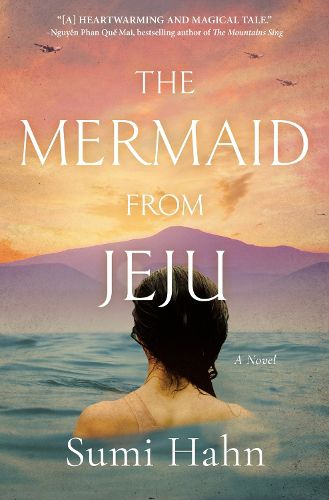
‘The Mermaid from Jeju’ by Sumi Hahn

2022, 336 p.

As preparation for my trip to South Korea earlier this year, I read books with a South Korean setting, which is why I ended up reading this book. As it turns out, I read two books based on Jeju, a large island south of the South Korean mainland. It is an oval shaped island, with a large mountain Hallasan in the middle. The Jeju people are indigenous to the island, and have been there since Neolithic times. It is famous for its haenyeo, traditional women fishers who free-dive to gather molluscs and seafood in a semi-matriarchal society, where their wages formed the basis of the family income. Shamanism remained an important part of social and religious observance. Jeju was annexed by the Japanese (as was the rest of Korea) in 1910, and it became a hotbed of independence: a stance that remained when the US-sponsored South Korean government took over from the Japanese after WW2. It was this desire for independence and reunification which led to the South Korean government, led by Syngman Rhee, to see it as a potential hotbed for Communist insurgency. In 1948-9 the government led an ‘eradication campaign’ against these supposed insurgents, arising from the April 3 Incident in 1947, resulting in between 14,000 and 30,000 people (10 percent of Jeju’s population) being killed, and 40,000 fleeing to Japan.

This is the political background of the novel, which focuses on a young girl Goh Junja, who is coming into her own as a haenyeo diver. She encourages her mother to let her travel inland to swap sea produce for a pig, and on this journey she meets Yang Suwol, the son of a wealthy family on the mountain. They are instantly attracted to each other, but on her return from the mountain, she finds that her mother has died from injuries which at first she believed came from a diving accident. As the political situation intensifies, Yang Suwol becomes involved in insurgent activity, and Junja realizes that her own family is more politically involved than she realizes. The whole community is endangered by political currents at a world level that are manifested through cruelty and repression as it becomes increasingly difficult to work out whose side anyone is on.

The book is told in two parts. The first part commences with Mrs Junja Moon in Philadelphia in 2001, wife to Dr Moon, who is about to suffer an embolism. The story then backtracks to Jeju in 1944 as Junja nearly drowns while diving, then jumps ahead to 1948 and Junja’s meeting with Suwol. Part Two returns to Philadelphia, and as a reader you are wondering how Junja ended up being married to Dr Moon. Who’s he? What happened to Suwol? Dr. Moon decides to return to South Korea for the first time in many years, where he meets up with his old friend Dong Min. The book then alternates between 1944, 1948 (when Dr Moon- or more properly- Gun Joo were sent to the island as conscripts) and 2001 as the two men consult a Shaman and return to the mountain to learn the truth of what happened there some fifty years earlier.

The book starts with a timeline of political events, which is important as it frames the story. Unfortunately, it is a fairly sketchy timeline and it does not mention the word ‘nationalist’, even though it is used frequently during the book. The author does give political information, but it feels rather didactic, and I didn’t ever feel that I really understood the politics. The dual timeline, which is becoming rather hackneyed in historical fiction, made the book feel as if it were two separate books- as if she started writing one book, scrapped it, then started on another.

That said, the relationship between Junja and Suwol was well-handled and I found myself caring about what happened to them both, and pleased that it wasn’t tied up with an easy ending. However, the book seemed to be lacking something and I doubt that I would have persevered had I not had an interest in the setting.

My rating: 6/10

Sourced from: ebook borrowed from Yarra Plenty Regional Library

Read because: I was going to South Korea. I’m a little sorry that I didn’t go to Jeju now.

‘Korea: A Walk Through the Land of Miracles’ by Simon Winchester

2005, (first published 1988), 336 pages.

I was going to Korea: I like Simon Winchester. So of course I was attracted to reading this book which was originally published in 1988, and has been recently republished in its second edition. However, there is little evidence that the book has been re-edited in any way, and so it was a very dated travel description of South Korea by an English writer, who spoke minimal Korean, and who reflected the sexism and anti-Americanism of the time.

The premise of the book is that Winchester decided to follow the path of Hendrick Hamel, the Dutch soldier who was shipwrecked on Jeju Island in 1653 on his way to Japan. He was prevented from leaving by the isolationist policies of the Josean emperor, and spent 13 years in what is now Korea, before escaping back to the Netherlands and writing the first western account of Korea. Winchester followed Hamel’s route up into what is now North Korea, but he could not cross the Demilitarized Zone at that time (even though, as he tells us in the preface to the second edition, he did manage to visit later). His route takes him up from Jeju Island to the central and western side of South Korea, where he meets mainly with monks and US servicemen, as well as some ‘ordinary’ South Koreans.

I found the book very dated in its outlook, and I felt uncomfortable about his pontifications on South Korean life and national characteristics from such an Anglo-centric perspectives. Although I am usually a magpie for interesting details, especially when I am travelling in a country that I have read about, I didn’t really gain much from the book to bore my fellow-travellers with (“Hey, did you know that…..”)

So all in all, a bit disappointing.

My rating: 5.5/10

Sourced from: e-book on subscription

Read because: I was visiting South Korea.

I hear with my little ear: Podcasts 1-8 April 2025

The Ezra Klein Show. I’m over in Phnom Penh surrounded with little ones at the moment, and it seemed a particularly apposite time to listen to Ezra Klein’s interview with Jonathan Haidt Our Kids Are the Least Flouishing Generation We Know Of. Haidt’s book The Anxious Generation: How the Great Rewiring of Childhood is Causing an Epidemic of Mental Illness was on the best seller list for a year. Haidt’s work has been picked up by many on the right, although it really transcends a left/right binary, and it’s interesting that he often references the certainties (for good or bad) promulgated by traditional religions. I don’t know if it’s my age, or my affiliation with Unitarian Universalism, but I find much to agree with here.

The Rest is History Episode 538 Horror in the Congo– 3 parts. I had already read Adam Hochschild’s book King Leopold’s Ghost which Tom and Dominic defer to in these episodes, and so I was already familiar with quite a bit of material. However, listening to it at more than 20 years remove, it seems even more relevant today with Trump’s naked shake-down of compromised countries for their rare earths (somehow, everything I read seems to come back to Trump). I had forgotten the degree of privatization and the sheer exploitation of the Congo by King Leopold, and the role of Roger Casement in publicizing the atrocities. The first three episodes deal with the story of the Congo, while Episode 541 Part 4 Fear and Loathing in the Congo looks in detail at Joseph Conrad’s novella, Heart of Darkness which I read over fifty years ago. I remember the feeling of impending doom in it, but I didn’t particularly see it as the masterpiece that Tom and Dominic do. Of course, it was written in 1898, and new literary and historical lenses are trained on it now, with some commentators seeing as racist and imperialistic.

In the Shadows of Utopia. I’m in Cambodia, but Episode 4 of Season Two deals completely with Vietnam. In The Path to the Second Indo-China War Part I The Two Vietnams, Lachlan promises a shorter episode dealing with the years immediately following the Geneva Accords. He starts with the heavily-choreographed photograph of the monk self-immolating in 1963, which most people associate with the Vietnam War, but it was in fact a protest against the actions of the South Vietnamese government before the Vietnam War had even started.

He then moves to examining first North Vietnam, then South Vietnam. Between 1953-1957 the North Vietnamese Government under Ho Chi Minh, following the example of the Soviet and Chinese revolutions, embarked upon a land reform program. This involved cleaning out ‘the reactionary and evil landlords’, but perhaps with not quite the same ruthlessness of Russia and China, with the suggestion that perhaps 1 in 1000 people would need to be executed. Although the numbers of victims may have been lower, it followed the same process: denunciation, land confiscation and redistribution, and later collectivization (which, as in Russia and China the newly landed peasants deeply resented). However, there was so much internal protest that the government admitted its error and abandoned the program and turned its attention instead to the writing of a new constitution which would cement the role of the Communist Government.

In South Vietnam, although under the sponsorship and patronage of the United States, the Diem government undertook a very similar program (albeit less violent). The Geneva Accords were undermined from the start, and the planned elections never took place. The nascent-fascist Diem government was elitist and rife with nepotism. There was a similar land reform program, complete with denunciations and arrests for possible disloyalty, and it too was abandoned when it failed. The formation of the National Liberation Front gave a focus to the armed struggle, and many former South Vietnamese with communist sympathies who had fled north returned to South Vietnam and the civil war resumed.

I hear with my little ear: Podcasts 8-15 September 2024

Dan Snow’s History Hit The Warsaw Uprising. It’s the 80th anniversary of the Warsaw Uprising, which I have always had confused in my mind with the Warsaw Ghetto. This episode features Clare Mulley, the author of Agent Zo: The Untold Story of Fearless WW2 Resistance Fighter Elzbieta Zawacka. To be honest, I’d never heard of Agent Zo. She was born in German-occupied Poland, and was 11 years old at the end of WWI. Once WWII began, she was involved in active service with the Polish Home Army from the start, a resistance force of 400,000 to 500,000 people. The Polish government and army escaped and set up a government-in-exile, and never conceded defeat. From 1942 she used her German language skills and appearance to bring information into Berlin, and in 1943 was sent to Britain with microfilm. She brought parachutists back to Poland to join the uprising, which started on 1 August with an outbreak of brutal street fighting. Hitler was furious and ordered that every Pole be shot. Meanwhile, with Stalin advancing from the east (he had changed sides by now), the Russian government stepped back and let the battle continue, as it was in their interests for the Polish nationalists to be wiped out. The Warsaw Uprising continued for two months, and Warsaw was completely destroyed. Agent Zo was arrested and imprisoned in 1951, long after WW2 had finished. She died in 2009.

In the Shadows of Utopia Becoming Cambodia Pt 2: Cambodia after Angkor This episode deals with the increasing European influence in Cambodia, and the shift from a subsistence economy to a trade economy. Longvec (or Lovec) was the capital for 50 years until it was conquered by the Thai. A multitude of foreign traders moved into the area, including Portuguese and Spanish traders who were competing with each other. The first phase of trading involved the extraction of gold and silver (and the spreading of religion in return), but the second phase involved Dutch trading for goods, rather than mere extraction. In 1594 the Thais threatened again so the King looked to the Spanish in the Phillipines for support. By the time his envoy returned, the Siamese had invaded and the King fled. When the Thais were distracted by conflict with Burma, the King took Lovec back again. The Spanish envoys decided to support the King in exile, and were promised that they were free to spread Christianity. By the time the envoys arrived in Laos to liberate the King, he was already dead, so they brought his son back again, only for the son and the envoys to be killed. Meanwhile Pierre De Behaine, a French missionary stationed in Vietnam where there was north/south tribal conflict, went back to Spain and organized the Treaty of Versailles – no,not that one- this one was in 1787 between the French King Louis XVI and the Vietnamese lord Nguyễn Ánh, the future Emperor Gia Long. Not a good time to be ratifying treaties, and when the French government fell through with its promises of aid, Pierre brought mercenaries and modern warfare methods. In 1801 Nguyễn proclaimed himself emperor of North and South Vietnam. Meanwhile, the Vietnamese and Thai governments both kept fighting to-and-fro over Cambodia. There was 40 years of Vietnam influence, then the Thais installed a pro-Thai King who gave away land around Angkor to a warlord, which was strongly resented. In the 1820s there was a new Vietnamese emperor who very anti-Catholic.

Episode 6 The Dawn of French Indochina This episode deals with the years 1789 – 1887. He starts off this episode with an engaging story of two little village boys growing up under the French protectorate. It’s only after you’ve been listening for a while that you realize that he’s talking about the man who became Pol Pot, and suddenly the story doesn’t seem quite so engaging any more. In telling the story of how the French came to dominate French Indo-China, he draws on three longer themes. The first is the French Revolution, which embodied nationalism as a source of power. When Napoleon III wanted to regain the empire that had been lost after Waterloo, he seized on the persecution of French missionaries in the 1850s as a cause to justify colonialism. The second factor was the unification of Vietnam, which had previously been split between clans in north and south Vietnam. This strengthening of Vietnam meant that Cambodia was being tussled over between two stronger countries: Vietnam on one side and Thailand on the other. The Cambodian king, crowned under Thai influence, started to look for a third power that he could turn to. Finally, we had the French naturalist Henri Mouhot who toured Siam, Cambodia and Laos and saw the potential for growing cotton, to fill a possible market failure with the American Civil War, and a way of competing with Great Britain’s imperial power. He also uncovered Angkor Wat during his travels. France invaded Vietnam by the end of the 19th century, as an opportunity to access Chinese trade, under the excuse that they were protecting French Missionaries from mistreatment. But the French didn’t need to invade Cambodia; King Norodom welcomed its presence.

Background Briefing. Kidnapping the Gods Part 1. Over this week, I was in Phnom Penh and visited the Cambodian National Museum, where they had a display about looted artefacts that had recently been returned to Cambodia. This two-part Background Briefing program looks at the Australian collection of Khmer artefacts purchased, of all places, from David Jones department store in Sydney, which had a special section for fine arts. Although the director of the gallery, Robert Haines, seemed completely above-board, he sourced his artefacts through a Bangkok dealer called Peng Seng who also worked for Douglas Latchford, an infamous dealer in Khmer looted goods.