It’s literally the first Saturday of the month, which makes it Six Degrees of Separation day. This meme, hosted by Kate at Books Are My Favourite and Best involves Kate nominating a book I have rarely read (in this case, We Have Always Lived in the Castle by Shirley Jackson) and then nominating six other titles of books that spring to mind.
With ‘castle’ in the title of the starting book, what else could I go for but I Capture the Castle by Dodie Smith? In Grade 7 and 8, I just loved this book and kept reborrowing it from the school library. I saw the film, but it didn’t have the magic for me now that it had as a young girl. I have a copy on my shelves, but I don’t know if I want to re-read it or not. Perhaps some books are best left as memories.
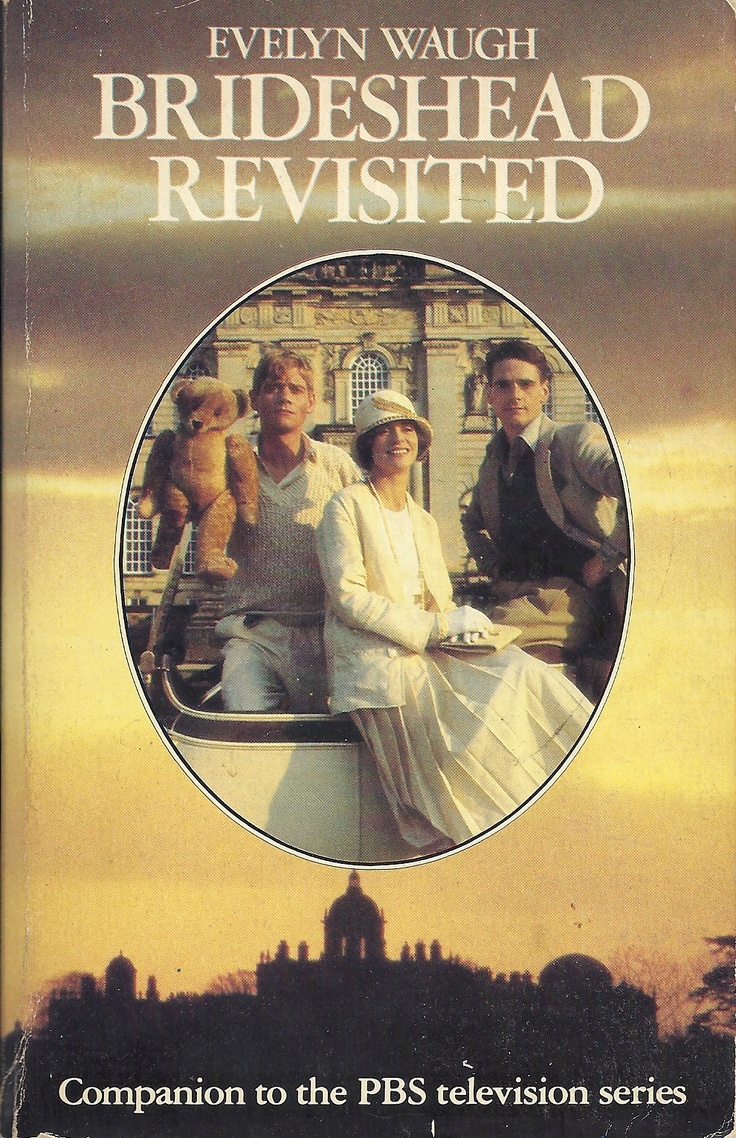
Brideshead Revisited had a castle in it too. I loved the series with Jeremy Irons. I know that I read the book too, while I was at university.
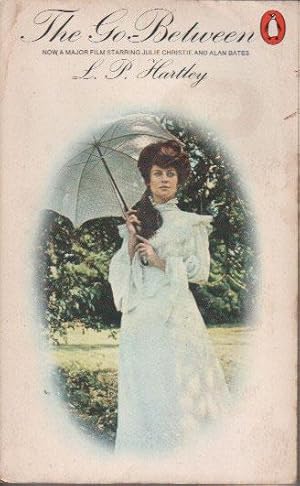
L.P. Hartley’s The Go-Between was set in a big house as well, told from the perspective of a visitor from a lower class who doesn’t know the ‘rules’ of the gentry. We read it in Matric (yes, I’m that old), and I think that it has one of the best starting lines in literature: “The past is a foreign country. They do things differently there.”
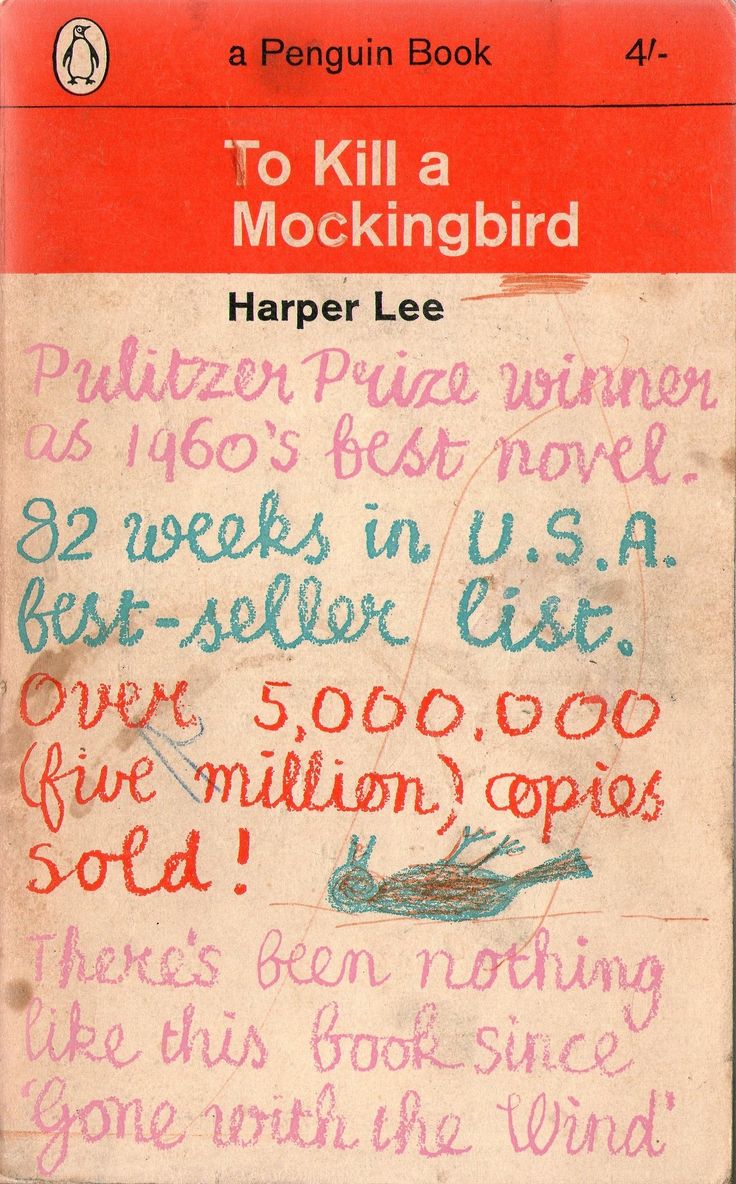
Like everyone else in the world, we read To Kill a Mockingbird at school too. I have re-read this one, many times, and every time I hear the music to the absolutely perfect movie, my eyes fill with tears. To me, this book is emblematic of the Deep South
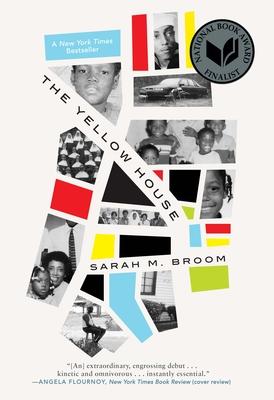
Another book set in the South- New Orleans this time- is The Yellow House by Sarah M.Broom (my review here). The youngest of twelve children in a working class family, she tells the story of her family home in New Orleans, interweaving national and local history, family stories and her own story of place and identity.
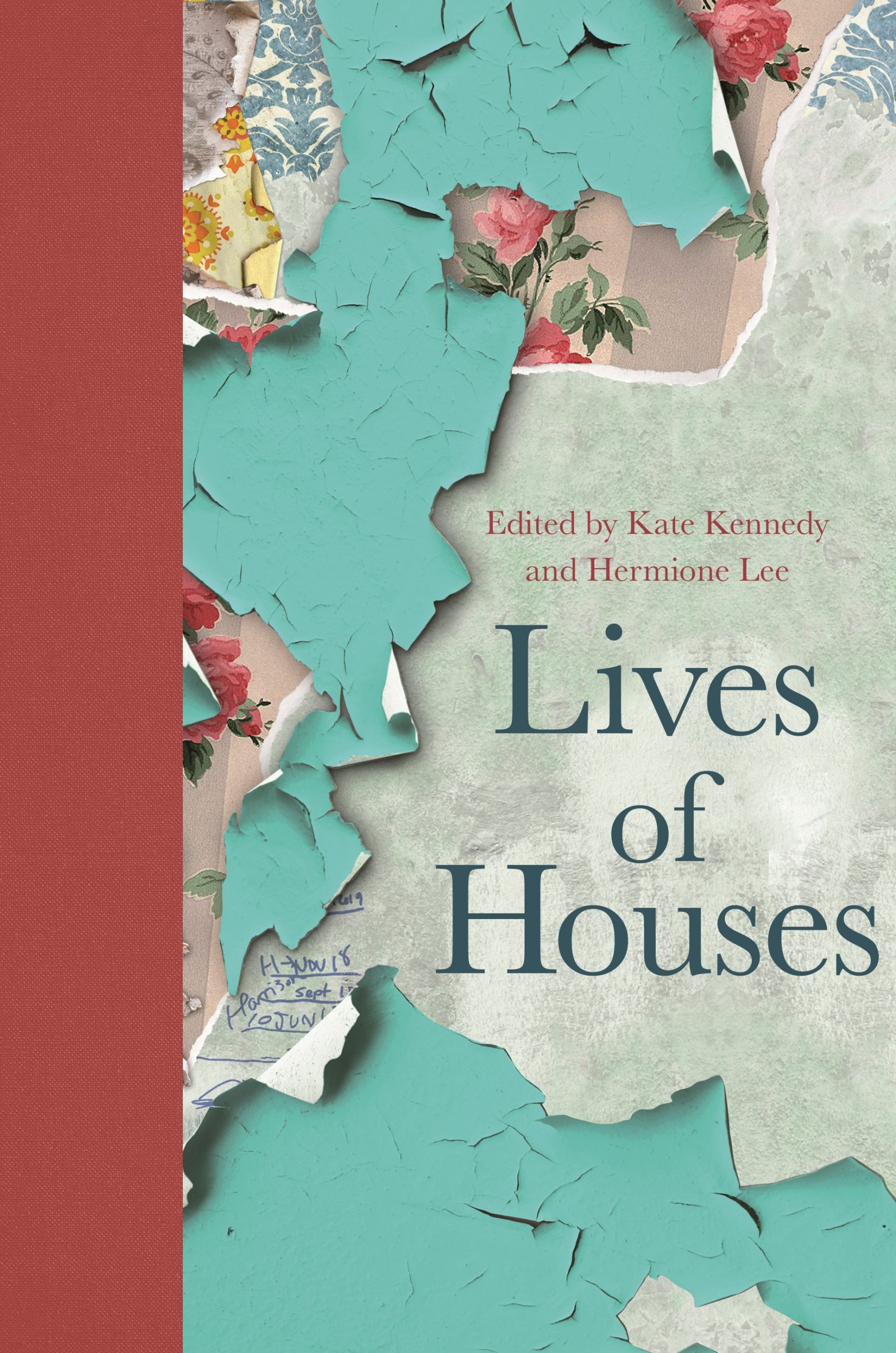
The Lives of Houses, edited by Kate Kennedy and Hermione Lee is a collection of essays that emerged from a 2017 conference titled ‘The Lives of Houses’ held at the Oxford Centre for Life-Writing at Wolfson College, Oxford. This conference brought together scholars from different disciplines and professions, with an emphasis on British, Irish, American and European houses. The ‘big’ names include Hermione Lee, Margaret Macmillan, David Cannadine, Jenny Uglow, Julian Barnes, and it focuses on 19th century British writers and a peculiarly British form of being ‘the writer’ in a mixture of eccentricity and domesticity. (My review here)
So somehow or other I started off with a castle and ended up in a house.
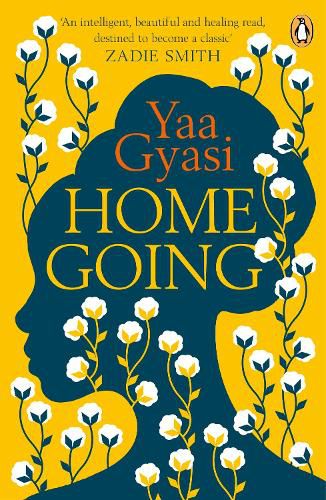
Despite its modest 300 pages, this book covers a huge scope, covering three hundred years over two continents: Africa and America. It opens in Ghana in the mid 18th century, with two half-sisters who are unknown to each other. One sister Effia, of Fante tribal heritage, is coerced into marrying a white British officer sent to oversee Cape Coast Castle, a staging post for enslaved Africans prior to being shipped across the Middle Passage. Living in luxury at the Castle, she is oblivious to her half-sister Esi, of Asante tribal heritage, imprisoned as “cargo” in the basement holding pens, before being shipped to America. The two family trees bifurcate at this point as Effia’s line stays mainly based in Ghana, with the ongoing effects of colonization affecting the life events of generation after generation. Esi’s line is based in America, spanning slavery, Jim Crow legislation, the Harlem Renaissance and drug-fuelled urban life.
The opening pages of the book have a time line, tracing the generations in two distinct branches. The narrative alternates between the two branches, in a series of fourteen separate but linked short stories. They could be read separately because each one in effect starts again in its opening paragraphs, although there are small familial references that allow the reader to place the character within their familial context. In many ways this disjointed narrative reflects the dislocation of slavery and the rootlessness of not knowing where you come from. It was a rather jarring reading experience: you would come to be invested in a character, only to have the narrative whisk you across the ocean and time into a new story.
Running through the book is the theme of betrayal and complicity. The coastal Fante tribe capture and sell the Asante people to white slavers. In Harlem Renaissance New York, a black man who ‘passes’ as white leaves his wife to marry a white woman. Step-mothers are cruel to their step-children; families shun their gay children. There is also the theme of severance: two half-sisters growing up on different sides of the globe; and particularly in the American part of the narrative, severance between parents and children, one of the tools of enslavement, but which recurs from generation to generation. This severance lies at the heart of identity and reflects the title of the book: one of the characters, speaking of the Back to Africa movement says “We can’t go back to something we ain’t never been to in the first place. It ain’t ours anymore.”
A rather heavy-handed motif of the book was a pair of gold-flecked stones, one each given to the two half-sisters by their mother Maame. Esi’s stone was soon lost, buried in the mud of the holding cell at Cape Coast Castle, while the other stone was handed from generation to generation. I was dreading a rather mawkish resolution of the two stones at the end of the book but fortunately Gyasi was an astute enough writer not to fall to such an easy trope.
I enjoyed the book, with the equal weight given to the Ghanan and American experience, a weight judiciously and scrupulously meted out. I did find myself thinking of Alex Haley’s Roots which took a similar generational approach but from memory, there was not the bifocal approach of both African and American stories in that book.
It is particularly impressive that this is a debut novel, as the author has such control of a tightly structured dual narrative. The structure did feel a bit like a straitjacket at times, and not all characters were as fully developed as others. But it is a good exploration of slavery, colonialism, inter-generational trauma and the intersection of colour, class and gender- in many ways a book of its time, despite its historical focus.
My rating: 8/10
Read because:Ivanhoe Reading Circle selection. I wish that I had written this review soon after reading the book, instead of waiting weeks. You’d think that I’d know by now.
I feel a bit as if I’ve come half-way into a conversation with this book, because this memoir by Mandy Sayer is in fact her fourth (no fear of an unexamined life, here). But although it is discussing her life, it is more a love letter to her father, Gerry, addressed to him in the second person.
At my age, one attends an increasing number of funerals. I’ve often been struck by the practice in giving eulogies where the deceased person is addressed as “you”, as if they are present and listening. This is how Sayer speaks to her father, as she revisits their shared life and describes the last months of his life as she visits him daily as he moves between hospice care and her own apartment.
Her father had not been a constant presence in her life. Her parents, Gerry and Betty, separated when she was ten years old. It was an erratic, bohemian, drug-and-alcohol fuelled upbringing, and when she went to live with her mother, along with her siblings Lisa and Gene, her mother subsided further into alcoholism and toxic relationships. There were reconciliations, and further falling aparts. Her father came back into her life when, at the age of 20 she travelled with him to the United States to busk on the streets and parks of New York City, New Orleans and Colorado, he on drum, she tap-dancing. Now, in No Dancing in the Lift her own marriage has ended and she is a published author circulating in the literary scene in Sydney, and her father is dying of cancer.
Her father had been a noted jazz drummer in Sydney, playing with both local and international acts. He had a cleft lip and palate, which affected his speech badly. As I have a cleft myself, I was interested to see the child’s-eye view of the parent’s condition. It was accepted completely, and she knew that he had spent years at Westmead Children’s Hospital having surgery. (Actually, having experienced it myself, I know that surgery was more a recurrent than ongoing event, often with years in between surgeries- although it might not have been remembered that way). At one stage, her father falls asleep open-mouthed, and for the first time, she could see into his mouth and was appalled to see how incompletely the palate had been repaired.
As her father’s cancer progresses, he becomes hostile and belligerent, although this subsides after further health conditions emerge. Her siblings, having survived the same childhood that she did, are troubled people as well: either distant in the case of her sister, or manipulative in the case of her brother. Both parents had embarked on complicated relationships after the marriage breakup, and as Gerry becomes sicker, people and situations emerge from his past. But fellow musicians and writers emerge as well, and the reefers and drinks flow in what must have seemed a racketty lifestyle in the midst of the inflexibility and judgement of hospitals and institutions.
In the midst of this, Sayer meets fellow author Louis Nowra, who was married at the time and their relationship deepens from initial attraction, to a chaste and tentative friendship, then to a full-blown love affair, observed and encouraged by her father Gerry. Death and love, both becoming stronger at the same time: it is a confronting, and yet in many ways, perfectly natural conjunction.
She has not changed names in this book, and so you meet authors Louis Nowra and Linda Jaivan, musician Jeff Duff, and actors Geoffrey Rush and Cate Blanchett move in and out of the pages. It is an intensely local book, with the landscapes of Sydney and Darlinghurst described evocatively.
From the start of the book, you know as a reader how the book is going to end. What did surprise me was that these events took place twenty five years ago, as the rawness and the hollowness seemed so recent. Although I shouldn’t really be surprised because, as the child, you are always the child. Although, as she says, her father has taught her how to grow old- and in his case, unrepentantly and without necessarily growing up.
My rating: 8.5/10
Sourced from: review copy from Transit Lounge, via Scott Eathorne.
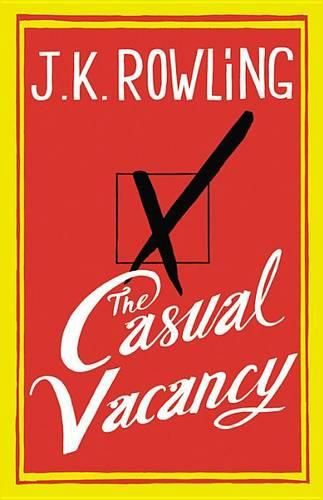
As I have related several times in this blog over the years, when I was young I read Hans Christian Anderson’s The Snow Queen. In that story, a shard from an evil, broken mirror entered the eye of a little boy, Kay, who from then on could only see ugliness in everything. I think that J. R. Rowling may have a similar shard in her eye, at least in this book. It was her first book for adults, written after the Harry Potter series that had captured young readers and accompanied them into adulthood. It is ugly, snarky and ends in a tragic melodramatic conclusion. I was hooked, after a very slow start, but in the closing pages of the book, I just thought “this is ridiculous”.
I’ve always thought that Rowling is very good with her beginnings, particularly in her Cormonan Strike books- three pages and you’re in. She starts well here too, with a death in the first few pages, but instead of jump-starting the book, the impetus dissipates as various people in the fictional town of Pagford learn that their local councillor Barry Fairbrother has died. The ‘casual vacancy’ caused by his death prompts a local election to fill his seat, and Rowling introduces a wide range of people who are taking a particular interest in this election.
Pagford is an older town, established in the days when ‘parishes’ were the backbone of local government, but time has brought many changes. A council estate called rather ironically The Fields, with low-income and social housing, had been built nearby and had been attached to the Pagford Parish. At the time of Barry’s death, the council had been engaged in negotiations to sever The Fields, and have it come under the jurisdiction of the larger, more modern city of Yarvil. For many Pagford ratepayers, this would shift the problem of drug addiction and social dislocation onto another council but Barry Fairbrother, as a former Fields boy himself, was leading the push to have The Fields remain in Pagford. The now-vacant seat on the parish council was a means to influence the outcome.
There is a huge range of characters in this book, and it took quite a while for me to embed who-was-who into my mind. They’re a rather unsavoury lot: the morbidly obese Howard Mollison who is angling to get his son onto the council; Colin ‘Cubby’ Wall, the school principal, who is tortured by the fear that he may have molested students without retaining any memory of the fact; local doctor Parminder Jawanda who supports keeping The Fields in Pagford, although her opinion is possibly influenced by her infatuation with Barry Fairweather; and Terri Weedon, a drug addict and prostitute from The Fields, whose daughter Krystal takes responsibility for caring for her young brother Robbie- among many other characters. Their partners and children resent each of them, all for various reasons, and there is barely a happy person amongst them. It’s all rather sordid in a petty, pathetic way. It’s not surprising, then, when posts under the name ‘The Ghost of Barry Fairweather’ begin appearing on the parish’s online forum, spilling the dirt on one person after another.
The narrative swings from one family constellation to the next, and gradually tightens its focus on two tragic deaths that make the election seem tawdry and petty. By this time, the pace of the book had really picked up and the majority of the characters were firmly established. But I just found myself saying “This is stupid!” as the ending became increasingly fast-paced and melodramatic. The ending was just as bleak as the whole scenario had been, and I felt as if some of the grubbiness of the book had rubbed off on me.
I gather that much of the ire against this book comes from a disappointment that it had none of the magic of Harry Potter. There’s certainly no magic here. Because of its provincial town setting, some have likened it to Middlemarch which likewise has a large cast of characters, going about their small, ultimately insignificant lives. But this is much grittier and nastier than Middlemarch, with its complexity laced through with snarkiness.
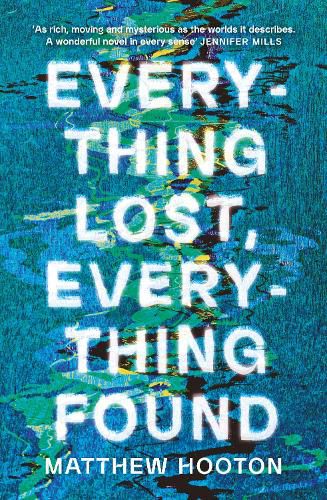
Are there more books being published about the slide into dementia and confusion, or it just that I perceive it that way because of my own fears? Writer and academic Matthew Hooton is rather too young to be facing this situation himself, but he captures well the slipperiness of memory in this beautifully written book. If you’re looking up ‘Matthew Hooton’ to find out more about him, you’ll find that unfortunately for him, he shares his name with a former National Party politician from New Zealand. But there’s a certain irony in that because Jack, the narrator of Everything lost, Everything found also shares a name with another Jack in Henry Ford’s rubber plantation in the Brazilian Amazon, where he travelled with his parents in 1929.
There are two threads to this book. One is Jack’s memories of Fordlandia in Brazil, a cookie-cutter American suburb transplanted into the Brazilian jungle, under the control of the morality agents charged with carrying out Henry Ford’s vision for a colonial outpost to establish rubber plantations in the jungle, while gradually easing out reliance on native rubber-gatherers. The second thread is that of Jack’s life in Michigan, in what is now a deserted Ford Factory town, as his wife Gracie is sliding into dementia and a slow death with cancer.
The descriptions of the jungle are just gorgeous, and the jungle itself seems to take on a personality. But it is a malevolent personality: taking Jack’s mother’s life in a caiman attack on the river, and driving Jack’s father into his own madness in searching for his wife’s body in the jungle. A man half-dead from exposure and the jungle’s flesh-eating insects staggers into Fordlandia, and Jack himself is not sure whether it is his father or not. Young Jack himself is forced into a battle with the jungle as he and Soo, a young Korean girl who had worked in the sanatorium laundry, try to escape the morality agents who have shopped her to the Japanese.
I read this book because I had recently read Hooton’s Typhoon Kingdom (review here) and at first I was struck by the difference in setting between his earlier book and this one. But Korea (where Hooton lived and worked for some time) works its way into this book as well, when Soo explains that she is Korean royalty has escaped the Japanese in their takeover of Korea early in the 20th century. I’m not sure whether this strains credulity or not.
But there is no difficulty at all in watching the older Jack, seventy years later, defiantly trying to stay in his family home as his life revolves around visiting his wife in the nursing home. Jack’s relationship with his divorced daughter Jess is strained, and his grandson Nick is a mixture of solicitous and off-hand adolescence as he is trying to negotiate his own relationship with his father.
In fact, one of the things that really impresses me about Hooton’s writing is the way that he is able to emotionally inhabit someone that he clearly is not: a Korean comfort woman in Typhoon Kingdom and an old man here. His characters have an authenticity and layers of complexity, and their dialogue and tone is distinctive and convincing.
The two story lines become increasingly intertwined, as Jack himself becomes more addled, and as the past colonizes the present, not unlike the colonization attempt of Fordlandia. Jack’s narrative voice is comfortable and engaging, and as a reader you want things to be better for him.
I really enjoyed this book. In one of those little twists of coincidence, I read a review from 1925 of Henry Ford’s rather burnished autobiography, which was written before the establishment of Fordlandia and some of the more unsavoury aspects of Ford’s politics. Moreover, I had only recently read Hooton’s earlier Typhoid Kingdom, and so the Korean aspect was familiar to me as well. But quite apart from that, I just enjoyed the beauty of the descriptions, the poignancy of loss and grief, and the sheer humanness of it all.
My rating: 9/10
Read because: I enjoyed Typhoon Kingdom and I saw that he had a new book out
Background Briefing (ABC)Agents of Influence Ep. 2 The Billionaire’s New Sport I’d never heard of Len Blavatnik, but apparently he’s the new head of Foxtel and the owner of Warner Music. Is he the person I have to blame for taking AFL off free-to-air on Saturday night? He is one of the oligarchs (although he does not like that term) who made his money through the carve up of Russian state enterprises after the fall of Communism, and somehow he seems to have escaped Western sanctions. He has since distanced himself from Russia, and is strongly pro-Israel and pro-Netanyahu. Yuck.
The Rest is History Episode 554: 1066 The Shadows of War After our little excursion with Harald Hardrader, we head back to 1066 again with three warlords: the Viking Harald, the French Duke of Normanby and the Anglo-Saxon Harold Godwinson. Edward the Confessor died on 5 January 1066 and the Bishops met to choose the next king (which surprised me because I thought that the English crown was hereditary, but it wasn’t. Although family had a good head start). There were quite a few contenders to choose from: 1 Harald Hardrada who had a slight claim, and no one wanted the Vikings 2. Sven, who was King Knut (Canute)’s nephew. Another Viking. 3. William the Duke of Normanby who had been promised the throne of England 4. another descendant of Alfred the Great 5. Edward the Exile in Hungary who arrived back in England in 1057. 5. Thirteen-year old Edgar. 6. Harold Godwinson. The Bishops went for Harold Godwinson, well aware that this would prompt an invasion, and so they crowned him the very next day. Meanwhile Tostig, Harold’s brother was stewing away in exile and he invaded but was not successful. Thanks to feudalism, Harold could command 90% of English men, but he was facing Norman technology and confidence, sharpened by religious reform under hardline Catholic reformer Hildebrand (who was later to become Pope Gregory VII). When bad winds arrived, threatening to delay William of Normanby’s troops, Harold decided to stand down his army which was a big mistake because who should arrive but brother Tostig and Harald Hardrada!
Half Life BBCEpisode 7 The City Forgets Happy to distance himself from his great-grandfather’s half-truths, Joe turns to his great-grandfather Siegfried’s sister Elizabeth who redeemed the family somewhat by establishing a nursery and orphanage for Jewish children in Munich. Once the Nazis came to power, Elizabeth herself escaped to Tel Aviv, and there she read about the gradual deportation, in several tranches, of all the children in her orphanage. In the concentration camps they were gassed by the same chemicals that Joe’s great-grandfather had produced. Episode 8 A Fracture Joe returns to Germany, where eventually a memorial to the Dersim massacre is unveiled, something that would not be possible in Turkey, where all mention of the massacre is suppressed. Kurdish activists are trying to get the German government to take responsibility because the chemicals were manufactured there (which is a bit of a long stretch, I reckon, and they’re probably only pursuing it because the Turkish government won’t admit it). I’m getting a bit sick of Joe making it all about him. It’s about time this series finished.
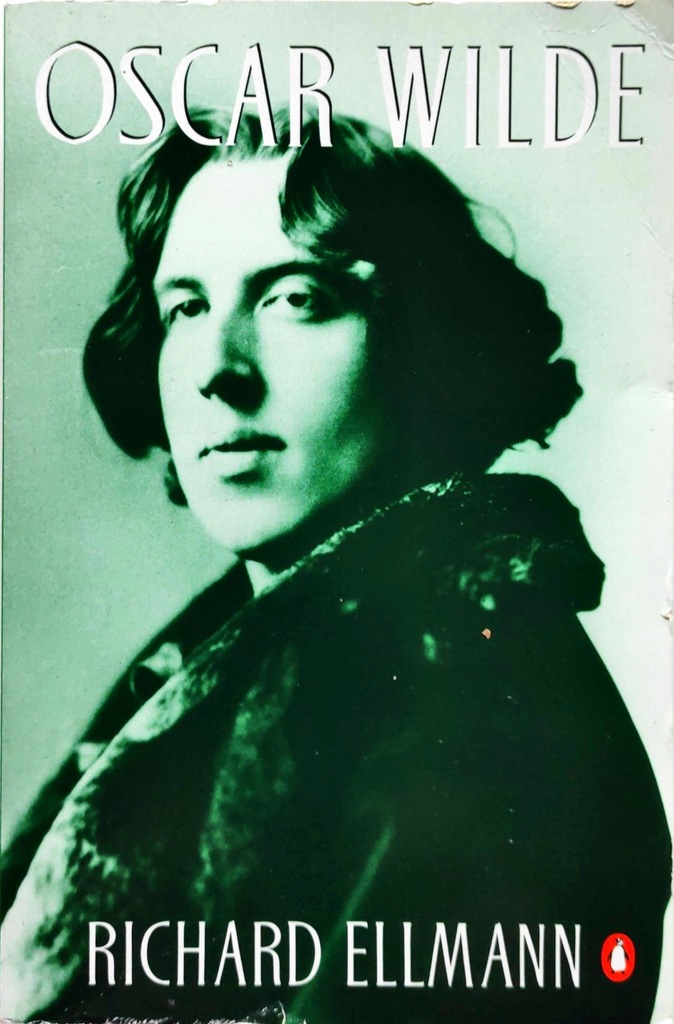
I can hardly believe that I have read this enormous tome not once, but twice. The first time was in 2002, when I read it for an online Literary Biography book group, and this second time was for my former-CAE bookgroup (which I nicknamed ‘The Ladies Who Say Oooh’, which is what my daughter used to call us). The CAE has disbanded its bookgroups and farmed out its book collections to groups, no doubt to save themselves the hassle of getting rid of thousands of books. None of us actually chose this book, but we were happy to read it. That was before the group members realized how long it was, and how small the font was. I think that I was the only one to actually finish it, largely because I knew that I enjoyed it the first time. But I think that I was more impatient with it this time.
Richard Ellman’s biography of Wilde won both the National Book Critics Circle Award and the Pulitzer Prize. It has been described as the ‘definitive’ biography, and I certainly don’t think that another Wildean fact could possibly to be dredged up that hasn’t been included in this exhaustive and exhausting book.
The first time I read it, I was largely unaware of Wilde and his story. I knew that he wrote plays, that he wrote ‘The Happy Prince’, that he was homosexual and that he ended up in jail. Perhaps my enjoyment of the book the first time was that it was all new to me then, although I have since watched Stephen Fry’s wonderful performance in the movie ‘Wilde’, seen an excellent local performance of David Hare’s The Judas Kiss and read Fanny Moyles’ Constance: The Tragic and Scandalous Life of Mrs Oscar Wilde.
Ellmann certainly leaves no stone unturned, starting right back with Wilde’s birth and and going through to rather graphic details of his death. He draws parallels between Wilde’s writing and his own life, and then (as now), I found myself regretting that I have never read The Picture of Dorian Gray. The courtcase that led to his downfall does not appear until about 4/5 of the way through the book, so there is plenty of time for Ellmann to establish Wilde’s large circle of artistic friends – including even Australia’s Charles Conder and Dame Nellie Melba- and Wilde’s conscious creation of ‘aestheticism’ as a cultural movement. In the late 1880s-early 1890s, he seemed to be everywhere: in print, on the stage, amongst the wealthy, the glittering and the cognoscenti. Ellman’s sympathies are clearly with Wilde, although he shows us his fecklessness (especially in relation to his wife Constance), his recklessness and his odd mixture of weakness and doggedness.
This second reading, however, found me impatient at the denseness of the prose and overwhelmed by the minuscule level of detail. It is as if he could not bear to leave a single fact out, and if he couldn’t squeeze it into the text, then he would carry it on in the lengthy footnotes at the bottom of the page. (That said, I was grateful that he included translations of the French in the footnotes as well). I read now that Ellman completed the book just before his death with Motor Neurone Disease in 1987, and that he was not able to revise it or correct errors which have since been corrected by another writer. Perhaps, had he had more time, he might have stripped the book back a bit, which would not have harmed it in any way and indeed may have enhanced it. As it is, Ellmann has covered Wilde’s life so exhaustively that any further biographers could not compete in thoroughness, only in incisiveness.
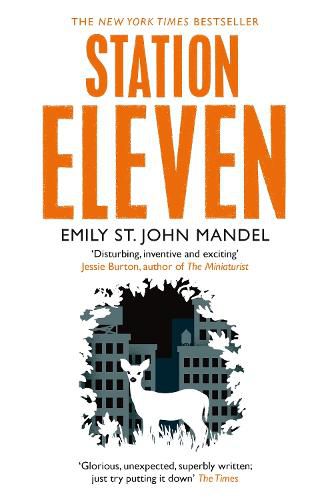
I had heard about this book during the COVID pandemic, and no wonder. Published in 2014, some six years before the world locked down, it describes a world where 21st century Western industrialization has collapsed in the wake of a virulent influenza that has wiped out 90% of the population. What cheering reading during a pandemic!
However, reading it ten years later and with those COVID years behind us, does Station Eleven stand on its own two feet? I think it does. Right from its opening chapter, which starts with a Shakespearean actor, Arthur Leander playing King Lear, collapsing on stage, I was hooked.
As Arthur falls to the floor, a member of the audience, Jeevan Chaudhary, a trainee paramedic rushes to give him CPR, watched by a little girl Kirsten Raymonde who stands in the wings. Returning home, he takes a phonecall from a friend who is a doctor, who warns him that the Georgia flu is rampant, and to take his girlfriend Laura and his brother, and to get out of town.
The narrative then jumps ahead twenty years and takes up again with Kirsten, now an adult, with only scattered memories of that night at the theatre, before everything changed. She is now part of the Travelling Symphony, a rag-tag group of actors and musicians, who move from settlement to settlement to perform music and plays. Electricity, gasoline, the internet and all the things enabled by these had ceased, and in the first years after the pandemic, life had reverted to a light-governed, subsistence struggle against other frightened groups, who were themselves fighting for existence. After twenty years, things had stabilized, albeit at a stagnant level, but a level of menace had been recently introduced by the rise of the Prophet, drawing on a mixture of messianic religion and violence to consolidate his power.
If this sounds at bit like Cormac McCarthy’s The Road, it is. I certainly had the same feeling of dread in the pit of my stomach as I read. But unlike The Road, there is not the same relentless hopelessness. This is a world that is trying to hold onto the best in music and literature, and trying to collect as many artefacts from the old world as possible so that the ‘before’ world is not completely lost. The world still looks for beauty. The book’s ending, while ambiguous, is hopeful.
It is beautifully written with strong control of the narrative, as Mandel slips back and forward between the ‘before’ and ‘after’ worlds, moving from one character to another. How prescient she was, and how chilling it must have been to pick up this book in the early days of COVID. But as a piece of writing, it doesn’t need the experience of the last few years to give it strength: it’s a very human, well-crafted book that celebrates creativity and the best of being human, giving hope without sentimentality.
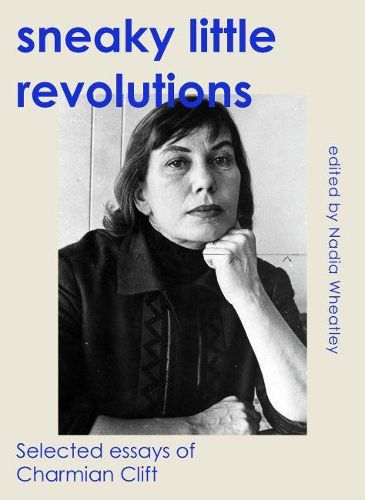
This book, edited by Clift’s biographer and former daughter-in-law Nadia Wheatley, is marketed as ‘selected essays’. More properly, they are a selection of 80 of her 225 newspaper columns published mainly in the Sydney Morning Herald and Melbourne’s Herald between 1964 and 1969, when they came to an abrupt halt with her suicide.
The newspaper columnist was (is?) a curious beast. Although there are innumerable bloggers and sub-stack writers, there seemed to be something rather special about turning over the page of a print newspaper, and seeing an article by a regular columnist, in its accustomed place on the page. I used to enjoy the columns of Sharon Gray (who I see is actually Adele Hulse), Pamela Bone and Gillian Bouras who ended up living in Greece – all women- and Martin Flanagan in the Age. I know that Anne Deveson wrote a regular column, but I only know of her through her daughter Georgia Blain. The only physical newspapers that I still receive are the Saturday Paper and The Age on Saturdays and although they have a stable of staff writers and comment columns, the only one who comes close to my perception of the ‘newspaper columnist’ in the Charmian Clift mould is Margaret Simons with her gardening columns in the Saturday Paper, and perhaps Kate Halfpenny and Tony Wright in The Age. Somehow you feel as if you know them, and that you could plonk down beside them in a coffee shop and just take up talking with them.
Of course, it’s all artifice because despite the appearance of confidentiality and intimacy, columnists project a particular view of themselves, and one that is often quite removed from reality. This is the case with Charmian Clift whose columns brim with confidence and warmth, when instead she had lived, and was still living, a life that was far removed from the suburban Australian life of many of her readers. She and her husband, writer George Johnson, circulated in an artistic and intellectual milieu on the Greek island of Hydra that could simply not be found in Australia (barring, perhaps, the communal living at places like Heide in Bulleen). There’s little sign in her columns of the infidelities and arguments that wracked her marriage. She never mentioned her family members by name, and referred only obliquely to her husband’s long hospitalization with TB. The birth of an illegitimate, and relinquished, daughter when she was 18 years old was coded as “a wrong road…that led me to disaster”.
I could find only one mention of her alcoholism:
A whole human life of struggle, bravery, defeat, triumph, hope, and despair, might be remembered, finally, for one drunken escapade.
One can only read with hindsight her essay about her husband’s forthcoming semi-autobiographical second book Clean Straw for Nothing, which she had not dared read, for fear of what he might reveal about her through the character Cressida Morley
I do believe that novelists must be free to write what they like, in any way they liked to write it (and after all who but myself had urged and nagged him into it?), but the stuff of which Clean Straw for Nothing is made, is largely experience in which I, too, have shared and … have felt differently because I am a different person …
Indeed, several commentators have linked her apprehension about the publication of this book with her suicide in July 1969 at the age of 45- a suicide that seems so paradoxical with the fiesty, intelligent personae that she had curated through her columns.
Wheatley has titled this book ‘Sneaky Little Revolutions’, echoing a rather condescending but also self-effacing comment that Clift made about her own columns to her publisher in London:
I have been making my own sneaky little revolutions …writing essays for the weekly presses to be read by people who don’t know an essay from a form guide but absolutely love it….
Some of her essays are disarmingly suburban, but there are many others that are subversive and indeed, “little revolutions” for the mid-1960s, deep in the midst of the Menzies-era. She resisted the smugness of white-Australia that expected her gratitude for returning to comfortable Australia from a ‘foreign’ country; she supported the rights of women and decried their ‘second-class’ status; she said “sorry” some forty years before the Australian government did; and she revelled in young ‘protestants’ (i.e. protesters) who challenged the complacency of the 60s. In an essay that was not published at the time, she criticized the contingency and unfairness of the National Service draft, which left some men untouched and diverted the life course of others.
As a middle-aged (who am I kidding?) woman myself, I loved her essay ‘On Being Middle Aged’.
…the middle-aged drag time around with them like a long line of fetters, all the years that they cannot escape, the mistakes that can never be undone, the stupidities that can never be uncommitted now, the sames and humiliations and treacheries and betrayals as well as the prides and accomplishments and happinesses and brief moments of wonder…. I often think that middle-aged people have two lives, the one they’ve lived, and a parallel life, as it were, that walks around with them like a cast shadow and lies down with them when they go to sleep, and this is the life they might have lived if they had made different choices in that time when time was so abundant and the choices were so many.
There is a run of essays in the volume about her trip to central and northern Australia. At a time before cheap airfares and mass international travel, her beautiful writing brought to life a view of Australia from above- something that not all Australians had seen. In ‘The Centre’:
Pitted pores. Dried out capillaries of watercourses. Culture slides of viridian clotting thick creamy yellow. Wind ridges raised like old scars, and beyond them the even, arid serrations of the Simpson Desert, dead tissue, beyond regeneration. And yet, the tenderness of the pinks, the soft glow of the reds, the dulcet beige and violet seeping in.
She has a distinctive voice, although one that is not completely unlike my own with her colons and lists and parentheses and made-up words. The genre of the newspaper column does impose a straitjacket of must-haves: an engaging introduction, a set word length, and a rounding-off last paragraph. I found myself longing for a longer essay than the requisite six pages in my e-book and something more thorny and less self-contained.
Is there any point to re-publishing seventy year old newspaper columns? Yes, I think there is in exceptional cases, and few newspaper columnists have that honour bestowed upon them. I think that it rescues some good thought, good thinking and prescience from the flow of ephemera and evokes a humility in us to remember that many others have held certain political positions and made similar observations in the past.
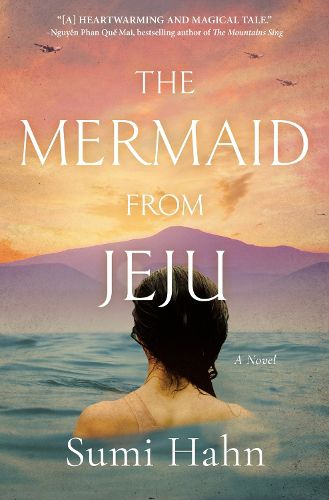
As preparation for my trip to South Korea earlier this year, I read books with a South Korean setting, which is why I ended up reading this book. As it turns out, I read two books based on Jeju, a large island south of the South Korean mainland. It is an oval shaped island, with a large mountain Hallasan in the middle. The Jeju people are indigenous to the island, and have been there since Neolithic times. It is famous for its haenyeo, traditional women fishers who free-dive to gather molluscs and seafood in a semi-matriarchal society, where their wages formed the basis of the family income. Shamanism remained an important part of social and religious observance. Jeju was annexed by the Japanese (as was the rest of Korea) in 1910, and it became a hotbed of independence: a stance that remained when the US-sponsored South Korean government took over from the Japanese after WW2. It was this desire for independence and reunification which led to the South Korean government, led by Syngman Rhee, to see it as a potential hotbed for Communist insurgency. In 1948-9 the government led an ‘eradication campaign’ against these supposed insurgents, arising from the April 3 Incident in 1947, resulting in between 14,000 and 30,000 people (10 percent of Jeju’s population) being killed, and 40,000 fleeing to Japan.
This is the political background of the novel, which focuses on a young girl Goh Junja, who is coming into her own as a haenyeo diver. She encourages her mother to let her travel inland to swap sea produce for a pig, and on this journey she meets Yang Suwol, the son of a wealthy family on the mountain. They are instantly attracted to each other, but on her return from the mountain, she finds that her mother has died from injuries which at first she believed came from a diving accident. As the political situation intensifies, Yang Suwol becomes involved in insurgent activity, and Junja realizes that her own family is more politically involved than she realizes. The whole community is endangered by political currents at a world level that are manifested through cruelty and repression as it becomes increasingly difficult to work out whose side anyone is on.
The book is told in two parts. The first part commences with Mrs Junja Moon in Philadelphia in 2001, wife to Dr Moon, who is about to suffer an embolism. The story then backtracks to Jeju in 1944 as Junja nearly drowns while diving, then jumps ahead to 1948 and Junja’s meeting with Suwol. Part Two returns to Philadelphia, and as a reader you are wondering how Junja ended up being married to Dr Moon. Who’s he? What happened to Suwol? Dr. Moon decides to return to South Korea for the first time in many years, where he meets up with his old friend Dong Min. The book then alternates between 1944, 1948 (when Dr Moon- or more properly- Gun Joo were sent to the island as conscripts) and 2001 as the two men consult a Shaman and return to the mountain to learn the truth of what happened there some fifty years earlier.
The book starts with a timeline of political events, which is important as it frames the story. Unfortunately, it is a fairly sketchy timeline and it does not mention the word ‘nationalist’, even though it is used frequently during the book. The author does give political information, but it feels rather didactic, and I didn’t ever feel that I really understood the politics. The dual timeline, which is becoming rather hackneyed in historical fiction, made the book feel as if it were two separate books- as if she started writing one book, scrapped it, then started on another.
That said, the relationship between Junja and Suwol was well-handled and I found myself caring about what happened to them both, and pleased that it wasn’t tied up with an easy ending. However, the book seemed to be lacking something and I doubt that I would have persevered had I not had an interest in the setting.
My rating: 6/10
Sourced from: ebook borrowed from Yarra Plenty Regional Library
Read because: I was going to South Korea. I’m a little sorry that I didn’t go to Jeju now.