Rough Translations There’s much talk of trolling and cancelling online, and the episode Dream Boy and the Poison Fans looks at the story of Chinese celebrity Xiao Zhan, whose fans took trolling to a new level. Xiao Zhan was riding the celebrity wave, earning huge sums for product endorsements, until a story on a fan fiction website prompted his fans to turn on the fan fiction site. Supporters of the fan fiction site then attacked the products that he had endorsed. In the end, it was Xiao Zhan who suffered most. The ‘reporting’ culture of China’s past seems to have revived, now using social media.
99% Invisible How perverse! Ecologically fragile peat bogs are drained in order to plants trees to soak up carbon, thereby releasing the carbon from the bog! For the Love of Peat looks at peat bogs, how they are formed, and ecological programs that threaten or protect them.
Nothing on TV. I do enjoy Robyn Annear with her quirky little podcast program! Deadwood Dick and the Picture Show Panic looks at the moral panic about boys reading comics and watching the picture shows. She then goes on to explain the craze for the ‘movies’, all over Australia, where the audience consisted almost entirely of children under 14 who would save up their bottles and threepences to go to the movies – often! By post WWI, there was more restriction on the morals depicted in the movies. Fascinating!
Dan Snow’s History Hit The title How Deep History Swung the US election sounds pretty out-there, given that Deep History deals with the distant past of human history, integrating archaeology, anthropology, geology, primatology and genetics. What Lewis Dartnell is arguing is that the geological construction of America has encouraged particular industries (cotton growing; iron; coal) which in turn has political implications for party affiliations.
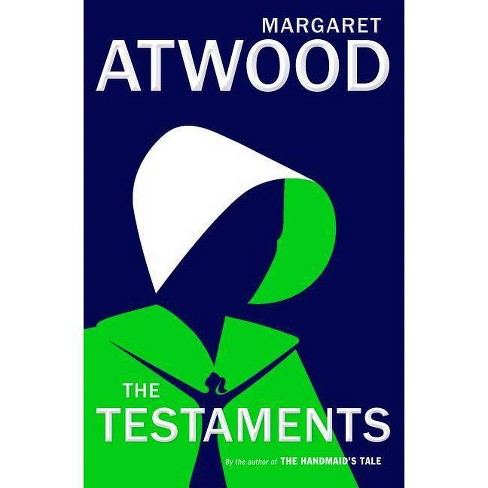
I read The Handmaid’s Tale back in 1997, before I started this blog. I can remember turning the last page and cursing that everything was left so indeterminate. Well, 36 years later, we finally have closure! Of course, in between there has been the enormously successful HULU series which started in 2017, and the red cloaks and white bonnets have been incorporated into protest iconography, especially in response to abortion rights and the Trump presidency.
The Testaments is told in alternating chapters, that are labelled either ‘The Ardua Hall Holograph’ or ‘Transcript of Witness Testimony 369A or 369B’. The Holograph is addressed to an unknown reader, by a writer who does not know if it will ever be read. She introduces herself to us in the second segment:
I am well aware of how you must be judging me, my reader; if that is, my reputation has preceded me and you have deciphered who I am, or was. In my own present day I am a legend, alive but more than alive, dead but more than dead…. I’m a bugaboo used by the Marthas to frighten small children – If you don’t behave yourself, Aunt Lydia will come and get you!
p.32
And so we meet Aunt Lydia again, indelibly cast in my mind as the actress Anne Dowd. We learn more about the Aunts, who now need to recruit young missionaries to cross over into Canada to entice young women across to Gilead. As one of the four ‘founding’ Aunts, Aunt Lydia has power, although the founding Aunts have decided to publicly defer to the Commanders. In the pre-Gilead world, Aunt Lydia was originally a Judge- which is rather uncanny with the confirmation of Amy Coney Barrett to the Supreme Court, a member of ‘People of Praise’ group that used to have a religious rank ‘handmaid’. (This article explains that another Catholic charismatic group ‘People of Hope’ who also used the term ‘handmaid’ may have influenced Atwood’s original book). Through Aunt Lydia’s book, conveyed through Holograph, we learn what her experience was as Gilead became a Theocracy, how and why she became an Aunt, and how Gilead is sustained through the Aunts’ work.
It takes a little while to work out the Witness Testimonies. It becomes clear that there are two witnesses, although their narrative voices are very (and too) similar. I won’t say how they fit into the story, but I became increasingly apprehensive about why they were designated ‘Witness Testimonies’. The ending of the book very much echoed the epilogue of the original Handmaid’s Tale.
The visual imagery and architecture of the HULU Handmaid’s Tale streamed series is so striking that this book seemed particularly devoid of description. I can’t remember whether that was the case for the original Handmaid’s Tale book or not. Atwood has worked as consulting producer on the series, and perhaps she – like us – has internalized the ‘look’ of Gilead so much that there is no need to spell it out.
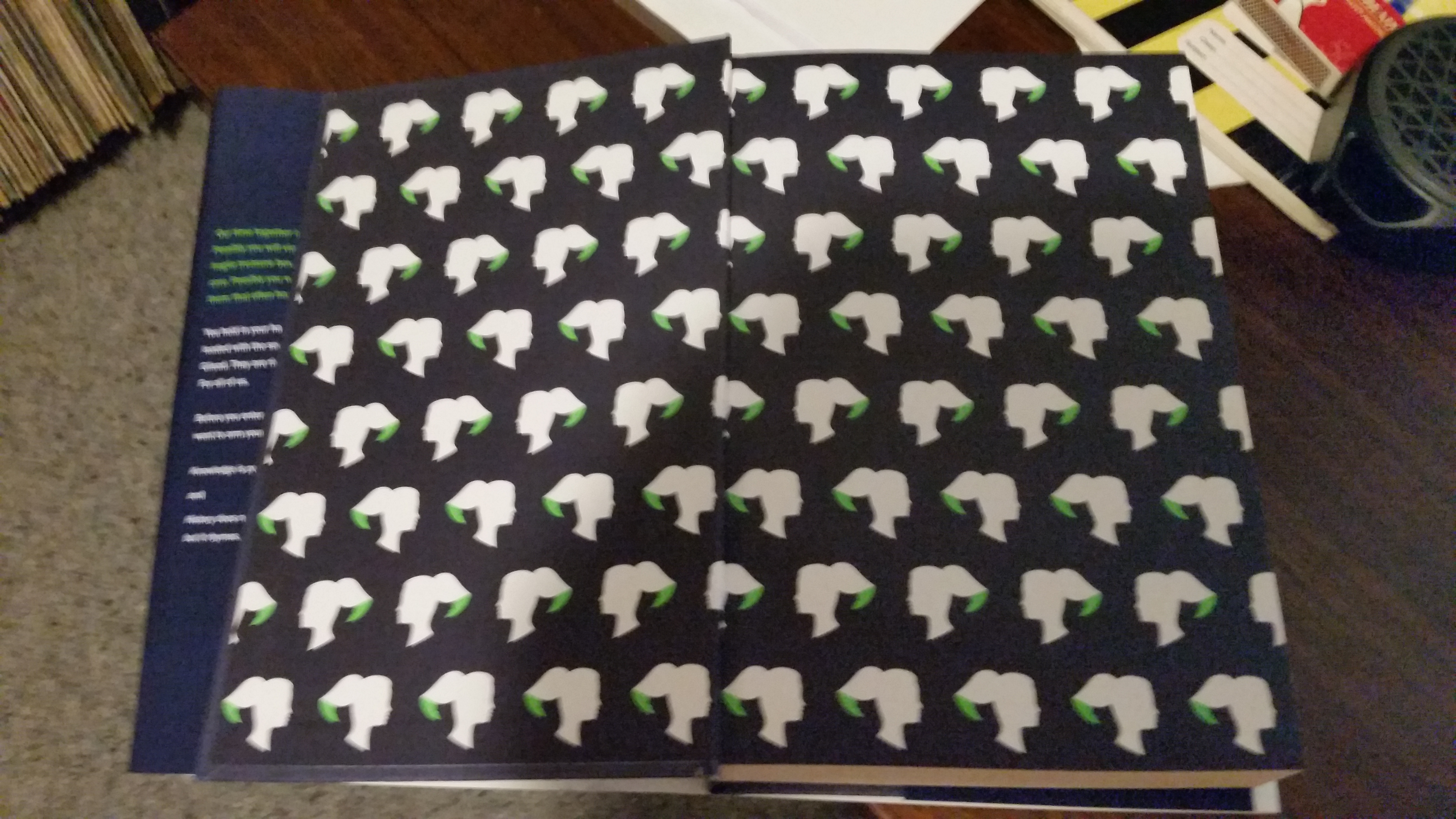
I bought the hardcover version, which is really beautiful. It has eschewed the red and white of the handmaid’s uniform for dark blue, bright green and white. The endpapers (is that the right word? the inside of the cover) are a clever visual trick that switches between handmaid and girl with a ponytail. It made me remember how much I enjoy reading a real, hard-cover, printed book.
I finished the original The Handmaid’s Tale thinking “NOW what happens??” Margaret Atwood doesn’t leave her readers so unsatisfied this time – you know exactly what happened. And she has left plenty of space for Series 4, Series 5…as many Series as they want.
This book was awarded the 2019 Booker Prize, even before it was released here in Australia. I don’t know whether it really deserved it in its own right as a literary work, as distinct from a cultural phenomenon. It’s well constructed and satisfying but the writing is rather pedestrian, although that may well reflect the paucity of intellectual life in Gilead and post-Second-Civil-War Canada. I can’t help thinking that it received the Booker through gratitude that there finally was a sequel, and for the perspicacity that created a Gilead that we have more cause to fear now than in 1985.
My rating: 8.5 /10
Sourced from: purchased as a pre-lockdown indulgence.
It’s strange when you read a history that is analysing events that you lived through yourself. The events are familiar, of course, but there’s also an element of surprise at things you didn’t realize at the time, and at the matters that the historian has placed emphasis on, when you weigh them against your own perspectives and memories. It’s also rather disconcerting to realize that your own lifespan is now considered ‘history’.
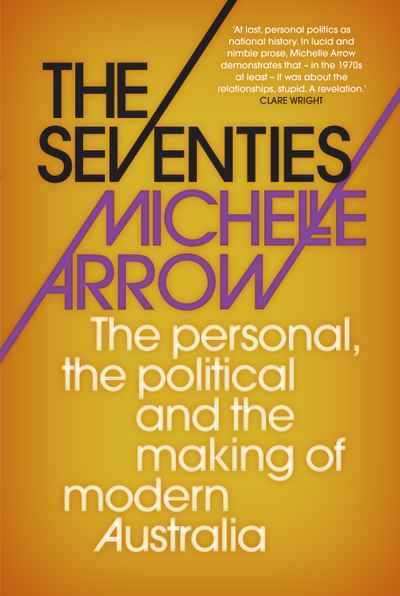
Of course, histories of a given decade or century do not neatly conform to calendars. Historians speak of the ‘long’ eighteenth and nineteenth centuries, and in this case, Michelle Arrow sets the start date for the ‘sixties’ with the retirement of Robert Menzies in 1966 (I don’t know if I agree with her here), and ends ‘the seventies’ with the election of the Hawke ALP government in 1983. As she points out, there has been relatively little scholarly interest paid to the Seventies in Australia, especially in comparison with the United States and the United Kingdom. The decades of the 1950s, 1960s and 1980s in Australia have all received book-length treatment, but the only stand-alone study of Australia in the 1970s was Frank Crowley’s Tough Times: Australia in the Seventies. The 1970s, she argues, have either been defined solely in political terms, most particularly involving The Dismissal, or as a gloomy economic narrative leading up to the 1980s and 1990s as a period of economic deregulatory reform (think Paul Kelly’s The End of Certainty or George Megalogenis’ work).
Her book does not pretend to be a comprehensive history of the decade, but it does emphasize social change rather than political events and economic policies:
Somehow the social movements and social change of the decade sit just outside the frame through which we see the 1970s…This book places them front and centre and positions them as key drivers of change…this book is primarily concerned with the ways new understandings of gender and sexuality transformed Australia, and as a result it focuses on the women’s movement and the gay and lesbian movement.
p.11
And so, having made the women’s movement and the gay and lesbian movement her main frames of analysis, this book traces these two themes through the 1970s, discussing social and political events of those years along the way. As has been the case with many of the decisions and programs of the Whitlam government (e.g. dismantling the White Australia policy, withdrawing from Vietnam), quite a few had already been set in train in the last years of the 1960s, although not prosecuted with the fervor of the Labor years. This was also true of the women’s movement and the gay/lesbian movement. There had been ‘women’s groups’ of different political hues throughout the twentieth century, pushing for ‘liberalism’ rather than ‘liberation’. The Homosexual Law Reform Association of the Act was formed in 1969, priding itself on the knowledge that ‘no member of our committee is a practicing homosexual’ (p. 30)
What changed in the 1970s was that the mantra ‘the personal is political’ was taken up by both the women’s movement and gay/lesbian rights groups. Consciousness-raising groups brought up individual stories which were then woven into a political analysis of systemic oppression. It’s hard for us to realize now, in our time when everyone has their ‘story’ and their ‘journey’, that 1960s Australia, along with other Western cultures, was content for uncomfortable stories to be kept private, out of the public eye, and certainly not the basis for political (as distinct from individual) action.
However, ‘The personal is political’ did not translate into electoral success for women in the 1972 election that swept Gough Whitlam to power after 23 years of Liberal-Country party government. (An amazing thought: people voted in that election who had never seen any other government than a Liberal-Country party one). There were no women in the House of Representatives, and the only two women in the Senate were from the Liberal Party. As a result, Gough Whitlam appointed Elizabeth Reid to be his advisor on women’s affairs, from a short list that included Anne Summers, Eva Cox and historian Lyndall Ryan. It was a tough gig. She had no staff but she became the public face of the women’s movement (p.93). Many in the women’s movement objected to her appointment by a man. She embarked on a listening tour and inviting women to write to her, hearing women’s stories- there are those stories again- in order to develop policy ideas to turn the personal into policy. Equal pay for equal work, the introduction of the single mothers benefit, and improving the quality and availability of child care emerged as the most important needs. There was an uneasy relationship between the Whitlam government and the women’s movement, and between Elizabeth Reid and the women’s movement as well.
In 1972 with Helen Reddy’s ‘I am Woman’ ringing in their ears, the UN General Assembly declared 1975 to be International Women’s Year. In the leadup, Spectrum research had conducted a research report into the status of women that both provided a snapshot into women’s lives but also revealed a widespread lack of interest in feminist issues and the women’s movement more broadly. A grants program set up as part of IWY further exacerbated this schism (although many of the projects and women creators who were supported through these grants have stood the test of time). The headline event was the week-long Women and Politics conference in Canberra, which was opened by Gough Whitlam on the evening of the 31 August. Arrow notes that in many ways it was an exemplary feminist project, with subsidized fares for low-income participants and free child care. But it also highlighted the fractures in the women’s movement between white feminists and migrant women, working class women and particularly Aboriginal Women, led by Marcia Langton, many of whom had different priorities to the largely middle-class white feminists. But as the political temperature rose in 1975, Reid’s power was reduced; there was a suggestion that she be moved into the bureaucracy, and she tendered her resignation.
‘The Personal is Political’ was writ large in the Royal Commission on Human Relationships, headed by Justice Elizabeth Evatt, journalist Anne Deveson and Brisbane Anglican archbishop Felix Arnott, which was established by the Whitlam government in late 1974. By the time it reported on 28 February 1978, the Fraser government wanted no part of it. It was not the first government inquiry into human relationships – the Royal Commission on the Decline of the Birth-Rate and on the Mortality of Infants in New South Wales of 1903-04 was a world-first – but unlike that earlier commission which mainly heard from men, the 1974 commission actively sought the views of women. The files of this Commission form the heart of Arrow’s book, where she describes some of the evidence collected in the submissions, both in relation to women’s issues and homosexuality, and traces through the muted response once the government had changed.
Australia had become a “nation of bank tellers” in the second half of the 1970s, as the role of women’s adviser became circumscribed, the Women’s branch had its resources cut, and funding for refuges dried up. The National Women’s Advisory Council was established in 1978 ‘to assist in policy making’. Chaired by the vice-president of the Victorian liberal party, Beryl Beaurepaire, it included an Aboriginal woman, a migrant woman, a representative of the ACTU, the President of the Family Planning Association, law lecturer (and later Governor General) Quentin Bryce and a representative of the CWA. Only Wendy McCarthy, the Family Planning president, was part of the women’s movement. Arrow argues that it replicated much of the work of the Commission on Human Relations, and although it developed a comprehensive policy agenda, none of the initiatives came to fruition until the Hawke Labor government. There was backlash over abortion reform (think Margaret Tighe and the Right to Life); religious conservatives became more organized (think Festival of Light) and groups like the Women’s Action Alliance and Women Who Want to be Women formed a visible anti-feminist front. Sex education became bitterly contested, especially in its approach to homosexuality. The first Mardi Gras parade, held in June 1978 opened up a new more confrontational phase in gay and lesbian politics. (p. 220)
Reflecting the ‘long’ Seventies that Arrow deals with, the book closes with the Women Against Rape collective protests at Anzac Day commemorations in the early 1980s – a reassertion of the ‘personal is political’ trope into national affairs. In her Afterword Arrow picks up on the Hawke Labor government, and the emphasis on the economy that has largely obscured the importance of using individual story-telling as the basis for political action. But there is no great triumphant ending here. Perhaps the most important legacy is the continuation of the recognition that the personal is political, as seen in the Human Rights Commission Bringing Them Home report in 1997 and the Royal Commission into Institutional Responses to Child Sexual Abuse in 2017. But, as Arrow points out, too often “personal stories are told without political activism to animate them…the political is all to often reduced to the personal.” And there is still much unfinished business of the 1970s.
This book won the Ernest Scott Prize for 2020, awarded annually “to the book judged to be the most distinguished contribution to the history of Australia or New Zealand or to the history of colonisation published in the previous year.” It is carefully footnoted and researched, but it maintains a light tone which is personal at times. It is well-structured in a narrative sense with chapters divided into discrete sections, and ‘hooks’ at the start and end of each section to drive the argument forward.
But, having lived through the seventies myself, I do wonder about the difference between the historian’s view and the perspective of those who lived at the time. In Arrow’s book, a documentary archive (i.e. the correspondence of the Royal Commission on Human Relationships) takes on an importance for a historian that I’m not really sure it had for the general public at the time. Was I even aware of it? I certainly didn’t contribute to the commission- in fact, did I know anyone who did? Maybe my obliviousness to this Royal Commission reflects nothing more than my own sheltered, middle-class, conservative, politics-free life at the time.
But perhaps even the visibility of, and participation in, inquiries then and now signals a change. I think of inquiries held today into what would previously been seen as ‘personal’ matters, most especially the Institutional Response to Child Sexual Abuse inquiry, and I think that there is a high level of public buy-in (e.g. the animus against George Pell; the ribbons on church railings) that I don’t recall existing in the 1970s. But perhaps the importance of an inquiry doesn’t rest in its creation or impact at the time, but the use that is made of it in the years and even decades following.
I’ve had enough of America. All my listening this week comes from anywhere other than the Disunited States of America.
The History Listen (ABC). This is fantastic! The Scholar’s Hut is about Thomas Shadrach James, a Mauritian born school teacher who worked with indigenous students at Maloga Mission (about 15 ks from Moama) in 1883-8, and after the mission closed, he reopened his school at Cummeragunja. The program featured a restaged roll-call of students, and at first I thought that it was just for effect, because it’s a virtual who’s-who of 20th century southeastern Australian aboriginal activists : Bill Onus, Doug Nicholls, Jack Patten, William Cooper, Margaret Tucker. But it’s not just for effect: Thomas Shadrach James taught them all, and encouraged them to use ‘leading and writing’ (rather than ‘reading and writing’) to agitate for change.
My Marvellous Melbourne Episode 13: St Kilda Main Drain may not sound very exciting, but for a Melburnian who likes sticky-beaking, it’s just the thing – especially as the lockdown has prompted us to walk our neighbourhood more than we ever have before. Andy May starts off with a reflection on Darebin Creek, then Sophie Couchman talks about the St Kilda Main Drain. Living on the other side of town, I wasn’t familiar with a lot of the streets that she mentioned, but she has a blog with maps and pictures.
Rear Vision (ABC) In July 2020 during the COVID lockdown here in Melbourne, suddenly the Housing Commission residents of high-rise towers in Flemington and North Melbourne found themselves quarantined, with chaotic service delivery and a heavy police presence. Cruise ships in the sky- the story of public housing and high-rise towers looks at the move across the world during the 20th century to build multi-storey housing, at first of relatively good quality, and the political decisions that resulted in its later success or failure.
And here’s one of my favourite historians, Graeme Davison, among others, talking about petrol stations in Fill ‘er up- the history of the Australian servo. After talking about the history of servos, the program talks about the future of petrol stations. If and when electric vehicles are more common,petrol stations will be leisure stops while you rapid-charge your car – or at least, that’s what they’re planning to do. And did you know that the best selling product at petrol stations with convenience stores attached (i.e. nearly all of them) is not petrol but 500 ml energy drinks?
The Documentary (BBC) I often listen to the BBC in the middle of the night when I can’t sleep and wish days later that I could remember what program it was that interested me. I did find these ones again- The Burning Scar is about the dodgy deals that Indonesian palm oil companies are making with traditional owners in Papua. Don’t trust that Forest Stewardship Council accreditation you see on packets of printer paper: they have accredited Korindo, one of the worst offenders. Here’s a video by Greenpeace about recent burning.
India’s Missing Children is about the selling and kidnapping of children in India to work in factories, as domestic labour and in brothels. It’s estimated that a child goes missing every eight minutes, and the coronavirus pandemic has only made things worse.
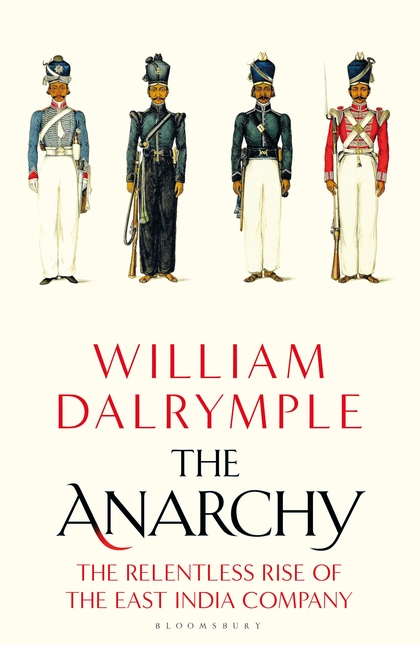
In 1608, who would have thought that India – with a population of 150 million and the source of one quarter of the world’s manufacturing – would be devastated by a small joint-stock company from England, a country that had just 5% of India’s population and contributed only 3% of the world’s manufacturing? But over the next 250 years, that is just what happened, as the East India Company steadily drained India’s wealth in goods and precious stones and cash, pouring it into the Company’s coffers for its shareholders. This is the story that William Dalrymple tells in his The Anarchy: The Relentless Rise of the East India Company.
When the East India Company was established in 1599 in Tudor England, there was no indication that it was to become the behemoth that it did. Other joint-stock companies had been founded, and it was competing with similar companies from other European nations, all jostling to establish trade routes with the East Indies. Its ports in India were founded almost as a consolation prize when the better-financed Dutch dominated the Moluccas. However, through ingratiating themselves with the enormously wealthy Mughals in India, only to later exploit their rivalries, the East India Company had found a source of wealth even more lucrative than the East Indies. The wealth flowed one way only: straight to London. The precious stones, the golden thrones, the eye-watering amounts of money: this is the pillage that Shashi Tharoor describes in his Inglorious Empire (my review here).
But England was not the only nation involved in India, and the amount of European activity and interference in what England saw as its own market surprised me. Technological changes in warfare technology added to the European-based rivalry between Britain and France throughout the eighteenth and early nineteenth century. This rivalry played out in the Carnatic Wars between the French and British armies stationed in India, using Indian troops, paid for with Indian money and lives. European technology also weighted the scales when the British extended their ‘assistance’ (at a price, of course) to different rulers vying for supremacy in India. I was surprised, too, by the involvement of European soldiers who adopted Indian names and headed various armies of Indian soldiers, on both the French and English sides.
Dalrymple tells his history through individuals, most particularly the East India Company merchants, the governors from England, and the Mughals, Nawabs, Rohillas, Sultans and Marathas whose assets were steadily stripped by the EIC. In telling his story, Dalrymple has his goodies and baddies. Robert Clive (yes, he of the Curry Powder) was a baddie, who had three stints in India, amassing huge personal wealth, facing (and staring down) a Parliamentary enquiry, and finally committing suicide. Warren Hastings, the first Governor of the Presidency of Fort William (Bengal) in Dalrymple’s eyes was a qualified goodie – and now I understand the nuances of Barry Jones’ response to the question ‘Who was the the first Governor General of India?’ Hastings, who was not beyond enriching himself either, was undermined by Sir Philip Francis -certainly a baddie in Dalrymple’s eyes (and incidently thought to be the author of the ‘Junius’ letters, much discussed in 19th British legal history). Francis was appointed to the supreme council of Bengal during Hastings’ Governor-Generalship. On his return to England, Francis began agitating for the impeachment of Warren Hastings which, after seven years, led to Hastings’ acquittal. Then there are the historic figures who are better known in other arenas. There’s Wellington (just plain old Arthur Wellesley at this stage) who led a number of battles, under the governor-generalship of his brother Richard. There’s General Cornwallis, who arrived in Calcutta in 1786 to replace Warren Hastings, after his surrender of the 13 Colonies to George Washington. He was determined to ensure that a settled colonial class would never emerge to challenge British rule in India as it had in America, and so he introduced a “whole raft of unembarrassedly racist legislation” (p.327) ensuring that the children of British men with Indian women would never be employed by the Company.
Dalrymple’s emphasis on individuals extends to the Indian protagonists in the story too. I’m ashamed to admit that as a European reader, I struggle to distinguish Indian and Muslim names. Dalrymple has gone to some lengths to support the reader in this. The narrative is prefaced by a lengthy list of Dramatis Personae, helpfully arranged more or less chronologically into categories: the British, the French, the Mughals, the Nawabs, the Rohillas, the Sultans of Mysore, the Marathas. Maps in the preface show the main cities, with the areas of influence by various chieftains, peshwahs and emperors identified. A paragraph after each name summarizes the main points of their story, and gives each one a distinct personality. The beautiful illustrations, inserted in three places in the book, also have an identifying paragraph. Most clearly defined of all is the Mughal Prince, Shah Alam, handsome, intelligent, and culture, who was tortured and blinded by the Rohillas. In fact, the violence in this book – who knows how accurate it was, depending on the chronicler – is really chilling.
The subtitle of Dalrymple’s book is “The Relentless Rise of the East India Company”. While it was certainly relentless, the rise was not without its setbacks. East India Company troops were defeated by the French-led troops on several occasions, and the company needed to be bailed out of bankruptcy in 1772 in exchange for greater British government oversight. This was always likely to be light-touch regulation, and many Parliamentarians had East India Company shares. And still the Company kept churning on, stripping Indian assets in order to distribute them for its British shareholders.
It’s interesting that Dalrymple chooses to end his book with the Battle of Delhi, with the defeat of the Marathas, in 1803. This left the Company the dominant military force and “the sinews of British supremacy” now established (p.382). He finishes at the high point of East India Company power, rather than with its removal from power after the Indian Mutiny as it is known in Britain, or the First War of Independence as it is known in India, and the final expiry of its charter in 1874.
Dalrymple’s purpose is not a ‘Rise and Fall’ story. Instead, it is a cautionary tale about corporations and power, as he makes clear in his epilogue. When corporations become too big to fail, as the East India Company was; or when they have Parliaments in their thrall through lobbyists and parliamentary shareholders; or when they can just buy military might and other people’s bodies – then much is at stake. As he says in his closing sentence: “Four hundred and twenty years after its founding, the story of the East India Company has never been more current.” (p.397)
Heather Cox Richardson. Her podcast on Thursday 29 October was the last one before election day. If you haven’t listened to her before, this would be a good catchup one, because she went over things that she has said many times previously (hence, it was a little repetitious for rusted-on listeners like myself). Her podcast on Thursday 5th November was before the results had been announced, and she was soothing about waiting for the process to play itself out.
History Workshop. The Violence of Empire was originally broadcast in May 2019 and it features Kim Wagner – author of Amritsar 1919: An Empire of Fear and the Making of a Massacre. His book argues that colonial violence didn’t start after the war, and he draws a link between the Indian Rebellion/Mutiny/First War of Independence (it has various names) of 1857 and the Amritsar Massacre or Jallianwala Bagh Massacre where at least 379 (and some say 1000) were fired upon in a confined area by members of the British Indian Army. He rejects the politicized anti-British feeling of Shashi Tharoor’s Inglorious Empire (my review here) and likewise pro-Empire British historians (like Niall Ferguson, I guess), arguing for a more nuanced approach. His book seems to take a thick description, microhistory approach to the Massacre. Both the author and the interviewer assume that the listener knows about Amritsar (I had to look it up) and a bit more backgrounding wouldn’t have gone astray.
America if you’re listening. It’s the 5th November, and counting continues in the U.S. elections. I’d better hurry up and listen to these podcasts, because if Trump wins I’ll be too discouraged and depressed to do so. Episode 7 How Donald Trump turned the Presidency into a business looks at Trump’s use of his hotels and golf courses as a way of leveraging public money into his wallet. The man is shameless. Episode 8 How China fooled Donald Trump examines the way that once Xi Jinping worked out that all Trump wanted was a trade deal, then he could get away with anything- Hong Kong, Uighurs, the South China Sea etc. And the final Episode 9 How Coronavirus destroyed Trump’s MAGA promise traces through the last year, and Trump’s mishandling of the whole thing.
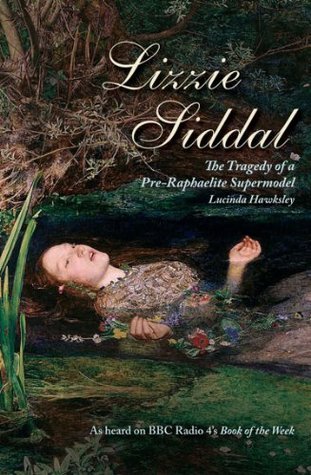
You might not recognize the name, but you probably recognize the face of Lizzie Siddal. You will have seen her in John Millais’ painting Orphelia, deathly pale, her red hair flowing around her, her hands uplifted in supplication. It is the image that Lucinda Hawksley has chosen to use on the cover of her book about Lizzie’s life. In her subtitle ‘The Tragedy of a Pre-Raphaelite Supermodel’, Hawksley draws a not-completely satisfying parallel between Lizzie’s life and those of the supermodels of the 1990s. I might quibble with the supermodel concept, but certainly not with the designation of ‘tragedy’. Lizzie Siddal’s life trajectory took her far beyond her origins, but she was always insecure and wary, and eventually succumbed to addiction.
2004, 256 p.
Lizzie Siddal (originally spelled Siddall but changed on her husband’s suggestion to make it look more genteel) worked in Mrs Tozer’s hat shop in 1849 when she was approached by an artist, Walter Deverell, who was looking for an artists’ model for Viola in a painting of Twelfth Night that he was working on. Lizzie had had a ‘respectable’, religious lower class upbringing. In a scenario reminiscent of Tess of the D’Urbervilles, her father was engaged in a long and ultimately fruitless attempt to claim ownership of a convoluted family fortune. Her father worked as a cutler, and the children needed to work, but this did not mean that Lizzie leapt at the opportunity. Walter Deverell’s mother called on Lizzie’s family to assure them that Lizzie’s reputation would not be damaged by the modelling, as Mrs Deverell herself and her daughters would be present at all times. Thus Lizzie was launched into a milieu completely foreign to her.
Walter Deverell was amongst the circle (although not one of the original members) of the Pre-Raphaelite Brotherhood (PRB), a group of seven students who criticized the teaching of art in art schools, harking back to the rich colours and animated subject matter of Botticelli and other early Italian artists. It had all gone downhill since Raphael, they said, and so they adopted the name ‘Pre-Raphaelite’. The original group of 7 included John Everett Millais (who painted ‘Ophelia’), William Holman Hunt, Dante Gabriel Rossetti and his brother William, Thomas Woolner, Frederic George Stephens and James Collison. It expanded to include Ford Madox Brown, Walter Deverell, William Morris and Charles Allston Collins. They were always on the lookout for ‘stunners’ and in Lizzie Siddal they found one.
Unfortunately for Lizzie, she was not the only ‘stunner’ associated with the PRB. New women were being brought in all the time, and like Lizzie, often engaged in relationships with the artists. Lizzie fell in love with Dante Rossetti, who made moves to marry her (against his family’s wishes) but he then retreated over a number of years, embarking on relationships with other women within the circle, before returning to Lizzie. A destructive cycle was established: Dante would go off with another woman; Lizzie would increase her intake of laudanum, a commonly used drug, and refuse to eat; Dante would come rushing back to her bedside; she would improve; he would go off again.
As Hawksley points out, laudanum or ‘tincture of opium’ was a mixture of opium and alcohol that was widely available over the counter from greengrocers, barbers, ironmongers or at market stalls. Mothers spiked their babies’ bottles with in when they had to work and it was used to quell the symptoms of cholera, diarrhoea, gout, rheumatism, toothache, sprains and ulcers…and any number of other symptoms. Certainly, just do an image search on Google for Lizzie Siddal, and you’ll see her depiction in myriad paintings looking very much ‘on the nod’.
I wasn’t really aware of Lizzie Siddal’s story, and so I’m not going to divulge the ending, although you’re probably already well aware that it’s not going to end well. And, in keeping with the Victorian gothic sensibility that runs just under the surface of the whole book, just being dead wasn’t the end of the story.
Hawksley is fairly condemnatory of Lizzie Siddal, seeing her as emotionally manipulative, and using her possible eating disorder and addiction as a way of drawing Rossetti back to her. That might be true, but I think I’d cut her some slack in what I see as a mutually unhealthy relationship, where she had little other power.
Although focussing on Lizzie and Dante, this book has a wide range of supporting characters with familiar names – almost like a who’s who of the mid 19th century British artistic world. At times I feel that Hawksley pursued too many rabbits down rabbit holes for the sake of a good story, and I wished that she had indicated in the text whether the painting under discussion was included amongst the illustrations in the book. But Hawksley explains things well for a reader with only fragmentary knowledge of the PRB, and manages to keep a huge number of characters under control. I heard the author, who happens to be Charles Dickens’ great great great grand-daughter speaking in Birmingham when we were there in 2011.
Lizzie as supermodel? Certainly she was chosen because her looks – her striking (although unpopular at the time) red hair, her slim boyish figure, her languor – suited the medieval sensibility that the PRB was trying to create/recapture. Addictions and eating disorders are not unknown to supermodels. But I’m not sure that she had ‘fame’ in the sense that we granted to the supermodels of the 1990s, and certainly her respectability and reputation was compromised by mingling in ‘artistic’ circles. It’s hard to see positive agency in Lizzie’s life. So I think I’ll just leave the ‘supermodel’ aside, but I certainly acknowledge the ‘tragedy’.
My rating: 7/10
Sourced from: my own bookshelves. At last. I think we bought it in 2011 after hearing the author speak.
Sydney Writers Festival. Did you know that the Sydney Writers Festival has a site with podcasts by writers who would have participated in the Sydney Writers Festival in a COVID free world? I listened to Cassandra Pybus being interviewed by Jakelin Troy about her book Truganini which I reviewed here. She spoke about lots of things that I don’t remember from the book- I wonder if she was talking from her familiarity with the sources, or whether I just forgot?
The Last Archive. This podcast series is presented by American historian Jill Lepore whose book These Truths: A History of the United States I must read one of these days. In it, she poses the question “Who Killed Truth?”. In episode 1 The Clue of the Blue Bottle, she looks at a murder case from 1919 in Barre, Vermont where a young woman was strangled. Instead of crimes being seen as acts of god, there were now clues, and facts and photographs. It’s a case that was reported in great detail as far as the body was concerned, but the press reports of the trial itself glided over facts that were deemed “unfit for publication”.
Heather Cox Richardson The History and Politics Chat on Tuesday 27th November talks about the opinion polls. She points out that polls are useful for highlighting the issues that people are concerned about, but not for how people vote. She cautions that only Associated Press are in a position to ‘call’ a poll: the other polls are going unofficially on projections from exit polls. She points out that Americans can recall their votes- how weird! I am so grateful to live in a country with compulsory voting.
In Our Time BBC. A few episodes from their ‘Religion’ series. The Thirty Years War pitched Catholics against Protestants, Lutherans against Calvinists and Catholics against Catholics, although it wasn’t a war that the soldiers necessarily believed in from an ideological and political point of view, as 20th century wars are. Instead, it was pretty much soldiers for hire as various kingdoms fought themselves to a point where it was possible to sue for peace.
Papal Infallibility traces through the history of the doctrine of Papal Infallibility from its origins as a means of cementing the authority of the Bishop of Rome, through the Franciscans wanting to ensure that arrangements granted under one pope couldn’t be withdrawn by the next, through the Reformation- and most importantly the Counter Reformation- then the Enlightenment and more recent papal history. If you were Pope, you’d want to keep a handle on what the ‘infallible’ Popes before you had said, because if he could be wrong, so could you.
West Midlands HistoryBeatrice Cadbury: The Heiress Who Gave Away Her Fortune is really good. It’s based on the book by Fiona Joseph. Born into the wealthy Quaker Cadbury family, Beatrice became increasingly uncomfortable about her unearned wealth, and after becoming a Christian Socialist, she tried to give it away. A peace activist, philanthropist and a woman who lived her faith and her politics.
The first Saturday of the month seems to come around very quickly! We are usually given a starting book by Kate, who hosts the Six Degrees of Separation meme on her blog Books Are My Favourite and Best. But this time, she instructed us to start from the last book on last month’s chain, which for me, was Marie Munkara’s Every Secret Thing.
So, thinking of ‘secrets’, there’s Sebastian Barry’s The Secret Scripture, set in Ireland, where during the process of deinstitutionalization, a woman is discovered who has been incarcerated in an asylum for 60 years. The book explores how, and by whom, she came to be placed in the asylum- but I didn’t like the ending at all (and after 12 years, I have no memory at all of what the ending even was!)
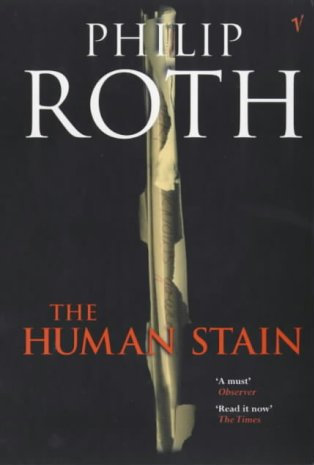
But I do remember the ending of Philip Roth’s The Human Stain, which is a book about secrets too. Roth’s books are often swaggering, male and very American, and this is no exception, telling the story of Coleman Silk, a successful, white Jewish professor who is accused of using a racist term in his classes. Narrated by Nathan Zuckerberg, who appears in several of Roth’s novels, it’s infuriatingly conservative but also incisive about sex, race, and Americanism.
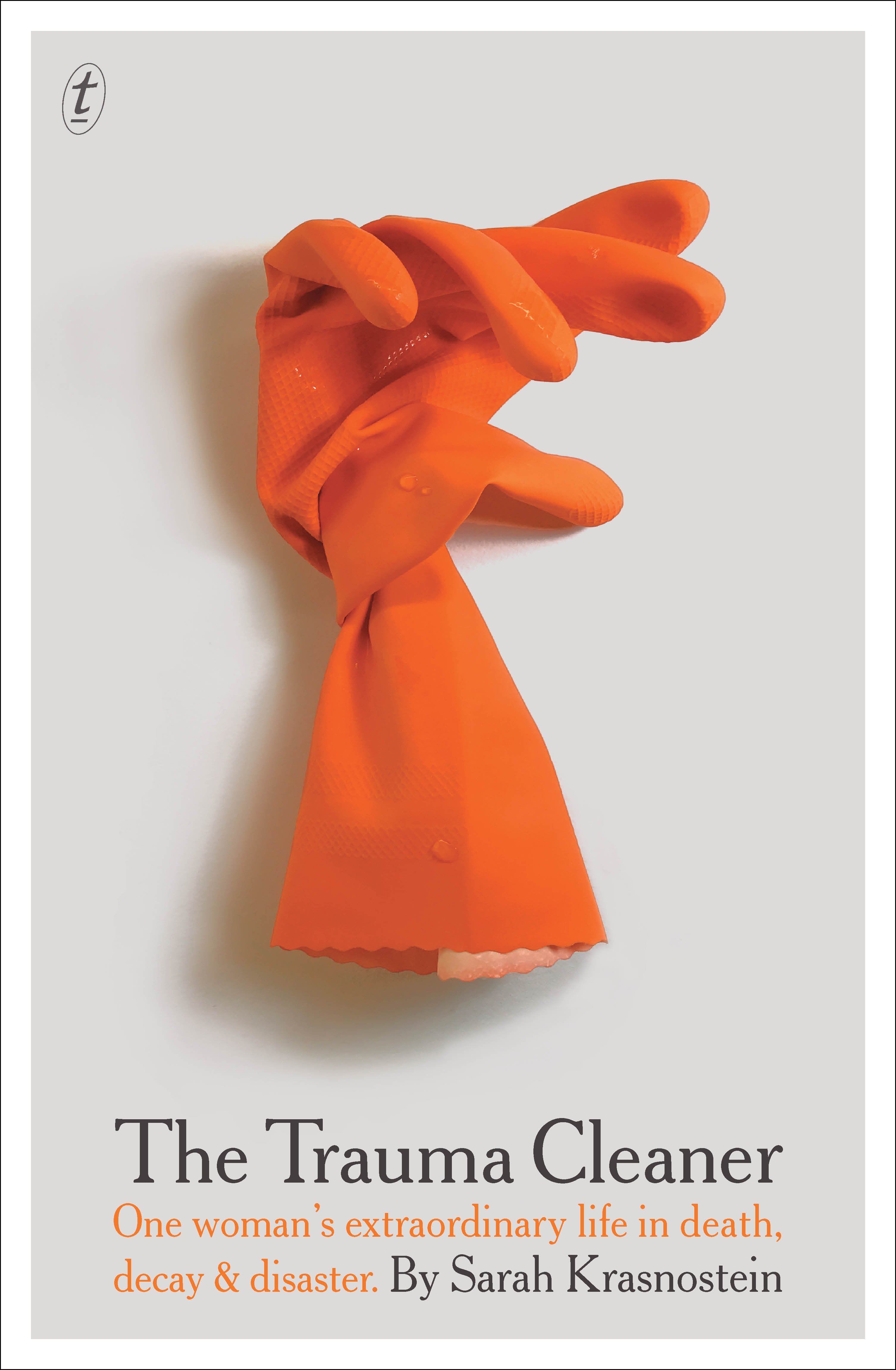
Speaking of stains, there’s some really gruesome stains in Sarah Krasnostein’s The Trauma Cleaner, the biography of Sandra Pankhurst, who runs an agency that does cleanups after a crime scene, a death or where hoarding has become perilous. Sandra Pankhurst, born Peter, has her own story of abuse and emotional deprivation before her gender reassignment surgery. It’s a fantastic book.
David Ebershoff’s The Danish Girl explores the marriage of two artists, Einar Wegerer and his American wife Greta Waud in the 1920s and 30s. It was at Greta’s suggestion that Einar first cross-dressed within their marriage, and his increasing excursions as ‘Lily Elba’ culminated in the world’s first sex-change surgery.
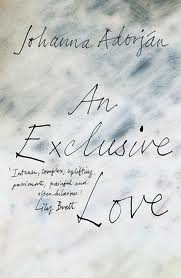
Also set in Denmark is Johanna Adorjan’s An Exclusive Love, the story of the author’s Jewish grandparents who had emigrated from Hungary to Denmark after their terrible experiences during WWII. We learn in the opening sentences that they decided to commit suicide together in 1991, and in this book their granddaughter reconstructs the lives that they rarely spoke about later.
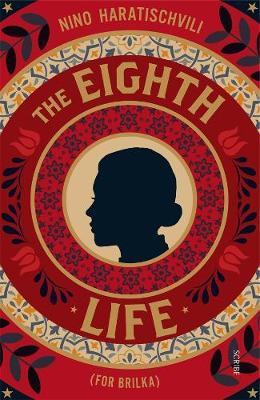
Thinking of grandparents and great-grandparents and aunts and great-aunts brings to mind The Eighth Life (For Brilka) by Nino Haratischvili. This was one of the big fat books I read during COVID lockdown and it was wonderful: a family saga, set in Georgia (near Russia, not in America) during the 20th century with various branches of the family tree sprouting off in all directions, but with such well-defined characters that you didn’t need a genealogical chart.
So look at that- all fiction this month!- and set in Australia, Ireland, America, Denmark and Georgia. Who said we couldn’t travel during these coronavirus days?
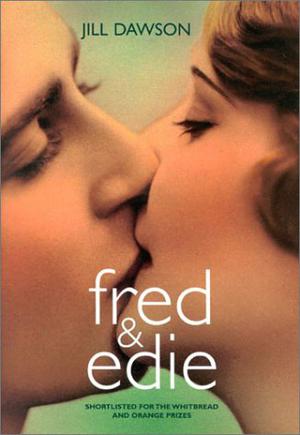
I obviously bought this book at some stage but can’t remember why. Was it after a review that I had read; because of the steep reduction in price from $31.30 to $6.95, or on account of the striking cover? (am I so easily swayed?) For whatever reason, it has been on my shelf for some time.
The book was shortlisted for the Orange Prize and the Whitbread Novel of the Year in 2000. It is loosely based on the real-life murder case of Edith (Edie) Thompson and Freddy Bywaters, who were hanged in January 1923 for the murder of Edith’s husband Percy. It is written as a series of letters from Edie in her jail to Fred in his, where they are both awaiting trial. Hoping at first to smuggle the letters out, Edie decides not to actually convey them to Fred, which frees her to be more frank. The letters are interspersed with authentic newspaper articles from the time, and a first-person present-tense narrative that gives the back story.
Edith Thompson was nine years older than her lover, Freddy. Edith was a modern, intelligent, independent young lady with shingled hair, who earned a good wage in a millinery shop. At first Freddy was going out with her sister Avis, but he was attracted to Edie and came to live for a while with the unhappily-married Edith and Percy. After an altercation between the two men, Freddy left.
Some time later Edith and her husband Percy were walking home from a night at the theatre, when a man jumped out and stabbed Percy to death. Fred was arrested, and on being (incorrectly) told that he had confessed, Edith admitted that she knew that Freddy was the assailant and the nature of their relationship.
Even though Edith had no connection with the actual murder, the discovery of a cache of letters that Edith had written to Freddy was tendered to the court in evidence, revealing their affair and Edith’s attempt to poison and kill Percy by putting ground up glass in his food. They were both found guilty of murder. Freddy Bywaters protested Edith’s innocence, which ironically led to a surge in public pressure against his hanging. Edith’s position with the public – despite Bywater’s declarations and the lack of her involvement in the murder- was more equivocal. For many people, including the judge and jury, she was seen as the master-mind and an adulteress – and guilty. You can’t help thinking that she was executed for being a passionate, feisty adulteress (not a capital crime) rather than as a murderer.
Dawson has been able to use the real-life letters that were tendered in the court as a model for Edie’s voice in this fictionalized account. Edie’s awakening sexuality, even with the boorish Percy in her heightened sense of attraction, is well described, and the fictional letters capture well the giddiness and rashness of early infatuation.
There’s a fantastic website put together by one of her biographers Rene Weiss that can be found at https://edithjessiethompson.co.uk/ that includes all the authentic letters, an entire copy of Weiss’ book, photographs, and current news. I enjoyed the book in its own right, but I must admit that my admiration for Dawson’s book increased further when I saw the source material from which she drew to write her own fictional account.