‘Transnational Lives: Biographies of Global Modernity 1700-Present’

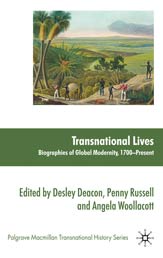
‘Transnational Lives: Biographies of Global Modernity 1700-Present’ edited by Desley Deacon, Penny Russell and Angela Woollacott

transnational

2010, 285 p.

It’s when you’re reading through a Dictionary of National Biography ( and there’s many online: Australian, Canadian, New Zealand etc) that you often realize that even though one dictionary might ‘claim’  a particular individual as theirs,  other dictionaries of other nations could write their own account of the subject’s life as well because whole decades of the subjects’ lives  are sometimes spent in another country.  We’re well aware of the technological advances in transport and communications that contribute to the mobility of people and ideas beyond national borders today, but such forces were in play in centuries past too.  It is in this spirit that Transnational Lives presents twenty-one essays on diverse lives that cross national, racial and cartographic boundaries. (Click link for Chapter Listing) Continue reading

‘Writing Lives Forwards: A Case for Strictly Chronological Biography’

MappingLives

2002, 360 p.

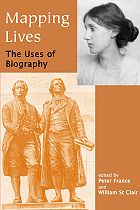
As you might know if you’ve been following this blog for any length of time,  I’ve been thinking and grappling recently with the narrative form that biographies can take- chronological, thematic and novelistic- and wondering how much latitude the thesis genre allows in adopting these approaches.  As part of this,  I’ve been reading a book of essays on the writing of biographies called Mapping Lives: The Uses of Biography, edited by Peter France and William St. Clair.

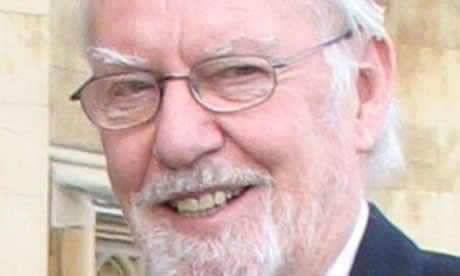
I was particularly taken by an essay in this volume by Mark Kinkead-Weekes called ‘Writing Lives Forwards: a Case for Strictly Chronological Biography’.  Kinkead Weekes was a D. H. Lawrence scholar and the lead author for the Cambridge University Press three-volume biography of Lawrence,  for which he wrote the second volume dealing with the years 1912-1922 of Lawrence’s life. This biography adopted a straight chronological approach, as Kinkead-Weekes notes, “following his life forwards, miming the way it was lived, and banning all hindsight” (p.236).   David Ellis, the author of the final volume, wrote in his obituary of Kinkead-Weekes in 2011 that Kinkead-Weekes’ forte was infinitely painstaking and sympathetic exposition of an author’s processes and intentions” and I think that you can see this in Kinkead-Weekes’ chapter  that praises “strictly chronological biography”.

Kinkead-Weekes

There does seem to me to be something rather workmanlike about a chronological account and so I was interested to read an argument in support of it.   Why did he choose to write Lawrence’s biography this way?

The main reason for adopting a chronological method however was to resist the urge, so powerful in biographers, to structure a life too early and too simply into some overall pattern and explanation. (p.238)

He does qualify his support for chronological method somewhat by upholding its usefulness particularly at first draft stage.

Of course, biographers who have been researching for years do already know the general shape of the story they have to tell and how it will end, before they write the first word; and of a course a life could not be written week by week, let alone day by day, even if enough data were available, without insufferable tedium.  What is possible, however, at the crucial first-draft stage when a general sense of things begins to develop into an organized story, is to work on, and then narrate in, time-spans small enough to allow all the evidence to be freshly commanded at once, with nothing but space ahead.  This approach brings immediate advantages.  Misconceptions show up, puzzles can be clarified, unexpected connections appear, simply through careful attention to the exact sequence and context of events…” (p. 236)

But even beyond the first draft, there are other advantages as well:

Above all, strict chronology allows some miming for a reader of how a life may have felt to live, at the time.  There will be too many spaces, unknowns, opacities, for this to be more than partial, and frustrating, as biographers know only too well; but the strictly chronological method also tends to show up the gaps in the evidence which confident analysis conceals.  It constantly throws the emphasis on the experience of the biographee rather than on the commentary of the biographer.  It is also a way of inviting the reader in on more equal terms, watching the life unfold rather than having its significance anticipated, or being enclosed in the biographer’s analytic structure, or for that matter the subject’s own retrospective imagining.  In try to make change and development more manifest, it also affects the treatment of relationships, aiming at greater complexity and changefulness in other characters too.  Finally- although an avidity for judgement is one of the less admirable reasons for the fascinations of biography and no biographer can be wholly free from presupposition and prejudice- the chronological method does tend to delay verdicts until there has been sufficient exploration of process and development. (p. 251)

However, he was aware that a strictly chronological approach had its drawbacks as well.

The price that has to be paid for strict chronology, however, is also huge.  Every one of its gains will increase the length, slow the pace, and involve a degree of repetition when the eventual bearing of previous developments becomes clearer (p. 251)

The result, he feared, is bagginess, and you’d have to say that the Cambridge biography (which I haven’t read) in three parts at a total length of 2,349 pages might fall into that category!  Makes a thesis look a mere bagatelle!  And, unfortunately, undercuts completely his argument about his usefulness for a strictly chronological approach- at least for the final product- I’m afraid.

‘All Things Bright and Beautiful’ by Susan Mitchell

Mitchell

2004 ,259 p

This book gave me nightmares.  I usually do my non-thesis reading in bed, just before falling asleep and this book falls well into the ‘not thesis’ category. But not once but three nights in a row I found myself sitting up in bed, heart pounding after a nightmare prompted by reading this book.   So I decided that if I was ever to finish it, I’d have to read it by light of day.

You only have to say the word ‘Snowtown’ to an Australian and they’ll immediately think of a disused bank in a small, South Australian country town, with barrels stuffed full of rotting, dismembered body parts.  It’s a sordid tale: a boorish, violent man on a self-propelled mission to rid the world of paedophiles, drawing vulnerable and rather simple men into his campaign to torture and kill the “dirties” as he calls them.  Twelve lost, marginal often mentally ill victims: so many dysfunctional histories of sex abuse and neglect. Truly the stuff of nightmares.

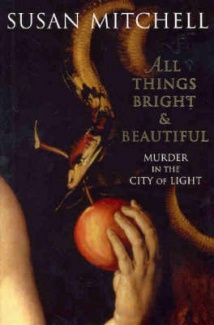
The author, Susan Mitchell, was born in Adelaide but at the time of writing this book was living in Brisbane.  She had been a presenter on ABC radio in Adelaide, and she still had contacts and friends there.  This book is only partly about the Snowtown murders.  It is just as much about Adelaide itself- Adelaide the city of churches; Adelaide the planned city surveyed and planned by Colonel Light (hence the second part of the rather clever title ‘Murder in the City of Light’); Adelaide the festival city with its Festival of Ideas and its Writers Festival; Adelaide with its worthy Wakefieldian principles and Adelaide with its enlightened social policy.  How does this Adelaide reconcile itself with Snowtown, the lost Beaumont Children,  the drowned law lecturer George Duncan and the sense that there’s something just a little strange about Adelaide?  As she puts it:

If a city is planned to be perfect, if its citizens think of themselves as having the best possible life, if the expectations of Utopia are ever-present, how, then do they cope with its underbelly, with the serpents slithering about, unnoticed and disregarded on these hot, bright, plains of Paradise? (p. 63)

This book is written as first-person reportage, much like Helen Garner’s work in Joe Cinque’s Consolation or The First Stone,  or Anna Krein in Into the Woods, or  Chloe Hooper in The Tall Man.  As with Garner and Hooper’s work, much of this book is set in a courtroom listening to evidence, watching witnesses and the legal system at work.  However, Mitchell doesn’t do the hard yards in quite the same way: instead of sitting in the courtroom day after day (which lends its own perspective on the proceedings), she jets back and forth between Brisbane and Adelaide, catching up on the transcripts in between times.

Now that I was reading the book by harsh (and comforting) light of day, I became much more aware of the second part of her quest in writing this book: to reconcile the City of Light with the city that spawned Snowtown.  And, I have to admit, I became increasingly critical.  She sits in her five-star hotel, ordering room service and a good bottle of wine, and then mulls over the transcripts of terror that she has read.

She speaks to people: which people? you ask. Why, lawyers, Christopher Pearson the conservative bon vivant, wealthy philanthropists, writers, the Lord Mayor of Adelaide of course. The brightest stars in the City of Light.

She hops in her car and drives to Elizabeth, the impoverished industrialized town in which the murders took place, and gets her directions from a helpful girl on the telephone.  She drives around looking,  looking at the “sullen, blank stares of the people in the malls, of the people loitering outside Centrelink, of the teenage mothers dragging little children behind them (p. 77). ”  What a relief to return to leafy Dulwich, in her house with its high ceilings, open fires and leadlight windows  where “An open fire, a deep couch and a glass of wine could, perhaps, take the chill out of my soul” (p.79)

Or what about a day trip to Snowtown itself, where the bulging barrels with their appalling stench were stored in a disused bank, a plastic curtain shielding them from curious eyes?  Again, driving around, safe in the car,  she is looking, looking, although at least she does get out at one stage.  She has a quick conversation with the only person she sees, the elderly owner of a bric-a-brac, antiques and gift shop.

Perhaps I should follow her and buy some useless piece of bric-a-brac just to give her some income, I thought.  It was a damning legacy for this small town, forever branded through no fault of its own as a place of torture and murder. …Of course, as soon as I shut myself in the car the thought of what had happened in that bank was so chilling and repulsive that I put my foot on the accelerator and left Snowtown behind, a diminishing reflection in my rear-view mirror( p. 98)

There are no conversations with the denizens of the dark side.  Even if she felt unable to actually talk with the Snowtown woman or the people in the Elizabeth mall or those outside Centrelink, surely there would be a nice Lord Mayor of Elizabeth (rather than Adelaide) to talk to; or the lady behind the Centrelink desk, or the local vicar.

Mitchell is completely aware of her pusillanimity and her preciousness.  She mocks and berates herself, and pours herself another glass of very fine wine.

In the middle of the night,  I found myself jolted awake, feeling as if I were suffocating  at the thought of the torture in the bathtub that these victims endured.  But by light of day, I found myself feeling grubby and complicit in Mitchell’s voyeurism and smugness- while at the same time, compelled to keep turning the next page.  I strongly suspect that she was aiming for exactly this response in her middle-class, educated, reading audience.  But I’d like to think that I’d at least get out of the car.

Note:

awwbadge_2013I am posting this review to the Australian Women Writer’s Challenge.  I suppose that I will post it under the category ‘True Crime’, which feels rather odd as I don’t often read books in this category.  I could just as easily post it under Memoir on Non Fiction other as well.   I don’t really know how to rate the book because I think that it would be influenced by my emotional reaction to the book and the stance of the author.

Read because: I’d heard of the book (I think I heard her interviewed on the radio when it was released?)

Sourced from: my own bookshelf, bought second-hand.

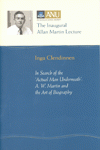
“In Search of the ‘Actual Man Underneath’: A. W. Martin and the Art of Biography” by Inga Clendinnen

martin_clen

2004, 33p.

Sometimes you read the transcript of a paper given to a conference or seminar some time ago and wish with all your heart that you could be there to witness it, not so much for the paper itself (which, after all, you have a copy of) but to sense the response to it at the time.  That’s the way I felt reading Inga Clendinnen’s inaugural Allan Martin Lecture, delivered at ANU on 4 May 2004.  The title of her paper was “In Search of the ‘Actual Man Underneath’: A. W. Martin and the Art of Biography”.

Inga Clendinnen knew Alan Martin from his decade at La Trobe University as Foundation Chair of the School of History, when he appointed her to a tenured lectureship at La Trobe  to join the 33 other historians he hired within three years to establish the department.  In this paper she speaks of him as administrator and mentor as head of school, but also as an academic and writer – and this is where I wonder if the audience started to lean in and listen a little more closely.

Allan Martin conducted an honours course in biography, and staff members were welcome to attend.  Clendinnen did, and she characterized it in 2004 as “probably the most sustained intellectual adventure of my rather long life”.  She attended every class over two years where they discussed the psychological theorizing then being pioneered by Gregory Bateson and Gordon Allport, and they worked on real documents, sequences of letters and confessional writings.  Martin was working at the time on his biography of Henry Parkes, the colonial politician, and when the class was ready, he gave the class some of his toughest Parkes material.  

Then some years later Martin’s work, Henry Parkes came out.

In the preface to ‘Parkes’ Allan made a remarkable apology.  He apologized to his biography class for something not there: the matter discussed in those enthralling sessions.  He acknowledged that he had initially planned ‘to explore Parkes’s life history under other categories’, to expose ‘those intersecting patterns of experience, personality and circumstance which mould a man’s response to the contingent and hence lie under the existential surface.’  Instead he had chosen to adopt ‘a rigid chronological framework’ (which was, he granted, ‘in some ways an intellectual and artistic defeat’) because it was the political Parkes he was determined to pursue- although, he said, he would also ‘try to tell the story of the man’s personal life as far as the documents would permit it to be glimpsed’- as if the story were there, as if ‘the documents’ spoke in a simple tongue- as well as ‘Parkes’ successes and failures in mastering his political environment.’ (Parkes, xi) Clendinnen, p. 13-14)

She was disappointed and she told him so.

On that first reading, I thought that any unusually good and judicious historian could have written A. W. Martin’s ‘Henry Parkes’.  Where was the brilliant essay into the art of biography I had been expecting? To me it was seeing a bright sword sheathed.  True, you could look up every light-footed political manoeuvre, every tricky little factional dance, and it would be there.  But where was the grappling with Parkes’s beguiling personal complexities?… A. W. Martin says in this foreword, ‘because one person cannot attempt everything’, and that’s true.  But only Allan Martin could have unraveled this strange, secret, public man.  He also claims to have been ‘defeated by structuring problems’, and that I simply don’t believe.  Allan had preternatural literary skills.  He could make his prose do anything he wanted, while his mind was as sensitive, as penetrating, as intrepid as any I have encountered.  So why did he choose to step back- and for him, truly, it was a step back (why else the apology?)- to pursue a conventional public-political biographical model?  Why didn’t he write the international state-of-the-art biography of which he was capable?  ( Clendinnen p. 15)

She suggests three reasons.  The first was Martin’s criterion of ‘good’ history:  that you could look something up, it would be there; and it would be right.  I was reminded of the writer’s ethical statement that Tony Birch talked about at the Past Matters festival at Montsalvat, and I wonder, as I suspect Clendinnen did, whether Martin’s own ethical statement served him, and his writing, well.  Historians hold facts in different degrees of reverence: military historians in particular have a grasp on detail and dates that I could never master (and to be honest, I don’t really know if I would want to) and my own certainty on dates in my own work is often slippery and vague.  Yet I veer between annoyance and exultation when I find a mistake in work that I’m familiar with- the academic ‘gotya’ moment. But it’s a hollow and rather demeaning victory: often the error relates to such minutiae that it is  ultimately irrelevant to a bigger picture.

A second reason, she suspects, was Martin’s own Calvinistic mistrust of his own talents, that he would have classified as self-indulgent; and finally, she concedes there was the inadequacy of biographical models that were available at the time- most particularly Jerome Bruner’s idea of self-narration, encapsulated in his book Making Stories: Law, Literature and Life (I reviewed it here) , – which emerged in the years after Henry Parkes was published.

Yet Martin did not immure himself completely in his strictures for ‘good’, fact-based, accurate history.  In an article published in Historical Studies in 1974, Martin tiptoed towards an exploration of the ‘Actual Man Underneath’- a phrase used by Henry Parkes himself, and apostrophized in Martin’s article title (‘Henry Parkes: in Search of the “Actual Man Underneath”, Historical Studies, vol 16, No 63, 216-234.)  After drawing on a myriad of sources to describe in some detail a period of years where Parkes’ political career seemed finished, Martin inched towards the approach that Clendinnen looked for, but did not find, in the book.  It’s there, right in the last paragraph, dangling tantalizingly at the end:

…one needs also to observe in the documents we have discussed the manifold hints that a life might fruitfully be conceived in more dynamic terms- from the inside a range of self-identifications held in fragile tension, personality a process rather than the unfolding of a given core of self-hood, and action the fruit of a traffic between circumstance and these unseen worlds.  It may be that such a perspective could melt the discrepancies between actor and man underneath, to merge the two and reveal in the individual’s struggle for their reconciliation the sources and character of motivation- and hence, for the outside observer, important keys to explanation. (Martin, 1974, p. 234)

Clendinnen rues that Martin came so close to the ideas that Jerome Bruner later articulated, but that he chose instead to work within the existing frames for political biography.  She admits, too, her doubts that even if Martin had had  Bruner’s ideas available to him, his choice of biographical model was deliberate:

So… at the end, despite contingencies of the availability of particular theories, the time of writing and so on, I have come to think Allan’s biographical model was fully deliberate: that it mirrored his moral temperament- as it had to.  Writing being the solitary business it is- sitting alone, making the dozens and hundreds of tiny choices of emphasis and selection we must make- I doubt if we could effect an enduring divorce from ourselves even if we tried.  That mass of barely-conscious choices figures forth the most intimate processes of our thinking. (Clendinnen, p. 23)

I very much enjoyed reading this small booklet and its exploration of the book not written.  It’s made me think a great deal about my own writing and the relationship between an academic’s personality and the type of history they write, and the ethical tenets she holds.  And gee, I wish I could have been there for the response that followed when Inga Clendinnen stopped talking and sat down.

Is there a book in this thesis?

One of the dreams that is secretly cherished by Ph.D candidates is that perhaps, one day, they might have their thesis or a work arising from their thesis published.  Given my advanced age (!) and shrivelled career prospects (!!) the pressure is not as strong on me as it is for my much-younger doctoral candidate colleagues, but there is certainly strong encouragement to accrue research points for the faculty through publications arising from your thesis and ‘the book’ is the most highly sought trophy of all.   Quite apart from any career benefits, there’s the personal passion for your topic which has had to flicker sufficiently to light your way through the thesis, and the conviction that you have a story worth telling that makes publication such a magnet.

The advice we as PhD candidates receive about writing with an eye to future publication is somewhat contradictory.  Some academics encourage us to write in the way we want to and with an eye to a larger audience than just the examiners who are obliged to read our thesis. One of my fellow-PhD candidates, for example, wrote a very ‘brave’ thesis that has been snapped up for publication largely unaltered.  Others caution that a thesis has its own genre rules that must be obeyed and that a book for publication is a different creature entirely.  I’ve heard a historian I admire, who had a contract for publication before she’d even submitted, admit that she published her thesis too early.  I’ve seen another colleague work really hard for about two years after receiving her doctorate, rewriting her work and actively pursuing a contract- in this case, with success.  I’ve heard publishers and many academics say that you in effect have to throw the whole thesis out and rewrite from scratch for a new audience.

Complicating all this is the requirement that universities now have that theses have to be placed online.  There’s some merit in the argument: after all, taxpayers’ money has gone into supporting your candidature, and a hard copy of the thesis just sits there on the shelf, largely unavailable to a wide audience who are not likely to know of its existence anyway.  I know that I have certainly been deeply grateful for the theses on Upper Canada that I have been able to source electronically that would otherwise be unavailable to me.  On the other hand, though, publishers are wary of- and even refuse- taking on a work that is accessible in the public domain in digital form.  I’ve been interested to compare novels that have been published commercially with the academic product available online in an earlier incarnation as part of a creative writing course through a university (see my posting on I Dream of Magda where I also discuss this) .  I’m also wary and disappointed to see big publishing conglomerates like EBSCO swallowing up theses and putting them behind a paywall with, I assume?- no payment to the author.

It is possible to embargo your thesis for a number of years, and I know several people who have done this.  I was interested to read the American Historical Association Statement on Policies Regarding the Embargoing of Completed History PhD Dissertations (a title almost as long as a thesis!)

It’s all rather fraught with difficulty and still in flux.  Often in pursuing a wide commercial readership, historians are forced to give up much of the academic scaffolding of footnotes and bibliographies that makes their work a history instead of a generalized non-fiction book.  University press publishers are more accommodating, but you wonder how they will survive in such a cut-throat, commercialized environment.  Many are moving to e-texts: I wonder if there’s the same frisson of excitement at seeing a web-page that has your book compared with seeing it physically on a bookshelf and being able to pick it up and sniff its bookishness?  Other histories are published by prestigious overseas academic publishers at an exorbitant price that ensures that only an academic library could afford to purchase them, thus making the work almost as inaccessible as the hard-copy thesis.

Still, I don’t know why I’m thinking about all this.  I have to write the damned thing first.

Others have written about this as well:

The Thesis Whisperer writes about publishing an academic e-book


‘HHhH’ by Laurent Binet

HhhH

2012, 336 pages

Sometimes I think you enjoy a book better if you don’t know much about the topic.  I’m rather abashed to mention that I get a little confused about the Nazi leaders: all those H’s (Hitler, Hess, Himmler, Heydrich….) When I read on the blurb that this book was about the assassination attempt on the life of Reinhard Heyrich, I really didn’t know whether it was successful or not (and if you don’t know either, I’m not going to tell you).

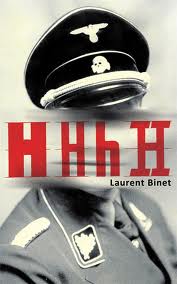
The front cover is striking – that chilling army hat with the death’s head insignia and a blurred face (is he just passing quickly by or is he being erased?) overstamped with ‘HHhH’ , the German acronym for the common saying ‘Himmler’s brain is called Heydrich’.  Reinhard Heydrich, known as the Blonde Beast and the Butcher of Prague, was responsible for Kristalnacht, was an SS general, was appointed Acting Reich Protector of Bohemia and Moravia and was one of the main architects of the Holocaust.  But, says the book’s discouragingly young author Laurent Binet, Heydrich is not the protagonist of this book, but instead the target.

The book is classified as ‘fiction’ (or at least, the publisher has decided to categorize it this way) , but it’s true. ‘The good thing about writing a true story’ says Binet ‘is that you don’t have to worry about giving an impression of realism’ (fragment 20).And it’s not history: he finds it untellable as history:

I’m fighting a losing battle.  I can’t tell this story the way it should be told.  This whole hotchpotch of characters, events, dates, and the infinite branching of cause and effect- and these people, these real people who existed.  I’m barely able to mention a tiny fragment of their lives, their actions, their thoughts.  I keep banging my head against the wall of history.  And I look up and see, growing all over it- even higher and denser, like a creeping ivy- the unmappable pattern of causality. (fragment 150)

The author announces, close to the end “I think I’m beginning to understand.  What I’m writing is an infranovel” (fragment 205).  Yet if it is a novel, he is brought back to the evidence.  How is he to write a dialogue that seems plausible to him, when he has an eyewitness recollection of a conversation that feels artificial? How is he to second guess the inner thoughts of his characters?  He even bridles against the thought of them as characters:

The people who took part in this story are not characters.  And if they became characters because of me, I don’t wish to treat them like that. (fragment 251)

Yet if he is not writing history, then there is fictionalizing to be done- but he resists that as well:

That scene, like the one before it, is perfectly believable and totally made up.  How impudent of me to turn a man into a puppet- a man who’s been dead for a long time, who cannot defend himself.  To make him drink tea, when it might turn out that he liked only coffee.  To make him put on two coats, when perhaps he had only one.  To make him take the bus, when he could have taken the train. To decide that he left in the evening, rather than the morning. I am ashamed of myself…. But I’ve said that I don’t want to write a historical handbook.  This story is personal.  That’s why my visions sometimes get mixed up with the known facts  It’s just how it is. (fragment 91)

I think that from these extracts, you can detect the flavour of this book.  There are twin intentions at play here: first to tell of the assassination attempt on Heydrick’s life and to pay tribute to the bravery of the men who carried it out and second to grapple with the act of narrating this story.  The narrator is,  I think (without being absolutely sure) genuinely Laurent Binet the writer.  He is present throughout: apologizing, backtracking, clarifying, justifying.  Underlying this is a trenchant critique of historical fiction- most particularly of Jonathan Littell’s The Kindly Ones which was released at much the same time as this book was nearing completion- but also admiration of other writers who have attempted similar feats like W.E. Sebald, Vollman in Europe Central, Flaubert in Salammbo .

But there are a couple of places in which the author steps away and lets the story take place.  The first is the assassination scene, which he circles around, almost too frightened to commence.  At this point, as he baulks and dissembles, I felt like throwing the book against the wall, but once he starts it is brilliant writing that goes on for page after page.  It is engrossing, breath-holding writing and it extends over several pages, unbroken, compared with the short sometimes only paragraph-length segments of the rest of the book.   The second is the hunt scene- again, told at length.  At first he attempts to tell it in the words of one of the assassins, but soon drops the pretense:

I am not Gabcik and I never will be.  At the last second, I resist the temptation of the interior monologue and in doing so perhaps save myself from ridicule at this crucial point.  The gravity of the situation is no excuse. … The truth is, I don’t want to finish this story.  I would like to suspend this moment for eternity… (Episode 250)

He then starts a countdown by day, but the dates are in 2008, as he (supposedly) writes this section- sometimes just a sentence, other times even a page.  He writes about an episode eight hours in length, but it takes him from May 27-  June 18 2008.  Of course, all this is artifice: he’s probably rewritten these paragraphs several times.  His story of himself as writer is a narrative conceit that he chooses to foreground, just as other authors choose to suppress their own presence in the text.

I often find when I’m reading that I frame the text I am reading against one that I’ve recently finished, or perhaps am still reading.  In this case, I read this book immediately after reading Kitty’s War. There are similarities between the two books: both are written in the present tense; both have the author on  stage; both co-opt the reader as ‘we’ (whether you want to be included or not); both purport to resist the text even while they are dealing with it.  What makes one ‘history’ and the other ‘fiction’?

Butler’s book has a named, verifiable source text, even though it is held in private hands.  The other texts that she triangulates it against have a similar status, and her work draws on secondary texts which themselves call on similar provenances.  It has the academic architecture of footnotes and bibliographies.  Binet’s book has none of these things.  In the end, you just have to take his word for it- there’s nothing named specifically to check against.

Perhaps it also comes down to the authenticity and reputation of the “I” as author.    Binet treats himself as author with self-deprecation and undercuts himself at every turn; Butler – as with all academics- never does.  She might admit doubt and go out on a limb, but she always takes her endeavour seriously, as indeed it is her professional responsibility to do.

Another way to think of it might be to think about what the author would need to do to the text to transform it from fiction to non-fiction or vice versa.  To turn the Binet text into history (albeit a very post-modern history) , you’d need to tone down the authorial interruptions (especially about his girlfriend) and invented conversations and add footnotes and references, but much of the text could remain more or less intact.  Butler’s book, however, would need to be turned inside out to make the transformation into fiction. In fact, I don’t think it could be done without dispensing with much of the book, and it would lose its whole raison d’etre.  Perhaps that is the ultimate testimony to its historicity.

Laurent Binet will be attending the Melbourne Writers Festival later this month, and his session in conversation with Michael Cathcart, will be simulcast on Radio National on Friday 23 August 2013 at 10.00 a.m.  No doubt it will be available as a podcast afterwards.

My rating: 9.5/10

Sourced from: La Trobe University Library

Read because: London Review of Books review.

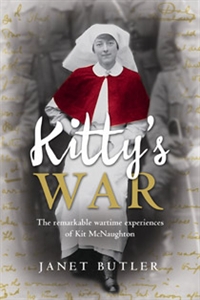
‘Kitty’s War’ by Janet Butler

Butler

2013,  231 p & notes

KITTY’S WAR by Janet Butler

I had forgotten the power of a beautifully written introduction to a history.

Imagine, for a moment, that we are granted an eagle’s eye-view of the fields and villages, the roads and towns of northern France.  It is dusk on a mid-autumn evening.  This is the Western Front, one hundred and eighteen days after the beginning of Operations on the Somme…. (p. 1)

Sister Kit McNaughton was a nurse from Little River, near Geelong who heeded the call for nurses during the First World War.  As did many others, she wrote a diary and this book, by Janet Butler presents extracts from that diary.  But Butler here is not an editor, stepping to the side to allow the diary and the diarist’s voice to take centre stage (as, for example, Bev Roberts has done in Miss D. And Miss N.)  Instead, Janet Butler  interrogates the diaries: she triangulates them against other writing; she supplements them with secondary sources; she looks for patterns and changes over time and she listens to the silences.  Kitty’s own (rather prosaic) entries take up a small proportion of the book – perhaps ¼ of the text, if that.  The majority of the text is the historian at work, always respectful of Kit McNaughton and privileging her perspective, but grappling with the diary as text and the emotional and physical enormity of the unfolding experience that it documents as well.

A diary fills multiple and often changing purposes. The writer often has an audience in mind: sometimes explicit (as in Anne Frank’s ‘Kitty’) or sometimes unnamed but tacitly understood.  As Butler writes about Kit McNaughton’s diary:

There is clearly a ‘you’ addressed in its pages. ‘We often think of the people at home & wonder what you are all doing,’ she writes after describing a concert given by the troops, the first day out of Australian waters, ‘& if you could only see us all doing the grand you would know how we are enjoying our selves’. It is to this audience that Kit’s presentation of herself has to be acceptable. (p. 13)

Kit conceives her writing as a travel diary, but she also is conscious that she is chronicling history as well.

…Kit’s diary intersects briefly, under the umbrella of the travel diary, with another kind of diary: the public chronicle of an historic event, which is more often than not a male prerogative (p. 27)

Kit McNaughton is aware that she is writing for an Australian audience ‘at home’ who will read her diary with a particular consciousness: they will want to see her as the ‘good nurse’ imbued with the discipline, rigour, efficiency and obedience of her professional calling; they will be sensitive over descriptions of Australian suffering and death;  and they will share her sense of Australianness. She  draws from the rhetoric of the Anzac legend, already being honed in the despatches of the war correspondents and seized for recruiting purposes at home, as a way of presenting herself. In doing so, she contributes to our own understanding of the legend 100 years later.

Her use of the ANZAC legend to actively craft her persona shows agency.  The nurses are not simply passive recipients of the identities thrust upon them.  It reveals a desire for a level of freedom denied them at home.  For nurses travelling to war, the Anzac legend opens out the boundaries of acceptable behaviour…. They continued the work they did as civilians, but their journey into war challenged and enabled them to expand their sense of self.  (p. 18)

The book follows Kit chronologically as she starts off in Egypt, as so many WWI soldiers did; is sent to Lemnos,  falls ill and is sent to a convalescent hospital. On going back to Europe, she nurses wounded German soldiers on the Somme, returns to No 2 Australian General Hospital at Trois Abres just six kilometres from the front, goes across to No. 3 Australian Auxiliary Hospital in Dartford, Kent and finally is sent to Sidcup maxilla-facial hospital nearby.  Each separate placement has its own chapter in the book, but multiple themes run across them all: her sense of being Australian; the resentment with which the nurses are sometimes greeted either because they are women or Australian or both; her companionship with the ‘boys’ she met up with in Cairo and her friendship with other sisters (in both senses of the word).  There is much that she cannot say, however.  To complain about the dismissiveness of the doctors would be insubordination (and a ‘good’ nurse is never insubordinate); to speak too much of the death and injury of Australian soldiers is too sensitive.  Nursing German soldiers however- the enemy- is different, and here she can write of the injuries and the smell and the loss in a way that she could not when nursing Australian soldiers:

I have eleven with their legs off and a cuple ditto arms & hips & heads galore & the awful smell from the wounds is the limit as this Gas Gangrene is the most awful thing imaginable, a leg goes in a day. I extracted a bullet from a German’s back today, and I enjoyed cutting into him…the bullet is my small treasure, as I hope it saved a life as it was a revolver one (p. 130)

In many ways Kitty understates her own role.  As we can see, she was entrusted with the scalpel, and she later worked in the operating theatre and administered anaesthetics- all skills that were denied nurses ‘at home’. She was mentioned in despatches; she won a Royal Red Cross.

But soon the silences are not just evasions and glossing-overs but the actual lack of words.  Particularly once she reaches Dartford, her entries become summaries,  widely spaced and sparser, reflecting her own “disengagement  from the war of which she no longer feels so much a part” (p. 197).  Kit is no longer on her journey, and she is no longer writing a travel diary.  There is no adventure, no sightseeing (which she had earlier managed to do), and Butler suggests that she is probably suffering what we would call post-traumatic stress.  Certainly, her photographs show that the war has taken its toll on her. Her hair has gone grey; she has lost two stone; she is in poor health.

As Butler says:

Statistics alone cannot provide a guide to the impact of war on personal lives.  Our journey with Kit has shown biography to be a way of reaching to the level of the personal and private.  Stepping beside Kit, an individual, into the aftermath of her war- reading her life, as we once read her diary- offers the possibility of insight into the effects on women, on the relationships between women and men, and therefore on Australian society, that more objective measures cannot. (p. 216).

The book is written in the present tense throughout.  I must admit that I’m rather ambivalent about the use of the present tense in fiction because it makes me feel edgy and anxious.  (Says she who has written this whole review in the present tense!)   It’s an interesting and striking choice in non-fiction, and one that I haven’t seen used often in history. I’m not quite sure how I feel about it. It makes me feel edgy here too, just as it does when it is used in fiction, but it certainly has its strengths as well.   It brings the intellectual and emotional interrogation of the diary right onto centre stage, and Butler’s frequent use of “we” draws you, as reader,  into engagement with the diary as well.

“Kitty’s War’  is a reverent and sensitive tribute to Kit McNaughton.  It’s much more than a platform for making her diary available to a wider audience.  It shows the historian at work, shuttling between the small detail and wider overarching questions of gender, war, personal identity, Australian identity and the ANZAC legend.

You can read Lisa Hill’s review of this book at ANZLitLovers and Yvonne Perkins has reviewed it at Stumbling Through the Past.  You can also read Janet’s own guest post about writing the book on a nursing blog.

I have posted this review as part of the 2013 Australian Women Writers Challenge.

awwbadge_2013

‘The Past Matters’ at Montsalvat

Up to Montsalvat on Saturday 27th July for the 10th Past Matters Festival. This festival, convened by the Eltham Bookshop and the Nillumbik Reconciliation Group with funding by the Nillumbik Council,  has  now been joined by Montsalvat, with Australian Book Review and the Australian Indigenous Studies Program at the University of Melbourne as well. Continue reading

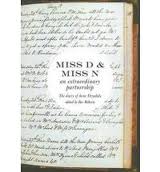
‘Miss D and Miss N’ by Bev Roberts

If I were a well-travelled person, at this point I would wave airily and announce that I always try to read a book set in a place that I am visiting.  Alas, I am not;  I can claim that I read Henry James’ The Bostonians while in Boston, and Dickens while in London…but that’s about it, I’m afraid.

So, a couple of weeks ago when we went down to Geelong (a whole 100 kms away!), I decided that of course I must read a Geelong book!!  But where to find a Geelong book? you ask.  The answer is: Miss D. and Miss N.  In fact, there’s a chance that if you’re on the Bellarine Peninsula that you’ll drive right through the areas named for them: Drysdale and Newcomb.

missdmissn

2009, 326 p.

The two women share an entry in the Australian Dictionary of Biography.   Drysdale was twenty years older than her friend Caroline Newcomb.  Anne arrived in Port Phillip in 1840, aged forty-seven, with the experience of farming in Scotland under her belt, capital at hand, and determined to take up sheep farming in the booming pastoral industry of early Port Phillip.    Caroline Newcomb had arrived in Hobart in August 1833 and found a position as a governess with the family of John Batman, one of the members of the Van Diemen’s Land- based  Port Phillip Association that looked across Bass Strait to establish pastoral runs in what they perceived (incorrectly) as land for the taking.   When she arrived in Port Phillip on April 19 1836, she was one of only thirty-five women in the settlement, out of a white population of 177.  In March 1837 she shifted to Geelong, presumably as governess to  Dr. Alexander Thomson.  The two women met at Dr Thomson’s house where they formed a strong friendship, despite the twenty year age difference between them.   This friendship became a partnership that lasted twelve years when Anne asked Caroline to join her as a pastoralist on Boronggoop, a squatting run on the Barwon River at Geelong.  In August 1849 they achieved their wish “to have a piece of land &c a stone cottage” when they moved to Coriyule, a beautiful stone house that they had built (and which, it seems, still exists).

This, then,  is Anne’s diary, commenced from on board ship in Scotland in September  1839 going through to 1852 and 1853 when she fell ill and the writing of the diary was taken over by Caroline. Continue reading

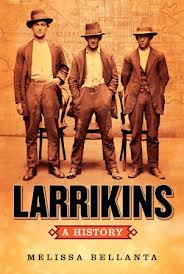
‘Larrikins’ wins Ernest Scott Prize

Image

Congratulations to Melissa Bellanta, whose book Larrikins:A History ( you can see my review of the book here) won the Ernest Scott Prize, announced at the Wollongong Conference last week.  The prize is awarded to the book judged to be the most distinguished contribution to the History of Australia or New Zealand or to the history of colonization published in the previous year. The shortlist for this year’s prize was:

  • Webs of Empire: Locating New Zealand’s Colonial Past (Tony Ballantyne, Bridget Williams Books)
  • Larrikins: A History (Melissa Bellanta, UQP)
  • University Unlimited: The Monash Story (Graeme Davison & Kate Murphy, A&U)
  • The Lone Protestor: A M Fernando in Australia and Europe (Fiona Paisley, Aboriginal Studies Press)
  • Tasmanian Aborigines: A History Since 1803 (Lyndall Ryan, A&U).

The citation for Larrikins  from the judges for the prize, Professor Mark Finnane (Griffith University) and Professor Philippa Mein-Smith (University of Canterbury) reads:


A landmark first book by a young scholar, Larrikins stands out for its liveliness, centrality to issues in Australian culture and politics, and breadth of approach, including attention to patterns of speech and youth behaviour,  style and dress. Melissa Bellanta unpacks the origins of Aussie larrikinism as a cultural phenomenon (and performance) that originated on city streets.  Noting that Ned Kelly perceived the larrikin as a city version of himself in 1879, she asks why the larrikin became such a mythic type in Australian identity formation. Contextualised by a social history that locates the shaping of a colonial urban youth culture in the wake of the gold rushes, Larrikins teases out how Australians turned a term of abuse imported as dialect from the United Kingdom into a national mythology once merged with the image of the digger during the First World War. This youth culture – attracted by the pull of the ‘push’ rather than the bush – was ‘flash’, exhibitionist and violent. Part of the book’s appeal is the way in which Bellanta engages with the language and conduct of her youthful larrikin subjects, young ‘brazen’ women as well as men. The quality of research, engagement with the spoken word, connections with the theatre and visual culture place this engaging work in a singular category. Its inter-disciplinary achievement is considerable, respecting the best scholarly conventions of archival history while deploying analytic and interpretative tools from literary and cultural studies that illuminate this phenomenon of Australian history.  Based on rigorous primary research, this work addresses a core aspect of Australianness and Australian sensibility in a refreshing, thoroughly readable but equally scholarly way.