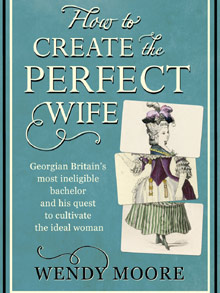
‘How to Create the Perfect Wife’ by Wendy Moore

wendy-moore-cover-_2474788a

2013,  259 p. & notes

The original Pygmalion of Greek mythology was a sculptor who, disgusted by the impurity of the daughters of Propoetus, fell in love with the beautiful sculpture of a woman that he had carved out of ivory.  Before the altar of Venus, he secretly wished that he could marry a woman who would be the living likeness of his sculpture, only to find that his wish was granted.   A man creating his ideal woman is a story that was repeated in Shaw’s Pygmalion, in My Fair Lady and  Pretty Woman– and so too, in this book.  But there’s nothing romantic, feel-good or funny about this book at all.

In 1769  twenty-year old Thomas Day was wealthy, intense, disheveled and a young man of questionable personal hygiene. He did not take his first rebuttal in love at all well.  Spurned by the sister of his friend Richard Edgeworth and deeply influenced by Rousseau’s book Emile, he and Richard contrived to adopt one, then two, 12 year old girls from the Foundling Hospital in order for Thomas to mould them into a woman who would make a perfect wife. Although ostensibly adopted by the safely married Richard Edgeworth, the two girls became Thomas’ possessions as he changed their names, took them away and followed the prescriptions in Emile.  When the first girl proved unsuitable, she was bundled off to be apprenticed and he turned his attention to the second, ‘Sabrina’.  We certainly would see his treatment of her as abuse today: isolation, exposure to the cold and wet,  the dropping of hot wax onto bare skin and the expectation of unquestioning and  absolute obedience.  But in Georgian Britain?  His friends, members of the nonconformist and free-thinking Lunar Society of Birmingham   (James Watt, Erasmus Darwin, Matthew Boulton, Josiah Wedgwood etc. ) were aware of his ‘experiment’ and his odd obsession, and while they thought it strange, did not intervene.

But even the  young orphans refused to be part of a such a perverse undertaking, and he lost Sabrina. He immediately turned his attention to other women in his circle, still striving for the perfect wife who would live with him in isolation and penury by choice, completely subservient to his wishes.  The chapters in the book are arranged by the women he turned to, one after the other and some even more than once,  in his quest.  At last he found a woman who loved him deeply and complied with his wishes, even though she was not at all the type of woman he had tried to create.

The book focuses on Thomas Day and Sabrina, one of the orphan girls.  She survived him, but was almost brought undone by the exposure of her story and her illegitimacy by the writings of people in Thomas Day’s literary circle.  Thomas Day himself is a paradox: a strange, driven, single-minded man who was at the same time the author of one of the most popular children’s book series  (The History of Sandford and Merton), the author of a highly influential anti-slavery tract The Dying Negro, and a strong supporter of American Independence.

The author, Wendy Moore, obviously knows a good story when she sees one.  She wrote the best-selling Wedlock (see my review here) , which was a retelling of the story of Andrew Robinson Stoney and Mary Eleanor Bowes, the inspiration for Thackeray’s Barry Lyndon .  Both that book and this one are non-fiction, well researched and well-documented, drawing on the extensive writings of these educated, literate characters of Georgian England.

Moore writes a rattling good yarn, which moves quickly and lightly.  It is told in a rather conversational style that is rather sweeping as far as the big picture is concerned, but the extensive footnotes at the end reveal how source-based the material is when she is dealing with Thomas Day himself.   It’s a good, if unsettling, read.
Banyule Homestead: VCAT decision!

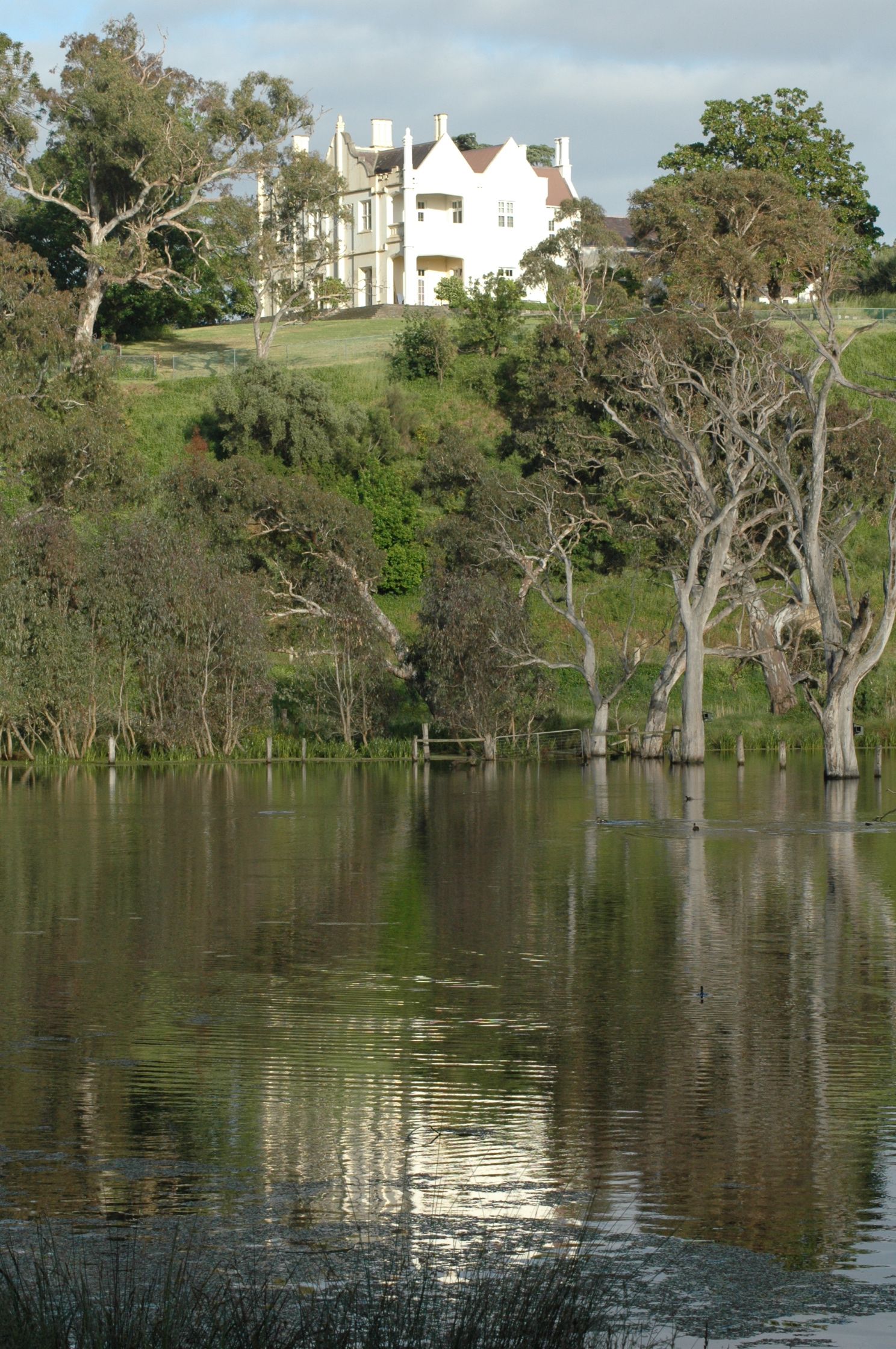
On 29, 30 and 31st May the Victorian Civil and Administrative Tribunal heard the case between Banyule Management PL and  Banyule CC.  The developers challenged Council’s refusal of a permit to build three townhouses on the southern end of the Banyule Homestead site.

Some time ago I wrote a post on this blog called Why I’m as mad as hell about Banyule Homestead.  You might want to go back and read it to see why I’ve been so engaged with the whole matter.

We received notification of the decision today.  The chairman, S. R. Cimino concluded:

I accept that the subject land presents some opportunity for increased development over the southern part of the land. However, the land is subject to heritage and environmental constraints. In this case, the proposal fails to respond appropriately to its context. I suspect that too much development is proposed over the southern part of the land. A reduced development which provides for an appropriate setback from the homestead and escarpment boundary, suitable landscaping and does not present unreasonable visual bulk to the rear open space of 58 Buckingham Drive is required.

I will affirm the Council’s decision. The permit application is refused.

You can read the full decision on the Friends of Banyule website here. 

I will post the link to the decision on the AustLii site when it is available.  For now at least, the proposal in its present form has not been approved.

If you’d like to read more about Banyule Homestead itself and its long history, please visit my other blog at http://banyulehomestead.wordpress.com

Banyule Homestead (b)PeterCRone

Please Sir, may I have some more ….

A letter to Noel Whittaker “(financial adviser and international best-selling author”) in the Money section of the Age Wednesday September 11, 2013

My husband is 61 and retired.  I plan to retire when I reach 60 this year. We live in an apartment worth $1.7 million with an outstanding loan of $350,000. Our combined super is $1.2 million.  Do we have to draw on our super to pay off the loan so we qualify for the aged pension when we turn 65?

Well, obviously even Noel Whittaker (“financial adviser and international best-selling author”) found this a bit rich… (groan for bad pun):

Your assets are at a level where you’re almost (my emphasis) over the threshold for pension eligibility; therefore I certainly agree you should use $350,000 of your superannuation to pay off the home loan.  Just keep in mind that you are four years off pension age and even when you make the withdrawal from super, it is possible that good returns over the next four years will push you back over the asset-test threshold.  That’s a good problem to have because it puts you in the top 1 per cent of Australians in a financial sense.

I hope that this letter writer and her husband and in your sights for the ‘sense of entitlement’, Joe Hockey.

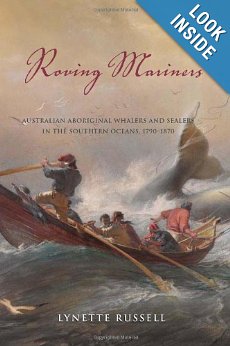
‘Roving Mariners’ by Lynette Russell

rovingmariners

Roving Mariners: Australian Aboriginal Whalers and Sealers in the Southern Ocean 1790-1870

2012,  140 p & notes

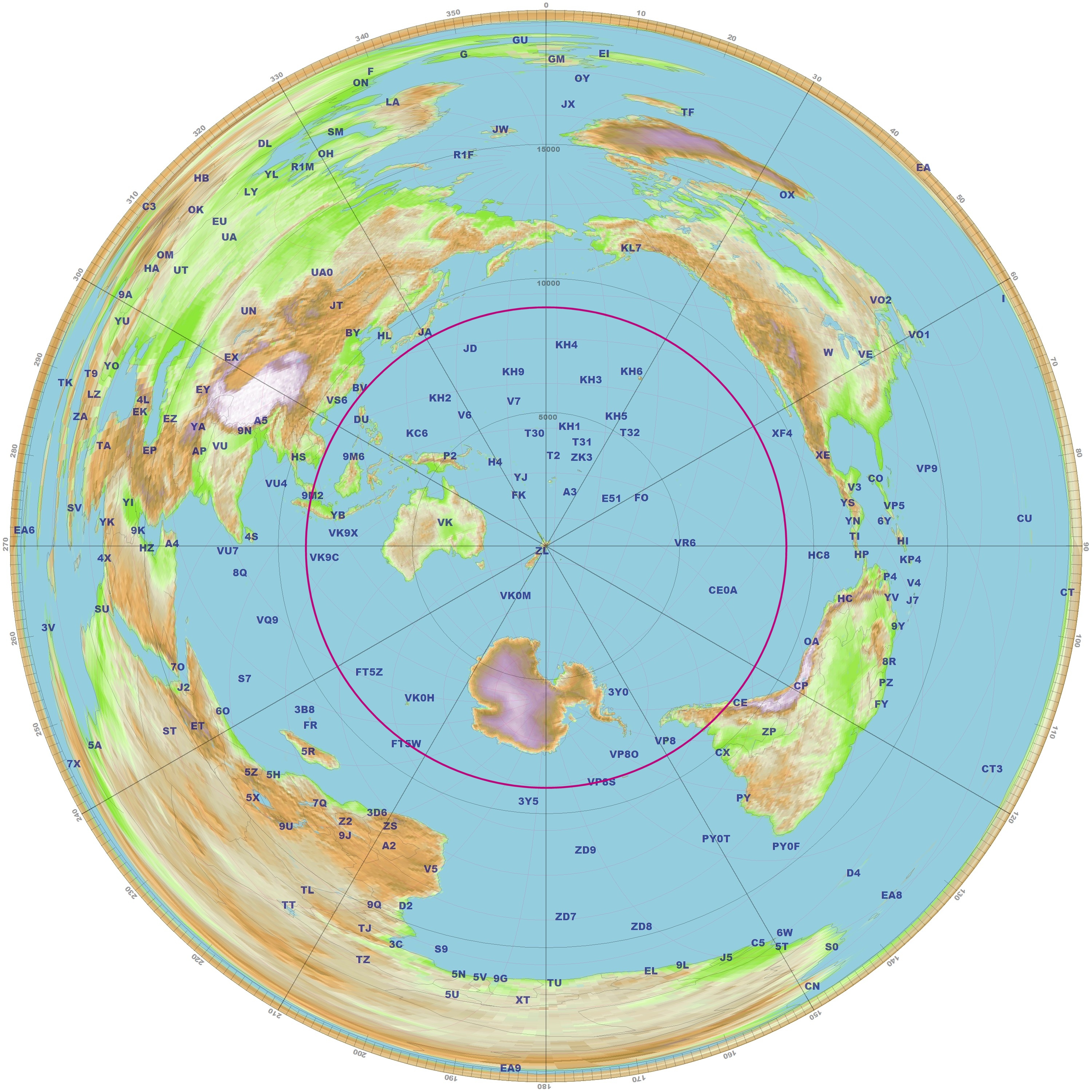
There are two decenterings that this book demands of its readers.  The first is encapsulated by a map that looks something like this:

great_circle_SM3GSJ

It’s a map showing the great circle route of the southern ocean.  Dotted around and radiating out from the centre of the circle are the islands of the southern ocean: the larger land masses of  Antarctica, Australia, New Zealand,  and although you can’t see it here, Macquarie Island, Pitcairn Island,, Kerguelen, Chatham Island, Tahiti, Society Islands,  Solomon Islands, Falkland Islands, South Georgia.  It’s a view that challenges our land-mass bias by emphasizing the ocean and the space, and the relative proximity of small islands flung into the centre of the Indian, Pacific and Atlantic Oceans.

The second decentering reflects the focus on whaling and sealing in this book right up to 1870.  We’re often told that whaling and sealing were primitive, increasingly marginal endeavours which were eclipsed by the pastoral industry and then the gold rushes that super-charged the Australian economy in the 1830s, 40s and 50s.  It’s odd: I’ve been reading through 1840s newspapers for years now seeing mainly sheep, sheep, sheep but after reading this book suddenly I saw references to whaling all over the place- not long articles mind you, but the steady ongoing enumeration of whaling ships in the shipping news and, I must admit, the frequent presence of whalers and sealers in the criminal news.

Lynette Russell is the director of the Monash Indigneous centre at Monash University, and is herself of Tasmanian Aboriginal descent. Her own personal engagement with the history of whaling and sealing was prompted by a discussion she had with an elderly distant cousin who, like her, acknowledged descent from both Aboriginal and European ancestors.  He explained that his great-great-grandparents had been sealers, she a Tasmanian Aboriginal woman and he a British seaman.  When she sympathized with the virtual slavery in which Tasmanian Aboriginal women were kept, he pulled her up.  They were both sealers, he said, rather than a sealer and his ‘woman’ (p. 22).  This set her off to explore in a more nuanced way the complexity of the Southern Australian sealing industry.

In regard to her own Aboriginal identity, Russell embraces notions of undecidability and uncertainty:

As such, I emphatically state that I am neither one thing nor another.  Though I recognize that for many (perhaps most) people the desire to acknowledge one identity over all others is paramount.  For me, the binaries of Indigenous- non-Indigenous or native-newcomer- binaries that, despite their obvious artificiality, continue to be widely used- are meaningless; such simplifications hamper our understanding of the past. (p. 21)

This personal stance is reflected in the history that she writes in this book.

One of my key desires is to create a more complex and less linear narrative than has been previously produced for southern Australia.  One of the complexities I wish to develop concerns the question of the boundaries surrounding who was categorized as native, who was not, and who was described as newcomer…. I believe that these categories were not stable, and during the sealing and whaling period they were perhaps in a greater state of flux than they were either before or afterward. (p. 13)

The whaling and sealing industries of the Southern Oceans were always ethnically diverse with a strong representation of ‘coloured seamen’: African and Native Americans, Native Canadians, Pacific Islanders, Maori and Aborigines. Her sources are the archival records of the maritime industry including  logs, ships’ records, diaries, journals, visual materials including photographs and European artifacts.  After trawling through the sources, she concluded that there was ultimately a paucity of information about the ‘coloured seamen’ that she wished to write about.  This, she says, enabled space for her to imagine their lives and labours and to be “intentionally creative” (p. 16).  She plunged herself into the experience of whaling and sealing:  standing on the deck of a ship in the midst of a pod of sperm wales; standing on Kangaroo Island amongst a colony of noisy, smelly fur seals.

I must admit that there is much in her upfront description of her political stance and methodology that discomfits me (and I should imagine that within Indigenous politics, some would be even more uncomfortable), but I found little  in the text itself that unsettled me.   Instead, I sensed that she had read widely and imaginatively and that there was a strong tethering in verifiable, if diverse, sources (with one major exception where I felt that her creative imagination was straining the evidence too much).  She is very much present in the text. Her argument is strenuous and well argued, and it has the effect of challenging easy assumptions.

She focusses in particular on two men: Tommy Chaseland, and William Lanne.  Thomas Chaseland was born illegitimately to an Aboriginal woman and a white emancipist father.    He was sent to work in the shipping yards of the Hawkesbury River and signed on to the Jupiter. After a succession of stints on various whaling ships, he settled in New Zealand where he became the husband of a high-ranking Maori woman and made his home on the isolated Codfish and Stewart Islands before moving to the Fiordlands west of Stewart Island where he and his wife worked on a whaling station.

William Lanne, often incorrectly described as ‘the last Tasmanian Aboriginal male’  is more widely known, largely in terms of the outrageously disrespectful treatment of his body after his death.  Russell examines Lanne as one of three  Tasmanian Aboriginal men who pursued their luck at sea alongside Captain Henry Whalley and Walter George Arthur.  The details of what happened after his death almost obscure the life that he lived, but Russell attempts to reconstruct it.

Reconstruction of a life becomes even more difficult when she turns her attention to Tasmanian Aboriginal women.  Here she follows two other historians, Rebe Taylor who examined Kangaroo Island and Lyndall Ryan who focussed on Bass Strait and Tasmania.  She acknowledges her debt to this work, and tries to take it further by endeavouring to bring the wives and women from the shadows of the narrative.  It is a difficult task that involves reading against the sources, many of which were written by the missionaries who tried unsuccessfully to get the women to leave the islands.  She is extremely careful in her discussion of freedom, action and choices and her caution in the text behooves us to read closely and to attend to her hesitations and qualifications.

This is a beautifully written and nuanced  reflective history. It is at the same time easy to read and yet requires much of the reader as well in terms of weighing the argument and her use of sources.

A review of the book is available on H-Net.

awwbadge_2013I am posting this review to the Australian Women Writer’s Challenge under the History/Biography/Memoir section.

‘Against the Forces’ Walter Burley Griffin and Marion Mahony Griffin Exhibition in Heidelberg

This year has been the centenary of the commencement of building Canberra. Part of that celebration has been the recognition of Walter Burley Griffin and Marion Mahony Griffin as the designers of a vision of a city that was only partially realized.

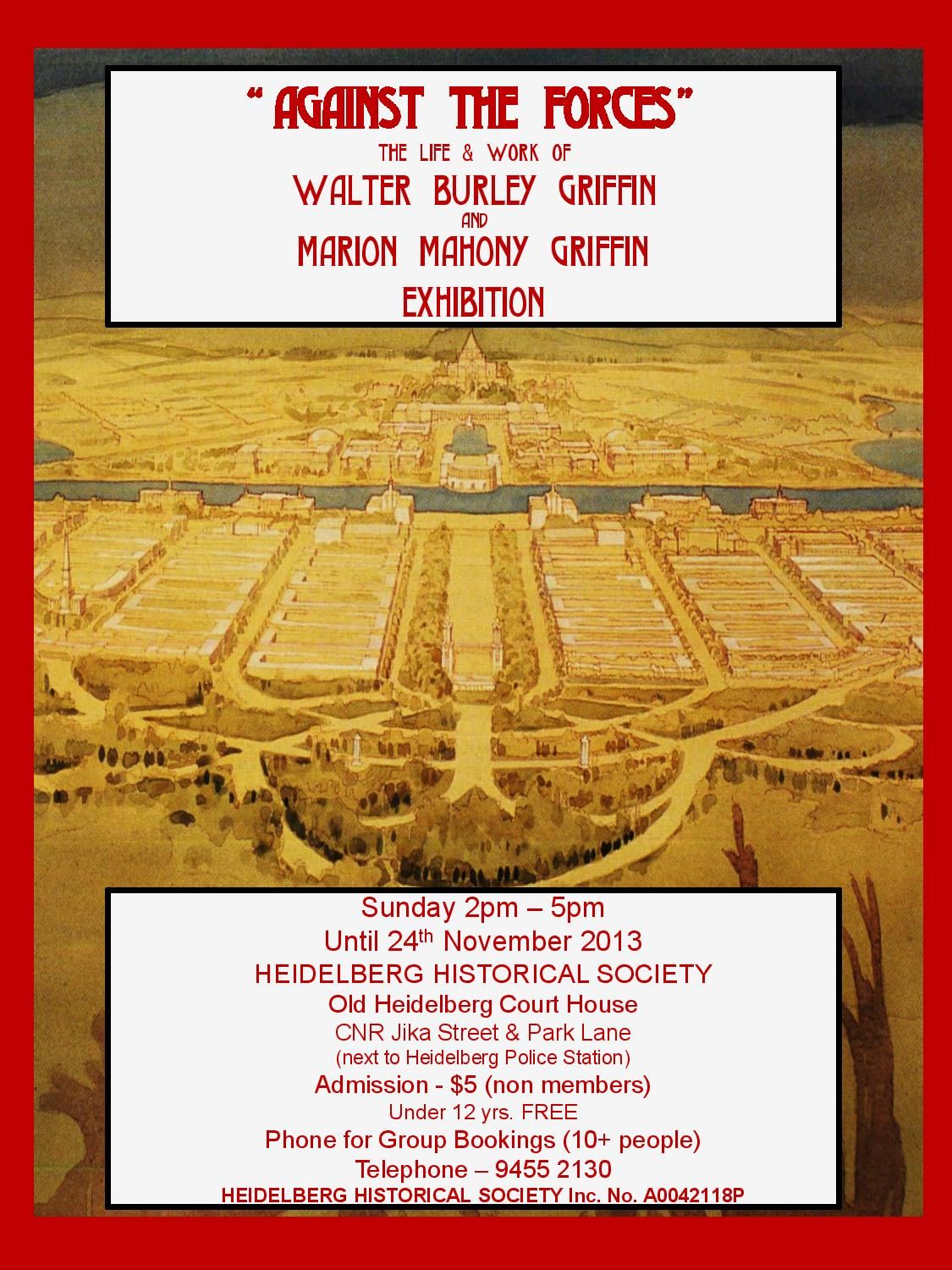
Most of the attention has been focussed on Canberra, but central Melbourne  and suburbs and in particular Heidelberg and Eaglemont,  have a strong Griffin connection as well.  Heidelberg Historical Society are marking this through their exhibition ‘Against the Forces: Walter Burley Griffin and Marion Mahony Griffin’.

Griffin_poster-page-001

I’m really proud that we have been able to mount this exhibition- it really is good.  Being located in Heidelberg, it has a focus on the nearby Griffin houses  (of which I’m aware of four- two in Glenard Drive, one in Outlook Drive and another in Darebin Street) and the subdivisions in Eaglemont that he designed but it’s much broader than that.

The exhibition traces the connection of the Griffins with American architects, most particularly Frank Lloyd Wright and their designs for theatres, public buildings, commercial industrial buildings -most particularly incinerators!- and  residential building in Melbourne, Sydney and even India.  You can read more about the Griffins’ building projects here.

The display depicts buildings but it also addresses the question of the Griffins’ ideas about the relationship between design and the big questions of environment, national identity and lifestyle choice.  There’s a lot of reading and thinking involved in the exhibition- it’s not the sort of exhibition that you can dash through in 5 minutes.

Which makes the $5.00 entry fee a small price indeed for a fascinating Sunday afternoon’s viewing!  The exhibition is open between 2.00 and 5.00 each Sunday until 24th November.  And if you come on the third Sunday in the month you may even glimpse a Resident Judge!

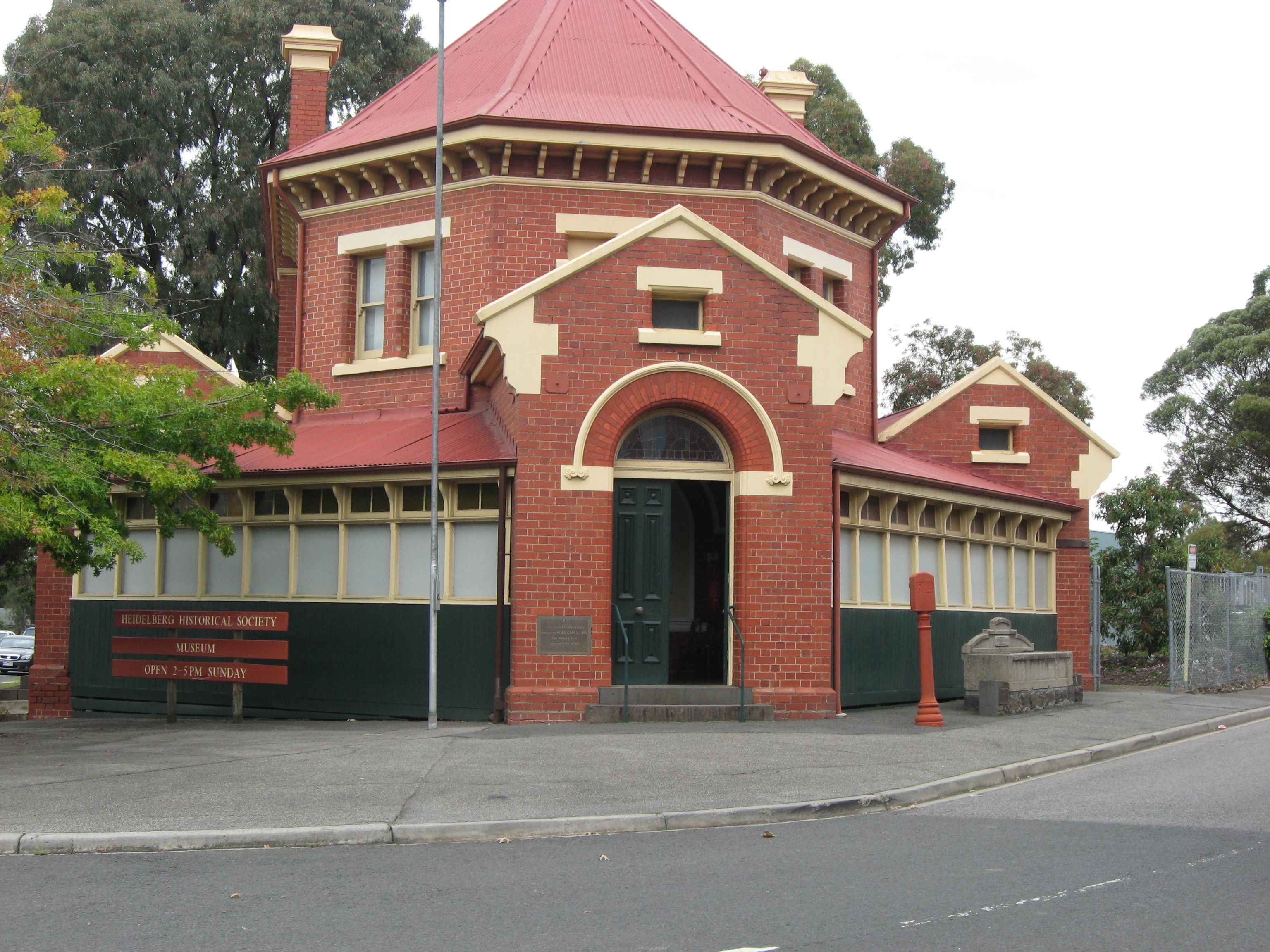
Heidelberg Historical Society is located in the beautiful old court house in Jika Street (the extension of Burgundy Street for locals).

courthouse

AHA Rethinking Indigenous Histories podcast

You might remember that I blogged about the Rethinking Indigenous Histories panel at the recent AHA conference that I attended in Wollongong.

The podcast of the session is now available at Radio National’s Big Ideas page.

The panel, chaired by Richard Broome, Emeritus Professor of History at La Trobe University  included:

Professor John Maynard
Director of the Wollotuka Institute of Aboriginal Studies, University of Newcastle. He is a Worimi man from the Port Stephens region of New South Wales and currently holds an ARC Australian Research Fellowship (Indigenous).
Professor Tim Rowse
School of Humanities and Communication Arts, University of Western Sydney
Professor Marcia Langton AO
Foundation Chair of Australian Indigenous Studies at the University of Melbourne
Professor Ann McGrath
Director of the Australian Centre for Indigenous History at the Australian National University.

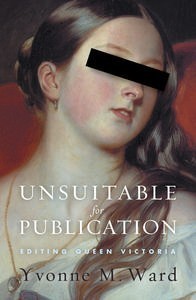
‘Unsuitable for Publication: Editing Queen Victoria’ Yvonne M. Ward

ward2013

2013,  173 p.

We’re told that it’s all about controlling the narrative.  Politicians all do it, it seems; and we risk losing control of our narrative by putting too much of our lives onto the internet, we’re told.  All this might seem far removed from good old Queen Victoria, but on reading Unsuitable for Publication, I’ve realized that it isn’t.  Then and now, it’s all about image creation and the interplay between the image we think we have constructed and the image that others might massage or manipulate from our words.

Queen Victoria was a huge correspondent.  She wrote 122 volumes of her diaries over her long life and she maintained a large correspondence with her family  members so widely dispersed amongst the royal families of Europe, as well as a vast network of communication amongst politicians, and other notables. It has been estimated that she wrote an average of 2500 words each day of her adult life, and perhaps sixty million words in the course of her reign (p.9).  What to do with all this writing?  Her daughter Princess Beatrice thought that she knew.  Queen Victoria had appointed her as her literary executor, and after her mother’s death and over 30 years she copied the entries of the 122 diary volumes into 111 thick exercise-books, altering and censoring anything liable to ‘affect any of the family painfully’, then burnt the originals.  Interestingly, Victoria herself had published extracts from her own journals while she was on the throne, so she wasn’t beyond a bit of image-creation herself. Continue reading

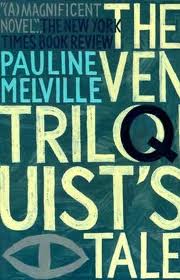
‘The Ventriloquist’s Tale’ by Pauline Melville

Melville

1997, 357 p.

All stories are told for revenge or tribute.  Take your pick (p.9)

So says the ventriloquist, the narrator (‘You can call me Chico. It’s my brother’s name but so what‘)  who appears in the opening and closing pages of this book. He is an unsettling, jeering presence who adds nothing to the book as a whole and yet manages to subvert it as well.

Ah, secrecy, camouflage and treachery.  What blessings to us all.  Where I come from, disguise is the only truth and desire the only true measure of time. (p.7)

His tale, sandwiched between the prologue and epilogue, is told in three parts. The first and final parts are the framing story of Chofy McKinnon, an Amerindian married man who embarks on an affair with Rosa Mendelson , a British academic who has travelled to Guyana as part of her research into Evelyn Waugh.  While interviewing an old woman in London who had worked as a governess for the McKinnon family in what was British Guiana at the time, Rosa had been told that Evelyn Waugh had stayed with the McKinnon family, and that she had even cut his hair sixty years earlier.

Poor man.  He was so out of place.  He sat out in the open that first day and that was when I gave him a haircut.  Nobody really knew what the hell he was doing there…. For all that he was looking for material, he missed one story that was under his nose…If you find any of the McKinnon’s they will be able to tell you about Mr Waugh.  The other business had to do with Danny McKinnon and one of his sisters.  Her name was Beatrice…I don’t know why Mr Waugh didn’t write about that.  He certainly knew about it. (p. 49)

And so Rosa travels to Guyana to track down any McKinnon descendants.  There she encounters Chofy, who was estranged from his wife Marietta and son  Bla Bla. His aunt Wilfreda, sister to Danny and Beatrice knows the story too, but she doesn’t want to tell it.

The second and largest part of the story concerns Danny McKinnon and his sister Beatrice sixty years earlier.   Scots-born Alexander  McKinnon had arrived in British Guiana at around the turn of the twentieth century, married two Indian sisters and had several children to both sisters, including Danny and Beatrice.  When Danny and Beatrice fell in love, the villagers accepted it as something that happened occasionally.  A brother-sister love affair was even referenced in the tribal myths and stories about the sun and moon.  The author, Pauline Melville, takes a similar approach in writing about the relationship: sensual and evocative but neither condemnatory nor sensationalist.  The Catholic priest, Father Napier, however, cannot abide the relationship as he pursues the couple to bring God’s punishment on them.  He is not the only one punished.

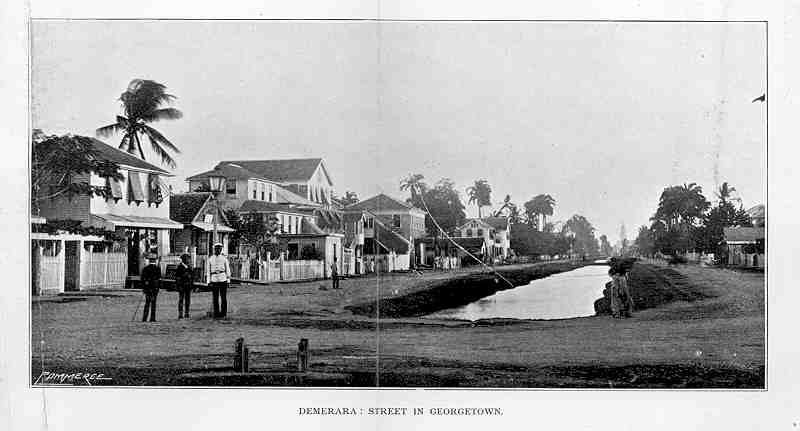
I heard about this book when it was reviewed by M D Brady at Me, You and Books as part of her Global Women of Colour reading challenge.  A book about Guyana! I’m attracted to reading about Guyana/Guiana because it’s part of my own research into Judge Willis for my thesis.   I’m sure that very few readers of The Ventrioloquist’s Tale thrilled to Melville’s description of Georgetown, but  I certainly did.  Given that I have never seen Georgetown and probably never will, this captured what I have gleaned from my reading and can see in my mind’s eye:

Chofy had not visited Georgetown often.  From his first visit as a young boy, the city had made him uneasy.  It was not just the geometrical grid of the Georgetown streets, the parallels, squares and rectangles which disoriented him after the meandering Indian trails of his own region, but as he walked over the dry brown clumps of grass along the verges, he experienced the unaccountable sense of loss that hung in the spaces between buildings renowned for their symmetry and Dutch orderliness.

From early on in its history, there had been something pale about the city of Stabroek, as Georgetown was known in the eighteenth century.  It was as if the architects and builders had attempted to subdue that part of the coast with a geometry to which it was not suited and which hid something else.  The labours of men had thrown up a city made of Euclidean shapes, obtuse-angled red roofs, square framed houses on evenly spaced stilts, delicately angled Demerara shutters, all constructed around transparency, emptiness and light. (p. 35)

demerara

This book is a delight in itself, quite apart from any post-colonial theorizing imposed onto it.  But it is a robust enough text to withstand heavy-duty academic analysis (see, for example here)  and my admiration for the text grew even stronger when I read about the connections between the author’s own family history and the text here and in this Guardian interview with the author.  Melville has not just taken her family’s real-life connection with Waugh but has, I think, taken her revenge, as the ventriloquist suggested, on Waugh’s simplistic and blinkering dismissal of his time in British Guiana and Brazil.

I had borrowed this book out of a desire to read literature set in British Guiana. I was given much, much more. Brilliant.

My rating: A big fat 10.

Sourced from: LaTrobe University Library

Read because: M.D. Brady’s review.  Thank you.

Happy 178th birthday Melbourne!

30th August is Melbourne Day- a little celebration that sputters along despite the huffing and puffing of our redoubtable Lord Mayor trying to breathe some life into what seems destined to be a rather low-key ceremonial occasion.  In a way, it’s nice that it hasn’t been commercialized and corporatized.  I’ve written about it previously  here .

Port Phillip aficionado as I am, I’m duty bound to celebrate the day, and so there I was, off to the Royal Historical society to hear Robyn Annear speaking about the writing of her much-loved book Bearbrass, which was first published in 1995 and reprinted in 2005.  It is still in print and sells consistently, not only to Melbournites, but also to others interstate and overseas.

Bearbrass is  a light, happy book divided into thematic chapters that start with a map of the city grid with the locations that are discussed in the chapter marked out onto it.  It’s full of anecdotes and curiosities, with nary a footnote in sight.

Robyn Annear describes herself as a non-academic historian, and she says that at the time of writing the book she was unaware of the scholarly conventions that she had leapfrogged over in writing her funny, affectionate book.   Quite frankly,  she was oblivious to any disapproval that she might have received from academe, because it was not her world.

She was strongly influenced by the humour in Garryowen’s writing and was swept up in the naughtiness and sheer youth and exuberance of the young population in Port Phillip at the time.  Probably her favourite episodes involved the adventures of the members of the Melbourne Club, especially in view of the utter respectability and conservatism of its members today.

She spoke about the availability of Trove and the way that it would make the writing of Bearbrass a daunting prospect today.  It would be harder to draw boundaries around it, she said and perhaps there is such a thing as too much information.  Is there still room for wondering if information is so readily at hand?

It was a lovely, engaging talk – much like the book itself.  A podcast of the talk is available here  (along with other interesting podcasts from RHSV)

Happy birthday Melbourne!

Too much ‘democracy’?

A bit of a grumpy-pumpkin post today.

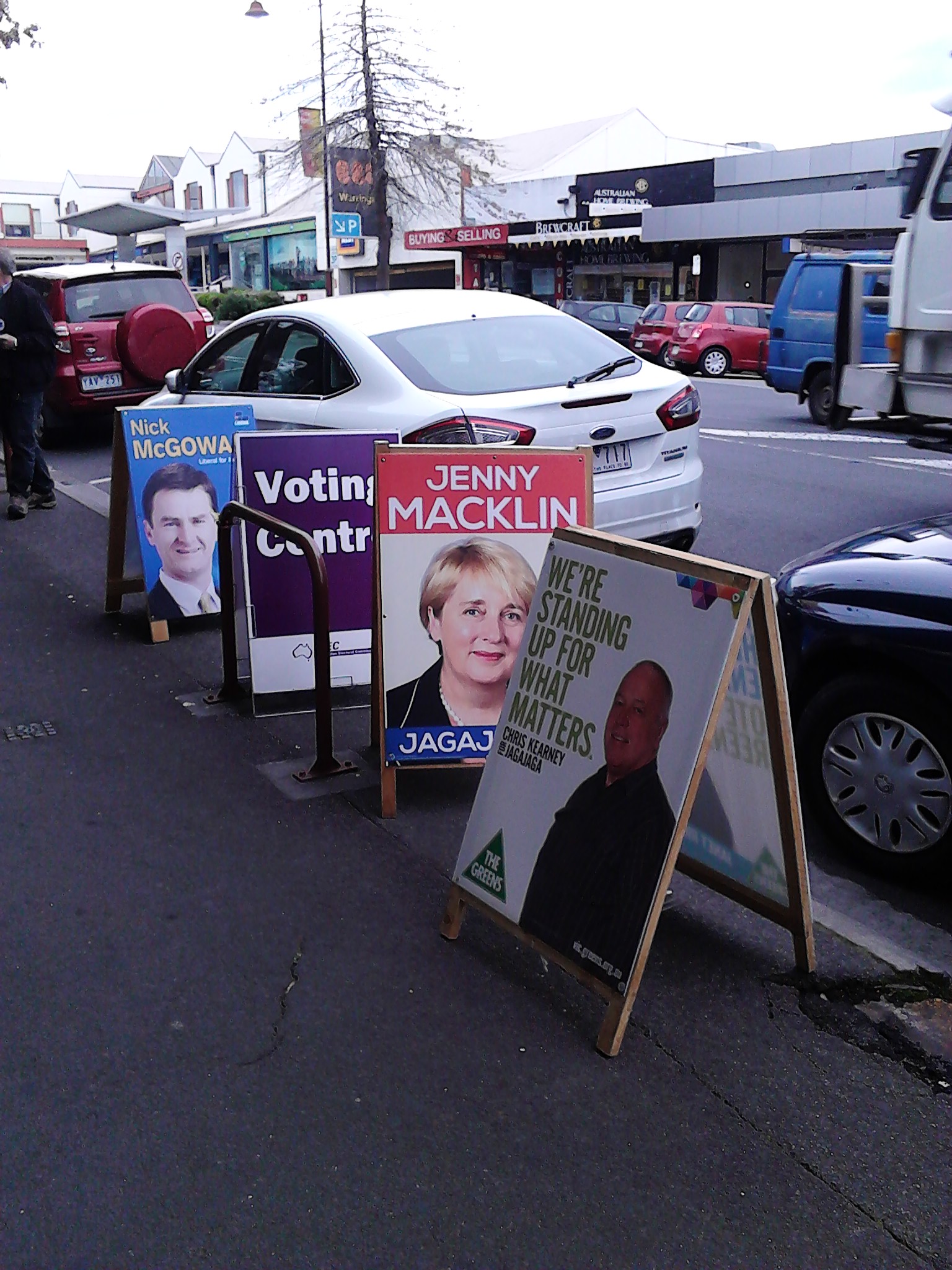
I handed  out how-to-vote cards at the early voting centre down in Burgundy Street in Heidelberg on Tuesday.  The early voting centre opened last week, three weeks before the election on 7th September.

IMG_20130829_095646

Three weeks? you might ask.  Surely with postal voting, there’s no need to have early voting three weeks ahead of the election.  A week before, maybe- but three weeks? Two- or three-hour shifts for party members handing out how-to-vote literature between 8.30 and 5.00, five days a week for three weeks.  That’s a lot of volunteers- quite apart from the ones you need for letter-boxing and manning the booth on the day.  Surely it could be postal voting until a week before the election?

It would have been a bit bleak in the cold winds of last week (20th-24th August) but I must admit that it was quite pleasant last Tuesday when I was there.  I’ve never experienced any animosity between people handing out how-to-vote cards representing different parties at polling booths and Tuesday was no exception.  On the contrary: it seems that, this election particularly, no body is particularly happy with the choices on offer.

IMG_20130829_095950

I was surprised by how many people came to vote.  I don’t think that five minutes went by without someone coming in.  These days parties are holding their launches as little as a week before the election, withholding their figures until the last days of the campaign, and drip-feeding their policies in yet another confected photo-opportunity over a four-week period.  Yet, you can vote three weeks ahead if you want to.

This voting booth is located in a former JB Hi-Fi shop that is on several levels. It claims to be wheel-chair friendly, but it’s not.  There’s an unusually high step to enter the shop, with very  narrow ramp that can be used to get to the door if you can’t negotiate the step.  But it’s not a proper ramp and once you enter, there are then about three further steps without a hand-rail to negotiate.  There is a voting booth on the entry level, but someone has to alert the staff at the back that a voter needs to access it.  I don’t know how some people would have been able to enter had it not been for the party volunteers outside who took off their badges and left their leaflets with someone from the opposing parties to distribute (which they did) in order to help someone up the stairs and tell the staff that someone needed to use the street-level booth.  It shouldn’t require this much assistance in something that is supposed to be accessible.

Then there’s the voting paper itself.  Do we really need 97 candidates in the Senate?  You can choose to vote ‘1’ in the Senate and the pre-arranged preferences will flow from that- but who do these preferences go to?  The presence in the Senate of ultra-conservative Family First candidates who were voted in through the re-distributed preferences from progressive parties is a cautionary tale.  I checked the website of the Greens but there is no information there, and when I emailed them to ask they referred me to the AEC site.

http://www.aec.gov.au/election/vic/gvt.htm

It took some finding, but it’s there.  Ye Gods.  Second preferences for the Greens? The Wikileaks party. Great. Not.  And is there a nice little print-friendly version that you can download to take with you if you’re going to grit your teeth and fill in the 97 boxes?  Nup- just the one version that has all the voting preferences of every grouping (all 4366 permutations) with  Danny Nalliah of the Rise-Up Party as the number one candidate because he lucked out in the candidate draw. (No doubt the result of prayer.)

Then there’s the ticket viewer at  Below the Line at http://www.belowtheline.org.au/viewer/vic  

It has a rather natty little tool where you can compare the tickets of two groupings by selecting the grouping you want from the pull down box and all the names will miraculously re-arrange.  You can see two different voting patterns side-by-side if you select two different groupings. But there’s no facility for a print-out showing the preferences in the order that they will be shown on the voting paper to take with you on this site either.

So, you have a choice of numbering just ‘1’ or filling in 97 boxes. How about something in between- 10 perhaps?  At what point does too much choice become undemocratic?

Humpf. I told you I was grumpy.