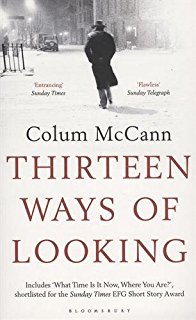
‘Thirteen Ways of Looking’ by Colum McCann

mccann

2016, 256 p

Written by the author of one of my favourite books (This Side of Brightness) this is a really strong collection, comprising a novella and three short stories.  Each one of them is memorable in its own way.

The heart of the book is the eponymous novella with which it opens ‘Thirteen Ways of Looking’.  It is told in thirteen chapters, each of which is headed by a stanza from Wallace Stevens’ poem ‘Thirteen Ways of Looking at a Blackbird’. It was not clear to me that the stanzas had a direct connection with the chapter: they seemed to act more as an organizing device.  The octogenarian Manhattan judge Peter Mendelssohn is murdered after lunching at a nearby restaurant with his boorish, self-centred son. The thirteen chapters follow Mendelssohn through this last day as he wakes and is tended by his live-in nurse, dresses, shuffles to the restaurant, eats, then leaves.  Some chapters are his lengthy, wordy inner monologues which flesh him out as a character; others are more detached descriptions of the vision captured by the CC cameras with which wealthy Americans, in particular, surround themselves as a way of insulating themselves from danger.  We see, and yet do not see the one thing we need to know: who killed him?  We have multiple perspectives, and have been given knowledge things that the judge and jury in the ensuing murder trial do not know- but the ending of the story is abrupt and frustrating. The question is not answered definitively, but in many ways it doesn’t matter.

I was perhaps less taken with the second story, “What Time Is It Where You Are” which is a rather postmodern story of the construction of a story- in this case, about a female soldier in Afghanistan on New Years Eve. Just as in ‘Thirteen Ways of Looking’, there are choices in how a story can be told.  ‘Thirteen Ways’ utilized CC cameras as its way of creating a narrative, and in this story it is the unnamed author who is weighing up which facts to include or omit, and which twists of plot to introduce or not.

The third story, ‘Sh’khol’, riven through with a raw, keening anguish, counterbalanced the archness and self-consciousness of the second story.   An Irish mother, separated from her partner, is holed up in a cottage beside a raging ocean, with her thirteen year old deaf son who was adopted from Russia.  She has given him a wetsuit as a present. The next morning she wakes and he is gone.  Sick with dread, she searches for him on the windswept beaches and in the swirling waves.

I thought that the final story was as good as the one with which the collection opened.  In ‘Treaty’, an elderly nun has been enfolded back into her Irish convent when she is confronted with the sight of the  right-wing guerilla fighter who had kidnapped and raped her in the South American jungle many decades earlier. She’s not sure whether this re-fashioned ‘peace negotiator’ really is the man she thinks he is, and like Peter Mendelssohn in the opening story, her grasp of past and present is slippery.

I often find myself thinking about the editorial decision to select one short story over another in a compilation like this, and whether and how the individual stories contribute to the overarching unity of the collection.  These stories, very different though they are, are linked by their exploration of multiple perspectives, the elision of past and present and the contingency of fate. I enjoyed each of them, most particularly the first and final stories. Perhaps it’s because there were only four of them, but each of them is clearly defined in my mind in its own right – something that doesn’t always happen when reading a book of short stories. Or perhaps, as I suspect, it’s because Colum McCann is a very, very good writer.

Source: E-book from Yarra Plenty Regional Library

My rating: 9/10 (high praise for short stories from me!)
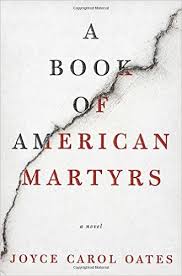
‘A Book of American Martyrs: a novel’ by Joyce Carol Oates

americanmartyrs

2017, 736 p

It’s been a while since I last read a book by Joyce Carol Oates. What a prolific author she is! Her bibliography lists 41 titles, with one book published each year since 1994. Some of them are gritty, edgy (often icky) novella-length books (e.g. The Beasts at 130 pages) while others, like  My Heart Laid Bare (531 p.) are real door-stoppers. There are themes she revisits in many of her books – emotionally lost female protagonists, infatuation, and the rippling effects of a crime on a family – and they’re all here in A Book of American Martyrs.

Here, though, they’re placed within the cultural and religious chasm between pro-life and pro-choice activists that has ruptured American politics for years.  Luther Dunphy is a zealous evangelical Christian, convinced that God has chosen him to assassinate an abortion provider, Gus Voorhees, in the driveway of the clinic where he is employed. Both men pay with their lives, in different ways.

Rather unusually for a fiction book, it has a table of contents. The book is divided into five sections, each divided from the next by a grubby, much-handled page that suggests that the book is a series of smaller, covered books, each separate from the other.  The first section focusses on Luther Amos Dunphy ‘Soldier of God’ and leads us up to the shooting. It is followed by a section ‘The Life and Death of Gus Voorhees’, subtitled ‘An Archive’. This archive, collected by Voorhees’ daughter Naomi, is her way of trying to make sense of her father’s death. It comprises a disparate and unsorted collection of documents, interviews and narratives from different members of Gus Voorhees’ family, some no longer than a paragraph, others some thirty pages in length.  The reader is left to make her own sense of all this.

The remaining three sections are arranged chronologically. ‘The Hammer’ turns to Edna Mae and Dawn, Luther Dunphy’s wife and daughter, in the years leading up to Dunphy’s execution in 2006. (I read this book in May 2017, very much aware of the multiple executions being lined up in Arkansas, where the drugs used to kill the prisoners are due to expire. It all seemed very pertinent) Now there are two martyrs: Dr.Gus Voorhees who died for the pro-choice principle, and Luther Dunphy who revels in his role as the man God chose to save the babies that Voorhees was about to ‘murder’ that day.

In the fourth section ‘The Embrace’ (2006-2010) and the final section ‘The Consolation of Grief’ (2011-2012) the two daughters, Naomi Voorhees and Dawn Dunphy come into each other’s orbit.  Both are damaged by their fathers’ deaths, each in their own way. Dawn, poorly educated and marginally employed, is achieving minor success as the female boxer, D. D. Dunphy. Naomi, who has spent most of her adolescence and adult life so far in obsessively collecting the ‘archive’ in Part Two is freed by wealth and connections from any real necessity to make a living. For both women, though, their families have fractured.  The two girls are united by their fathers’ martyrdom, but politically and culturally they are far separated.

This is a very long book at over 700 pages, but I didn’t find myself wishing that it were shorter, and I even felt sorry when it came to an end.  The Dunphy characters – Luther and Dawn- are more fully drawn than the Voorhees family, who always seemed rather insipid. I don’t know enough about small-town Evangelical working-class Americans to know whether Oates is being clear-eyed or loading on the stereotypes- I suspect a bit of both.  There is a lot of detail about boxing which probably could have been trimmed, although given that Oates wrote a series on essays On Boxing, it’s probably no surprise that so much attention is paid to the sport.

Oates herself does not come down on one side or the other of the abortion question. She gives each of the ‘martyrs’ a worldview that makes sense of their actions, however they might appear from the outside.

Source: Yarra Plenty Regional Library

My rating: 9

Report: ‘Why do we need social mix?’


Newspapers often use an academic or commissioned report as the basis of an article. I often think “I wonder if that report is available?” but then forget to follow it up. However, today I’m making a mid-year resolution to do so more often – a resolution that will no doubt suffer the same fate as the rest of my resolutions.

Since the horrific Grenfell fire, I find myself looking at brightly-coloured high-rise towers differently. Here in Heidelberg, a gigantic glowing copper high-rise is materializing on top of one of the highest landmarks in Melbourne, while there are plans for a high-rise on stilts to front the entrance into Ivanhoe. These are for the private market. Meanwhile  this morning, the Age published an article pertaining to the State Government’s plans to redevelop former public housing walk-ups with a mixture of public/private housing with higher density. According to the government, there will be no loss in the number of public housing units, and the public-housing residents will benefit from the influx of private buyers “to foster an integrated community”.

In the end, however, there’s no getting away from the fact that land for public housing is being turned over to developers for private profit.   Several public housing estates are in very enviable positions, close to all facilities and public transport, and in the case of Williamstown and Fairfield, with desirable outlooks. Once it’s in private hands, there’s no getting it back.


A report by  Abdullahi Jama and Kate Shaw cited here examines the Carlton redevelopment which is being lauded by the government as a good example of public/private redevelopment.  Jama previously lived  at the Carlton estate, while Kate Shaw is an Australian Research Council (ARC) Future Fellow in Urban Geography and Planning at the University of Melbourne.  They report that instead of a ‘salt-and-pepper’ distribution of public and private residents, the estate has separate public and private blocks, each with their own entrances, and few shared spaces.  The locked courtyard garden is for the use of the private occupiers only, and there is no mingling in the two cafes in the estate. This wasn’t the stated outcome when the redevelopment was first announced but, arguing that after the GFC it would be impossible to sell the private units, the idea of a ‘social mix’ has been put onto the backburner.  Meanwhile, private developers and owners have been able to grab prime real estate for themselves, without having to worry about ‘those’ people who are corralled in ‘their’ part of the estate.

Moreover, they question whether ‘social mix’ policies replace the social capital they displace.

Their conclusion?

A diversity of housing types must include diverse sources of funding, with a range of support programs. Involving future residents in design and ensuring they know what they’re moving into, and enabling people to organise their own housing, are far more effective ways of building social harmony than enforcing a rigid notion of mix.


‘Refurbishing’ memorials

OLYMPUS DIGITAL CAMERA

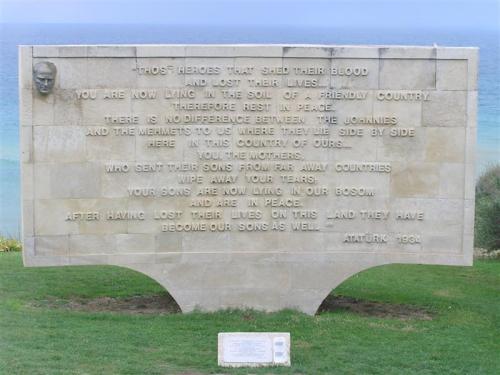
The memorial in 2005 . Image source: Wikimedia

So, I see from a report in the Guardian (16/6/17) and on the Honest History website that the Ataturk memorial in Turkey is undergoing ‘refurbishment’.  Australians have often felt a warm inner glow when contemplating Ataturk’s words, previously emblazoned on the Ataturk memorial  at ANZAC Cove, Wellington and in Canberra:

Those heroes that shed their blood
And lost their lives…
You are now lying in the soil of a friendly Country.
Therefore rest in peace.
There is no difference between the Johnnies
And the Mehmets to us where they lie side by side
Here in this country of ours…
You, the mothers,
Who sent their sons from far away countries
Wipe away your tears,
Your sons are now lying in our bosom
And are in peace
After having lost their lives on this land
They have become our sons as well

Except, as the Honest History website has been discussing for some time, there is real doubt whether Ataturk ever uttered these words at all.  I have always been impressed and surprised at the generosity of the Turkish government in accommodating the hordes of Australian and New Zealand tourists who flock to ANZAC Cove, although I’m sure that their tourist dollars are welcome. I can’t, however, see the generosity being reciprocated if the descendants of an invading force wanted to commemorate their battles on Australian land.

It will interesting to watch the politics of this- on both sides.

Exhibition: Love – Art of Emotion 1400-1800

love_cover_d087b0cc-a52a-425f-8d2b-e171d3075443_1256x838

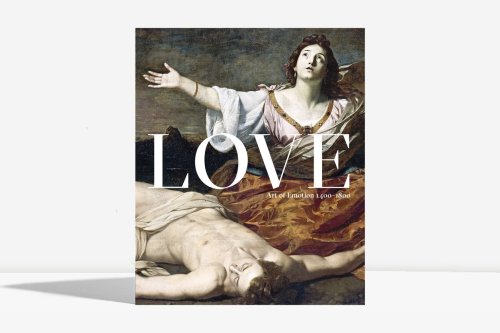
Hurry! The excellent ‘Love: Art of Emotion’ exhibition closes at the NGV on 18 June 2017. Yes, once again I’ve failed to blog about something until it’s about to close – sorry. This free exhibition is on the ground floor of NGV International, and if you’re waiting around while seeing the Van Gogh exhibition, why not go see this one too. Most of the works are from NGV’s own collection, and are arranged around various perspectives on love.

It’s been on since February, and it closes this coming weekend. Perhaps I should rename this blog “Oops- Last Days”.

Movie: Moonlight

Well, I know that I always leave it late to catch movies but I excelled this time, with catching the very last showing on the very last day at Cinema Nova.  I knew that this won an Academy Award for Best Picture, but the trailer left me cold. Frankly, I knew very little about the film before seeing it.

I didn’t realize that it was a coming of age story, set in Miami but not Miami as I think of it. There’s not a white person to be seen in this Miami, a place of poverty and drug addiction. I didn’t realize that it involved a gay main character, who even before he knew what the term meant, asked ‘Am I a faggot?’. The movie is told in three parts, as Chiron grows up from a neglected, bullied child to a hesitant, searching teenager, and then a muscle-bound, intimidating ex-prisoner drug dealer.

I didn’t find it particularly easy to watch with jerky, handheld camera shots, and very-difficult-to-understand dialogue. But it was beautifully filmed, and it told a story that stays with you.

But if it’s no longer showing at the Nova, you know it’s really over and time to look for the DVD.

My rating: 4.5

‘Alicia en el Pais de las Maravillas y El Mago de Oz’

aliciaenelpais

155 p.

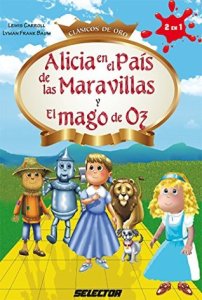
I feel a bit as if I’m cheating counting Spanish books as ‘books read’ but – dang it- they take me as long to read as any 400 page novel, so count it I will! This book is not overtly aimed at the Spanish learner, in that it does not have vocabulary or questions at the back although its author information at the start seems to be aimed at an adult audience. The font is large, with a large illustration on the facing page, and the chapters are relatively short (i.e. a couple of pages). Of course, being Alice in Wonderland, strange vocabulary pops up and you think ‘Surely that can’t be right!’ but then you remember that yes, croquet is played with flamingos etc.  The Wizard of Oz story was easier to read because there was more repetition and the story followed a more conventional arc.

Does it work for me, reading a children’s book in Spanish? Yes, on one level, given that both are familiar stories which makes guesswork easier. But it certainly was a very abridged version, tracing plot alone, and in Alice in Wonderland particularly, it depended a lot on prior knowledge of the story with one event piled on another with little connection between them.  Come to think of it, though, that’s very much how Alice in Wonderland is, I suppose.

Source: Borrowed from my Spanish teacher Renato

Movie: ‘Lion’

It’s been around for a while, and still going strong. Based on a true story, Saroo is separated from his brother, ends up lost in Calcutta and is adopted by an Australian family. Google Earth comes to the rescue as he decides to look for his Indian family. A terrific story, although the dream sequences were a little tedious near the end. Stick around for the end of the movie where you learn ‘what happened next’.

8/10

‘Surviving Peace: A Political Memoir’ by Olivera Simic

simic

2014, 188 p

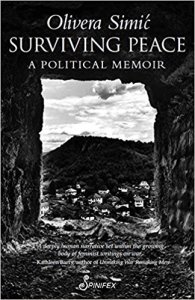
It’s not often that I open up a book and find myself thinking “Hey! I was there!” I did in this book, though, where Olivera Simic starts by describing an encounter at a law and history conference in Melbourne. [Those of you who have been with me since 2010 might vaguely remember that I was involved in the organization of the ANZLHS Law and History Conference that year. For me, any recollection of the conference is completely overwhelmed by the accompanying memory of leaving quickly after the last session to sit with my mother at her nursing home. She died the next day.]

Olivera Simic’s recollection of that conference, though, involves a quick interaction she had with the chair of the panel who asked how he should introduce her.  ‘Where are you from?’ he asked. ‘Yugoslavia’ she replied. ‘But that country doesn’t exist!’ he countered, finding the interchange sufficiently bewildering to share it with the audience.  Several people came up to afterwards, saying that it was very unusual to hear someone still introducing herself as Yugoslav.

But I do. I am a Yugoslav without Yugoslavia. I identify with the country I was born in; I am homesick for the place that exists only in my distant memory: the beautiful old towns, rivers and mountains, and the part of the Adriatic coast that was Yugoslavia. I speak a language that was declared dead when the war broke out in 1992. I was fortunate not to lose a close family member, but like many Yugoslav people, I lost so much.  The beginning of the war meant the end of my physical belonging to the country I was born and grew up in, the country I loved, the country I left and soon abandoned.  I tried to move on, to forget destruction and war, to run away from it all… The further I was from home, the closer home was to me, to my heart, to my mind.  The connection to my homeland was not severable to distance but, as many migrants will know, on the country, was made stronger by it. The smell, the sound, the sky and the sun of my home haunt me. They are always with me. (p.10)

We hear and read of people surviving war, but less often surviving peace. Simic was born in 1973 and spent her childhood in Banja Luka, the second-largest city in Bosnia and Herzegovina (BiH). Her parents are Orthodox Serbs and were members of the Community Party before the 1990s in what she regarded as “a heterogenous multicultural, multilingual and multireligious community.” (p11) When war broke out in 1992, her parents sent her as a nineteen-year-old to neighbouring Serbia, her mother’s home country, where she was granted refugee status and enrolled in law school. She lived in Serbia, with occasional dangerous trips home to see her parents, from 1992 through to the 1999 NATO bombing during which, for 78 days,  she along with her fellow residents, lived in a permanent state of fear and anxiety. She was –  and still is – angry at the world for allowing this to happen, and after September 11, the emotional and existential burden of this experience devastated her in the form of PTSD.  At the end of the war, she was no longer ‘Yugoslavian’  but, on the basis of her surname, was designated to be Serbian – “a specific, but somehow alien ethnic identity”  that it had never occurred to her to apply to herself previously (p.21). Her mother-tongue, Serbo-Croation ceased to exist, replaced by other languages (Serbian, Croatian and Bosnian).

Our labels of ethnicity have overridden our very being and make it impossible for us to be recognized first as people, and only then as an ‘ethnicity’. (p.25)

In 2001 she started work with Human Rights Watch in Washington DC. She completed an M.A. in Gender and Peacebuilding in Costa Rica. Since 2006 she has lived in Australia, and after gaining her PhD., worked as an academic writing on genocide and war crimes, most particularly (but not only) those committed by Serbs, and on trauma more generally. It’s an academic path that her parents and neighbours back in BiH try to dissuade her from, seeing her as a traitor to their concept of the Serbs as both victims and heroes.  She is aware that she is part of the ‘industry’ of postwar recovery and reconciliation, organizing seminars and workshops, receiving grants to carry out research on armed conflicts.

One of the paradoxes of experiencing violence first hand is that it can give unconditional power and authority to one’s voice, and people who have not had these experiences might feel as if they cannot say anything worthwhile (P 102)

She is aware, when faced with representatives of Srebrenica (where thousands of Muslim men and boys were slaughtered by members of the Serbian forces) that she, like other academics, could be seen “as ‘conference tourists’, building our careers on the misery of survivors.” (p. 104) It doesn’t sit well with her.

I have summarized her story as a continuous, chronological narrative, which is not the way she has structured this book. There is a timeline of Yugoslavia’s disintegration as an appendix, but it acts more as an organizing device after reading her memoir, rather than during it.  Instead, her chapters are titled as paradoxes and opposites:  Journeying through War and Peace; Traitor or Truth Seeker? Moving from War to Peace; The Past Is Present; Victims and Survivors; Between Remembering and Forgetting.  There is no narrative tension of wondering if she will survive or not: no tales of want or deprivation.

Instead, this is a memoir of the intellect. She refers often to other writers and theorists and her bibliography is rich with academic references.  I was puzzled by her subtitle ‘a political memoir’ because this is so much a memoir of the head AND heart, until I remembered that old feminist touchstone ‘the personal is political’.  The blurbs on the back cover clearly place it within a feminist tradition, and in her preface she explains:

In feminist research women are considered to be experts regarding their own lives who communicate and reveal the narratives about the events that took place in their lives, their feelings about those events, and their interpretation of them (Foss and Foss, 1994 . 39) … Although mine is an individual story, I believe that on many levels it is also universal . My experiences of war and survival are similar to those of other war survivors…This is…why I have been motivated to embark on this emotional journey which sometimes links intimate experiences with existing scholarship. (p. 2, 3)

It is, then, her story but analyzed from an academic perspective, and interwoven with literature, history, genocide studies, trauma studies, human rights and peace studies.  It’s not the sort of memoir that will make you cry, but it will make you think.  I watch television and those streams of Syrians, carrying children and one or two plastic bags (what do you pack?); I hear predictions that partition might be the only solution for Syria and I think of Simic’s resistance against having an ethnic identity forced upon her by war.  I think of Simic’s need to weave her own experience into a larger philosophical and intellectual web – to make it mean something more.  It reminds us that the victims of war need to become survivors of peace, as well.

Source: Yarra Plenty Regional Library

My rating: 8.5/10

aww2017-badge I have posted this review at the Australian Women Writers Challenge website.

Movie: Things to Come (L’avenir)


(French, English subtitles)

I liked this movie- a lot. My 88 year old father hated it. Nathalie is a middle-aged university philosophy lecturer, fully immersed in the academic life of teaching, reading and writing text-books. Her long-standing series of academic texts is hauled in for ‘refreshing’ by young marketers and instructional designers, and this is just one of the changes she faces, as she deals with her increasingly frail mother and flat marriage.  Neither of these situations are of her choice, and the film follows her as her world of ideas is challenged by a more mundane, draining reality.  Not a lot happens here, but perhaps I am just the right age and milieu to enjoy it.

8/10 for me (1/10 for my father!)