Movie: ‘Lion’

It’s been around for a while, and still going strong. Based on a true story, Saroo is separated from his brother, ends up lost in Calcutta and is adopted by an Australian family. Google Earth comes to the rescue as he decides to look for his Indian family. A terrific story, although the dream sequences were a little tedious near the end. Stick around for the end of the movie where you learn ‘what happened next’.

8/10

‘Surviving Peace: A Political Memoir’ by Olivera Simic

simic

2014, 188 p

It’s not often that I open up a book and find myself thinking “Hey! I was there!” I did in this book, though, where Olivera Simic starts by describing an encounter at a law and history conference in Melbourne. [Those of you who have been with me since 2010 might vaguely remember that I was involved in the organization of the ANZLHS Law and History Conference that year. For me, any recollection of the conference is completely overwhelmed by the accompanying memory of leaving quickly after the last session to sit with my mother at her nursing home. She died the next day.]

Olivera Simic’s recollection of that conference, though, involves a quick interaction she had with the chair of the panel who asked how he should introduce her.  ‘Where are you from?’ he asked. ‘Yugoslavia’ she replied. ‘But that country doesn’t exist!’ he countered, finding the interchange sufficiently bewildering to share it with the audience.  Several people came up to afterwards, saying that it was very unusual to hear someone still introducing herself as Yugoslav.

But I do. I am a Yugoslav without Yugoslavia. I identify with the country I was born in; I am homesick for the place that exists only in my distant memory: the beautiful old towns, rivers and mountains, and the part of the Adriatic coast that was Yugoslavia. I speak a language that was declared dead when the war broke out in 1992. I was fortunate not to lose a close family member, but like many Yugoslav people, I lost so much.  The beginning of the war meant the end of my physical belonging to the country I was born and grew up in, the country I loved, the country I left and soon abandoned.  I tried to move on, to forget destruction and war, to run away from it all… The further I was from home, the closer home was to me, to my heart, to my mind.  The connection to my homeland was not severable to distance but, as many migrants will know, on the country, was made stronger by it. The smell, the sound, the sky and the sun of my home haunt me. They are always with me. (p.10)

We hear and read of people surviving war, but less often surviving peace. Simic was born in 1973 and spent her childhood in Banja Luka, the second-largest city in Bosnia and Herzegovina (BiH). Her parents are Orthodox Serbs and were members of the Community Party before the 1990s in what she regarded as “a heterogenous multicultural, multilingual and multireligious community.” (p11) When war broke out in 1992, her parents sent her as a nineteen-year-old to neighbouring Serbia, her mother’s home country, where she was granted refugee status and enrolled in law school. She lived in Serbia, with occasional dangerous trips home to see her parents, from 1992 through to the 1999 NATO bombing during which, for 78 days,  she along with her fellow residents, lived in a permanent state of fear and anxiety. She was –  and still is – angry at the world for allowing this to happen, and after September 11, the emotional and existential burden of this experience devastated her in the form of PTSD.  At the end of the war, she was no longer ‘Yugoslavian’  but, on the basis of her surname, was designated to be Serbian – “a specific, but somehow alien ethnic identity”  that it had never occurred to her to apply to herself previously (p.21). Her mother-tongue, Serbo-Croation ceased to exist, replaced by other languages (Serbian, Croatian and Bosnian).

Our labels of ethnicity have overridden our very being and make it impossible for us to be recognized first as people, and only then as an ‘ethnicity’. (p.25)

In 2001 she started work with Human Rights Watch in Washington DC. She completed an M.A. in Gender and Peacebuilding in Costa Rica. Since 2006 she has lived in Australia, and after gaining her PhD., worked as an academic writing on genocide and war crimes, most particularly (but not only) those committed by Serbs, and on trauma more generally. It’s an academic path that her parents and neighbours back in BiH try to dissuade her from, seeing her as a traitor to their concept of the Serbs as both victims and heroes.  She is aware that she is part of the ‘industry’ of postwar recovery and reconciliation, organizing seminars and workshops, receiving grants to carry out research on armed conflicts.

One of the paradoxes of experiencing violence first hand is that it can give unconditional power and authority to one’s voice, and people who have not had these experiences might feel as if they cannot say anything worthwhile (P 102)

She is aware, when faced with representatives of Srebrenica (where thousands of Muslim men and boys were slaughtered by members of the Serbian forces) that she, like other academics, could be seen “as ‘conference tourists’, building our careers on the misery of survivors.” (p. 104) It doesn’t sit well with her.

I have summarized her story as a continuous, chronological narrative, which is not the way she has structured this book. There is a timeline of Yugoslavia’s disintegration as an appendix, but it acts more as an organizing device after reading her memoir, rather than during it.  Instead, her chapters are titled as paradoxes and opposites:  Journeying through War and Peace; Traitor or Truth Seeker? Moving from War to Peace; The Past Is Present; Victims and Survivors; Between Remembering and Forgetting.  There is no narrative tension of wondering if she will survive or not: no tales of want or deprivation.

Instead, this is a memoir of the intellect. She refers often to other writers and theorists and her bibliography is rich with academic references.  I was puzzled by her subtitle ‘a political memoir’ because this is so much a memoir of the head AND heart, until I remembered that old feminist touchstone ‘the personal is political’.  The blurbs on the back cover clearly place it within a feminist tradition, and in her preface she explains:

In feminist research women are considered to be experts regarding their own lives who communicate and reveal the narratives about the events that took place in their lives, their feelings about those events, and their interpretation of them (Foss and Foss, 1994 . 39) … Although mine is an individual story, I believe that on many levels it is also universal . My experiences of war and survival are similar to those of other war survivors…This is…why I have been motivated to embark on this emotional journey which sometimes links intimate experiences with existing scholarship. (p. 2, 3)

It is, then, her story but analyzed from an academic perspective, and interwoven with literature, history, genocide studies, trauma studies, human rights and peace studies.  It’s not the sort of memoir that will make you cry, but it will make you think.  I watch television and those streams of Syrians, carrying children and one or two plastic bags (what do you pack?); I hear predictions that partition might be the only solution for Syria and I think of Simic’s resistance against having an ethnic identity forced upon her by war.  I think of Simic’s need to weave her own experience into a larger philosophical and intellectual web – to make it mean something more.  It reminds us that the victims of war need to become survivors of peace, as well.

Source: Yarra Plenty Regional Library

My rating: 8.5/10

aww2017-badge I have posted this review at the Australian Women Writers Challenge website.

Movie: Things to Come (L’avenir)


(French, English subtitles)

I liked this movie- a lot. My 88 year old father hated it. Nathalie is a middle-aged university philosophy lecturer, fully immersed in the academic life of teaching, reading and writing text-books. Her long-standing series of academic texts is hauled in for ‘refreshing’ by young marketers and instructional designers, and this is just one of the changes she faces, as she deals with her increasingly frail mother and flat marriage.  Neither of these situations are of her choice, and the film follows her as her world of ideas is challenged by a more mundane, draining reality.  Not a lot happens here, but perhaps I am just the right age and milieu to enjoy it.

8/10 for me (1/10 for my father!)

What happened in Port Phillip in 1842: May 1842 Pt.II

Feting the gentleman captors

Not a lot else happened in May, other than the excitement of catching the Plenty Valley bushrangers. So grateful were the good people of Melbourne to the ‘young gentlemen’ who  were feted with capturing them, that it was proposed to hold a dinner in their honour:

it is proposed to give the brave little band of amateurs who succeeded in capturing the bushrangers, a public dinner.  This is as it should be: no men more honorably deserve such a mark of public respect.[PPH 3/5/42]

A venerable list of Port Phillip Gentlemen put their names to the proposal (including Cavenagh, Arden and Kerr – the editors of the Herald, Gazette and Patriot respectively)

Bushrangerdinner

The Port Phillip Herald reported that

The Forthcoming Dinner for the captors will take place Thursday next 26th May at Royal Hotel, tickets 35 shillings each, can be obtained until Wed evening from the stewards. His Honor, Judge Willis, had signified his intention of being present, but has declined on account of the sentence not having yet been carried into effect upon the unfortunate men.   The partition wall between the large front room above stairs and an adjoining back apartment will be removed [PPH 24/5/42]

But then, as the night of the dinner drew near, the editors of the Press learned that the Stewards of the dinner had decided to omit a toast to ‘The Press’, the same insult that had been levelled at them at the Governor’s Dinner as well.  As a group, the editors decided to boycott the dinner.  They wrote to the guests of honour:

To Messrs Snodgrass, Fowler, Gourlay, Chamberlain and Thomson.  Monday 25 May 1842. GENTLEMEN As the absence of every one connected with the Melbourne Press from the dinner to be given to you tomorrow by your fellow-colonists cannot fail to be observed and commented upon, we are desirous that our absence should not be considered as indicating any want of respect for you, or any disinclination to join in a tribute we think you have well deserved. We feel it due to ourselves, however, as the representatives of the Press of the Province, to shew, by our absence from the dinner our sense of the indignity (a second time offered to us) in the exclusion of “The Press” from the list of toasts to be given, under the authority of the stewards, every other toast of a public nature which it is customary to give on such occasions, being inserted in the list which has been furnished to us.  We have the honor &c  Wm Kerr Ed. Patriot, Geo Cavenagh Ed. Herald, A.F.A Greeves Ed. Gazette, T. H.Osbourne, Ed. Times.

And the gentleman guests wrote back:

To Mr Kerr and the Editors of the Melbourne Journals.  Wednesday evening.

GENTLEMEN- In the names of Messrs Gourlay, Fowler, Thomson and myself, I beg leave to acknowledge the receipt of your communication, and to inform you that our position, as guests to the gentlemen who have tendered us so handsome a testimonial, prevents us interfering in any way with the arrangements they may have made with the Editors of the Melbourne papers for our entertainment.

Permit me to express our regret on our hearing, for the first time, your intention to deprive us of the pleasure of your society on the forthcoming occasion, which we were led to expect from having observed the names of Messrs Kerr and Cavenagh- two of your body- on the list of those gentlemen who offered us so flattering a compliment. I have the honor to be, Gentlemen, Your obedient humble servant, Peter Snodgrass. N. B. Mr Chamberlain being absent from town prevents his replying to your letter. P. S.  [PPP 26/5/42]

After the publication of the correspondence, there was a meeting of “a large number of gentlemen” who intended going to the dinner, who resolved that the toast would be proposed in defiance of the Stewards. Then the Stewards had a meeting behind closed doors on the afternoon of the day on which the dinner was to take place and they decided to propose the toasts themselves, and issued cards of admission to the reporters at 5.30 with the dinner to start at six. The editors returned the tickets with the intimation that “the Editors could not think of exposing their Reporters to an indignity, they were themselves staying away from the Dinner to avoid” [PPP 30/5/42]

And so, avoid it they did, but being newpaper men after all, the Port Phillip Herald  did publish a report of the dinner after all.

THE PUBLIC DINNER Pursuant in the previously notified general meetings at the Royal Exchange Rooms, as fully reported in the columns of the Melbourne Press, a public dinner was given on the evening of Thursday, to the gallant captors of the bushrangers now in the condemned cells awaiting execution – more especially to do well deserved honor to Messrs Fowler, Gourlay, Snodgrass, Chamberlain and Thompson, to whose heroic conduct the inhabitants of the province owe such deep gratitude for the early termination of the career of as desperate a gang of banditti as ever infested the Middle District. [PPH  31/5/42]

The Port Phillip Gazette wasn’t too impressed with this break in editorial solidarity:

 Our contemporary the Herald diminishes our regret at the inability to report the dinner, having published yesterday a full account of the proceedings, by its own reporter.  As the note to Messrs Snodgrass, Gourlay, Fowler, Chamberlain and Thompon, signed by all the Editors, commences with these words- “Gentlemen, The absence of everyone connected with the Melbourne Press &c“- we presume it was not read by the Editor of the Herald, or it is obvious that he neither could consistently attend the dinner, nor give a report of it, because he would not have exposed his reporter to an indignity he would avoid himself. [PPG 1/6/42]

But the celebrations didn’t finish with just a dinner.

MASONIC COMPLIMENT- On Wednesday evening last, at a meeting of the Lodge of Australia Felix, Mr Stephen proposed that a token of regard should be offered to Messrs Gourlay, Fowler and Snodgrass for their heroic conduct in capturing the bushrangers. It was consequently resolved, unanimously, that Masonic Medals, according to their rank held in the order, should be presented to the above named gentlemen upon which should be engraven an appropriate inscription. Although unusual for the Masonic body to take cognizance of [indistinct] circumstances, yet from the fact of there being no less than three out of four of the “intrepid band” freemasons, the [indistinct] deem it a fitting occasion, in no way opposed to the constitution or traditions of the craft, to mark their [appreciation?] of the service rendered to the community; and the public will learn from this …that whilst Masons acknowledge [?benefits?], the fraternity are ever ready to [indistinct] their lives in protecting…their country when duty calls them into action.  [PPH 28/5/42]

Duello

It was a rather propitious time for Peter Snodgrass to be revelling in all this public adulation, because there was the little matter of an appearance in the Police Court which might otherwise dimmed his lustre. I find it really strange to juxtapose boggy, unmade Collins Street, with its tree stumps still visible, and all the aristocratic geegaws of ‘cutting’ someone dead and challenging to a duel, as if they were in the streets of London.

THE DUELLO. At the Police Office on Friday last, Messrs Peter Snodgrass and John Maude Woolley were bound over to keep the peace towards all her Majesty’s subjects, but particularly towards Captain George Brunswick Smyth. From the evidence of Captain Smyth, it appeared that one the previous day he met Mr Snodgrass in Collins-street, but not being desirous to rank any longer in the list of that gentleman’s acquaintances, he had given him “the cut direct”. In the evening of the same day Captain Smyth received a visit from Mr John Maude Woolley, whom he described as anything but sober; Mr Woolley announced himself commissioned by Mr Snodgrass to demand an explanation from Captain Smyth, touching his reasons for shunning Mr Snodgrass, and in the event of his inability to assign a satisfactory reason, to name a friend with whom to arrange the preliminaries of a hostile meeting on the following morning. Captain Smyth, however, declined acceding to either course, and hinted his desire to be freed from the presence of a visitant in Mr Woolley’s condition, whereupon Mr Woolley, threatening postings, horsewhippings and all the other numerous ills a club life is heir to, left the house. In the morning Captain Smyth brought the parties before Major St John, at the Police Office, and they were bound over to keep the peace [PPP 23/5/42]

Two views of the hospital

A temporary hospital was opened in Bourke Street when it became clear that the very first hospital in William Street, open only to convicts and new immigrants, was inadequate.  The Port Phillip Gazette was full of praise for the institution:

THE TEMPORARY HOSPITAL. On Tuesday last an opportunity was afforded the writer of inspecting the temporary hospital in Bourke-street, in the company of Dr O’Mullane, one of the visiting surgeons. This institution, it may not be generally known, is supported entirely on casual charity, and the funds are hardly sufficient to enable it to drag on its existence. It was originally proposed to build a permanent hospital, towards the maintenance of which it was intended to apply for the appropriation of certain revenues which are in like manner afforded to a similar institution in Sydney. A public meeting of its supporters decided that the building should not be opened until £800 had been collected by subscription; the great distress prevalent during the past hot season induced the same parties to consent to the establishment of a temporary hospital, which was placed under the control of an interim committee. The ministers of the various congregations in Melbourne, who were appointed on the committee, have been using the greatest exertions- especially, we are warranted in saying, the Rev Mr Thomson- to incite the charitable feelings of the more wealthy inhabitants in its behalf; but at various times the funds have run so short as to leave not enough even to defray the purchase of bandages and other trifling articles of daily use.  The object of our personal notice is both to record the public thanks which are due to the gentlemen in the management of the institution, and to raise more abundant means for the continuance of their services.  The professionalists who have charge of the patients are Drs O’Mullane, Wilkie, Meyers and Thomas; these gentlemen, as well as either of the resident clergymen, will receive the donations of the charitably inclined, and apply the receipts to their proper purposes  [PPG 11/5/42]

The Port Phillip Patriot was somewhat less charitable

Several worthless characters in town, keeperss of houses of ill-fame and persons of a similar description, have taken it into their heads that the temporary hospital (towards the maintenance of which they have never contributed a farthing exception in the shape of drunken fines) is quite at their disposal whenever any of their unfortunate inmates have become incapacitated by disease or sickness from following their loathsome trade. Some of these fellows will take no refusal, but will hurry the patients up to the hospital door, bundle them in and then off, and leave them. Some days ago a trick of this kind was played by a worthless fellow named Hyams, well-known in the police records, who left at the door of the hospital in a dying condition an unfortunate woman named Maxwell, who after running a career of dissipations for several years in Hobart Town, had come here to perish. On Wednesday week another worthless fellow of the name of Young who keeps a house of very questionable fame in Bourke street, nearly opposite the Southern Cross Hotel brought a young girl, one of the inmates of his house, who was suffering severely from erysipelas in the leg, and bundled her down at the door of the hospital in the midst of all the rain, and there abandoned her. The Committee would do well to being some of these worthies before the police, and Major St John we daresay would contrive to read them a lesson they would not forget for some time. [PPP 5/5/42]

Another indigenous execution on the way

The newspapers carried news that three indigenous men were being brought to Melbourne from the Port Fairy district to face the court. It was a rather indirect route to Melbourne from Port Fairy via Launceston.

THE ABORIGINES Three aborigines from Port Fairy arrived in town, via Launceston, on Tuesday evening last, having been forwarded by Capt Fyans, from Port Fairy in charge of a trooper of the Border Police. Their names are Rogers [sic], Cock Nose and Jupiter; the former is charged with the murder of Mr Clement Codd, in the neighbourhood of Port Fairy, about 18 months ago, and the two latter with stealing and spearing sheep and cattle. Mr Seivewright, the Protector, it is said, had thrown the shield of his protection around Roger, though there is abundant poof of his guilt, and Capt Fyans had actually to resort to stratagem to get the murderer taken into custody  [PPP 19/5/42]

This story has further to go.

How’s the weather?

I’m missing the first week of May, but for the rest of the month the warmest temperature was 65(17.8)  on 13th of May   and the coldest temperature was recorded on 24th May with a high of  48 (8.9) and a low of 39 (3.9)

Recordings for ‘Democratic Opposition to War’ conference

You might remember that a fortnight ago I attended a conference hosted by the Brunswick-Coburg Anti Conscription Centenary people (among others).  When I hear about a conference that I would have liked to have attended, I’m always delighted when the presentations are put online afterwards. That’s the case with this conference, so if you thought it sounded good, have a listen yourself!

Details of the recordings can be found at

https://brunswickcoburganticonscription.wordpress.com/2017/05/30/recordings-democratic-opposition-to-war/

‘Spanish Mystery Stories for Beginners: El Detective Pepe Sevilla’ by Alex Diez

pepesevilla

2016, 108 p.

Well, it may only be 108 very widely spaced pages, but it took me weeks to read! There were 60 chapters, each no more than two pages in length. And believe me, my Spanish is so rudimentary that one chapter a night was about all that I could manage.  Each chapter has vocabulary at the end of each chapter, with a special focus on colloquial expressions, of which there were many.

And the story? Well, surprisingly enough, there was one. Pepe Sevilla is a detective with his dog Kiko who is called to a luxurious mansion to investigate the death of a woman found at the bottom of a swimming pool. Her husband insists that it is suicide, but Pepe has his suspicions and gets to the bottom of the mystery.

It’s a pretty sparse text and I found that, in many ways despite (and because of) its brevity, it was more difficult to read than a newspaper article on BBCMundo because there’s no redundant text to help you guess the meaning of words.

I have the utmost admiration for anyone who ever becomes fluent in another language. Millions and millions and millions of people manage it so it must be possible, but it all seems a long way off yet.

This Month in Port Phillip: May 1842 (Pt.1)

In May 1842 the talk of the town was BUSHRANGERS!  There had been reports filtering into the newspapers from late April about a spate of holdups and invasions and by early May it was clear that the same gang was involved. They were dubbed the Plenty Valley Bushrangers.  I wrote about them at length here, (complete with map!) so follow the link and read about their spree and capture before coming back here to follow up with the trial.

Reenactment of a bushranger robbing some travellers on a country road

Re-enactment of a bushranger robbing some travellers on a country road. Photograph taken by J.W. Lindt 1845-1926, State Library of Victoria http://handle.slv.vic.gov.au/10381/290418

Are you back?  On 3rd May an inquest into Williams’ death was held and the three surviving bushrangers were committed to trial.  Willis scheduled a special sitting on 11 May (even though the usual criminal session would be held on 16th anyway).

Rather controversially, Willis wrote to La Trobe immediately following the committal hearing but prior to the bushrangers’ trial, noting that should the death sentence be passed, “it would have a much more effectual example were that sentence carried into execution within a very short period instead of delaying it until the proceedings could be sent to Sydney and returned”. He suggested that La Trobe request permission from Governor Gipps to make the arrangements at the local level, and that Willis would announce the time and place from the Bench.[1] Governor Gipps in Sydney, however, would have nothing of it.  A terse letter reiterated the necessity, under the Queen’s instructions to the Governor, to bring every sentence of death before the Executive Council.[2]

The courtroom trial itself was unremarkable, beyond Willis’ alacrity in scheduling the  unnecessary special sitting on May 11.  His opening comments congratulating the captors for their services to the community do not seem to have attracted attention or criticism at the time. [3]  The three surviving prisoners faced twenty-four counts, all related to the shooting and wounding of Henry Fowler, the leader of the “gay and gallant Five”. There were other charges that could have been laid from the five-day outbreak of violence but only the charge of shooting with intent to maim, disfigure or disable carried the death penalty.  Given that the wounding occurred during a shoot-out, there was a heavy reliance on forensic evidence and crime reconstruction to prove that it was the bushrangers, and not the captors, who had fired at close range and at particular angle to cause the injuries sustained by Henry Fowler.  The prominence given to scientific evidence is striking, given the usual reliance on character evidence and eyewitness reports that was usually tendered to the courts. [4] The jury retired for an hour and returned with the guilty verdict.

Willis then held sentencing over for two days until the following Friday, perhaps in the expectation that a reply to his request to announce the date and time for execution might arrive.  The audience for the sentencing was more than sufficient: the crowd rushed into the courthouse as soon as it was opened and “both ingress and egress were forcibly prevented”. In the tumult a window was broken, and Willis threatened to clear the court if a “more discreet and distinct silence were not maintained.” [5] He ordered the three bushrangers to remain in jail “until such day as His Excellency the Governor shall appoint for your execution”.

This, however, was not the end of Judge Willis’ involvement with the bushrangers. The Port Phillip Herald of 24 May carried a startling report that Ellis, Fogarty and the now-deceased Williams had planned to murder Judge Willis as he crossed the creek on the way into Melbourne, but had been dissuaded from the plan by their colleague Jepps.  News of this reached Judge Willis, possibly through petitions that were forwarded to him by three settler victims of the bushranger, each mentioning Jepps by name as instrumental in restraining his partners in crime.  No doubt relieved at his reprieve from the fate of being a kidnap hostage, Willis wrote to La Trobe, enclosing the petitions of the settlers and submitting them “for your serious consideration, and that of His Excellency the Governor.” [6]

But too late, too late – the report had gone up to Sydney and now everyone just had to wait until June when the bushranger story met its sorry end.

oldtreasury

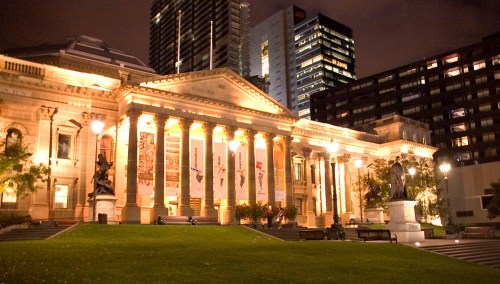
You can see an exhibition about Victoria’s Bushrangers, including the Plenty Valley Bushrangers at the Old Treasury Building Museum in Spring Street in the city.  It’s called Wild Colonial Boys:Bushrangers in Victoria and it’s on until August. It’s closed on Saturdays, but it’s open every other day of the week between 10.00 and 4.00 and entry is free.  While you’re there, check out the terrific ‘Melbourne Foundations of a City’ exhibition and the Melbourne Panorama- a display to spend hours looking at.


Notes

[1]Willis to La Trobe 3 May 1842, PROV 19 Unit 31 Encl to 42/1163

[2] E. D. Thomson to La Trobe 16 May 1842 PROV 16 Unit 31 42/1163

[3] Port Phillip Herald 13 May 1842

[4] Especially the evidence of Dr Charles Sandford, Judge’s notes enclosed in Willis to La Trobe 3 May 1842 PROV 19 Unit 31  42/1163

[5] Port Phillip Herald 17 May 1842.

[6] Willis to La Trobe 25th May 1842 PROV 19 Unit 31 42/966 enclosure to 42/1163.


Movie: The Innocents

“So, what are you off to see today, Janine?” they asked. Nobody suggested joining me when I told them that I was going to see a movie about Polish nuns being raped after WWII.

It was just as grim as it sounds. One day a young female French Red Cross doctor based in Poland is importuned by a nun to come to the convent. When she finally agrees, she finds a young novice giving birth. She learns that Russian soldiers had ransacked the convent three times, raping the sisters. The rapes were not just physical, but spiritual and existential as well.

The film is based on a true story (follow the link in this story to a translated interview with the real-life doctor’s nephew) although I don’t know if the ending – which I found a bit too easy – was true or not.

The cinematography is just breathtaking. The convent is surrounded by a bare forest in the snow, setting off the black-and-white habits of the nuns. But it feels almost callous to think of beauty in a story which is anything but beautiful.

Once again, it’s just about to leave Melbourne cinemas within the next few days.

My rating: 4 stars

‘The Mysterious Mr Jacob’ by John Zubrzycki

Mr-jacob_COVER-600x913

2007, 262 p & notes

Transit Lounge

In 1912 it was said that when the real story of Alexander Malcolm Jacob was written, it would be invested with more wonder and mystery than “even in our strangest dreams we never imagined it could possess.”(p.247)

Well, it took a hundred years, but in this book John Zubrzycki has probably got as close to the “real” story as anyone else is likely to do. Mr Jacob – diamond merchant, magician and spy – was happy to embroider and dissemble about his actual origins, but for the civil servants of the British Raj who escaped to the Indian hills of Simla to escape the summer heat, Mr Jacob was a celebrity. His shop was full of  gems, curiosities and wonders, he lived in a opulent mansion ‘Belvedere’ and he was sought out for his magic and mystical skills and political contacts. He appeared in multiple newspaper articles, essays, books and Rudyard Kipling’s Kim  (albeit, not under his own name but as Lurgan Sahib).  He dealt with Indian princes and maneuvered the shadow world of British spies operating in the Far East, and yet he ended up largely impoverished, living on a rather miserly pension before his death in 1921 aged 71.

Many rumours spread about his origins –  Jewish? Greek? Polish? Italian? – but Zubrzycki has tracked his birthplace down to a small town in Turkey, near the Syrian border. He was actually Catholic, but in a world obsessed with spiritualism, he attracted Theosophists and the adherents of Madame Blavatsky. He arrived in Bombay in 1865 penniless, and within 12 years had achieved celebrity status. His greatest, and as it turned out, most damaging challenge was to sell the Imperial diamond, the largest brilliant-cut diamond in the world, to Mahboob Ali Khan, the sixth Nizam of Hyderabad in 1891.  Fabulously wealthy and opium-addicted, the Nizam liked gems, and Jacob undertook to bring him the diamond from Europe on approval, hoping to make a hefty profit for his efforts. But the sale ended up in court and here, if perhaps anywhere, Zubryzycki got closest to discovering what may be the truth about Alexander Jacob.

The book is framed as the author’s search for the ‘real’ Mr Jacob, and the author strolls onto the page quite frequently as he hunts for locations, searches for documents and seeks an elusive photograph of him. It certainly seems as if Mr Jacob is reaching out from the grave, sometimes thwarting some of his efforts (as in when he finally tracked down Mr Jacob’s grave only to find that it had just been destroyed), and permitting “just in time” discoveries at other times (as when he found the decrepit Belvedere mansion, just before its demolition).  In this case, Australian readers benefit from the six year lag between the book’s publication in 2011 and its recent release through Transit Press in Australia, as in the meantime he found the much-sought-after photo to add a physical presence to such an elusive subject. The author has an engaging style, whipping up interest at the start of each chapter, and if he digresses it’s because they’re such interesting alleyways into which he is being drawn.

We are taken on a fascinating journey into an India of  the scarcely-imaginable wealth of its Indian Princes and the rather disdainful manipulation of British colonial politics. There is a fluidity in Mr Jacob’s life as he defies national definitions and flits in the shadows of spies and diplomats.  There’s little attempt- and I dare say, little scope- for any exploration of Mr Jacob’s personal life, and in this he is just as slippery and elusive as in his professional life. It’s a rattling good yarn, as Mr Jacob knew himself in his various retellings and embellishments, and you can’t help but be imbued with Zubryzycki’s passion for such an enigmatic character.

My rating: 8/10

Sourced from: review copy from Transit Lounge Publishing.


Conference: When we voted ‘NO’: Democratic Opposition to War 20 May 2017

ConscriptionConference

I attended a very enjoyable conference last Saturday at Brunswick, under the auspices of the Brunswick-Coburg Anti-Conscription Commemoration Committee, Melbourne Labor History Society and Victorian Trades Hall Council. Just look at the speakers: Barry Jones, Stuart Macintyre, Joy Damousi, Ross McMullin as the ‘big names’ but all of the speakers were excellent.  The day started with a small group from Brunswick Secondary College (who featured in the play 1916 that we saw last year) who sang two songs from WWI.

Barry Jones gave the keynote address where he outlined the political context for the conscription referendums of 1916 and 1917 (which someone noted was not ‘referenda’, as I always assumed). He pointed out that even before Federation, Australia had always been enthusiastic for war, with involvement in the Maori Wars, Crimea, US Civil War (on both sides),  the Sudan, Boer War and the Boxer Rebellion. During WWI, Australia was impelled by a need to be seen, a sense of adventure and hope for reciprocal support. He described the political environment of the new Commonwealth, which before the war was relatively civilized, with no party system. Into this came Billy Hughes, a divisive figure, vicious campaigner and wrecker, who unleashed sectarianism and broke the ALP.  He outlined why Hughes needed a referendum, and why he went for a second one in December 1917 after the first was defeated in 1916.

He was followed by Murray Goot who analysed the returns of the two referendums, looking for patterns and anomalies.  He challenged a number of the received explanations for the defeats, and explored a number of ‘what if’ scenarios, including a consideration of what might have happened if the second referendum had passed.

Stuart Macintyre described the electoral context generally, then focused particularly on the Brunswick-Coburg area.  Two local political identities were discussed in more detail. Peter Love spoke about the local Labor MP Frank Anstey- a man prone to hyperbole and opposed to conscription from the start. Caroline Rasmussen examined Maurice Blackburn  (commemorated in the law firm of that name) who was M.P. for the adjoining seat of Essendon who also opposed conscription, but from a more dispassionate commitment to ‘liberty’, the right of conscience and the law.  His wife Doris, was also an activist, although hampered by family commitments at the time.

Kate Laing spoke about two women’s groups active at the start of the war that were both involved in international movements. The Sisterhood of International Peace, which emphasized ‘respectability’ was at first reluctant to take a position on the war, out of fear of the War Precautions Act. The Womens Peace Army grew out of the suffrage campaign, and was always the more activist organization. Joy Damousi expanded on the Womens Peace Army, led by Cecilia John. She emphasized how both sides of the conscription debate leveraged motherhood: what would a ‘responsible mother’ do?

[And at this stage, I missed the next two speakers because I was in the Serenading Adela Choir, and we had to prepare for our performance of our party-piece ‘Ghosts Don’t Lie’]

serenading serenading2


[Images from https://brunswickcoburganticonscription.wordpress.com/2017/05/23/our-successful-conference/  and https://www.facebook.com/pg/BrunswickCoburgAntiConscription/photos/ And no, you can’t see me! I’m hiding in the corner]

After lunch Ross McMullin emphasized the significance of the fact that while other Labor governments in the world only had to react from Opposition, the Australian Labor Party was in office, voted into power in 1914 largely on the strength of its Defence policy. He spelled out the options facing Hughes and traced the political maneuvering chronologically during the war. He then moved to the long term consequences, including the National Party’s portrayal of themselves as the party of the AIF Digger.

From this point attention shifted to the Vietnam War and conscription. Ann-Mari Jorden examined the shift attitudes towards universal compulsory military training, from its introduction prior to WWI in 1911, the development of the Citizens Military Force between 1951 and its abolition in 1959, and the introduction of compulsory (although largely unenforceable) registration in 1964. She traced the treatment of religious conscientious objectors right from the Defence Act of 1903, and the gradual dropping of the ‘religious’ criteria of conscientious objection.

The day finished with Paul Barratt, who is currently promoting the reform of the Australian Government’s war making powers, preferably so that a motion needs to be passed in both house of parliament, with a statement from the Solicitor General that it is legal, and passed by the Governor General. Jenny Grounds from the Medical Association for the Prevention of War canvassed an array of steps that the government could take to promote peace.

So- what a treat! Excellent speakers, well-organized and lots to think about.