Category Archives: Uncategorized

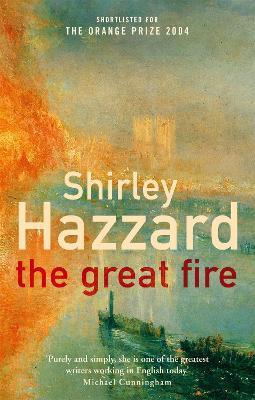
‘The Great Fire’ by Shirley Hazzard

2003, 314 p

I was disappointed by this book. It won the Miles Franklin and the National Book Award for Fiction in 2004, and was short-listed for the Orange Prize. So why, 150 pages in, could I not remember or care about any of the characters? why was I exhausted by her pretentious prose, re-reading sentence after sentence thinking “what on earth does THAT mean?” To deny the external and unpredictable made self-possession hardly worth the price (p. 10) or a place being differently aware in that murmurous season (p. 59), or That vulnerability should make a man strong. That there could be thought without helplessness; without that very helplessness in which their women were marooned, as if, by existing at all, one had become a victim. (p. 292). Oh mercy.

You might think from the title that this is about the Great Fire of London, but it’s not- instead the Great Fire is the conflagration of two World Wars.

The 1947 setting, in post World War II Asia, is an interesting one from an Australian perspective. The English protagonist Aldred Leith, who had sustained injuries during the war, has been dispatched to write reports on China, and then occupied Japan; while Australian Peter Exley, whom he had met during the war and rescued, is working as a war crimes lawyer after the dropping of the bomb on Hiroshima. The story traces through their progress through Japan and Hong Kong. Aldred falls in love with the 17 year old daughter of the Brigadier in charge of the army base in which he is staying. She is devoted to nursing her chronically and fatally ill brother Benedict, but she reciprocates Aldred’s feelings, and yearns to join him, especially when her parents, who disapprove of the relationship, take her to New Zealand. It was at this point that I began to be interested in the book and the characters fell into place.

The book, written in 2003, has captured well the stiff formality of language of the 1940s, and is replete with small details of clothing, setting, communication etc. The theme of Empire runs throughout, especially in the ashes of World War II which has devastated England and will wrench apart the Empire on which the sun never sets. Hazzard generally sees Australia as a parochial outpost, to which people are exiled- a reflection of her own attitudes to Australia, I suspect.

But her descriptions are so laboured and unnecessarily complex, and I felt as if I was drowning in a sea of unnecessary, pretentious words. And no Miles Franklin winner should take 150 pages to engage its reader, and even after finishing the other 150 pages, I really don’t know if it was worth the effort.

My rating: 6/10

Read because: CAE bookgroup selection.

I hear with my little ear: Podcasts 1-7 February 2024

February already!

Expanding Eyes. Continuing on with A Midsummer Night’s Dream before going to see the play in the Botanic Gardens, Episode 99: Night Rule goes through the scene of Puck and the “love juice” which he manages to place on the eyes of the wrong people: on Titania, who instantly falls in love with Bottom wearing his ass’s head, and Lysander who is woken by the treacherous Helen, and instantly falls in love with her. Helen, who is infatuated with Demetrius, gives a rather pathetic speech where she begs him to treat her like his dog. He’s not worth it, Helen.

Episode 100 A Milestone, the Lovers and Fairies’ Conflicts Resolved. Michael Dolzani starts this episode by talking about imagination in Shakespeares’ work and the difficulties in trying to pin Shakespeare down to a specific theological approach. Duke Theseus’ oration about imagination here reflects Hamlet’s “there’s a divinity that shapes our ends” but it’s not as clearcut as that. There are many opposites in this play, and when Dolzani was teaching this play, he would get his students to identify them: reason/desire, order/chaos, masculine/feminine, reality/imagination. At the end of Act III, everyone is asleep and Puck and Theseus get the opportunity to undo the mischief they have caused. In Act IV, Oberon has ‘won’ and he has taken the child that Titania wanted to protect. Act V returns to Theseus, and it is here that he gives his speech about imagination.

Episode 101 A Midsummer’s Night Dream: What is the purpose of Act V? Good question, because this is where the lovers are all back with the people they are supposed to be with, and the rude mechanicals put on their play. Dolzani reminds us that this is a festive comedy, and the slapstick in their production of the play is a crowd-pleaser. However, at the end, Bottom asks whether the whole thing is a dream- a theme that Shakespeare addresses often. Is life real? Are we all just puppets, and who is the puppeteer? Dolzani reminds us that the play put on by the rude mechanicals has multiple audiences: the court, the fairies and us. Is someone watching US? (cue spooky music)

[By the time I’ve written this, I have seen the play and gained much by listening to these lectures – because that’s in effect what they are, complete with the rustle of paper as he turns the pages. He repeats himself a bit, so much so that I wondered if I was listening to an episode I’d heard before, but the repetition worked well for me in keeping the continuity when I was listening to episodes several days apart.]

History Hit I’ve finally finished the series on Napoleon. Episode 4 Napoleon: The Myth features Andrew Roberts (who appeared in the first episode) as he traces through Napoleon’s exile on St Helena, 2000 miles from any other land. He had 29 people in his entourage, and he spent his time writing The Memorial of Saint Helena where he himself crafted the ‘great man’ personae. He died after 6 years, and there are suggestions of arsenic poisoning, but tests have shown that all his family had high levels of arsenic as well, which could be ingested through many number of environmental sources. He was buried on St Helena, but in 1840 he was disinterred by Louis-Phillipe who was hoping for some reflected glory. Roberts thinks that Napoleon kept the best bits of the French Revolution, but there was such bloodshed. He thinks that Napoleon is unfairly stigmatized by the “Napoleonic Wars” because five of the seven such wars were started by the anti-Napoleon coalition. The coat, the medals, the bi-corn hat was all part of a carefully cultivated image on Napoleon’s part- and in promoting this visual image, you’d have to say that he succeeded brilliantly.

Prohibition. This episode comes from the American History Hit series. Under the Prohibition legislation passed in 1920, it was made illegal to manufacture, transport or sell alcohol, although not to actually drink it. Featuring Sarah Churchwell, Professor of American Literature and Public Understanding of the Humanities at the School of Advanced Study, University of London, UK. [Public Understanding?? Whatever happened to HISTORY?] she identifies prohibition as one of the three political movements that arose out of second wave Revivalism in America, the others being abolition and the suffrage. In 1920, 90-95% of the American population identified as being Christian, and so prohibition was framed as a moral campaign, led by women concerned about the link between alcohol, poverty and domestic violence, and the Anti-Saloon League, a powerful lobby group. It was spectacularly unsuccessful. New York ended up with 100,000 speakeasys, and organized crime moved into the trade. The government ended up adding poison to ‘rubbing alcohol’ to deter people from drinking it, which was not a good look, and with the coming of the Depression, the government became aware of the taxation revenue it was foregoing. So the Prohibition legislation was repealed in 1933, the first time a constitutional amendment was amended by a later amendment.

Sydney Writers Festival. Diary of an Invasion. I’m not really sure why this turned up in my podcast feed because events have largely overtaken it. Ukrainian novelist Andrey Kurkov has been writing about daily life in Kyiv, and here he talks with Matt Bevan who, much though I like him, doesn’t do a particularly good job of posing questions to him (in fact, he sounds surprisingly nervous). Kurkov emphasizes that there are many Russian-speakers in Ukraine, but many of them have distanced themselves from their Russian identity as Putin insists that there is no such thing as ‘Ukrainian’ history or language. The head of the Wagner group, Yevgeny Prigozhin was still alive at that time, and Kurkov discusses his role as an alternative political persona to Putin- but we all know how that ended. Badly.

Things Fell Apart (BBC) Episode 2: We’re Coming After You Honey. In 2006 a barmaid in a yachtclub was befriended by the Wittermore family, whose daughter was very sick with Chronic Fatigue. The barmaid (Judy) had worked as a medical researcher, and the family set her up in a research facility that they funded in order to search for a cure for CFS. She found traces of XMRV, a mouse virus, in the blood samples of CFS sufferers, and her research which she presented with 13 other authors, was published in ‘Science’ magazine. However, other researchers were not able to replicate her findings and the study was retracted. Judy angrily asserted that Big Pharma was attacking her research as an outsider to the medical establishment, and when she refused to hand over her cell lines on which the research was based, the Wittermore family sacked her. She stole the cell line and her notes from the laboratory, and ended up arrested and bankrupt. Eight years later, in May 2020, she appeared in the viral (haha) video ‘Plandemic’ accusing Big Pharma and Fauci of collusion in inflecting the population in order to sell vaccines. Interesting.

I hear with my little ear: Podcasts 16-23 January 2024

The Global Story (BBC)I had heard of the Houthis before the current attacks on ships in the Red Sea, but certainly they have more prominence in recent days as the Middle East becomes even more combustible. Why are the US and UK attacking the Houthis in Yemen?, featuring the BBC security correspondent Frank Gardner explains that the Houthis come from the north of Yemen, although they only constitute 15% of Yemenis. They are a Shia sect that overthrew the President in 2014 and teamed up with the Republican guard to take power. The Saudis bombed them for years because Saudi Arabia didn’t want an Iranian ally on their doorstep. When the Houthis withstood this bombing, they developed a sense of invincibility. As devout Muslims, they see themselves part of the Axis of Resistance, comprising Hezbollah, Hamas and the Houthi. They are attacking at a chokepoint in the Red Sea, where 15% of global shipping passes. Australia has given logistical support to the US/UK bombings as part of a twenty-country coalition. I think we did the right thing in refusing to send a ship there.

The Daily (NYT) What the Houthis Really Want. Continuing on about the Houthis, this podcast is from 18 January, after several bouts of bombing. Vivian Nereim, the Gulf bureau chief for The New York Times points out that the Houthis have a larger Western presence than might otherwise have been the case because of their internet presence through videos, songs and TikTok. They go back to the 1990s, but came to prominence after the 2003 US invasion of Iraq. After the 2010-2011 Arab Spring they toppled the US-back Yemeni strongman, and seized the capital in 2014 and installed themselves as the government. Saudi Arabia was concerned at having an Iran-aligned country on their border, so with US support, the Saudis began bombing Yemen, causing huge damage and famine- although this US support has frayed since 2018. The Houthis, at their core, are anti-US and anti-Zionist, and although their stated aim in the recent attacks on shipping is to support Palestine, it is also in their interests to distract attention from their difficulties in being the government and doing government-y things, rather than being rebels. October 7 was a gift to them, and they have nothing to lose from their pro-Israel support, and the US/UK bombings just feed into the anti-US rhetoric. They will not stop.

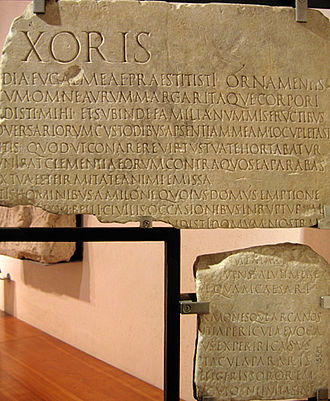
Laudatio Turiae, Turia’s funeral monument. Wikipedia

Being Roman. Episode 2: The Vengeance of Turia. This was a fantastic episode. The assassination of Caesar was followed by ten years of civil war. It’s easy to forget the perils of picking a side in a brutal, vicious civil war, where there is no stable government and when the sides keep shifting. Turia’s parents were both killed by thugs, the day before her wedding, and she had to fend off the legal claims of her relatives for her inheritance. Her husband chose the wrong side, and was exiled by the junta that took over after Caesar’s death. Eventually Augustus agreed to him returning, but Lepidus blocked it. She challenged him, and was bashed for her trouble. She and her husband were not able to have children, so she offered to give him a divorce and live in a menage a trois with a woman who could provide him with an heir. He rejected her offer (perhaps because he feared that he was the infertile one?) Anyway, we learn all this from a long inscription on her funeral monument, which just happened to reflect well on him too.

The Rest is History Episode 402 The Mystery of the Pregnant Pope was believed by the Catholic Church for about three hundred years, although in 1601 Pope Clement VIII declared the legend untrue. Later historians have christened the 9th century papacy “pornocracy”, and this is when the Englishwoman Joan was supposed to have lived, and ascended the ladder to become “John VIII”. Tom Holland (who wrote the book Dominion) goes on at length about the Gregorian Revolution which replaced the power of kings over the church with cardinals instead, with the church was conceptualized as the Bride of Christ. Even though most people acknowledge that the legend of Pope Joan is untrue, Saint (Abbess?) Guglielma had many echoes of the Pope Joan legend. When she died around 1280, her burial site became a shrine for the Guglielmites, who believed that she would be resurrected and lead a new church headed by women. The Inquisition charged 30 of her followers with heresy and dug up Guglielma herself, and burned her along with several of her followers. Fascinating.

Things Fell Apart (BBC) This is the second season of this podcast. Presented by Jon Ronson, it looks particularly at conspiracy theories that arose in May 2020, about six weeks into the COVID pandemic. In the first episode, Ep. 1 The Most Mysterious Deaths Ronson looks at the concept of “excited delirium” to explain the death of George Floyd which occurred on May 25, 2020 (I’d forgotten that it occurred during COVID). This spurious medical concept, developed and promulgated by a Dr Wetley, the Deputy Chief Medical Officer of Miami, arose in the 1980s when 32 black sex workers were found dead. Instead of going for the serial killer explanation, which seeme the most likely, Wetley said that it was the result of a mixture of cocaine and sex that led to “excited delirium” which manifested as sudden death in women, but psychosis and superhuman strength in men. The term was eventually debunked, but Wetley continued to publicize it up to 2020, sponsored by the manufacturers of Tasers who argued that deaths during Taser use were the result of “excited delirium”. It continued to be circulated amongst police officers, and indeed during George Floyd’s arrest, one of the arresting officer suggested putting him onto his side because he was suffering from “excited delirium”.

History in the Bible Although I have admitted to a secret enjoyment of ‘what-if’ history, I don’t know if my enthusiasm extends to the Bible. Speculations I looks at the years 35CE to 60CE and asks What If John the Baptist had been bigger than Jesus? His answer: John the Baptist was very popular and both were apocalyptic preachers but John the Baptist wouldn’t have spoken to Gentiles, and he would have been one among many sects in Judaism. Second question: What if Paul had split to form his own independent movement? His answer: perhaps the Jews who were left might have had more influence on Temple worship, and Jesus might have been seen as one of the great rabbis. If Paul had gone his own way, the Jewish part would have faded away, and what was left would probably have got on better with the Christians. Paul might have been able to downplay Jesus completely as the Marcions did later.

Expanding Eyes Episode 56 Book 24 The Meeting of Priam and Achilles is the final podcast about the Iliad. He concentrates mainly on Book 24, which is not a coda (even though it could have finished at Book 22) but instead one of the most important books in Western literature. Book 23, where Homer describes the games (rather boring) shows Achilles being re-integrated back into his society. The gods get involved again, and Achilles is ordered to give up Hector’s body and Priam is told to go and retrieve it. FINALLY we learn why it is called ‘The Iliad’: Priam and his manservant stop at the tomb of his ancestor Ilios, indicating that the whole thing has been about fathers and sons. When Achilles is transformed by the recognition of his grief for his own father, and extends this empathy to Priam, he shows his true greatness. In his speech about the 2 jars of life, that the Gods can dispense at will, Achilles emphasizes that fate is random. The play has a slow and dignified closure, with three speeches by women: Hector’s wife, mother, and rather surprisingly, Helen, whose actions had prompted the whole thing. Although there was a bit of a dip in the middle, I really enjoyed this series and found it really worthwhile. But do I want to launch into Milton’s Paradise Lost? Nah, I don’t think so.

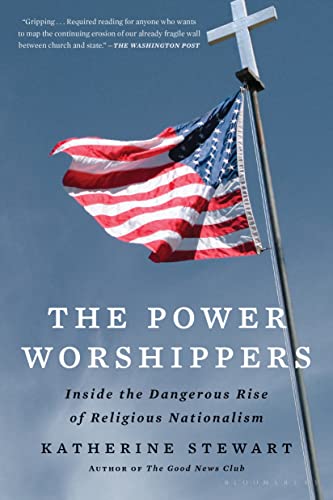
‘The Power Worshippers’ by Katherine Stewart

2020, 352 p.

A few months back, I spoke at a service at our Unitarian Universalist fellowship based on Elle Hardy’s book Beyond Belief: How Pentecostal Christianity is Taking over the World. As part of that, I spoke about the Seven Mountains Mandate which calls upon Christians to influence the ‘seven mountains’ of education, religion, family, business, government/military, arts and entertainment and media as a way of ‘taking back’ society and bringing on the ‘end times’. Elle Hardy only really mentioned the Seven Mountains by name in one chapter, as she travelled from congregation to congregation looking at the influence of Pentecostalism. In this book, however, Katherine Stewart looks beyond faith communities to examine broader society and how it is being influenced, often unwittingly by ‘Christian nationalism’ (her preferred term).

Christian Nationalism is not a social or cultural movement, but a political movement and its goal is power.

It is not organized around any single, central institution. It consists rather of a dense ecosystem of nonprofit, for-profit, religious, and nonreligious media and legal advocacy groups, some relatively permanent, others fleeting. Its leadership cadre includes a number of personally interconnected activists and politicians who often jump from one organization to the next. It derives much of its power and directions from an informal club of funders, a number of them belonging to extended hyper-wealthy families.

Introduction

She cautions that we need to distinguish between the leaders of the movement, and its followers. Its followers, she says are

…the many millions of churchgoers who dutifully cast their votes for the movement’s favored politicians, who populate its marches and flood its coffers with small-dollar donations are the root source of its political strength. But they are not the source of its ideas….The leaders of the movement have quite consciously reframed the Christian religion itself to suit their political objectives and then promoted this new reactionary religion as widely as possible, thus turning citizens into congregants and congregants into voters.

Introduction

She starts off at the Unionville Baptist Church, 45 minutes out of Charlotte, North Carolina, at a meeting sponsored by an affiliate of the Family Research Council, “one of the most powerful and politically connected lobbying organizations of the Christian right”, where pastors are being encouraged to use their pulpits for the upcoming half-term elections. Speakers rail against the Johnson Amendment that bars houses of worship and charitable non-profits from endorsing political candidates, they commend the use of NGOs internationally to spread the word of God, and urge the need to bring Latino and Black Americans onto the “right” side of history through their churches.

She visits the World Ag Expo in Tulare, California, where agribusiness leaders elevate politicians who espouse low regulation, foreign trade, water access and minimal workers’ rights. They gain direct access to the White House (and specifically Trump’s White House) through pastors who hold weekly bible studies there amongst the politicians. She ventures into the March for Life anti-abortion movement, where during the 1970s abortion was packaged and sold as the unifying issue of the global conservative movement drawing together conservative evangelicals and catholics in a way that could not have been imagined decades earlier. She talks about the Green family, the owners of Hobby Lobby stores and their Museum of the Bible and the push towards charter schools with sectarian agendas and the insistence that America was founded on Judeo-Christian principles with the intention of being a Christian nation. She emphasizes the interconnection between various groups with innocuous-sounding names, and their affinities with religious nationalist groups in other countries. Throughout, she stresses the connection between seriously-wealthy backerswith their own political agendas, government, and charismatic church leaders who are bringing their congregations and their votes along with them.

This is a wide-ranging, accessible book which has far more local American detail than an Australian reader is likely to appreciate. She makes her argument that Christian Nationalism is a political ideology in the introduction, and spends the rest of the book prosecuting it. It is sobering reading. I might have dismissed it as a conspiracy theory if I didn’t see it playing out in front of my eyes in our own local politics. There’s the influence of U.S. lobbying and advertising firms bringing their ‘expertise’ from sectarian US politics to advise the ‘No’ campaign at our recent referendum. There’s the rise of far-right and populist politics in Argentina and the Netherlands and although these new leaders might not be believers themselves, Christian nationalist believers support them. And most disturbing of all, the seeming untouchability of Donald Trump and his unwavering support among Christian nationalists should make us all pause.

My rating: 8.5/10

Sourced from: purchased e-book

You can read more about Christian Dominionism and its links to Australian politics at Chrys Stevenson’s article Christian Dominionism: Follow the Money which can be found on her Gladly The Cross-Eyed Bear blog.

.

I hear with my little ear: Podcasts 9-16 December 2023

Emperors of Rome Podcast. This is their hundredth episode and to celebrate it was taped in front of a live audience here in Melbourne on 8th August 2-18 (It’s taken me a while to find these podcasts!). Episode C The Death of Caesar points out that it wasn’t just Brutus, Cassius and Decimus acting alone- instead there were about 60 co-conspirators. They chose this particular time because Caesar was just about to go off to the Parthian War. The involvement of Brutus may have been particularly poignant for JC “et tu, Brutus?” because Brutus was rumoured to be Caesar’s illegitimate son.

BBC Radio Being Roman with Mary Beard. I just love Mary Beard. I wondered at first whether I was hearing the soundtrack to a television program, but no, it seems that these have been produced for BBC Radio. Episode 1 Loving an Emperor looks at the letters between Fronto and Marcus Aurelius between 161-181 CE, when Marcus was still a young man. To our reading they are blatantly homoerotic, but who knows how they read at the time.

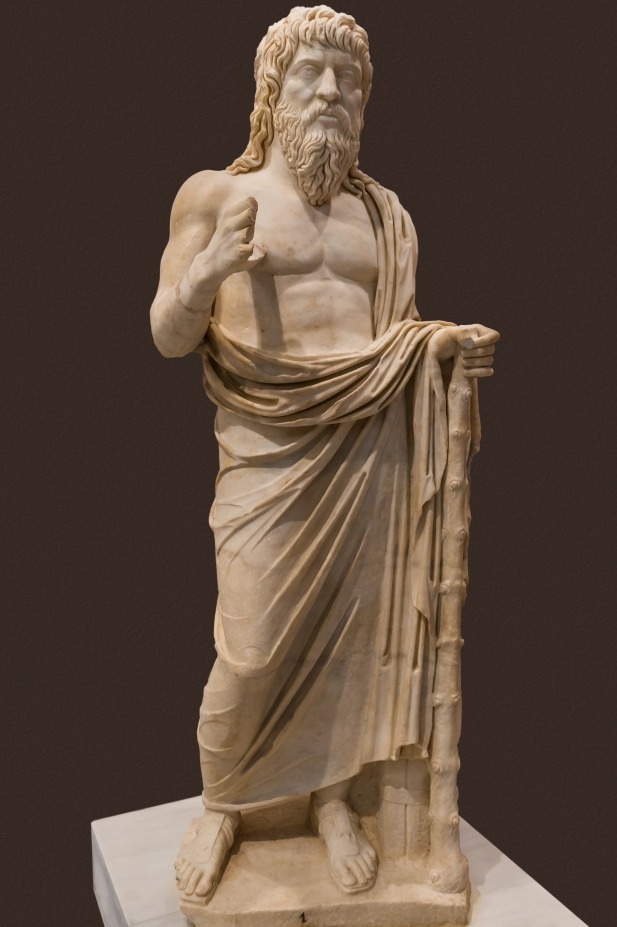
Let’s Talk Religion Yes, at the time I listened to this I was still preparing for my Christmas service at Melbourne Unitarian Universalist Fellowship. I heard this as a podcast, but it’s also a YouTube video The Pagan Jesus? Apollonius of Tyana. Apollonius is often used to argue against Jesus, although they are both historical figures. Most of the information about Apollonius comes from a 3rd century biography written by Philostratus, and there are letters of doubtful authenticity. Difficult to say anything historical about him- it’s easier to talk about the mythical Apollonius, as depicted in Philostratus’ work. He was a wonder-working sage, a Neo-Pythagorean, following an itinerant lifestyle with a focus on numbers. It is said that his mother was visited by the god Proteus when she conceived, and his birth was surrounded by swans (like Apollo’s birth), accompanied by a thunderclap. He went to India and studied with the Brahmins, then returned to the West where he was known as a Sage. He travelled throughout Anatolia and Egypt, performing miracles and raising people from the dead. He rejected animal sacrifice, and may have seen God as a unitary, transcendant being. He was tried before the courts, but disappeared before he was sentenced. Philostratus’ biography of him was written in the 3rd century, possibly as a response to the gospels to show that Jesus wasn’t so special.

Pythagorus and his Weird Religious Cult looks at the ancient mathematician, and the emergence of a neo-Pythagorean lifestyle at the turn of BCE/CE when men would adopt vegetarianism and wear simple, ragged, smelly clothes. Pythagorus himself had an interest in numbers, music and the cosmology of the spheres.

The Rest is History Continuing on with Cortez: Episode 4: The Fall of the Aztecs: Prisoners of Montezuma. Aztec society was a Bronze Age society, similar in technology to the Sumerians, but their city was huge, with over one million inhabitants, well maintained and new (compared with European cities at the time). Who is exploiting who here? Why didn’t the Aztecs just kill them all. Matthew Restall, who wrote When Montezuma Met Cortés: The True Story of the Meeting that Changed History suggests that Montezuma was planning to sacrifice them for display, but then the 18 other Spanish ships arrived to apprehend Cortez for disobeying his orders. Cortez decided to split his troops, with 80 to go off with Montezuma to confront Spain, and the rest of the troops to stay there.

Very Short Introductions This podcast has short interviews with the authors of books in the ‘Very Short Introduction to…’ series. I had just finished reading Marina Warner’s rather dense book From the Beast to the Blonde so I though I’d listen to this episode Fairy Tale- The Very Short Introductions Podcast Episode 20. She explains what a fairy tale is better here than she did in her lengthy book i.e. that anything can happen; it faces difficult themes like cannibalism, incest and jealousy, and it has a happy ending.

History Hit History Hit is responding to the interest in Napoleon prompted by Ridley Scott’s recent film with a short series on Napoleon. Episode 1: Napoleon The Early Years . The episode features biographer Andrew Roberts. He points out that Napolean was not of humble birth- he was from an aristocratic family which could prove its nobility for at least 250 years. His family was impoverished, but it was not nothing. Corsica had been purchased from Genoa in 1768 (the year of Napoleon’s birth) so its French identity was not well-established, and Napoleon himself was conflicted over his Frenchness as a young man. He received a free education from the French military academy, and was a great reader and good mathematician. He was 20 years old when the French Revolution began. He made a name for himself in the battle of Toulon, which is shown in the movie.

Theology in the Raw. Who would have thunk that I’d be listening to THIS? Hosted by Preston Sprinkle (is that even a real name?), it’s unapologetically Christian in its emphasis. The Scandal of Christmas is a four-part series leading up to Christmas and he starts Ep#927 The Scandal of Christmas Part I with Dr. Craig Keener talking about Luke 1-2, the politics and sociological scandal of Christ’s birth, his earthly vocation , the location of Christ’s birth, Matthew 1-2 (and the differences between Luke and Matthew), the problem of genealogies, and much, much more. The guest is rather discursive and sounds rather nervous. He starts by talking about other angelic visitations to announce births e.g. to Zechariah and Elizabeth. Caesar Augustus seems to be setting the agenda, but it was really God (hmmm). Most Galileans were immigrants to Judaea, some first generation others six generations on. It is said that Jesus was born in a cave where animals were kept, attached to a house. When Emperor Hadrian went through Judaea in 135CE deliberately placing pagan sites on Christian ones, he placed one on this cave, so it’s probably the authentic site according to legend. It could have been as much as two years before the Magi turned up, so Joseph, Mary and Jesus may have been in Bethlehem for some time. Nazareth only had a few hundred people, and it was more conservative, especially Upper Galilee. Aramaic was spoken but lower Galilee (where Jesus came from) was more multicultural. It is believed that Jesus spoke Aramaic, but he may have been able to speak Greek as well. Joseph was a ‘hand worker’ – probably he didn’t specialize, but did all sorts of construction. 70-90% of Galilee was agricultural, so as an artisan, Joseph may have had slightly higher status, but could not be said to be ‘high status’. If we only had Matthew’s gospel, we wouldn’t have realized that Jesus came from Nazareth. After Jesus’ birth they went to Jerusalem (about six miles) then returned to Bethlehem before going home to Nazareth. Herod acted like Pharoah did, killing babies to shore up his own power, and the wise men were pagans. There is no historical evidence of the Slaughter of the Innocents, but it’s consistent with his personality. Both Matthew and Luke go through Jesus’ genealogies, but Luke goes back to Adam, while Matthew lists Jesus’ ancestors and there is little overlap between the two genealogies after David.

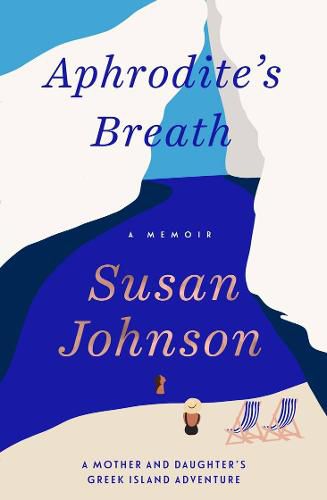
‘Afrodite’s Breath by Susan Johnson

2023, 338p.

Even though I have very much enjoyed Susan Johnson’s work in the past – I absolutely loved My Hundred Lovers (see my review here) and The Broken Book and enjoyed From Where I Fell (review) and Life in Seven Mistakes (review)- I wasn’t tempted by this book at first. I knew that it was about a writer taking her elderly mother to a Greek island, and I feared that it would be some sort of Eat, Pray, Love book (not that I’ve read it) or one of its many escape-the-quotidian-by-travelling-to-Europe clones.

But I was wrong on both counts. It is a memoir, rather than a novel, and it’s by Susan Johnson, so of course it’s going to be much richer than a travel memoir. I just loved it.

As a long-time journalist and successful-enough author (I think she under-rates herself) she decided to put her hand up for redundancy at the Murdoch-owned newspaper where she had worked for some years. With some back-of-the-envelope calculations she worked out that, with no need to financially support her now-adult sons, she could afford to retire if she lived carefully. She had travelled to Greece as a young woman, and one of the threads of her her novel The Broken Book involved Charmian Clift’s time on Kalymnos and Hydra. Her money would go further if she moved to Kythera, a Greek island that she had fallen in love with, and in her head it was associated with the bright sun of being a young woman with your whole life ahead of you. But she was now over sixty, the promises of her life had not been fulfilled, and as the eldest child and only daughter (as am I) she felt responsible for her now-widowed mother Barbara. She felt that she could not leave her mother, but what if her mother were to accompany her….. She asked Barbara if she went to Kythera, would she come too? And her mother said ‘yes’.

And so they went, but it did not turn out as Susan expected it would (do things ever turn out the way you think they will?) Although Susan fell in love with a house that found online and managed to lease for a full year – quite a feat in a community with a large, lucrative tourist influx ‘in season’- her mother disliked it from the start. Far from being the sunlit, balmy island of her dreams, it was cold and her Brisbane-bred mother hated the cold in a house with no heating. She didn’t like walking, and although neither of them could speak Greek (which surprised me, as Johnson’s text is sprinkled with Greek words), Barbara had no interest in learning it. They managed to break the lease, and took another house further north, which Barbara preferred although, like Johnson, I wonder if it was more that she had a choice over this house instead of her daughter organizing it ahead of time. By this time, spring had arrived and it was warmer and Susan threw herself into the life and traditions of the small village in which they lived, while Barbara participated tepidly and largely kept herself apart. Eventually it is decided that Susan will accompany Barbara to London where she will meet up with her son, and travel with him back to Queensland. While Susan missed her company (because she truly does love her mother), you can sense of sigh of relief.

And so, not really a lot happens in this book. So what kept me opening it up with relish, night after night, and my regret when it finished? Part of it was a rather perverse curiosity about what would go wrong, and when- dementia? the dreaded ‘a fall’? a passionate love affair out of left field for mother and/or daughter? But it was also Johnson’s own self awareness of the Faustian-bargain she had entered into with her publisher that helped to finance their trip: that she would finish the edits on the book that ended up as From Where I Came, and that she would write this book – her memoir of “A mother and daughter’s Greek Island adventure” as the subtitle rather forlornly ventures. How would she depict this stubborn, complaining woman, whom she adored? What if there was no “adventure” but only a grapple between mother and daughter that laid bare all the compromises, micro-aggressions and resentments of many mother/daughter relationships.

The book takes a turn at the end, as COVID makes it impossible to return home as Barbara’s health deteriorates. We all know, unless Fate is perverse, how mother/daughter stories end and so there was an inevitability about the finale, and yet there was a surprise there too. For me, I was left with a sense of a circle closed, a rich love of a daughter for her mother, the psychological integrity of both these two, separate women, and a deepening of my own reflections about mothering and daughtering, aging, travel and home.

Susan Johnson is just slightly younger than I am, and I have always found that her books speak to me, and that they seem to capture where I am at the time of reading. I do wonder how a younger woman would read this book, though. Part of me feels that it is only with age, and the sense of having moved on beyond being a child against an older, more beautiful mother, that a reader can stand outside the Susan/Barbara relationship and observe. For a ‘woman of a certain age’ as both Johnson and I am, this was a really satisfying and perceptive read.

My rating: 10/10

Read because: It was there on the library shelf, and I have enjoyed her other work. But reading about a writer, I felt a bit guilty borrowing it from a library, though (public lending rights notwithstanding). When Johnson talks about her own writing and success, I didn’t quite register how personally an author takes sales figures.

I hear with my little ear: Podcasts 1-8 November 2023

Literature and History. I’ll be doing the Christmas service at my Unitarian fellowship, and even though I know I’ll end up working on the service the night before, I have started thinking about what I’m going to do. I usually have a historical bent to my services, and this time I’m thinking of looking at the historical context into which the Nativity story was embedded. This led me to Ep.76 Judea Under Herod. (You can get the transcript here). Herod was a client king under Roman rule who reigned over the province of Judea between 37 and 4 BCE, at a time when the Republic was tearing itself apart and re-forming as an Empire. We know Herod through the story of Jesus’ birth and death (and to my shame, I thought that it was the same King Herod involved in both, but it wasn’t- they were father and son). None of the historians writing at the time, even Josephus, mention the Massacre of the Innocents, which you’d think they would, if it happened. King Herod was first appointed governor of the backwater territory of Galilee in 47BCE as a result of his father’s connections with Julius Caesar. He was not a popular choice: he was ethnically Idumean and not Jewish, his father had been embroiled in Jewish civil wars and Roman campaigns against Judea. When Herod’s father died and after aligning himself with Mark Antony and Octavian, he was appointed King of Judea, but the Jews didn’t want him, preferring a home-grown Hasmonean king instead. Herod was pretty ruthless: executing his enemies, confiscating their property and even killing family members who threatened him. Apart from that (a big qualification), he put Judea on a strong economic footing, he rebuilt the Second Temple (even though it was still standing albeit profaned by the entry of Roman troops in 63BCE so think of it as Temple 2.5) but it was destroyed by 70CE except for the Western Wall. As a client King, Herod needed to manage competing demands while being essentially powerless. He did manage to keep Judea intact instead of being swallowed into Syria. He had nine wives, and after he died, the kingdom was divided in three and ruled by three sons, one of whom was Herod Antipas, who was the one who ordered the execution of John the Baptist and did nothing to stop the execution of Jesus. It was Herod Agrippa II who ended up dealing with the Apostle Paul. All these Herods! No wonder I was confused.

History This Week Chasing Utopia tells the story of Bronson Alcott (father of Louisa May Alcott) who along with Charles Lane established Fruitlands, a Transcendentalist utopian community, in Massachusetts in 1843. It never really expanded much beyond the two families, and when the men went off to try to get new members, they left his wife Abby May and her daughters to bring in the harvest alone. She increasingly resented Lane’s domination of her husband, and in the end she wrote to her brother, telling him to stop funding the farm and threatening to leave with the children. Eventually, it was Lane who left and a few months later, Bronson and his family left too. So much for Utopia.

Emperors of Rome It’s time to go back to the Emperors of Rome podcast. I take up again at Episode XCIV A Republic Worth Fighting For After Sulla died in 78BCE, the Senate didn’t want to undo his Senate-friendly moves. There was a string of strongmen in the 70sBCE: Crassus, Pompey and then Julius Caesar. Both Crassus and Pompey came up through the military, and both of them had armies behind them. In 70BCE they were made consuls, even though officially Pompey was too young (although by this time, who needs rules?). He was seen as the ‘efficient one’, cleaning up the Slave War, Pirates and King Mithridates, the latter meaning that Pompey finally got the triumph he had been hanging out for. There were extremists in the Senate, like Cato, and the ‘new men’ coming into the Senate. Cataline came from the ‘right’ sort of family, but he was rejected as Consul and so he riled up the disaffected. The existing Consul, Cicero, found out about the plot, and summarily executed the men who were plotting but not Cataline, who escaped. This came back to bite him five years later, when he was put on trial for acting beyond his powers and was exiled.

Conspiracy Theories. (I can’t believe that I’m listening to a podcast called this) Failed Conspiracies: Cataline Conspiracy In the first century BC, there was stiff competition to be consul. Cataline was from an old family but very ambitious and strategic in his search for power. Cicero, on the other hand, was an outsider and a brilliant lawyer. There was rivalry between the two men for a Consul position but Cataline was beaten twice for the position. In 63BCE Cicero learned of a conspiracy to overthrow and assassinate him from letters that had been delivered to Crassus outlining the plot. Cicero had the ringleaders executed but Cataline escaped with his troops, who were attracted by his populist policies, especially amongst ex-military men and heavily indebted farmers. Cataline’s army was defeated and Cataline died a traitor. The presenters then indulge in a bit of ‘what-if’ history that goes too far. What if Cataline had won instead of Cicero? Well, we wouldn’t have had Cicero’s letters, which were all written after the conspiracy and rediscovered by Plutarch. The Roman empire might have turned socialist- and what would the Founding Fathers do with that, given that they modelled America on the Roman Empire. Hmm. Stop already.

By unattributed – William A. Crafts (1876) Pioneers in the settlement of America: from Florida in 1510 to California in 1849[1], Pioneers in the settlement of America: from Florida in 1510 to California in 1849. edition, Boston: Published by Samuel Walker and Company, Public Domain, https://commons.wikimedia.org/w/index.php?curid=17689791

History Hit. To celebrate Halloween and All Saints Days, History Hit revisits The Salem Witch Trials. Europe had gone through its witchy stage in the 15th and 16th century, especially when the Protestants took up the idea, but after a wave of executions, it went out of fashion in Europe. But not in Salem though, where the Puritans (who were out of fashion themselves) were living on a hostile frontier, didn’t like women and believed in Satan- a bad combination. During the witch trials, 200 people – including some men- were accused and 20 died. Some of the accused were adolescent girls, who were given an otherwise unattainable degree of power through their accusations, and rich widows who had land. Eventually, there was pushback from the legal system when they rejected spectral evidence in 1696, and when Europeans were askance that the colonies were still looking for witchcraft, which they had discarded decades earlier.

Expanding Eyes continuing on with Books 3 and 4 of The Iliad. Episode 47 The Contest Between Paris and Menelaus to settle the issue of who gets Helen. What was Agamemnon thinking at the start of Book 3 where he told his men that he was giving up and going home? He was nearly trampled as the men rushed towards their boats, eager to go home after 9 years fighting the Trojans. He was just testing them, but they took him up on it. Perhaps Homer wrote this to show his weak leadership. Paris was the first to propose that he and Menelaus duke it out between them, but then he chickened out when Menelaus took him up on it and he had to be goaded into action by his brother Hector. When Paris was getting beaten, Aphrodite flew down, swept him up, and deposited him in Helen’s bedroom. Actually, the gods are pretty ambiguous here- no-one actually saw Aphrodite do it- and when Helen decided that she’d gone off Paris after all and wanted to go home to Menelaus, Aphrodite rounded on her and terrified her. Book 4 is mainly of fighting. Dolzani comments on the complexity of Helen: she seems quite regretful about leaving Menelaus but then she gives in and sleeps with Paris. (I don’t see any great complexity here, personally. Women do what they have to).

Frequencies of Peace

Like the rest of the world, I am horrified by the violence in the Gaza Strip and Israel at the moment. There will be children going to bed terrified tonight. The children of Syria have been going to sleep to the sounds of war for the past ten years. A recent initiative funded by UNHCR, Babyshop,Spiritune, and Anghami has taken neuroscience and music psychology to create a lullaby. It has a tempo which can be speeded up or slowed down, depending on the child’s level of alertness; it has a limited number of notes, and it picks up on Arabic tonal structures. It is played on Syrian radio stations at 8.00 p.m. and cars with speakers mounted on the roof drive slowly through the streets, playing the lullaby.

I hear with my little ear: Podcasts 16-23 September 2023

Reflecting History So after my little sojourn to the early episodes of this podcast to catch up on the Social Wars, here I am back again at Episode 60: The Fall of the Roman Republic Part VI-Death by a Thousand Cuts, the final one in this series. With the conflict between Pompey and Julius Caesar, politics was now a zero-sum game. Both men felt that they were saving the republic, and for both men their claims to legitimacy were a bit dodgy. In 49 BC Julius Caesar crossed the Rubicon while Pompey’s armies were all far away, and declared himself Dictator. However, he offered pardons and leniency, and when Pompey’s head was brought to him, Caesar mourned his death. He then went on a tour of the Mediterranean as a bit of a victory lap and to reinforce his power. He undertook lots of reforms, and provided lots of public works and public games, in effect making himself indispensible to the Republic without actually having a lot of public support. Perhaps he was angling to become King?? This is what was behind his assassination by Brutus. In the wake of his death, the deputies became more important. Mark Antony (milking the occasion for all it was worth) read Caesar’s will publicly, which named Octavian as his heir. Tension emerged between Mark Antony and Octavian, and Brutus and Cassius were off raising money as well, without authority. Octavian went to the Senate to obtain sanction to defeat Mark Antony which he did. Having defeated Mark Antony, they joined together to outlaw Brutus and Cassius, leading to the second triumvirate formed by Octavian, Mark Anhony and Lepidus (one of Caesar’s generals). Out came the proscription lists again, leading to the deaths of prominent people like Cicero, 300 senators and 2000 equestrians. They divided up the empire with Mark Anhony controlling Gaul and the East, Lepidus controlling Africa for a while (until he was demoted) and Octavian controlling the rest. That left Mark Anhony and Octavian circling each other. There was criticism of Mark Anhony’s relationship with Cleopatra, and Octavian issued the Oath of All Italy to everyone in Italy, Gaul, Spain and Sardinia. He presented his scheme for an imperial system to the Senate… and that’s the end of the Republic.

History Extra Chaos and Violence in Country Houses. I’m a bit of a sucker for Country Houses and the whole concept of the Big House surrounded by bucolic countryside. American historian Stephanie Barczewski, who has written previously on the way that Empire affected the Country house, has published a new book called How the Country House Became English (Reaktion Books, 2023) which looks at how the Country House has changed over time, reflecting changes in English/British history. Country houses were destroyed as part of the violence of the Reformation and the Civil War, but when the French Revolution broke out, there was a fashion for ‘peaceful’ Palladian houses as a way of distancing from and expressing disdain for the excesses of the French Revolution. Empire influenced their architecture and objects, and led to the escape of exotic animals from their gardens- there were even wallabies on the Isle of Man! Post-war taxation changes saw many country houses moving from private to public or institutional hands. Interest in them has increased since the 1979s when their displays began emphasizing the servants (a huge labour cohort), capturing the interest of family historians whose forebears were far more likely to be servants than owners. Very interesting- I’m tempted by the book!

The Rest is History I’ve only read one Harry Potter book – and that was in Spanish- but that didn’t stop me enjoying The Real Harry Potter: Magic, Empire and Beastly Bullies. Dominic Sandbrook, one of the presenters of this series, is well placed to talk about Britain’s popular culture and its effect on the rest of the world, as he is the author of The Great British Dream Factory . He and Tom Holland talk about the influence of Tom Brown’s School Days from the 1850s, which in effect constructed the template for public school fiction and its particular form of Britishness (i.e. public school in that anyone can go there if they can pay the fees – so, it’s a ‘private’ school here in Australia). They talk about the influence of sport, fagging, headmasters, trains, ‘houses’ and hierarchy. Of course, the big difference was that Hogwarts had girls. I’m looking forward to the next episode.

Emperors of Rome I’ve forgotten where I was up to, so I just scrolled through until I found something republicanny as I’m still puddling around in the late Republic. There I found Episode CXXVIII (128) Cornelia Mother of the Gracchi (Is ‘Gracchi’ plural of Gracchus?) It was common for Roman women to be known by their father’s name, but Cornelia was known at the Mother of Tiberius and Gaius, the radical Tribunes of the People who tried to introduce land reform into Roman society and were assassinated for their troubles. Mind you, she was the daughter of Scipio Africanus, who defeated Hannibal, so it wasn’t as if she was ashamed of her father. She came from an elite family, and was very highly educated. She had 12 children, only three of whom survived to adulthood and when she was widowed, she never remarried which gave her special status and a degree of autonomy that married women didn’t have. We don’t really know a lot about her, and what we do know is filtered through responses to her sons, but there might have been a statue erected to her, and some of her writings were reported (although they are a bit dodgy because they are critical of her sons, so they might be fakes created by her sons’ enemies).

‘The Shark Net’ by Robert Drewe/

2003, 384 p

It’s funny how particular crimes permeate your consciousness of growing up in a particular place and time. I suspect that every child growing up during the 1960s was touched in some way by the disappearance of the Beaumont children, and I know that the disappearance of Eloise Worledge in the 1970s made me frightened to sleep beside the window when it was open on an airless hot summer night, as windows always were before the days of airconditioning. (Apparently later research found that the small hole in the flywire screen in her room had nothing to do with her abduction. All that worry for nothing.)

For Robert Drewe, growing up in Perth during the early 1960s, the crime that shaped his consciousness was the multiple murders committed by Eric Edgar Cooke, who was eventually hanged at Fremantle jail in October 1964. His family had shifted to Perth from Melbourne when Robert was six, on account of his father’s promotion at Dunlop Rubber, one of those 1960s brands embedded in Australian consciousness through tyres, tennis balls and Dunlopillo pillows and mattresses. His father was a Dunlop Man, who had married ‘a girl in the office’, and just like expatriates, the staff who had transferred from ‘over east’ formed a male-dominated Dunlop Family who met socially in the smaller white-collar social world of Perth.

Written from a child’s-eye point of view, both his parents were opaque to him. His father, Royce, ever the company man is depicted as a strict, slightly menacing, emotionally distant philanderer who leaned more towards his daughter than his sons. His mother, who he names ‘Dorothy’ when she was in ‘company wife’ mode, or ‘Dot’ when she was relaxed and truly herself, is a more complex character. She was never completely happy in Perth and maintained her family links with Melbourne independently of her husband and children. As Robert grows older, and his life trajectory branches out in ways that his mother disapproves of, we see the judgmental and rigid ‘Dorothy’ at work. The family splinters, under varying degrees of guilt and self-centredness.

Running alongside this memoir of family life is the story of Eric Edgar Cooke, a serial murderer who lurked around the well-to-do streets in which the Drewe family lived. A small man, often overlooked because of his cleft lip and palate, he lived on the edges of society, rebuffed by girls, married with seven children, an itinerant labourer. His life brushed up against Robert Drewe’s life in multiple ways, perhaps coincidentally or perhaps as a characteristic of life in a relatively small city. Cooke worked for Dunlop, he visited the Drewe household as part of his work, one of his victims was known to Robert Drewe, and one of Cooke’s murder implements belonged to a friend of Robert’s. There are faces at the window that may, or may not, have been Eric Cooke; he walked the streets of Dalkieth and Peppermint Grove. Later, the journalist Drewe attends the committal and murder trials that end in Cooke’s execution.

The memoir is interrupted by three independent chapters ‘Saturday Night Boy I, II and III’ which give us a glimpse of Eric Cooke. These are beautifully written, and while not exactly sympathetic and silent on his motivation, do try to explain Cooke’s life from the outside. The famed ‘light’ of Western Australian sunshine is juxtaposed against the darkness in which Cooke operated. There is a sense of menace that bubbles underneath. On driving home from being fingerprinted, as many Perth men were in the dogged search for the ‘Night Caller’, Robert’s father begins to sing the Bing Crosby song:

Where the blue of the night

Meets the gold of the sky

Someone waits for me.

Preface

He falls silent when both father and son realize the menace implicit in the words.

So, too, the image of the shark net which gives the book its title. Drewe was always frightened by sharks, and wished that the Perth beaches had been netted as some eastern beaches were:

I favoured the idea of shark nets…It wasn’t just that the nets trapped sharks, but they prevented them setting up a habitat. Intruders were kept out. A shark never got to feel at home and establish territory. I liked the certainty of nets. If our beaches were netted I knew I’d be a more confident person, happier and calmer. Then again, I might lose the shark-attack scoop of my life

p.299-300

This tension between looking for death and peril, and the desire to avoid it, runs throughout the book. He does, indeed, miss a journalistic scoop involving a friend, but it is because he is looking for sharks and not at what is directly around him. The idea that danger is amongst us, and not netted off, permeates the book.

This is a beautifully crafted memoir, with its juxtaposition of memoir and true crime, which avoids both sentimentality and prurience. It reminded me, in a way, of George Johnson’s My Brother Jack. It has the feel of being the first in a series of memoir, but as far as I know Drewe has never continued with a second book. Instead, it is a slice of life from the late 50s/early 60s rendered faithfully and lovingly but always with a sense that the sunshine and heat is coexisting with darkness and danger. Excellent.

My rating: 9/10

Read because: CAE bookgroup. I had read it back in 2002 and was impressed with it then, too.