Category Archives: Uncategorized

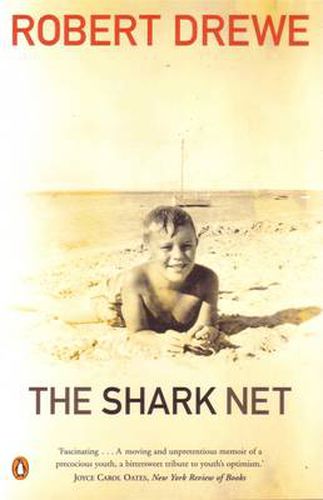
‘The Shark Net’ by Robert Drewe/

2003, 384 p

It’s funny how particular crimes permeate your consciousness of growing up in a particular place and time. I suspect that every child growing up during the 1960s was touched in some way by the disappearance of the Beaumont children, and I know that the disappearance of Eloise Worledge in the 1970s made me frightened to sleep beside the window when it was open on an airless hot summer night, as windows always were before the days of airconditioning. (Apparently later research found that the small hole in the flywire screen in her room had nothing to do with her abduction. All that worry for nothing.)

For Robert Drewe, growing up in Perth during the early 1960s, the crime that shaped his consciousness was the multiple murders committed by Eric Edgar Cooke, who was eventually hanged at Fremantle jail in October 1964. His family had shifted to Perth from Melbourne when Robert was six, on account of his father’s promotion at Dunlop Rubber, one of those 1960s brands embedded in Australian consciousness through tyres, tennis balls and Dunlopillo pillows and mattresses. His father was a Dunlop Man, who had married ‘a girl in the office’, and just like expatriates, the staff who had transferred from ‘over east’ formed a male-dominated Dunlop Family who met socially in the smaller white-collar social world of Perth.

Written from a child’s-eye point of view, both his parents were opaque to him. His father, Royce, ever the company man is depicted as a strict, slightly menacing, emotionally distant philanderer who leaned more towards his daughter than his sons. His mother, who he names ‘Dorothy’ when she was in ‘company wife’ mode, or ‘Dot’ when she was relaxed and truly herself, is a more complex character. She was never completely happy in Perth and maintained her family links with Melbourne independently of her husband and children. As Robert grows older, and his life trajectory branches out in ways that his mother disapproves of, we see the judgmental and rigid ‘Dorothy’ at work. The family splinters, under varying degrees of guilt and self-centredness.

Running alongside this memoir of family life is the story of Eric Edgar Cooke, a serial murderer who lurked around the well-to-do streets in which the Drewe family lived. A small man, often overlooked because of his cleft lip and palate, he lived on the edges of society, rebuffed by girls, married with seven children, an itinerant labourer. His life brushed up against Robert Drewe’s life in multiple ways, perhaps coincidentally or perhaps as a characteristic of life in a relatively small city. Cooke worked for Dunlop, he visited the Drewe household as part of his work, one of his victims was known to Robert Drewe, and one of Cooke’s murder implements belonged to a friend of Robert’s. There are faces at the window that may, or may not, have been Eric Cooke; he walked the streets of Dalkieth and Peppermint Grove. Later, the journalist Drewe attends the committal and murder trials that end in Cooke’s execution.

The memoir is interrupted by three independent chapters ‘Saturday Night Boy I, II and III’ which give us a glimpse of Eric Cooke. These are beautifully written, and while not exactly sympathetic and silent on his motivation, do try to explain Cooke’s life from the outside. The famed ‘light’ of Western Australian sunshine is juxtaposed against the darkness in which Cooke operated. There is a sense of menace that bubbles underneath. On driving home from being fingerprinted, as many Perth men were in the dogged search for the ‘Night Caller’, Robert’s father begins to sing the Bing Crosby song:

Where the blue of the night

Meets the gold of the sky

Someone waits for me.

Preface

He falls silent when both father and son realize the menace implicit in the words.

So, too, the image of the shark net which gives the book its title. Drewe was always frightened by sharks, and wished that the Perth beaches had been netted as some eastern beaches were:

I favoured the idea of shark nets…It wasn’t just that the nets trapped sharks, but they prevented them setting up a habitat. Intruders were kept out. A shark never got to feel at home and establish territory. I liked the certainty of nets. If our beaches were netted I knew I’d be a more confident person, happier and calmer. Then again, I might lose the shark-attack scoop of my life

p.299-300

This tension between looking for death and peril, and the desire to avoid it, runs throughout the book. He does, indeed, miss a journalistic scoop involving a friend, but it is because he is looking for sharks and not at what is directly around him. The idea that danger is amongst us, and not netted off, permeates the book.

This is a beautifully crafted memoir, with its juxtaposition of memoir and true crime, which avoids both sentimentality and prurience. It reminded me, in a way, of George Johnson’s My Brother Jack. It has the feel of being the first in a series of memoir, but as far as I know Drewe has never continued with a second book. Instead, it is a slice of life from the late 50s/early 60s rendered faithfully and lovingly but always with a sense that the sunshine and heat is coexisting with darkness and danger. Excellent.

My rating: 9/10

Read because: CAE bookgroup. I had read it back in 2002 and was impressed with it then, too.

Six degrees of separation: from I Capture the Castle to….

Finally, I have actually read the book that Kate chose as part of the Six Degrees of Separation meme for this month. The idea of Six Degrees of Separation is that Kate chooses the starting book, and then you nominate six books that are linked in some way to that title.

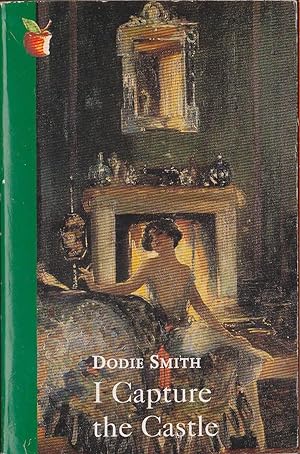
In fact, I just didn’t read the starting book I Capture the Castle (1949) just once: I read it many, many times as a teenager. In my family, we didn’t tend to buy books, even though I was an inveterate reader, and so I borrowed this book from Banyule High School library over and over and over again. Strangely, I can’t remember if this was the cover or not, but it looks vaguely familiar.

In keeping with the retro nature of the starting book, I’ve tried to show the book covers as I remember them. I read many of these books before I started blogging, so there’s only one link to my review.

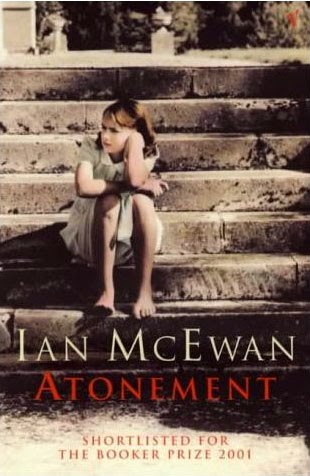
I Capture the Castle by Dodie Smith (who also wrote One Hundred and One Dalmations) was about two sisters, and is told from the perspective of the younger sister, Cassandra. It reminded me of Ian McEwan’s Atonement. In both cases the narrator is a young aspiring author living in a ‘big house’, who is romanticizing her older sister’s love life.

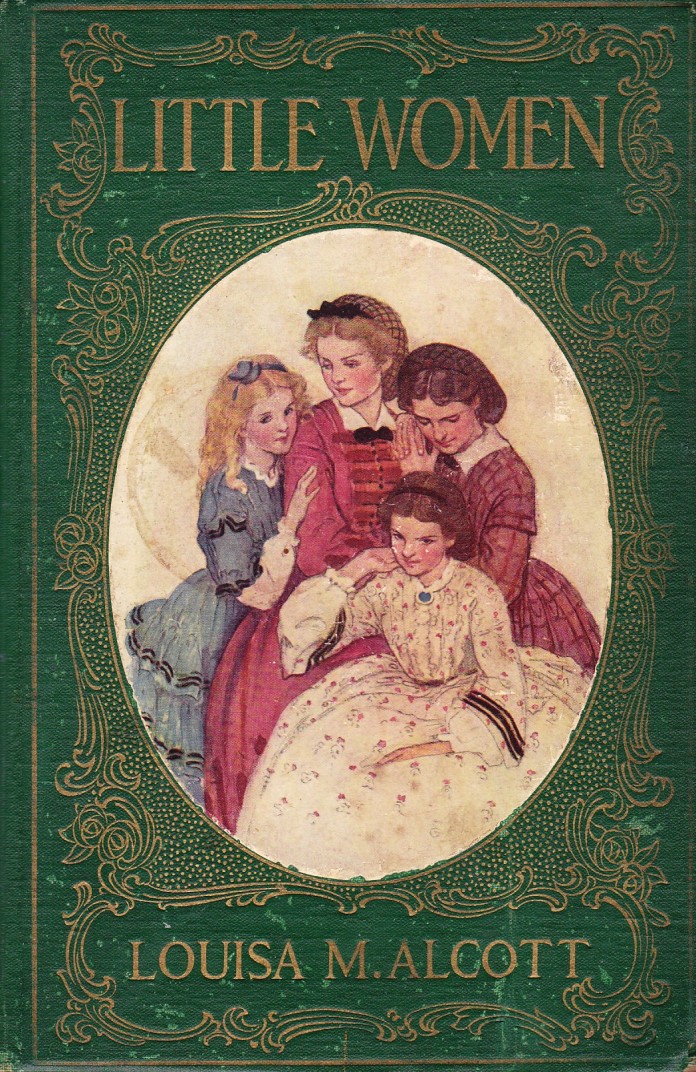
Another book about sisters, of course, is Louisa May Alcott’s Little Women – another book that I just loved as an adolescent. Part of me still wants to be Jo March, writing books in my attic, even though I am now probably older than Aunt March!

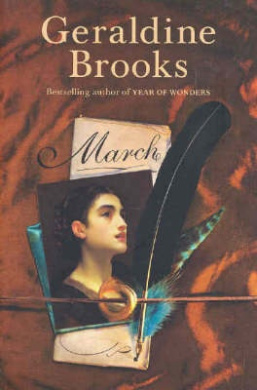
My love for Little Women meant that I just loved Geraldine Brooks’ March as well, where she writes herself into the character of Mr March, the absent father who is off as a chaplain in the American Civil War. Brooks takes a much loved story, but she makes it her own, spiking it up with Marmee’s perspectives as well.

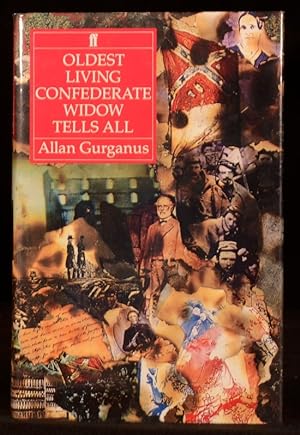
It was probably Little Women that spurred my love for American Civil War books as well. I really enjoyed Alan Gurganus’ Oldest Living Confederate Widow Tells All which, set in the present (it was written in 1989) was presented as the memoirs of an old lady who at the age of 15 married a much older Confederate veteran in 1900.

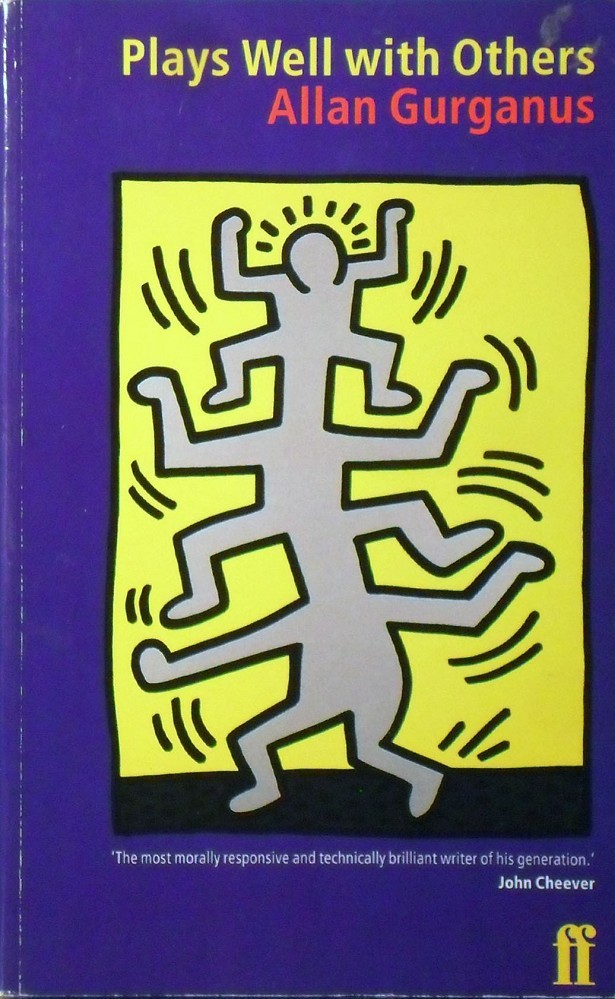
In fact, so much did I enjoy it that I purchased Alan Gurganus’ Plays Well With Others, which wasn’t about the civil war at all. Instead, it was about AIDS cutting a swathe through the artists and writers in New York during the 1980s.

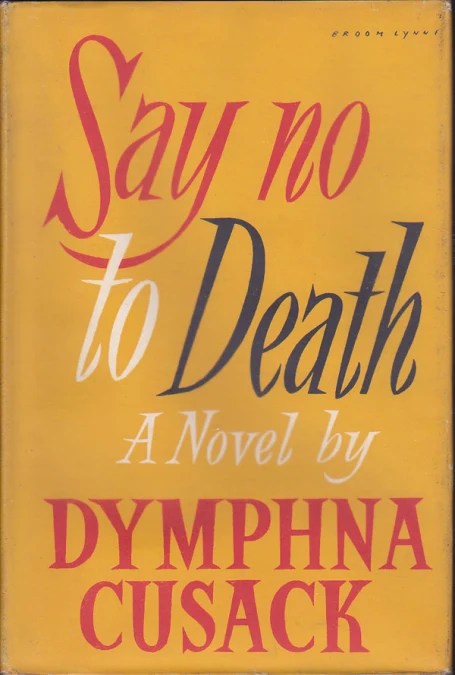
Tuberculosis was another disease which cut down young people in their prime. Say No to Death by Dymphna Cusack is the story of two sisters (sisters again!) in post-war Sydney when Jan contracts TB. It was a contemporary book when it was written (1951) but now it’s a fascinating slice of social history and critique. My review is here.

My Six Degrees this month has taken me back to older books that I read ages ago, but obviously they made enough of an impression to spring to mind again now. Where did I Capture the Castle take you?

I hear with my little ear: Podcasts 8-15 September 2023

Some rather belated podcast listening reports.

Reflecting History Episode 12 The Social War- The Tyranny of Deterioration. This is the final of the three-parter on the Social War, which has drawn heavily on Philip Matyszak’s work. He focuses on Marius- the quintessential politician, who appeared to be populist but behind the scenes was a great underminer, and Sulla, respected by patricians but also ruthless. Marius and Salpicius fomented riots, which gave them the excuse to take over, but Sulla saw Marius’ actions as unconstitutional and turned his troops towards Rome, took the city easily and established himself as dictator. It’s hard to tell whether this was opportunism, or from a deep sense of honour. Cinna was elected consul, but as soon as Sulla left to fight Mithridates, he brought Marius back and together they embarked on revenge against Sulla’s supporters. But then Marius died, so the showdown between Marius and Sulla never occurred. Sulla joined forced with the young Pompey and his private army and Crassus with his wealth. In 82 BCE the Social Wars finally came to an end when Sulla marched on Rome and revived the role of Dictator which had been in abeyance for 120 years and killed 5000 people on the proscription list to wipe out any opposition (and take their wealth while he was at it). But the underlying issues never went away, and now there was a precedent for violence if your own private army was big enough. Overall there was a loss of faith in the system- so perhaps this can be seen as the end of the Roman Republic.

History Extra Great Reputations Oliver Cromwell. I’m on a bit of an Oliver Cromwell kick at the moment. This episode features Ronald Hutton (author of The Making of Oliver Cromwell 2021) and Mark Stoyle, who has worked on the English Civil Wars. I couldn’t really distinguish between the two guests’ voices, but one of them described Cromwell as a ‘puritan Jihadist’, whose religious zeal and desire to keep up with the radical fringe of the movement – especially the army- kept pushing him on. The Battle of Marston Moor in 1644 was a turning point in his career, although one of the historians suggested that the Parliamentary forces probably would have won without him. Cromwell took a huge army to Ireland, where they undertook two huge massacres, although there is only inconclusive evidence that the battle of Siege of Drogheda was the bloodbath that myth claims it to be- he certainly killed soldiers, but maybe not all the women and children. He was not trusted by his contemporaries because his zealotry always outpaced that of the nation. Even the Puritans were worried about his radicalization. His regime crashed six months after his death, but his reputation was rehabilitated with the publication of his letters and writing by Thomas Carlyle in the 1840s, and some twenty years ago he was voted the 3rd greatest Englishman (after Elizabeth [not sure which one- Elizabeth I or II] and Churchill.

History Hit Europe’s 1848 Revolutions looks at the continent-wide revolutions of that year, some of which brought permanent change; others not. Even though we identify 1848 as THE year, there was actually turmoil in the preceding decade, brought about by a literate population exposed to a new public sphere through the press, economic changes and the long-term effects of the Napoleonic Wars, which saw nations mobilized for some time afterwards. Nationalism was a progressive force at that time, with the desire that ethnic and geographical borders should be the same, and based on emotion and knowledge (especially knowledge of language). Women were included in nationalism, especially compared with liberalism which was male-dominated. Europe at the time was still dynastic, and in some of the revolutionary movements we see a form of pre-Marxian socialism. The decade of unrest had started with a wave of revolutions in the 1830s (cue ‘Les Miserables’) when through a thickening of communication channels, there arose a sense of Europe. There was a revolution in Switzerland (Switzerland!) in 1847, and it spread to Sicily, Paris and Berlin. At first the waves of revolution were very successful. However, the liberals, students, peasants etc. had differing demands, which became even harder to reconcile once the revolution was successful. Conservative forces dealt themselves back into the equation by playing radicals and liberals (who actually feared the radicals themselves) off against each other. In other places, the monarchy regained its nerve and imposed its authority. Some constitutions survived e.g. Switzerland, Denmark, the Netherlands, Prussia and Piedmont. In other places, defeat was instructive. It led to the rise of Marxism and the advent of social democracy. Even where monarchy triumphed, it wasn’t the same- no longer could it refuse constitutional change outright. The episode features Christopher Clark, author of Revolutionary Spring.

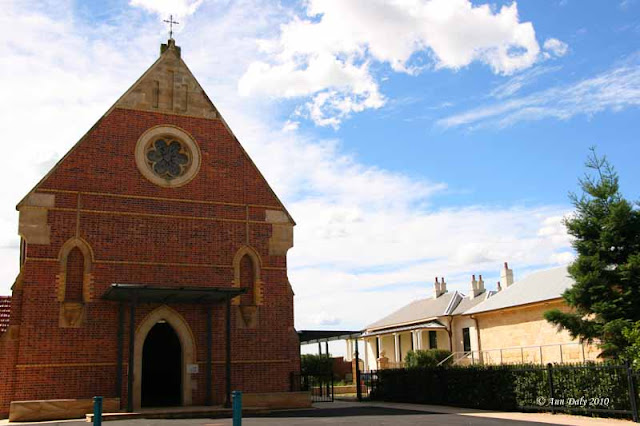
The History Listen (ABC) The Missing Magdalens Being a northern-suburbs Melbourne girl, I’ve long been aware of the Magdalen laundry at Abbotsford Convent, but the presenter of this podcast, Donna Abela, was completely unaware of the Magdalen laundry at Tempe, on the Cooks River in Sydney. Here she talks with Dr Kellie Toole from Adelaide Law School, whose M.A. thesis ‘Innocence and Penitence Hand Clasped In Hand Australian Catholic Refuges For Penitent Women, 1848-1914’ (2010) is available online. (Could be an interesting read). The pastoral station Tempe was purchased in 1885 by the Catholic Church as a refuge for ‘penitents’, located on the outskirts of the town. It only closed in 1983, although its emphasis had changed after changes to the Child Welfare legislation.

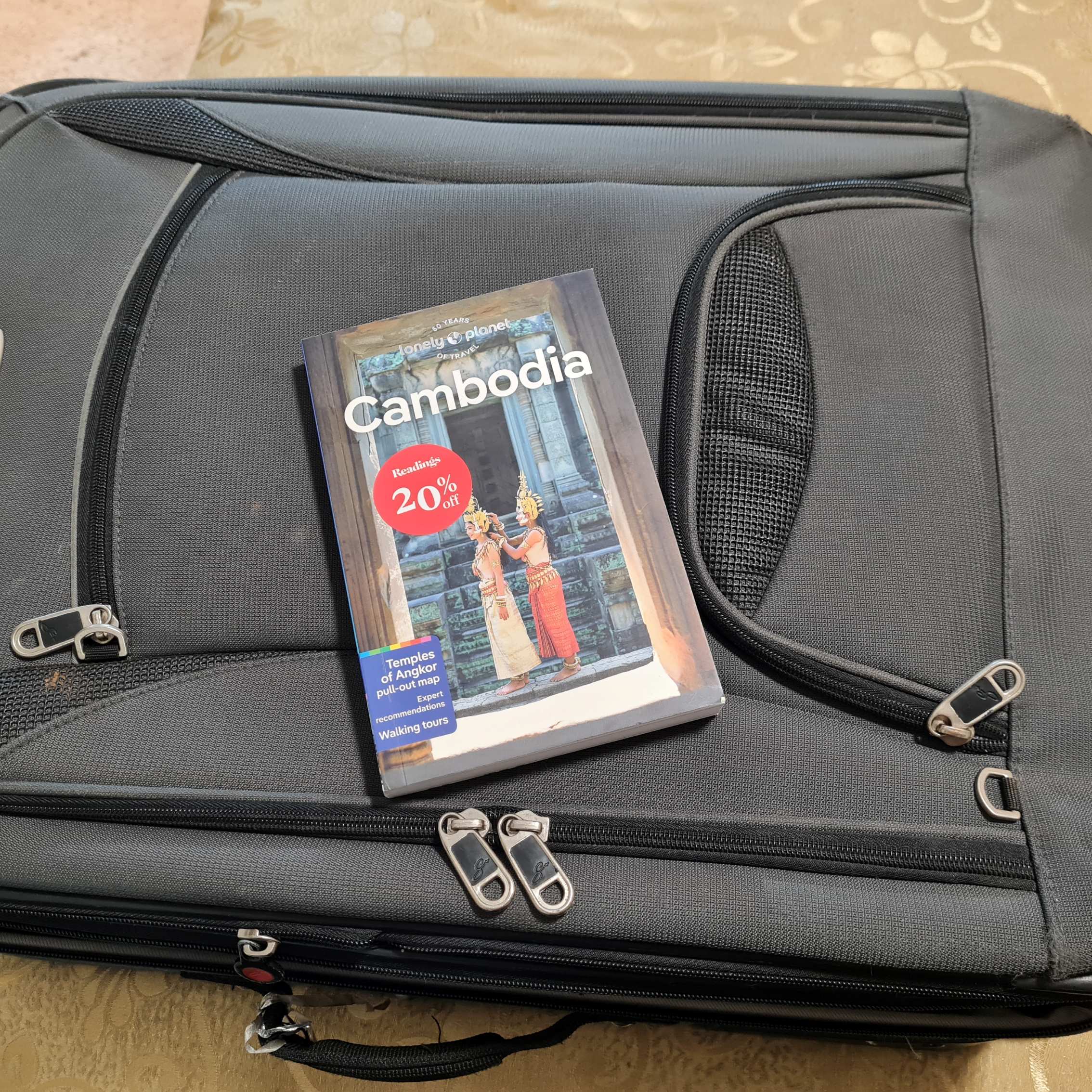
The Fall of Civilizations. I’m off to Cambodia very soon, and I don’t want my only knowledge of Cambodia to be the Killing Fields. So, I’m listing to Paul M. M. Cooper’s podcast The Kymer Empire: Fall of the God Kings It’s long, but excellent. He starts with the ‘discovery’ of Angkor Wat by Portuguese missionaries Antonia de Madalena in 1586, who although he died in a shipwreck before returning to Europe with the news, wrote about this magnificent, deserted ruin. The people might have left it in the mid-15th century, but it was never ‘lost’ as such because monks and farmers still lived there. Even then, it was more magnificent than anything that could be found in Europe. They were more advanced in other ways too, with an alphabet, and concepts of zero (something I have always struggled with, alas). There were three factors that led to the success of the Kymer empire 1. The concept of a God-King, which drew on Indianized ideas of the organization of society 2. efficient taxation, where elites competed against each other to raise taxes, some of which they kept for themselves 3. skill in water engineering, leading to the creation of two huge reservoirs. But each of these strengths was to carry the seed of failure. 1. To maintain the God-King authority, they had to maintain the Hindu religion, an Indian import, against the Buddhism of the common people. King Jayavarman VII introduced Buddhism, which was reflected in Angkor Wat where earlier Hindu iconography was replaced with Buddhist sculpture. 2. Both the people and the land were over-taxed. 3. The water system failed. This could have been prompted by the Little Ice Age in the 15th century which caused long 30 year droughts, interspersed with devastating floods. Here’s a cautionary tale for us: during the first 30 year drought- absolutely unheard of- they changed the meandering design of their canals to avoid evaporation and bring water direct to the city, but when the floods came they just rushed down, bursting the reservoirs (and we’ve seen with Libya what that means). We can’t know whether people left because the infrastructure failed, or whether the infrastructure failed because the people left it untended. Either way, by 1431 during the final siege of Angkor Wat by Thai troops, the city was abandoned. The jungle, and particularly the destructive banyan tree, soon took over the city. This was a fantastic podcast – and it whets my appetite to visit Angkor Wat (next trip, perhaps)

Off again…

I’m off again, this time to Cambodia to see my little granddaughters (and my son and daughter-in-law too)

And once again, you can follow my adventures at

https://landofincreasingsunshine.wordpress.com/

Movie: Past Lives

Set over decades, this is the story of childhood sweethearts in Seoul who are separated when Nora’s parents emigrate to America. It starts in the present day as Nora sits in a bar between two men, one Hae Sung who has travelled to America to see her, and her husband Arthur, a fellow-writer whom she married, partially to obtain a green card. An unseen narrator speculates about the relationship between the woman and the two men, and we are then taken back to her childhood friendship with Hae Sung. They had re-established contact through an internet connection twelve years ago which she brought to an end to concentrate on her career. Now, in the present day, Hae Sung has come to visit her. Meeting up with him in person, she realizes how Korean he still is, how much he is still invested in that childhood relationship, and how much she has changed. Her husband Arthur can only watch on, uncertain of whether she will stay or go. It reminded me a bit of the beautiful film Brooklyn in that both deal with emigration, the pull of the past and choices but it was much quieter than that film, with none of the main characters seeming to have friendships or connections beyond each other. It was a bit slow, but the ending made up for its languid pace.

My rating: 3.5 stars

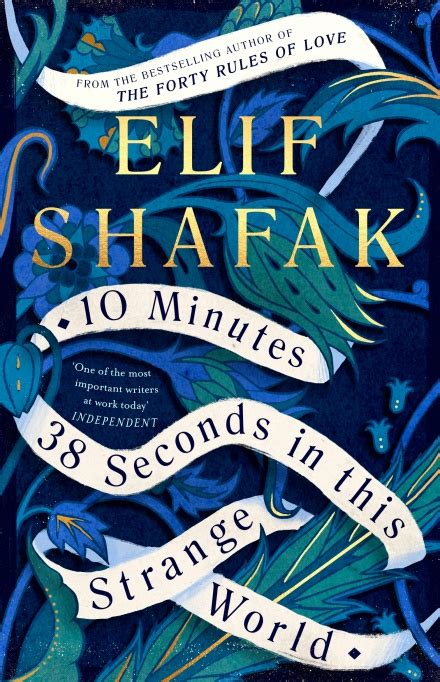
‘Ten Minutes 38 Seconds in This Strange World’ by Elif Shafak

2019, 308 p

I had read somewhere – as has this author, obviously- that the mind does not shut down immediately upon death. As the morgue technician inspecting the body of a woman found in a garbage bin observes:

When exactly did a living being turn into a corpse? As a young graduate fresh out of medical school, he had had a clear answer, but he wasn’t so sure these days….Researchers at various world renowned institutions had observed persistent brain activity in people who had just died; in some cases this had lasted for only a few minutes. In others, for as much as ten minutes and thirty-eight seconds. What happened during that time? Did the dead remember the past, and, if so, which parts of it, and in what order?…If that were true, shouldn’t human beings be considered semi-alive as long as the memories that shaped them were still rippling, still part of this world?

p.190,191

This, then, is the premise by which the first part of the book is organized. Ten minutes and thirty eight seconds, counted off chapter by chapter as Leila’s murdered body, stuffed into a rubbish bin, gradually shuts down. Minute by minute she remembers impressions, smells and senses that convey us through her life, not necessarily chronologically, as a young girl growing up in post-WW2 Turkey until her death in 1990. The opening chapter sees her slip as a baby from her mother’s body, into the arms of her father’s infertile first wife who claims the title of mother, relegating the second wife and birth mother to ‘auntie’. We see a child drawn into secrets – those of her own mother, and other more devastating secrets- that make her guilt-ridden and wary. When her father becomes increasingly religious, Leila rebels against him and ends up working in the brothels of Istanbul. It is this work that sees her violently murdered by religious zealots who cruise the streets of Istanbul, collecting angel figurines on the dashboard as they murder prostitutes in the name of ‘cleansing’ the streets. Along the way, Leila collects five friends – a childhood friend who always loved her, and four female friends, one of whom was trans-sexual- and these friends, and their stories, are numbered off in turn, with a chapter giving their own backstories.

All of this is embedded within the twentieth-century history of Turkey. In her birth city of Van, in east Turkey, the family lives in a house that had previously been owned by Armenians. The arrival of the Sixth Fleet of the U.S. Navy in 1968, the opening of the Bosphorus Bridge in 1973, the Taksin Square massacre of 1 May 1977 and the endemic corruption and string-pulling of the 1990s frame the story, sometimes a little too self-consciously. What did ring true was the increasing hardening of religious influence over daily life, giving a sharper sectarian edge to the already patriarchal and abusive treatment of women.

I loved the first part of this book, titled ‘The Mind’, and the creative (if somewhat ghoulish) device of counting down the minutes to her eventual shutdown. I was less enamoured of Parts II (The Body) and Part III (The Soul) which comprised the final third of the book. Here her friends rally around to take custodianship of her body, which had been consigned as to the bleak and distant Cemetery of the Companionless, in a form of paupers’ funeral. Leila was not companionless and her five friends embark on an attempt to remove her to a different cemetery. Unfortunately, this Keystone Kops farce detracted from the strong first 2/3 of the book although the final section, which is more evocative of Part I does rescue it somewhat. I had enjoyed Part I so much: perhaps I should have left it there.

My rating: 8/10 (would have been higher without Part II)

Sourced from: Yarra Plenty Regional Library. I think that I must have read a review of it somewhere.

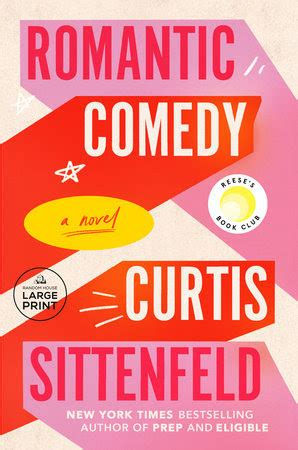
Six Degrees of Separation: From ‘Romantic Comedy’ to….

It’s the first Saturday of the month, so it’s time for the Six Degrees of Separation meme, hosted by Kate at Books Are My Favourite and Best. The idea is that she chooses the starting book, and you then link six other titles to it, following your own chain of connections and associations. It is a truth universally acknowledged that I have never read the starting book, and this month is no exception. It’s ‘Romantic Comedy’ by Curtis Sittenfeld.

Never read it; never heard of it. So where to go? I decided to split the difference, and link to three love stories (I don’t know if I read ‘romances’ as such) and three comedies.

Three Romances…. well, Love Stories

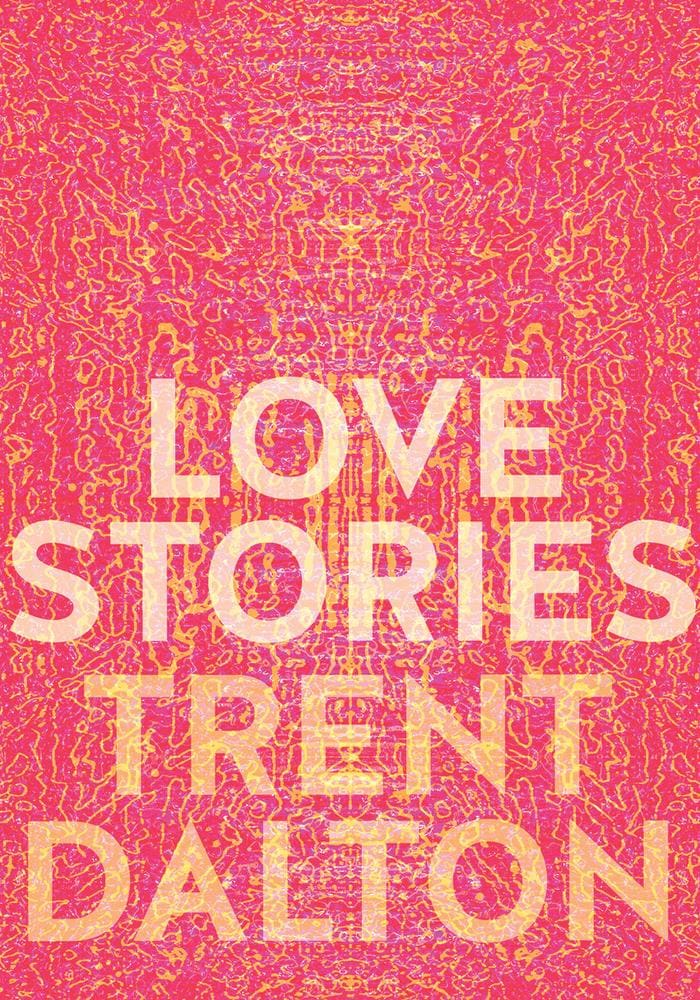
1 Love Stories by Trent Dalton. A published author sets himself up on a Brisbane city street with a folding table and a blue Olivetti typewriter, with a sign reading ‘Sentimental Writer Collecting Love Stories’ and waits for people to come and talk to him. And talk to him they do – 42 of them – and he writes their love stories up for them, and for us. Most of them are only about three pages in length, although some are longer, and one extends over two parts widely separated in the book. Actually, I didn’t really like it that much. For me, it felt a bit like a newspaper column, and I found myself wondering if it were, whether I would seek out the column each day. I suspect not. I think that the earnestness and wide-eyed wonder would pall after a while. (My review here)

2. Alzheimers: A Love Story by Vivienne Ulman The book has ‘love story’ in the title, and there is certainly a love story here as a family negotiates the guilty, anger, sorrow and, yes, love that surrounds a family members subsiding into Alzheimers. It is a memoir, written by the daughter of a wealthy Melbourne family – the manufacturers of Glo-Weave shirts- as her father has to relinquish his wife to a nursing home and is wracked with guilt and belligerence, while she grieves her mother and their relationship, but is wary of being drawn into her father’s obsessiveness. (My review here)

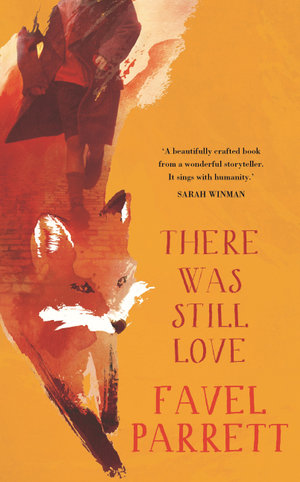
3. There was Still Love by Favel Parrett A different perspective on love, set in Melbourne and Prague: love between sisters separated by distance and ideology; love between mother and child, and most of all love between grandparent and grandchild. And now that I’m a grandmother too, I understand this even more. (My review here).

Three Comedies

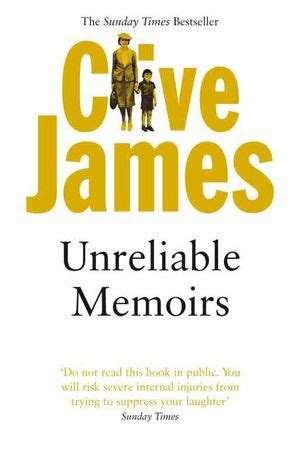
4. Unreliable Memoirs by Clive James. I remember sitting in the train reading this book, laughing until I cried. One of the funniest books I have ever read. No review- I read it years and years ago.

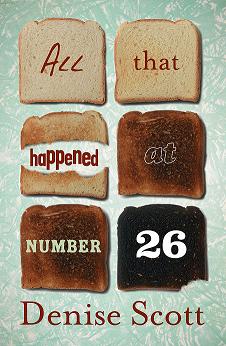
5. All That Happened at Number 26 by Denise Scott. I wish that ‘Scotty” was my friend. I just love her. Nothing really happens in the book- it’s more a series of anecdotes and yarns about family life, marriage, motherhood and daughterhood. Family is at the heart of this book, but there’s barbs too. She fears that now that her children have grown up that she has lost her well of family anecdotes, but I don’t think she need worry. She has that wonderful ability of sniffing out the ridiculous in life and she makes me feel good about being a 60 plus year old woman living in Melbourne. (My review here)

6. I Built No Schools in Kenya by Kirsten Drysdale. This is not high literature, and it is not meant to be. I found myself laughing out loud in places, and the whole thing rang completely true to me – even the dynamics of a family struggling with dementia, which is its own form of madness. She has an acute eye for the absurd, but also is a keen and thoughtful observer of what is going on around her. Of course, part of my delight in this book was that I was familiar with the setting in Nairobi, which I have visited several times. (My review here).

So that’s August’s chain. September is Anna Funder’s Wifedom. At least I’ve heard of this one!

Congratulations Nathan!

I’m delighted to learn that Nathan Hobby won the W.A. Premier’s Prize for the Book of the Year for his biography of Katharine Susannah Prichard. You can read his response to the award in his blog here.

I reviewed his book here and hopefully receiving the award will give his sales another little nudge.

Six degrees of separation: from Friendaholic to…

It’s first Saturday of the month, which means that it’s Six Degrees of Separation day. This is a meme hosted by Kate at her BooksAreMyFavouriteandBest website. Here’s how Kate describes it:

On the first Saturday of every month, a book is chosen as a starting point and linked to six other books to form a chain. Readers and bloggers are invited to join in by creating their own ‘chain’ leading from the selected book. Books can be linked in obvious ways – for example, books by the same authors, from the same era or genre, or books with similar themes or settings. Or, you may choose to link them in more personal ways…

Kate’s starting book this month is Friendaholic by Elizabeth Day which, true to form, I have not read. I’m taking the ‘similar theme’ route, revolving around the rather predictable theme of friends and friendship.

Of course, thinking about friendship immediately brings to mind My Brilliant Friend, the first book in Elena Ferrante’s Neapolitan Quartet about the friendship between Elena and Lina, two young girls growing up in a poverty-stricken section of Naples in the 1950s. Lina marries young, becomes financially successful, while Elena undertakes an academic and writing career. Told from Elena’s point of view, Lina is always smarter and more street-smart and, along with Elena, you’re never really sure whether you trust her or not. Like all long term relationships, there are periods of closeness and distance, and their fortunes ebb and flow, both emotionally and financially. (See my review of the Quartet here).

Friendships are often rooted in (and perhaps contribute to) a shared world view, and when the commonality breaks down, so does the friendship. Historian and academic Anne Applebaum talks about this in Twilight of Democracy: the Failure of Politics and the Parting of Friends. In this book, which is a mixture of memoir and political argument, Applebaum talks about her falling out with her friends, most of whom would fit into that American Enterprise Institute, Thatcheritish, conservative-leaning (but not Trumpian) Republican world of intellectuals and diplomats. They have found themselves on different sides of a political divide that runs through the right in Poland, Hungary, Spain, France Italy, and with some differences, the British right and the American right. This political divide has ruptured their personal friendships as well. (See my review here).

Helen Garner’s thinly disguised memoir The Spare Room explores the demands and limits of friendship when she is asked to host a friend from Sydney who is seeking alternative therapy for advanced cancer. Nicola’s death is not really the core of this story: instead the drama of the book is Helen’s rage and inadequacy in the face the demands of friendship, and her frustration at her friend’s relentless faith in a “cure” that Helen feels is quackery. (Short review here).

Sigrid Nunez’s book The Friend is quite short, and it left me wondering whether I understood it properly. It is addressed to an unnamed, dead friend in the second person “you” throughout, and it is a series of short paragraphs, separated by time and asterisks. The unnamed narrator is a female writer, teaching creative writing at a university as many writers tend to do. Her friend, to whom the book is addressed, was her mentor, a fellow teacher and also a writer and he had committed suicide. (Short review here).

Friendship is particularly painful in adolescence, and most coming-of-age books explore it, or its absence, as part of growing up. In Another Brooklyn by Jacqueline Woodson, the main character, August, was motherless when her father shifted her from SweetGrove Tennessee to live with her younger brother in Brooklyn. Forbidden by their father from going down into the streets to play with the other children, August watches three other girls, Sylvia, Angela and Gigi as they amble the neighbourhood streets. As she and her brother gradually achieve more independence, August comes to know the three girls and is embraced into their friendship group. Over time each of the girls has to find her own way from parental demands, expectations and inadequacies. (See my review here).

And then there is a absence of any friendship whatsoever. The eponymous main character in Gail Honeyman’s Eleanor Oliphant is Completely Fine is a lonely thirty-year old woman. Just not ‘self-contained’ or without friends, she is bone-achingly lonely. Eleanor is gradually brought into a circle of other kind people – not saints, but just ordinary people acting with everyday kindness. (Review here).

So, no great leaps of creativity or imagination in putting together my chain, but rather a linking of books which all throw their own perspective on the phenomenon of friendship.

‘The Cuckoo’s Calling’ by Robert Galbraith

2013 (2014) 560 p.

I’m not much of a fan of detective fiction and murder mysteries, and I don’t read much of it. I do watch it on television, but either I roll my eyes at the predictability of simple murder mysteries like ‘Midsomer Murders’ or ‘Death in Paradise’, or I ending up saying “But what happened?” at more complex and convoluted murder mysteries that demand an inordinate number of hours to reach completion. So, I wouldn’t have necessarily chosen to read this book, but it was selected by my CAE bookgroup and I enjoyed it much more than I anticipated I would.

As nearly the whole world knows by now, Robert Galbraith is a pen-name for J.K.Rowling who, as an experiment, wrote a book under a pseudonym to gauge the effect of her name in generating sales. Well, she found out: the first edition ran to only 1500 copies, and it was #4,709th on the Amazon best-seller list until the news that Robert Galbraith was in fact J.K. Rowling broke on 14 July 2013. [As an aside, the question over the effect of her name has had a twist. I volunteer at Brotherhood Books and after noticing several visibly unread donations of Robert Galbraith books over a number of weeks, I wonder if they were given as gifts to former Harry Potter aficionados who either (a) decided without opening it that they didn’t like crime fiction or (b) consciously refused to read it on account of J.K.Rowling’s views on transgender rights. Interesting.] I’m too old to have been caught up in the Harry Potter phenomenon: the only one that I read was in Spanish, which is probably not a good basis for judging its quality.

But whether it’s Robert Galbraith or J.K. Rowling, I was completely caught up in her story-telling within a few pages. She follows all the reassuring conventions of old-fashioned detective fiction – a murder, a flawed main character with a side-kick, a range of possible murderers, lots of sitting in pubs – but she also developed her private detective with the suitably-implausible name of Cormoran Strike with a physical (as distinct from emotional or psychological) disability and an eager female secretary who brings a frisson of romantic tension. Strike lost the lower part of his leg while serving in Afghanistan in an investigative capacity, his business is failing, and he has resorted to sleeping on a camp bed after his girlfriend evicted him from her flat. Meanwhile, his temporary secretary Robin has recently been engaged to Matthew, an accountant, who disapproves of Strike and wants her to find a more respectable secretarial position- something that is less and less appealing to Robin as she is drawn into the investigation.

Perhaps reflecting Rowling’s own ambivalence about fame in the wake of her Harry Potter success, the death that opens this book is an apparent suicide of supermodel Lula Landry from her Mayfair apartment. His investigation is funded by Landy’s brother John Bristow who suspects a police cover-up. In investigating Lula´s death, Strike becomes immersed in the world of high-end fashion, celebrity and paparazzi. He has a family connection with this world, as his father was a Mick-Jagger-esque rock star, but he brings only trouble to Strike’s life. As part of his investigation in a scene reminiscent of Princess Diana, Strike finds himself in a chauffeur-driven car, blinded by the flash of camera bulbs, as he seeks out interviews in nightclubs, photographic studios and luxury apartments. Apart from the conspicuous consumption and empty vanity of this lifestyle, grubby motivations of ego and revenge play out in explaining Lula’s death.

There is a wide range of characters, of varying wealth and class, who swim into and out of the frame as red herrings. Rowling denotes these variations through dialogue, which at time verges on cliche, but these conversational inflections help to distinguish the characters from each other and to reinforce their social distance from each other. It was a long book, and at one stage when a character re-emerged with a new significance, I found myself having to leaf back through the book to remind myself who she was.

This book consciously stays within the crime fiction genre, with some rather surprisingly dated gender stereotypes, which I hope she subverts in later books in the series. The ending has a whiff of the Agatha Christies about it with its “You’re probably wondering why I called you to the drawing room” type ending, but I was grateful that the murderer was clearly identified, the motivations explained and all loose ends tied up. At least I wasn’t left saying “But what happened?”

My rating: 8.5/10- and yes, I will seek out more Robert Galbraith books and see if I can find the television series somewhere.

Sourced from: CAE bookgroups