Category Archives: Uncategorized

Australian Women Writers Challenge 2014 Finished

Well, it’s the end of the year and time for toting up my reads for The Australian Women Writers Challenge again.  I had intended to read more histories written by women, and I’m rather disappointed to see that I hadn’t really read as much as I thought I had.  I do, however, have an excuse as this thesis really does need to be written.  In fact, the high number of fiction books gives a hint as to why it hasn’t been finished this year as planned.

Here they are, then:

FICTION

The Golden Age by Joan London

When It Rains by Maggie Mackellar

The Kayles of Bushy Lodge by Vera G. Dwyer

All the Birds, Singing by Evie Wyld

After the Fire, A Small Still Voice by Evie Wyld

Letter to George Clooney by Debra Adelaide

NON-FICTION  (Memoirs, biographies, non-fiction)

Velocity by Mandy Sayer

The Tainted Trial of Farah Jama Julie Szego

Boy, Lost by Kristina Olsson

Night Games Anna Krein

Housewife Superstar Danielle Wood

The Ghost at the Wedding Shirley Walker

Mrs Cook: the Real and Imagined Life of the Captain’s Wife Marele Day

Madness by Kate Richards

HISTORY

Shattered Anzacs Marina Larsson

What’s Wrong with ANZAC?  Marilyn Lake and Henry Reynolds

The Forgotten Rebels of Eureka Clare Wright

Broken Nation Joan Beaumont

And my favourites?  The Golden Age for fiction; a dead heat between Boy, Lost and Madness for non-fiction and Shattered Anzacs for history.

awwbadge_2014Posted to Australian Women Writers Challenge 2014

Imagine there’s no countries

I don’t normally get my history from the New Scientist, but there was an interesting article in the 6 September 2014 issue called “Imagine there’s no countries…” written by Debora MacKenzie.  Her article incorporated some historical approaches (Benedict Anderson etc) but also highlighted findings from the social sciences related to nationhood.  For example, here’s some rather disjointed observations from the article that attracted my attention:

Robert Dunbar of Oxford University has found that one individual can keep track of social interactions linking no more than about 150 people. He came up with this figure through studies of villages and army units throughout history and the average tally of Facebook friends (!!).  Society transcended that number by the invention of hierarchy, which meant that leaders could coordinate large groups without anyone having to keep personal track of more than 150 people.

Peter Turchin of the University of Connecticut notes that Eurasion empires grew largest where fighting was fiercest, suggesting that war was a major factor in political enlargement.  Picking up on the idea that hierarchy facilitated larger groups than the 150 figure, Turchin suggests that in addition to their immediate circle, an individual interacted with one person from a higher level in the hierarchy, and typically eight people from lower levels.

These hierarchies, of course, are not nation states.  A number of historians have concluded that states define nations, not the other way round.  For example, in France in 1789, half its residents did not speak French; while in Italy in 1860 at reunification, only 2.5% only spoke standard Italian.

When nation-states fail, they break down into civil war.  Civil wars are often blamed on ethnic or sectarian tensions, but there are other nation-states that combine multiple ethnicities and religions.  What makes the difference, the article suggests, is bureaucracy.  An interesting thought, especially given the rage that conservatives, in particular, direct towards ‘red tape’.  While we might complain about lengthy processes, queues etc. a return to  the alternative of patronage, bribery and ‘who you know’  being the basis of service provision  is pretty unappealing.

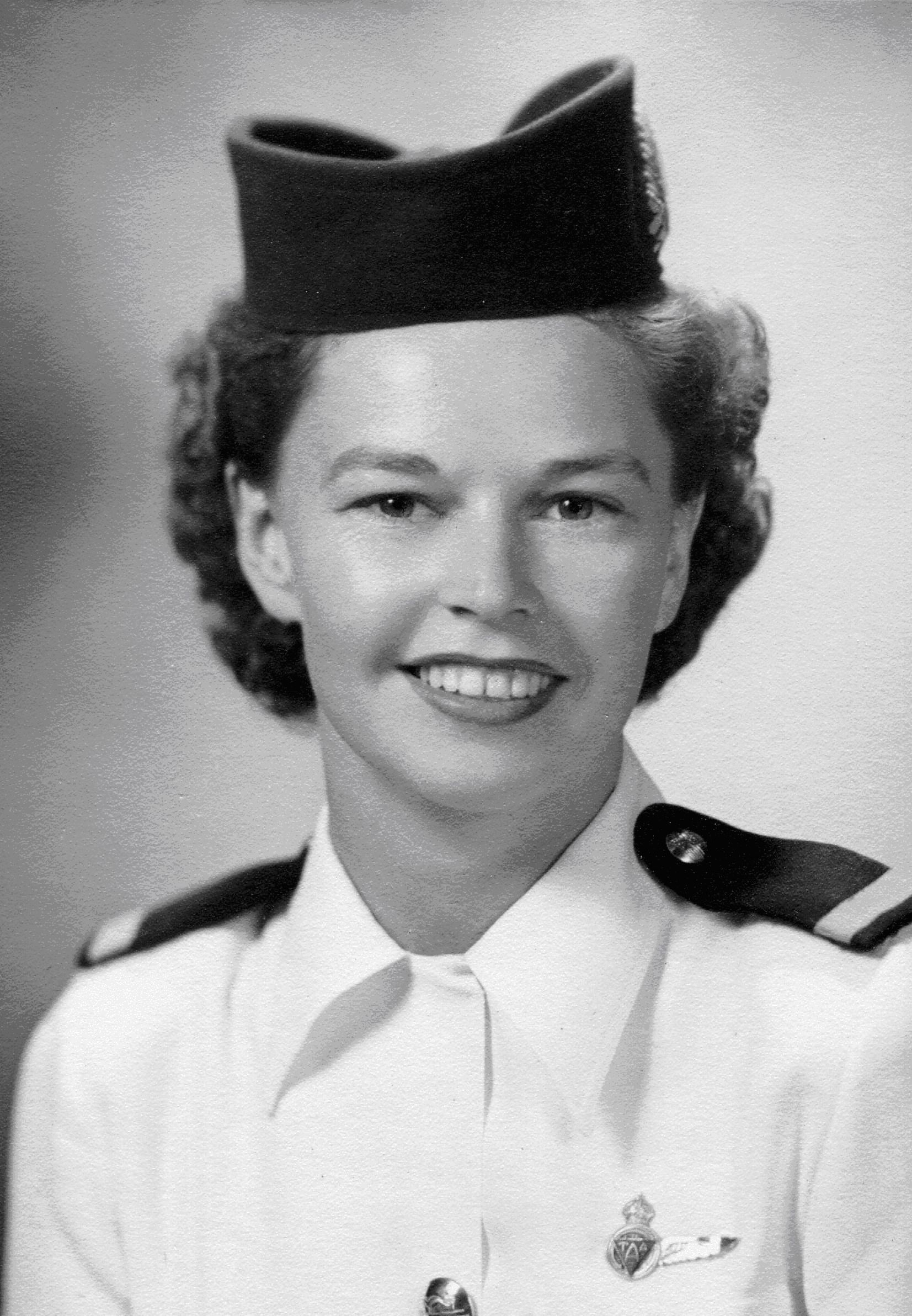
My mum 08/09/25- 17/12/10

Four years ago today.

011

Mum was an airhostess with TAA before she married.

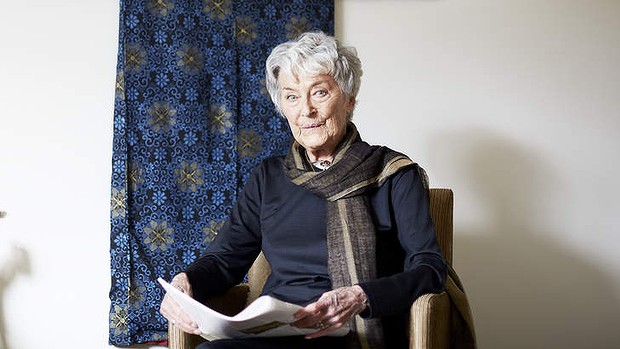
Warrior of the Mind- Inga Clendinnen

When I read this interview by journalist Jana Wendt with Inga Clendinnen – my most revered historian- I didn’t know whether to smile or weep.

To be honest, I did both.

Clendinnen2014


My response on learning of her recent death is here.


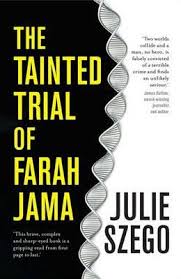
Julie Szego ‘The Tainted Trial of Farah Jama’

szego

2014, 256 p.

Our attention span for court cases is very short indeed.   There might be a splash of publicity during the committal hearing, then nothing is heard for some time.  The actual case, some months later, might attract attention if it is particularly salacious or graphic.  The sentence is given, then the main characters subside back into obscurity and you’re left thinking “Now, what was that case again?”.  Usually.  But sometimes there is something about a case that snags the attention of a passing journalist or essayist, who picks at the threads and expands our gaze beyond that particular case into society more broadly.  This book does just that.

Farah Jama was a young Somali man who was jailed for raping a woman thirty years his senior in a nightclub.  He insisted that he was not at the nightclub and that he had never seen the woman before.  The woman could not recall seeing any African men at the club that night, and could remember nothing at all about the attack.  Farah was convicted solely on DNA evidence and eighteenth months later his conviction was overturned.

In this book, journalist Julie Szego traces through the crime, the case and the circumstances that led to the overturning of his conviction.  On the way she finds herself on the edges, and eventually outside, the local Somali community as Farah becomes increasingly resistant to her questioning. He becomes determined to take his own story back with an eye to his own book somewhere down the line, and sees her as a competitor.  She finds herself bridling against his anti-woman stance, even while she can understand it on one level.  Her investigation takes her into the management practices and risk management policies of the Macleod Forensic Laboratory where the DNA was tested, and the organization’s defensiveness after several previous errors in dealing with DNA.

I think that the first book of this kind I read,  where the journalist wades into the backwater of a crime, was Truman Capote’s In Cold Blood.  I’ve read several others in recent years: Helen Garner’s Joe Cinque’s Consolation and The First Stone, Chloe Hooper’s The Tall Man and Anna Kreins Night Games.  It strikes me, looking at this list, that these later books are all written by women, and they all share an ambivalence and tentativeness about coming to a firm conclusion.  This is probably because defamation lawyers are lurking, but also I wonder if there’s not a reticence to be too black-and-white, too certain.

It’s a strange genre in that generally readers know the outcome before they even crack open the book.  The books do not appear on the shelves until some time afterwards, and they often follow a flurry of newspaper and television coverage at the time of the crime and then at key points in the resulting trial.  The writer herself (or himself, in the case of Capote) becomes part of the story as well and often has to face her own prejudices and doubts. There’s often a larger picture as well: the football culture, black/white policing relations, the sharp edge of perfection, feminism and in this case, Somali ‘integration’.

This book is an easy read, told in an easy conversational style. There are chapters, but the narrative is presented in small segments within a broadly chronological structure.  The focus shifts from one participant to another, and in this case, there are no baddies as such, only powerlessness and an underlying question of racism.  Questions are raised, of course, about the dubiousness of the prosecution in the first place, and the reliability of DNA evidence.

Sometimes I watch television reports of the sentencing statements given from the bench after a particularly newsworthy crime.  The judge often mentions that the accused “showed no remorse” as a factor for increasing the sentence. That seems odd to me. Why would a person who claimed that they had not committed the crime- especially to a stranger- be expected to show remorse?  Perhaps a detached, abstract sympathy, but no remorse.

Farah Jama has every right to be angry.  I guess that we can take some small comfort that everything worked out in the end, although we have no right to expect him to feel that way.  The ease with which any questions about his original ‘crime’ were deflected is unsettling.

awwbadge_2014I’m posting this review to the Australian Women Writers Challenge.

Abbott on MH-17

I see in an opinion poll today, that Abbott has been ranked well above Barak Obama and David Cameron on showing leadership in the wake of the MH17 disaster.  I note, too, that in terms of who respondents would prefer to stand up for Australia’s interests overseas, Bill Shorten came out on top. 

The results comparing world leaders do not surprise me at all. Neither Obama nor Cameron seem to be making it an issue of national identity in the way that Abbott has, given the relatively few victims from either of those countries.  A more sensible comparison would be with the Dutch and the Malaysian leaders, both of whom represent countries that have suffered, but who have expressed their sorrow without the hairy-chestedness of Abbott.

I do not feel at all reassured by Abbott’s handling of this tragedy. The man’s judgment is off. I have no affection at all for Putin, and I strongly suspect that evidence will point to weapons provided by Russia, but let the evidence fall where it will.  And it’s all about evidence.

In the immediate aftermath, on the basis of no evidence whatsoever, Abbott declared Russia’s involvement:

I stress: it is not an accident, it is a crime, and criminals should not be allowed to get away with what they’ve done,” Mr Abbott said. “So, there has to be a full impartial international investigation and Russia should certainly not be allowed to stand in the way of that just because the aircraft has come down over territory controlled by Russian-backed rebels….

We also know who is very substantially to blame for those problems, and the idea that Russia can somehow say that none of this has anything to do with them because it happened in Ukrainian airspace frankly does not stand up to any serious scrutiny.

“I want to say to the Australian people that as far as I am concerned, when you have a situation where Russian-backed rebels appear to have killed Australians using, it may well turn out to be, Russian-supplied heavy weaponry, Australia takes a very dim view indeed and we want the fullest possible investigation….

“I just want to say that it is absolutely imperative if Russia is to maintain any international standing at all that there be complete Russian co-operation with this,” he said. “No provocation, no excuses, no blame-shifting, no protecting of people who may be backed by Russia but who may have been involved in this terrible event….

 
This instant rush to judgment is Abbott’s alone: both the Dutch and Malaysian heads of state cautioned the need for evidence.  No such qualms with Abbott.
 
Bill Shorten interjected his own bit of hairy-chested nonsense with his suggestion that Putin would not be welcome at the G20 and Abbott quickly adopted it as a “fair question”.  It’s not.  Australia may be hosting the G20, but Russia’s presence is not a matter for Australia alone.
 
Our response has been militaristic from the start, dubbed “Operation Bring Them Home”.  Then there was the declaration that we would be sending armed police to “secure the site”.  Oh we don’t want to get involved in the politics, says Abbott, we just want to bring our people home. As soon as Australian weapons are carried onto that soil, it’s political alright. Fortunately that thought bubble seems to have lapsed and wiser heads have prevailed.
 
He seems completely oblivious to the fact that there is a war going on over there. I note that neither the Ukranians nor the rebels have stopped fighting: in fact, the Ukranians seem to be stepping up their attacks to regain territory.
 
Australia did make good use of its Security Council seat to garner unanimous international support for an impartial enquiry: a Council seat that the Coalition had sneered at previously.  All this concern for international protocols is rather galling given the deliberate disregard for similar international protocols in relation to refugees.
 
It’s a good reality check to listen to European reports of the recovery effort: try BBC, or Deutsche Welle.  There you’ll learn that it is the Dutch-  those Dutch who have treated the victims with such grace and dignity, those Dutch who in the midst of their sorrow held back from lashing out until the evidence is in- who are taking the lead here.  Just as well, too.

‘The Case behind the Case Books’ at Rare Book Week

Tuesday 22nd July, 1-2 p.m.  Royal Historical Society, 239 A Beckett Street, cnr. A Beckett and William Street, Melbourne

Rarebooksweek

‘Mrs Cook: The Real and Imagined Life of the Captain’s Wife’ by Marele Day

mrscook

357 p. 2002

Marele Day has subtitled her book “The Real and Imagined Life of the Captain’s Wife”, signposting that this is not a straight biography, but nor is it pure fiction either.  The book is organized around a fairly large collection of existing Cook artefacts which, from the the notes at the back of the book, are located in various museums, libraries, churches and parks across the world.  Some of them are documentary, but several of them are domestic objects like drinking glasses, teapots, fans.   She uses these real-life objects as the tethering posts to which she attaches her fictional narrative, complete with conversation and internal speech. The narrative unfolds chronologically, with each chapter named for the object which appears somewhere in that chapter.

However, given that many of the objects are rather domestic in nature, it means that the narrative is even more quotidian than it would already have been, given that it is examining the life of the woman left behind by one of the world’s great navigators.  At times, too, the narrative becomes quite contorted and unnatural in trying to bring the object into the story- for example, in devoting a whole chapter to the act of buying a teapot.

The ‘imagined’ life in the title mainly revolves around Elizabeth’s emotional and sexual life.  A explorer’s wife spent years not knowing whether her husband was dead or alive, and somehow life had to be lived at two speeds: the long years of waiting, reunion and waiting again,  and at the same time the day-to-day accumulation of  rather banal, land-based, domestic detail. Elizabeth Cook  endured the tragedy of outliving her husband and all six children, and the book makes much of her sorrow.

Day has decided to remain true to the main facts of Elizabeth’s life – thus the ‘real’ Elizabeth stays firmly rooted on solid ground, waiting for James to return, with no imagined affairs, imagined illegitimate children, or imagined crimes of passion.  The ‘imagined’ part of the book is most clearly seen in the sexual passages, of which there are several.  I found them all rather uncomfortable, I must admit. Somehow, looking at that picture of James Cook sitting  in his skin-tight white breeches looking at a scrolled map on the table before him will never be the same again:

He would start at the nape of her neck, gently blowing aside the wisps of her hair, and making a place for his lips.  He began the journey south, each vertebra rising to the moist warmth of his mouth.  The long channel under which lay the reef of her backbone descended to her buttocks, two plump hillocks with a dimple either side.  Elizabeth lay with her arms by her sides, and when she shifted, bent her elbows to make a pillow of her hands, James saw the shoulder blades rise up like the beginnings of angel wings….When she was ready, she turned to face him and their desires would meet… Gradually, James’s gentle perseverance awakened Elizabeth’s pleasure.  How wonderful that her body opened to him, moistening the pathway he would take.  Then he lifted her into rapture and Elizabeth became a wave.  (p. 102)

I was never convinced of the emotional and sexual authenticity of this eighteenth century woman, who seemed to me to have a very twentieth century head on her shoulders (and other parts of her body).   I was put off by the awkward, didactic tone of the text when the author explained the context and use of particular artefacts, and its juxtaposition with  the heavy-breathing, purring tone of passages describing their intimate life.

Nonetheless, the decision to integrate real-life artefacts into the story is an interesting one, and I find myself wondering if there are other ways that it could have been done more successfully.  Could the author have inserted herself into the text more  in describing the artefact and its provenance in a strictly non-fictional way at the start of the chapter, then moving to the imagined story? Could the artefact and associated information  have been marked out typographically from the fictional text?

This book was a bookgroup selection, and I must confess that I would have abandoned reading it had I not felt an obligation to read to the end.  It was probably one of the most divisive books we’ve read in recent years: some absolutely loved it; others were distinctly underwhelmed.  I’m afraid that I was one of the latter.

awwbadge_2014I have posted a link to this book on the Australian Women Writers Challenge.

Mirror, mirror

There was an interesting article in the New Scientist from 2 November last year.  It describes a Halloween party trick that involves quite simply looking at your face in the mirror.

As I prepare the room, it feels as if I’m getting ready for a seance.  I close the curtains to block out most of the light and place two chairs about a metre apart.  I prop up a large mirror on one and sit in the other so that I can just see my reflection in the near darkness.  Then I set a timer for 10 minutes and wait patiently for the faces to appear.

When they do, it is startling.  At first the distortions in the mirror are small: a lifted eyebrow, a twitch of the mouth.  But after seven minutes my reflection suddenly looks fake, like a waxwork.  And then it is no longer my face.  For a few seconds an old man with a thickly wrinkled brow and down-turned mouth stares back at me.

Apparently these visual illusions are quite common. Giovanni Caputo, a psychologist from the University of Urbano in Italy came across the phenomenon by accident when conducting an experiment looking at self-identity in a room entirely enclosed with mirrors.  The experiment was usually conducted in normal lighting, but one day he decided to dim the lighting, and found that many people experienced a distortion in what they saw after about 10 minutes.

Since his chance discovery, Caputo has found that most people perceive some degree of eerie distortion to their face if they stare into a mirror in low light for at least 10 minutes. “Usually, after about 1 minute of mirror-gazing, the eys start to move or shine, the mouth opens, or the nose becomes very large,” he says. “If you continue to gaze there are very big changes, until completely new faces appear.”  And it’s not just human faces that are seen-” some report seeing animals and others fantastical or monstrous beings….You are suddenly conscious that there is another person behind the mirror.”

The article offers a number of explanations for the phenomenon. One is that the incomplete view of the image disrupts the way that the brain binds together features to make a recognizable face, and so it patches together a ‘photo fit’ of features.  Another suggestion is that it is a form of dissociation, which is apparently heightened by looking in mirrors.

I must confess to being a little frightened to try it myself.  But it did bring to mind many of the those Victorian horror-stories and reports of seances conducted in dimly lit rooms.  Of course, darkness hides a plethora of tricks and manipulations by unscrupulous shysters, but it’s an interesting thought that perhaps some of the effects are generated within the brain of the perceiver as well.

Source: “Mirror, mirror” by Douglas Heaven. New Scientist, 2 November 2013

Queens Birthday

It’s the Queens Birthday holiday in Australia today.  I know that only naughty bloggers recycle old posts, but I did write this years and years ago…..

And I suppose that I should mark the day in some fashion.