Category Archives: Uncategorized

#TBR20

I can feel new carpet coming on. Our carpet is sixteen years old and, as we live in a smallish unit, it suffers a fair bit of wear-and-tear.  Moreover, our three miniature foxies  (two aged 16, one aged 14) are entering the twilight of their lives: one in particular is very poorly and another is likely to follow that moonlit pathway quite soon. The third (and my favourite, I confess) is blind and deaf with terrible teeth and she, too, is not long for this world I’m afraid.  “After the dogs!!” I have promised myself as I grimly vaccuum the threadbare steps and the doggy stains that I hate so much.  And if we’re going to carpet, then we may as well paint while all the furniture is taken up…and all this means I NEED TO DO SOMETHING ABOUT THE BOOKS.

I don’t actually buy a lot of books because I use my library a great deal.  I love receiving books as a present but  I’m too miserly to spend $30.00 on a weekly basis when I know that the chances of reading a book for a second time are not high.  I am, however, a sucker for the book stall at the Uniting Church fete, the new op-shop down the road, the new Little Free Library installed in the park and the Bargains table at Readings bookshop.  Then there’s Mr Judge, whose appalling library borrowing record and love of second-hand books compels him to bring home several books a week that pile up in his study, many of which I’d like to read one day (although I’ll give all the science fiction a miss).

But I really do need to READ some of these looming piles of books so that, when the new carpet beckons, I can sort out what I really do want to keep and dispense with two of the bookshelves in my cluttered and thoroughly unsatisfactory lounge room.  The TBR20 Reading Challenge sounds like a good idea to me.

Started by Eva Stalker in Glasgow, the TBR Challenge involves reading twenty books in a year from your own shelf before buying or borrowing any more. Well, eschewing the buying part should be fairly easy for me, but the borrowing not so much. As a result, I’ll blithely ignore that part of the challenge and just undertake to read twenty books that I already own by 30th June 2016. You’re supposed to sign up on Twitter with the hashtag #tbr20 but I must confess that I don’t think I know how to work Twitter. I need a young person to help me.

I’m quite looking forward to it. As far as the brand new un-read books are concerned, I obviously thought that these books were so desirable that I shelled out the money for them at some stage. As for the second-hand books, well I must have brought them home for a reason too.

Some people do several reading challenges, but I only until now have signed up for one: the Australian Women Writers Challenge.  I do try to catch up on the books that are short-listed for the major prizes, which involves reading a certain quota of new work.  The TBR challenge, however, is going to plunge me into some retro reading, I suspect. Prepare for lots of reviews of  early-twentyfirst-century books.  Doesn’t matter! I’m looking forward to it!

What would Willis do? #3

Well, the presentation of Queensland Chief Justice Tim Carmody to a legal conference on Hamilton Island has been cancelled.

The Guardian has more.

We’ll have to continue to wait and watch.

What would Willis do? #2

A few weeks ago I made reference to the controversy swirling around the Chief Justice in Queensland, Tim Carmody.  I’m particularly interested in this, having spent the last eight years of my life working on a judge who was dismissed from his position twice, John Walpole Willis.  Willis’ dismissal was initiated by the local governor  (rather than at the initiative of the Colonial Office) and, even though the principle of judicial independence was (and is)  tenaciously held amongst judges, none of his brother judges who actually presided alongside him lifted a finger in his defence.

Before I become too excited about parallels between Willis and Carmody, a few qualifications are in order. The Tim Carmody situation is fundamentally different to that of Willis, because the complaint is that Carmody is too close to government (or at least, the recently departed LNP government), rather than too antagonistic towards government as in Willis’ case. And we need to remember that even though judges (then and now)  might put great store on judicial independence, this sentiment was not shared by the 19th century British government and the Colonial Office, who expected judges to act as a component of colonial administration rather than hold themselves separate from it.  As a colonial judge, Willis was appointed “at pleasure” which meant that the government could dismiss him at will.  British judges, on the other hand,  were appointed  “during good behaviour” which meant that there had to be cause for the dismissal (which is the case today). However, there are similarities between the Carmody and Willis situation in that here we can witness a public discussion about judicial fitness played out through the media, and that judicial peers and the Bar are  openly critical of the Chief Justice.

So, I’m watching this with great interest, finding many parallels.

When Carmody was first appointed by the Newman government in July 2014, there was already disquiet.  After a career in the Family Court (from where he had the backing of former judge Alistair Nicholson QC) he had served as Chief Magistrate for only nine months before being appointed Chief Justice. Several current and former judges and senior lawyers criticized his inappropriate closeness to the Newman government, his inexperience and the lack of support within the legal profession for his appointment.   The Saturday Paper of  5 July 2014    notes  Carmody’s open support as Chief Magistrate for the Vicious Lawless Disestablishment Act of 1213 (i.e. the VLAD anti-bikie legislation) and his announcement that judges should not use the  “weight of their office to engage in the public debate or make comments about the comparative morality or fairness” of the government’s legislation. He was strongly supported by the local Murdoch paper and the police union.  The article is critical of his track record in the Family Court and as Chief Magistrate and raises doubts over the selection process.

Stephen Kein SC and Alex McKean (National President of the Australian Lawyers for Human Rights and defence counsel for Dr Mohamed Haneef) and Alex McKean (Past Co-convenor  of the Queensland chapter of Australian Lawyers for Human Rights, barrister and lecturer at the University of the Sunshine Coast) have written a series of blogposts on the Justinian site regarding the Carmody appointment.  They criticized his appointment from the start in A Matter of Principle written on 15 September 2014. They too discussed Carmody’s inappropriate closeness with the government, quoting the former Solicitor-General Water Sofronoff QC. They note the perceived lack of eminence amongst his peers. and  criticisms about Carmody’s frequent declarations of independence in the media.  In relation to Carmody’s insistence that judges should keep quiet about government legislation, they cite both Tony Fitzgerald QC and Geoffrey Robertson QC, who take an opposing stance.  They then go on to discuss the stance of Christopher Dore, editor of the Courier-Mail, who wrote several editorials in support of Carmody.

On 30 March 2015 they returned to the issue with  Chief Justice of Queensland-Addressing the Dilemma. They noted  Judge Margaret McMurdo also faced criticisms of lack of experience when she was elevated to the second highest judicial position in Queensland, the President of the Court of Appeal. She, however, has become widely respected.  Justice Wilson’s speech (that I wrote about here) is also discussed, and especially his accusation that Carmody had questioned  the roster system  used for allocating judges to the court of disputed returns, and then tried to influence the randomly appointed judge.  As Graham Orr explains in an article in the Brisbane Times of 28 March 2015 , this was a particularly delicate matter when it appeared that the electoral seat of Ferny Grove might be decided in the courts after the Queensland election where the LNP government was turfed out after one term.

The next day (31 March) they addressed the issue again with their blogpost Queensland CJ leaps to his own defence.  They noted criticisms that Carmody had been too often absent from the bench, they turned again to the Court of Disputed Returns, and briefly mentioned the position of the senior judge administrator, whom Carmody had sacked.

Since then, there has been controversy over contact between Carmody and Bravehearts campaigner Hetty Johnson in regard to the appeal case of the murderer of  Daniel Morcombe  discussed in the Guardian article http://www.theguardian.com/australia-news/2015/may/07/tim-carmody-recuses-himself-from-appeal-by-daniel-morecombe-killer on 7 May 2015. In late April, Hetty Johnson accused Carmody’s critics of being “petulant“.

The Chief Justice is currently on sick leave for a back condition, but on 25th May he announced to the Australian newspaper that he had offered to resign on condition that a judicial commission be established.  However, an article by Mark Bahnisch in the Guardian on 26 May asserts that Tim Carmody can’t demand reform as part of his severance package. Meanwhile, the Chief Justice will be giving the opening address at the North Queensland Law Association Conference this coming Friday 29 May where he will lay out his “vision” for the courts and, according to a Brisbane Times article, “expand on his issues with the judiciary and particular members of it”.

I’ll be very interested to read what he says.

Banyule Homestead sold

Banyule Homestead went up for auction on Saturday 16th May 2015 and sold for $5.2 million.  Unfortunately only registered bidders could gain access to the interior of the homestead on the day, leaving lesser mortals to mill on the lawns outside.

The auction was held at the rear of the property. Bidding started at $4 million, initially at $100,000 increments, then smaller.  Progress was boosted considerably by a $500,000 bid that took it from $4.5 million to $5 million.  It was purchased by a very young-looking couple for $5.2 million.

The view from the back is spectacular.  There’s nowhere else that you can get this outlook which makes the loss of this property from public ownership and access even more regrettable.

The Age has a good article on the auction, complete with video.

Writers and Readers: Books that Shaped and Subverted the British Empire Conference 8-9 May 2015

I’ve just spent a fascinating two days at a conference held at Melbourne University that explored the impact of books and writing on and in the British Empire. Held to support the launch of Ten Books that Shaped the British Empire: Creating an Imperial Commons, this was an interdisciplinary conference that brought together academics from history, anthropology, English and museum studies to examine the writing, reading and distribution of books that both shaped and subverted the British Empire.
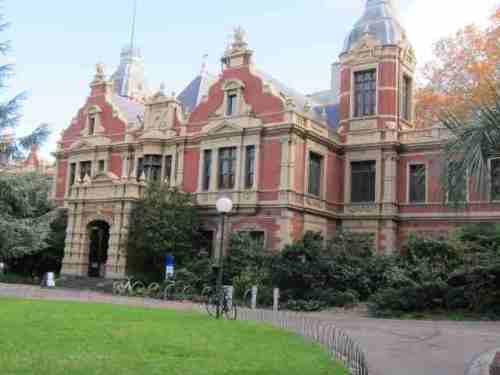
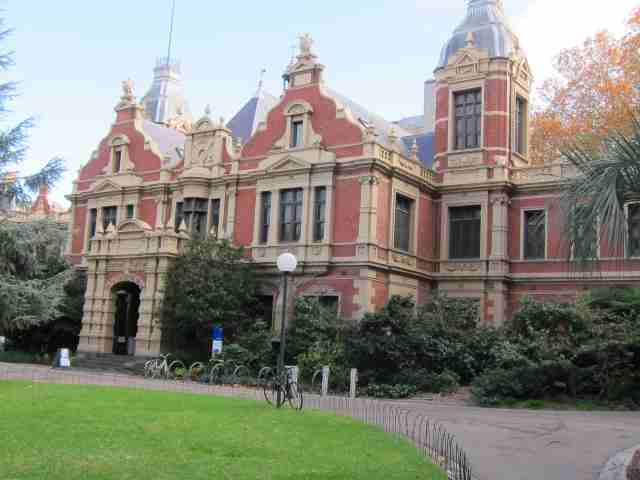
1888 Building, University of Melbourne

1888 Building, University of Melbourne

The keynote address was by Elleke Boehme, Professor of World Liberature in English from Oxford University (and one of the judges for the 2015 Man Booker International Prize).  She compared autobiographical texts written by Jawaharlal Nehru (Autobiography and The Discovery of India) and Nelson Mandela’s Long Walk to Freedom.   Both texts were written by outstanding leaders, both were fostered during long periods of imprisonment, and they even drew on similar themes, tropes and imagery. However, Mandela’s text departed from Nehru’s narrative in that he projected a more confident view of the future beyond the nation.

It was followed by a session that explored religious texts in empire. Troy Heffernan from USQ discussed the King James Bible and the Book of Common Prayer- two Anglican texts that accompanied the expansion of the British Empire.  I hadn’t realized that the Book of Common Prayer had undergone major revisions, most particularly in relation to the daily obligations that had shaped earlier Anglican religious expression. Then Samia Khatun from the University of Melbourne explored the global circulation of the Quran, and the Ahmadiyyan prophesies that emerged from British India at the end of the nineteenth century.  The prophesies of Mirza Ghulam Ahmad, were regularly published in Australian newspapers, and his predictions of the defeat, rise and then collapse of Turkey were interpreted, of course, in the light of World War I. Dr Khatun then shifted her attention from these public prophesies to the private stories of prophesies and dreams that were circulated through women’s stories, drawing on stories from her own family.
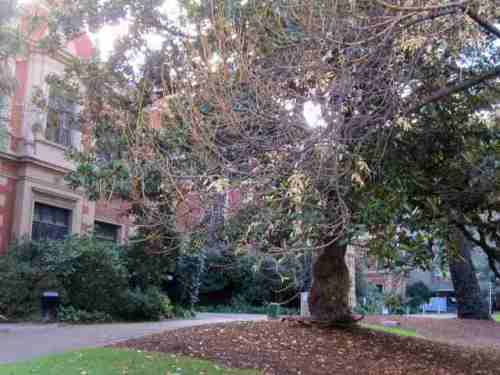
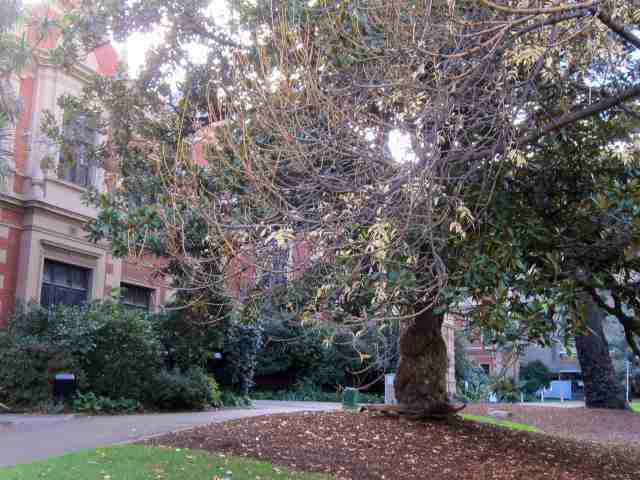
Large magnolia tree outside 1888 building

Large magnolia tree outside 1888 building

The next panel, Texts of Dispossession, explored three texts of empire.  Tracey Banivanua Mar discussed Edward Gibbon Wakefield’s work over the length of his career, noting in particular the feedback about Indigenous landownership that Wakefield received from his brother Felix, a surveyor in Tasmania, and Arthur, a settler with the New Zealand Company who was killed by Ngati Toa over stolen land.  Lucy Davies (fellow PhD candidate from La Trobe) took Beatrice Grimshaw’s 1911 novel When the Red Gods Call, set in New Guinea, which addressed fantasies and anxieties about masculinity, sex and gender when the main character, Stephanie Hammond, learns that her husband had once married a ‘native’ woman.  Finally, Tom Rogers from the University of Melbourne explored William Westgarth’s writings published between the 1840s and 1860s- “booster” literature that lauded Port Phillip’s progress and encouraged emigration to the colony. He traced the change in Westgarth’s attitudes towards the Indigenous population over time, with  increasingly heightened claims about infanticide and cannibalism as a way of justifying the settler-colonial project.

Two papers on Jane Eyre followed: one by Charlotte Macdonald, the other by Bryonny Goodwin-Hawkins, an anthropologist.  Both these papers were carefully written and beautifully presented.  The first explored ideas of possession and re-possession, picking up that very first scene in the opening chapter with Jane defiantly rebuffing Master Reed who bullied her when she crept behind the curtains in the drawing room to read.  The second paper ‘placed’ the image of the deserted, lonely Haworth Parsonage into the industrial context of cotton bales and looms of the Pennines region.  These were two really special papers (probably my favourites of the whole conference), quite different in construction and delivery to the more history-based papers to which  I’m accustomed.

The fourth session examined the book trade.  You only have to look at any of the early Australian newspapers on Trove to note that the final page of each four-page edition was made up of articles extracted from newspapers from across the empire. In fact, it has often struck me that these little local newspapers had probably as much international  (or at least inter-empire) focus proportionally as our newspapers do today- if not more.  Isobel Hofmeyr from the University of the Witwatersrand explored the role of the ‘exchange editor’ whose job it was to scour the newspapers as they arrived from overseas and literally cut-and-past articles into the local papers. When the concept of copyright arose- and it did not do so for some time-  it became tied up with Customs and Excise, and an exercise in sorting out the desirable from the undesirable.  David Carter from the University of Queensland discussed the transatlantic book trade which, although it restricted the development of local printing houses, did provide a means by which Australian books were offered to American and European markets (even though they were seen as ‘British’).  Australian books were reduced from three volumes to one, and often circulated in cheap libraries and as pirate copies – although at a time when copyright was unknown, a cheap knock-off was seen as a legitimate way of broadening the audience.

Christina Twomey explored Emily Hobhouse’s 1902 book The Brunt of the War and Where It Fell which demonstrated the impact of the Boer War on white women and children, but what struck me about her presentation was her sensitive portrayal of Hobhouse as the frustrated youngest daughter, confined for years in caring for her ailing father. [And I must confess that at this point, I had to leave and missed the next two papers and the book launch]
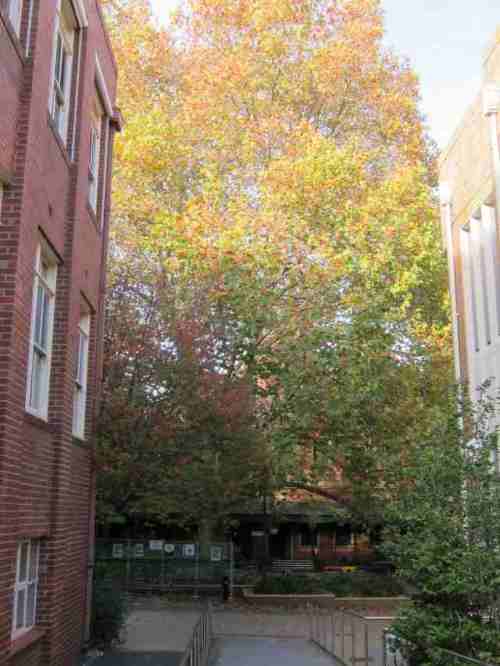
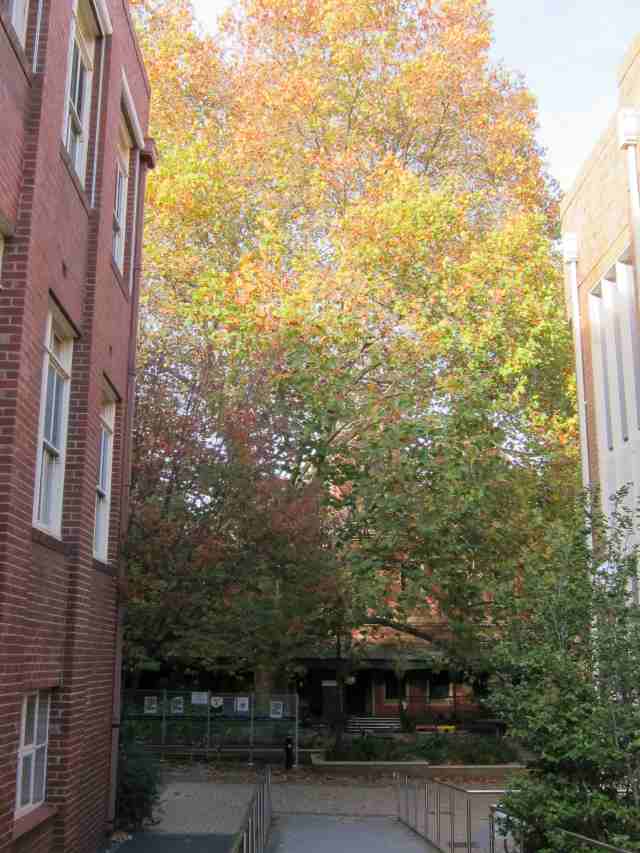
The beautiful (plane?) tree at the rear of the 1888 building. When I attended, the creche was located in the building and this tree dominated the children's playground.

The beautiful (plane?) tree at the rear of the 1888 building. When I attended, the creche was located in the building and this tree dominated the children’s playground.

But I was back bright and early this morning for the second day.  The first session ‘The Caribbean’ explored three texts- two of which were unfamiliar to me, the other more well-known.  Trevor Burnard from University of Melbourne discussed Edward Long’s History of Jamaica, published in 1774 by a wealthy and influential British absentee planter, who was resident in Jamaica between 1757-1769. This three-volume book is more often dipped into for its facts rather than read as as a text in its own right, and although it is a racist rant, it is also a critique of the short-termism of English policy compared with French planning, perseverance and expenditure.  Aaron Kamugisha from the University of the West Indies followed, with a presentation on C.L.R. James’ The Black Jacobins: Toussaint L’Ouverture and the San Domingo Revolution, published in 1938, and hugely influential in shaping the views of three generations of radical activists and intellectuals.  The text was originally a stage-play starring Paul Robeson before James reworked it as a history, and appearing as it did just as World War II broke out, the first edition is difficult to find.  It was translated into French in 1949 and promptly banned, and it is the second edition of 1963 that had such a profound effect in bringing the Haiti Revolution to audiences throughout the world.  The final paper of the session was by Sue Thomas from La Trobe University who discussed Jean Rhys’ Wide Sargasso Sea (which of course links with the Jane Eyre papers of the previous day) and the biographical influences of Rhys’ own family that are echoed in the novel.  She quoted from a cache of financial letters from Rhys’ great-grandparents, their son, and their creditors, that highlighted the indebtedness and sense of financial injury that form the background to Rhys’ own family and which inform the context of Wide Sargasso Sea.

The next panel ‘The Colonial Writing World’ started with Ken Gelder’s discussion of colonial Australian detective fiction- especially the world’s first detective novel, John Lang’s The Forger’s Wife (1853).  George Flower, the detective, was himself an emancipated convict, and was probably based on Israel Chapman.  He went on to Mary Fortune’s detective stories, especially Dandy Art’s Diary where one detective undercover watched another detective undercover.   The detective held an uneasy social position, just below respectable, and as in Fergus Hume’s Mystery of a Hansom Cab, there were many others who competed with the detective to solve the crime.   Bruce Knox then followed with a paper on Edward Bulwer Lyttton, who was a novelist, MP and eventually Secretary of State for the Colonies.  He wrote what sounds like a very strange science fiction/satire The Coming Race where a subterranean people, possessing the awesome power of ‘Vril’ practiced colonization  and planned to eventually ascend to the upper world and displace the existing inhabitants.  It was a satire and critique on Utopianism, Equality and Democracy (and was also the source of name of the ‘Bovril’ drink [Bo as an abbreviation of bovine or beef, and ‘vril’ from The Coming Race])

240px-Bovril_250g

Helen Bones rounded off the session with a discussion of Antipodean writers who span the Australian/New Zealand nexus, in particular Arthur H. Adam and Edith Lyttleton (who wrote as G. B. Lancaster).  Lyttleton’s books are ‘Dominion’ novels, set in Australia, Canada and New Zealand. Both these writers are often overlooked because they are in-between the two countries, and fall outside nationalistic approaches to literature with their emphasis on identification with landscape.

The final session that I stayed for (because I again left early) was ‘The Imperial Formation of Australian National Identities’.  Karen Downing who wrote Restless Men (reviewed here) gave a beautifully constructed paper that picked up on the argument in her book for the importance of Robinson Crusoe as an inspiration and point of identification for men in the emerging British colonies. Melanie Nolan, the General Editor of the Australian Dictionary of Biography, followed, with a discussion of Coral Lansbury (Malcolm Turnbull’s mother) and her book Arcady in Australia which argued that the egalitarian, Arcadian view of Australia was not formed in the bush in the 1890s as Russel Ward argued, but was instead imported to Australia by English writers of the 1850s – Samuel Sidney, Charles Dickens and Edward Bulwer Lytton (who we met in an earlier session).  She suggested that Lansbury and her book Arcady in Australia  has been largely overlooked because she was an expatriate, died early, went into English Departments rather History (as Russel Ward did), and she didn’t write about women beyond an article in Meanjin.  I have a copy of Lansbury on my shelf, and I’ll be reading it soon.  And, for me, the last paper of the day was by Kate Darian-Smith who discussed two post-war books, Henrietta Drake-Brockman’s The Fatal Days (1847) set in Ballarat and a thinly disguised book on Australian nationalism, and Florence James and Dymphna Cusack’s controversial Come in Spinner, which had a long and stormy gestation after winning a prize as an unpublished manuscript and then had to be cut and censored for its raciness and anti-Americanism.
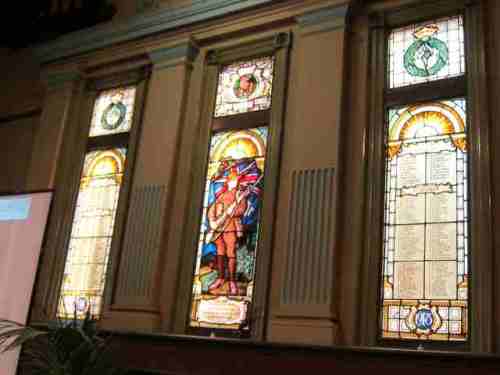
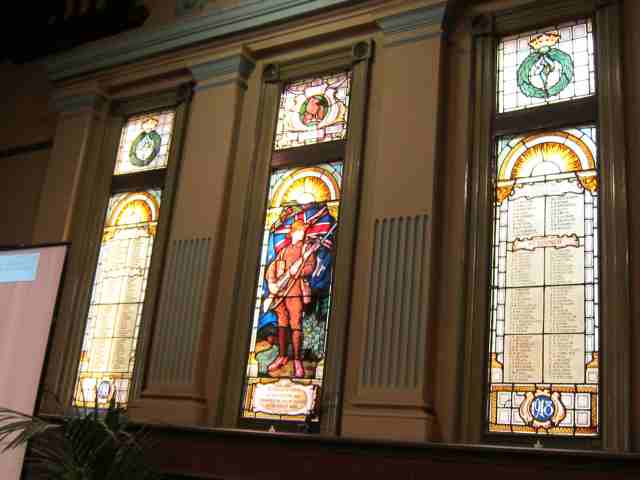
The beautiful stained glass windows in the Gryphon Gallery (where the conference was held), commemorating members of the Melbourne Teachers College (whose building this originally was) who died and served in World War I

The beautiful stained glass windows in the Gryphon Gallery (where the conference was held), commemorating members of the Melbourne Teachers College (whose building this originally was) who died and served in World War I

As you can gather, this was a wide-ranging conference that discussed many books and ideas.  The panels were well-organized by theme, and I enjoyed being exposed to the different presentation styles from other disciplines.  And so, what WERE  the Ten Books That Shaped the British Empire? I don’t know: I wasn’t there for the launch and there were no copies on sale today. So I guess I’ll just have to read it to find out!

[If I’ve made any errors or misrepresentations here, please contact me at my email address in the ‘About’ section]


‘From Botantical Illustration to Research’ Baillieu Library- until 28 June 2015

I’ve been going into Melbourne Uni over the last couple of weeks to read a thesis in their Special Collections room and I noticed this small exhibition on the first floor of the library.  I could see what looked like some large sponges in the display cases, but when I looked more closely, they were old mushrooms. I’ve got to say, there’s not many things that look deader than a dead fungus.  And that’s why, if you want to see its real colours and structure, you either need a photograph or a botanical drawing.

Howie

Source: National Museum of Australia

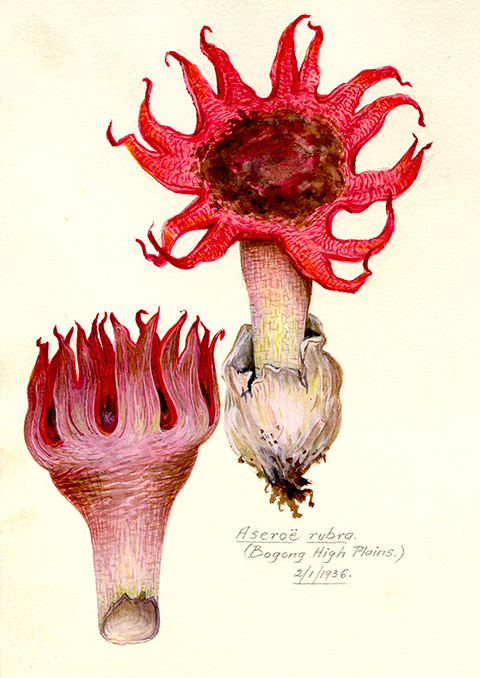
The illustrations in this collection were drawn by Malcolm Howie. There was a photograph of him on the wall, and he seemed a very young man, sitting rather awkwardly on the grass.  He died at the age of 36, a victim of spinal muscular atrophy that rendered him unable to walk by the age of sixteen. Towards the end of his life, he could only make small movements of his wrist when painting.

His brother-in-law was Jim Willis, a botanist with the National Herbarium of Victoria with a strong interest in fungi.   Willis published a booklet Victorian Fungi in 1941 that featured Howie’s illustrations, which went through several editions right through until 1962. Howie had died by this time.

It is likely that Willis sourced the fungi for him to paint, and all of Howie’s paintings have annotated details on them in Willis’ handwriting.  Howie painted 200 life-sized species in total, and Ethel McLennan at the School of Botany at Melbourne University commissioned a series of 80 illustrations.  These illustrations form the heart of this display.

There are specimens beside some of the paintings- and rather dessicated and shrivelled specimens they are too- and other botantical illustrations of fungi from rare books in the library’s collection.

It’s a small, rather weird but nonetheless beautiful collection of illustrations, tinged with sadness at the death of the artist at such a young age.  The exhibition is on show until 28th June, with a series of talks about the illustrations running through May.  The website is here, complete with a slideshow of some of his illustrations.

From Botanical Illustration to Research, Noel Shaw Gallery, University of Melbourne 27 March -28 June 2015

The War To End All Wars, ANZAC Eve

What a wonderful night.  This Anzac-eve function was organized at the Deakin Edge theatre at Fed Square by the Medical Association for the Prevention of War, with support from the ANZAC Centenary Peace Coalition and funding from the Dept of Veteran Affairs ANZAC Centenary Local Grants Program.

The night started with a presentation by Jackie Mansourian from PEN Melbourne who spoke about the Armenian Genocide- that other centenary that marks the arrest of 250 Armenian intellectuals on 24 April- and the resistance of the Turkish government to have it acknowledged as the century’s first genocide. She spoke of the assassination of Hrant Dink, the editor of the Armenian-Turkish newspaper Agos by anultra-nationalist in 2007 after Dink referred to the 1915 massacre of Armenians as ‘genocide’. At the time Dink was being prosecuted under Article 301 of the Turkish Penal Code for ‘denigrating Turkishness’.

IMG_1592a

First up Shaking the Tree Choir, decked out in scarlet and purple, sang a bracket of four thoughtful songs, including the beautiful On the Turning Away, the Pink Floyd song that they have adapted in their video clip:

Then Kellie Merritt, the widow of Flight Lieutenant Paul Pardoel who was killed in Iraq in 2005.  She said that she was apprehensive about public speaking but she was fantastic: controlled, articulate, forceful.  She spoke of her resentment at the conflation of personal grief with political argument.  Honouring personal grief did not necessarily mean honouring the political purpose and intention for deployment.  The two aims of the Iraq War of 2003 were never met: there were no Weapons of Mass Destruction, and one dictator was merely replaced with another dictator of a different sectarian hue. She particularly resented Attorney-General George Brandis who attacked those who drew links between the 2003 and 2015 deployments as “simple-minded” and “ignorant”.

IMG_1593a

She was followed, after long and heartfelt applause, by the Melbourne Singers of Gospel, a huge choir – I counted at least 55 people -who gave a terrific rendition of ‘When the War is Over’ .

IMG_1595a

Adam Bandt, the Greens member for Melbourne spoke next after taking a picture on his phone of the assembled audience.  He picked up on Kellie Merritt’s call for Parliament to be required to approve the deployment of Australian troops (unless we are facing imminent threat). Even though Parliament may still approve it- and with our current government and opposition, that would be the case- it is still important that the reasons for sending troops overseas be articulated and that Parliament be accountable for the decision.

IMG_1596a

Peter Cundall, the 88 year old peace activist and gardener spoke next, speaking about his experience in both WWII and the Korean War.

IMG_1597a

I was struck by his description of the pervasive, nauseating smell of battle.  He finished with a beautiful recitation (from memory!) of Seigfried Sassoon’s ‘Aftermath’, written in 1919 . What a fitting poem during this current tsunami of bad history and mawkish emotionalism:

Have you forgotten yet?…
For the world’s events have rumbled on since those gagged days,
Like traffic checked while at the crossing of city-ways:
And the haunted gap in your mind has filled with thoughts that flow
Like clouds in the lit heaven of life; and you’re a man reprieved to go,
Taking your peaceful share of Time, with joy to spare.

But the past is just the same-and War’s a bloody game…
Have you forgotten yet?…
Look down, and swear by the slain of the War that you’ll never forget.

You can find the rest of the poem here.  It’s powerful writing.

It was affirming to finish with a group from Brunswick Secondary College, singing a beautiful arrangement of Dolly Parton’s ‘Light of a Clear Blue Morning’ and John Lennon’s ‘Imagine’, prefaced by the worlds spoken in many different languages.

IMG_1598a

I was proud that this is a government-school based choir of engaged young people.

We left on a drizzly ANZAC Eve, really pleased that we’d attended such an affirming and respectful night.  The crocheted poppies spill over the steps of Fed Square.  Beautiful

This slideshow requires JavaScript.

My ANZAC Commemoration

It’s interesting to see that perhaps the millions spent on the centenary of Gallipoli might have been misdirected. There’s been a  thoroughly appropriate reaction against the crasser forms of commercialisation : think ANZAC stubby-holders, teddy bears and  ‘Camp Gallipoli’ where you sleep under the stars like the original  ANZACS did, in your $275 Gallipoli  deluxe swag:

…participate in a once in a lifetime event [which] will take your emotions on a roller coast as its [sic] blends moving tributes with commemoration. You will learn, sing, eat, drink, laugh, (and cry) but most importantly you will be together.

It will be

…a special night of remembrance, entertainment, mateship and the birth of the ANZAC spirit… There will be entertainment, special guests, movies, documentaries, great food options and a very Special Dawn Service on ANZAC day itself.

And it would appear that all those ANZAC blockbusters planned for television  have garnered only lukewarm ratings as well, although I’ve read good things about Sam Neill’s documentary so I may watch that.  Claire Wright, who was involved in the documentary ‘The War that Changed Us’ some months ago suggests that Gallipoli fatigue at all the “ANZACkery” seems to have set in ahead of time.

So this is how I will be commemorating, NOT celebrating ANZAC this year

wartoendallwars

‘Foreign Soil’ by Maxine Beneba Clarke

foreignsoil

2014, 265 p.

She’s good. Very good.

Maxine Beneba Clarke is described in the afterword as a “spoken word performer” and the author of several poetry collections.  You can tell. There’s a real joy in the sound of voices in this book, and it comes through loud and clear. Voices plural because there’s multiple narrative voices here from all over the world:  a Sudanese woman in Footscray in ‘David’ ; a Jamaican school girl in suburban Australia herself fighting for acceptance being asked to “look after” a new Vietnamese student in ‘Shu Yi’ ;  Delores in New Orleans  in ‘Gaps in the Hickory’ and, most challengingly, Nathaniel speaking in Jamaican patois in ‘Big Islan’ as he gropes towards literacy and awareness of a larger world.

I sometimes find when I come to the end of a book of short stories that I can’t quite remember what happened in which book. That’s not the case here.  She uses imagery so well in ‘ The Stilt Fishermen of Kathauluwa’ that the story is unforgettable, and it is one of the most powerful stories about so-called ‘illegals’ that I’ve read.  The young girl hanging upside down from the monkey bars, paralysed with fear in ‘The Sukiyaki Book Club’ is a memorable image for the writer herself, writing on despite one rejection letter after another.  The cold fear in ‘Foreign Soil’ as an Australian woman realizes her mistake in following the man she loved to Uganda is almost palpable.  I just loved ‘Gaps in the Hickory’ even though I guessed the ending- and what a satisfying ending it is!  There’s not a single story here that falls flat. They’re all well-crafted, opening up possibilities and yet leaving you in no doubt as a reader that you’ve reached the end.  Her observations are sharp and her ear for language acute.

Blurbs often trumpet things like “the arrival of a major new voice” and the blurbs on this book are no exception.  I think, this time, they’re right.

aww-badge-2015-200x300Posted on the Australian Women Writers Challenge. And so far, my pick for the 2015 Stella Prize.

‘Heat and Light’ by Ellen Van Neerven

vanNeervenEllen-138x206

2014, 225 p.

I’ve noticed this book bobbing around on long-lists for the various literary prizes on offer, and it has been shortlisted for the Stella Prize. The young author is of mixed indigenous and Dutch heritage, and she seems to have taken to heart the aphorism “write what you know” because the stories are written about or from the perspective of a young indigenous person.

The book is divided into three parts:  Heat, Water and Light.  The first part, Heat, comprises a number of short stories about the Kresinger family which interweaves magic realism and contemporary indigenous family life.  The stories are tangentially connected, a technique I enjoy, giving them stand-alone status within something larger.

The second section, Water, contained only one story and it was probably my favourite one.  Kaden is a young Aboriginal woman employed in a scientific program engaged with research on ‘sandplants’, a marine lifeform that has been found to have almost human intelligence.  The sandplants are found around islands off the Queensland coast that are about to be reclaimed for a new Aboriginal nation (Australia2) under a bold new plan by President Tania Sparkles.  The plan which at first sounds seductive becomes increasingly sinister in this story set in the near future, and as Kaden becomes closer to Larapinta, one of the sandplants, their relationship changes.

The blurb on the back of the book tells me that in the final section ‘Light’ “familial ties are challenged and characters are caught between a desire for freedom and a sense of belonging”. Yes, but I must confess to finding this last section bitsy and insubstantial.  Having only just finished it, I can only remember two stories well- my memory of one probably reinforced by the picture on the front cover, and the final story which was very good.  For many of the others, I only knew that it had finished because there was a blank at the bottom of the page, and I found myself wondering about the point of it.  The stories seemed like fragments.

So, all in all- a bit of a curate’s egg of a book: good in places.   The writing is lyrical, but occasionally somewhat overwrought.  It’s a good debut collection but I’m not convinced that it’s prize-winning material, though.

aww-badge-2015-200x300I’ve posted this review to the Australian Women Writers Challenge site.