Category Archives: The ladies who say ooooh

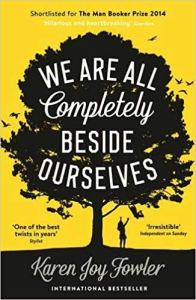
‘We Are All Completely Beside Ourselves’ by Karen Joy Fowler

Fowler_WeAreAll

2014, 336p.

One of the problems with writing a book that is almost completely reliant on a big narrative twist in the middle is that you can’t really review it, without spoiling it for others. So, I won’t do either- review it, or spoil it.

The book is told in the conversational narrative of an American woman looking back over her childhood, which was ruptured when her sister left.  And I’ll leave it at that.

How would I have reacted to this book without the ‘great reveal’, I wonder? Probably not as favourably, because there’s a sort of shocked delight in going back over your assumptions when you’ve had them turned upside down.

Once you’ve read the book, do an image search for the front cover. It’s interesting that some of the front cover designs give away the story much more than the cover on the version I read (above).

Read because: it was a CAE bookgroup selection

My rating: 7/10

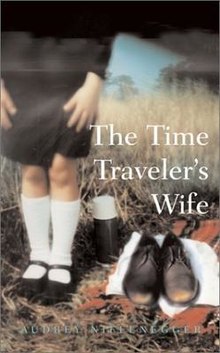
‘The Time Traveler’s Wife’ by Audrey Niffenegger

Niffenegger_TimeTravellersWife

2004, 519 p.

I used to read many more books that I do now, particularly between the years 2000 and say 2007, when I had an extended period of ill health. When this book was produced with a flourish as our July read for book group,  my heart sank a little as I had read it back in 2005. But fourteen years is a long time between reads, and although I remembered the gist, I didn’t remember the details.

It’s a time-travel book. I quite enjoy time-travel books that have a relationship at the heart of them until I try to explain them, and then the whole construct falls apart. It is the story of Henry, who travels back and forth through time, and his love for Clare, who would become his wife. The structure is confusing at first, with the chronology jumping back and forward, with Henry at varying ages as Clare plods through her allotted life span as Henry appears, disappears and reappears again.  I often found myself having to turn back to check the date of the chapter, and there was not enough difference in tone and language between the alternating narratives of Henry and Clare. The book has many references to literature and poetry which don’t really rescue it from what is often very domestic and every-day. The ending was a long time coming, with ‘just one more chapter’ being tacked on to the last.

Did I like it any more in 2005? It seems not: in fact, I seem to have mellowed in my old age. This is what I wrote in 2005:

I should have been warned off this book by the Women’s Weekly Great Read sticker on the front. It’s an interesting idea: a chronodisplaced man pops in and out of the life of the woman who is to be come his wife, but worthy only of novella treatment – not a whole 500 page tome! So much of this was banal: getting dressed, eating, mundane conversation lived by an adolescent randiness and panting and always-wonderful sex.  It will probably make a nice enough movie, but it doesn’t need all this print to support it. It’s a first novel, and one badly in need of a judicious prune.  5.5/10

Ouch! I was surprised by how much sex there was in the book, which seemed rather gratuitous in the end.  Perhaps I would enjoy the movie more? After all, that Christopher Reeve movie ‘Somewhere in Time’ was a favourite when I was about 20.  Still, I’m pleased to see that my opinions about books generally hold firm over more than a decade, and that I won’t have to go back to re-read all the books I didn’t like.

My rating: 6.5 out of 10 (I told you that I had mellowed)

Sourced from: CAE as a bookgroup selection.


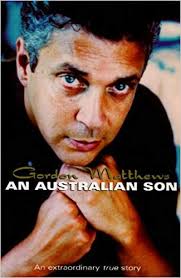
‘An Australian Son’ by Gordon Matthews

matthews_australianson

1996, 230 p.

There are spoilers in this review

In his short disclaimer about” changed names to protect identity etc.” at the start of this book, Gordon Matthews writes:

This book was an act of catharsis. I wrote it to make peace with myself.

The motivations for writing a memoir are many and varied, and I suspect that ‘catharsis’ is quite a common one. However, I’m not sure that all catharsis needs to be put into print. I closed this book feeling complicit and somewhat sullied, and I wondered why Gordon Matthews published this book.

At one level, I can understand it. Identity, or the search for it, is one of the touchstones of modern life. In Australia,  there is heightened awareness of the Stolen Generations of indigenous children after years of Royal Commissions. In this book, with the small black and white photograph on the back cover of a cheeky, curly-haired boy who certainly looks aboriginal, we think that we are reading the story of an adopted child who learns later in life that he is part of the Stolen Generation. But that’s not what happens (and here’s the spoiler, so look away now!). Adopted by a middle-class white family; teased by his private school ‘friends’ who call him ‘Abo’; conscious always of his difference, he is encouraged by an Aboriginal Liaison Officer to apply for a university scholarship and eventually gains a designated position as Australia’s first indigenous diplomat. Then he finds out the truth: that his father is Sri Lankan, not Aboriginal, and his whole identity falls apart. Although his Aboriginality was not a deliberate hoax, he knows that he cannot continue to claim an indigenous identity that he does not hold.

I was slightly surprised by his telling of how he came to embrace  and be embraced in what he thought was his own Aboriginality.  It seems at one remove from the broader Aboriginal community, seeming to be based mainly within the university and bureaucracy. Is this because he is in Canberra, perhaps? I’m not sure quite when the actions in this book took place, and maybe things have changed. As I understand it, indigenous identity involves both family connections and genetics (rather ironic given how ‘blood’ ratios have historically been used as such a weapon) and acceptance by the community. It is only near the end of the book, when he has admitted that he is not indigenous, that his relationships with the community come into sharper focus.

Secure and happy enough with his adopted parents, it is his search for racial identity in particular that impels his search to find his birth parents. He is curious about them, but not as individuals in their own right, but as the key to his racial understanding of himself. He eventually finds them in America. After giving him up for adoption, they married and went on to have other children. Gordon finds  not only both parents grieving their relinquished first child, but also blood siblings who have been completely unaware of his existence.

The relationship with his birth mother was tense, despite his parents’ joy at finding him and embracing him as part of their family. Contact between him and his family cooled. His birth parents did not want him to publish this book, and it was at this point that I felt I wanted to drop the book from my hands. This was such a fragile relationship, and he was asserting his right over his own story at the risk, I suspect, of alienating and losing this new family that he had found on the way to discovering his racial identity. Pigheaded? Self-sabotaging? Selfish?

The book raises complex questions about identity, race and family. There is a distance in the telling, both at an emotional level and in the slightly stilted language. Whatever he might have been as a diplomat, Matthews is not a ‘natural’ writer.

I can find nothing on the internet about what happened next to Gordon Matthews, or his family.  The silence is a little unnerving. I have no idea how the publication of this book was received by his family at the time, and I wonder if, more than 20 years later, he would say that it was worth it. I guess I will never know.

My rating: 7

Sourced from: Council of Adult Education. It was the June book for my bookgroup.


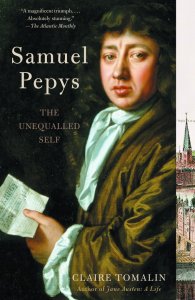
‘Samuel Pepys: The Unequalled Self’ by Claire Tomalin

Tomalin_Pepys

2002, 380 P plus notes

There are some biographies where you think that there’s no point in anyone else even picking up their pen to write another one. Claire Tomalin’s biography of Samuel Pepys falls into that category.  This isn’t the first time I have read this book, because I read it in 2005- certainly long enough to have forgotten much of the details. That was before I had been to London myself, and before I had started my own academic work in biography. I very much enjoyed it in 2005 and enjoyed it even more fourteen years later.

I think that I first became aware of Samuel Pepys in a school reader, where his eyewitness report of the Great Fire of London was reproduced. I’d always associated him more with the events that he wrote about (the fire, the plague etc) rather than as a person in his own right. But as Claire Tomalin points out, perhaps his most striking and original achievement was to see himself, his actions and his motivations, as a topic in themselves. One of the most opaque things over time and culture is to sense how people saw themselves, especially when such a question was so often overlaid with religious language. In Pepys we have a man holding himself up to his own scrutiny, laughing at himself, and at times writing what he knew could be used against him politically.

Pepys’ diaries covered only nine of his seventy years. It’s not really clear why he started writing them, but it was a very deliberate act when he purchased a notebook and carefully ruled up each page – all 280 of them- and drew 20-30 evenly spaced lines on which to write. He wrote in shorthand, with some proper nouns written in English, and breaking into pidgin Spanish when he wanted to describe some of his (all too frequent) amatory adventures.

Although Pepys’ diaries of course provide the richest source for Tomalin’s work (and indeed, the work of any Pepys scholar), this biography devotes about 1/3 of its length to the 1660-1669 period of the diaries. The other 2/3 deals with his life before beginning the diaries, and then after the diaries. This seems a judicious weighting, and one which placed the journals, important though they are, into the context of his whole life.

The book starts with a lengthy list of ‘who’s who’ which I found myself turning to frequently. As Tomalin highlights, when Pepys was starting out on his career, contacts were everything in making it possible for this son of a tailor to end up as a high-level civil servant and Member of Parliament. Even though I’m not in the habit of taking my history from Academy Award winning films, the recent film The Favourite exemplified the trails of patronage that could bring distant cousins into orbits far beyond their expectations.

What struck me particularly on this second reading, and particularly in days when watching the so-far unsuccessful attempts at political change in Venezuela, is just how dangerous it is when a country undertakes a huge political change. I’m not talking about elections, which in our case are just variations on the same, but the big political about-faces. Pepys experienced a number of such changes, at an uncomfortably close quarter to royal power, but without the means or patronage to have any influence at all on events. He saw the execution of Charles I; he supported Oliver Cromwell when he was a young man; he managed to switch to Charles II in time; he escaped suspicion (just) after the Popish plots; and he acquiesced when William took the throne. The people he aligned himself with survived, and so he did too.

Although the book is largely chronologically arranged into 3 parts (Part I pre-diaries; Part II 1660-1669 diary entries; Part III 1670-1703), its chapters are thematic as well e.g. work, marriage, science. She does not cite at length from the journals themselves, choosing to comment on them instead of reproducing them.

At times Pepys seems like us: at other times, not. His infidelities and what now reads like rank sexual harassment are uncomfortable reading; his domestic violence to his wife and servants is not endearing. But I found myself laughing when his enraged wife threatened his manhood with red-hot fire tools when she found out about his affair with the maid, and his own awareness of his hypocrisy, failings and weakness keeps him human.  Tomalin has given us a fully rounded man, and I just can’t imagine anyone else doing it better.

By the way, the first time I read this book, I was fascinated by the Pepys Diary page, which is still going. Each day an entry from the diaries is posted in full and people, who have a wealth of information about Pepys and London, annotate the entries.  Another site which I’ve enjoyed, although it’s aimed at children is an interactive site  fireoflondon.org.uk

My rating: 9.5/10  This is biography at its best

Sourced from: CAE bookgroups.

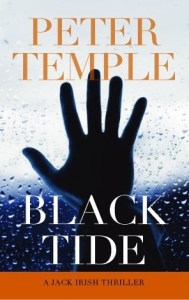
‘Black Tide’ by Peter Temple

Temple_BlackTide

1999, 356 p.

That’s it. I’m not reading another Peter Temple ever.

In fact, I said that to myself after I had to re-read Truth for my CAE bookgroup earlier this year. I looked back at my original blog post and everything I said there, I say again. Too disjointed. Too much conversation. Too confusing. And definitely not worthy of a Miles Franklin prize.

I’m amazed to find that I’ve read as many Peter Temples as I have. I quite liked The Broken Shore, but by White Dog the appeal had worn off. In the Evil Day was set in Africa, but it had all the same problems (too disjointed, too much conversation, too confusing etc).  He does dialogue well, but why doesn’t (didn’t) he just write plays? At least the speaker is identified in a script and you don’t have to count back to see who’s talking. And who are all these people he keeps bringing in? Or capturing a setting, which he also does well: why doesn’t (didn’t) he just write travel books?

At least Black Tide is a Jack Irish story, and I can see Guy Pearce, the three old blokes at the pub, Cam, Harry Strang and Stan the bartender in my mind’s eye.  Thank God for television, I say. The dodgy betting is here, and the carpentry, and a bit of sex, along with a confusing story about dodgy companies.  But I really have no idea what it was about.

So that’s it. Ned Kelly Awards and Miles Franklin prize be damned. If someone chooses another Peter Temple for bookgroup ever again, I’m just going to say “Nup. I don’t like Peter Temple”.

My rating: 6/10

Read because: ONLY because it was chosen for my CAE bookgroup.

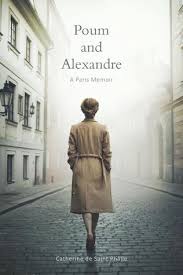
‘Poum and Alexandre: A Paris Memoir’ by Catherine de Saint Phalle

Poum_Alexandre

2016, 256 p.

There is no shortage of memoirs about parents written by their children.  Too often, there is an underlying whine of grievance in such memoirs – admittedly, quite often justified- because the parents are too cruel, too self-absorbed or too mad, and the author/child is seeking to blame or understand (and often both at once).  Alternatively, there are memoirs of parents bathed in nostalgia, sorrow and yearning: yearning for a return to a simpler time and regret for lost opportunities and all the things the author did not say at the time.

Poum and Alexandre falls into neither of these camps. It’s significant that the title makes no reference to the author at all – there’s no ‘my’ in the title- and the subtitle ‘A Paris Memoir’ emphasizes place. The book is written from the child’s point of view, but the author’s own life, and most particularly her adult life, is largely absent, except in the final section. The book is written in three parts: ‘Poum’ dealing with her mother Marie-Antoinette, nicknamed ‘Poum’ because of a childish game in bouncing down stair ‘poum, poum, poum’; ‘Alexandre’ dealing with her father; and then a final short coda involving both parents.

Both Poum and Alexandre are eccentric. Poum is a disinterested mother, just as happy to stay in bed with her books, as to spend time with her daughter. Alexandre imbues his daughter’s mind with Greek myths, praise for the Magna Carta, and tales of Napoleon. Both parents are drawn to tales of blood and savagery, and they share these with their daughter, irrespective of her age.

Their daughter, Catherine, spends much of her early life away from her parents. Born in England, ostensibly  because of the freedoms bestowed by the Magna Carta, she is largely raised by her nanny Sylvia, and Sylvia’s own family. When she finally settles in France, she can barely speak French, and the book is largely devoid of friends or any other contacts other than her family.

Told from Catherine’s point of view, there are many gaps and non-sequiturs. Alexandre is already married and has an older, first family and what seems to be an ever-increasing number of offspring that Catherine gradually learns about, but does not meet. Alexandre and Poum are cousins, and have fallen out with their families over their relationship. Poum tries doggedly to maintain relations with her own family, but there is tension and resentment, and Catherine feels it. This ‘situation’ swirls around Catherine and her parents, marking them out as different and disreputable. Perhaps it’s this exclusion that turns them towards each other in a fey, irresponsible and downright strange way.

Yet there is no judgement here. Catherine describes them with love and acceptance, even though as a reader you find yourself raising a sceptical eyebrow or huffing with disapproval at the sheer irresponsibility that both parents display at different times.   The book is beautifully written, and it certainly subverts the chronological memoir genre. It shuttles backwards and forwards, and tells events from multiple perspectives. It withholds as much as it gives.  And yet at the end of the book, you realize just how much Catherine has given you as a reader, and you are left with a puzzling and yet rich view of her parents – much how the author finds herself. This is a challenging memoir, but I suspect that I will remember it long after the ‘misery memoirs’ have merged one into another.

Read because: CAE bookgroup selection (mine). And several people on the Australian Women Writer’s Challenge website had read it

My rating: 8

AWW2019

I have added this review to the Australian Women Writers Challenge database

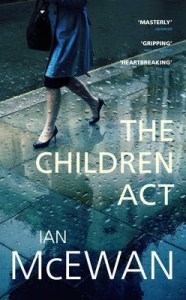
‘The Children Act’ by Ian McEwan

McEwan_ChildrenAct

2015, 224 p.

Like On Chesil Beach which preceded it, this book is quite short and has a similar tremulous, sinking, hold-your-breath feeling about it. It is named for the UK legislation of 1989 the Children Act which rules that “When a court determines any question with respect…to the upbringing of a child… the child’s welfare shall be the court’s paramount consideration”.

The child in this case is Adam Henry, just three months short of his eighteenth birthday, who along with his parents, is refusing a blood transfusion rendered necessary by treatment of cancer because they are Jehovah’s Witnesses.  The hospital, aware that time is running out, brings the case to the court, where it rests before High Court judge, Fiona Maye.

‘My Lady’ Justice Maye has come before other excruciating moral cases before in her capacity as judge with the Family Division, most particularly a case about the enforced separation of conjoined twins. In deciding this current case under such tight deadlines, she decides to go to the hospital to visit Adam Henry, who she finds to be highly intelligent, articulate and engaged. McEwen really knows how to built the tension as he reports her long-winded finding to the court, just as it would have been experienced by the gallery filled with family and journalists.

At the same time that professionally Fiona Maye is dealing with this, her own personal life is unravelling. After a long marriage with both partners working, her husband Jack announces that he wants to have an affair, now that the spark has gone from their marriage.  She is hurt, furious and ashamed. She has seen many ruptured families in her professional life, but somehow felt aloof from all that.

A professional life spent above the fray, advising then judging, loftily commenting in private on the viciousness and absurdity of divorcing couples, and now she was down there with the rest, swimming with the desolate tide (p.49)

It’s only a small book, and I don’t want to give too much away. At heart is the question of how much responsibility Fiona has for Adam’s wellbeing both professionally and personally.

Adam’s case is just one in a long professional life, and I felt that McEwan turned too didactic in his backgrounding of the other cases she had heard. It felt clunky and contrived.  The ending is not as I expected it to be, and could perhaps be seen as a letdown. I didn’t see it that way, however.  I don’t believe in karma, and there is often no symmetry or fairness in consequences. The book has the same chilliness that many of McEwan’s books express, while dealing with pain and regret. Somehow it seems a very English combination.

I read this for my bookgroup, and it was my choice from about two years ago. It has taken some time for us to receive it! As it happened, we read it in November, just as the film was on general release.

My rating: 8.5

Read because: CAE bookgroup

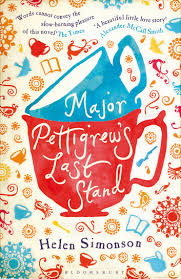
‘Major Pettigrew’s Last Stand’ by Helen Simonson

simonson

2010, 359 p.

This was a bookgroup selection and I’d left it late to start reading it. So, in the one night I was catapulted from Vichy France and Nazi interrogators in Lovers at the Chameleon Club  into  English village life, retired Army Majors and golf-club gossip in Helen Simonson’s Major Pettigrew’s Last Stand. A very abrupt change of pace!

I was surprised to learn that Helen Simonson is an American writer, albeit British-born, who has lived in America for the past twenty years. She captures village life remarkably well. Midsomer Murders is a cliché, but when I visited my brother who lives near a village outside Maidenhead, I was stunned to find myself in a village that looked very much like that murderous locale, right down to the village green with the white posts and looped chain fence. This is the sort of place in which  68 year old Major Pettigrew (retired) makes his last stand.

Not that you’d know it from the opening pages of the book where, numb after the death of his brother, he has put on his deceased-wife’s floral housecoat. The doorbell rings, and he answer it to find Mrs Ali, the widow of the local general-store owner. With self-assured pomposity and casual racism, he had barely been aware of her except to buy his blended tea from her, but they strike up a friendship.  They are drawn into the disastrous plans by the local golf club to have as their party theme ‘The Last Days of the Maharajah’, an ignorant and insensitive event which conflates India and Pakistan, the Mughals and the Empire. Both the Major and Mrs Ali are quietly resisting the suffocating oversight of their son/nephew, both of whom are insufferable in different ways. The book does become rather hyperactive at the end.

Is it the persistence of Baby Boomers as a reliable reading market that has led to a rash of older-person ‘twilight’ relationships? I’m thinking of Our Souls at Night, Elizabeth Strout’s Olive Kitteridge, or Australian author Josephine Wilson’s Extinctions, all of which have older protagonists who are being pressured by their offspring.

This book is a comfortable read that reveals a wry sense of humour. I was reminded of Barbara Pym, and perhaps even shades of Jane Austen. I hadn’t ever heard of it, but it was a very enjoyable escape that made you squirm at time with embarrassment, roll your eyes at pretension and prejudice, and rejoice in a happy ending that didn’t necessarily tie up all the ends too neatly.

Sourced from: CAE bookgroups (a reading selection for my bookgroup)

Rating: 7.5/10

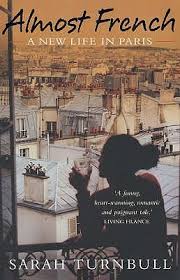
‘Almost French’ by Sarah Turnbull

turnbull_almost_french.jpg

2002, 309 p.

Somehow or other, the deluge of books about women going off to France seems to have rushed past me. I hadn’t particularly been drawn to dip my toes into the flow, but this book was chosen by my bookgroup and so I read it, some sixteen years after it was published.

At the time of writing it, Sarah Turnbull was an expatriate freelance journalist living in Paris. Most of her journalistic work was published in magazines (similar to the Weekend Magazine that comes with the Age), and the lightness of her touch and self-deprecation makes this an easy and very pleasant read. Food, fashion, the joys (or not) of pet ownership are topics that she addresses in the book, and could easily be lifted for lifestyle magazine consumption.

She only intended going to Paris for a week, having met Frederic in Budapest, and accepting his offer of a week in Paris on a whim.  She ended up staying eight years. In this time she came to realize the truth of the words of an elderly man she had met on the Greek  island of Samos on her travels. After migrating to Australia, he had returned to Greece but felt it “a bitter-sweet thing, knowing two cultures”.

She has to learn the language, and she feels excluded by her limited French and frustrated by her inability to assert herself. But more than words, she has to learn the French purpose of language in a social setting as a game, to show one’s quickness and wit. She struggles with the coldness of other French women until she recognizes it as a manifestation of competition. She mocks Frederic’s horror at her donning tracky-daks to go down to the nearby bakery, but finds herself equally affronted by the tackiness of English dress-sense when they go over to England for a weekend.

This book is laugh-out-loud funny in places, for example where Frederic quickly ties his jumper around his waist and affects a dodgy French accent when pretending to be an Australian tourist when they are challenged for trespassing. There are moments of poignancy too, like when she needs to don sunglasses in the plane when leaving Australia, looking at the Qantas advertisement and seeing the landscape curving away from her from her plane window.

This is really just a series of anecdotes, with no great plot shifts or crises. She is insightful in identifying the nuance and yet solidity of cultural difference. It is something that we can and should all be reminded of, going in the different direction, by people who are adjusting to Australia. It’s a light, enjoyable read- and yes, it made me wonder if perhaps I could go to France next year after all…..

My rating: 8/10

Sourced from: CAE bookgroups.

AWW-2018-badge-rose-199x300 I have put this title onto the Australian Women Writers Challenge database.

‘From Strength to Strength’ by Sara Henderson.

henderson1

1993, 337P.

This book made me break two of my maxims. The first is that book-group selections must always be finished. My second is that if I find a book unreadable, I generally don’t blog about it at all.  In  this case, however, I found From Strength to Strength so enervating that I didn’t finish it even though it was a book-group selection. And as for the second, well, Sara Henderson has sold enough copies of this drivel that obviously other people found something in it, even though it completely eluded me. My little blog isn’t going to change that.

Born into a fairly affluent family, Sara had dreams of being a world-class tennis player. An accident which left her with serious injuries, put an end to that. She was swept off her feet by an American ex-serviceman, who spirited her away on his yacht. Always a womanizer with big dreams but poor follow-through, her husband Charles brought her and their young daughters to Bullo River Cattle Station in outback Northern Territory, where they lived in a tin shed for years. After multiple affairs, they separated although she nursed him when he was gravely ill, only to find herself a widow with a huge debt for the station. She and her daughters turned the station around economically, and she was proclaimed Telstra Businesswoman of the year in 1991.

The book started relatively well, where the author admits that this is the second version of her memoir, having decided after finishing the first draft that she does have to tell the truth about her no-good, womanizing, irresponsible husband Charlie. But I soon realized that her commentary – it is too kind to call them ‘reflections’- on her husband became engulfed by a tsunami of anecdotes, all told in the chatty, light tone of a Christmas-letter. The cliches and minutiae mounted; important events (like, say, the birth of her children) happened almost in passing, and it was not hard to discern that this book is a completely self-serving endeavour.

And not just this book either. She went on to write another five books. Her daughters, with whom she fell out at different times, wrote their own books, challenging their mother’s narrative.  Suffice to say, I am not tempted to read any more.

My rating: 2/10

Read because: CAE bookgroup.