Category Archives: Book reviews

‘From Secret Ballot to Democracy Sausage’ by Judith Brett

brett_democracy

2019, 183 plus notes

When she was a lecturer in politics at LaTrobe University, Judith Brett tells us, she used to ask her first-year students to talk about their first political memories as an ice-breaker activity in their first tutorial (p157). Many mentioned going with their parents to their local school while their parents voted. I must confess that my only memory of going with my parents when they voted was the election before I turned 18. It was 1972, and the Labor Party was about to be elected after 23 years of successive Coalition governments. I knew whom I would have voted for, had I been allowed, and to this day I wonder if my father voted Labor, just that once. I had a strong sense of “this will be me, next time” and I felt quite excited about it. But other elections? I just can’t remember. My family (including me) all played tennis on Saturdays: I assume that they nicked in to vote either before or after the tennis court.

I am proud of Australia’s electoral system, despite grizzling about the politicians it throws up, and fearful of the effects of lobbyists and deep pockets. Judith Brett, in From Secret Ballot to Democracy Sausage is too, and as we head into one of our more important elections, it’s good to read this book from one of Australia’s foremost political historians that affirms and celebrates the process. Sometimes we forget just how distinctive our system is. We have compulsory voting (as do Belgium, Luxembourg, Lichtenstein, Cyrus, Greece, two regions of Austria and one Swiss canon; Central and South America, Egypt, Fiji and Singapore) (fn1. p. 185). And more importantly, compulsory voting is popular, with 77% support in 2007 (p.151). We vote on Saturdays (not Mondays, Tuesdays or Fridays). We have preferential voting in the House of Representatives (in itself a rarity) and proportional representation in the Senate. Our elections are conducted by the Electoral Commission, who are public servants at arm’s length from government. We don’t have to queue for hours. And there are sausages and a cake stall.


[Back in 2010 at my local school]

This book is quite current, taking us right up to 2018, but two-thirds of the book is a historical analysis of how we ended up with the electoral system that we have today. Unlike America, which was first settled during the 17th century constitutional struggles between monarch and parliament and steeped in the ideas of John Locke, Australia’s first political institutions were established when the British Parliament was supreme, and beginning to expand its own franchise. Our philosophical roots lay in Jeremy Bentham who believed in government first, rights second (p6). As historian W.K. Hancock wrote:

The Australian democracy has come to look upon the State as a vast public utility, whose duty is to provide the greatest happiness for the greatest number…To the Australian, the State means collective power at the service of individualistic ‘rights’ and therefore he sees no opposition between his individualism and his reliance on governments (Hancock Australia, 1930 cited on p.7)

Newly expanding colonies needed infrastructure, and the government provided it. In fact, for the first 100 years or so, Australian taxpayers didn’t have to pay much for it: the British government did. We didn’t have income tax until 1915, and Britain paid for our defence. Why would people want to limit government expenditure on services that benefited them? (p.8)

Our first elections, starting in the 1840s on a limited franchise, followed the English model of public voting. They were held in a carnival-like atmosphere, ‘treating’ supporters with alcohol, and keeping up a running tally. It was the desire to largely  circumscribe the abuses of this system that led to the development of the secret ballot, complete with separate cubicles and a pre-printed ballot paper issued only at the booth, which came to be known as “the Australian ballot”. Brett highlights three South Australian electoral innovators whose contributions are often overlooked : Catherine Helen Spence who devoted years to her campaign for proportional representation, William Boothby who as Provincial Returning Officer bureaucratized and regularized electoral administration, and Mary Lee who campaigned tirelessly for women’s suffrage in South Australia. (I had always wondered why South Australia had an electoral district called ‘Boothby’ when Justice Boothby caused as much trouble as my own Judge Willis did. But it’s the son William, not the father Benjamin). Ironically, her table showing state-based changes to Legislative Assembly and Legislative Council franchises now shows South Australia as the laggard, with compulsory voting for Legislative Council elections in South Australia introduced only in 1985! (p. 138)

It was because South Australian women had had the vote since 1895 -and thus, should not be disadvantaged by losing their suffrage under Federation-  that the new Commonwealth Australian constitution allowed anyone enfranchised to vote at a state level to also vote in Commonwealth elections. A similar arrangement was made for Aboriginal voters. Disturbingly, right up until 1962 Aboriginal people could not vote in federal elections unless they were on the state roll or had served in the armed forces, thus leaving Western Australian, Queensland and Northern Territory Aborigines unable to vote. There’s a grubby little secret in her chapter “Women In Aborigines Out” where the Commonwealth had a ‘preponderant blood’ rule whereby “all persons in whom the aboriginal blood preponderates are disqualified”. It was left up to electoral officers to decide largely on the basis of skin colour and their own judgements about individual Aboriginal people’s capacities (p.68). It wasn’t at the 1967 referendum that the right to vote was extended to all ATSI subjects: it was the 1962 act. Aboriginal people were not subject to exactly the same voting laws as other Australians until 1983 (p.72).

In fact, one of the most contested features of Australia’s electoral system was the postal vote, which was allowed, disallowed and allowed again according to the vicissitudes of the different political parties. The Labor Party opposed postal voting because it removed the act of voting from the public booth into the private realm, where domestic power dynamics could lead to voters being pressured to vote against their wishes. Conservative parties supported postal voting, citing women’s interests, arguing that women were confined to their homes before and after the birth of children, and were not comfortable attending a polling booth alone.

One of the things that comes through clearly is that neither party acted from high principle in tweaking the system. Parties supported changes that they thought would have some advantage in it for them, although sometimes the consequences were unforeseen. And as her chapter ‘Liberals push back’ shows, hard right Liberals and libertarians have tried (and probably continue to try) to repeal compulsory voting. Likewise suggestions from the Liberal party that voter ID be introduced, and Howard’s attempts to reduce the time after the writs are issued for enrolment or change of details, are threats to our system of compulsory voting.  As far as undermining our system is concerned (especially from the Right), we need to be alert, and then alarmed.

The book has a light touch on what could otherwise be pretty turgid material.  There are enough ‘jump-forwards’ to keep the currency of her endeavour in mind, and particularly in the latter chapters, Brett herself comes forward more.  Just as with Rebecca Huntley’s Australia Fair (which I reviewed here), sometimes we need to be reminded, as Brett does in her final sentence, that

What the story of compulsory voting tells us is how very good we are at elections. We should celebrate it. (p. 183)
AWW2019 I have included this book on the Australian Women Writers Challenge for 2019.
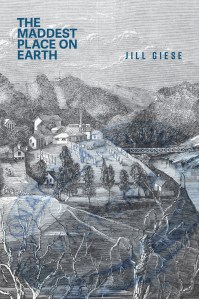
‘The Maddest Place on Earth’ by Jill Giese

Giese_The-Maddest-Place-on-Earth

2018, 220 p.

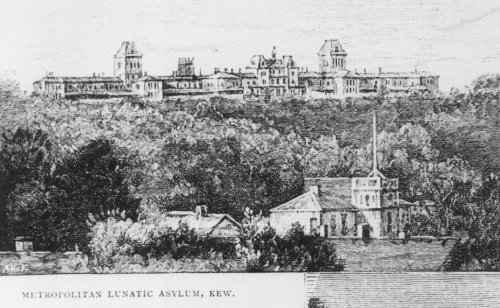
In the Epilogue of this book, clinical psychologist and author Jill Giese  writes that she jumped at the rare opportunity of an Open Day at Willsmere, the site of the old Kew Asylum. A little girl asked in that unfettered way that children do, ” If they were all crazy, why did they build them such a nice place to live?” As Giese notes, the most (and increasingly) visible sign of mental illness today is people lying on the streets of Melbourne, wrapped in blankets, begging for small change. Interestingly, it was the urge to give mentally ill people a shelter – an asylum- from the homelessness and penury of living in a blanket, that led to the construction of first the Yarra Bend Lunatic Asylum, and within six years, the construction of Kew Asylum, the first purpose-built asylum in Victoria. Both institutions – though plagued with overcrowding – were not established as the ‘Bedlam’-type places of horror that we might assume them to be.

KEWdraw

English: Engraving of the Metropolitan Lunatic Asylum, Kew. Buildings of Yarra Bend Asylum are seen in the foreground. c 1880. Source: Wikipedia

Victoria had what was perceived to be the highest level of mental illness in the world, hence the title “The Maddest Place on Earth”. In fact, at one of the numerous Royal Commissions held into asylums in Victoria during the 19th century, it was predicted that by 2050 every inhabitant of Victoria would be mad. A number of reasons were put forward: our meat-rich diet, the climate, the effect of the Gold Rush, excessive masturbation (although why Victorians would be especially prone to this was not explained) and the success of the Salvation Army in turning people’s minds to God.  Perhaps a better explanation was the “imported insanity” that arose from families ‘back home’ shipping their mentally-ill family members off to the colonies to avoid the scandal of madness. The Gold Rush could have both attracted and elicited madness in men who threw in everything to travel to the other side of the world, with failure more likely than success.

Giese tells the story of the Yarra Bend Asylum and the Kew Asylum but this is not your usual institutional history. Instead of taking a top-down approach, she uses  two main characters as the lens through which to view the asylum system in Victoria. Her first character, George Foley, was the son of an eminent artistic family in England. He suffered his first episode of mental illness while in art school, and suddenly “found himself” on a ship headed for Melbourne. He moved in and out of Yarra Bend and Kew Asylums, continuing to draw while incarcerated, and trying to hold together a precarious artistic existence when he was “outside”. The second character was journalist  Julian Thomas who, working under-cover as a ward attendant, wrote a series of columns for the Argus under the pen-name of “The Vagabond”.  He writes vividly and with humour, every bit the equal of a Mark Twain, or a nineteenth-century Louis Theroux.  Julian Thomas is well-known to historians of Australian (and particularly Victorian) history, but I hadn’t read his work before, and obviously Giese herself – a psychologist herself, rather than a historian-  was delighted to discover him for the first time.

Through George Foley, we catch a glimpse of the sharp edges of the itinerant artist’s life, even for a man clutching the slender thread of family reputation. At a time when there was no treatment for mental illness, he would be housed, fed and given meaningful work while in the asylum, only to flounder once he was released to his own resources again. He drew portraits of personnel within the asylum, including ‘The Vagabond’, who used a touched-up version of the portrait when he finally revealed his identity.  Through ‘The Vagabond’ we learn of meal-times with poorly cooked food, the dissonant music of the asylum band at the fortnightly balls held for inmates and staff, and the brutalizing effects of institutional life on the Kew Asylum attendants in particular.

Right from the establishment of Port Phillip, the presence of mentally ill people on the unmade streets of Melbourne was noted. Until the changes in asylum practice encouraged by the Quakers in the early 19th century in England, asylums had been dire places. Based on the new philosophy that asylums for the mentally ill should be built out of town, on hills in the fresh air, Yarra Bend quickly outgrew its construction in 1848 and was soon surrounded by a mosaic of cottages and even tents. The nearby Kew Asylum was opened in 1872 in a much grander E-shaped Italianate building,  Within five years Kew was the subject of a Royal Commission, which found overcrowding, disease and mistreatment. This was largely caused by a change in the criteria by which patients could be admitted to a ‘lunatic asylum’, which swelled the numbers of mentally ill patients with chronic patients with intellectual disabilities or dementia.  Despite the grandness of Kew Asylum, Yarra Bend stayed largely unchanged with its small cottage structure and more domestic, less institutionalized approach.  As Giese points out, Yarra Bend (despite its age and comparative neglect) came to be seen as the better model for dealing with mental illness with features like shelter, home-cooked food and meaningful, routinized work, that our mental health system could well emulate today.

Giese’s decision to use Foley and the Vagabond as her focus – one a patient, the other a staff member- is inspired. It would have been easy to have taken a patchwork approach, with small stories and vignettes stitched together into a fairly conventional institutional history, but for most of the book she avoids this methodology.  While she also traces through the career of Edward Paley, Inspector of Asylums, and recounts the numerous commissions of enquiry that, as too often happens today, masqueraded as action in themselves, she maintains her gaze on two individuals.  As a reader, you become invested in these two men. You read with a sinking heart of Foley’s struggle for mental stability and you see through the eyes of The Vagabond, in lengthy italized extracts from his columns.  Moreover, The Vagabond, too, has his secrets as Giese discovers at the end of the book.

This book won the Victorian Premier’s History Award for this book, and it fully deserves it. It is beautifully written, although perhaps a little fervent at times, and it is a deeply compassionate book. By foregrounding the long-term experience of George as patient, the Vagabond as attendant and journalist, and to a lesser extent Dr Paley as administrator, she gives a human face to mental illness as a lived experience. It’s a wonderful read.

My rating: 10/10.

Source: review copy from Australian Scholarly Publishing

AWW2019 I have included this book in the Australian Women Writers Challenge.

‘Imperfect’ by Lee Kofman

Imperfect1140-658x1024

2019, 306 p

In reading this book, I alternated between anger and a vague sense of voyeurism. When I review books, I tend to avoid tackling the author and try to engage more with the words on the page, the research, the planning decisions in mounting an argument. However, sometimes the author insinuates herself so much into the text, and makes herself so much part of the whole endeavour, that it’s impossible to separate the two. The other book that angered me in this way was Caroline Jones’ Through a Glass Darkly (my review here) and the two books are similar. Both books profess to be – and are – very honest but I find myself wondering just why these authors decided to put themselves on the page like this at such a personal level. They have made their book about themselves, quite deliberately. They force the reader to engage with the writer as a person. And in both cases, I think to myself “You know, I don’t think I like you much” and I want to move away. This is different from not ‘liking’ a character in a fiction book: instead, it is the whole premise and world view through which the book is filtered – and this world view is something that, as authors, these writers have decided to foreground.

Lee Kofman has undergone several bouts of surgery during her life. As a young child in the Soviet Union, she was operated on for heart problems, then a bus accident resulted in injuries to her leg that required skin grafts, leaving her with a large scar and misshapen leg. Her self-consciousness about her scars was heightened when she shifted with her family to Israel, where a high premium is placed on body image, before moving to Australia. She adopted clothes that hid what she saw as her ‘disfigurements’, always tentative about the act of revealing her body to friends and lovers. Not only is this a point of vulnerability, it is complicated further by a sense of inauthenticity and evasion – that she has pretended to be something perfect and whole when she is not.

This self-consciousness about her body and its disfigurement has bubbled through her professional life as well. Her PhD was written about concepts of the human body; she has undergone therapy with what she perceives as mediocre success; she has included in her fiction characters who are physically marred in some way. And now this book: an exploration of ‘body surface’ (her phrase) and the way that it shapes the people we become. It all starts with her.

I confess that my brittleness about her use of her own life-story as a rationale and lens springs from my own experience (ah! I’m aware of my own hypocrisy here). But in her exploration of obesity, horrific burns, facial deformities etc., and her assumption of a sense of shared experience, she personally has the luxury of the dilemma of when and if to reveal. That is a luxury denied to most of the people she interviews, whose difference is right there from the start, visible to all- not just to lovers and friends – but the curious, cruel and supercilious alike.

She admits at times that her own curiosity verges on voyeurism about other people’s experience. Her analysis is not just of imperfect bodies, but bodies that have been deliberately manipulated through extreme surgery and piercing, tattooing and shaping. She ranges far, interweaving her interviews with ‘imperfect’ people with academic research encountered as part of her PhD study. In many ways, even though I know that many readers enjoy it, I am uncomfortable with this mixture of the confessional and the academic.

She writes that her own sons have albinism. I do wonder how they will read this book when they are older. Will they see “Mummy’s scars”, which have figured so heavily in her writing and academic life, as a common bond between them, or will they resist? Will they resent being drawn into her analysis? I suspect that they may well.

Kofman gives us plenty of herself, but the voices of the people she interviews are reflected through her lens. I find myself thinking of the excellent ABC program “You Can’t Ask That” that gives time to look, and then listen. The interviewer there is silent because the questions are written on cards, and drawn from a range of questioners. Kofman is not silent.

I will probably let this post sit for a while as I ponder whether to post it. When I dislike a book, I generally don’t write a blog post about it at all. After all, I figure, if the book is a dud, then my piling-on is not going to make the book any better, or the author a better writer.

But neither this book, nor Caroline Jones’ book are duds.  And in both cases, the author herself has made choices. She has chosen to place herself in the centre of her book, not just in terms of the action (as an autobiographer or memoirist might do), but to use herself as the starting point of the analysis, not just in an intellectual sense but asking you to join her in the exploration as well. In this case, I’m not comfortable with her fixation on what she sees as her own failings. Even more, I’m not comfortable with her assumption that it gives her a sense of fellow-feeling with people whose ‘body-surface’ is much more confronting and demanding than hers.

My rating: 7/10 (actually, I found this hard to judge)

Sourced from: Yarra Plenty Regional Library

AWW2019I have included this review on the Australian Women Writers Challenge database.

‘Black Tide’ by Peter Temple

Temple_BlackTide

1999, 356 p.

That’s it. I’m not reading another Peter Temple ever.

In fact, I said that to myself after I had to re-read Truth for my CAE bookgroup earlier this year. I looked back at my original blog post and everything I said there, I say again. Too disjointed. Too much conversation. Too confusing. And definitely not worthy of a Miles Franklin prize.

I’m amazed to find that I’ve read as many Peter Temples as I have. I quite liked The Broken Shore, but by White Dog the appeal had worn off. In the Evil Day was set in Africa, but it had all the same problems (too disjointed, too much conversation, too confusing etc).  He does dialogue well, but why doesn’t (didn’t) he just write plays? At least the speaker is identified in a script and you don’t have to count back to see who’s talking. And who are all these people he keeps bringing in? Or capturing a setting, which he also does well: why doesn’t (didn’t) he just write travel books?

At least Black Tide is a Jack Irish story, and I can see Guy Pearce, the three old blokes at the pub, Cam, Harry Strang and Stan the bartender in my mind’s eye.  Thank God for television, I say. The dodgy betting is here, and the carpentry, and a bit of sex, along with a confusing story about dodgy companies.  But I really have no idea what it was about.

So that’s it. Ned Kelly Awards and Miles Franklin prize be damned. If someone chooses another Peter Temple for bookgroup ever again, I’m just going to say “Nup. I don’t like Peter Temple”.

My rating: 6/10

Read because: ONLY because it was chosen for my CAE bookgroup.

‘Short Walks from Bogota’ by Tom Feiling

feiling

2012, 288 p.

Before I went to Colombia recently, I tried to find books set there. Of course, there’s Gabriel Garcia Marquez but (dare I say it?) many of his books are rather similar and I wanted to read something different.  But everything I read seemed fixated on violence and drug-crime. Are there no other stories to be told about Colombia?

Tom Feiling found a similar phenomenon. He had been in Colombia in its violent decades, but in 2010 he went back, spurred by then-president Alvaro Uribe’s declaration that the country had moved from terrorism to tourism.  Tourists would need a book about the ‘new’ Colombia, he thought, and so he decided to write it.

However, he too has written a book that is steeped in drugs and violence, but he bookends this period by accounts of colonialism and twentieth-century history, and a view towards the future. It’s not a ‘walking’ book as such, although he does his fair share of hiking and talking and bumping around on the back of motorcycles and trucks. He visits Bogota (which I did not) and Medellin (which I did), and many other mainly rural places as well, many deep within the ‘orange’ Reconsider Your Need to Travel section of the map on the Australian Government Smart Traveller Website. Even in a book hoping to get beyond drug-violence, he found that it had shaped the Colombia that he found in 2010.

The book is written in a chatty, discursive, self-deprecating style and it paints vivid word-pictures of landscapes and people. It was published in 2012, and I think that Colombia appears to have been more successful than he anticipated in writing a new narrative for itself- although the persistence of so many Reconsider Your Need to Travel regions some seven years later is disturbing.

I finished reading this when I returned, and perhaps that was the ideal way to read this book. I may have been a bit turned off my plans for solo-60+female travel had I read it earlier.

Sourced from: purchased e-book

Read because: I was going to Colombia, but I didn’t finish it until I returned

My rating: 8/10

‘Argentina: A Modern History’ by Jill Hedges

Hedges_Argentina

2011, 336 P.

I purchased this book on e-reader to take with me to Argentina, which I was visiting at the time. As is the way of such things, I was so tired at night that I couldn’t concentrate enough to read it, and ended up finishing it in Colombia. [In turn, the book that I purchased to read about Colombia I finished reading in Chile!]. I wanted something readable and relatively current, with enough ‘back story’ to make a ‘modern’ history intelligible.

This book certainly fitted the bill. The author received a PhD in Latin American Studies from Liverpool University, and at the time of publication was Senior Editor for Latin America at Oxford Analytica since 2001. It is eminently readable, and does not assume much prior knowledge, which is just as well for me.

The book starts with the constitution of 1853, which still stands today. The first two chapters deal with national consolidation, and the ‘golden age’ of the Argentinian economy, and especially its relationship with Britain and emulation of European elite lifestyle. The rest of the chapters deal with the twentieth and early twenty-first centuries.

The book focuses on political players, most especially Peron and the generals who followed him during the dictatorship. She gives a really good explanation of Peronism (which exists in some form today) although she is critical of its populism and lack of philosophical/political principle. She points out that  the conditions under which leftist groups were ‘disappeared’ during the dictatorship started after Peron returned for a third term in the 1970s, and certainly her retelling of his political manoeuverings makes it difficult to space him on the political spectrum. While Peronism was explained well, the Dirty War was not as clearly described.

Perhaps because of this political narrative, the book also has a strong economic emphasis as well (are the two separable, I wonder, in any history or especially in this one?). The recurrence of broken promises and endemic corruption is depressing, as is the volatility of the economy and the democratic compromises it brings in its wake. This is very much a top-down analysis, focused on the political sphere, with little attention paid to social or cultural conditions.

I’m not in a position to take issue with any of its arguments – indeed, to even identify where her perspective differs from others’ – but I found it very readable and informative, and it enhanced my enjoyment of Argentina, even if I did finish it after I’d left it!

‘Poum and Alexandre: A Paris Memoir’ by Catherine de Saint Phalle

Poum_Alexandre

2016, 256 p.

There is no shortage of memoirs about parents written by their children.  Too often, there is an underlying whine of grievance in such memoirs – admittedly, quite often justified- because the parents are too cruel, too self-absorbed or too mad, and the author/child is seeking to blame or understand (and often both at once).  Alternatively, there are memoirs of parents bathed in nostalgia, sorrow and yearning: yearning for a return to a simpler time and regret for lost opportunities and all the things the author did not say at the time.

Poum and Alexandre falls into neither of these camps. It’s significant that the title makes no reference to the author at all – there’s no ‘my’ in the title- and the subtitle ‘A Paris Memoir’ emphasizes place. The book is written from the child’s point of view, but the author’s own life, and most particularly her adult life, is largely absent, except in the final section. The book is written in three parts: ‘Poum’ dealing with her mother Marie-Antoinette, nicknamed ‘Poum’ because of a childish game in bouncing down stair ‘poum, poum, poum’; ‘Alexandre’ dealing with her father; and then a final short coda involving both parents.

Both Poum and Alexandre are eccentric. Poum is a disinterested mother, just as happy to stay in bed with her books, as to spend time with her daughter. Alexandre imbues his daughter’s mind with Greek myths, praise for the Magna Carta, and tales of Napoleon. Both parents are drawn to tales of blood and savagery, and they share these with their daughter, irrespective of her age.

Their daughter, Catherine, spends much of her early life away from her parents. Born in England, ostensibly  because of the freedoms bestowed by the Magna Carta, she is largely raised by her nanny Sylvia, and Sylvia’s own family. When she finally settles in France, she can barely speak French, and the book is largely devoid of friends or any other contacts other than her family.

Told from Catherine’s point of view, there are many gaps and non-sequiturs. Alexandre is already married and has an older, first family and what seems to be an ever-increasing number of offspring that Catherine gradually learns about, but does not meet. Alexandre and Poum are cousins, and have fallen out with their families over their relationship. Poum tries doggedly to maintain relations with her own family, but there is tension and resentment, and Catherine feels it. This ‘situation’ swirls around Catherine and her parents, marking them out as different and disreputable. Perhaps it’s this exclusion that turns them towards each other in a fey, irresponsible and downright strange way.

Yet there is no judgement here. Catherine describes them with love and acceptance, even though as a reader you find yourself raising a sceptical eyebrow or huffing with disapproval at the sheer irresponsibility that both parents display at different times.   The book is beautifully written, and it certainly subverts the chronological memoir genre. It shuttles backwards and forwards, and tells events from multiple perspectives. It withholds as much as it gives.  And yet at the end of the book, you realize just how much Catherine has given you as a reader, and you are left with a puzzling and yet rich view of her parents – much how the author finds herself. This is a challenging memoir, but I suspect that I will remember it long after the ‘misery memoirs’ have merged one into another.

Read because: CAE bookgroup selection (mine). And several people on the Australian Women Writer’s Challenge website had read it

My rating: 8

AWW2019

I have added this review to the Australian Women Writers Challenge database

‘The Hand of Fatima’ by Ildefonso Falcones

falcones

2010, 887 pages – yes, 887 pages. Translated from the Spanish by Nick Caistor

Oooffgghh!! That was a long read! I was about to write that I rarely read big chunky historical fiction books but on reflection, that’s not true. I loved Kristin Lavransdatter, I eagerly await the final volume of Hilary Mantel’s Thomas Cromwell trilogy, and I really enjoyed Amitav Ghosh’s Ibis trilogy. Perhaps it’s that I often read trilogies and suchlike as they are released, several years apart. But I read this book all in one gulp.

I heard about it from a guide who took me on a historic walk in Cordoba last year, and I very much enjoyed reading about places that I had been in Granada, Seville and of course Cordoba.

It is set in 1564, long after the reconquest of Spain by the Christian Kings. However, as we see all too often in the midst of the sectarian wars that still afflict us, mere conquest is not enough to expunge the beliefs, stories and world view of a conquered people. The Islamic Morisco people in 16th century Spain are defeated, but restive, and uprisings erupt across Al Andalus, put down violently with massacres and enslavement on both sides.

Hernando is the son of an Arab woman and the Christian priest who raped her.  His stepfather despises him, and he kidnaps Hernando’s one love, Fatima, and takes and mistreats her as a second wife to spite him. He is shunned by the Christians who educate him into their beliefs, and he secretly visits Hamid, an old teacher who educates him into the Islamic beliefs. These two streams of belief, which he can call on when he needs to, mean that he is distrusted by both sides as he moves between the two cultures.

It is his facility with both Christianity and Islamic that drives him to a project to unite the two faiths through the figure of Mary, who is revered by both traditions. I found this part rather tedious and I’m not sure that it was really necessary to the story. But overall, it is a rather driven narrative, which barely takes a breath. Just when you think that things are about to be resolved, yet another twist occurs…and hence the nearly 900 pages.

I hadn’t heard of this book, which is written by a best-selling author. I was surprised for a moment to find that Lisa at ANZLitLovers had read it (until I remembered just how widely she reads) and her review is much more detailed than mine. I wasn’t even sure if it was written by a male or female author, but after reading the sex scenes with too much throbbing manhood for my liking, I decided that the author must be a man. I was not wrong.

To have the book recommended by a Spanish speaker, keen to show the beauties of her cities, is no small thing. It complicates the easy historical concepts of ‘conquest’ and ‘reconquest’, and I very much enjoyed the descriptions. When I was told about the book, I was reassured that I’d be able to find it in translation which is just as well. I doubt that I’ll live long enough to translate a book of nearly 900 pages in Spanish!


‘Saltwater’ by Cathy McLennan

saltwater

2016, 314 p

If you go by the cover of this book, with its subtitle “An Epic Fight for Justice in the Tropics”, you’re going to be disappointed. There is a trial in this book, but you won’t have heard of it. It’s just one of what I suspect is an ongoing succession of trials of young aboriginal men, whose lives seemed almost doomed to incarceration by their background of alcoholism, illiteracy and aimlessness. It’s not an ‘epic’ fight for justice, and there’s certainly no victory here.

The book is a memoir written by Magistrate Cathy McLennan, who looks back some twenty years to her first graduate job with the Townsville Aboriginal and Torres Strait Islander Legal Service, when she was aged just 22. She is not of indigenous heritage herself, and although brought up on nearby Magnetic Island, she felt largely overwhelmed working with this indigenous organization. Other non-indigenous barristers came and went, and despite her youth, she was very much thrown in at the deep end. The clerical and administrative staff were indigenous, and she relied on the guidance of aboriginal women working in a liaison capacity.  The male indigenous administrator of the organization was less supportive.

One of her earliest cases involved four young men charged with the murder of a white grog-runner. She was initially convinced of their innocence, and feels blocked by the local police.  The police, however, are not one-dimensional.  Called out to meet with a group of aboriginal people drinking in the park, she was horrified that a very young baby was lying on glass-strewn dirt. Brought right up against the dilemma of child protection vs. fear of another stolen generation, she realized that, in this situation, the police wee just as conflicted as she is.

Running alongside her involvement in this case was her ongoing contact with Olivia, to whom the book is dedicated, an 11 year old the size of a 5 year old, who was continually being locked up for robbery, and was sexually abused repeatedly. Olivia was failed at every turn: by her alcoholic mother, by child services who could do no more than come up with ‘a plan’, and by the ‘justice’ system that was content to shunt her off to Palm Island, where Olivia was even more abused than she was in Townsville.  McLennan bridles against failure at all levels that condemns indigenous children to incarceration. She could see the problem: she had no answers.  Now, twenty years later and as a magistrate, I find myself wondering if she has found a way for the system, that she is now part of, to do better.

The book is written in the present tense, and the prose is fairly pedestrian. She certainly raises many questions, and even if the book is not as “compelling” as its blurb suggests, it does add texture and complexity to a tragic and seemingly intractable situation.

My rating: 7/10

Sourced from: Yarra Plenty Regional Library.

I have added this to the Australian Women Writers Challenge database.

AWW2019

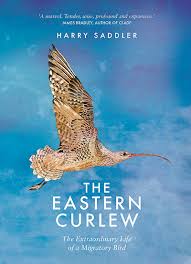
‘The Eastern Curlew’ by Harry Saddler

saddler

2018,  212 p.

What’s the life of a shorebird like? What’s it like to live a life of contact activity, when even your moments of rest are full of wakefulness? To gorge yourself on food twice yearly, and become obese, and burn all that fat off, year after year? To fly wing-to-wing with dozens or hundreds or thousands of your fellow creatures, for days at a time? To find upon your arrival, starving and exhausted, that your feeding grounds have been destroyed? (p. 203)

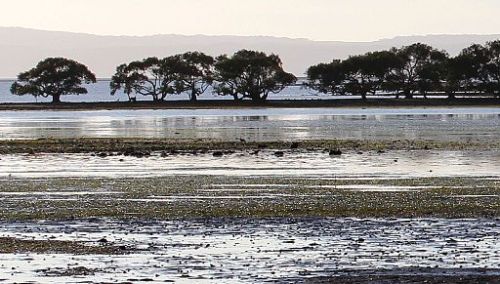
A couple of weeks ago I listened to an ABC Background Briefing podcast called The Bird and the Businessman. It’s about Toondah Harbour outside Brisbane, where developer Lang Walker wants to build a residential enclave. It’s situated within Ramsar-listed wetlands, but money is talking here. It’s also one of the feeding grounds for the Eastern Curlew, one of the migratory shorebirds that travels each year from Australia to China and Korea to the Arctic to breed, and then flies back again. I don’t think I’ve ever heard a program that made me so angry: listen to it.

toondahharbour

Panthus [CC BY-SA 3.0 (https://creativecommons.org/licenses/by-sa/3.0)%5D, from Wikimedia Commons

The Eastern Curlew is written by a keen birdwatcher, who traces the path of the Eastern Curlew, much as Ann Jones did in her excellent OffTrack series of programs Flying for Your Life.

The book is divided into three sections: Seeing, Moving, Being. The first section, Seeing traces his own growing awareness and fascination with the curlew, then moves on to the misnaming of the Eastern Curlew as Numenius madagascariensis, even though it doesn’t go anywhere near Madagascar.  The chapter ‘The Sea Curlew’ celebrates the indigenous response to curlews, particularly around Roebuck Bay near Broome, where they congregate before heading off to Asia.

Part II, Moving, starts with a chapter about bird tracking. The author then takes us to Dandong, China which he has mistaken as his destination instead of the similarly-sounding Donggang. It is a critical ecosystem for curlews: it is also one of China’s major ports. Netting, channelling, draining and road and seawall construction are all threatening the location. After leaving China, he goes to the mudflats of Ganghwa and the developing city of Gunsan, where the South Korean Government hopes to build a ‘dream hub’, surrounded by the 33-kilometre long Saemangeum seawall. Although the Korean government spouts their environmentally-friendly construction practices, all is not as it seems.

In attempting to justify the intentional destruction of the tidal mudflats at Saemangeum, the South Korean government stated that the birds would simply fly elsewhere. But the birds were never going to relocate. One of the reasons there are so many species of shorebird in the world is that each species has adapted to take advantage of a subtly different niche within tidal mudflasts. Different rivers, flowing to the sea through different geologies, create a wide variety of mudflat ecologies- and, as in any environment, variety in mudflat habitat leads to variety in the species found in that habitat. (p. 151)

Part III, Being, takes us to the Arctic and Lemmenjoki National Park in Finland, and the frantic mating and hatching before the birds leave for the Southern Hemisphere again. The chicks are left to fend for themselves. Then, we head back to the local wetlands in Cheetham in Victoria, where again developers are circling. The final chapter takes us to the Melbourne museum where he inspects the collection of curlew carcasses, collected mainly in 1990 at the Werribee Sewerage Treatment Plant, including object B.17906, a female which was collected nearly forty years earlier. As he closes the drawer,

…it occurs to me that the drawer contains the densest concentration of eastern curlews that I’ve ever seen, anywhere. (p. 198)

This is a beautifully written book. The proof-reader seemed to go a.w.o.l. for a couple of pages, and it jarred so painfully because the rest of the book is so careful and lyrical. The book meanders and goes off onto tangents, but what comes through clearly is the love of watching, the sorrow and anguish at our impotence against larger economic forces, and the feeble beating of a spark of hope that it doesn’t have to be this way.

When it comes to the conservation of migratory shorebirds, moments of hope are too few and too far between. Yet the very exuberance of these birds’ life cycle, the unfathomable vastness of their exertions, itself is a kind of hope: there are few animals in the world so full of life. And if there’s one fundamental truth about life, it’s that it wants to persist. If we can give it enough of a chance to do so, it’ll take that chance. (p.207)

Sourced from: Yarra Plenty Regional Library

My rating: 8.5

The East Asian – Australasian Flyway Partnership (EAAFP)

BirdLife Australia

https://www.facebook.com/saveourbaytoondah/