Author Archives: residentjudge

‘The Book of Rachael’ by Leslie Cannold

2011,  324 p.

Leslie Cannold is an esteemed  Australian public intellectual best known for her contribution to debates over feminism and reproductive technology.  I haven’t read her previous non-fiction publications What, No Baby? and The Abortion Myth but I generally read her newspaper columns and articles.  This is her first fictional work.

The impetus for this book, the author tells us, sprang from watching the BBC documentary Son of God.  This documentary examined Jesus the man (as distinct from Jesus the religious figure) and mentioned that he had four brothers who were named.  His sisters- if indeed he even had any- were un-named and not part of the historical record at all.  When Cannold went to research the existence of these possible sisters,  she found that there was nothing – not even enough for an article.  “That’s OK” she thought “I’ll just write a novel instead.”  And here it is: dedicated to the women of her family and to “every woman still struggling for a place in history.”

This  goes some way to explain my response to the book.  Cannold wanted, from the start, to mount an argument about women’s visibility in history, and the injustice of their life experience in 1st century Galilee.  It is a conscious, political statement that places women back into the biblical story.   The eponymous Rachael is the intelligent, headstrong younger daughter of Yosef the carpenter and his wife Miriame, and the sister of the charismatic preacher, Joshua.  This slight shifting in the names unsettles our easy identification with the gospel story, and there is certainly no supernatural or religious element here at all.  Her father Yosef is a good, loving man; Miriame is a carping, bitter woman and certainly no saintly figure;  her brother Joshua changes from a quietly empathetic ally into a somewhat fey, distant figure, driven by his own obsessions and agendas.   Rachael, conscious from the start of her difference and chafing against the many restrictions placed on women, becomes an acolyte of ‘the crone’ Bindy, who initiates her into the women’s arts of healing.  She falls in love and marries Judah of Iscariot, rebel leader of a guerilla band that is resisting the Roman authorities. She struggles with the pressures to have a baby and yet continue her work as a healer.

The anachronisms started early- on the second page in fact, with the ‘Galilean resistance fighters’ (shades of Monty Python’s Judean People’s Front??) and Rachael’s mindset is a thoroughly twenty-first century one.  The book is obviously well  researched, especially the details of women’s medicine and herbalism, but the research is conveyed with a heavy hand.

The book reminded me of Anita Diamant’s The Red Tent, but it has none of the rich female intimacy that marked that book.  The Book of Rachael  is a book of the head that mounts an aetheistic alternative narrative to the gospel.  Perhaps it could be described as an extended, fictionalized ‘what-if’ argument. As  a reader I found myself watching how the argument was constructed, weighing it and judging how well it countered the gospel account.

I  switched to intellectualizing the book because it was the only way that I could break through the writing, that veers between chicklit and stilted, pompous prose.  At times there are hints of a biblical cadence- think Song of Solomon perhaps- but they are fleeting and not sustained throughout the book.  Is it just me, perhaps?  Very few of the reviews I have read address the issue of the narrative voice at all.  I’ll leave it to you- here’s an example. Here is our first century, Jewish narrator.  A deeply troubled Judah has gone off by himself, just prior to Passover,  ostensibly to buy a sacrificial lamb for the feast that night, but we sense (and know) for another purpose:

By late afternoon I was close to gnawing off my own arm from idleness when Judah burst through the door, whistling through his teeth.  I ran to his side, desperate for company and news. ‘Where were you?’

He removed his scarf and pegged it on the hook before turning to me. His brow was smooth and eyes clear.  He was Judah again: vigorous, confident, in charge. ‘Nowhere,’ he boomed cheerfully, then changed his mind: ‘Buying a lamb for sacrifice. I have tied it in the lane.’ He looked around then gathered me for a passionate kiss, one hand gripping a breast.  When we separated he gazed in the direction of the hearth. ‘Is there anything to eat?’  (p. 272,3)

The reviews I have read of this book are generally glowing.  Lisa at ANZLit Lovers wrote one of the most enthusiastic reviews I’ve ever seen her give;  Kylie Ladd on Mamamia liked it too, as did Theo Chapman in the SMH and Patricia Maundel on Radio National’s Bookshow.

I’m afraid that I have to disagree.

My rating: 5/10

Reason read: Australian literature bookgroup

Book obtained from: Eltham Bookshop (purchased)
Something to think about…

If the great leading article of a creed be a contradiction of the intellect, or understanding, or reason, then the whole religious system must be supported by contradiction and absurdities… if a nation’s faith be superstitious and irrational, and they sincerely believe it, then all the laws and customs and institutions will, in some degree, be tinged with irrationality

Rev. Maxwell Davidson, January 30 1853 at the first Unitarian service held in the Mechanics Institute, Melbourne.

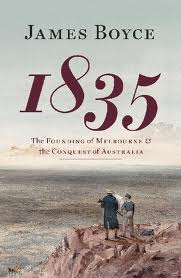
‘1835’ by James Boyce

James Boyce, 1835: The Founding of Melbourne and the Conquest of Australia, Black Inc, Melbourne, 2011.  212 p & notes

At last! I thought when I finally got my hands on this book.  In fact, three ‘at lasts!’  I’m almost sure (nothing is really sure these middle-aged days!) that I read about this book at the beginning of 2010 when publishers were spruiking the books that were about to appear during the year.  I waited throughout 2010 but no sign of it.  And now- here it is.  And ‘at last!’ I thought because in the closing chapters of excellent previous book, Van Diemen’s Land, James Boyce clearly signalled that, just like Tasmanian settlers themselves, his own  thoughts about Van Diemen’s Land crossed the strait as well.  And ‘at last!’ again  I thought because in reading about the early history of the Port Phillip District – for example in A.G.L. Shaw’s A History of the Port Phillip District – you find yourself wondering if Port Phillip will ever get itself off the ground.  Navigators just kept sailing past it, missing the bay completely; Collins picked up sticks and decamped for Hobart after a short time, and the aborted and rather half-hearted  attempts to establish a settlement on Westernport Bay sputtered away fitfully.  Like a car with a flat battery, the Port Phillip settlement just didn’t seem to be able to turn over and take off for decades.

Boyce describes the arrival of squatters coming across from Launceston in 1835 as “a brazen act” that “would shape the history of Australia as much as would the arrival of the First Fleet in 1788” (p xi). It’s a big claim:

…the policy turmoil which followed the establishment of a squatters’ camp in 1835 had an significance far beyond the baptism of a great city.  In this place, at this time, ‘Australia’ was born. (p. xiii)

As might be expected from the title, Boyce starts his book in the year 1835, which he approaches from a range of perspectives: by locating us in the deep time of the Yarra River, and then  amongst the smaller black/white encounters along Bass Strait in the decades prior to 1835 through the unregulated and largely undocumented whaling, sealing and wattle-bark industries.  After this largely geographical perspective he then moves on to explore the political mindset of the three groups of players during 1835: – the financiers, pastoralists and adventurers in nearby Van Diemen’s Land who formed themselves into the Port Phillip Association ; the governors in Sydney under official British instructions to limit settlement to the area adjacent to Sydney ; and the Colonial Office and lobbyists representing opposing evangelical and pastoral interests in London.

It’s important to remember that there was no inevitability about the Port Phillip district being considered as part of New South Wales.  In terms of distance, it was far closer to Van Diemen’s Land than it was to Sydney- it still surprises me when driving down near Lakes Entrance that you’re just as likely to find local Tasmanian stations as Victorian ones on the car radio.  Governor Arthur, whom Boyce suggests was influential in the whole Port Phillip Association endeavour, certainly was in no hurry to let Sydney know what was going on across the strait.

Indeed, as Boyce suggests,  this policy double-speak pervaded the whole endeavour.  Batman’s so-called ‘treaty’, was as Bain Attwood also suggests in his recent book Possession, a legal fiction, but Boyce claims that it was not meaningless, either to the Port Phillip Association, or to the Kulin leaders who putatively ‘signed’ it. Adopting the slow-motion, close reading that Inga Clendinnen used to such good effect in Dancing with Strangers,  Boyce traces the pedigree of the treaty in colonial thinking generally and in the actions of both black and white protagonists in that first year.  There was an intricate dance of go-slow and evasion between all the political actors involved, in Port Phillip, Hobart, Sydney and London, that exploited all the silences and ambiguities of correspondence at a distance.   Had the Colonial Office, or its representatives in Sydney really wanted to suppress the Port Phillip settlement in line with the espoused policy of closer settlement,  they could have used policy to do so. It could have punished squatters for illegal possession by banning them from future land purchases; it could have with-held convict labour from them and it could have equipped Aboriginal Protectors with the authority to award or strip leases depending on the treatment of the Aboriginal tribes already there.  There was, he claims, a choice involved, and the governments here in NSW and the British Govt through the Colonial Office,  chose to do none of these things.

Boyce takes up a second theme that he foreshadowed in his chapter in Van Diemen’s Land entitled ‘Victoria’s Van Diemonian Foundation’.   There was, he claims, a deliberate policy both in the Colonial Office and in Sydney to dilute the influence of the small, bush-savvy Tasmanian ex-convicts who flooded across the strait as shepherds and labourers.  By blaming ex-convict shepherds  as the main threat to Aboriginal tribes, Sydney and the Colonial Office and the behind-the-scene evangelists, championed the more ‘respectable’ large, NSW-based pastoralists as the means of civilizing and incorporating Aboriginal people into the settlement endeavour.  The pastoralists, already a powerful lobby group, were only too pleased to reap the benefits of this portrayal.    Boyce’s argument is not couched in the Marxist terms and language of Martin Sullivan’s earlier Men and Women of Port Phillip, but there is a strong class dynamic at play nonetheless.  In this regard, Boyce’s argument needs to spill out of the 1835 chronological straitjacket he has confined himself within.  For example, although Boyce does not mention it, in succeeding years the decision to hold the first land auctions in Sydney rather than in Melbourne itself played to the interests of Sydney pastoralists and speculators, and the early constitutional arrangements for elections to the Legislative Assembly favoured Sydney-based candidates for Port Phillip seats.  This process of expunging the VDL-based nature of Port Phillip society was set in play in 1835 and intensified in the years following.  But because his book focuses on the first year of settlement in Melbourne,  his account gives more prominence to VDL than the longer-term perspective suggests.

Boyce closes his book by asserting that the land rush and dispossession that so quickly followed the settlement of Port Phillip was not inevitable, even though it was portrayed that way by Governors and the Colonial Office at the time and is still portrayed that waytoday.  His final chapter engages in an exploration of ‘what-if’.  I’m always wary of ‘what-if’ (even though I enjoy it!)- I see it as a guilty pleasure but ultimately a sterile pursuit because the reality is that it didn’t happen.

I’m likewise  a bit uncomfortable about his closing observations that extend his observations about government decision-making, or the lack thereof, during the settlement of Port Phillip  into a discussion of climate change policy today.  His argument has been strong and  persuasive throughout the rest of the book but I don’t know if it can stretch this far into the realm of present-day politics.  Although ‘doing nothing’ or failure to act (are they the same thing?) might be the end result, I’m not sure that it always springs from the same impetus. It might be a deliberate delaying tactic; it may be quite self-conscious; it may be because some actions are literally unthinkable and certainly unvoiceable because other imperatives are more important, or it may reflect a failure of imagination.  I’m not convinced that failure to act on climate change and failure to act to suppress illegal possession are the same thing.  It’s a debate worth having, I suppose, and perhaps that was his purpose in introducing the question at all.

This book is well-written, clear, engaging and forceful in its claims and well worth reading.   As a Melburnian, it nudges you into a different place to look at your city’s history, and that’s a bracing and exciting thing to do.

Census

2016 Update: I have rather cheekily linked to this post as part of the National Family History Month Blogging Challenge which, during Week 1, asked for a post about things people had learned about their ancestors through the Census.  Well, as you’ll see, this posting isn’t really about a family at all, but rather it looks at the controversy over one of the questions in the 1841 census. So, here’s my posting from 2011:

15 August 2011.

My census paper is all filled in, waiting to be collected.  I quite enjoy filling in surveys and doing interviews.  I note that several of my Facebook friends with young babies were amused at the inappropriateness of many of the questions to their babies (“How well does the person speak English?” “Does the person ever need someone to help with self care activities?”).  At the other end of the parenting spectrum, I found myself feeling rather furtively curious at the replies given by adult children (Hmmm- so that’s how much they earn?! How did they answer the unpaid domestic work for the household question?)

My son was rather keen that I answer ‘No religion’ in the optional religious question.  It’s obviously a touchy subject because it, alone among the questions, is optional.  Thinking back to the rigid, unyielding sectarian prejudices of my 1950s-60s childhood, this would have always been a hot question but for different reasons.  What’s a Good Unitarian Girl to do?  Yes- I know that identifying as Unitarian will be collapsed into a bald statistic showing the increasing religiosity/atheism of modern society.  Do I want my creedless religion collapsed into a category along with fundamentalists of all shades? How religious is a creed-less religion?  Such deep questions, all for a census.

Then there’s the marriage question.  It’s when there’s such a stark choice- married/divorced/widowed/never married – that I feel uncomfortable about the many shades of grey that are blurred by such harsh distinctions.  The long term same-sex relationship that would dearly love to be a marriage but is forbidden?

And the either/or nature of language spoken at home.

Radio National’s Rear Vision program had an excellent feature recently called Who Counts? A History of the Census (podcast and transcript available).  The program highlighted that censuses (censi?) differ in their questions, format and intent in different countries at different times.  The British census of the mid-19th century, for instance,  reflected the public health concerns over ‘the household’ as an economic unit, particularly in the wake of the widespread mobility of the Industrial Revolution.  The American census was framed by a mindset of growth, particularly on the frontier.

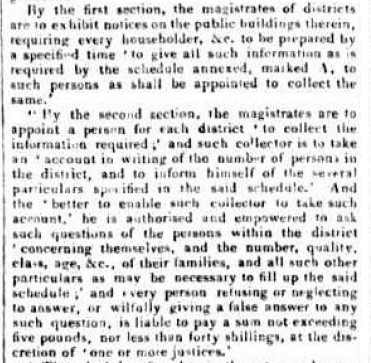
The Australian census, first conducted in 1828, emerged out of an earlier tradition of the convict muster.   As shown on the Historical Census and Colonial Data Archive site, there were censuses in New South Wales in 1833, 1836 and 1841.  The Census Act of 1840 spelled out the process for collecting the information, and the magistrates were at the heart of it:

[Australasian Chronicle 5 December 1840]

During the 1840 debate over the Census Bill, the process was not controversial, but one of the questions in particular was:

whether he was born in the colony, arrived free, or obtained freedom by pardon or servitude?

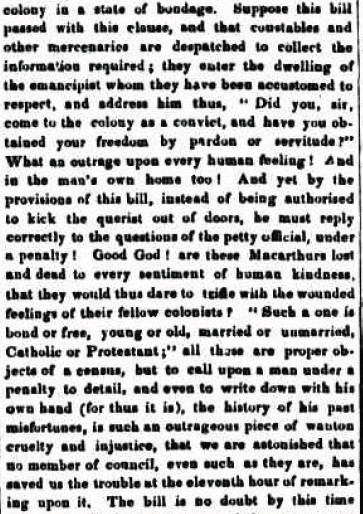
The original census of 1828 provided several “class” categories: CF meant ‘came free’; BC meant ‘born in colony’; CP denoted ‘conditional pardon’;  FS meant’ free by servitude’ and TL stood for ‘ticket of leave’.  But by 1840 New South Wales was distancing itself ever further from its convict origins – a process which John Hirst in Convict Society and its Enemies argues began right from the start of settlement.  This question was now highly sensitive.  As the Australian Chronicle argued:

[Australian Chronicle 20 October 1840]

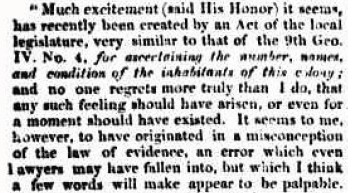
And into the fray steps- yes, you guessed it!- Judge Willis.  Justices Dowling and Stephen, the two other judges of the Supreme Court of NSW declared the bill to be repugnant to British Justice on the grounds that, as a witness under oath in court did not have to degrade his character by identifying himself as an ex-convict, he should not be required to do so before a census collector.  Justice Willis, as was his right, issued a dissenting opinion, arguing that the benefit of the question for the government outweighed this consideration (although he did not specify what these benefits were to be).   As was often the case with Willis’ interventions into political questions, at issue was not his dissent per se but the way in which he expressed it (although in this case, it highlighted tensions between the ‘exclusives’ and the ’emancipists’). In court he observed:

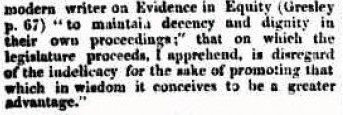
With this subtle, but nonetheless public put-down of his fellow judges, he then went on to discuss the laws of evidence in the courts and concluded:

This public jousting on a question of law was one of several issues between Willis and his brother judges, most especially Chief Justice Dowling, at the time. Along with other similar considerations,  it led to Gipps’ decision to place Willis as the resident judge of the Supreme Court of New South Wales in the district of Port Phillip, well away from his colleagues.

So, I can hand over my completed census form- minus any questions about my convict status or lack thereof- safe in the knowledge that yet again, I have operated on the principle of six degrees of separation between Judge Willis and any topic you may choose to name, and managed to bring Judge Willis into 2011, no matter how tenuous the link.

A day trip to Westgarthtown

The sun was a-shining, the magnolias a-blooming, the wattles a-bursting and the magpies a-caroling-  so a good day for The Sunday Drive.  It’s the second Sunday in the month and Ziebell’s Farmhouse is open  at Westgarthtown.  Westgarthtown is not, as one might assume, in Westgarth.  Instead, it’s out at Thomastown and now surrounded by 1970s brick veneer homes.

We decided to head out along Plenty Rd, stop off for lunch at a cafe we both knew of vaguely in Mernda, then go across through Wollert to Epping and back to Thomastown.  After all, Sunday drives are supposed to be a circuit, aren’t they?

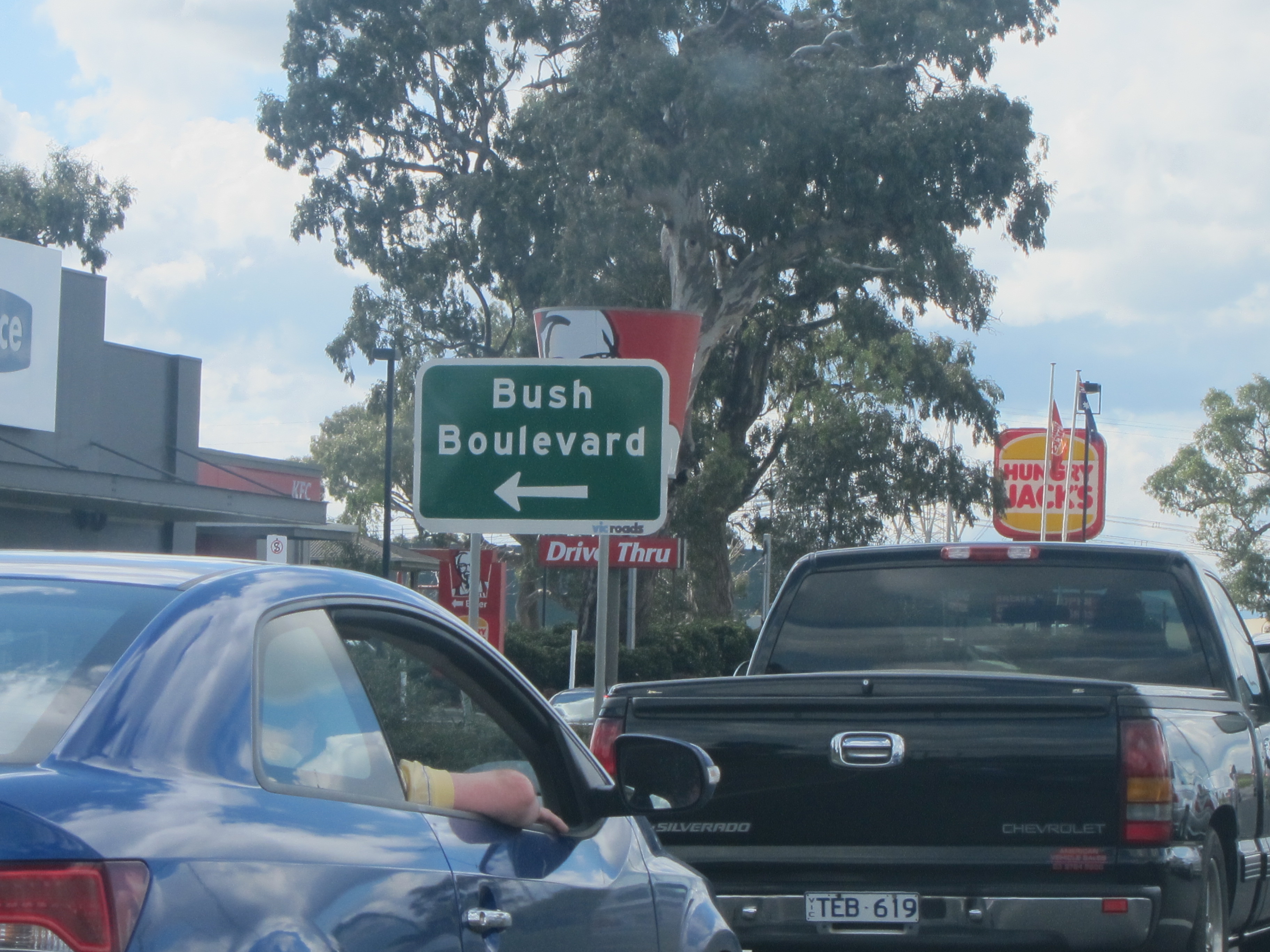
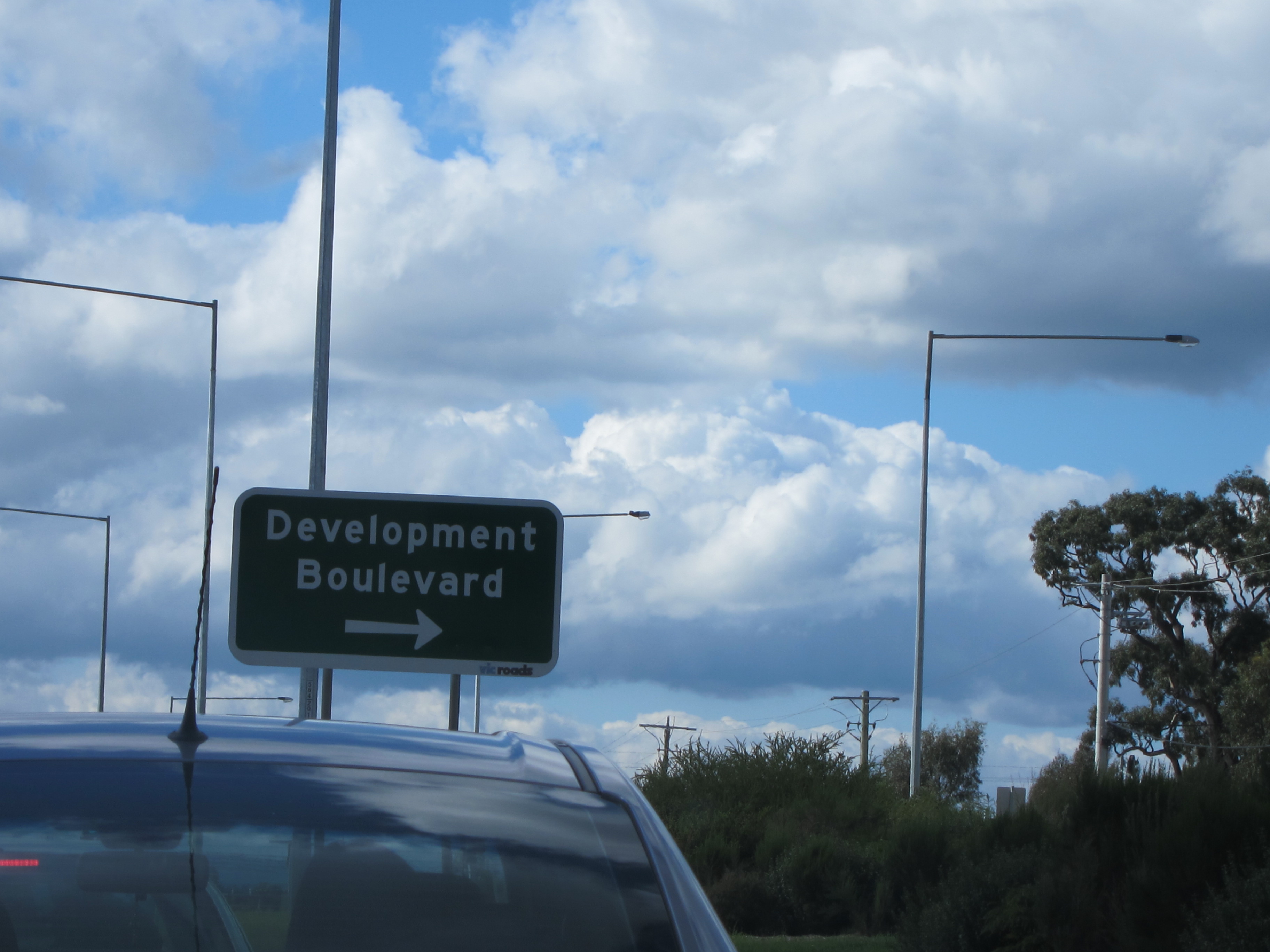
My wordy, I haven’t been this far out along Plenty Road for a long time.  I was once told that there wouldn’t ever be any development on the east side of Plenty Road because there was a MMBW covenant on it.  Obviously not.  There was little discernible difference between “Bush Boulevard” (huh! with its takeaway food stores) on the left and “Development Boulevard” on the right.

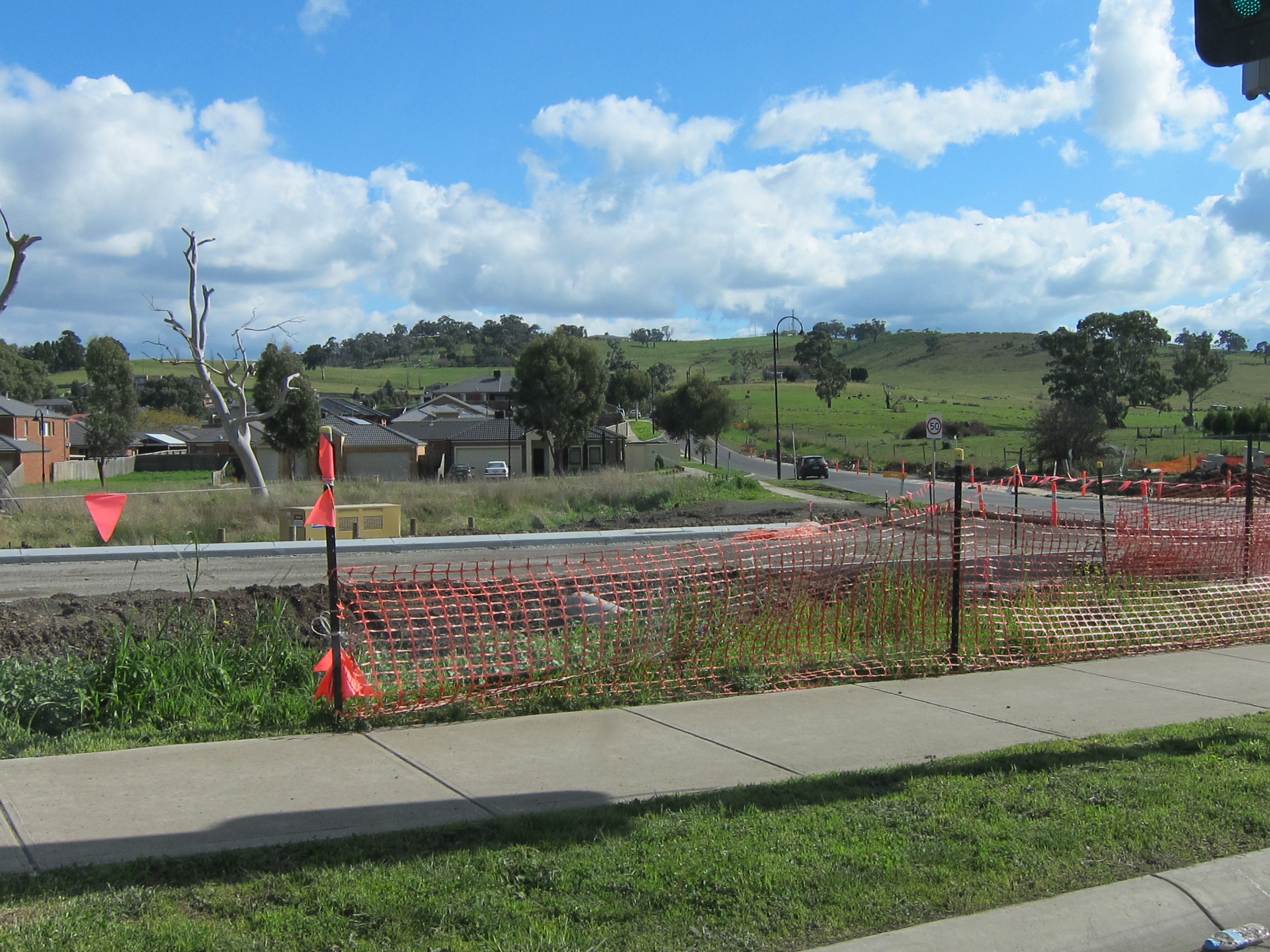
We often receive glossy pamphlets in our letter box advertising new land developments out at Berry Lane,  Eden Gardens, Eucalypt etc.  They all sound so bucolic until you see them clawing their way into what had been farmland.

We headed back towards the city (which was actually visible on the horizon), passing drystone walls and strange farmhouse gardens composed entirely of prickly-pear.  The paddocks gave away again, this time to the triple-fronted brick veneers so proudly bought by ‘New Australian’ migrants as they moved out into suburbia in Lalor and Thomastown in the 1960s and 70s.  Down a couple of side streets and there we were- Westgarthtown.

Westgarthtown is named after William Westgarth, who arrived in Port Phillip from Scotland in 1840.  He was here during Judge Willis’ time and an active member of civic society with involvement in the Mechanics Institute, the Benevolent Society, and later the Victorian branch of the Australasian League for the Abolition of Transportation and the Melbourne Chamber of Commerce. He helped found the first gas company and was an enthusiastic promoter of the railways.  He was a member of the NSW Legislative Council and a supporter of manhood suffrage, the abolition of property qualifications, state education and the abolition of state aid to religion.

He was instrumental  in the establishment of Westgarthtown.  I’ve read of other men in Upper Canada, too, who involved themselves in emigration schemes targetting particular geographical regions in the ‘old world’. These men personally sponsored from their own pocket, or sought bounties from the government for the transportation and establishment costs of whole villages into new settlements in the colonies.  It is particularly significant that German settlers, like the Italians up near Daylesford, excelled at agricultural farming in its own right as distinct from pastoral farming- something that the Wakefield scheme tried without much success to encourage amongst British immigrants.  Westgarth explains his own involvement:

When I made my first Home trip, in 1847, I resolved to open, if I possibly could, German emigration to Port Phillip. Quite a number had already been settled, some from the earliest years, in South Australia, where their industry, frugality, sobriety, and general good conduct had made them excellent colonists. This favourable testimony was confirmed to me by correspondence on the subject with my late much-lamented friend, Alexander L. Elder, one of South Australia’s earliest, most esteemed, and most successful colonists. My first step on arrival was to write to the “Commissioners of Emigration,” an officiate since dispensed with, pointing out this South Australian success, and suggesting that a certain charge upon the Colonial Land Fund, authorized in special cases of emigrants–an aid of 18 pounds a head, I think–might be made applicable to German vinedressers emigrating to Port Phillip. In due course, I received a most cordial reply from the secretary, Mr. (afterwards Sir) Stephen Walcot, to the effect that Lord Grey, then Colonial Secretary, highly approved of the project, and that the aid asked for would be forthcoming for properly qualified German vinedressers. ..

But the grand prize for these Germans was the acquisition of land. Accordingly Captain Stanley Carr (then on a visit with the German Prince of Schleswig-Holstein) and myself took up, in trust for such Germans as desired it, and had the means of payment, one of the square miles of surveyed land, as yet unapplied for, about twelve miles north of Melbourne, which was divided amongst them in lots as agreed upon. And there they are to this day, a thriving community. When, in company with Neuhauss, my wife and I visited them in 1857, just before finally quitting the colony, we found considerable progress in the form of a scattered village, with a little Lutheran church, and some show of gardening and cultivation. They seemed delighted to stick to their German speaking, and would not even try to speak English. One amusing feature in the scramble as to allotments was that each tried, in most cases, to get trees, stones, and rocks in preference to clear ground, as if so much additional wealth. The trees might have had value for firewood, but in the other items they had probably more than they bargained for. We secured the land for them at a pound an acre, and the fact of their being so largely settled upon it raised its value at once considerably. All the land thereabout has now risen to many times this first cost. Many more Germans have since, as I understand, settled upon other land.   William Westgarth ‘Personal Recollections of Early Melbourne and Victoria’

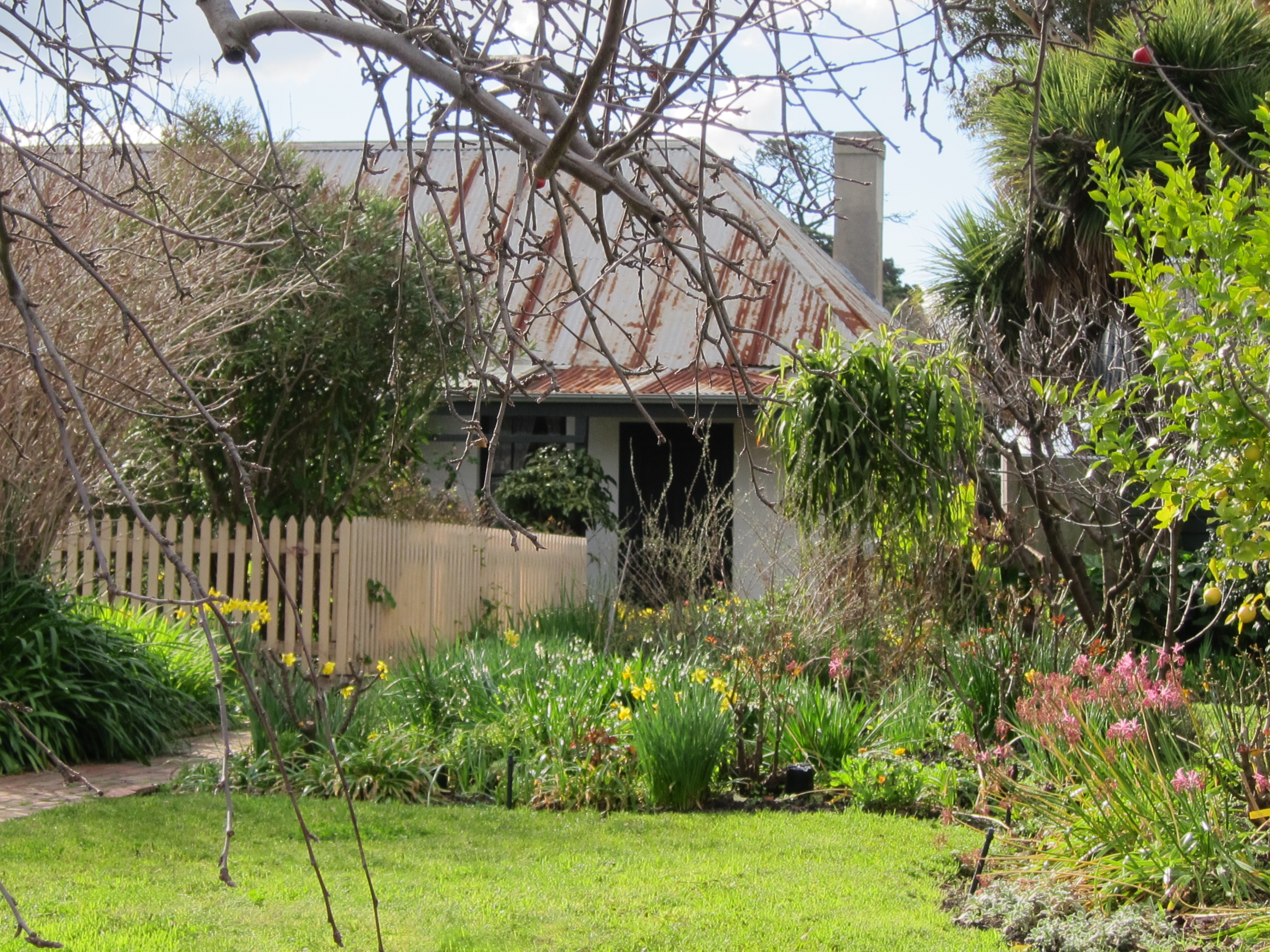
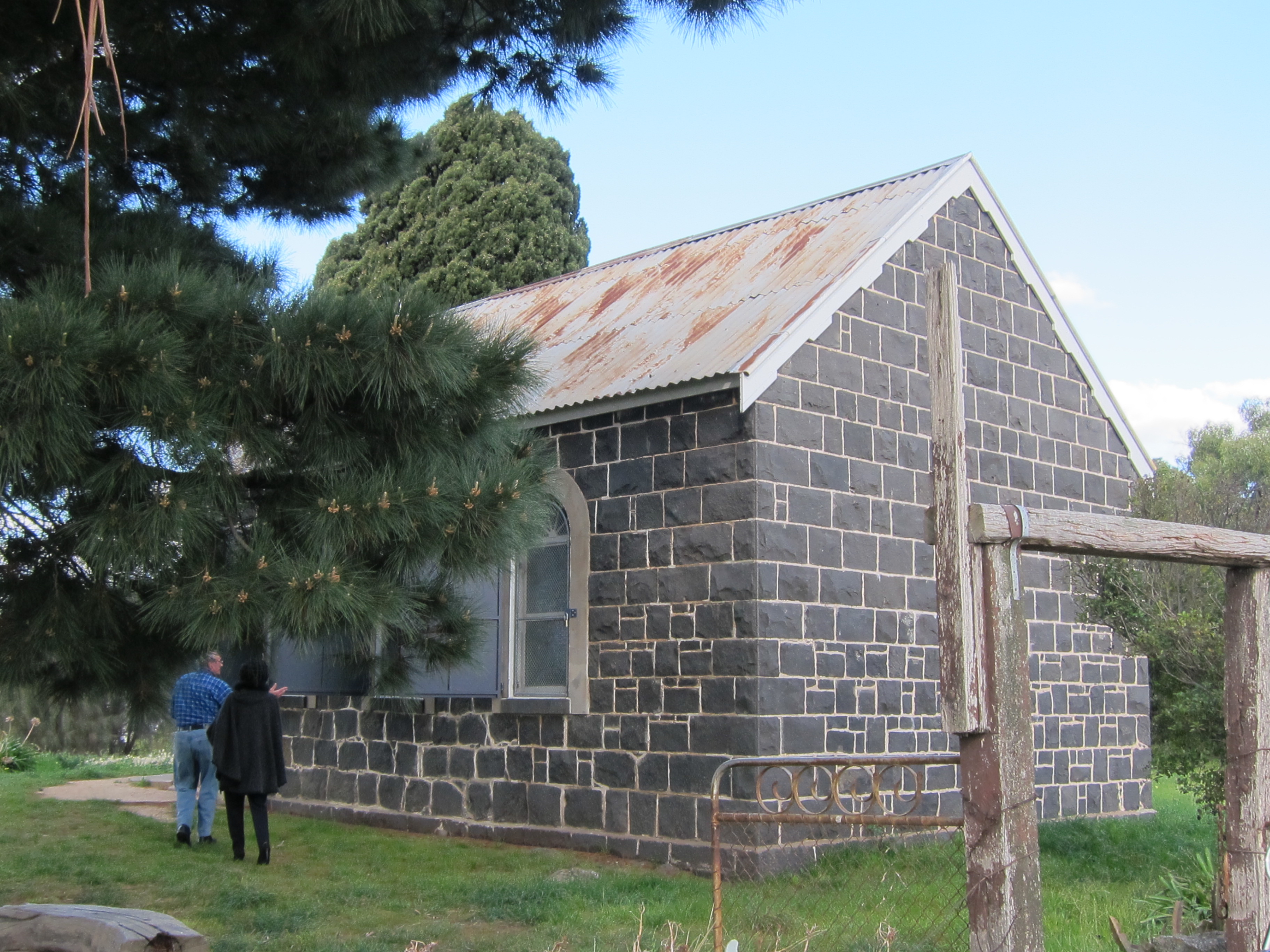
The houses are still there, even though the Germans are not.  There is a large, open square in the midst of suburbia, with Ziebell’s farmhouse in one corner of it.  It is a low-slung, rough bluestone farmhouse, with a barn, wash-house and smokehouse.  The last surviving member of the Ziebell family moved from it in the 1970s into a new house built beside it (now used as a caretaker’s cottage) and for the first time she had electricity and running water- yes- the 1970s.

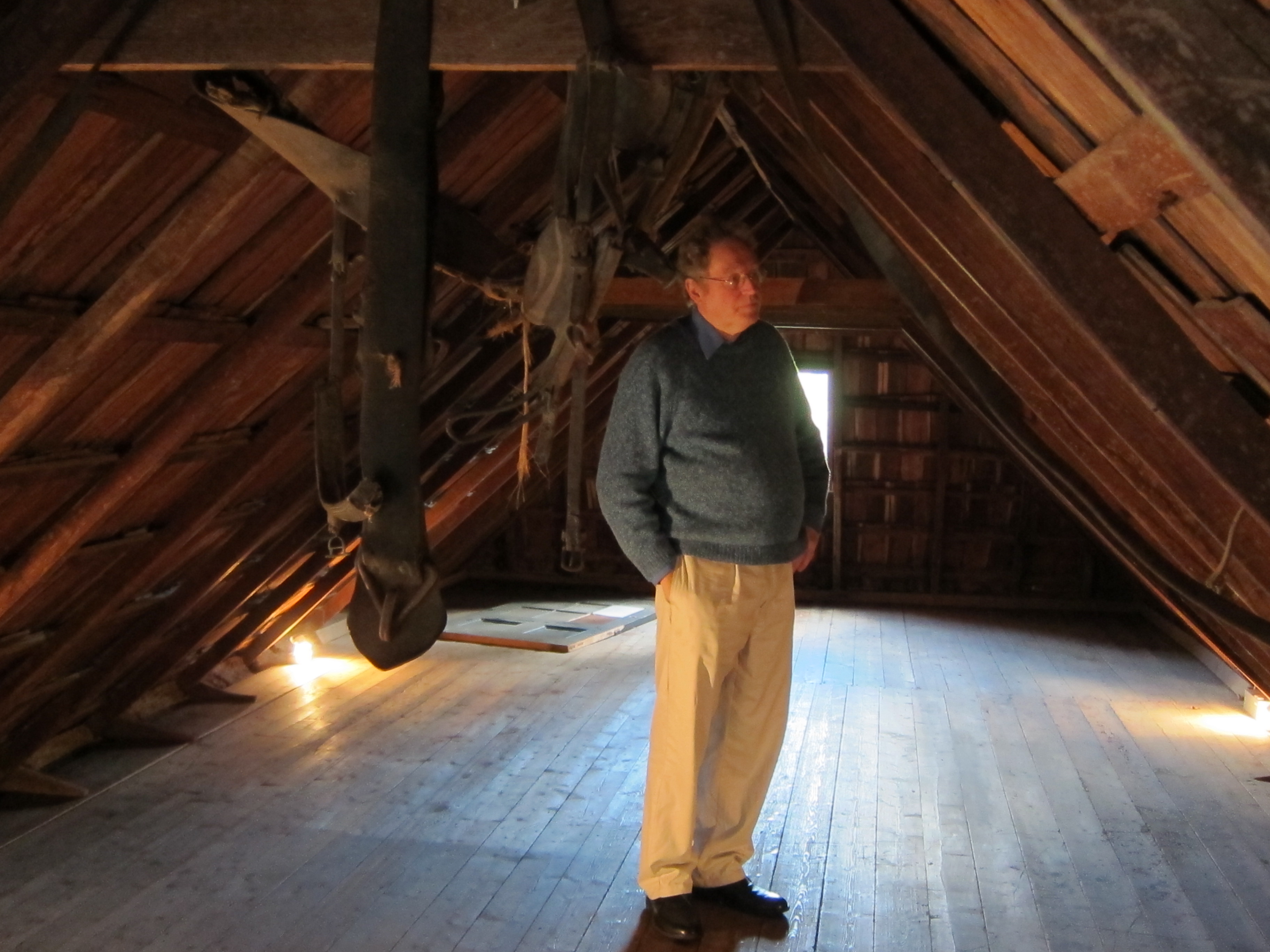
The parents slept downstairs, beside the large pantry and kitchen, while their eight children slept in the attic upstairs.

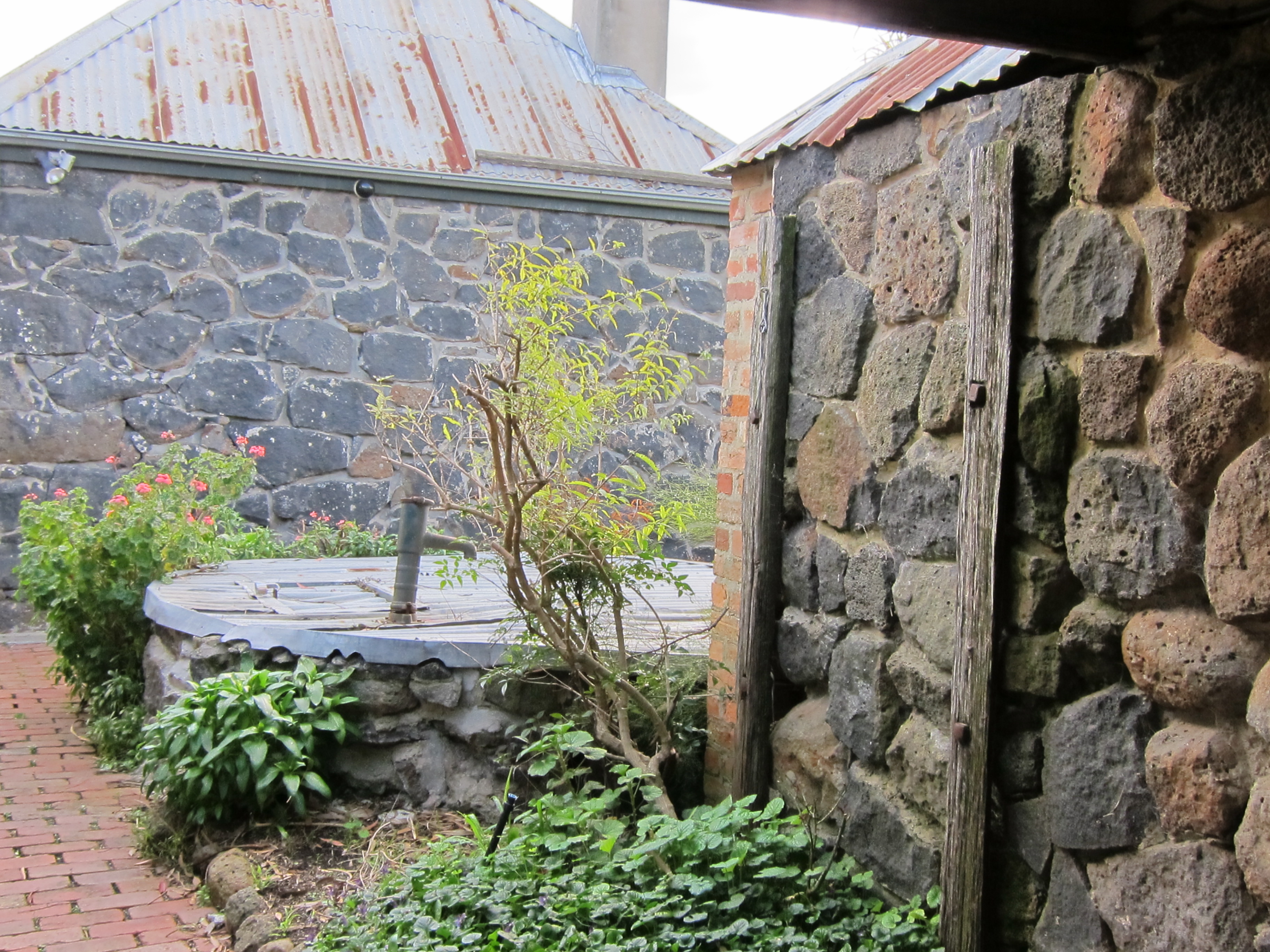
The wash-house was separate from the main house, with a well outside it for drawing water, and a fireplace inside the wash-house for heating the water.

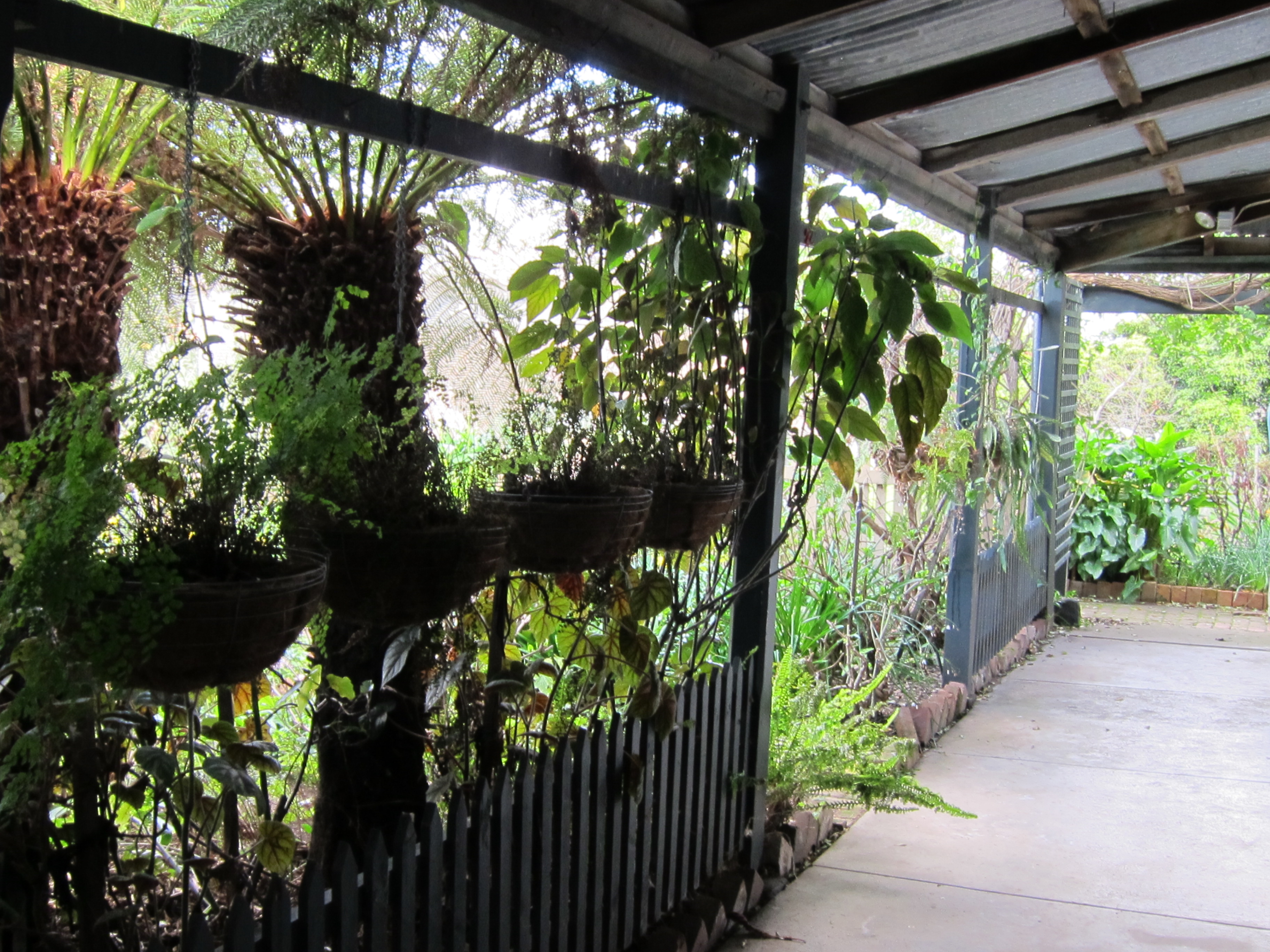
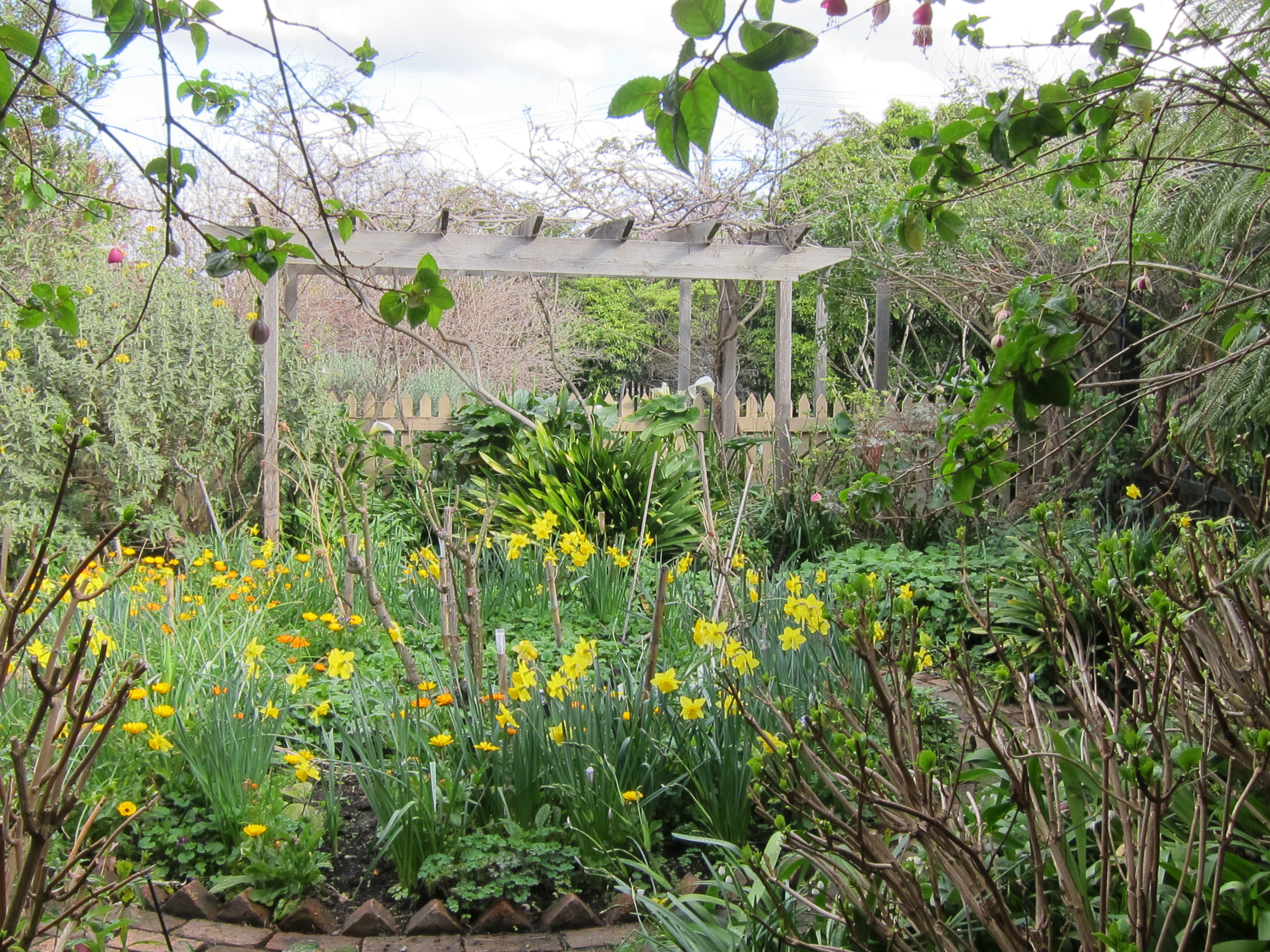
The house itself is only open on the second Sunday of each month between 1.00 and 4.00 pm. (entry $3.00) but you can see the garden at any time and a beautiful garden it is, tended with care and pride.  It’s a credit to its keepers (whomever they may be).

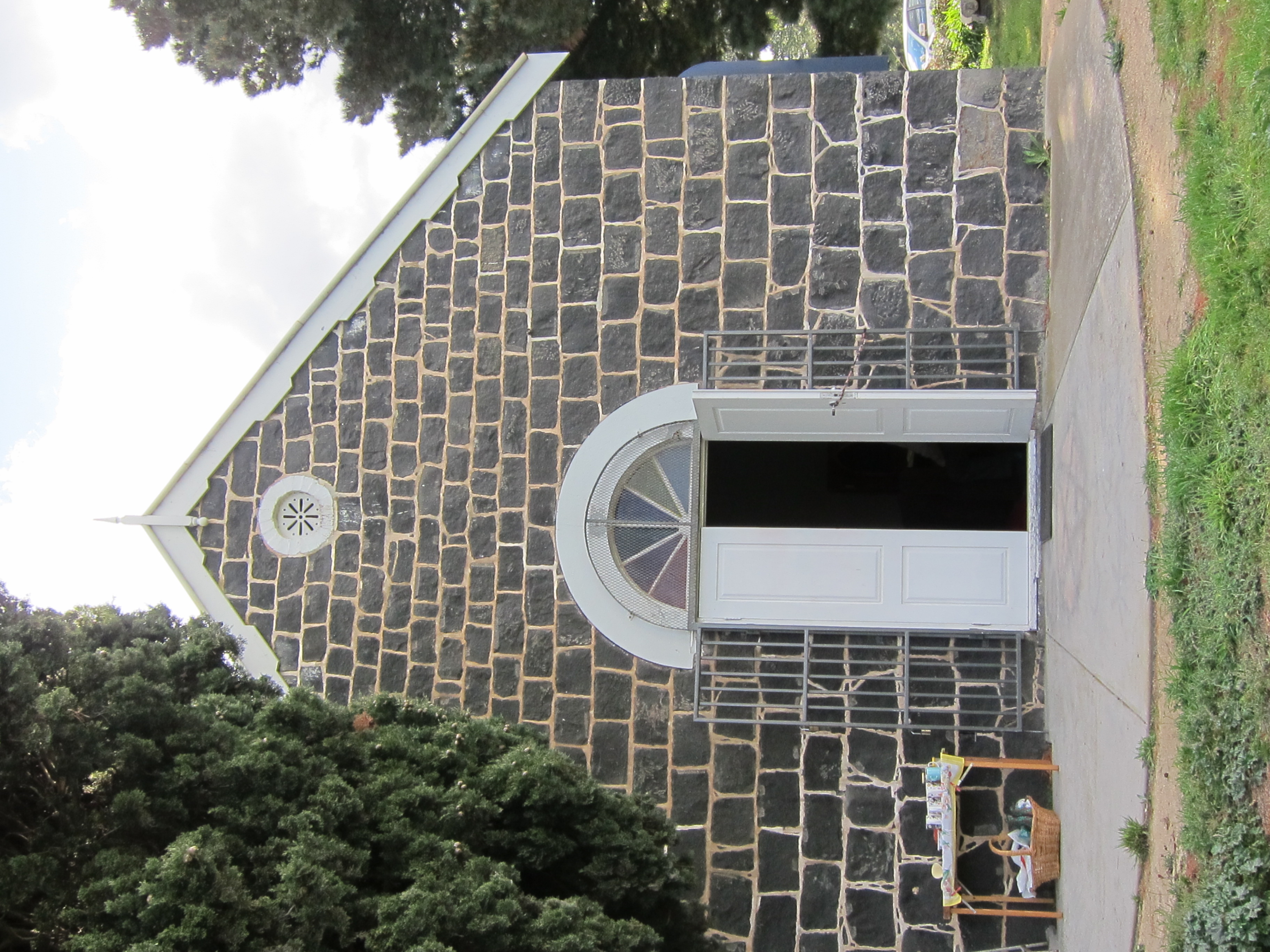
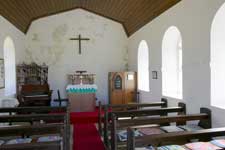
The back of the farm opens onto a large expanse of grass and diagonally across is the Lutheran Church, the oldest operating Lutheran church in Australia, and still in use on alternate Sunday afternoons.  I love seeing a church still fulfilling its original purpose, and the doors and windows were open (they are often shuttered and locked for fear of vandalism), a young man was preaching and a small congregation was inside. A card table was set up for their afternoon tea outside.

We didn’t go in- but if we had, the interior would have looked like this:

There had been a bluestone schoolhouse built nearby, but it was demolished in the 1950s.

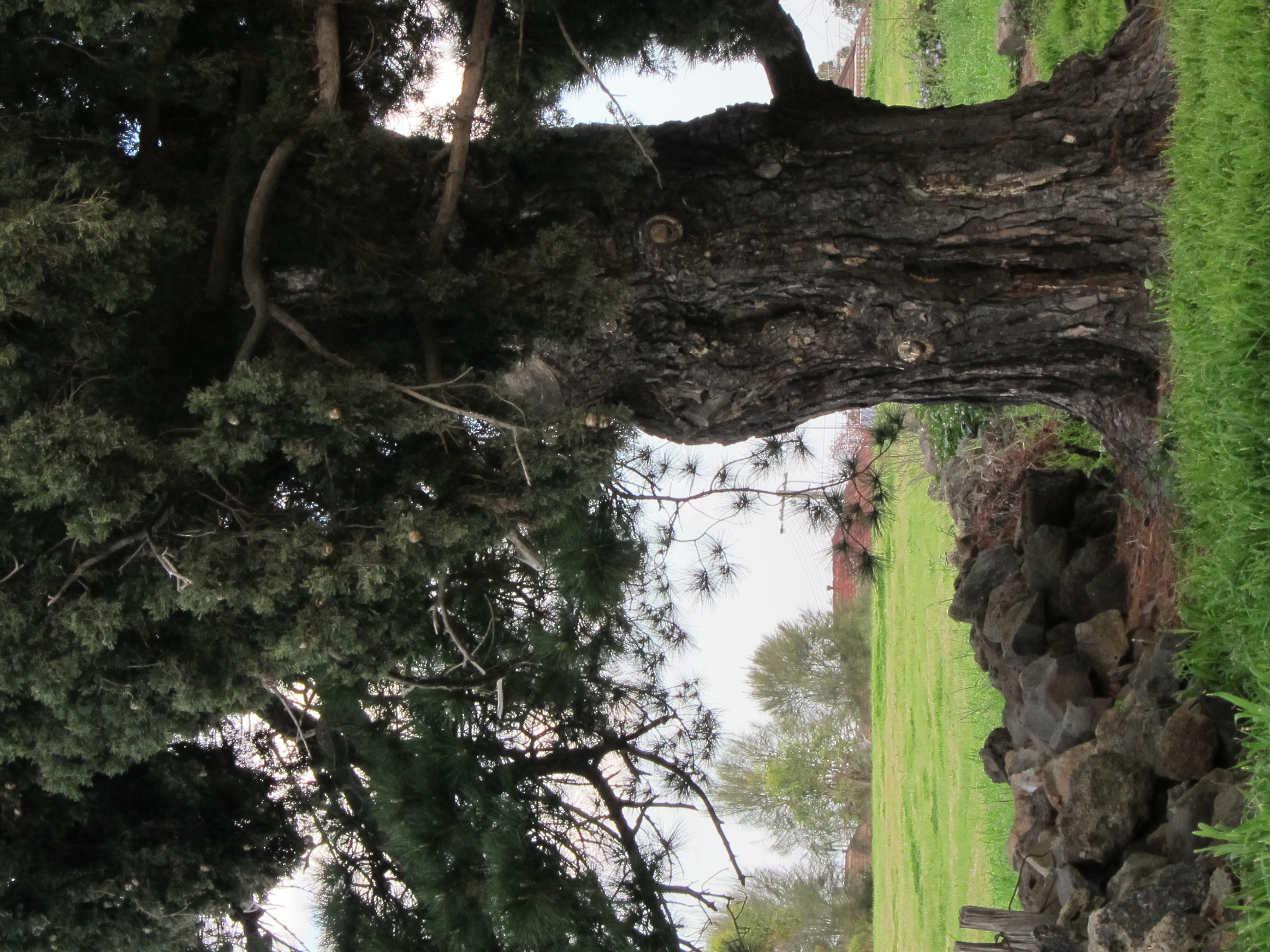
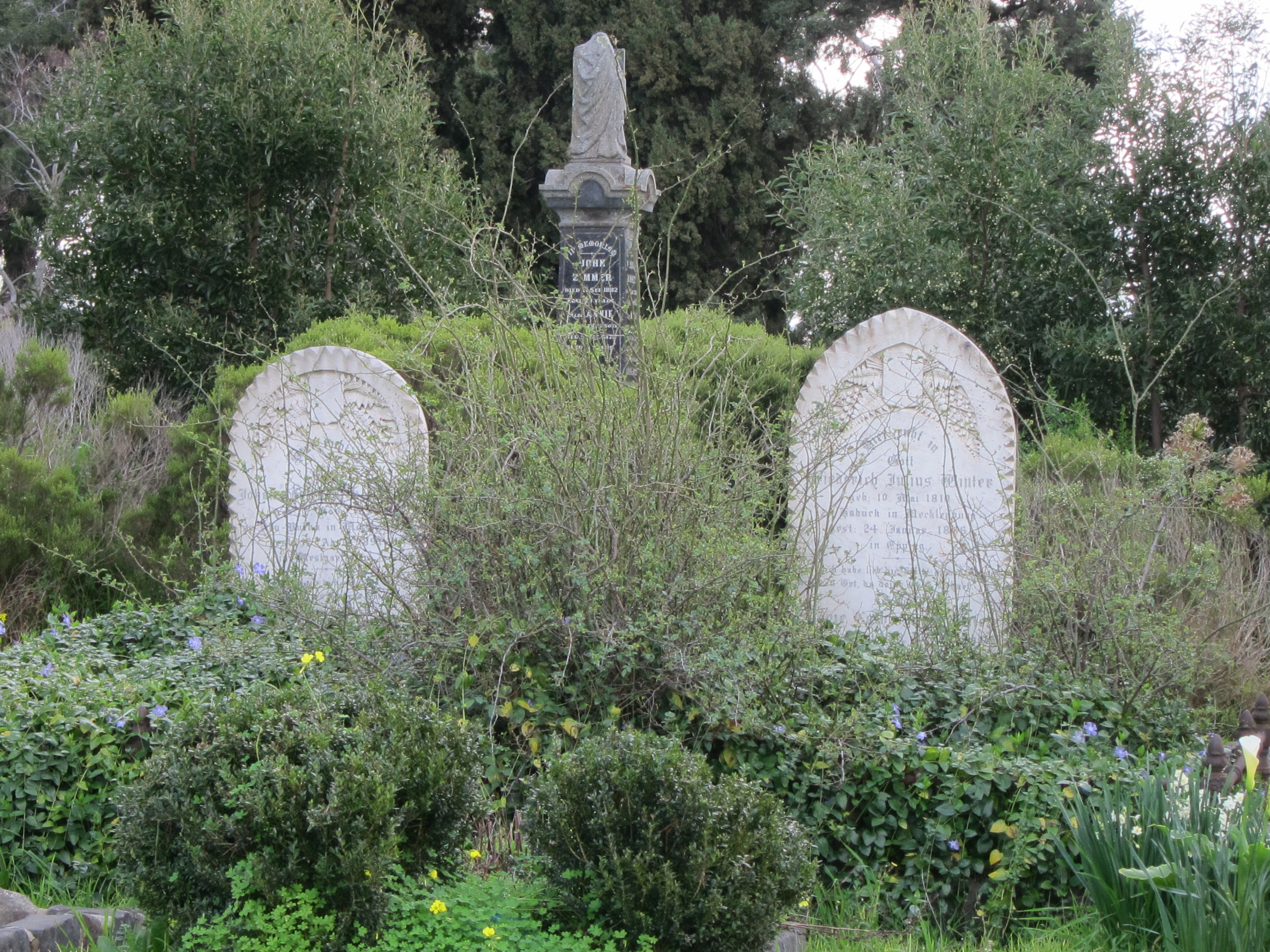
Back across the field to the other corner, and here was the cemetery.  You really had a sense of the centrality of church, school, God and death to these settlers’ lives.  The cemetery is marked out by drystone walls and dark, gnarled conifers.

Many of the inscriptions on the gravestones are in German.  The cemetery is still in use- in fact there was a very recent grave over in one corner that was too muddy to reach- but only direct descendants of the German settlers can be buried there.

It’s wonderful that this little section of Westgarthtown has been preserved intact, but there are other, privately owned old settler houses in the surrounding streets as well.

Maltzahn’s Farmhouse

The Westgarthtown website has more information and there’s more here as well.

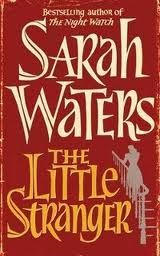
‘The Little Stranger’ by Sarah Waters

2009, 499 p.

I was about to say that it’s a long time since I’ve read a ghost story.  Then I realized that I don’t think I ever have read a ghost story- not even Edgar Allan Poe.  (No- I lie.  I have read A Christmas Carol).  Nor, for that matter, could I think of a ghost movie that I’d seen other than spoofs.   Of course, it’s possible that I have both read and seen ghost stories but they were so utterly unmemorable that I’ve forgotten them completely, or perhaps I just absorbed the ghost story genre by osmosis.

[Errata: I just remembered that I’ve spent Saturday nights for the last few weeks watching ‘Marchlands’.  I don’t know quite how that slipped my mind]

But I have read gothic stories with a hint of the supernatural- think Jane Eyre, Rebecca, Wilkie Collins- great fat books with the big house, the confused first-person narrator, and things that go bump in the night.    The Little Stranger fits right into this genre.  It is a gentle, slow tale told by the local doctor, Dr Faraday, who becomes enmeshed in the distress of the local gentry Ayres family, whose house harbours a ghost. Their home,  Hundreds Hall is falling into disrepair with tangled gardens, vermin, leaking roofs and windows and the family- the vague, aristocratic Mrs Ayres, her son Roderick who has returned from the war with a leg injury and ‘nerves’, and the practical, plain daughter Caroline- cling futilely to a vanishing world of servants, farm labourers and estates.

I was perhaps a little disappointed by the plot, which promised much and kept me anticipating more.  Sarah Waters is a master at emulating but subtly subverting a literary genre, with her lesbian-themed Victorian pastiches in Fingersmith and Tipping the Velvet and the brilliant Blitz-era The Night Watch which I very much enjoyed reading  earlier this year.  There’s no lesbianism in this book,  but as in all her other works she complicates what would otherwise be stock characters.   We don’t actually see much of the ghost in this story, but there are other ghosts as well: the ghosts of men who went to WWII and came back hollow; the ghosts of the British aristocracy in Labour-governed post war England; the ghosts of slowly decaying Georgian mansions and the ghosts of the marriage hopes of a diffident, insecure country doctor and the bluff, angular spinster daughter of the big house.

This is a long book and the tension mounts very slowly.  I found myself anticipating snuggling up in bed to read it and glad that I wasn’t reading it on my own.   I did feel a bit let down by the ending,  and yet I don’t know what ending would have satisfied me. I would have resented having everything tied up neatly, and was wary that the book not step over the line into melodrama on the one hand or gratuitous  terror on the other.

Waters’ balancing act in writing this story was mirrored in my own contradictory response to reading it.   I had that same feeling of wanting to read on but wanting to stop as well, when it seemed that it was becoming a bit too  spooky.  It was the sort of book that you wanted to gallop through, regretting at the same time that you were getting closer to the end.  It brought out the adolescent book-worm in me, wanting to read late into the night, knowing that you’ll regret it the next morning. It was rather nice to be taken back to that type of book, and that type of reading again.

Some reviews? Hilary Mantel liked it in the Guardian;   Dove Grey Reader was slowly won over by it, and Abigail Nussbaum was lukewarm.  If you’ve read it, you’ll enjoy John Crace’s Digested Read of it.

Read because: Sarah Waters is one of my favourite authors.

My rating: 9/10

Obtained from: La Trobe University Library

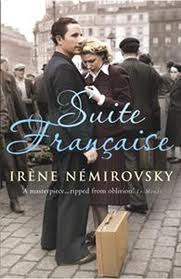
‘Suite Francaise’ by Irene Nemirovsky

2006 (English translation), 344 p & appendices

I purchased this book in the flurry of publicity that greeted its arrival in English translation.  It came with such a wonderful back-story: the 60 year old manuscript lugged around in a suitcase by her orphaned children after their parents were murdered in the Nazi extermination camps finally becomes a world-wide bestsellerBut, as often happens when I simply have to have a particular book, once purchased it sat in its paper bag beside the bed for a few months until it shed its packaging, was put on a bookshelf and joined the long line of books that “I really must read  one day”. By the time I did read it, five years later, I had forgotten the back-story and I’m glad that I did, actually.  It meant that I approached the book just on its own merits without the publicity hype.

The volume contains two separate books in effect, conceived as part of a larger work.  The two books are only tangentially related, quite close to the end.  The first, “Storm in June” focusses on the panic of Parisians just before the German army took over Paris.  In a way, it reminded me of A Woman in Berlin in its depiction of  the physical fear of the oncoming victors and the awareness of being on the wrong, losing side.  There is haste and panic, but there’s also that slow-motion inevitability that life is about to change for the worse.  Nemirovsky draws together a number of smaller stories: a husband and wife who work for a bank whose son is missing at the front; an art connoisseur; a wealthy family with their old, ill father-in-law- there’s several stories running in parallel here.  I must admit that it took me until about p. 150 before I was able to distinguish one from the other and pick up their story without flipping back to remind myself who they were.  No-one comes out of this scenario covered in glory:  the rich are self-centred, hypocritical and selfish, and the poor and teeming masses are desperate as well.

The second book “Dolce” picks up on a small rural community once the Nazi occupation is underway.  A new cast of characters is introduced, but the narrative focuses particularly on Lucile, whose older husband has been captured as a prisoner-of-war, and who lives uneasily with her hypercritical mother-in-law.  German soldiers billet in the villagers’ homes, where they are treated with varying degrees of sullen resentment, hostility, resignation and even curiosity and attraction.  It is only at the very end of the second book that tenuous links are drawn to the characters in Book 1, and you catch a glimpse of the wider vision that Nemirovsky had for her work.

The appendices flesh this vision out for us.  She kept a notebook while writing where she mapped out the wider arcs of the plot and her ideas for the work as a type of symphony with different acts.  She refers several times to Tolstoy’s War and Peace, and even before reading these notebooks I had detected the parallels.  Like Tolstoy, she paints  a broad historical canvas by depicting small, intimate, domestic relationships that intertwine and contrast with each other.

The final appendix is a series of letters written by and to Nemirovsky as the Nazi threat becomes clearer.  We see her husband and friends anxiously combing through her earlier published works, looking for evidence that they can use to argue for her release from arrest, little realizing that she is already dead.  The book closes with the biographical preface that appeared in the French edition when it was first published in 2004.  In this we learn that Nemirovsky was from a Russian Jewish family that had emigrated to France early in the 20th century, and converted to Catholicism- but none of these things were enough to save her from Auschwitz.

I’m glad that I read this book in the order and at the time that I did.  Had I read it earlier, I think I would have been tempted to read the appendices first and this would have shaped my response to the book itself  As it was,  I encountered the book first, incomplete and perhaps undeveloped though it might be in the whole scheme of the larger opus, and it stands up well.  It makes her ending even more tragic, if that’s possible.

Uplifting Quotes for the Uninspired Historian #10

It is hard to think away out of our heads a history which has long lain in a remote past but which once lay in the future.

F.W. Maitland ‘Memoranda de Parliamento (1893) in Selected Essays (Cambridge University Press, 1936) p. 66

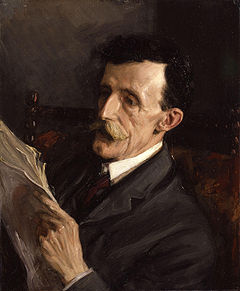
F. W. Maitland– now where have I heard that name before? I’m only too well aware of how limited my knowledge is of ‘older’ historians, but the name seemed familiar. I have been reading about Sir Peregrine Maitland in Upper Canada and I thought that perhaps I had the two mixed up.  But then I realized that a picture of F. W. Maitland was on the cover of the conference program at the legal history conference I attended at Cambridge a few weeks ago- in fact, he was the Downing Professor of the Laws of England at Cambridge between 1888-1906.  That surprised me: the quote above seems somehow more reflective and almost postmodern than I would have expected from a 19th century legal historian.

F.W. Maitland was a philosopher at heart, who went into the law for largely pragmatic reasons  and came to history rather late in his prolific, but rather short, academic career.  At the age of 25, and as part of his quest to earn a Trinity Fellowship  he wrote and self-published a treatise called ‘A Historical Sketch of Liberty and Equality as Ideals of English Political Philosophy from the Time of Hobbes to the Time of Coleridge’.   Much of his academic work elaborated on this foundation, whereby he unearthed, transcribed and commented on the broad sweep of English law, right back to Roman and Anglo-Saxon law.  From this he developed a sweeping vision of social relations and modernity both in Britain and the Anglo-world, and on the Continent.   While solidly a records-based historian, grappling with legal, highly technical documents, his works revolve around the larger philosophy of ideas exemplified by de Tocqueville, Adam Smith, Montesquieu and Marx. Although a prolific writer- over 5000 pages- much of his work was conducted in spite of ill-health through tuberculosis, and he died in 1906 at the age of fifty-six.

On the 4th January 2011  a memorial to him was placed in Poet’s Corner at Westminster Abbey, the only professional historian to be honoured in this way.   Quite apart from his interest in history and law,  and his clear, evocative writing, his approach to history itself speaks to me.  He was deeply conscious of the dangers of anachronism:

The history of law must be a history of ideas. It must represent, not merely what men have done and said, but what men have thought in bygone ages. The task of reconstructing ancient ideas is hazardous and can only be accomplished little by little.  If we are in a hurry to get to the beginning we shall miss the path. [… ]Against many kinds of anachronism we now guard ourselves. We are careful of costume, of armour and architecture, of words and forms of speech. But it is far easier to be careful of these things than to prevent the intrusion of untimely ideas. […]  ‘The most efficient
method of protecting ourselves against such errors is that of reading our history backwards as well as forwards, of making sure of our middle ages before we talk about the “archaic”, of accustoming our eyes to the twilight before we go out into the night.[…] Above all, by slow degrees the thoughts of our forefathers, their common thoughts about common things, will have become thinkable once more. F. W. Maitland, Domesday Book,  p. 356, p. 520

He knew the importance of starting in the right place to find the essence of the structure.

Too often we allow ourselves to suppose that, could we get back to the beginning, we should find that all was intelligible and should then be able to watch the process whereby simple ideas were smothered under subtleties and technicalities. But it is not so. Simplicity is the outcome of technical subtlety; it is the goal, not the starting point. As we go backwards the familiar outlines become blurred; the ideas become fluid, and instead of the simple we find the indefinite. F.W. Maitland, Domesday Book p. 9

References:

Alan Macfarlane (a renowned social anthropologist in his own right) F. W. Maitland and the Making of the Modern World. It’s downloadable as a PDF here and it displayed brilliantly on my e-reader- being able to read long PDFs in a book-like form without having to print off- now this is what an e-reader does really well.

A You-Tube video Alan Macfarlane lecturing on F.W. Maitland in 2001 in the Department of Social Anthropology, Cambridge University.  There’s no bells and whistles here- it’s just a straight out, softly-spoken, chalk and talk lecture that assumes familiarity with Maine, Montesquieu etc (an unfounded assumption in my case!) but it convey’s Macfarlane’s deep admiration of Maitland and the significance of Maitland’s work.

‘Tales of Old Toronto’ by Suzanne Marnie

This is a collection of short stories set in or around Ontario, Canada.  It’s available in many places on the internet as it is no longer in copyright.

They are rather odd, nostalgic, sad little stories.  Most, but not all, of them are written from a woman’s perspective and are domestic in scope.  A couple of them start out in the same way, with a long survey of the room in which they are ostensibly written, and they seem to trail off rather inconclusively at the end.  I mostly was left with a sense of lonely, unfulfilled lives- a bit like Eleanor Rigby set in the backblocks of Upper Canada. They’re not particularly sharp-eyed or insightful.

I can find nothing about Suzanne Marnie on the ‘net, and these strange little tales seem to just dangle in amongst antiquarian works on Upper Canada.  They’re queer, defeated little things.

Reason read: Getting myself in the mood for “Old Toronto” while I was there.

Bishopscourt

It was Melbourne Open House on Sunday, and on such a magnificent winter day, I just had to call into one of the locations while I was in the area.  We had come across Toronto’s Open House while we were there, and London’s too for that matter, but I think that Open House days are meant for the residents of a city rather than visitors.  Some of the sites are open year round so there was no great appeal there (unless you went to parts of the building not normally accessible), but I was more drawn to places that are not normally open to the public.  I was walking past Bishopscourt and had always been intrigued by it- so Bishopscourt it was!

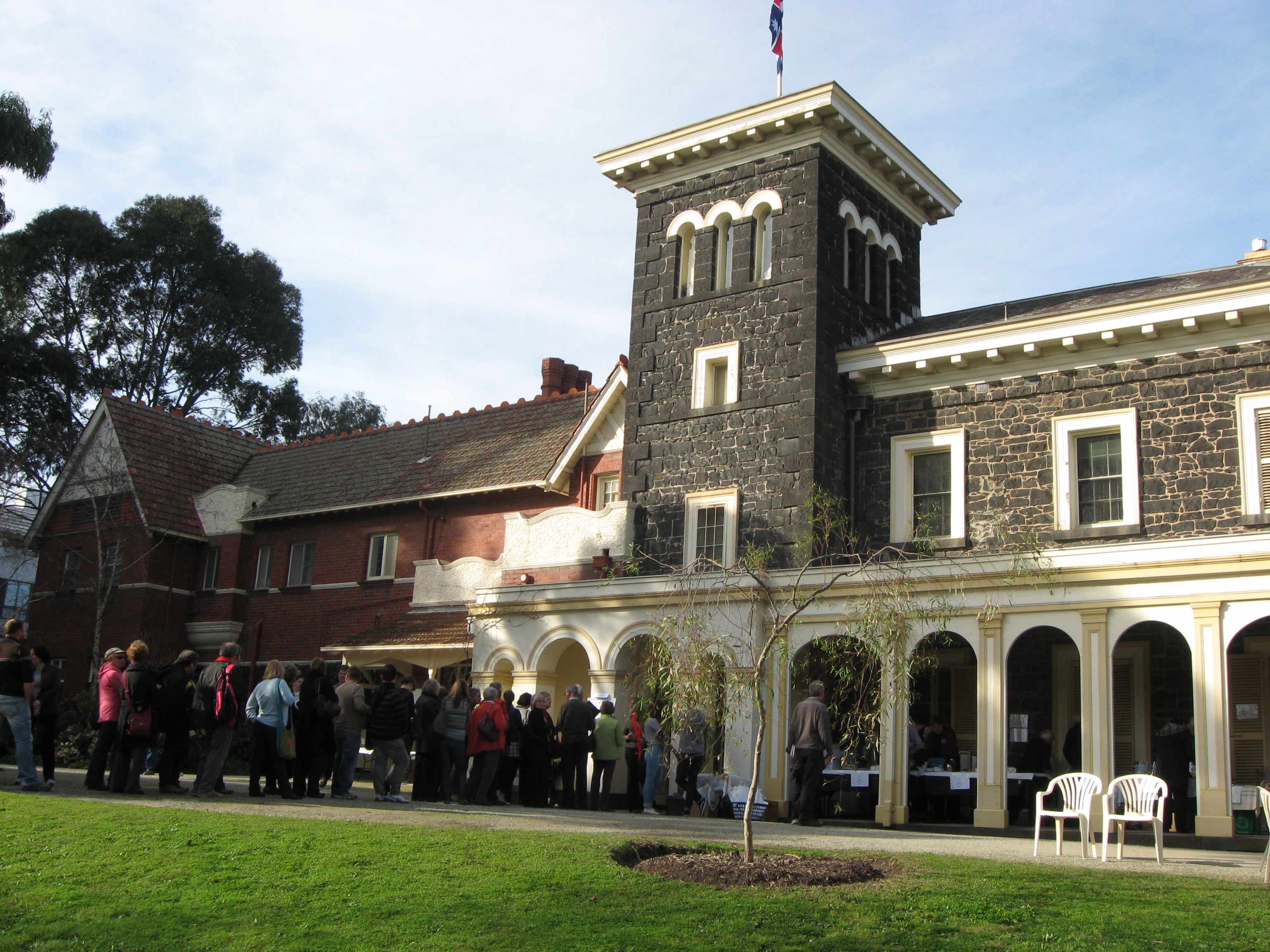
Bishopscourt is located in Clarendon Street, opposite the Fitzroy Gardens.  It has been the family home of the Anglican Bishop and later Archbishop of Melbourne since it was built in 1853.

If it looks a bit of a hodge-podge, that’s because it is.  The first Bishop of Melbourne, Bishop Perry, selected the location so that he could walk into Melbourne itself, while being close to the site that was originally considered for the Cathedral between Hotham and George Streets in East Melbourne .  It was later decided to construct the Cathedral in its present location on the corner of Swanston and Flinders Streets. Construction of  Bishopscourt began in 1851 but because of the shortage of building labourers in these goldrush years, the house was not completed until 1853.  Sixty years later it was decided that a grander house was required. One of the bluestone wings was demolished in 1903 and replaced with the rather discordant red-brick wing, resulting in its rather schizophrenic  appearance.

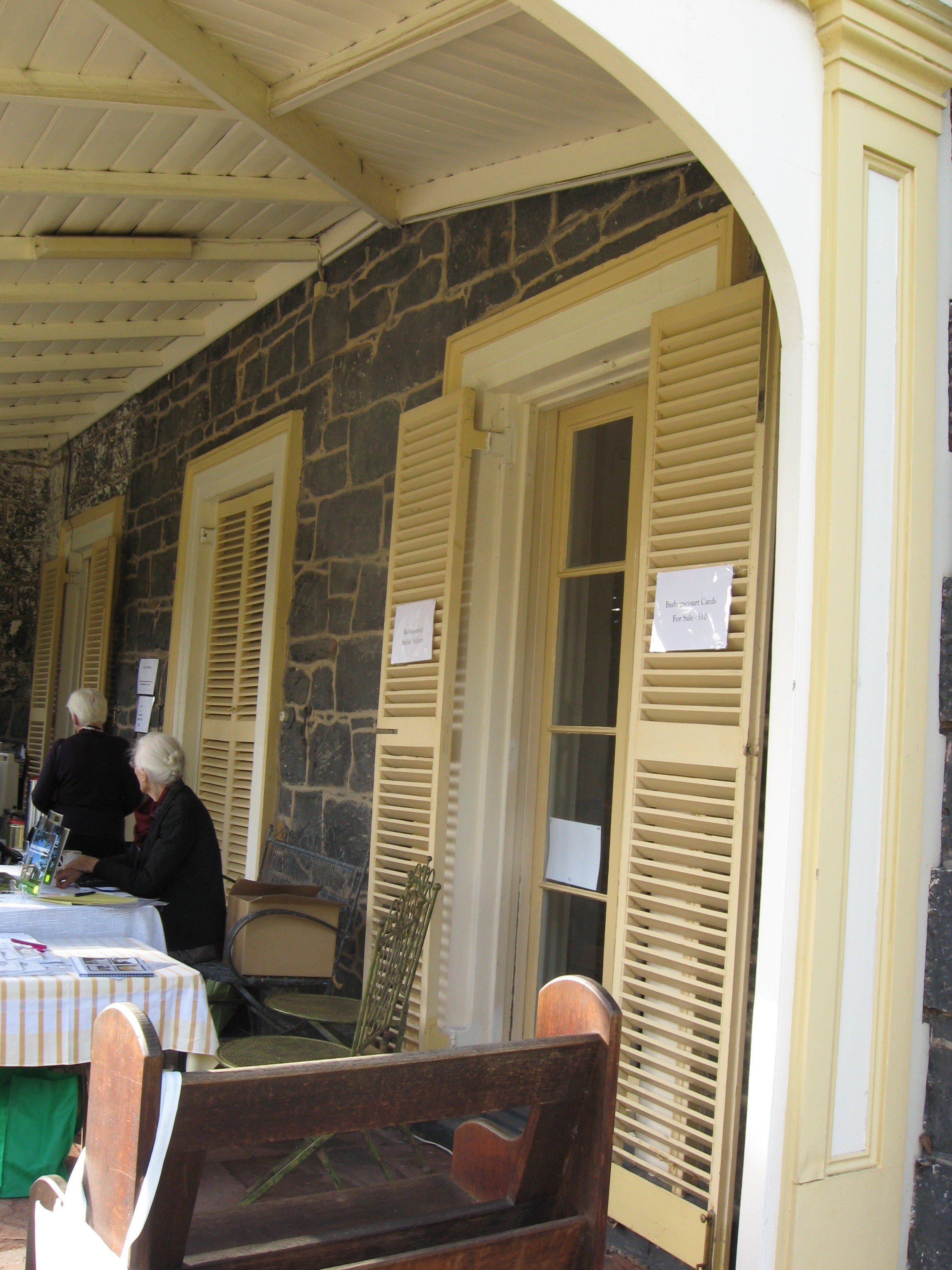
Although constructed in wealthier gold-rush days,  the design of the bluestone section evokes an earlier, more Georgian influence with its French windows and shutters, wide doors and simple architecture.

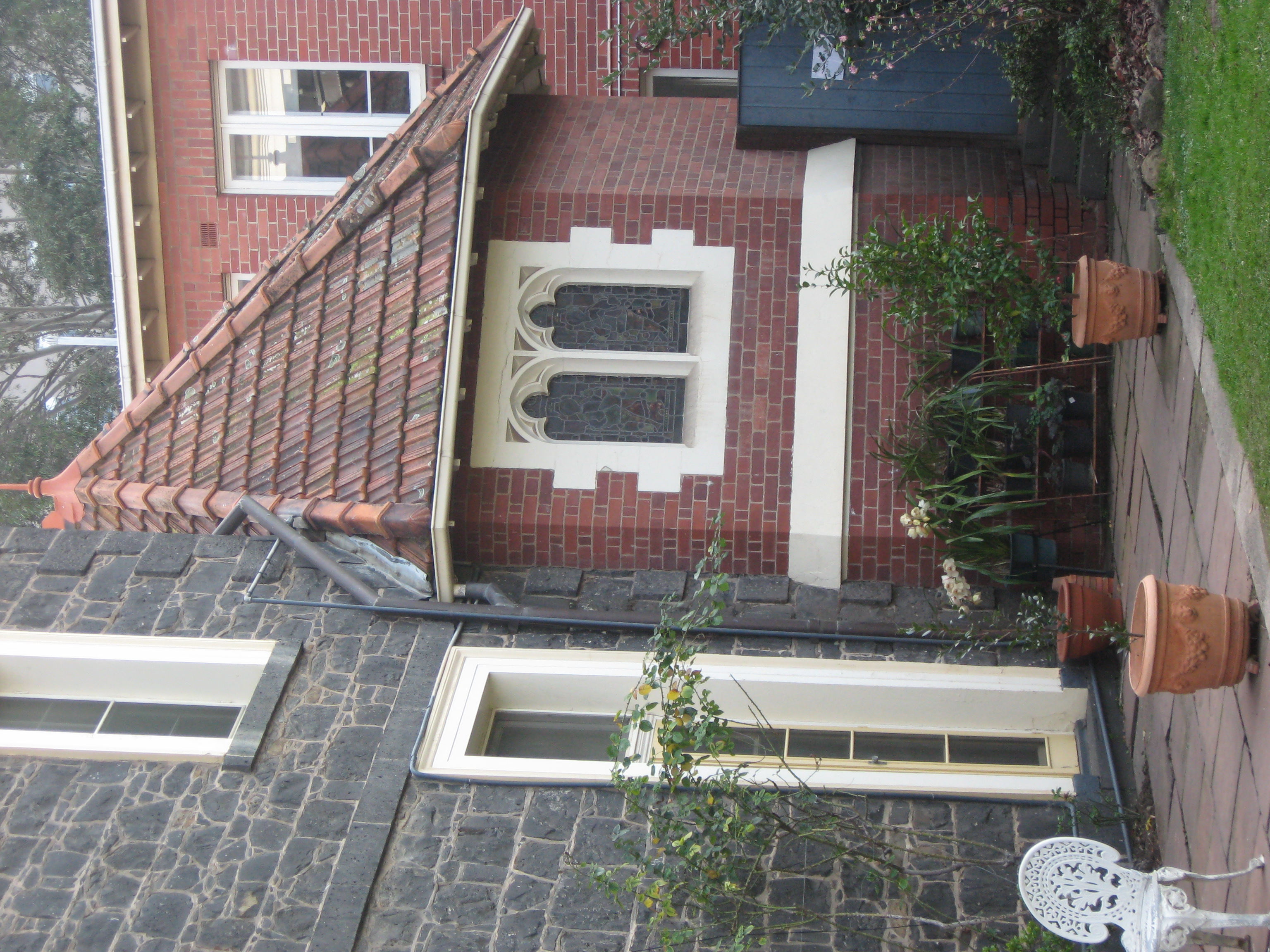
The bluestone is rather roughly laid on the front and side of the house, and it has been suggested that perhaps it was intended that the facade be stuccoed at a later time.  The new red-brick section included a large dining room and a private chapel which was a warm, intimate space that might hold perhaps twenty people.  I wish they had let us take photographs, because the chapel was very special place, with many of the furnishings and decorations donated by previous occupants.

The chapel from the outside

Tours ran approximately every half hour and you were ushered from one room to another, where someone who had previously lived at Bishopscourt spoke about their memories of the room as part of their family home.  The Archbishop of Melbourne was there in the drawing room, decked out in his purpleness, and the daughters and daughter-in-law of the former Archbishop Frank Woods spoke in the morning room, dining room and chapel.  Unfortunately we were restricted to the ground floor- I was intrigued by the staircase which was carved with silhouettes of bishops’ mitres- but I suppose that some privacy was in order as the house continues to be used as a family home: the only pre-gold rush estate still to be used for its original purpose.

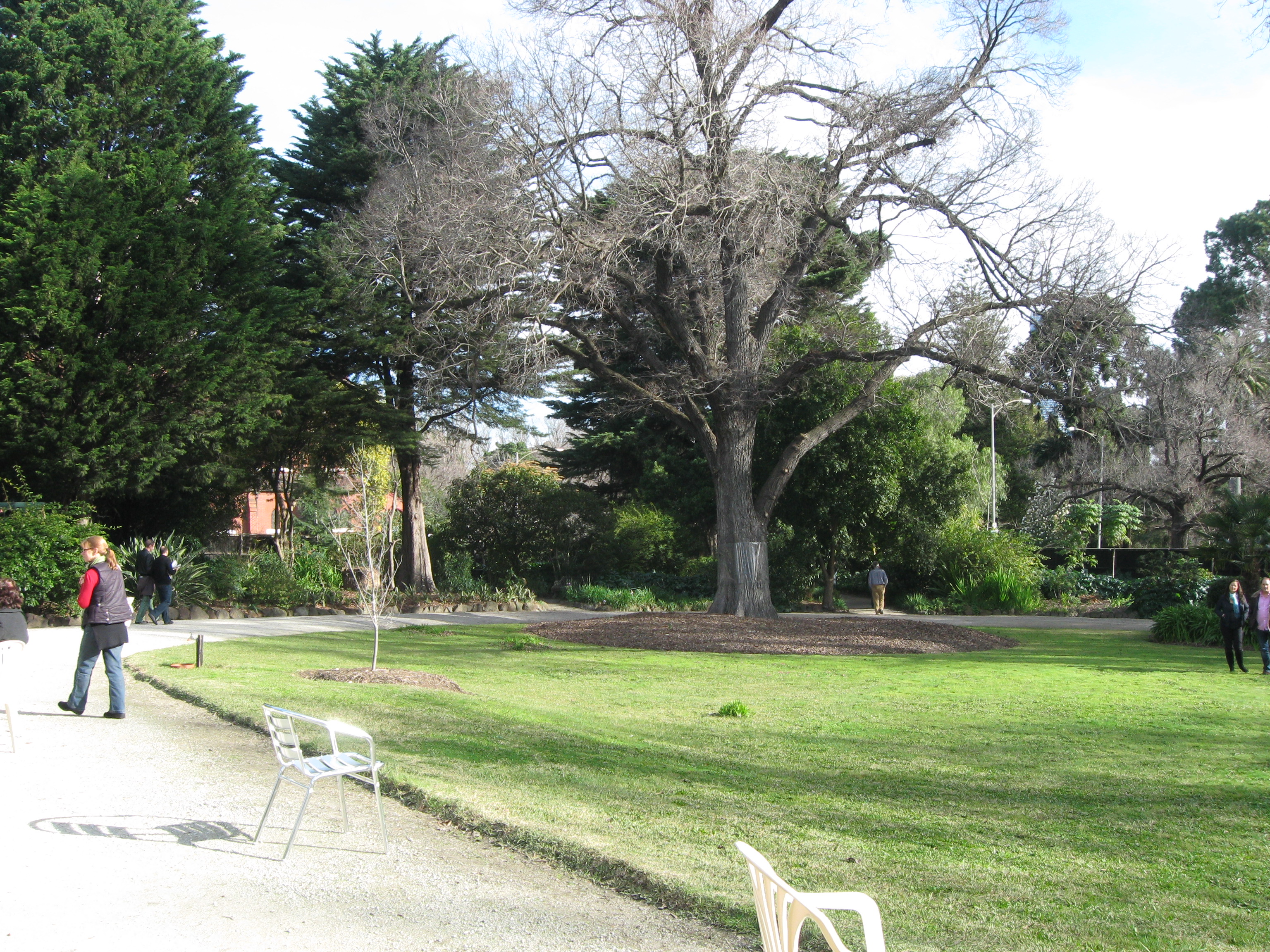
The gardens have been rescued from disrepair by a dedicated band of volunteers and they were in beautiful condition.

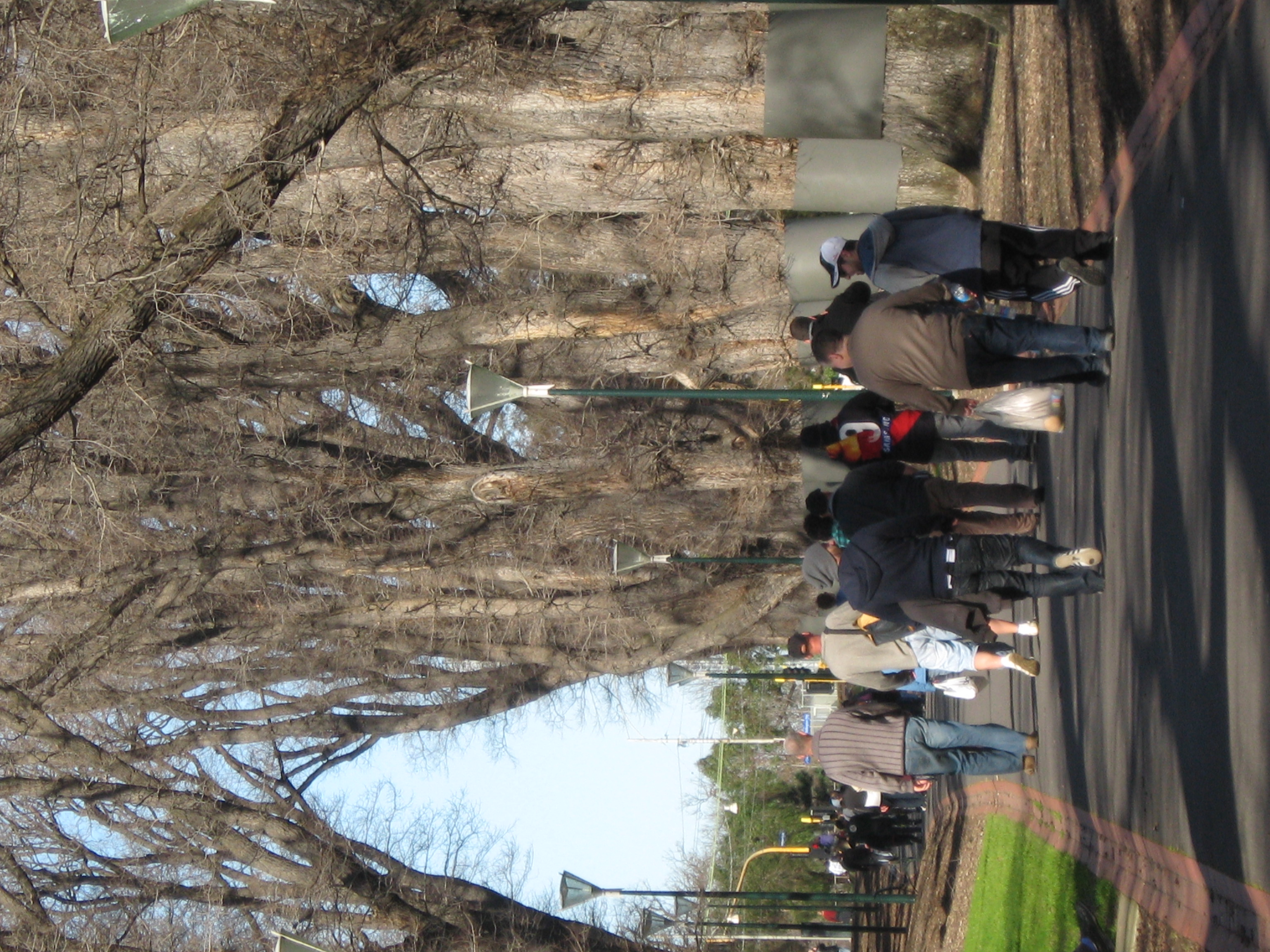
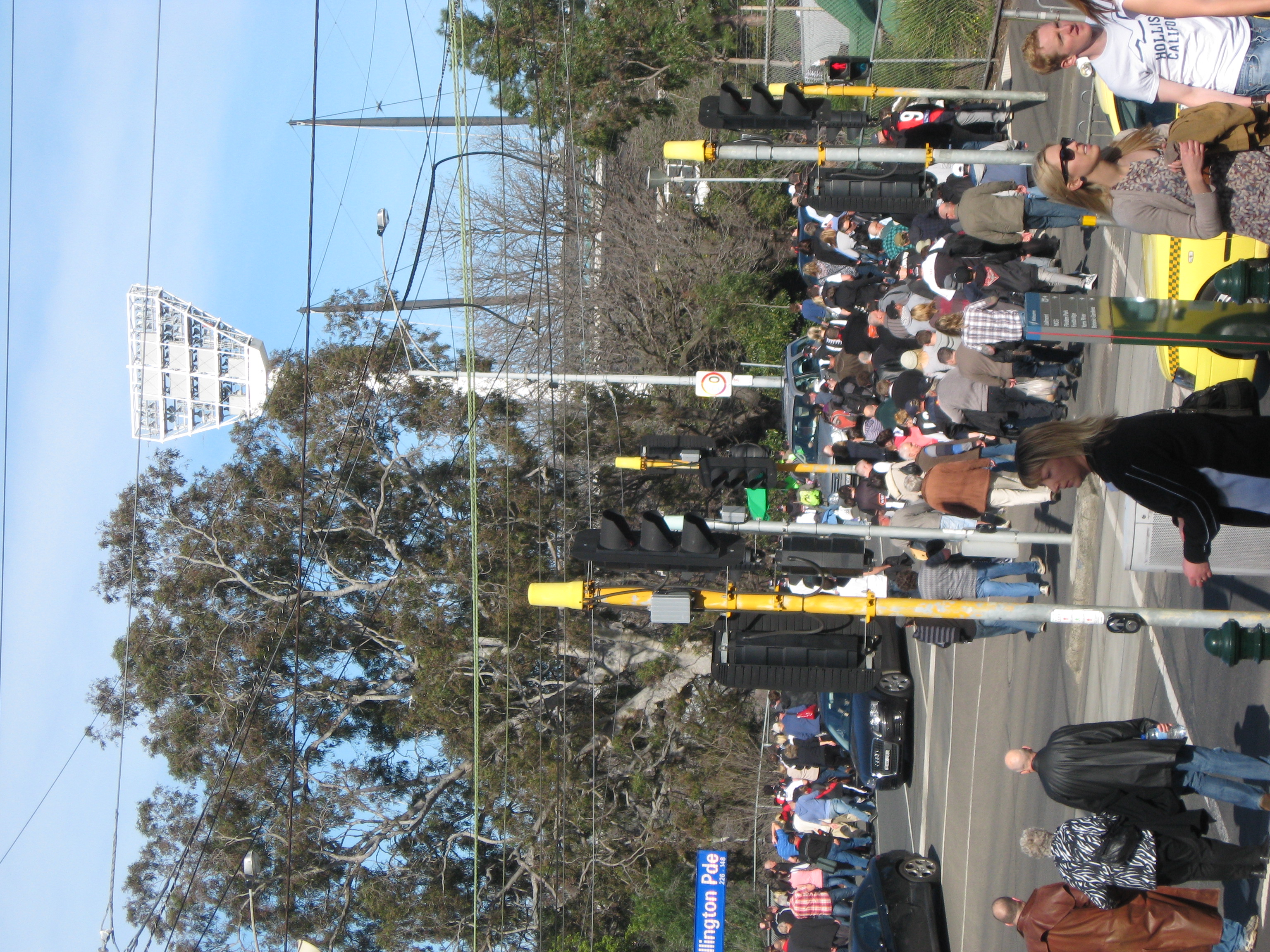
As I left, there was a religious pilgrimage of a different type through the Fitzroy Gardens as the crowds headed towards the MCG for the Collingwood/Essendon match.

The processional to the 'G

Ah- the footy and the MCG on a sunny winter afternoon- hot pies (unfortunately), seagulls, the Footy Record and Jolimont railway station. Who could want for more?

By the way, I wasn’t the only one checking out Melbourne Open House.  Andrew at High Riser had a very busy day and more success photographing than I did.