Author Archives: residentjudge

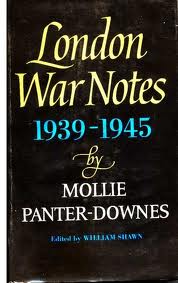
‘London War Notes 1939-1945’ by Mollie Panter-Downes

1971, 378 p.

Recently I read a collection of short stories by Mollie Panter-Downes (my word, that is an unfortunate name!) and I was so impressed by her writing that I tracked down this collection of her “Letter from London” columns that were published in the New Yorker between 1939-1945.  The book is divided into seven sections, for each year of the war, each commencing with a brief one-page time line of major events during that year.

Having now read her fictional and non-fictional writing, I can see the connections between them.  Many of her short stories were set in the Midsomer-ish surrounds of village life, and certainly she writes quite  a bit about evacuation and billetting, and the dissonance between viewpoints of rural dwellers as distinct from those of Londoners.

These letters were written in real-time, and thus reflect the fluctuations in perceptions of the war: the initial excitement that it was actually starting, the sudden awareness of the stretch of empire once Singapore fell,  the mental readjustment that people had to make once they realized that the dreaded-Communist Russians were fighting a common enemy and thereby fellow-sufferers, the longing for the second front to open up, and the dread when it did.

There’s a certain chutzpah in presuming to speak for ‘a people’ , although the late Alistair Cook in his ‘Letters from America’ and Hugh Mackay with his quarterly ‘Mackay Reports’ do not seem to have found it problematic.  I certainly don’t think that I would be brave enough to claim to do so. When you are surrounded by like-minded people, it comes as a bit of a shock to realize that you might actually be in a minority! I often find myself  having to remember that the views of a left-leaning, somewhat academic, northern suburbs fifty-year old white woman from Melbourne are not necessarily those held in western-suburbs Sydney, or the resource-rich states of Queensland and Western Australia, let alone anyone of a different age cohort or nationality.  Likewise, when Panter-Downes speaks of an impatience with the paltriness of the sacrifices that people were being asked to make by the Government in 1941, or when she chides the London working-class for taking children from their safe country billets prematurely and returning them to the danger of the city, I do wonder how representative her views are.

But, irrespective of this, her notes do provide a wonderfully intimate and domestic view of life where somehow or other a sense of normality is carved out of such very extraordinary circumstances.  She writes of the theatres and cinemas starting their shows early at 5.30 so that people can get home before the bombing starts,  the issuing of the first directory of emergency addresses for large business firms “if London is rendered uninhabitable”, the marvellous tulip display in the parks in 1940,  people lining up to stay in the Tube stations overnight while the evening-rush commuters are streaming out.  She speaks of the weariness of people in the closing year of the war, falling asleep almost instantly sitting in a bus or train, having been awake night after night with bombing raids. She describes the dissonance of being able to stand on tiptoe to peep at the old gentlemen in the St James Street clubs where the large windows were left uncurtained as soon as the black-out restrictions were lifted, even though after five and a half years many people still drew their own curtains as a matter of habit.

I hadn’t realized that the planning for post-war reconstruction had been announced by the coalition government while the war was still underway. Knowing what we do of the long, skimpy years of post-war shortages, the optimism about the future seems at once both brave and rather pathetic, given that so many of those gleaming high-rise housing estates turned out to be so bleak and blighted.
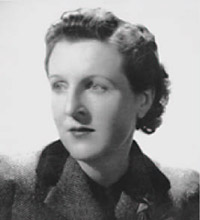
She is an absolutely beautiful writer: crisp, pithy, observant. Here’s just a sample, picked at random:

What had been an ill wind for many people had blown good to the glaziers, from whose vans, backed against the pavement, hundreds of square feet of glass were being lifted out of straw packing.  The danger from falling glass and odd bits of masonry was still considerable, and police barricaded the surrounding streets to anyone who couldn’t show a pass or prove legitimate business there.  Opposite St Giles, the church where Milton is buried, the front had been blown out of a dark and Dickensian little eating house, and two men in bartenders’ aprons sat together discussing events among the broken mahogany hattracks and scattered spittoons.  A notice tacked up outside announced business as usual.  Around the corner, in Aldersgate, a sign in front of a delicatessen shop which had suffered the same fate proclaimed cheerfully, “We are wide open”.  It was doing a good trade among customers who did not seem to be moved by the facts that they could leave by the conventional door or through the space where the window had been.”  August 30, 1940.


My rating:  Yet another 9/10

Sourced from: The CARM centre ( i.e. the Victorian universities’ repository for old academic books), placed by Deakin University who in turn received it from Gordon Institute of Technology. What a well-travelled book!

Read because: I think that Mollie Panter-Downes is pretty damned good.
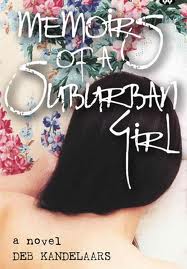
‘Memoirs of a Suburban Girl’ by Deb Kandelaars

158 p. 2011

I’m glad that this book only had 158 pages.  I really don’t think that I could have read any more.  As it was, I started reading it and turned off the light about 50 pages in.  I found that I was too anxious and troubled by it to sleep, so I turned the light back on and kept on reading until about 1.00 a.m. in the morning.

The book is set in 1979, and a teenage girl moves in with a violent older man, whom she calls S. B. (short for Spunky Boy) throughout, even though he turns out to be anything but.  She is only seventeen when she meets him, and she seems to encased in a nightmare world with this abusive, manipulative man, frightened and unwilling to take the first steps towards leaving him.

The book is written in the second person present tense, which I always find a rather claustrophobic, controlling narrative voice.  In this case, it is a risk.  There was a decision point at the very first episode of abuse at which many readers may have acted differently, and to continue to be addressed as “you” makes you feel somehow complicit and responsible for a decision that you might not have made.   I understand that she is making the point that it could be you, but maybe not.  There are choices here, even in the inability to make a choice.  The narrative is highpitched and breathless, and somehow garbled- as if it is falling out of her.

One of the most unsettling aspects of the book is its low-key suburban setting. There are neighbours, workmates, onlookers surely, who witness the violence in the car, in carparks, and who see the bruises and hear the excuses.  Yet somehow she seems to be isolated in her own parallel existence, with assistance from the few friends she manages to have, or her own parents,  visible, but just out of her reach.  She captures the late 70s and early 80s well in all their garishness.

It is a work of fiction, based on the author’s own experience.  It is presented as a memoir, and there are other memories coiled up in the telling.  In the middle of a beating, almost as a form of dissociation, her older and happier memories unspool, until she and you are jerked back into the grubby reality of her situation.

Should you read it? Yes, you should.  Will you like it? I don’t know. Did I like it? I don’t know. I couldn’t put it down- does that make it a good book?

Sourced from:Yarra Plenty Regional Library (who kindly bought it on on my suggestion!)

Read because:  It was highly recommended by Lisa at ANZLitLovers LitBlog

I’m reviewing this for the Australian Womens Writing Challenge 2012. It’s not too late to join, you know.

Why this man is the quintessential Opposition leader

Margaret Whitlam died yesterday, aged 92.

Here’s what our Opposition Leader had to say:

On behalf of the Coalition, I offer my deep condolences to Gough Whitlam on the passing of Margaret. Margaret was a marvellous consort to a very significant Labor leader and an epochal Australian Prime Minister. There was a lot wrong with the Whitlam Government, but nevertheless it was a very significant episode in our history and Margaret Whitlam was a very significant element in the political success of Gough Whitlam. She was a great patron of the arts, she was a woman of style and substance and we should mourn her passing as we extend our deep sympathies to her friends, to her family and especially to her husband.

What does sexism look like?  When a woman can spend sixty years in public life and still be defined almost solely by her husband. Just thirteen words about her.

What does obsession look like? When even in extending condolences, he cannot help himself plunging the knife and twisting it.

Susan Ryan, former Labor minister:

It sounds an old-fashioned thing to say these days, but women were supposed to be in a servile relationship with their husbands, particularly if you were married to a famous man.  You were seen as the consort, whereas Margaret saw it as an opportunity to be engaged.

What does old fashioned look like? “She was a marvellous consort to a very significant Labor leader and epochal Prime Minister”.

What does churlishness look like? When we “should” mourn her passing, not that we “do”.   We do mourn her passing. We do.

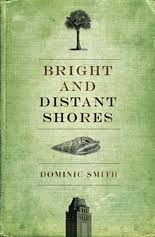
‘Bright and Distant Shores’ by Dominic Smith

502 P. 2011

The Voyage and the Return is, as Christopher Booker tells us in his book of the same name, one of The Seven Basic Plots.  On one level you could summarize the plot of this story quite simply- a young man travels to the South Pacific to collect artefacts and exhibits for an industrialist’s exhibition, then he returns.  But this summary would sorely undersell the complexity, exuberance and intelligence of this book.

I’ve been dabbling around with the 1840s colonial travellers and gentleman naturalists for too long, because the setting of this book jolted me into a different timeframe and mindset.  By the 1890s, wealthy, and especially American, magnates had moved into the field, buoyed by the increasingly large commercial success of the World Fair  phenomenon, and keen to pour their wealth into their private collections which could be levered for commercial and philanthropic gain.  They were anxious that the best artefacts had already been picked over, and were competing against each other  as well as private and public museums to scoop up what was left.  But a century of missionary endeavour and ethnographic plunder had changed the indigenous tribes as well, who were no longer content with mirrors and beads, and demanded guns as the price of exchange now.

Into this scenario steps Owen Graves, the poor but ambitious son of a demolitions expert, who is contracted by the wealthy owner of the Chicago First Equitable Insurance company to travel to the Pacific to collect artefacts, and especially human exhibits, for a display in his new building- the world’s largest. The company president, Hale Grey, insists that his dilettante son Jethro accompany the voyage where he could indulge his passion for collecting and taxidermy.

It was the “human exhibits” that were the sticking point.  Owen’s fiance, Adelaide, was a strong-willed and forthright humanitarian who would have been appalled by this trafficking, and so he did not tell her this part of  contract.  It transpired that he collected only two Melanesian islanders – a brother Argus Nui and his sister Malini- to take back to Chicago.  Argus had been thoroughly enculturated into British life by a missionary with whom he lived as house-boy, and both he and Malini were forced to enact a parody of primitive village life on the rooftop of the increasingly dangerous First Equitable Insurance building as it subsided into the lakeside shore.

It is ambiguous which setting is, in fact, the ‘bright and distant shore’. The Pacific Islands shimmer in the crystal waters, disguising the trade in people and artefacts not only on the part of American collectors and industrialist-philanthropists, but also the more sinister blackbirding system that supplied the Queensland canefields with labour. Or is the ‘bright and distant shore’ the tawdry  lure of America, that promises wealth and, for Argus, an opportunity to become a missionary perhaps in his own right?

This book is large and almost nineteenth-century in its scope and language.  It tackles big questions of exploitation, class, culture, avarice and tradition, and its characters- all of them- are complex and nuanced.  The writing is beautiful in many places with words that are unconventionally but deftly used and the narrative swoops across oceans and wreathes around one character after another.   It’s a very confident, assured book.

The author is Australian-born, resident in America since 1989, but that doesn’t stop us claiming our literary expatriates like Peter Carey and Geraldine Brooks. He’s right up there with them, but I hadn’t heard of him until this book.  It was shortlisted for both the Age Book of the Year and the Vance Palmer Prize Fiction Prize.

A thoughtful review by James Bradley is here.

My rating: 9/10 (again).

Read because: it was the February reading for the Yahoo  Australian Literature online reading group.

Sourced from: Yarra Plenty Regional Library

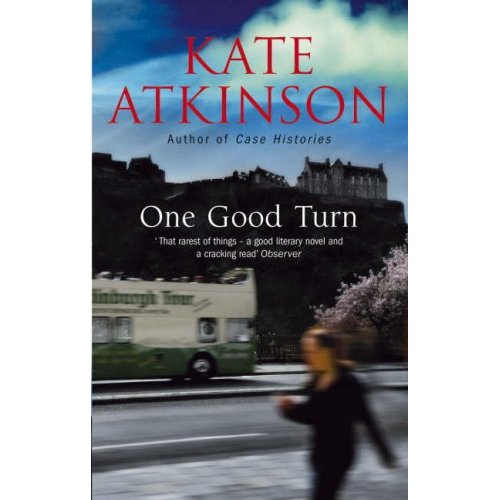
‘One Good Turn’ by Kate Atkinson

2006, 527 p

I don’t even LIKE crime novels as a rule, but I’ll make an exception for those written by Kate Atkinson.  This book follows on from her earlier novel, Case Histories by bringing to us again  detective Jackson Brodie, but it’s not at all necessary to have read the first book.  In the earlier book, there are three crimes that seem unrelated but become increasingly interwoven. This book is similar to its predecessor in that Jackson is searching desperately for “a tangible connection, not just a coincidence”, but it is more straightforward in that there is just the one crime initially that involves, in different ways, the many characters.

The book is set during the Edinburgh Festival, and the author turns a wry eye on the literary events and art-house performances that are part and parcel of such productions.  The crime occurs in the opening pages- always a good start, and in Rashamon-fashion the book moves from character to character in the lead up and fall0ut from the crime.  Her characters are full-bodied, and there’s enough romance to pep things up (and enough to induce deep groans in Mr R.Judge, should he ever read it, because he doesn’t like all that “love-stuff” mixed in with his crime stories).  Atkinson doesn’t take any of this too seriously, and there’s a cheeky humour that runs through the book.

The plot itself, while convoluted as crime novels tend to be, is easy enough to discern in retrospect, which is just the way I like it. Many’s the time that I’ve watched the credits roll on yet another ABC Friday night crime show, and I’ve twisted myself up on the couch and said “But I don’t get it…who?  why?…” and I can barely piece the plot together coherently enough to even formulate a question.

But this is a thouroughly satisfying crime novel, with a laugh or two along the way, several twists in the plot, and I can even tell you what happened!

My rating: 9/10 (I seem to be particularly generous at the moment. Perhaps I need to read a dud or two to get myself back into balance)

Sourced from: The Council of Adult Education

Read because: It is our March book in my face-to-face bookgroup

‘Parade’ Waterdale Players

I hadn’t heard of the musical. I had only vaguely heard of the theatre company (Waterdale Players). Neither of these things means much- I’m not really up with musical theatre- in fact, I have rather mixed feelings about the genre- and I’m not exactly a social butterfly. But I very much enjoyed this performance.

‘Parade’ is a musical based on the real-life story of Leo Frank, a Brooklyn-born Jewish factory supervisor who was accused of the murder of a 13 year old factory employee in Marietta, Georgia in 1913.  I was not familiar with the story at all, and so I won’t expand further- you can read about it here .  The case dragged up all sorts of racial stereotypes and conundrums: the Deep South, antisemitism, Yankee capitalism, and  allegations of racism in attempts to redirect attention for the crime onto a negro factory worker.

In thirty years time (maybe less!)  we’ll probably look back to a turn-of-the-millennium fad of large-scale, dramatic musicals that are typified by Lloyd-Webber and Schonberg and Boublil: think Les Mis, Miss Saigon, Phantom, Cats and all those Disney films that hover on the border between stage show and animation – Lion King, Beauty and the Beast, etc.  In many ways, the songs are almost interchangeable between them, and the music style itself bears more connection with record sales and popular taste than with the historical era or culture that it is depicting.  Still- that’s true too of Gilbert and Sullivan, Mozart, Handel, Rogers and Hammerstein, Lerner and Loewe- they all seem to have their own distinctive sound that comes to represent a particular era of musical, and you could mix-and-match the songs of one composer between any number of his musicals.  And so, too, Parade is very much of the Les Mis ilk- a big cast, big songs etc.

And so how did a small youth theatre company, based in Ivanhoe, deal with all this? Very well.  It was a large cast- I counted 43 on stage- working in a fairly confined area, so the choreography and stage direction had to be very disciplined. The set was minimal and ingenious, although it seemed to require a lot of manipulation and turning around in the dark.  The singing was robust and clear, and covered a wide emotional range.  It was a good story, well-told, a good musical score, and the whole performance was enacted with enthusiasm and confidence.

Most of all, it was refreshing to turn aside from all the corporate sponsorship and A-list crawling and parasitism to watch talented people doing something that they love doing because they love it.  I’m deeply grateful for people who turn out on weekends and weeknights, giving and receiving in turn – whether it be the local footy-team, the wildlife regeneration people in the local park, or in this case, an amateur theatre company- who are skilled and engaged, and who give pleasure through their talents to other people.

Parade closes this coming weekend and I’m not sure how their bookings are going, but the details are here.

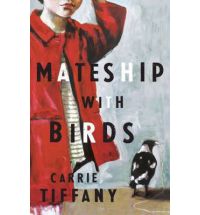
‘Mateship with Birds’ by Carrie Tiffany

2012, 208 p.

This is a quirky, sly book that had me closing it with regret, with a smile on my lips.  It is set in Cohuna in the 1950s and is redolent of long grass, cow-pats, and dusty roads, set to a soundtrack of magpies and kookaburras, country dances and a slow, masculine drawl.

Harry is a shy, lonely dairy farmer who lives next door to Betty, a single mother, who works in the local aged-care home and lives with her adolescent son, Michael and young  daughter Little Hazel.  They are neighbours: they turn to each other in need; they keep an eye out for each other, and as Michael grows older, Harry decides, in the absence of a father,  to teach him about the opposite sex.

But the boundaries between sex, breeding, fertility, physicality and nature are fluid in this strangely sensual context.  The book, too, is a scrapbook of conversations and episodes, birdwatching observations about a kookaburra family, reflections on the physicality of milking cows and washing withered old men, and a chronicle of illness and injuries.  It is a book of the rhythms of country life, and it is both hard and pragmatic and yet watchful and sensitive.

The author is not, as you might suspect, a dinky-die, true-blue Aussie country girl. Instead, she migrated from Yorkshire with her family as a child, grew up in Perth, and works as an agricultural journalist.  The amount of research that must have gone into this book- set in the decade before she was born in another hemisphere- is prodigious, and yet so lightly worn.  As with her debut book Everyman’s Rules for Scientific Living, it is a deceptively simple work with good people and big themes.  I hope that it gets the recognition it deserves.

My rating: 9/10

Sourced from: Yarra Plenty Regional Library

Read because: it’s my fourth book in the Australian Women Writers Challenge

‘Alexander Macleay: from Scotland to Sydney’ by Derelie Cherry

2012, 415 p & notes  (Review copy)

What a beautiful book! was my initial response on opening this book.  Like Alice in Wonderland’s sister, I am accustomed to my colonial biographies arriving without pictures or conversations, and if by chance there are pictures, it is usually a set of black-and-white pictures inserted in two or three places in the text.  But this book is a well-bound hardback, complete with ribbon place-keeper, with a coloured and gold-embossed dusk-jacket that envelopes an even more beautiful cover underneath.  It shows Conrad Marten’s painting of the landscape surrounding Elizabeth Bay House, built by Alexander Macleay, and possibly the best known association that many of us have with Macleay today.  The fly-leaves of the book are patterned with thistles, reflecting Macleay’s Scottish origins, and the book is replete with vividly coloured photographs.  The book has many of those features that publishers seem to begrudge these days: footnotes AND a bibliography, index and timeline.

I’m not accustomed to such luxury in my history books, although two other recent beautiful publications in Australian History spring to mind: Grace Karsken’s The Colony and Bain Attwood’s Possession.  But both these books, written by noted and established historians, dealt with the founding of the two largest cities in Australia, and while being strongly academic texts, could be expected to- and did- attract a broad readership and both garnered significant history awards.  Who, I wonder, is the audience for this beautiful book?

Alexander Macleay (1767-1848) was born in Scotland and did not arrive in Australia until 1826 at the age of 59 to take up the position of Colonial Secretary, alongside the new governor Ralph Darling.  By this time, he had a large family (17 children!- although only 10 survived to adulthood) and he was accompanied to Sydney by his wife and six daughters and an extensive private collection of insects and objects from all over the world. As Secretary of the Linnean Society in London, he had contacts with scientific boards and their gentleman collectors across Europe, and his interest in botany and natural history continued in NSW where he not only served as patron of the fledgling societies established amongst the colonial gentry here (including the Museum and the Botanic Gardens), but also maintained his networks with the natural history community back home.  His daughters married into the colonial elite of Sydney society, and his home Elizabeth Bay House was noted for its extensive and exotic gardens, through which he introduced many plants into Australia, including the wisteria.  His close association with Governor Darling meant that he had to share the increasing acrimony directed at Darling, and his career ended ambiguously and unhappily under Governor Bourke, with whom he never established the same rapport. However, with the granting of a limited degree of self-government in 1842, Macleay offered himself for election to the Legislative Council where he was voted Speaker, a position in which it was acknowledged, even by his political opponents, that he served well.  But despite (and perhaps because of) the rapid accumulation of land,  he fell victim to the widespread depression of the 1840s, and was forced to move from his Elizabeth Bay House, estranged from his eldest son William who had taken over his finances.  His scientific collection was eventually transferred to the Macleay Museum at the University of Sydney, where it still rests.

So which of these aspects of Alexander Macleay- civil servant,father, naturalist and collector, owner of one of Sydney’s grandest colonial homes, patron and politician- might attract readers to this book?  A well-rounded biography would incorporate all of them, of course, but an insightful, scholarly biography would do more than  enumerate achievements: it would also mount an argument about the individual that is woven into a broader approach to a society, a movement, a time.

The approach that a book is adopting is usually foreshadowed and shaped in the introduction, which in this book takes the form of a literature review, emphasizing that this is the first comprehensive biography of Alexander Macleay and questioning in particular the depictions of Macleay in the works of Stephen Roberts and Manning Clark.  The author takes up where an earlier researcher into the Macleay family, Annabel Swainston,  left off, citing frequently from Swainston’s papers which are now placed in the Macleay Museum.  Reading as an historian then, I found myself wishing that she would move back from her subject, and integrate her observations into a broader scholarly context.  Macleay is a prime example of the collector-networker described in the work of Zoe Laidlaw and Lambert and Lester, and yet this whole approach to empire is largely invisible.   Macleay’s prominence as a conservative is noted, but not taken any further.  A large portion of the book is devoted to Macleay’s gardening and horticultural significance and yet the work of Katie Holmes and others about the meaning of the colonial garden is nowhere to be found.  The blurb from Professor Stephen Garton from the University of Sydney describes her work as a “path breaking piece of forensic research”, and “forensic” is exactly the right word to describe this very close-up, detailed analysis.  However, I found myself craving a bit of distance, and a broader sweep that pointed out the ways in which Macleay was acting as a man of his time and place, and where, if anywhere, he was distinctive.  Having said that, though, her description of the Colonial Secretary’s office was illuminating, bringing to life the men behind the different scripts that you note in reading the primary sources, and her analysis of the financial entanglement that so damaged his reputation was insightful.

What, then, of Macleay’s activities as collector and horticulturalist?  In these sections, the fine-grained approach serves her well, resonant of the painstaking minutiae of the collecting and classifying mindset.  At times, however, the detail and connections seem rather laboured and indulgent: a glorious photograph of a dahlia from her garden that Alexander “would have been among the first to grow” and sweetly-scented stocks that the Macleays “certainly would have included” in their garden, perhaps moves the book towards the ‘significant garden’  market.   Given the prominence of Elizabeth Bay House as one of the foremost homes overseen by the Historic Houses Trust in NSW, I found it strange that the house itself played a minor part in the book if it is directed towards the gift-book buying public who may have visited the house, or those who may appreciate the importance of Elizabeth Bay House amongst our colonial architectural heritage.

And so, I find myself somewhat confused over how to appraise this book. It is a close-grained biography that could have benefited from more distance and a broader sweep.  It is also a particularly beautiful publication, that reflects no doubt the author’s experience in publishing over many years, and her own love of gardening and her family connection with Paradise Gardens and Nursery in Kulnura, west of Gosford.  The combination of the two is rather puzzling- appreciated, but puzzling nonethess.

This book was provided as a review copy by Paradise Publishers, Kulnura.  Available at www.alexandermacleay.com

Behaving badly

If Santa brought you ‘The Best Australian Essays 2011’, then you have probably already read Maria Tumarkin’s essay “The Whisperer in the Jungle” because it made the cut into that compendium.  But if you haven’t read it, it is available online here as it first appeared in Meanjin last year.

You may recall that I read Maria Tumarkin’s recent book Otherland recently, and I have her earlier work Traumascapes on my towering TBR list- a fate that, sadly and paradoxically, seems to befall books that I am keen enough to buy and yet never seem to get round to reading.  In this essay, she describes attending a Melbourne Writer’s Festival event in 2008 where Orlando Figes was discussing his then-recent book The Whisperers,  a much-lauded book on people’s private lives under Stalin.  I can easily see why she would have been attracted to the session: her own work examines the psychological cost of traumatic political and ecological phenomena, and as an Ukrainian-born historian, she would have a particular interest in the Soviet context.

But at one stage she reached across to take the hand of her Russian friend, whom she had cajoled into accompanying her:

After ten minutes I reached out and put my hand on my friend’s hand. I was afraid to look her in the face.

My friend and I, just by virtue of having been born in the Soviet Union, knew that the sweeping statements being hurled with overwhelming certainty from that stage were crude, conveniently mangled and phrased cheaply for effect, but it was something else that made us ill, a question. How could a person write a book about this kind of history and not have his heart even a little bit broken?

In this essay, written three years later, she returns to this memory of Orlando Figes’ appearance at the Melbourne Writers Festival in a reflection on moral bankruptcy in academia. For in 2010, news broke of the controversy over Figes’ anonymous and glowing comments on the Amazon site for his own book, and the equally anonymous and damning comments he made on the books of his academic rivals, in particular Robert Service and Rachel Polonsky (whose book I reviewed here).  The controversy is spelled out in more detail in an article about Polonsky here , and the comments that follow the story are revealing and hint at the venom that the controversy drew forth.

It was the critical acclaim that greeted Figes’ most recent book Crimea: The Last Crusade– in bookshops now as I speak-  that prompted her to dig up the story again.  She begins by citing Figes’ own anonymous praise for his own work:

‘Leaves the reader awed, humbled yet uplifted … A gift to us all.’

Ever since the story (the scandal, the row, the controversy) spilled forth in April 2010, these words have proved irresistible, to the British media in particular. They have been printed and reprinted countless times. I feel no hesitation in repeating them here once more. Let them stand. Let them be read more times still.

I am digging this story up again because to this day it feels large to me, not merely the incongruous straying of an academic at the peak of his powers but more like a sweeping epic befitting the Russian nineteenth-century literary tradition that Figes sought to capture in Natasha’s Dance, the book that preceded The Whisperers. …my feeling is that in front of us is a much bigger story, one symptomatic of a particular kind of public culture that is able to absorb certain transgressions but not others, a culture that has a bigger problem with the stain on Monica Lewinsky’s dress—such is this culture’s fixation on the thousand variations of sexual impropriety—than with, say, the ostentatious abuse of intellectual power. It is a culture that is forgiving, indeed encouraging in some of its quarters, of a certain intellectual psychopathology notable for its indifference to three key human emotions: empathy, shame and remorse.

…No-one (really) knows what to do with you—and not just you, Professor Figes, but all you celebrated writers, artists, scientists (you know who you are); you bullies, cowards, hypocrites and cynical opportunists; you filmmakers who forced your little selves inside other people’s children; you philosophers who abandoned your own children to orphanages; you eminent scholars who proudly headed university departments in book-burning, people-eating dictatorships.

We seem to be hearing quite a bit about intellectual and political psychopathology in the last week here in Australia.  We have been witnessing the fallout and the silencing that comes when people hold their tongues over the behaviour of a powerful man, and we can watch the rinse-cycle of public rehabilitation of reputation and legacy as it whirls into action.  I guess that we like to think that there are second chances, and the possibility of public forgiveness but sometimes it seems that some people have to fight harder for it than others.

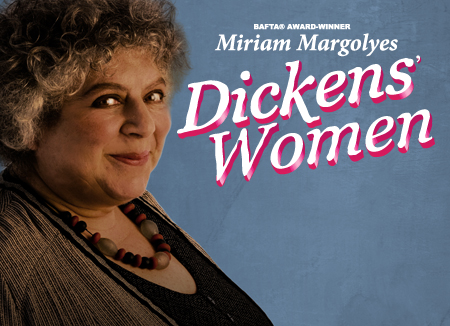
‘Dickens’ Women’ with Miriam Margolyes

Having recently read Colonial Voices, I was very much aware of what an anachronistic performance Miriam Margolyes’ ‘Dickens’ Women’ is.  Generations past may have been the audience for a series of readings and impersonations, but it seems a particularly quaint genre now: a “nice night’s entertainment” as Barry Humphries’ Sandy Stone might have said.

But to describe this performance as merely “readings and impersonations” is to undersell it, because it is more like a theatrical essay, with a clear argument that is supported by the anecdotes and examples that she weaves into the work.  She argues that Dickens wove his own biography into the female characters he created, colouring them with his own anger, sense of betrayal, and often misogyny.  She moves back and forwards from argument and explication, to readings and then to performance of both male and female characters, sometimes in soliloquy, sometimes in dialogue.

The performance opens with Sairey Gamp from Martin Chuzzlewit, and I must admit that it took me a couple of minutes to recognize and recollect her.  Would I know who she was playing each time? I wondered, aware that even though I have read quite a few Dickens, I haven’t read them all and I often forget which character appeared where.  But I need not have feared: she wove into the narrative a clear identification of who each character was, often with a bit of contextualizing information.  It didn’t matter that I hadn’t read Dombey and Son, or The Uncommercial Traveller or The Old Curiosity Shop.

Margolyes has been performing this show since 1989 and it is a very tight, confident performance.  In creating her 23 characters, she uses everything – her body, her beautiful clear voice, timing, lighting, gesture and stance- and at times, she almost seemed to change physically before your eyes.  I found myself scarcely daring to breathe watching her embody Miss Havisham, afraid that the spell would break.  It didn’t.

A very nice night’s entertainment indeed.