Monthly Archives: July 2026

Six Degrees of Separation: From ‘Yesteryear’ to..

First Saturday: Six Degrees Day. This meme, hosted by Kate at Books Are My Favourite and Best involves her choosing a starting book, then you linking the titles or themes of six other books. It is a truth universally acknowledged that I haven’t read the starting book, and this month is no exception because I haven’t read Yesteryear.
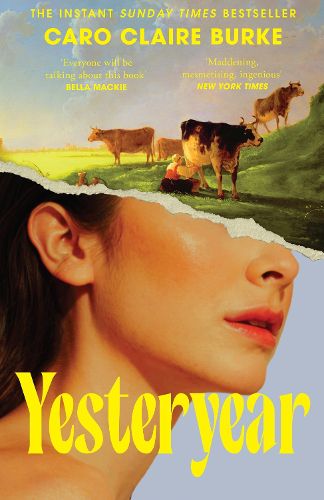
I gather that the plot of Yesteryear involves time-travel. Apparently a content-creator who promotes a trad-wife lifestyle suddenly finds herself really transported back to the past in a ‘traditional wife’ relationship. So let’s start with time travel…
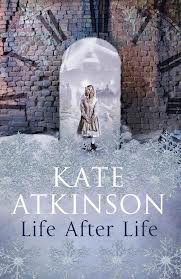
1. Life After Life by Kate Atkinson Ursula lives one life after another. Ursula experiences multiple deaths in this book, each marked by the appearance of snow before darkness falls. She is strangled by her umbilical cord at birth: or she is not. She catches Spanish influenza: or she does not. She is beaten to death by a brutal husband: or she is not. She is killed in an air-raid attack during the Blitz: or she is not.Once I’d realized what was happening, I was happy to go along with the premise and there were few times when the death, or not-death, did not seem completely natural or plausible. See my review here.

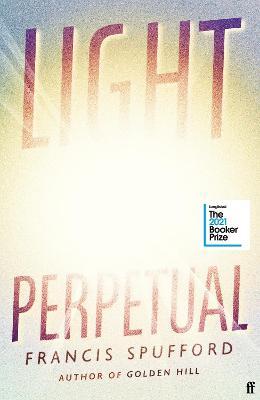
2. Light Perpetual by Francis Spufford Light Perpetual starts off with the real-life death of 168 people who died in the New Cross Road branch of Woolworths in November 1944 in a V-2 attack on a Saturday lunchtime, with the shop crowded with shoppers. Fifteen of those 168 were aged under 11. Spufford fictionalizes five of these children: sisters Jo and Valerie, Alec, Ben and Vernon. A different book might have gone backwards, tracing who the children were and how they came to be there, but Spufford takes a different approach. Instead, he drops the bomb in the first pages, then jumps forward as if the five children were not killed. In fact, they were not even in the store. Instead, they lived lives untouched by that November 1944 attack. See my review here.

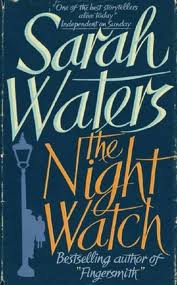
3. The Night Watch by Sarah Waters Waters’ narrative revolves around four main characters: Kay, Helen, Viv and Duncan. Her master stroke is to tell the narrative backwards, starting in 1947, then 1944 and finally 1941. It’s a risky technique, though. As a reader there is none of the backgrounding that you come to expect and you are forced to draw your own hypotheses about the characters and how they came to be in the situations in which you originally encounter them. See my review here.

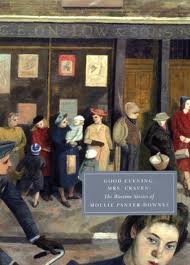
4. Good Evening Mrs Craven by Mollie Panter-Downes Moving on with the theme of Britain at war… this is a collection of the wartime short stories written by columnist and London resident Mollie Panter-Downes, which were published in the New Yorker, and they reflect her journalistic bent: who, what, when and where; with an optional why and how. To meet the constraints of the magazine short-story, they are of a fairly uniform short length (about 9 or 10 pages), and I often found myself wishing that they were longer. See my review here.

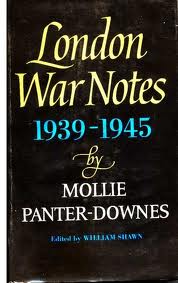
5. Letters from London by Mollie Panter-Downes this collection of her “Letter from London” columns that were published in the New Yorker between 1939-1945.  The book is divided into seven sections, for each year of the war, each commencing with a brief one-page time line of major events during that year. These letters were written in real-time, and thus reflect the fluctuations in perceptions of the war: the initial excitement that it was actually starting, the sudden awareness of the stretch of empire once Singapore fell, the mental readjustment that people had to make once they realized that the dreaded-Communist Russians were fighting a common enemy and thereby fellow-sufferers, the longing for the second front to open up, and the dread when it did. See my review here.

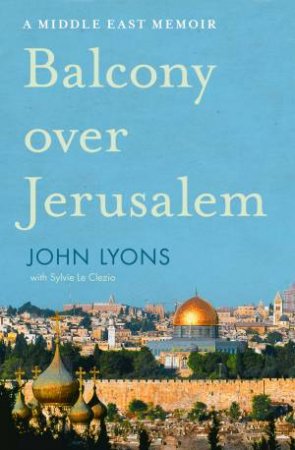
6. Balcony Over Jerusalem by John Lyons It is a memoir of the six years that Lyons spent based in Jerusalem as Middle East correspondent for the Australian, not a newspaper that I read often. He has worked for most of the media groups in Australia: Murdoch with the Australian, the Sydney Morning Herald and now for the ABC as their Global Affairs Editor. Having read this book, and knowing his own personal and professional opinion, casts a different light on his dispassionate, fact-based reporting for the ABC, reporting that saw him named Journalist of the Year at the 2024 Kennedy Awards. On the one hand, it fills me with admiration that he’s even able to report so calmly and authoritatively. On the other hand, though, I’m now aware of the editorial pressure and careful vetting that would have gone into his reports- and no doubt, for this book. See my review here.

I seem to have moved from a time-travel fantasy into a non-fiction ground-hog day of an intractable real-day conflict. How wonderful that reading can take you to so many places and times.
I hear with my little ear: Podcasts 16-23 June 2026

The Rest is History Episode 677 The Star-Spangled Banner Tom and Dominic are doing a series on National Anthems and they start off with that impossible-to-sing anthem, The Star-Spangled Banner. No wonder it’s impossible: it has 19 semi-tones. It was written in the 1812 war with Britain (a war largely forgotten except in Canada) and it was originally called The Defence of Fort McHenry. At the time the stars-and-stripes consisted of 15 stars and 15 stripes, and Fort McHenry had a huge 42×30 ft flag which was taken down at night and raised every morning in defiance of the British- so despite the impression given in the song, it wasn’t fluttering all night getting shot at. The tune was “The Anacreontic Song” which was used by 80 other songs with different words. The words to the anthem were written by Francis Scott Key. Even though it’s not explicitly there in the song as it is usually sung, Tom and Dom acknowledge that there are racist overtones in the lyrics with its mention of “the hireling and slave” in the third verse, especially as American slaves who escaped to the British military during the war, were offered freedom and the opportunity to join the Corps of Colonial Marines to fight against U.S. forces. Also Key was a slaveowner in his own right, and a statue of him was toppled in 2016. By the end of WWI there was still no U.S. anthem with ‘Hail Columbia’ and ‘American the Beautiful’ sung as patriotic songs. In 1931 the Star Spangled Banner became the national anthem but it has always been controversial.

Stuff Matters LEDs: How a little blue light changed the world Prompted by a cheap throw-away flashing wrist band at a sporting game, Ed Conway considers the millions and millions of LEDs in the world. Light Emitting Diodes had been invented earlier and promised a huge saving in energy costs, given that unlike incandescent lighting which emits only 5-10% of its energy as light (as distinct from heat) most of its energy is expressed as light. Red and green LEDs had been invented earlier, but the holy grail was a blue LED. After years and years of experimentation largely at his own expense and time, in 1979 inventor Shuji Nakamura finally successfully invented the blue light, which could provide the white light we know today. Fortunately he finally received the Nobel Prize for Physics in 2014. But would it run into the Jevons Paradox i.e. the phenomenon that when technology becomes more efficient, do we actually use less of it, or simply find new ways to consume more? Will we just innovate our way into more consumption? Fortunately, it seems that the Jevons Paradox doesn’t apply here. In rich countries LED has cut electricity usage even though LED use has become even more pervasive, and in poor countries where electricity use has finally arrived, there has been less energy use that would have occurred with incandescent lighting. LED may have broken the Jevons Paradox, but it is unique in having such a strong effect.

How Did We Get Here? Israel and the Palestinians Episode 8: From the First Intifada to Camp David featuring presenter Jonny Dymond, the BBC’s International Editor Jeremy Bowen, and Mark Tessler, Professor of Political Science at the University of Michigan, USA. In 1982 Israel invaded Lebanon, and five years later we saw the First Intifada, a Palestinian uprising with kids throwing stones. Arafat, at that time in Algiers, was surprised by the uprising but things had changed with the significant immigration of Russian Jews to Israel. In 1990 Iraq invaded Kuwait in the First Gulf War, leading to United States involvement and evoking anti-US feeling. The Madrid Conference of 1991 saw George H. W. Bush trying to revive the Israel/Palestinian peace process, which was made easier by the Labor party’s return, which had a policy of supporting a two-state solution. There were two Oslo Accords signed- the first in 1993 and the second in 1995. However, there were protests against the Accords on both the Jewish and Palestinian sides and in 1995, the Israel Prime Minister Rabin was assassinated by a right-wing Israeli extremist. Likud came back into power, but was defeated in 1999 by Ehud Barak who worked with Bill Clinton for the Camp David Accords- the last roll of the dice. The talks collapsed and Likud won again.

The History Bureau Putin and the Apartment Bombs Episode 5: The Investigator “As Putin’s power grows, American journalist Scott Anderson returns to the story of the 1999 apartment bombings. Only one man will speak to him: Mikhail Trepashkin. Once KGB, then FSB, Trepashkin used to believe fiercely in the system he served. Now, drawn into the mystery surrounding the bombings, he follows the evidence into the shadows where police sketches don’t match suspects, allies end up dead and the cost of digging deeper into the FSB’s activities keeps rising. In this episode, Helena speaks to Scott about the investigator turned whistleblower who refused to give up.” After Trepashkin tried to alert Yeltsin, he was sacked from the KGB and so he used his skills as a lawyer to work on an independent enquiry set up by MPs and represented one of the victims. However, on the case reaching court he found that the files had been cleaned out. The committee dissolved when commissioners began being poisoned. It’s not good to be an opponent of Putin.

The History of Singapore Episode 3: The 99% When the British East India Company set up a trading point in Singapore in 1891, there were only about 1000 people on the island. After the signing there was an influx of Bugis from Indonesia, attracted to Singapore as a port city. Trade and piracy were two sides of the same coin: it would be ‘trade’ if conditions were good or ‘piracy’ if conditions were bad. Singapore soon became the Port Royal of the East Indies, as alcohol, drugs (especially opium) and coolie labour replacing piracy as a source of wealth. Coolie labour from China brought many dialect-speaking Chinese to Singapore, and by 1900 three-quarters of the Chinese population were dialect speakers. The Bugis were exploited and oppressed by the British, while Indian immigrants, mostly from South India, moved into the merchant and money changing professions where they largely allied themselves with the British- the 1%. The British were happy to be hands-off, and the Chinese secret societies moved into the vacuum, keeping control of their members and clashing with other secret societies. Singapore became a Crown Colony in 1867, with a governor, executive council and legislative council. In 1877 the British government imposed the Chinese Protectorate to control the Chinese community, and it suppressed most of the secret societies. Voluntary associations arose, often linked by family, occupational and professional networks. In 1889 the Chinese Advisory Board was appointed to report to the governor, and merchants with status and wealth competed for influence. In 1906 the Chinese Chamber of Commerce was formed, and it became a form of Chinese parliament. After WW2 politics continued to draw on this ‘association’ model.

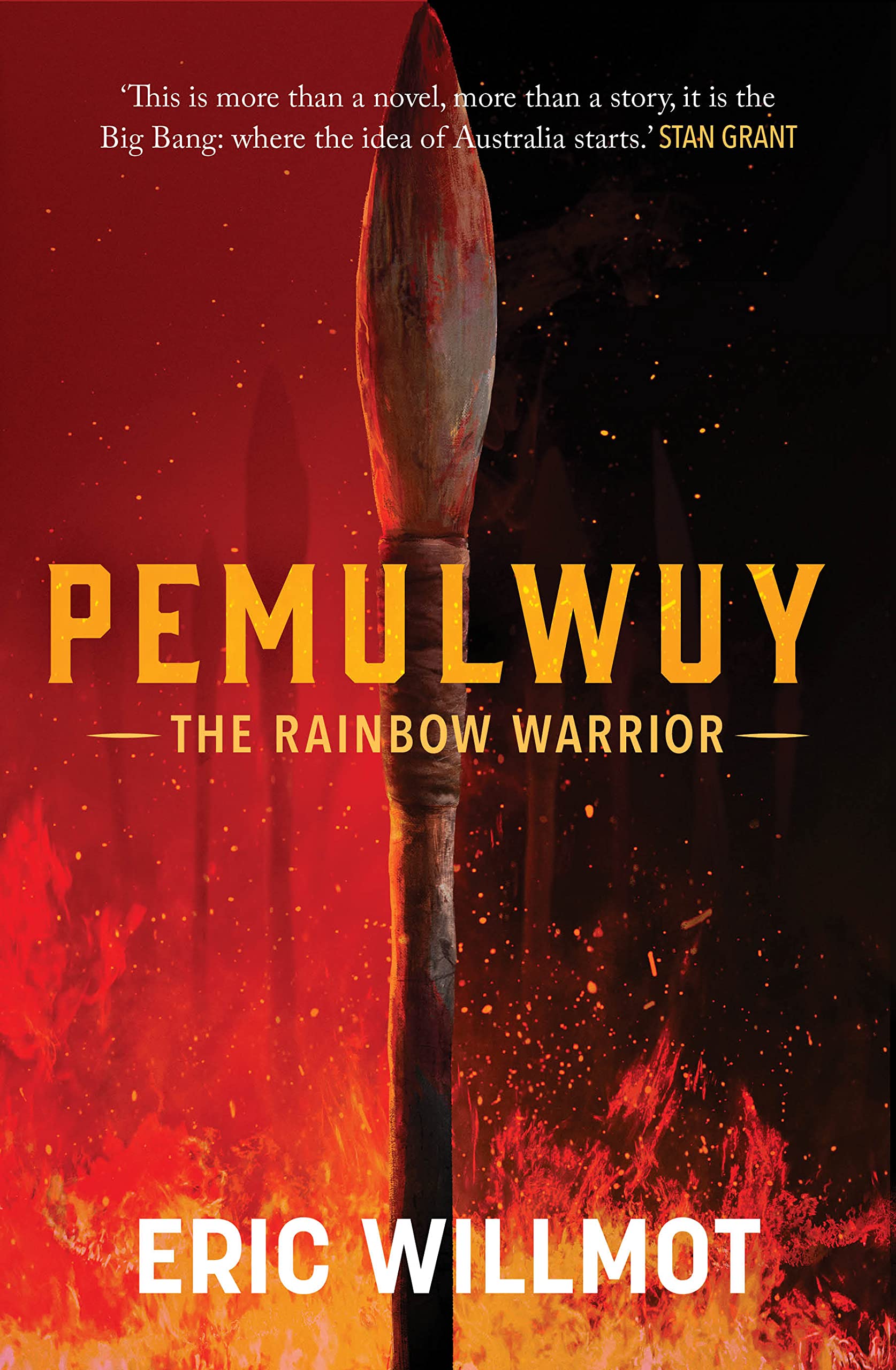
‘Pemulwuy’ by Eric Willmot

2021, 384 p.

I read this book decades ago, when it had first been released in 1988. At the time, it was the first book I had ever read that portrayed the arrival of the First Fleet through indigenous eyes. Now in 2025 when I saw that it had been recently re-released and was available as a book-club read, I selected it. I had my misgivings though: I wasn’t really sure how my bookgroup ladies would respond and I wondered how well it would stand up some 40 years later. I needn’t have worried on either count.

Although the focus of the book is on Pemulwuy, the narrative is told largely from the perspective of Kiraban, an 18 year old man of the Awabakal people from the northern coastal region below Newcastle. He, and the other young men who were undertaking a period of exile as part of their initiation into manhood, see the ships appearing “like small clouds” on the horizon. They meet with the aliens on the shore, where they are accompanied by a Kamergal man who invites Kiraban and his friends to accompany them back to Kamay (Botany Bay). Only Kiraban decides to go, and as a stranger among the Kamergal, he becomes known as Awabakal for his place of origin, as well as Kiraban.

It is here in Sydney that he meets Bennelong and Bungaree, the two Eora men that we most often associate with the First Fleet story, and Governor Phillip, David Collins and Watkin Tench who are familiar names in the first contact stories. When Kiraban/Awabakal accompanies a small group to Broken Bay he encounters Pemulwuy:

The man at the head of the band of strangers had a powerful sense of danger about him as he moved forward in long, liquid strides. He was tall and well built, with a strange caste in his right eye.

Pemulwuy is a larger than life character. At over six feet tall, his smile can turn to wildness within seconds, and everyone is frightened of him. He speaks English very well – Willmot doesn’t explain how he came know English so well- and the soldiers are dependent on his hunting prowess to provide them with meat. When Kiraban/Awabakal’s woman Nungee is killed after being taken by two white men, Kiraban throws his lot in with Pemulwuy who has vowed to avenge her death.

Willmot depicts well the political currents flowing through both European and Australian (i.e. indigenous) groups. Among the Europeans, there is tension between the naval men and the army men, and the political climate changes with each new governor chosen alternately from either an army or naval background. The Rum Corps is corrupt and looking out only for themselves. If there is a villain in the story, it is John Macarthur who is constantly pressuring the governors to allow the settlement to spread, in order to enrich himself. The convicts are barely under control, and escaped convicts like the Irish Sean McDonough join with the small Eora group, sometimes taking up relationships with the women.

Meanwhile, amongst the Australians there are those like Bennelong who urge co-operation, and those like Pemulwuy who want to resist. There are tribal boundaries that need to be respected, and while some tribes find the invaders relatively benign, others are soon extirpated from their land. Some tribal groups are happy to have the resistance occur on other tribes’ lands, and so hold back from involvement, hoping somehow that they will escape attention. Some of the women, like Narewe who had previously been with McDonough, fight with the men.

After that first cataclysmic change of invasion, the nature of the war between Pemulwuy and the Europeans changes over time. We see governors changing their tactics and the arrival of free settlers brings a new type of warfare where Pemulwuy begins setting fire to crops, and then to the huts (often with the settlers and their families) inside. Willmot hints at the rumours that smallpox had been introduced deliberately, but is not definitive. The Eora are joined by ex-convict bushrangers, who have their own reasons for fighting. The struggle for supremacy between Pemulwuy and former convict turned Constable Barrington becomes personal.

The novel is clearly based on the sources generated by First Fleet officers and soldiers, but Willmot has invented some characters, most particularly Kiraban, and it is told as a narrative with dialogue. Over the narrative Willmot has structured his novel around the concept of Three Parts of Truth. This comes from the myth of Yanada (which means “moon” in the Sydney language of Dharug), told by an old man.

In the old man’s telling, in Yanada’s tribe there were two great hunters, Yanlaree and Gonduwuy. Yanada, a young girl just becoming a woman, fell in love with Yanlaree, but he was prohibited to her because they were cousins, and she had already been promised to Gonduwuy. The people were frightened that the two men would fight over her, and that they would starve if they lost one of their best hunters. One day the people woke up to find Yanada beating children and old men with sticks. They consulted a healer, who said that Yanada had worried so much about the competition between Yanlaree and Gonduwuy, and the prospect of pregnancy, that her body opened up and a mischievous spirit had entered her and made her mad. The healer advised that Yanada should be cast out from the ground. But the Rainbow Serpent knew that Yanada was strong and took her up to the sky, where she became the moon, growing big with child each month and give birth to a new star, but each month for a time she must return to the earth and warn young women not to make trouble among men.

From this myth and in the voice of the old man telling the story, Wilmott draws out Three Parts of Truth. The first part of truth is that which we can see easily (for example, the people said that she was mad). The second part of truth is the truth in other peoples minds- i.e. the healer’s advice about the mischievous spirit and the need for her to be sent into exile. The third part of truth is the secret truth in each person. Wilmott uses this tripartite structure as a way of organizing the text, as different characters in the book find their own secret truth.

And so at the end of the book, Pemulwuy and Kiraban learn their third truth.

Awabakal marked the ground with his finger and then said “I have watched Yanada these nights and I know what our secret truth must be.” He paused. “Over all these summers we have learned that there are many ways to win wars.”

Pemulwuy climbed down to the ground. “To win a war, Kiraban,” he said “you must make someone lose”

“It is not even war,” said Awabakal. “It is just killing people.”

“Ah, but it is war, Kiraban”

“Then, if it is war, we must lose.”

“Only if we fight, Kiraban” said Pemulwuy. Pemulway smiled and lifted his cloak about him. “Only if we fight,” he repeated.

Awabakal sat up straight. Indeed he knew Pemulwuy’s third part of truth. “And we only fight, Pemulwuy, if you fight,” he said.

Pemuluy nodded sadly.

And so, it is only a week later that Kiraban and Pemulwuy are caught in an ambush that they could have easily evaded. Pemulwuy suffered the indignity of having his head cut off and sent to England. Apparently a few years ago Prince William undertook to have it sent back to Australia, but it seems to be “lost”.

Even though this book was written in 1988, many of the themes are just as- if not more- pertinent today. The Australian War Memorial has resisted having the Frontier Wars depicted as a war, and even now it is proposed that they be incorporated into a pre-1914 display. Willmot clearly portrays this as a war, complete with tactics and battles. And the emphasis on Truth, highlighted by Victoria’s Truth-Telling Commission and the call for Truth as part of the Uluru Statement shows that Truth has been a concern for decades. This book has not dated at all.

My rating: 7/10

Read because: Rosanna Readers Bookgroup selection by me

Sourced from: Yarra Plenty Regional Library. Also read through Kobo.