
First Saturday: Six Degrees Day. This meme, hosted by Kate at Books Are My Favourite and Best involves her choosing a starting book, then you linking the titles or themes of six other books. It is a truth universally acknowledged that I haven’t read the starting book, and this month is no exception because I haven’t read Yesteryear.
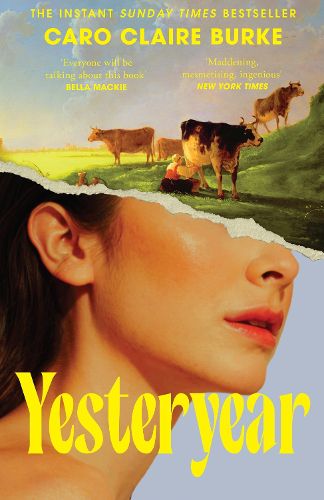
I gather that the plot of Yesteryear involves time-travel. Apparently a content-creator who promotes a trad-wife lifestyle suddenly finds herself really transported back to the past in a ‘traditional wife’ relationship. So let’s start with time travel…
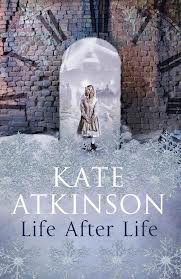
1. Life After Life by Kate Atkinson Ursula lives one life after another. Ursula experiences multiple deaths in this book, each marked by the appearance of snow before darkness falls. She is strangled by her umbilical cord at birth: or she is not. She catches Spanish influenza: or she does not. She is beaten to death by a brutal husband: or she is not. She is killed in an air-raid attack during the Blitz: or she is not.Once I’d realized what was happening, I was happy to go along with the premise and there were few times when the death, or not-death, did not seem completely natural or plausible. See my review here.
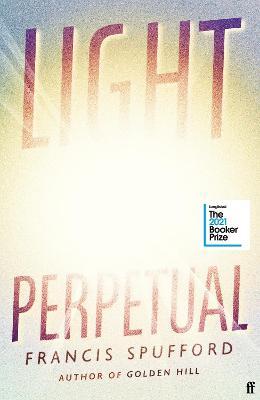
2. Light Perpetual by Francis Spufford Light Perpetual starts off with the real-life death of 168 people who died in the New Cross Road branch of Woolworths in November 1944 in a V-2 attack on a Saturday lunchtime, with the shop crowded with shoppers. Fifteen of those 168 were aged under 11. Spufford fictionalizes five of these children: sisters Jo and Valerie, Alec, Ben and Vernon. A different book might have gone backwards, tracing who the children were and how they came to be there, but Spufford takes a different approach. Instead, he drops the bomb in the first pages, then jumps forward as if the five children were not killed. In fact, they were not even in the store. Instead, they lived lives untouched by that November 1944 attack. See my review here.
3. The Night Watch by Sarah Waters Waters’ narrative revolves around four main characters: Kay, Helen, Viv and Duncan. Her master stroke is to tell the narrative backwards, starting in 1947, then 1944 and finally 1941. It’s a risky technique, though. As a reader there is none of the backgrounding that you come to expect and you are forced to draw your own hypotheses about the characters and how they came to be in the situations in which you originally encounter them. See my review here.
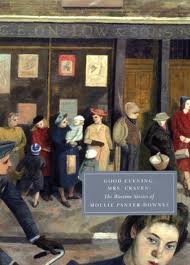
4. Good Evening Mrs Craven by Mollie Panter-Downes Moving on with the theme of Britain at war… this is a collection of the wartime short stories written by columnist and London resident Mollie Panter-Downes, which were published in the New Yorker, and they reflect her journalistic bent: who, what, when and where; with an optional why and how. To meet the constraints of the magazine short-story, they are of a fairly uniform short length (about 9 or 10 pages), and I often found myself wishing that they were longer. See my review here.
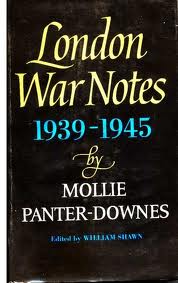
5. Letters from London by Mollie Panter-Downes this collection of her “Letter from London” columns that were published in the New Yorker between 1939-1945. The book is divided into seven sections, for each year of the war, each commencing with a brief one-page time line of major events during that year. These letters were written in real-time, and thus reflect the fluctuations in perceptions of the war: the initial excitement that it was actually starting, the sudden awareness of the stretch of empire once Singapore fell, the mental readjustment that people had to make once they realized that the dreaded-Communist Russians were fighting a common enemy and thereby fellow-sufferers, the longing for the second front to open up, and the dread when it did. See my review here.
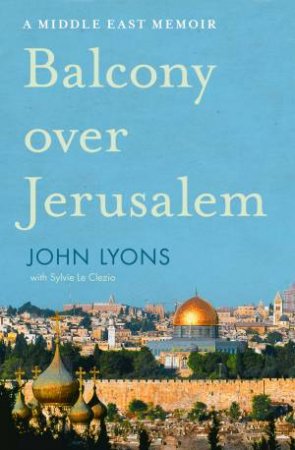
6. Balcony Over Jerusalem by John Lyons It is a memoir of the six years that Lyons spent based in Jerusalem as Middle East correspondent for the Australian, not a newspaper that I read often. He has worked for most of the media groups in Australia: Murdoch with the Australian, the Sydney Morning Herald and now for the ABC as their Global Affairs Editor. Having read this book, and knowing his own personal and professional opinion, casts a different light on his dispassionate, fact-based reporting for the ABC, reporting that saw him named Journalist of the Year at the 2024 Kennedy Awards. On the one hand, it fills me with admiration that he’s even able to report so calmly and authoritatively. On the other hand, though, I’m now aware of the editorial pressure and careful vetting that would have gone into his reports- and no doubt, for this book. See my review here.
I seem to have moved from a time-travel fantasy into a non-fiction ground-hog day of an intractable real-day conflict. How wonderful that reading can take you to so many places and times.

