Monthly Archives: February 2026

More challenges

Well, not only have I fallen behind with my Waking Up Challenges, but I’ve fallen behind in writing about them as well.

Day 5’s challenge was to sit it somewhere for five minutes and write down exactly what I saw,—objects, movement, colors, textures, light- then to write about what emotions or expectations might be influencing what I saw, and how. Well, I sat at my desk, the same desk that I’m typing this at. I have slimline venetian blinds, and so the light was being sliced up horizontally. What I could mostly see was mess: printoffs of music, little notes to myself, piles of folders, books I’ve read and haven’t decided what to do with. Around me, more piles of books and an assortment of ukuleles. My feelings about them all? Obligation and “I should”s. The one thing that made me smile was looking at my desk calendar which I had printed off with photographs of my grandchildren. Listening to the reflection that accompanied this challenge, I must be a person who sees through a glass darkly (which is not, I must admit, how I perceive myself). Or perhaps I should just clean up this desk (another should).

I skipped Day 6 but it looks interesting, and I might come back to that one.

Day 7 was called ‘Leveraging Boredom’ and the challenge was not to use my phone FOR A WHOLE DAY. Well, I soon decided that I couldn’t possibly do that, but what I could do was to not go onto social media, no Wordle, no Google, no Solitaire, You Tube or The Guardian website for a day. It was disturbingly difficult but I’ve been hating how much time I waste each day, especially at night when I get tired. So, instead of scrolling, I finished reading a book I’ve been enjoying and felt much better for doing so. Instead of watching TV and playing Solitaire at the same time, I actually watched the Foreign Correspondent episode I was watching.

Leaning Into Relationships

The challenge for Day 4 was:

Reach out to someone you haven’t spoken to in a while. Your message needn’t be long or detailed, but make it sincere: “You crossed my mind today, and I’d love to reconnect.”

Or, if you have some extra time and know the person’s address, consider sending a handwritten note.

Well, this all felt a bit cheesy to me, although that might be a bit defensive because I am certainly not good at keeping connections going. I often think of people, but I just don’t take that last step. So I rang my former sister-in-law and had a chat with her. I don’t think I properly entered into the spirit of this one.

I hear with my little ear: Podcasts 24-31 January 2025

The Rest is Classified Episode 100 Putin’s Secret Army: Fighting with Assad in Syria (Episode 3) Prigozhin met with Dmitry Utkin, a Nazi-leaning ex-soldier with the GRU Military Intelligence Unit. His favourite composer was Wagner, which is not unexpected amongst neo-Nazis, and this became his call sign, and later the name of the group he founded with Prigozhin. The hosts of the podcast, former CIA analyst turned spy novelist, David McCloskey, and veteran security correspondent, Gordon Corera, note that in all ages and all countries have their own mercenaries, not just Russia. There was restlessness in the Crimea and Ukraine, and with his contacts and supply lines of food to the military, Prigozhin could make himself “useful”. He arranged for 200 mercenaries (the ‘little green men’) in Crimea and Ukraine before their takeover by Russia, and it was proRussian groups who shot down Malaysian airlines MH17. Using his PR skills, Prigozhin was able to muddy the waters over the whole affair. The Wagner group fought a dirty war and by 2011 they had committed 1000 men, but the 2015 Minsk theoretically brought the fighting to a close (theoretically). By Sept 2015 the Wagner group was involved in Syria, where Russia had many interests and wanted to project its power. Russia was a big arms supply to Assad, and by 2016, 2500 mercenaries had been equipped by Russia. Soon there were very violent videos circulating on the internet showing beheadings etc. which all helped to build the mythology of the Wagner mercenaries. Prigozhin’s men were involved in fighting IS in Palmyra, and he soon started taking his cut from the infrastructure he ‘liberated’. But when the Wagner group attacked a US base, the Russians denied all knowledge of him and the attack, and suggested that he was freelancing (which he may very well have been doing). Prigozhin was furious with the Russian Ministry of Defence for not backing him up. In 2018 he was indicted by the US for interference in the 2016 election, and he shifted his attention to Africa.

The Global Story. The whole world was talking about Mark Carney’s talk at DAVOS, and I just felt relief that someone was FINALLY standing up to the Orange Bully. In Is Canada leading the global resistance against Trump? we hear a familiar voice, Lyse Doucet, the BBC’s chief international correspondent who I certainly would never have picked as Canadian.

Journey Through Time Episode 62 Spanish Civil War: A Nation in Flames (Episode 1) Ah good- I’m looking forward to this. As they start off by commenting, the Spanish Civil War is better known for its cultural effects, especially in terms of the writers and artists it attracted. But why did it matter so much to people outside? 1936 the Spanish army staged a coup, but it neither succeeded nor failed- it just stalled, and the country split with the east coast and urban areas in favour of the Republicans, and the rural areas especially in the South for the Nationalist/Falangists and as they were known even then, the Fascists. The Nationalists were supported by Germany and Italy; the Republicans by Russia . The UK and France decided to abstain, and people in other countries, feeling that their countries had dropped the ball, arrived to fight themselves. In fact, they draw parallels between Spain then and Ukraine today. When the Republic was formed in 1931 it was faced immediately with the Depression. The coup actually began overseas, and Europe was already on edge. Hitler sent the Condor legion, and made Spain the testbed for international intervention, to see what he could get away with. Hitler felt that a Nationalist Spain would threaten France, and would block access to the Suez Canal, as well as distract attention from what he was doing in Europe. Meanwhile, Baldwin was occupied with the abdication crisis, and he gave oversight to Anthony Eden, who was on Franco’s side. The non-intervention pact was signed by France, UK, Germany, Italy and the Soviet Union and the latter three promptly ignored it. The League of Nations failed to act, and the US signed the Neutrality Act, which ostensibly meant that there would be no arms sales, no loans etc. However, that didn’t stop US companies from ignoring sanctions and giving support to the Fascists. Meanwhile, Stalin gave support to the Republican goverment in exchange for gold reserves. The International Brigades were organized through Comintern and soon began attracting participants including Orwell, Hemingway, Gellhorn and Kim Philby no less.

The Rest is History Episode 636 Revolution in Iran: Fall of the Shah (Part 1) Very topical, eh. This episode starts with an absolutely dreadful impersonation of Jimmy Carter toasting the Shah, just before the Revolution began. Dom and Tom make the rather big claim that the Islamic Revolution is comparable to the French and Russian Revolutions. I need to think about that. They point out that Iran (formerly Persia, and meaning ‘Land of the Aryans’) is neither Arab nor Sunni, and their monarchy stretches back to Darius and Cyrus, before Islam. Shah Mohammad Reza Pahlavi (the father of the man who is in the US agitating to lead the current protests) was the rather timid son and heir to an overbearing bully, and he was sent to a Swiss boarding school, where he became quite the connoisseur and Francophile. His father, who was supported during WW2 to prevent the Germans from taking over, was forced by the British to abdicate after the war in favour of his son. As a result, the Shah has long been seen as a foreign puppet. In 1953 the Prime Minister of Iran Mohammad Mosaddegh threatened to nationalize BP (formerly the Anglo-Persian Oil Company) so the CIA organized a coup. The Shah did nothing. In the mid 1950s the Shah began modernizing, and began believing his own publicity that he was a celebrity. In 1967 he organized a second coronation and renamed Persia to Iran as part of the 2500 year anniversary (quite amazing really, that any nation could have a 2500 year anniversary!) Corruption was rife, with the CIA training the Savak, the Iranian secret police, and big US arms sales going to Iran, even though the other Middle East countries tried to warn America. Then along comes Jimmy Carter- Christian, Southern Democrat, inexperienced in international affairs, populist outsider and micromanager. He appointed William Sullivan as Ambassador, but the US embassy was largely oblivious to the unrest that rising under Khomeni. Khomeni himself was born in 1900 to a middle class family, he was clever, serious and revered as a Shi’ite ayotollah. It is this Iranian Shi’ite identity that distinguishes Iran from the Arab Sunnis. Local mullahs are very important, and there was always tension between the clerics and the Shah. Khomeni entered politics in 1960, drawing on anti-Zionist, anti-imperialist rhetoric. Revolution was brewing with inflation, unemployment and the bombing of the Cinema Rex, probably by Islamic militants. Strikes shut down the oil fields but the US government, under the unlikely President Jimmy Carter, was slow to realize what was happening until finally William Sullivan, the US ambassador began warning that perhaps the US should distance itself from the Shah, because change was afoot.


Does it matter?

Day 3 of my Real Attention Challenge. Today I had to do one task about 80% as well as I otherwise would, and let that be good enough. Huh!

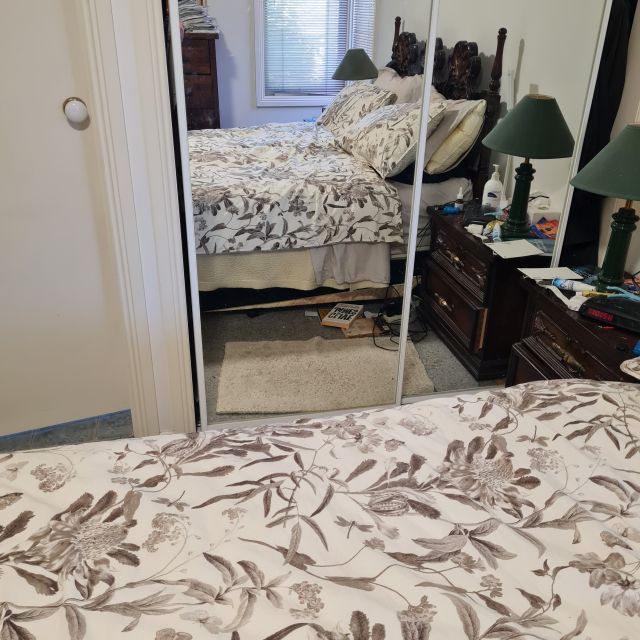
This is my bed. I loathe doonas: give me blankets any day. And don’t get me started on the absence of a top sheet in hotels. Layers, people, layers.

Anyway, we make the bed every morning: sheets (bottom and top), two blankets and a doona in a doona cover more for appearance than anything else. I tuck my blankets in, but Steve doesn’t. Worse still, you can see the blankets hanging out of the side of the bed reflected in the mirror because there’s never enough doona on his side. So every morning I spend a little while walking around the bed, making sure that the doona is even on both sides and tucking in any errant blankets on Steve’s side. I smooth out the wrinkles from the doona, and all is right with the world.

Did it matter? You bet it did. Every time I walked into the bedroom, I’d see the blankets hanging out of the side of the bed and it took every bit of self-control not to run round there, tuck them in and straighten up the doona. It put me in a bad mood for the whole day.

Then just to add insult to injury, I listened to the short reflection that went with this activity, where a man with a smooth voice rationalized his failure to wake up on time on a Saturday morning and get his kid out out of bed to go to kick-boxing by saying that it didn’t REALLY matter. Yes it did! You’re the father- show some responsibility! And if that kick-boxing instructor was a volunteer, that’s a million times worse. That’s the deal: you get your kid here on time, and I’ll teach him.

Does it matter? Yes.

Grrr. I don’t think this challenge is very good for me.

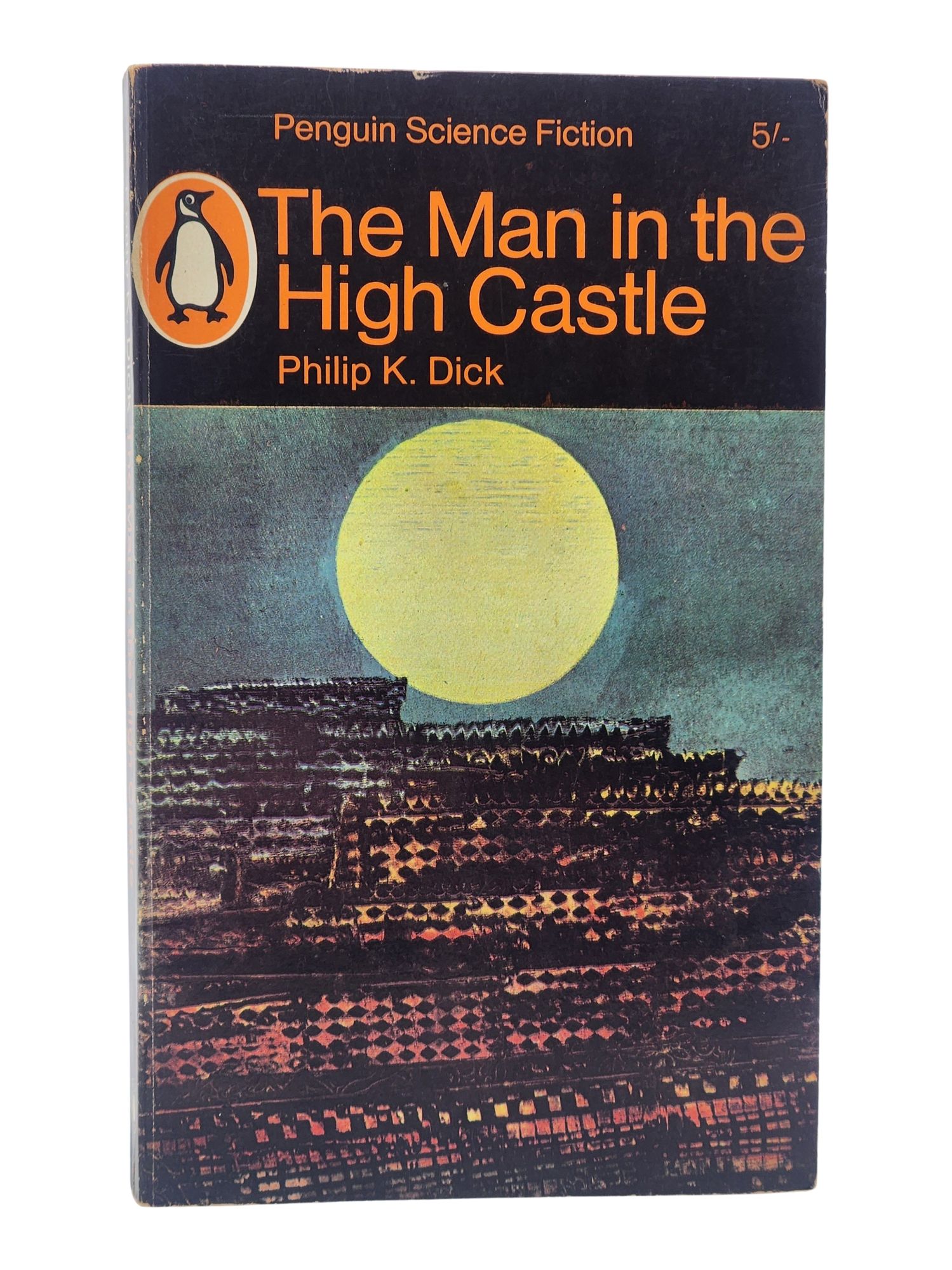
‘The Man in the High Castle’ by Philip K. Dick

1965 (1962) 236 p.

It’s interesting that my copy of The Man in the High Castle should be issued under the Penguin Science Fiction impress, because it doesn’t seem particularly science-fiction-y to me. It was first published in 1962 and envisaged a world in which Germany and Japan had triumphed during WW2, with the action occurring taking place in 1962- i.e. contemporaneously. To my mind it was more an alternative history or counterfactual than science fiction.

The narrative traces through several characters who live in an America partitioned into three. Nazi Germany controls the East Coast, as well as Russia and Western Europe. The east coast itself is divided in two: the remnant United States of America up to the Canadian border, and ‘The South’, both ruled by puppet regimes under Nazi control. The West Coast had been annexed by the Japanese as the Pacific States of America. Between the two regimes is the buffer Rocky Mountain states, where American citizens continue a depressed, oppressed existence.

The novel starts in the Pacific States of America, where businessmen Robert Childan runs a business selling pre-invasion Americana, most of which is counterfeit and manufactured by the Wyndam-Matson Corporation. Childan is contacted by Japanese trade official Nobusuke Tagomi, who seeks a gift to impress a Swedish industrialist named Baynes, who is coming to visit. Baynes, however, is really a Nazi defector who is coming to warn of the incipient activation of Operation Dandelion, a plan for Germany to attack Japan and attain world domination. Meanwhile, there is a banned publication, The Grasshopper Lies Heavy which is circulating surreptitiously, which posits that in fact, the Allies did win. Ostensibly the book is written by Hawthorne Abendsen, the eponymous ‘Man in the High Castle’. Juliana, the ex-wife of secret Jew Frank Frinke, is fascinated by the book, and travels unwittingly with an under-cover Nazi to meet the author, unaware that her companion Joe Cinnadella, has been sent by the Germans to execute Abendsen. It is a repressive and violent society, which has reverted to almost-magical times, with the I-Ching, a book of Chinese divination, guiding the actions of many of the characters, both Japanese and American.

The scenario is fascinating, but unfortunately the characters are not. I confess to losing track of who was who, and I am still bemused by the authorship of The Grasshopper Lies Heavy, although I think that the author intended this ambiguity. The characters are rather mechanical, and it is difficult to feel any connection with any of them. The end of the book becomes bogged down with a fairly metaphysical exploration of the I-Ching.

However, the book does form the political and ‘historical’ background to the excellent Prime four-season series, which managed in its first episode to evoke more sympathy and coherence to the characters than the whole book did. Interestingly, they turned The Grasshopper Lies Heavy into a film, instead of a book, which in a way made the whole scenario more implausible- who has a film projector hanging around in their apartment? Surely a book would be more portable and thus more dangerous. To eke four seasons of the TV series out of a fairly slim volume, obviously it was taken far beyond the original book, but to my mind so far, with far more success in character development than the book. So, for me, The Man in the High Castle is a book with a really fascinating premise which didn’t quite manage to develop its characters, or integrate its metaphysical aspects.

My rating: 6/10

Sourced from: My husband’s bookshelves. I had heard about the book, but never read it or seen a copy.

Looking the wrong way

Day 2 of the Real Attention Challenge was to go on a short walk and to choose to focus on one thing only, instead of sweeping your gaze around.

Well the walk part was easy because on Mondays I always walk to the museum in Heidelberg through the Rosanna Parklands. It was quite breezy this morning, so I decided to focus on the shadows from the trees.

I noticed the shadows of the leaves moving, as if they were dancing, and the thick density of the shadows thrown by the tree trunks. I did get a bit distracted by all the dogs running up to me, and I had to consciously fix my gaze on the ground when I passed people, instead of greeting them as I normally would. I felt a bit anti-social and I hope I didn’t pass anyone I know!

Trying something new

So, I’ve been subscribing to the ‘Waking Up’ meditation app for a few years now. This year they launched the Real Attention 14 Day challenge and I thought ‘why not?’ So Day 1 the challenge was ‘try something new’. Uff…something new. I am the ultimate creature of habit and it took me quite a while to think of something that I’d never done before. In the end I came up with two things

Something New Number 1: Go to Coburg Lake Park.

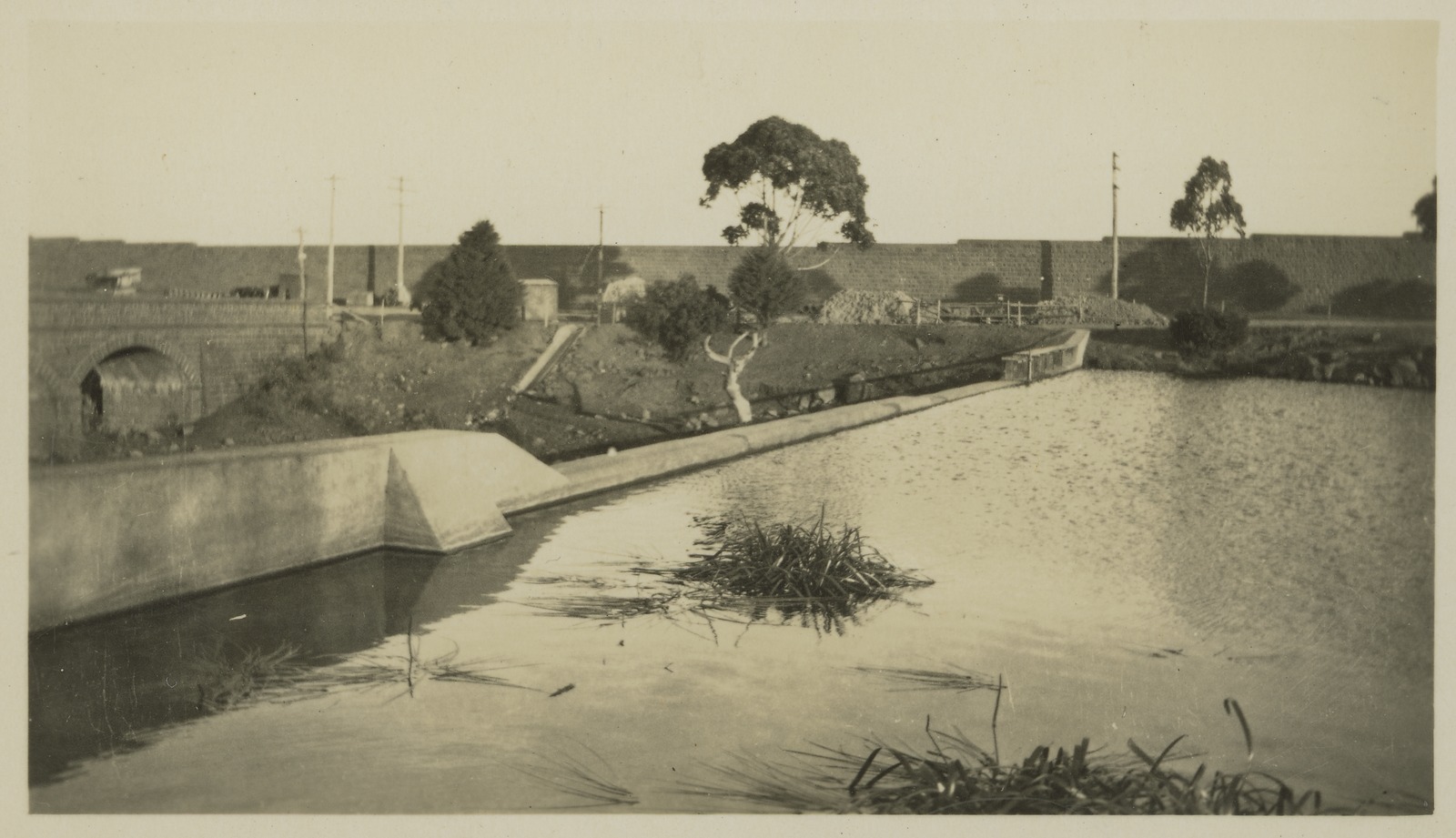
I must have driven past Coburg Lake dozens and dozens of times, but I’ve never actually been to it. It’s on Murray Road, opposite the old Pentridge Gaol which has now been redeveloped into highrise buildings, with shops, cinema etc. all enclosed within the bluestone walls of Pentridge, which can be seen on the other side of the lake in the photo above. I don’t know if I’d really like to live there: it’s just a little bit creepy. The lake is on the other side of the road from the gaol, and is reached by a bluestone bridge. Apparently Coburg had over 40 quarries in the 19th century, and this lake was constructed on the Merri Creek around the time of WW1.

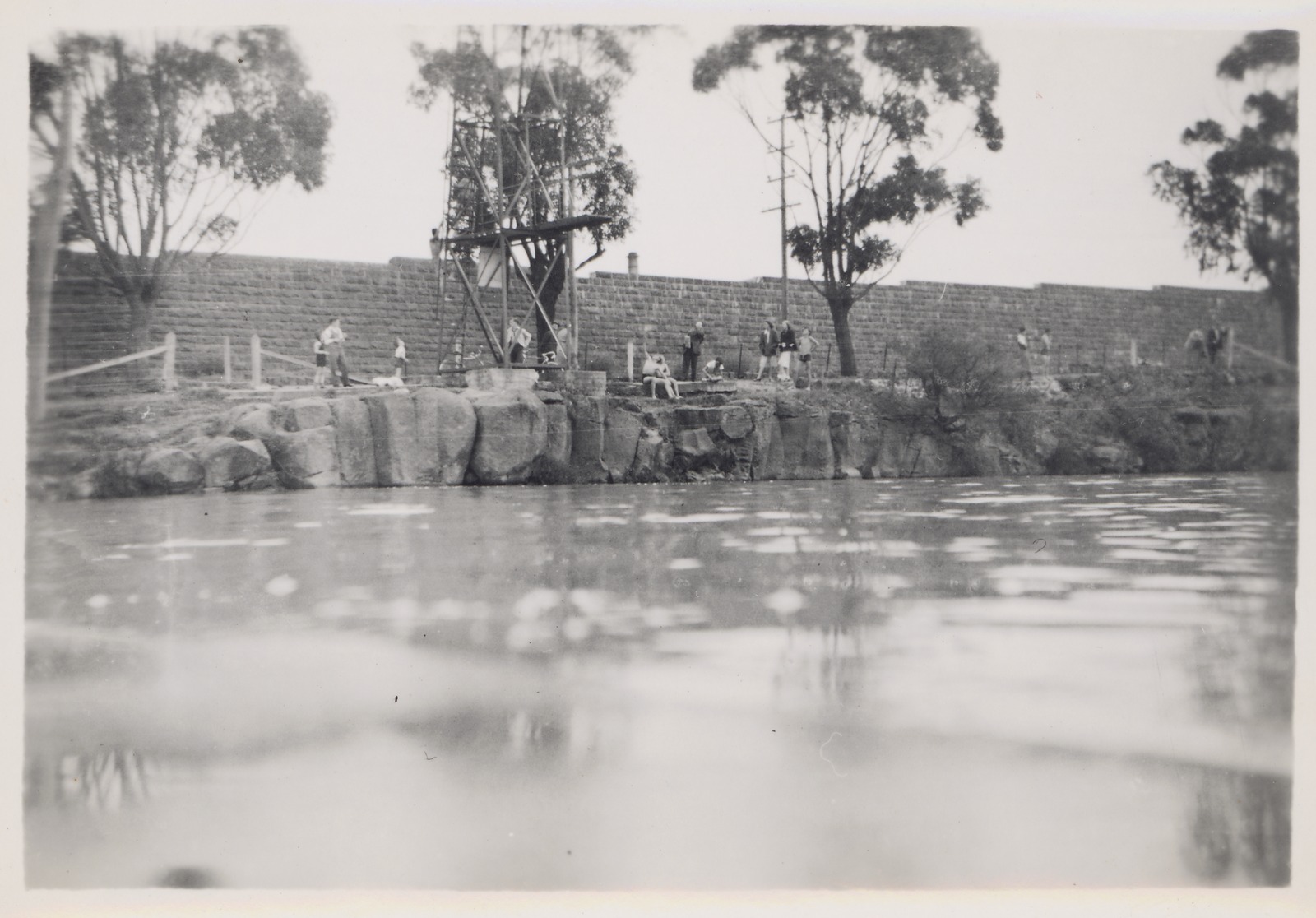
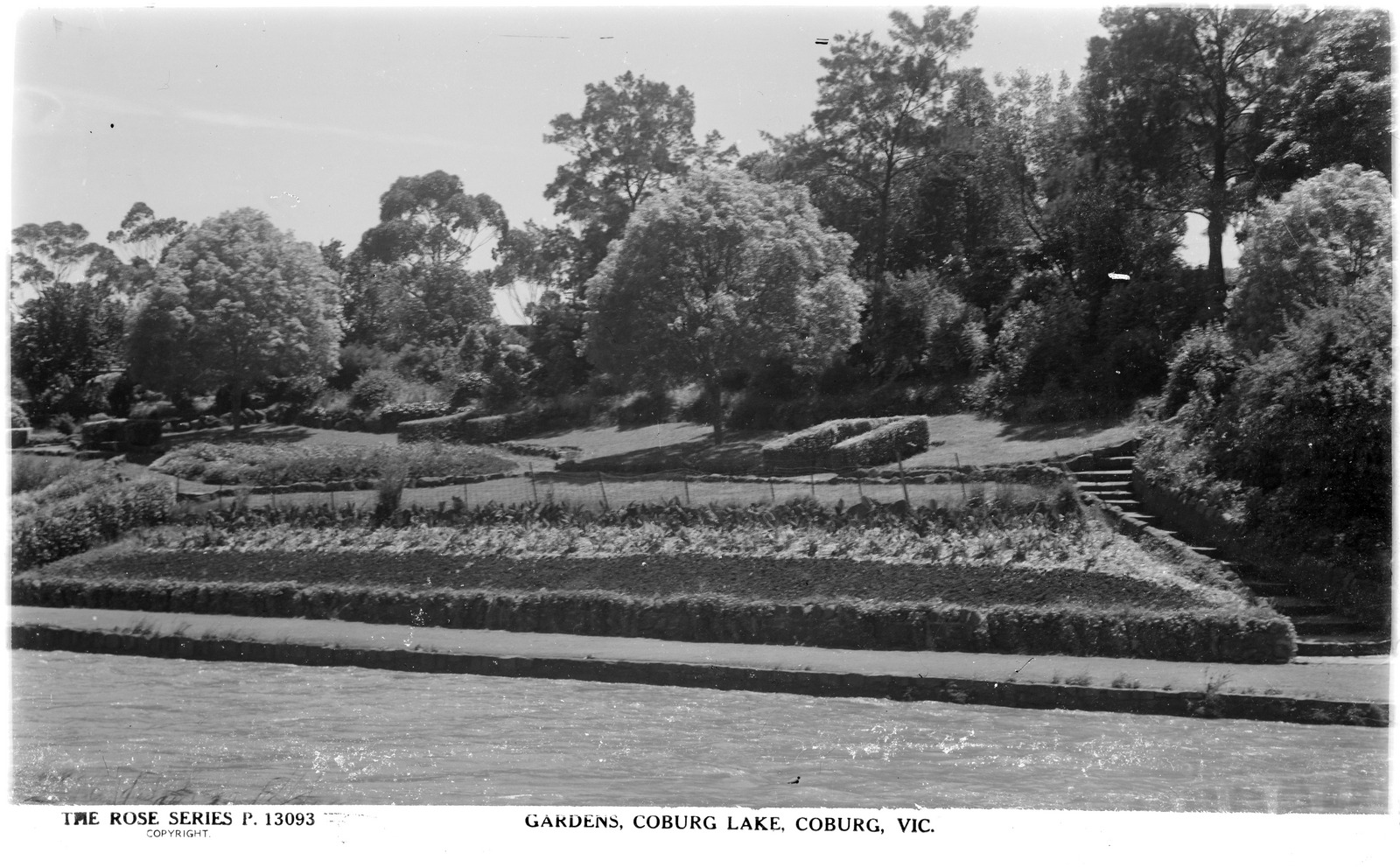
It looked pretty grim when it was first constructed. You can see the Pentridge Wall quite clearly in these photos. Just what you want as a backdrop to a picnic area.

But by mid-20th century it was all looking very formal

SLV http://www.slv.vic.gov.au/ FL16016882.jpg

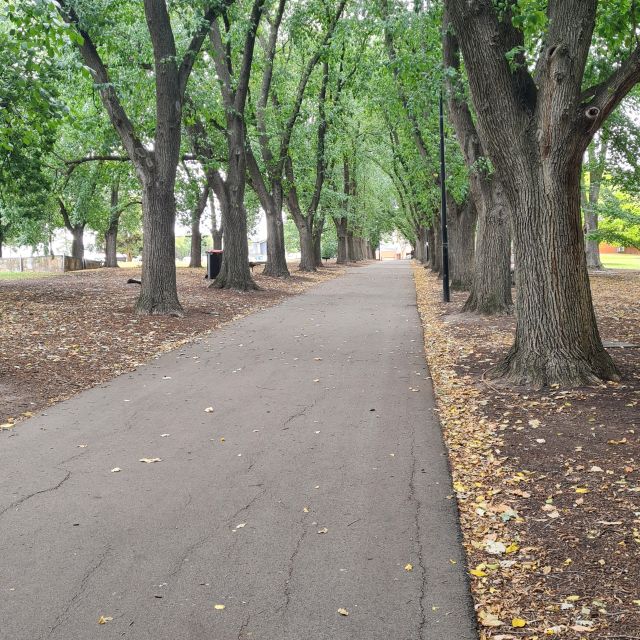
There’s still traces of the formal gardens in the park, especially the Avenue of Honour, which was planted in 1919. Originally there was one tree for each soldier, but now the remaining trees commemorate all Coburg servicemen.

Much of the park, especially around the creek has been de-formalized. Merri (originally merri-merri in Woiwurrung) means ‘rocky’ and you certainly get a sense of the rockiness of this area before it was quarried out and tamed.

I walked along the park, through the gardens and along the creek – a pleasant little amble- until I realized that I had no idea where I had parked the car. The Challenge for today mentioned ‘getting lost’ and for a while that was exactly what I was until I finally crested the hill and saw my little car waiting there for me. So Mission Accomplished.

Something New Number 2

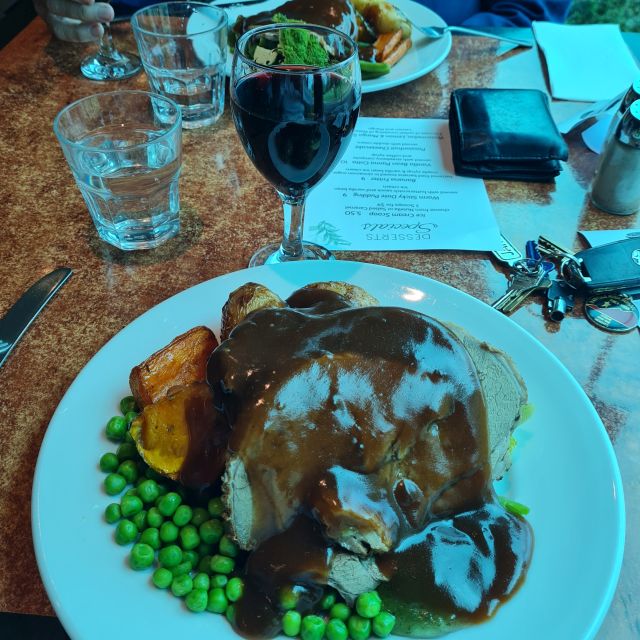
Now, this isn’t really something new because my friend Steven has been doing this for some time, but it’s new to me. He and his friends in the Sunday Roast Club go to a pub and have a Roast of the Day. Now, I have eaten millions of roast dinners, because my mother cooked a roast on Mondays and Thursdays (sausages on Tuesday, chops on Wednesday) and a very nice roast it was too. So nice, in fact, that I have never actually paid to have a roast dinner in a pub or restaurant. So, Something New Number Two was to go to an RSL and pay to have a roast of the day. And, you know, it was just like Mum used to make – none of that ‘jus’ rubbish, but real, thick gravy and roast potatoes, mint jelly, pumpkin and peas. Delicious. Mission Accomplished at Montmorency RSL.