The Ezra Klein Show Best Of: Barbara Kingsolver on ‘Urban/Rural Antipathy’ This episode was recorded some time ago, when Barbara Kingsolver’s Demon Copperhead had just been released (see my review of the book here) I knew that Kingsolver was from Appalacia, but I hadn’t realized how much she saw this as an Appalacian story and her attempt to breach the chasm of understanding between urban and rural Americans. This was before the Second Coming of Trump, and in many ways she foreshadows it here. Good interview.
The Human Subject (BBC)The Mothers of Gynaecology This is the story of a 17 year old enslaved girl – Anarcha – and the other enslaved women who gave birth to the field of gynaecology. The year is 1845 and Anarcha has just had a baby. But there’s a problem. She was in great pain and her doctor, J Marion Sims, believed nothing can be done about it – at least at first.
She had developed a vesico-vaginal fistula, a hole between her bladder and her vagina. This left her incontinent and in the doctor’s words: “aside from death, this was about the worst accident that could have happened to the poor young girl”. [Many women in third world countries, particularly in Africa, continue to suffer this appalling, life-changing condition]
It was only once Dr Sims worked out a way of getting better access to the vaginal area through the Sims speculum and the ‘Sims Position’ (lying on the left side) that he realized that maybe something could be done. He ‘took over’ Anarcha, as well as a number of other enslaved girls with the same condition, and began experimenting without consent (she was enslaved, after all) and worse still anaesthetic! Anarcha endured 30 surgeries. Ironically, Dr Sims is the one who is celebrated as the ‘father of gynecology’ with his women ‘subjects’ largely unrecognized as the ‘mothers of gynecology’ until recently.
Missing in the Amazon (Guardian) In June 2002 a Guardian journalist, Dom Phillips and an indigenous expert on uncontacted and recently contacted indigenous Amazonian tribes, were murdered. It garnered a lot of attention, probably because Phillips was British, because indigenous rights activists and environmentalists have long been in danger on the Amazon. This is a six-part series published by the Guardian, and pleasingly, the episodes only go for about 1/2 an hour (just the right length!) Episode 1: the disappearance starts with the search for their boat and bodies on the Javari River in the Vale do Javari in western Brazil, right in the middle of South America, near the borders of Colombia, Peru and Bolivia. It’s supposedly an indigenous-only zone, but it is a notorious route for drug-trafficking, and illegal mining, fishing and logging. Episode 2: The Journalist and the President looks at Dom Phillips, who started off as a music journalist and ended up being a freelance journalist working all over the world. He had become particularly interested in Brazilian politics and economic and cultural development, and was married to a Brazilian woman and lived in Brazil. When Jair Bolsonaro came to power in 2019 he gave the green light to many illegal activities on indigenous land, and 2 billion trees were lopped during his presidency. Terrible man.
Since the Orange One has launched his mayhem on the world – did this second presidency really only start in January?- China and Xi Jinping are presenting themselves as a calm, considered and stable presence on the world stage in comparison. It’s a seductive thought, but after reading this small book, I came away convinced that there is a fundamental difference between China and Western democracies in terms of both means and ends that we ignore at our peril.
Many historians mark 16 May 1966 as the start of the Cultural Revolution, when Jiang Quing (Mao’s fourth wife) and Mao circulated a document amongst the Party members which warned of ‘counter-revolutionary revisionists’ who had infiltrated the Party, the government, the army and cultural circles. This document was only made public a year later, but it was popularized in August 1966 by “Bombard the Headquarters”, a short text in written by Mao Zedong himself and published widely. It was a call to the students, who were already confronting their teachers and university lecturers, exhorting them that ‘to rebel is justified’. Yet the headquarters he was urging them to target were the headquarters of his government; of his party. Within three months there would be 15 to 20 million Red Guards, some already in university, others as young as ten. They were urged to ‘smash the Four Olds (old ideas, culture customs and habits) to make was for the creation of a new revolutionary culture. Mao did not explicitly call for the formation of the Red Guards, but he harnessed them as an alternative source of power to the government and, at first, beyond the control of the army until it also joined in the Cultural Revolution in January of 1967.
With Khruschev’s denunciation of the cult of Stalin, Mao felt that Russia had betrayed the revolution and that China needed to return to the dictatorship of the proletariat. Even though 1966 is seen by many as the starting point, Mao had been moving towards this point for several years, moving against the deputy mayor of Beijing and historian Wu Han, removing the People’s Liberation Army chief of staff and premier Luo Ruiquing, and splitting with the Japanese Communist Party because it failed to call out Soviet revisionism.
Some of his party colleagues, most especially Liu Shaoqui, Deng Xioping and Zhou Enlai, held qualms about Mao’s call for continuous revolution led by the Red Army. And well they might have, because quite a few of Mao’s judgment calls – The Great Leap Forward and the Hundred Flowers Campaign- brought unseen (to him) consequences, and the schemes ended up being abandoned. But despite any reservations his colleagues may have held, the Great Proletarian Cultural Revolution went forward, with the Red Guards murdering 1800 people in Beijing alone in Red August 1966. The Red Guards were joined by the workers in late 1966, and the Army in January 1967.
At a dinner to celebrate Mao’s 73rd birthday on 26 December 1966, he proposed a toast to “all-out civil war and next year’s victory”. He got his civil war. Children denounced parents; both the Red and the conventional army split into factions. The targets of the Cultural Revolution were the Five Bad Categories- landlords, rich peasants, counter-revolutionaries, bad elements and ‘rightists’. Temples, churches and mosques were trashed; libraries set alight, hair salons and dressmakers’ shops attacked, and even the skeletons of a Wanli emperor and his two empresses were attacked and burned. The verb ‘to struggle’ came to have a new meaning as ‘enemies’ were “struggled” into the airplane position, forced to bend at the waist at 90 degrees with their arms straight behind, with heavy placards hung around their necks and hefty dunce caps on their heads. Teachers, academics, musicians, writers, local officials were all ‘struggled’, with day-long interrogations that ended with instructions to return the next day for more after being allowed to go home overnight. No wonder so many people committed suicide.
By September 1968, the civil war was declared over, with ‘the whole nation turning Red’. However, with the deteriorating economic situation, and with a perception that people living in the cities were not pulling their weight, Mao decided that ‘educated youth’ needed to receive re-education by the poor and middle-class peasantry (p. 68). In 1969 as many as 2.6 million ‘educated youth’ -including present-day president Xi Jinping- left the cities for the country side. Some did not have to go too far from home, but others were exiled to the brutal winters of the Great Northeast Wilderness, or the tropical jungles of Yunnan in the south-west. Some villagers were ambivalent about these ‘soft’ teenagers, although they welcomed the goods and knowledge that they brought with them. The young people were often shocked by the poverty and deprivation in the villages, which contrasted starkly with the propaganda of the happy prosperous countryside they had accepted.
The Cultural Revolution had morphed in its shape, with the 9th Party congress declaring that the Cultural Revolution was over in April1969, and Mao criticizing his wife Jiang Quing and her radical associates in the ‘Gang of Four’ in May 1975. The outside world was changing too. A border war with USSR in March 1969 provoked fears of nuclear war, and the United Nations recognized the People’s Republic of China over Taiwan. President Nixon visited China in February 1972 (Australia’s Gough Whitlam, then opposition leader, had visited in July 1971) and Mao died in September 1976, eight months after the death of Zhou Enlai. In 1981 the Party declared that the Cultural Revolution had been a mistake, and that Mao had been misled by ‘counter-revolutionary cliques’. All at the cost of at least 4.2 million people being detained and investigated, and 1.7 million killed. Some 71,200 families were destroyed entirely. It has been estimated that more people were killed in the Cultural Revolution than the total number of British, American and French soldiers and citizens killed in World War II (p. 106)
The Cultural Revolution may seem an event of the 20th century it’s not that far away. Xi Jinping and his family were caught up in the Cultural Revolution, and tales of him toiling alongside the peasants in the countryside is part of his own political mythology. We here in the West are well aware of the Tienanmen Square protests of 1989, but there is no discussion of them in China. When Xi Jinping took power in 2012, discussion of the Cultural Revolution, the Great Leap Forward and the resulting famine, were all increasingly censored. Xi Jinping abolished the two-term limit to presidential office in 2018, making it possible for him to be President for life. New generations of nationalist fanatics have arisen, likened (for good or bad) to the Red Guards.
This is only a short book, running to just 107 pages of text. In its formatting and intent, it is of a pair with Sheila Fitzpatrick’s The Death of Stalin (reviewed here), and both books deal with hinge-points that, although taking place some 50 years ago, resonate today with even more depth. As with Fitzpatrick’s book, Bombard the Headquarters opens with a timeline and a cast of characters, but I found the brevity of Jaivin’s character list made it harder to establish the various protagonists in my mind, exacerbated further by unfamiliar names. What I really did like was the way that she interwove the stories and experiences of individuals alongside the ‘massed’ nature of this revolution. When we see the huge crowds of people in Tiananmen Square, and the chilling precision of the Chinese army at the parades that dictators are so fond of, it is hard to find the individual, but she has worked hard to keep our attention on the people who lived through, suffered, and did not always survive such a huge experiment in social engineering.
My rating: 8/10
Sourced from: Review copy from Black Inc. books, with thanks.
Behind the BastardsChristmas Non-Bastard The Tupamaros of Uruguay Parts 1 and 2 This program delves into the ‘baddies’ but as part of their Christmas Good Cheer, they nominate a non-bastard, and in December 2021, that was Jose Mujica and the Tupamaros. It’s presented by journalist Robert Evans, who has mainly worked on Bellingcat and specializes in extremism. He has read up on other people’s research for this episode, and I did learn some things that I didn’t already know. For example, the fact that there are many old cars in Uruguay because people believe in looking after things and not throwing them out (which fits in well with Jose Mujica’s ‘sobriety’); or the fact that during the 1950s a plebiscite with a very low turnout voted to abolish the position of president, which further cemented the two-party system already in operation. Or the fact that during the 1960s the first highly-educated population of Uruguayan students came of age. Or that during the mid 60s to 1980s, about 300 Tupamaros’ were killed, and they killed about 50 people.
But it was REALLY annoying to hear the way he mangled Mujica’s name, and where on earth is Monty-video (pronounced as if it’s a local video shop in Montmorency) instead of Montevideo?? Ye Gods.
The Rest is History Episode 577 1066: The Norman Conquest (Part 4) So Harald Hardrada is dead; Harold Godwinson is dead, and William of Normandy is now the Conquerer. Why was it game over? Mostly because there was no-one competent left to lead the resistance who had the legitimacy to act as King. The teenaged Edgar Atheling was elected King of England by the Witan in 1066, but it never proceeded any further and he was never crowned. William had behind him a formidable war machine, and when he was crowned using traditional rites as the King of the Anglo Saxons at Westminster Abbey, there was both continuity and rupture. But within 20 years, the fashions had changed, all the dynasties were gone, and the Thanes were destroyed as a social order. Ten Norman families held 1/4 of England, and many families fled to Constantinople. Was this part of William’s plan? Probably not: instead his plan of castle and cathedral building was a response to constant uprisings throughout the country. By the time all the landowners came to pledge allegiance to him at Salisbury in 1086, the Domesday book had worked out who owned what under Edward I and who owned what now. William’s reign saw an end to the rivalry for the throne which had convulsed the country earlier.
Witness History BBC. This BBC program only goes for nine minutes, and they draw from interviews in the BBC archive. As a result, the majority of subjects deal with the 1930s onwards, but in The Russian Revolutionaries nearly stranded in London, it goes back to the 1907 congress of Russian revolutionaries held in London because it was too dangerous in Russia. The congress was attended by Lenin, Stalin and Trotsky but they ran out of money. Journalist Henry Brailsford arranged for them to meet a benefactor, who provided the funds for them to return home, and Brailsford himself was interviewed about it in 1947. This must be the ‘oldest’ witness history in the program because there wouldn’t be many witnesses to 1907!
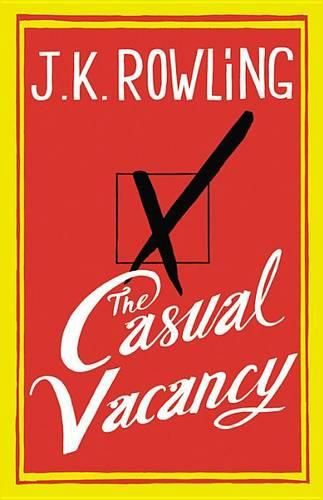
As I have related several times in this blog over the years, when I was young I read Hans Christian Anderson’s The Snow Queen. In that story, a shard from an evil, broken mirror entered the eye of a little boy, Kay, who from then on could only see ugliness in everything. I think that J. R. Rowling may have a similar shard in her eye, at least in this book. It was her first book for adults, written after the Harry Potter series that had captured young readers and accompanied them into adulthood. It is ugly, snarky and ends in a tragic melodramatic conclusion. I was hooked, after a very slow start, but in the closing pages of the book, I just thought “this is ridiculous”.
I’ve always thought that Rowling is very good with her beginnings, particularly in her Cormonan Strike books- three pages and you’re in. She starts well here too, with a death in the first few pages, but instead of jump-starting the book, the impetus dissipates as various people in the fictional town of Pagford learn that their local councillor Barry Fairbrother has died. The ‘casual vacancy’ caused by his death prompts a local election to fill his seat, and Rowling introduces a wide range of people who are taking a particular interest in this election.
Pagford is an older town, established in the days when ‘parishes’ were the backbone of local government, but time has brought many changes. A council estate called rather ironically The Fields, with low-income and social housing, had been built nearby and had been attached to the Pagford Parish. At the time of Barry’s death, the council had been engaged in negotiations to sever The Fields, and have it come under the jurisdiction of the larger, more modern city of Yarvil. For many Pagford ratepayers, this would shift the problem of drug addiction and social dislocation onto another council but Barry Fairbrother, as a former Fields boy himself, was leading the push to have The Fields remain in Pagford. The now-vacant seat on the parish council was a means to influence the outcome.
There is a huge range of characters in this book, and it took quite a while for me to embed who-was-who into my mind. They’re a rather unsavoury lot: the morbidly obese Howard Mollison who is angling to get his son onto the council; Colin ‘Cubby’ Wall, the school principal, who is tortured by the fear that he may have molested students without retaining any memory of the fact; local doctor Parminder Jawanda who supports keeping The Fields in Pagford, although her opinion is possibly influenced by her infatuation with Barry Fairweather; and Terri Weedon, a drug addict and prostitute from The Fields, whose daughter Krystal takes responsibility for caring for her young brother Robbie- among many other characters. Their partners and children resent each of them, all for various reasons, and there is barely a happy person amongst them. It’s all rather sordid in a petty, pathetic way. It’s not surprising, then, when posts under the name ‘The Ghost of Barry Fairweather’ begin appearing on the parish’s online forum, spilling the dirt on one person after another.
The narrative swings from one family constellation to the next, and gradually tightens its focus on two tragic deaths that make the election seem tawdry and petty. By this time, the pace of the book had really picked up and the majority of the characters were firmly established. But I just found myself saying “This is stupid!” as the ending became increasingly fast-paced and melodramatic. The ending was just as bleak as the whole scenario had been, and I felt as if some of the grubbiness of the book had rubbed off on me.
I gather that much of the ire against this book comes from a disappointment that it had none of the magic of Harry Potter. There’s certainly no magic here. Because of its provincial town setting, some have likened it to Middlemarch which likewise has a large cast of characters, going about their small, ultimately insignificant lives. But this is much grittier and nastier than Middlemarch, with its complexity laced through with snarkiness.
7.a.m. (Guardian) The Road to Yoorook is the first of a two-part series that was released at the same time as the Yoorook final report was handed to the Victorian government. The Yoorook truth-telling commission is the first one held in Australia. Although the indigenous population in Victoria is not large now compared with other states, prior to colonization Victoria was one of the most heavily populated areas of Australia , largely because of climate, geography and the abundance of food. It was also the home of many of the Aboriginal organizations of the 1970s, including the Aboriginal Legal Service, the Aboriginal Health Service. The First Peoples Assembly called for a truth-telling commission that had all the power of a royal commission, but at first – pathetically- they had trouble finding premises in which to hold the commission, and it took a directions hearing to get government compliance in making a building available. Part 2: The Truth Has Been Told has the stories of First Nations elders whose loved ones were stolen, and the changing policy settings that had such effects on their lives. It goes through the commission process, with the Premier and the Police Commissioner being called before it. Given the political climate of the present day, it is unlikely that we will see anything like it again.
In The Shadows of Utopia Season 2 Episode 10 The Cambodian Civil War Begins Part 1 deals with 1967. The foreword to the episode starts with the man we now know as Duch, who was at the time was a quietly-spoken communist teacher- we will meet him later, I’m sure. By this time, there was a contradiction between Sihanouk’s external and internal politics. Internally, he was veering between the left and right. At the end of 1966 he went to Paris for ‘health reasons’, leaving his Prime Minister Lon Nol in charge. In January and February 1967 riots broke out in Battambang, where the government cracked down on the black market sale of rice to Vietnam. Battambang had been the site of anti-French protest in the past, and it was close to the Thai border. Two-thirds of the rice harvest was being passed to the black market, and Lon Nol forced the sale of the rice to the government, at a low price. By April 2 1967 the resulting Samlaut uprising had morphed into a peasant revolt, which was quickly and violently suppressed. There were only a few hundred fighters, and they had some village support but they faced the superior technology of the army and betrayal by village vigilantes. This was the start of a new era of violence in an independent Cambodia. Historians are divided over the actual influence of the Communist Party of Kampuchea on the Samlaut uprising, but certainly the CPK decided on a nation-wide uprising at the start of 1968, against the disapproval of the Vietnamese communist party.
But Sihanouk couldn’t pretend now that unrest was all external. Sihanouk had dealt with the North Vietnamese, with the support of Russia and China. Internally, he wanted to eradicate the CPK, but he went for the wrong Marxists, and ended up pursuing all of the old Paris-based leadership. This led to false rumours that three of these leaders -Khieu Samphan, Hou Yuon and Hu Nim – had been murdered, and when the three re-appeared later, they were called the Three Ghosts.
The Rest is HistoryEpisode 556: 1066 The Battle of Hastings One of the first books that my parents bought for me specifically, on request, was the poetry book 1066 and all that. I was in grade 5 in primary school, but thinking back, it seems odd that we would have learned about the Battle of Hastings. Who knows. The Battle of Hastings took place on 14th October 1066, just three weeks after Harold Godwinson had seen off Harald Hadrada. William of Normanby had horses, where the English had shields, although given that it was an all-day battle, probably the horses weren’t that important anyway. Many of the myths about the Battle of Hastings are questionable. Was Harold really shot through the eye? The Bayeux Tapestry shows two figures identified as Harold, and it was reworked in the 19th century anyway? There’s an alternative scenario, identified in the account written closest to events, that says that he was butchered by four men including William the Conquerer.
I read this book some time ago, and reading back my review, written so carefully to avoid spoilers, I had no idea what the ‘twist’ was at the end of it. I shouldn’t have been so delphic! Anyway, I think I must have interpreted what the film portrays as a visualization as being a fact in the book – or at least, I think it was a visualization. I found myself more worried on film to see the obvious power imbalances with this white, blonde academic luxuriating in her rent-controlled New York apartment, blithely ignoring the hispanic people who were doing their jobs, and twisting the rules about ‘service animals’ ( a term so vague that it is meaningless) to keep a dog which was far too large for an apartment.
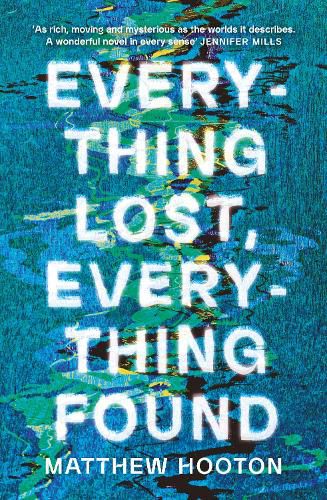
Are there more books being published about the slide into dementia and confusion, or it just that I perceive it that way because of my own fears? Writer and academic Matthew Hooton is rather too young to be facing this situation himself, but he captures well the slipperiness of memory in this beautifully written book. If you’re looking up ‘Matthew Hooton’ to find out more about him, you’ll find that unfortunately for him, he shares his name with a former National Party politician from New Zealand. But there’s a certain irony in that because Jack, the narrator of Everything lost, Everything found also shares a name with another Jack in Henry Ford’s rubber plantation in the Brazilian Amazon, where he travelled with his parents in 1929.
There are two threads to this book. One is Jack’s memories of Fordlandia in Brazil, a cookie-cutter American suburb transplanted into the Brazilian jungle, under the control of the morality agents charged with carrying out Henry Ford’s vision for a colonial outpost to establish rubber plantations in the jungle, while gradually easing out reliance on native rubber-gatherers. The second thread is that of Jack’s life in Michigan, in what is now a deserted Ford Factory town, as his wife Gracie is sliding into dementia and a slow death with cancer.
The descriptions of the jungle are just gorgeous, and the jungle itself seems to take on a personality. But it is a malevolent personality: taking Jack’s mother’s life in a caiman attack on the river, and driving Jack’s father into his own madness in searching for his wife’s body in the jungle. A man half-dead from exposure and the jungle’s flesh-eating insects staggers into Fordlandia, and Jack himself is not sure whether it is his father or not. Young Jack himself is forced into a battle with the jungle as he and Soo, a young Korean girl who had worked in the sanatorium laundry, try to escape the morality agents who have shopped her to the Japanese.
I read this book because I had recently read Hooton’s Typhoon Kingdom (review here) and at first I was struck by the difference in setting between his earlier book and this one. But Korea (where Hooton lived and worked for some time) works its way into this book as well, when Soo explains that she is Korean royalty has escaped the Japanese in their takeover of Korea early in the 20th century. I’m not sure whether this strains credulity or not.
But there is no difficulty at all in watching the older Jack, seventy years later, defiantly trying to stay in his family home as his life revolves around visiting his wife in the nursing home. Jack’s relationship with his divorced daughter Jess is strained, and his grandson Nick is a mixture of solicitous and off-hand adolescence as he is trying to negotiate his own relationship with his father.
In fact, one of the things that really impresses me about Hooton’s writing is the way that he is able to emotionally inhabit someone that he clearly is not: a Korean comfort woman in Typhoon Kingdom and an old man here. His characters have an authenticity and layers of complexity, and their dialogue and tone is distinctive and convincing.
The two story lines become increasingly intertwined, as Jack himself becomes more addled, and as the past colonizes the present, not unlike the colonization attempt of Fordlandia. Jack’s narrative voice is comfortable and engaging, and as a reader you want things to be better for him.
I really enjoyed this book. In one of those little twists of coincidence, I read a review from 1925 of Henry Ford’s rather burnished autobiography, which was written before the establishment of Fordlandia and some of the more unsavoury aspects of Ford’s politics. Moreover, I had only recently read Hooton’s earlier Typhoid Kingdom, and so the Korean aspect was familiar to me as well. But quite apart from that, I just enjoyed the beauty of the descriptions, the poignancy of loss and grief, and the sheer humanness of it all.
My rating: 9/10
Read because: I enjoyed Typhoon Kingdom and I saw that he had a new book out
Background Briefing: Agents of Influence (ABC)Episode 3: The Man Whose Name is All Over Sydney We don’t have quite the same problem here in Melbourne but Len Ainsworth, the 101 year old King of Pokies, has had many buildings named after him. The owner of Aristocrat Leisure, he made a killing from the pokies machines in Sydney’s clubs, and then as other states introduced them as well (to our eternal shame), he made even more money. Philanthropy, yes, but at what cost?
Witness History (BBC) I love Witness History- it features interviews with people from the BBC archives who witnessed a historic event, and only goes for 9 minutes which is just enough to walk to the station, or to drop off to sleep. The Reichstag Fire on 27 February 1933, saw the building that housed the German parliament burned down. This was a key event in the establishment of the Nazi dictatorship, as they were able to blame ‘the communists’. Berlin-born journalist, Sefton Delmer, told his story to the BBC World Service in 1967. His contacts with people in Berlin meant that he knew people involved with the Nazi party, and as the building burned down, he wandered around with Hitler and Goring as they ‘tut-tutted’ about the fire.
The Rest is HistoryEpisode 555: 1066 Slaughter at Stamford Bridge This was in effect the last battle between the Vikings and the Saxons, with two doomed characters each representative of their cultures. Harald Hardrada was 56 years old, and although he hadn’t previously been interested in invading England, he was now because of the need for money, the desire to be the next Cnut and because he was psychologically restless and warlike. He landed with 300 longships and possibly 10,000 men north of Yorkshire, where there were many Danish connections. There he joined forces with Harold Godwinson’s own brother Tostig (boo, hiss) at the Humber. It was a hot day, and it is possible that the Norse left their armour off, because they were unaware that Godwinson had rushed from London with his army, picking up men as he went. Harald was killed at Stamford Bridge, but glowing with success, Harold Godwinson did allow his treacherous brother Tostig to return to Norway. Then blow me down, who should arrive by William of Normanby, ready for a fight!
History Extra PodcastOwain Glyndŵr:Life of the Week The blurb on the website says “Famed for his dramatic and determined revolt against English rule in the early 15th century, as well as his bold vision for an independent Wales, Owain Glyndŵr has gone down in history as a symbol of Welsh resistance and a national hero.” Well, I’d never heard of him. To be honest, I didn’t like this episode much- it assumed too much knowledge of Welsh/English history. I’m not sure if I have this right, and I don’t have enough interest to check. As Wales was a colonized region, the rich and well-connected Owain served in the English armies, then went home for about 10 years. During 1400 rebellion broke out in Wales, taking advantage of the intra-English rebellion. His lands were confiscated, then an outbreak of violence saw a Welsh victory in 1402. The first native Welsh Parliament in 100 years was held in 1404 and in 1406 Owain wrote a long treatise on the Welsh State. The Welsh had French support at first, but when the French support split, the war reverted to a Peasants Rebellion. Owain never accepted a pardon from the English for his role in the resistance, and we don’t know what happened to him.
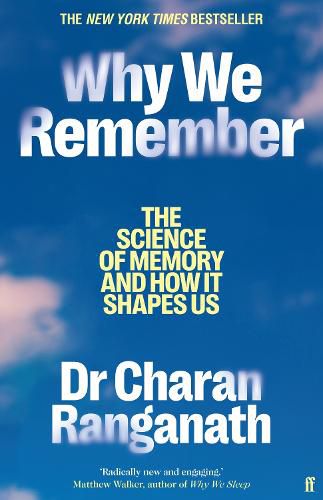
In many ways the subtitle of this book is a better indicator of its content than its headline title. The neuroscientist and memory researcher Dr Charon Ranganath does explore the connection between the evolution of the brain and human social behaviour, but he does this mainly through an exploration of the physical structure of the brain before widening his analysis to a more sociological and legal perspective.
His book starts with the evolutionary ancient structures of the brain: the hippocampus, amygdala and the nucleus accumbens. He then goes on to look at evolutionarily-later developments like the perirhinal and prefrontal cortex and the Default Mode Network. These structural elements of the brain are bathed by neuromodulators like dopamine and noradrenaline. To be honest, I couldn’t really tell you specifically what he argued in relation to these more scientific aspects of his book (I can’t remember!) but while at times he becomes rather technical, the language and approach is fairly low-key so that you don’t feel as if you are reading a science textbook.
What interested me more was the social and behavioural aspects of memory which he also deals with. Memory has evolved to enable us to forget much of what we experience. Instead of being backward-looking, memory plays an important role in orienting us to the new and unexpected, and episodic memory helps us to predict what can happen in the future. It is episodic memory, with its placement of beginnings and endings and its tethering in a specific place and time, that declines most with age, while semantic (i.e. facts and knowledge) memory, which is transferable across contexts, remains fairly constant.
The parts that interested me most were his discussions of memory-construction. A memory is not a grab from a fixed, if sometimes inaccessible, mental film-reel, but is instead the constant retrieval and updating of a memory, with subtle alterations creeping in with every reiteration. Moreover, the story varies depending on the audience for retelling as well, as when family memories are shaped into a story with which to regale listeners. As a local historian who collects oral histories, this is a rather disconcerting thought. And more than merely disconcerting are the implications of evidence in legal cases, where long interrogations and repetitions, and in particular ‘shaping’ questioning, can embed a memory that is different from the original one. Courtroom questioning, which involves retrieval of the memory for an external audience operating on different parameters, shapes memory with sometimes dreadful consequences. It’s all very destabilizing.
I had a recent example of this. I was talking on community radio about our local historical society, and was invited to select two songs and talk about the reason for selecting them. One of them was ‘5.10 Man’ by the Masters Apprentices, which I remember for being presented as a new song by the Masters when they appeared at our school social in 1969. I decided to check the Facebook page for my school, where I knew that there had been a conversation about that social, only to find that other comments made it 1968, and the ‘new song’ being ‘Turn up Your Radio’ (which couldn’t have been right because it wasn’t released then). I found myself questioning my original memory, although self-centred to the last, I’m sticking to my 1969 5.10 Man memory.
Charan Ranganath is no Oliver Sacks. His book is based far more in the laboratory than Sacks’ work, with example after example of rather odd lab tests, often using university students, that add incrementally to the science of memory. I did find his compulsion to praise everybody that he had ever worked with rather cloying as well. He intersperses his analysis with some personal anecdotes that, while being somewhat more ‘memorable’ for me than the scientific parts, were not particularly earth-shattering in themselves, and they lacked the deep empathy of Oliver Sacks’ work. So, interesting enough in its own right, although for me the implications of his work are more thought-provoking than the actual explanation.
My rating: 7/10
Sourced from: Yarra Plenty Regional Library
Read because: I read a positive review in the New Scientist.


 The Resident Judge of Port Phillip