Monthly Archives: April 2020

My non-trip in the time of coronavirus #6: Huaca Pucllana, Lima, Peru

Hey-  if I had been there, I would have wanted to go and see this!

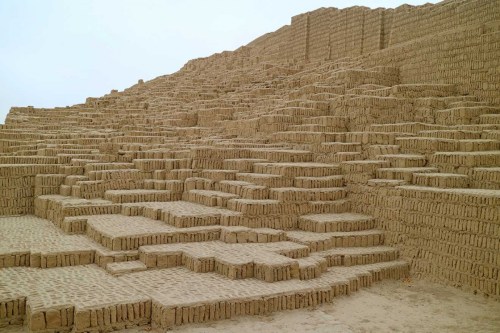
lima-peru-attractions-600x400@2x

It’s a whacking great adobe and clay pyramid, built in Miraflores (where we were intending to stay). It was built as an important ceremonial and administrative center for the Lima Culture, a society which developed in the Peruvian Central Coast between the years of 200 AD and 700 AD.  It was built in two sections: the western half of the site was an important ceremonial center for religious rites, complete with a 22-metre-high, seven-level pyramid. The eastern half of the site was used as an administrative outpost for the surrounding irrigation zone and included several open spaces likely used for public meetings. The two sections were divided by a large wall. They were invaded by the Waris, who were invaded by the Ychmas, who were absorbed into the Incas.

https://youtu.be/2EUqeBIM3Gw

Shame about the bloody great restaurant in the middle of it. What were they thinking? I wouldn’t have eaten there on principle.

My non-trip in the time of coronavirus #5: Lima, Peru

One of the reasons my son was happy to go back to Lima was that he’d be able to visit Centrale Restaurante, famous as No 6 in the list of the 50 best restaurants in the world. The plan was that he and Jesse would go there for lunch, while Nana minded baby Nina. We even made the reservation for 8th April.

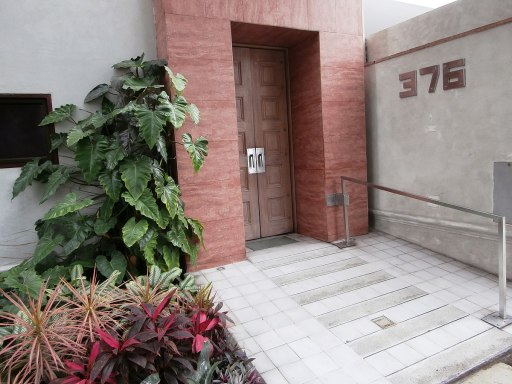
Central_Restaurante_-_Lima,_Peru

Source: Wikimedia.  Centrale Restaurante

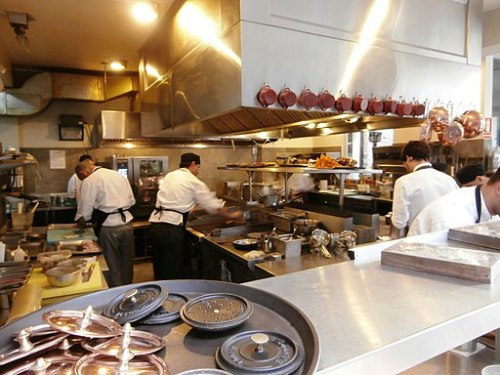
OLYMPUS DIGITAL CAMERA

Kitchen, Centrale Restaurante

Actually, I must admit that the food looks rather amazing.  Here’s a video, if you like videos of food:

Now, what could I do with Nina while they are gourmeting at the restaurant?  Pop her in the pusher, I think and head off to the  Amano Pre-Columbian Textile Museum in Miraflores, where we were going to stay. It was established by the Japanese businessman Mr. Yoshitaro Amano who began collecting pre-Columbian objects that had been discarded by tomb-raiders. He founded the Amano museum in 1964, one of the first purpose-built museums in Peru. The museum was remodelled after 50 years, after gaining the financial support of the Japanese Embassy, Sumitomo Metal Mining and the Miyasato company.

(Ah, that’s right- there’s a long history of Japanese in Peru.  there was that Peruvian president Alberto Fujimori, wasn’t there? Oh dear, that didn’t end well. It seems that he’s still in jail for corruption)

Let’s have a look around the museum.  There’s a virtual museum here, that I found that Google Arts and Culture

https://artsandculture.google.com/exhibit/permanent-exhibition%C2%A0/twLiPg1FFffbLw

It takes you chronologically through the different Peruvian societies up to and including the Inca, showing their skills in textiles. It’s quite striking when they start using brilliant colours. I assume that these are authentic- it’s amazing that they survived.

I hear with my little ear: Podcasts 25-31 March 2020

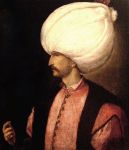
Suleiman_the_Magnificent_of_the_Ottoman_Empire

Suleiman the Magnificent (Wikimedia)

Fifteen Minute History Last year I did a U3A mini-course on the Ottoman Empire, and I listened to a very detailed series called “Empires of History – the Ottoman Series” that ran out of puff long before the Ottoman empire did. It was rather disconcerting listening to a podcast where the narrator pronounced “Anatolia” as Anna-toll-ee and pronounced “cavalry” as “Calvary”. But these two podcasts, called simply enough “History of the Ottoman Empire” are done by fair dinkum historians, and they’re detailed enough without being too detailed. Episode 26 is Part 1, talking about the rise of the Ottoman empire and Episode 27 is Part 2, where Barbara Petzen describes the concept of ‘fall’ in empire history, particularly in relation to the Ottoman Empire

And on a related, but not the same, topic, there is Carter Vaughn Findley, Humanities Distinguished Professor in the Department of History at the Ohio State University, in Episode 31: Who are the Turks?who points out that it is mainly language that unites ‘the Turks’, who are not one racial group at all. Which is a bit inconvenient for Turkish nationalists like Erdogan.

Boyer Lectures (ABC). I’m listening to the three-part 2019 Boyer Lectures, given by Rachel Perkins. She has a beautiful speaking voice, and as you might expect from the Boyer Lectures, these are beautifully crafted. Her lectures, subtitled ‘The End of the Silence’ refer back to the very first Boyer Lecture given by William Stanner, who spoke of the Great Australia Silence.  In Episode 1 she talks about the genesis of the Uluru statement, and in Episode 2 about the succession of previous attempts to have an Aboriginal ‘voice’.  (It makes me so cross: “tell us what you want” says the government, and then as soon as they do, in clear terms, the government says “well, not that”.) Episode 3  returns to the Uluru statement, and its call for a Makarrata Commission, and truth-telling about the Frontier Wars and the fundamental untruth that lies under European colonization.  Very good.

History Listen (ABC) Another oldie from November 2019, The Brazen Women of Silent Film features two different stories. The first is of Annette Kellerman, the swimmer and film star, who actually appeared nude in a 1916 movie. She could hold her breath for over three minutes! See also the excellent NFSA online exhibition “Annette Kellerman: Australia’s Fearless Mermaid.”  The second feature is about the McDonagh Sisters: Isabel, Phyllis and Paulette who formed their own film company and used Drummoyne House, which they were then running as an aged care hostel, as the setting for many of their films. I’d never heard of them, I must admit.

My non-trip in the time of coronavirus #4: Lima Peru

Well, we should have been in Lima by now. I’m very glad that we’re not there now. But in good news, it looks like Nan, whose blog I have been following at Le Chou Fou is finally making it home to America.  She hopes.

But let’s pretend that we are there in a non-coronavirus world. No doubt I would be keen to see the Plaza Mayor. All Spanish-founded cities have a very similar ‘old centre’ because in 1523 King Charles I of Spain mandated the Procedures for the creation of cities in the New World with a square plaza, surrounded by a grid. As with other such plazas, it was originally called the Plaza de Armas and it had a church, and a government building. Apparently, if there was an attack, this square would be the place of refuge, and guns would be supplied from here.

The Plaza Major (Plaza de Armas) in Lima was founded by the conquistador Francisco Pizarro on January 18, 1535. It has a cathedral, a government palace, the archbishop’s palace, the municipal palace….you get the picture.

Apparently Pizarro himself carried the first log for the construction of the Cathedral on his shoulders. The first Cathedral was a rather primitive, adobe building  and it was rebuilt several times due to earthquakes.  Pizarro’s tomb is in the Cathedral today.

When Peru proclaimed its independence in 1821 , Jose de San Martin paraded around the plaza with the new flag. Before then, the square had been used for executions, a bull ring and as the site for the Inquisition.

Actually, a lot of the buildings in the plaza are quite recent, built to replicate colonial buildings. The Archbishop’s Palace of Lima was completed in 1922, the Government Palace was finished in 1938 and the Municipal Palace was completed in 1944. I feel cheated.

Let me check out the Archbishops Palace.

And let’s go into the Government Palace.

There’s lots of changing of the guard and marching around.  (Don’t bother watching the whole 3 minutes. Nothing happens)

Wow. It looks very deserted and shut-down now. (The man is saying that they should have shut down earlier).

Perhaps I’m better off at home. I don’t like the look of those guns.

My non-trip in the time of coronavirus #3: Valparaiso, Chile

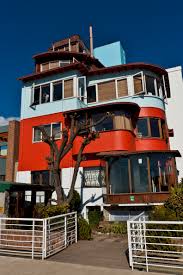
lasebastiana

Well, we were supposed to go to Valpairaso yesterday. I went there last time I stayed in Santiago (see my blog post at the time) and I was disappointed then that I didn’t get to see the poet Pablo Neruda’s house, La Sebastiana, in Valparaiso because it wasn’t included on the tour I chose. I had thought of doing a pilgrimage to his three houses this time but that fell through – so I’ll do it now from beautiful Macleod.

  1. La Chascona.  This is the one that I saw in the middle of Santiago. You can read my blog post about it here.
  2. La Sebastiana in Valparaiso – well, here’s a video about it.  I went on those strange looking hill trolley cars too. Neruda obviously had very fixed aesthetic tastes, because the two houses are very similar.  Actually, there were big fires in Valparaiso right on Christmas last year at about the same time that the Australian east coast was burning.  You can see footage from the fires here and here.  I wonder if they’ve rebuilt – and if so, how.
  3. Isla Negra – wow- he sure knew how to pick a house with a view.  This is the house I’d want to live in.  You can see the house from the outside using drone footage here and here’s a video taken inside the house (and no, I can’t follow what the guide is saying either- too fast for me!)

If you’re asking “Who’s Pablo Neruda?” here’s his Wikipedia entry.   And here’s one of his most famous poems “Tonight I can write the saddest lines”, read aloud in translation.

‘1956: The year Australia welcomed the world’ by Nick Richardson

richardson_1956

2019, 303 p.

When you live in Heidelberg, not far from the former West Heidelberg Olympic Village, you’re very aware of 1956 and its importance to Melbourne. Every four years, fifty years, sixty five years…the anniversary opportunities keep rolling on.  In popular Melbourne memory, the Olympics and the arrival of television were the quintessential events of 1956, but as Nick Richardson points out in his book 1956: The year Australia welcomed the world, there were other currents running through the year as well.  In his preface, Richardson writes:

One of the hardest clichés in Australian history is that the 1950s was a dull decade, when conformity settled on the nation’s shoulders, not to leave until the dynamic 1960s. Yet even the slightest scratching of the historical record reveals that there was significantly more going on that this cliché would have us believe. The decade was distinguished by drama, innovation, social change, a loosening of British ties, a big boost in migration, and the rise of consumerism. Australia was already on the path to being a different country by the time 1960 arrived. And the pivotal year in the preceding decade was 1956, when a series of important events – some accidental, others years in the planning – were critical in shaping the nation. (p. xi)

At times this book felt a bit like a television retrospective on 1956, particularly when dealing with events that have a strong visual or auditory presence. There are the images  we have of ‘golden moments’ in the Olympics; a nuclear mushroom cloud that we associate with Maralinga or the looming presence and voice of Sir Robert Menzies. But Richardson does move beyond these easy images to explore the political and cultural aspects of 1956 as well.

The prologue starts with April 1949 when Melbourne was actually awarded the Olympic Games. The selection of Melbourne was not at all a foregone conclusion, and Australia relied on ’empire men’ to support them. Not only was there the problem of distance, but other countries were well aware of Australia’s White Australia policy. The RSL, Australian nurse Sister Vivian Bullwinkel,  and the then- Immigration Minister Arthur Calwell didn’t want any Japanese entering Australia (in 1949 it was the Chifley Labor government, which lost power that year). Ironically, it was the Japanese delegate’s vote that clinched it for Melbourne.

Moving then to 1955-56, the book is divided into the seasons from Summer 1955-56 through to Summer 1956-57. Within this chronological structure, Richardson interweaves other themes including the Cold War, the Suez Crisis, the British nuclear tests, the debate over poker machines in NSW pubs.  I was aware of these things, but hadn’t actually connected them. Most particularly, it hadn’t registered with me that the work for the games commenced under John Cain Snr’s Labor government, and that by the time the games were actually held, there was a new government.  I didn’t really know that Menzies stuck his neck out so far over the Suez Crisis, just to keep in with ‘home’. Menzies still had another 10 years to go as Prime Minister, but he seemed an anachronism here.  I hadn’t realized that there was a parallel Arts program conducted alongside the Olympics, and I don’t think that many people at the time did either. It seemed to be very much a sideline activity.

As a local, I was interested in reading about the Olympic Village in West Heidelberg.  The village was opened up for journalists on the first week of September and Sun reporter Harry Gordon was horrified to see that the street names were named after famous WWII battles – rather insensitive given that some of the athletes came from these countries.  The names had been chosen for a housing commission development before the land was offered as the Olympic Games village, and they had not been changed.  There was a last minute panic to change the names, which have reverted today to the original battle-based names. There was a scheme to involve local women in the “Housewives Brigade” to make beds and tidy the athletes’ rooms in the mornings, after dropping the kids off at school. They received payment for making the 6,000 beds a day.

There was an almost bashful fear that there would be a stuff-up for the opening ceremony, which was held on 22 November,  a 27 degree day, after cool and wet days leading up to the Games. There were snafus and near-misses, the sort of anecdotes and tales that are greeting with gales of laughter afterwards, but it went better than anyone even hoped.  I can remember a similar feeling with the 1988 Sydney Olympics – that fear that we would come over as hokey.

This book interweaves political, social, cultural diplomatic and sporting history, while following the chronological confines that Richardson has chosen for himself. There were big egos at play amongst the Olympic impresarios, as there still are today.  But moving beyond the  IOC movers and shakers (Sir Frank Beaurepaire, Avery Brundage etc) Richardson has chosen lesser-known individuals – the medal maker, a Ukrainian asylum seeker who escaped during the games, athlete Marlene Mathews (never heard of her), media producers in the infant television industry.  He traces through their stories as well – quite a narrative balancing act.

The book has footnotes and a reference list, but I think that it sorely lacks an index.

I felt as if he was tracing over familiar territory, and the breezy journalistic tone did make the book feel like a documentary. Nonetheless, Richardson certainly broadened my perspective on 1956 and helped me to tie together disparate themes that gave the year more gravitas than just Olympics and television.

There are a couple of Radio National interviews with Phillip Adams on Late Night Live, and with the excellent Richard Fidler on Conversations, and it was the latter that prompted me to read the book.

My rating: 7.5

Sourced from: Yarra Plenty Regional Library

 

My non-trip in the time of coronavirus #2 London

OK, so I’m not in Peru but I’m in Melbourne sitting in front of my computer (actually, had our trip gone ahead, we would still have been in Santiago).

So where shall I go today?

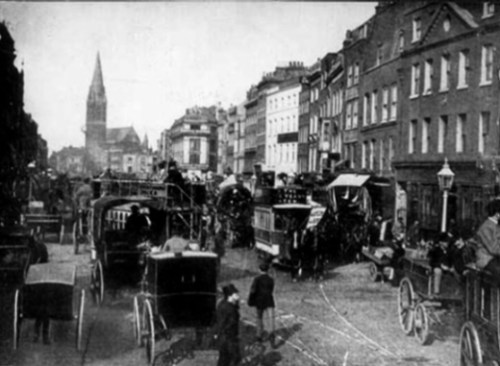
Whitechapel_High_Street_1905

Whitechapel High Street 1905 Source: Wikimedia

How about the East End of London? in particular, the Jewish section. The Memory Map of the Jewish East End is a fantastic digital resource that takes you to Whitechapel and Spitalfields which had a strong Jewish presence from the 1700s onwards, but particularly in the first half of the 20th century. This site has two views: the first uses the Ordnance Survey of 1913, and the other view is the most recent Ordnance Survey, where the lanes and small streets have been swallowed up by larger buildings.  There are four themes: education, community, business and religion. When you click on the coloured features, up pops a modern picture of what is there now then if you select ‘read more’ you can see pictures from the past, some explanatory text and some oral history excerpts.

Hours of fun! https://jewisheastendmemorymap.org/

And here is one of the creators of the site, Rachel Lichtenstein writing about it: http://www.historyworkshop.org.uk/the-memory-map-of-the-jewish-east-end/

I hear with my little ear: Podcasts 17-24 March 2020

Old_Arts_Building._Parkville_Campus_of_University_of_MelbourneMy Marvellous Melbourne is produced by the Melbourne History Workshop at the University of Melbourne history department, led by Prof Andrew May. Episode 2 features an oral history of waterside worker, Henry Briggs, recorded as part of the National Library of Australia Oral History Collection.  Then Stefanie Trigg gives a fascinating interview about bluestone in Melbourne and Stella Marr talks about the Red Cross Archives.
Earshot – (ABC) Aziz Abdul Aziz Muhamat is a Sudanese asylum seeker who had been in detention on Manus Island since 2013. In  Part 1.Flight from Manus he goes from Manus Island to Geneva to receive a Human Rights Defender Prize, accompanied by journalist Michael Green, with whom Aziz has been making a podcast to publicize the plight of detainees on Manus. In Part 2 A Stranger in Geneva, he needs to decide whether he should take up the offers of asylum offered by other countries, or whether that would be a betrayal of the men he left behind on Manus.

Now this is curious. Because my phone is full of old podcasts, I found Earshot’s Wrongful:Goldfingered – The Mickelberg Story about the Mickelbergs and the Perth Mint robbery. And now it seems to have completely disappeared from the ABC Earshop program page. Are there more legal proceedings, perhaps? Anyway, it’s an interesting program about crooked cops, a gold robbery, Perth at its brashest back in 1982.


My non-trip in the time of coronavirus #1 Lima, Peru

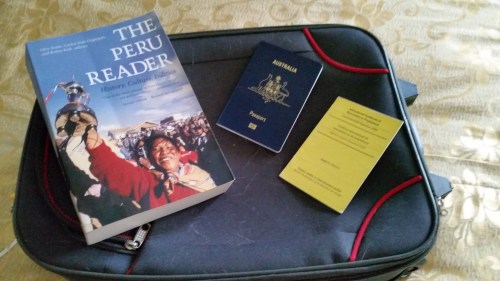
20200403_143423

Well, it’s the 3rd of April and I should be folding up the laptop, packing my case and taking up my passport all ready for a trip to Peru tonight.

Nup.  Not going to happen.

So, where shall I go instead? Well, given that I was planning to go to Peru, I have decided to drop in on Nan Bauer, an American food writer who is currently holed up in Lima Peru, unable to get back to America.  As I write, she’s up to Day 18. Scroll back to her Day 1 Covid-19 in Peru, and you’ll read about her mad rush from Cusco back to Lima, hoping to get out before the border closed.

If I’m a bit grumpy about a cancelled trip, lost deposits etc, I just read her blog at  http://lechoufou.com/ and I feel a whole lot better…..