My non-trip in the time of coronavirus #4: Lima Peru

Well, we should have been in Lima by now. I’m very glad that we’re not there now. But in good news, it looks like Nan, whose blog I have been following at Le Chou Fou is finally making it home to America.  She hopes.

But let’s pretend that we are there in a non-coronavirus world. No doubt I would be keen to see the Plaza Mayor. All Spanish-founded cities have a very similar ‘old centre’ because in 1523 King Charles I of Spain mandated the Procedures for the creation of cities in the New World with a square plaza, surrounded by a grid. As with other such plazas, it was originally called the Plaza de Armas and it had a church, and a government building. Apparently, if there was an attack, this square would be the place of refuge, and guns would be supplied from here.

The Plaza Major (Plaza de Armas) in Lima was founded by the conquistador Francisco Pizarro on January 18, 1535. It has a cathedral, a government palace, the archbishop’s palace, the municipal palace….you get the picture.

Apparently Pizarro himself carried the first log for the construction of the Cathedral on his shoulders. The first Cathedral was a rather primitive, adobe building  and it was rebuilt several times due to earthquakes.  Pizarro’s tomb is in the Cathedral today.

When Peru proclaimed its independence in 1821 , Jose de San Martin paraded around the plaza with the new flag. Before then, the square had been used for executions, a bull ring and as the site for the Inquisition.

Actually, a lot of the buildings in the plaza are quite recent, built to replicate colonial buildings. The Archbishop’s Palace of Lima was completed in 1922, the Government Palace was finished in 1938 and the Municipal Palace was completed in 1944. I feel cheated.

Let me check out the Archbishops Palace.

And let’s go into the Government Palace.

There’s lots of changing of the guard and marching around.  (Don’t bother watching the whole 3 minutes. Nothing happens)

Wow. It looks very deserted and shut-down now. (The man is saying that they should have shut down earlier).

Perhaps I’m better off at home. I don’t like the look of those guns.

My non-trip in the time of coronavirus #3: Valparaiso, Chile

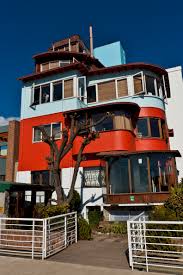
lasebastiana

Well, we were supposed to go to Valpairaso yesterday. I went there last time I stayed in Santiago (see my blog post at the time) and I was disappointed then that I didn’t get to see the poet Pablo Neruda’s house, La Sebastiana, in Valparaiso because it wasn’t included on the tour I chose. I had thought of doing a pilgrimage to his three houses this time but that fell through – so I’ll do it now from beautiful Macleod.

  1. La Chascona.  This is the one that I saw in the middle of Santiago. You can read my blog post about it here.
  2. La Sebastiana in Valparaiso – well, here’s a video about it.  I went on those strange looking hill trolley cars too. Neruda obviously had very fixed aesthetic tastes, because the two houses are very similar.  Actually, there were big fires in Valparaiso right on Christmas last year at about the same time that the Australian east coast was burning.  You can see footage from the fires here and here.  I wonder if they’ve rebuilt – and if so, how.
  3. Isla Negra – wow- he sure knew how to pick a house with a view.  This is the house I’d want to live in.  You can see the house from the outside using drone footage here and here’s a video taken inside the house (and no, I can’t follow what the guide is saying either- too fast for me!)

If you’re asking “Who’s Pablo Neruda?” here’s his Wikipedia entry.   And here’s one of his most famous poems “Tonight I can write the saddest lines”, read aloud in translation.

‘1956: The year Australia welcomed the world’ by Nick Richardson

richardson_1956

2019, 303 p.

When you live in Heidelberg, not far from the former West Heidelberg Olympic Village, you’re very aware of 1956 and its importance to Melbourne. Every four years, fifty years, sixty five years…the anniversary opportunities keep rolling on.  In popular Melbourne memory, the Olympics and the arrival of television were the quintessential events of 1956, but as Nick Richardson points out in his book 1956: The year Australia welcomed the world, there were other currents running through the year as well.  In his preface, Richardson writes:

One of the hardest clichés in Australian history is that the 1950s was a dull decade, when conformity settled on the nation’s shoulders, not to leave until the dynamic 1960s. Yet even the slightest scratching of the historical record reveals that there was significantly more going on that this cliché would have us believe. The decade was distinguished by drama, innovation, social change, a loosening of British ties, a big boost in migration, and the rise of consumerism. Australia was already on the path to being a different country by the time 1960 arrived. And the pivotal year in the preceding decade was 1956, when a series of important events – some accidental, others years in the planning – were critical in shaping the nation. (p. xi)

At times this book felt a bit like a television retrospective on 1956, particularly when dealing with events that have a strong visual or auditory presence. There are the images  we have of ‘golden moments’ in the Olympics; a nuclear mushroom cloud that we associate with Maralinga or the looming presence and voice of Sir Robert Menzies. But Richardson does move beyond these easy images to explore the political and cultural aspects of 1956 as well.

The prologue starts with April 1949 when Melbourne was actually awarded the Olympic Games. The selection of Melbourne was not at all a foregone conclusion, and Australia relied on ’empire men’ to support them. Not only was there the problem of distance, but other countries were well aware of Australia’s White Australia policy. The RSL, Australian nurse Sister Vivian Bullwinkel,  and the then- Immigration Minister Arthur Calwell didn’t want any Japanese entering Australia (in 1949 it was the Chifley Labor government, which lost power that year). Ironically, it was the Japanese delegate’s vote that clinched it for Melbourne.

Moving then to 1955-56, the book is divided into the seasons from Summer 1955-56 through to Summer 1956-57. Within this chronological structure, Richardson interweaves other themes including the Cold War, the Suez Crisis, the British nuclear tests, the debate over poker machines in NSW pubs.  I was aware of these things, but hadn’t actually connected them. Most particularly, it hadn’t registered with me that the work for the games commenced under John Cain Snr’s Labor government, and that by the time the games were actually held, there was a new government.  I didn’t really know that Menzies stuck his neck out so far over the Suez Crisis, just to keep in with ‘home’. Menzies still had another 10 years to go as Prime Minister, but he seemed an anachronism here.  I hadn’t realized that there was a parallel Arts program conducted alongside the Olympics, and I don’t think that many people at the time did either. It seemed to be very much a sideline activity.

As a local, I was interested in reading about the Olympic Village in West Heidelberg.  The village was opened up for journalists on the first week of September and Sun reporter Harry Gordon was horrified to see that the street names were named after famous WWII battles – rather insensitive given that some of the athletes came from these countries.  The names had been chosen for a housing commission development before the land was offered as the Olympic Games village, and they had not been changed.  There was a last minute panic to change the names, which have reverted today to the original battle-based names. There was a scheme to involve local women in the “Housewives Brigade” to make beds and tidy the athletes’ rooms in the mornings, after dropping the kids off at school. They received payment for making the 6,000 beds a day.

There was an almost bashful fear that there would be a stuff-up for the opening ceremony, which was held on 22 November,  a 27 degree day, after cool and wet days leading up to the Games. There were snafus and near-misses, the sort of anecdotes and tales that are greeting with gales of laughter afterwards, but it went better than anyone even hoped.  I can remember a similar feeling with the 1988 Sydney Olympics – that fear that we would come over as hokey.

This book interweaves political, social, cultural diplomatic and sporting history, while following the chronological confines that Richardson has chosen for himself. There were big egos at play amongst the Olympic impresarios, as there still are today.  But moving beyond the  IOC movers and shakers (Sir Frank Beaurepaire, Avery Brundage etc) Richardson has chosen lesser-known individuals – the medal maker, a Ukrainian asylum seeker who escaped during the games, athlete Marlene Mathews (never heard of her), media producers in the infant television industry.  He traces through their stories as well – quite a narrative balancing act.

The book has footnotes and a reference list, but I think that it sorely lacks an index.

I felt as if he was tracing over familiar territory, and the breezy journalistic tone did make the book feel like a documentary. Nonetheless, Richardson certainly broadened my perspective on 1956 and helped me to tie together disparate themes that gave the year more gravitas than just Olympics and television.

There are a couple of Radio National interviews with Phillip Adams on Late Night Live, and with the excellent Richard Fidler on Conversations, and it was the latter that prompted me to read the book.

My rating: 7.5

Sourced from: Yarra Plenty Regional Library


My non-trip in the time of coronavirus #2 London

OK, so I’m not in Peru but I’m in Melbourne sitting in front of my computer (actually, had our trip gone ahead, we would still have been in Santiago).

So where shall I go today?

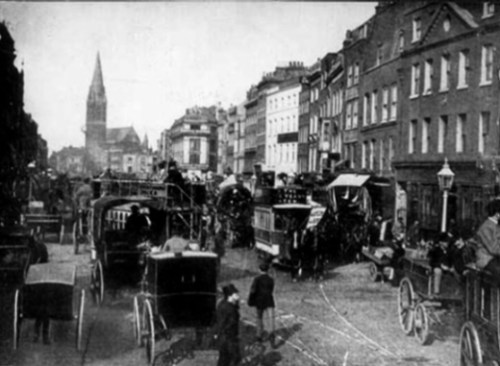
Whitechapel_High_Street_1905

Whitechapel High Street 1905 Source: Wikimedia

How about the East End of London? in particular, the Jewish section. The Memory Map of the Jewish East End is a fantastic digital resource that takes you to Whitechapel and Spitalfields which had a strong Jewish presence from the 1700s onwards, but particularly in the first half of the 20th century. This site has two views: the first uses the Ordnance Survey of 1913, and the other view is the most recent Ordnance Survey, where the lanes and small streets have been swallowed up by larger buildings.  There are four themes: education, community, business and religion. When you click on the coloured features, up pops a modern picture of what is there now then if you select ‘read more’ you can see pictures from the past, some explanatory text and some oral history excerpts.

Hours of fun! https://jewisheastendmemorymap.org/

And here is one of the creators of the site, Rachel Lichtenstein writing about it: http://www.historyworkshop.org.uk/the-memory-map-of-the-jewish-east-end/

I hear with my little ear: Podcasts 17-24 March 2020

Old_Arts_Building._Parkville_Campus_of_University_of_MelbourneMy Marvellous Melbourne is produced by the Melbourne History Workshop at the University of Melbourne history department, led by Prof Andrew May. Episode 2 features an oral history of waterside worker, Henry Briggs, recorded as part of the National Library of Australia Oral History Collection.  Then Stefanie Trigg gives a fascinating interview about bluestone in Melbourne and Stella Marr talks about the Red Cross Archives.

Earshot – (ABC) Aziz Abdul Aziz Muhamat is a Sudanese asylum seeker who had been in detention on Manus Island since 2013. In  Part 1.Flight from Manus he goes from Manus Island to Geneva to receive a Human Rights Defender Prize, accompanied by journalist Michael Green, with whom Aziz has been making a podcast to publicize the plight of detainees on Manus. In Part 2 A Stranger in Geneva, he needs to decide whether he should take up the offers of asylum offered by other countries, or whether that would be a betrayal of the men he left behind on Manus.

Now this is curious. Because my phone is full of old podcasts, I found Earshot’s Wrongful:Goldfingered – The Mickelberg Story about the Mickelbergs and the Perth Mint robbery. And now it seems to have completely disappeared from the ABC Earshop program page. Are there more legal proceedings, perhaps? Anyway, it’s an interesting program about crooked cops, a gold robbery, Perth at its brashest back in 1982.


My non-trip in the time of coronavirus #1 Lima, Peru

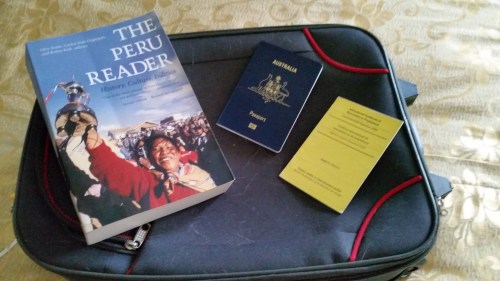
20200403_143423

Well, it’s the 3rd of April and I should be folding up the laptop, packing my case and taking up my passport all ready for a trip to Peru tonight.

Nup.  Not going to happen.

So, where shall I go instead? Well, given that I was planning to go to Peru, I have decided to drop in on Nan Bauer, an American food writer who is currently holed up in Lima Peru, unable to get back to America.  As I write, she’s up to Day 18. Scroll back to her Day 1 Covid-19 in Peru, and you’ll read about her mad rush from Cusco back to Lima, hoping to get out before the border closed.

If I’m a bit grumpy about a cancelled trip, lost deposits etc, I just read her blog at  http://lechoufou.com/ and I feel a whole lot better…..

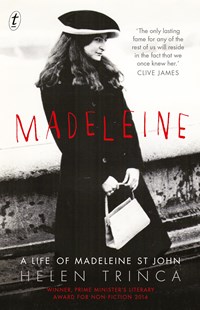
‘Madeleine: A Life of Madeleine St John’ by Helen Trinca

Trinca_Madeleine

2013, 243 p.

The author of this biography, Helen Trinca, came to know of Madeleine St John through one of her books. So did I.  For me it was The Women in Black, which I read back in 2011 as part of an online Australian Literature bookgroup and reviewed here. Erroneously suspecting that it was autobiographical, it seemed to me at the time to be a “happy, satisfying read” and “a small nugget of a book, affectionate, nostalgic and optimistic.” The film, The Ladies in Black (I hadn’t noticed the change in title before) was released in 2018, and it also struck me as a “feel-good, look-good” movie.

Having now read Trinca’s biography of St John, I couldn’t have been more wrong about The Women in Black being autobiographical.  And if I found the book “affectionate, nostalgic and optimistic”, perhaps that says more about St John’s skill as a writer than anything else, because the author was certainly none of those things.  Instead, she was prickly, bitter and more likely to hold a grudge than indulge in nostalgia.

Born in 1941 while her father was with the A.I.F. in Palestine, Madeleine St John’s mother Sylvette was Romanian, but styled herself as French after arriving in Sydney in 1934. Her father was the barrister and later M.P. Edward (Ted) St John, from a blue-blood conservative family.  The surname, pronounced ‘Sinjin’ niggled at me – something about the Voyager maritime disaster– and Trinca’s book reminds us that it was during his maiden speech as a Parliamentarian that St John attacked his own party and called for  second Royal Commission into the accident (which, when it finally occurred, completely overturned the findings of the first, flawed Royal Commission). But the Ted St John who appears in this biography is not so much the politician, as a father – and in Madeleine St John’s eyes, a very poor one.  Her parent’s marriage was an unhappy one. Her mother was an alcoholic, and Madeleine and her sister Colette were packed off to boarding school. When Madeleine was twelve, her parents divorced and soon afterwards her mother Sylvette committed suicide. Her father badly bungled telling his daughters, and remarried too quickly, to Val.

As Madeleine St John was too ready to tell everyone, her father’s perfidy and betrayal lay at the heart of her own world-view. Her anger and bitterness about it warped nearly every aspect of her life right up to her death. She was mercurial, cruel and self-centred, allowing people to come close and then spurning them when they became too close. The irony is that even though she despised her father and idolized her mother, she combined traits from both of them.  While denying all her life that her mother had committed suicide, she shared Sylvette’s fragile mental health, and suffered depression and breakdowns. She certainly shared her father’s black-and-white views about what was right, and refused to compromise them for anyone. For the sake of her own principles, however she defined them, she often acted against her own interests and burnt many people. She was more like her father than she would ever have admitted.

Madeleine enrolled at the University of Sydney in 1959 and circulated amongst that golden generation who were to head off to England: Clive James, Barry Humphries, Bruce Beresford, Les Murray, Robert Hughes, Mungo MacCallum. In this testosterone-heavy atmosphere, she became one of the sub-editors of Honi Soit (the university newspaper) but was never published in it. She was part of a group of eight girls, dubbed ‘The Octopus’ who joined up with the Sydney University Dramatic Society and regularly met at a cafe in Manning House.  She married and moved with her husband, Christopher Tillam, to America where he embarked on a film-making career. As emotionally brittle as she was, it was no surprise that the marriage faltered. Madeleine moved to England where she worked in a succession of bookshops and antique shops, managed to get council housing and developed an image that combined a  stylishness and snobbery that belied her meagre income. She became rigidly religious, and spent years – even decades- writing a biography of Mme Blavatsky, the Theosophist, which she ended up burning (and which I would have been quite interested to read, really.) She was not published until 1993, at the age of 52, when she released The Women in Black, set in the sun-drenched Sydney of her own adolescence. Her three other works were set in her own London-based suburb Notting Hill, one of which (The Essence of the Thing)  was shortlisted for the Booker Prize, thus bringing her to the attention of the Australian literary scene.

She did not particularly welcome the acclaim that publication brought her, and although it gave her the financial means to travel, she was no happier than she had been previously.  She abhorred the thought that she would be embraced as an Australian by the Australian literary scene, when she had spent all her adult life putting her Australian nationality behind her. In poor health, she eschewed the attempts at reconciliation by her step-mother Val, and continued to draw in and then reject her friends, who would be bewildered by her change towards them.  In poor health from emphysema, she became increasingly concerned to shape her image after her rapidly-approaching death, rejecting one literary executor for another, and demanding the return of letters.

I think that Madeleine St John would have been infuriated by this biography, where the author treats her with a cool impassiveness. She does not buy into St John’s histrionics and manipulations, but recognizes patterns in her behaviour and makes some sense of it, without condoning it. The book lightens, as did St John’s own life, once she achieved her break-through publications, but for Trinca (and me, for that matter), her writing only highlighted the paradox between the writer and her work. Trinca keeps her eyes steadily on Madeleine the character, and there is no in-depth analysis of the books as such. Her footnotes pay testament to the author’s diligence in tracking down friends and acquaintances – none of whom could give unalloyed praise for St John. She was fortunate to be given access to a collection of audiotapes recorded by St John that were left in the keeping of a friend.  She read St John’s own statements about her life with a judicious eye, and combed through the lively but self-serving correspondence that other people had kept, much against St. John’s wishes. Using this network of friends and acquaintances, Trinca manages to weave a background against which St John’s life can be placed; a background that captures the heady optimism of university life in the early 1960s, the tangled connections amongst an intellectual and creative largely expatriate milieu, and the continued warp and weft of family background, no matter how much someone might want to distance themselves from it.

There are a lot of people in this book, and I was often glad of the index to remind myself who was who. It was a little frustrating that the index was organized by surname, whereas the text referred to people, in a familiar tone, by first name. More than once I found myself having to scan the whole index, until I found the first name mentioned in the text.

This is an excellent biography, that captures well the ambivalence of the biographer towards her subject.  It won the Prime Ministers Literary Award for Non-Fiction in 2014, and was short-listed for several other awards. The summary on the back cover of the book mentions sadness, tragedy, love and perseverence.  I don’t know if I could be so charitable. Self-centredness, control and vindictiveness spring more to mind for me. And the mismatch between St John’s writing and her own life? I remain mystified, and I suspect that even after all this exhaustive research, I think Trinca might be too.

My rating: 9/10

Sourced from:  CAE bookgroup and read for The Ladies Who Say Oooh.
aww2020

I have added this to the Australian Women Writers Challenge.



Movie: A Hidden Life

From the good old pre-Coronavirus days.

An Austrian farmer, living high in the mountains, knows that he cannot pledge allegiance to Hitler. He can do his compulsory military training, he can work as an ambulance driver – but both of these options require an oath of loyalty to Hitler, and that he cannot do. And so his family is ostracized, he is imprisoned…and I think you know how this is going to end.

This is a beautifully shot film- think of the opening scenes of Sound of Music, and it captures well the isolated, slow pace of life in a small and very primitive village. But ye gods- it is a LONG movie (nearly 3 hours). I hoped to come out feeling inspired, but I just came out thinking “what a bloody waste of a life by a good man”.

My rating 4/5

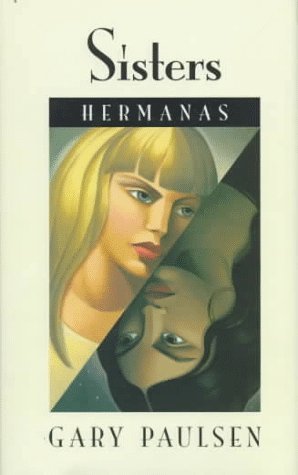
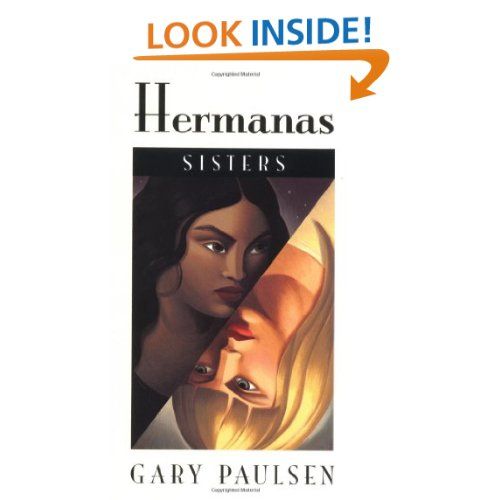
‘Sisters/Hermanas’ by Gary Paulsen

Paulsen_HermanasPaulsen_Hermanas_Spanish

1993, 64 p. English/Spanish. Translated into Spanish by Gloria de Aragón Adújar

This YA novella is presented in  both Spanish and English, each upside down from the other. I read it in Spanish, (and it was just right for an Intermediate Spanish student) but if you flipped it the other way, you could read it in English. An effective format for a language learner: the other language was there if you wanted it, but it was enough of a hassle to turn the book over and find the corresponding page that I generally persevered it trying to work it out for myself. I could then read the English chapter, just to make sure that I had got the gist.


Rosa is a 14 year old illegal immigrant from Mexico City who works as a prostitute. She dreams of becoming a model, but in the meantime she endures her lifestyle, sending money home to her mother in Mexico.  Traci is a blonde 14 year old from the suburbs, whose mother is preening her to become head cheerleader, which will launch her into a dazzling career as a beauty queen.

The book presents their stories in alternating chapters, as each of the girls gets ready, then brings them together in a clothing store at a mall. Rosa is hiding from the police, Traci finds her and with a jolt, recognizes them as being sisters  – not literally, but as holder of the same dreams which they are powerless to fulfill in a very imperfect world.

A compelling novella, and just right for my Spanish level.  The original text was written in English, and it was translated into Spanish by Gloria de Aragón Andújar

I hear with my little ear: Podcasts 8-16 March

Background Briefing (ABC)  This judge’s unfair decisions upended people’s lives. What can be done about it? (Feb 2020) particularly attracted me because of my own work on Justice John Walpole Willis who, like Judge Vasta in this podcast, had been accused of intimidating interruptions from the bench (as for example, in the case of J.B. Were who ended up being sentenced for an extra month each time he opened his mouth). And as with Justice Willis, the presence of such a polarizing and controversial figure on the bench gives rise to questions about judicial independence versus judicial accountability.

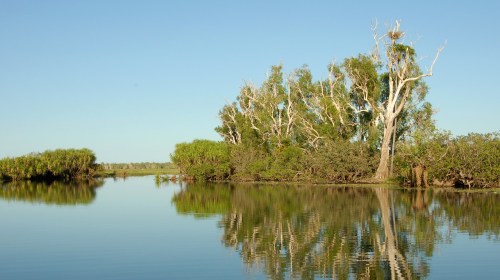
How fracking could threaten Australia’s Paris Target from 1 March 2020 has two threads. The first is the effect of climate change in the Northern Territory, with unseasonal fires and the drying out of the mangroves.  The second theme is the planned expansion of fracking at Beetaloo Basin, with its slippery projections of carbon emissions which make a mockery of any offset activities.  I hate the pernicious influence of lobbyists, who have such sway over governments.

The Eleventh (ABC) Episode 3 Dangerous Circus jumps forward to 1974, when the wheels were starting to fall off the Whitlam Government as it lurched from one scandal to the next.  First there was Jim Cairns and Junie Morosi; then there was Rex Connor and the Loans Affair, and then Cyclone Tracy blew in. Whitlam was not impressed by the calls for him to return home (shades of ScoMo in Hawaii perhaps?)  Episode 4 The Advisor features Elizabeth Reid, the 33 year old who was appointed as Whitlam’s advisor on women at a time when there wasn’t a single female MP in the House of Representatives. Her path crossed with the newly appointed Governor General John Kerr – and what a sleazy story that is.